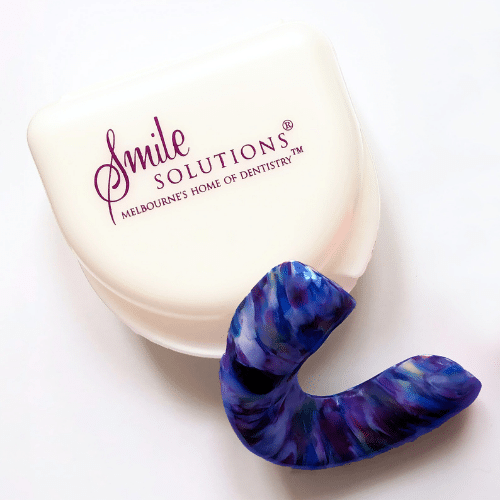
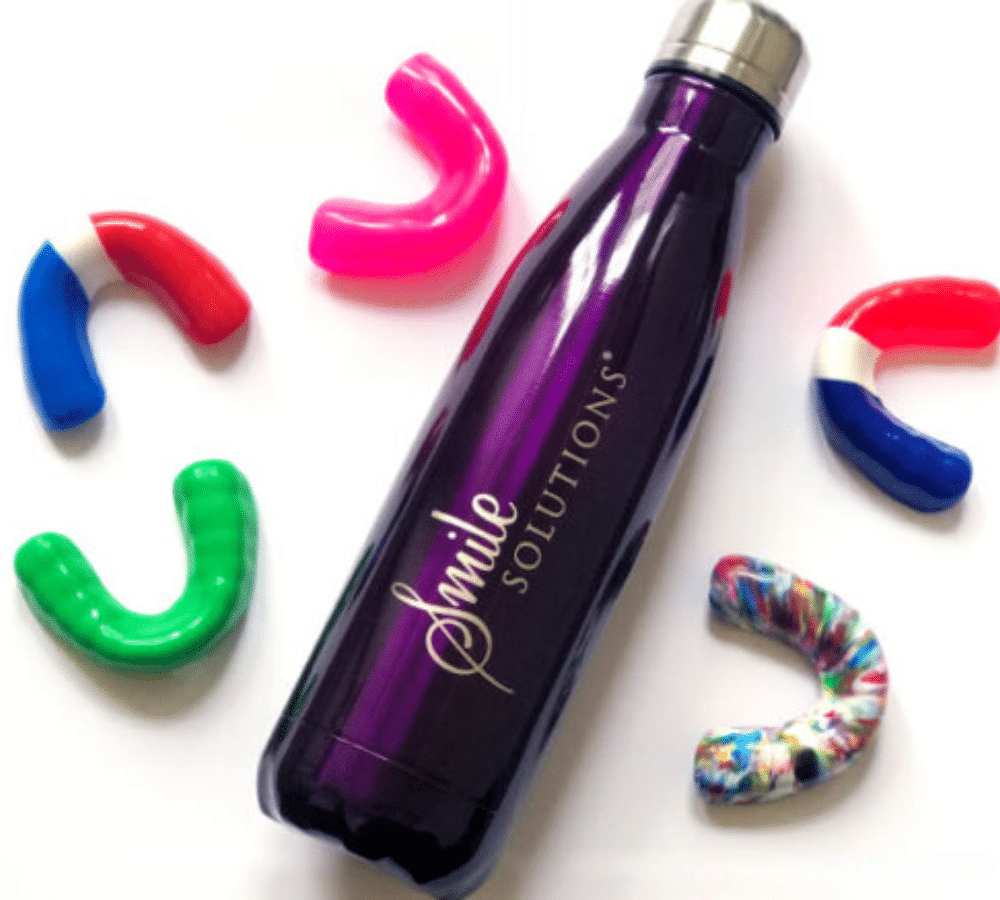
Sports Mouthguards
Why does a custom-fitted mouthguard matter?
Because most dental sporting injuries are preventable, and because the alternative most people reach for does not work as well as they assume.
The Australian Dental Association recommends a custom-fitted mouthguard for all Australians participating in contact sports or activities with a high risk of collision. Its Policy Statement 2.2.5, Prevention and Management of Oral Injuries (April 2024), states it directly: "The most effective protection against oral damage is a custom fitted mouthguard, where precision fit and quality materials offer maximum comfort & injury prevention."
Smile Solutions makes custom dual-laminated mouthguards at Level 1, 220 Collins Street, Manchester Unity Building, Melbourne CBD.
What a facial blow actually does
The damage extends beyond a chipped front tooth:
- tooth fractures
- tooth loss
- injuries to the lips, cheeks or tongue
- fractures of the jaw
The ADA's one-line summary of why this matters: "Oral damage is often irreversible, frequently complex, difficult, and costly to repair." A lost adult tooth at 22 becomes a lifetime of implants, bridges and replacements.
On head injury, it is worth being accurate rather than reassuring. A mouthguard separates the upper and lower jaw and absorbs some of the force that would otherwise transmit through the mandible. The evidence that mouthguards reduce dental and soft-tissue injury is strong. The evidence that they prevent concussion is not — research findings are mixed, and no mouthguard should be relied on as concussion protection. Wear one for your teeth and jaw, and follow your sport's concussion protocol separately.
How a guard actually works
An impact to an unprotected front tooth delivers its energy to a very small area of enamel and to the ligament holding that tooth in its socket. A guard does three things to change that:
- It spreads the load. Force arriving at one incisor is distributed along the whole arch, so no single tooth absorbs it.
- It absorbs and slows the impulse. The material deforms, stretching the same energy over a longer period — which is what reduces the peak force reaching the tooth.
- It separates the arches, so the lower teeth cannot be driven into the uppers, and it cushions the lips and cheeks against the sharp incisal edges.
Every one of those depends on the guard being in place, in contact, and the right thickness at the moment of impact. A loose guard that shifts on contact does none of them properly, which is the whole argument for custom fitting.
Why over-the-counter mouthguards fall short
Boil-and-bite and stock mouthguards are cheap and available. Three specific problems:
They are often ill-fitting, which means the protection is uneven and the force is not distributed as intended.
They dislodge during play. A mouthguard that is not in position at the moment of impact provides no protection at all.
In rare cases they can become dislodged towards the back of the throat on impact, which is a choking risk.
There is a fourth problem that is less obvious: biting down to hold a loose guard in place thins it exactly where it is needed. The ADA's consumer site names the mechanism — the do-it-yourself moulding process "can cause some parts of the mouthguard to be thinner than others", which "can affect how well the mouthguard protects your teeth".
A well-fitted boil-and-bite guard is still far better than nothing. If cost is the obstacle, wear one — the comparison that matters most is guard versus no guard. The ADA policy makes the same trade-off explicit: over-the-counter mouthguards "provide better protection than no mouthguard, however their protection varies depending on the design, comfort, adaptation and thickness of the final product", and "quality control of at-home custom adaptation is not achievable".
The three types compared
| Stock | Boil-and-bite | Custom dual-laminated | |
|---|---|---|---|
| How it is made | Bought ready-formed | Softened in hot water, bitten into shape | Made on a model of your own teeth |
| Fit | Generic | Approximate | Individual |
| Retention | Held by biting | Variable | Stays put without clenching |
| Thickness where it counts | Uncontrolled | Often thinned by the bite | Controlled by the technician |
| Speech and breathing | Usually poor | Variable | Generally good |
| Visits needed | None | None | Two |
| Worn consistently? | Frequently not | Variable | Most likely of the three |
What a custom dual-laminated guard does differently
A custom mouthguard is made to fit the individual athlete's teeth and gums, which is what makes it comfortable enough to wear consistently and allows the force of an impact to be spread across more of the arch.
Dual-lamination means the guard is built from two layers rather than moulded from a single sheet — generally producing a guard that is more durable, more comfortable and better at protecting teeth and jaws.
The comfort point is not a luxury. A guard that fits is a guard that gets worn, and consistency of wear is what actually determines whether it protects anyone.
No mouthguard eliminates the risk of dental injury. It reduces it, which is a different claim and the only honest one.
How yours is made
Visit one — the record. An impression or a digital scan of the upper teeth, and usually the lower, so the bite can be reproduced. It takes a few minutes. You choose colours at this appointment if you want them.
In the laboratory. A model is poured or printed, and the guard is formed over it under pressure in layers, then trimmed and polished to the margins marked by the dentist. Building it in layers is what allows thickness to be controlled where impacts land, rather than left to chance.
Visit two — the fit. It is seated, checked for retention without clenching, adjusted where it presses, and checked against your bite. Allow around one to two weeks between the two visits, which is the practical reason to organise it before the season rather than during it.
Guards are made for the upper arch in almost all cases, because the upper front teeth take the great majority of sporting impacts. A lower guard is occasionally indicated — most often where the lower teeth sit forward of the uppers, or for some combat sports — and that is a judgement for your dentist.
Who needs one
Anyone playing a contact sport or an activity with high collision risk. The ADA policy sorts sports into four risk levels: those where a mouthguard is strongly recommended (off-road bike riding, skateboarding, rock climbing, white-water rafting, trampolining, combat sports, football, basketball, squash, field hockey); those where head protection is worn and may remove the need for one (full-face helmets in ice hockey, goalkeepers in field hockey, cricket, rollerblading, cycling); those where a guard is not normally worn but could be justified in certain circumstances (high diving, surfboarding, skiing); and those where it would be impractical or not warranted (swimming, athletics, aerobics, rowing).
Children and teenagers need particular attention, for two reasons: they are still growing, so a guard needs replacing as the mouth changes — often every season, sometimes more than once a year — and a tooth lost in adolescence carries the longest replacement horizon.
The permanent front teeth arrive at around six to eight years of age, and for the years immediately after that they are prominent, still developing at the root, and highly exposed. That window is the one parents most often miss. The ADA also notes that children with prominent front teeth may be at higher risk of injury and may benefit from orthodontic assessment and early treatment to reduce that risk. See Children's Dentistry.
Players wearing braces should discuss this specifically. Orthodontic appliances change both the fitting requirements and the injury risk to the soft tissues, and a guard made before braces will not fit over them. An orthodontic guard is made with extra depth and a softer inner layer to sit over the brackets, and it usually needs remaking during treatment as the teeth move. Orthodontic Braces.
Wear it at training as well as on game day. The ADA policy is explicit about this: "Protective equipment such as helmets and mouthguards should be used during training as well as competition."
A sports guard is not a grinding splint. They are different appliances made from different materials for different purposes, and wearing a sports guard overnight will damage it. If you grind, see TMD & Teeth Grinding.
Care and replacement
- Rinse before and after use
- Clean it properly, not just with water
- Store it in a rigid ventilated container, never loose in a sports bag
- Keep it out of hot cars and away from direct sunlight — heat distorts the material and destroys the fit
- Bring it to your dental check-ups so it can be inspected
- Replace it when it no longer fits, when it is damaged, when it has been bitten through, and more frequently for growing children
Signs it is finished: it no longer clicks into place, you have to bite to keep it in, there are bite-through holes or tears at the edges, it has gone hard or brittle, it smells despite cleaning, or new dental work has changed the shape of your teeth. A guard that has taken a significant impact should be checked even if it looks intact.
Never adjust it yourself with scissors or a knife. Trimming an edge that rubs almost always removes retention along with the discomfort; a dentist can relieve the spot without losing the fit.
Before the season starts
- Book the two appointments with weeks to spare, not the week before round one
- Have the guard checked at the start of each season, and remade for any child who has grown
- Put a name and phone number on it — colour-moulded if you order it that way
- Pack the case with the boots, so it travels to training as well as games
- Know where the nearest dentist is on game day, and carry a small container of milk or a purpose-made tooth-storage kit in the first-aid bag
If a tooth is knocked out anyway
A knocked-out adult tooth is a genuine dental emergency, and what you do in the first ten minutes matters more than anything that happens later.
Hold the tooth by the crown, not the root. If it is dirty, rinse it briefly in milk or saline — not by scrubbing. If you can, put it straight back in the socket and bite gently on a clean cloth. If you cannot, keep it wet — milk, then HBSS, then the player's own saliva, then saline — and get to a dentist immediately. Whatever else you do, do not let it dry out.
The reason is specific. Living cells on the root surface are what allow the tooth to reattach, and they die quickly once the root dries. That is why the ranking is back in the socket first, then milk, HBSS, saliva or saline. If you have none of those, use water: the International Association of Dental Traumatology is explicit that "although water is a poor medium, it is better than leaving the tooth to air-dry". A dry tissue, a bag or an empty container is the worst option of all. The ADA policy directs dentists to those same IADT guidelines.
Do not attempt to reimplant a baby tooth. Call 13 13 96 and describe what has happened. Emergency Dentistry.
Teeth that are loosened, pushed out of line or driven upward are also urgent, even though they are still in the mouth, and so is a tooth that is merely chipped — see Chipped & Cracked Teeth. Bring any fragment, kept moist.
Call 000 or go to an emergency department for loss of consciousness, a suspected concussion or head injury, a suspected jaw fracture, difficulty breathing or swallowing, or uncontrolled bleeding.
Book the follow-up even if the tooth settles. A tooth that survives an impact can lose its nerve supply and darken months later, which is why injured teeth are reviewed rather than discharged. Where that happens, the usual answer is root canal treatment, and the discolouration can generally be managed afterwards.
Cover
We are a Bupa Members First Platinum provider. Eligible Bupa Platinum members with hospital cover combined with extras including general dental may receive a 100% rebate on certain preventative services, and mouthguards are among the services listed.
Eligibility, annual limits, waiting periods and policy restrictions are set by Bupa and can change. Confirm with your fund before your appointment, and bring your card. Bupa Platinum Dental Provider.
Sporting injuries may also be covered elsewhere. Many clubs and associations carry injury cover that includes dental, and workplace or motor-vehicle injuries have their own schemes. Ask on the day rather than months later, when the paperwork is far harder to assemble.
For fees and instalment options, see Price Guide and Payment Plans.
Common questions
Why choose a custom mouthguard instead of a boil-and-bite guard?
A custom guard is made from records of your teeth and can be designed for the sport, bite and level of protection required. A better fit generally improves retention, comfort, speech and the likelihood that it will stay in place during impact.
Is an upper mouthguard normally enough?
The page states that an upper guard is used in almost all cases. A lower or different design may be considered for a particular bite, sport or dental condition. The clinician should explain the arch and thickness selected for you.
Can a mouthguard fit over braces?
Yes, but it needs space for tooth movement and must be reviewed as treatment progresses. A close-fitting ordinary guard can become restrictive as teeth move, so orthodontic patients may need a special design and more frequent replacement.
Can a child's mouthguard allow for growth?
Some allowance can be designed for erupting or moving teeth, but no guard can accommodate indefinite growth. Check the fit during the season and arrange review if it becomes tight, loose, damaged or uncomfortable.
How long should a mouthguard last?
That depends on growth, tooth movement, wear, chewing and storage. Adults may use one for more than a season if it still fits and remains intact; children and orthodontic patients often need replacement sooner. Have it checked regularly.
Does a mouthguard prevent concussion?
No mouthguard can guarantee protection from concussion. Its purpose is to reduce dental and soft-tissue injury and absorb some impact forces. Appropriate sport rules, technique and other protective equipment remain necessary.
How is a custom guard made?
The page describes two visits: records or impressions are taken first, then the completed dual-laminated guard is fitted and checked. Typical turnaround is about one to two weeks, so arrange it before the season starts.
What should I do if a tooth is knocked out despite the guard?
Treat an adult tooth as an immediate emergency. Handle it by the crown, not the root; replace it in the socket if safe, or keep it in milk, and obtain urgent dental care. Do not let it dry. A mouthguard reduces risk but cannot prevent every injury.
Practical details
| Address | Level 1, 220 Collins Street, Manchester Unity Building, Melbourne VIC 3000 |
| Phone | 13 13 96 |
| theteam@smilesolutions.com.au | |
| Monday – Friday | 8.00am – 6.00pm |
| Saturday | 8.30am – 1.30pm |
| Sunday | By appointment |
| Type | Custom dual-laminated |
| Visits | Two — record, then fit |
| Typical turnaround | About one to two weeks |
| Arch | Upper in almost all cases |
| Knocked-out tooth | Socket first, then milk — never let it dry |
| Recommended by | Australian Dental Association, Policy Statement 2.2.5 |
| Parking | Wilsons Parking, Flinders Lane (between Swanston and Russell) |
General information only — it is not a diagnosis, a treatment plan, a quote or a promise of any particular clinical outcome, and it does not replace advice from your treating practitioner. A mouthguard reduces the risk of dental injury; it does not eliminate it, and it is not protection against concussion. Fit requirements vary between individuals and change as children grow. Fees and health fund rebates are indicative and subject to change; confirm at your appointment and with your fund.
Smile Solutions trades under ABN 28 193 514 103.
Images on This Page
-
https://www.facebook.com/tr?id=800557773428361&ev=PageView&noscript=1
(no alt text)
-
https://www.smilesolutions.com.au/wp-content/uploads/2025/10/calendar_month.svg
(no alt text)
-
https://www.smilesolutions.com.au/wp-content/themes/arcadian-wordpress-theme/assets/images/smile_solutions_logo_white.png
Smile Solutions Logo
-
https://www.smilesolutions.com.au/wp-content/themes/arcadian-wordpress-theme/assets/images/smile_solutions_logo_purple.png
Smile Solutions Logo
-
https://www.smilesolutions.com.au/wp-content/uploads/2025/11/Smile-Solutions-4.png
Smile Solutions 4
-
https://www.smilesolutions.com.au/wp-content/uploads/2025/09/Sports-Mouthguards-Smile-Solutions.png
Sports Mouthguards Smile Solutions
-
https://www.smilesolutions.com.au/wp-content/uploads/2025/09/WEBSITE-Images-2.png
WEBSITE Images 2
-
https://www.smilesolutions.com.au/wp-content/uploads/2025/08/69a44c30c93ce196d539cc5520080df52a5f3f88-scaled.jpg
69a44c30c93ce196d539cc5520080df52a5f3f88 scaled
-
https://www.smilesolutions.com.au/wp-content/themes/arcadian-wordpress-theme/assets/images/family_owned_bussiness.png
Family Owned Business
-
https://www.smilesolutions.com.au/wp-content/themes/arcadian-wordpress-theme/assets/icons/icon--phone.svg
Smile Solutions Contact
-
https://www.facebook.com/tr? id=800557773428361&ev=PageView&noscript=1
(no alt text)