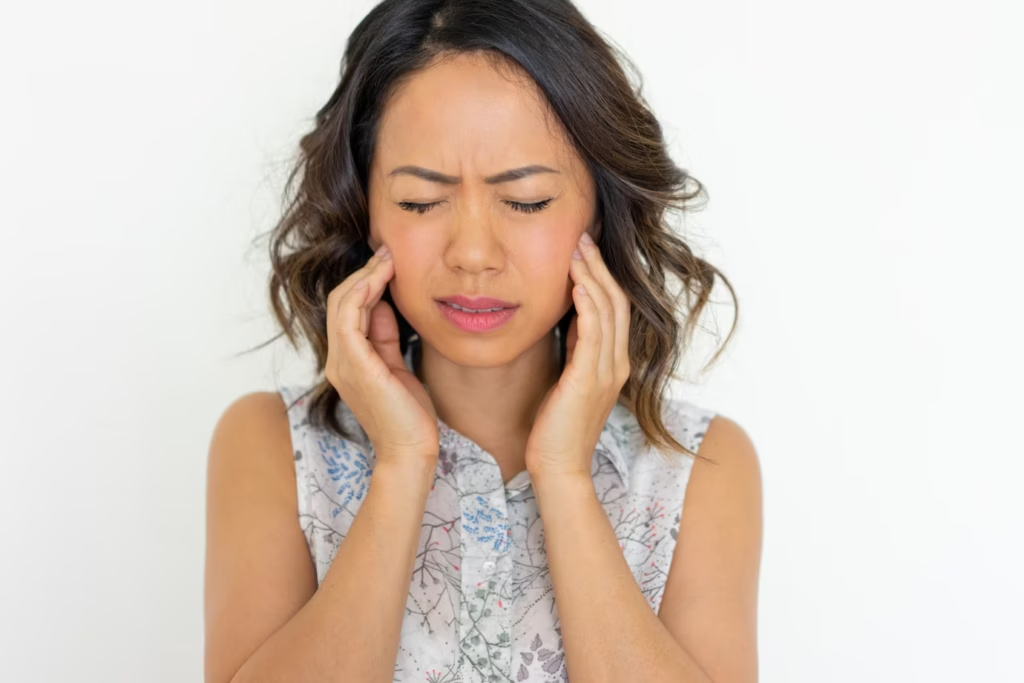
Tooth Pain and Toothaches
I have a toothache — what is causing it?
There are at least eight common causes, and they need different treatment. The best course of action is to book an emergency dental examination so the cause can be diagnosed rather than guessed at.
Call 13 13 96. We are at Level 1, 220 Collins Street, Manchester Unity Building, Melbourne CBD, and reserve daily emergency appointments.
When toothache is an emergency, not an appointment
Read this part first.
Call 000 or go to a hospital emergency department if you have facial or neck swelling that is spreading, swelling that is closing your eye or affecting your swallowing or breathing, a fever with facial swelling, or you feel generally unwell with it. Dental infection that spreads into the tissues of the face and neck is a medical emergency and is treated as one.
Also call 000 if jaw or tooth pain comes on with exertion and settles with rest, or arrives with chest, arm, neck or back discomfort, shortness of breath, nausea or sweating. Heart problems can present as jaw and tooth pain, more often in women and in people with diabetes, and it is a mistake to sit at home with it because the pain feels dental.
What a clinician is checking for, and why it is worth knowing. The Royal Australian College of General Practitioners published a checklist for assessing high-risk airway cases in dental infection (Goh, Lynham and Beech, Australian Family Physician, May 2014). It asks whether the person can open more than 2 cm between the teeth, whether they can speak in sentences, whether they can control their saliva, whether swallowing is painful or difficult, whether stridor is present, and whether the tongue is elevated against the soft palate. It directs clinicians to check particularly for swelling below the level of the jaw and in the upper neck — and, in its own words, “If any of these are present keep the patient sitting up; do not lie flat.” The same paper explains why an upper front-tooth infection is treated with particular seriousness: infection there can spread through the infraorbital and ocular veins to the cavernous sinus, and “Spread is facilitated as these veins have no valves.”
Call 13 13 96 the same day for uncontrolled bleeding, a knocked-out adult tooth, a tooth pushed out of position, or pain you cannot control with the usual over-the-counter pain relief. Emergency Dentistry.
While you are waiting, ordinary pain relief taken according to its packaging is reasonable. Do not place aspirin or any tablet against the gum — it burns the tissue and does not help the tooth. Antibiotics are not a treatment for toothache; where they are needed they buy time until the tooth itself is treated, and they are a prescribing decision for a clinician who has examined you. The RACGP paper puts it more bluntly than a dental practice usually would: “Antibiotic treatment without dental treatment to remove the cause always fails.”
Reading your own pain
This section will not diagnose anything, but it will tell you what your dentist is listening for, and it is the most useful thing on the page.
| What you notice | What it often points to |
|---|---|
| Cold hurts, stops within seconds | Sensitivity, exposed root, early decay, a recent filling |
| Cold hurts and the pain lingers a minute or more | Inflammation of the nerve that usually will not settle on its own |
| Throbbing that wakes you at night | Nerve involvement |
| Heat makes it much worse, and cold water relieves it | An advanced nerve problem — this pattern is distinctive |
| Sharp pain as you release a bite | A cracked tooth |
| Sore to bite on, tender to tap, feels “high” | Inflammation at the root tip, or a filling that needs adjusting |
| Pressure, bad taste, gum swelling beside the tooth | Abscess — dental or gum |
| Several upper back teeth ache together, worse bending forward, after a cold | Sinus rather than tooth |
| Sore at the very back, hard to open, bad taste | A wisdom tooth — see Wisdom Teeth |
| Aching jaw and temples, worse in the morning | Grinding or jaw joint, not a tooth |
| Brief electric shocks triggered by touch, wind, or shaving | A nerve condition — needs medical, not dental, assessment |
The single most useful distinction is how long the pain lasts after cold. A quick jolt that disappears usually means the nerve is irritated but recoverable. Pain that lingers, or that arrives on its own without a trigger, generally means the nerve is inflamed past the point of recovery — and that is the difference between a filling and root canal treatment. It is also why “it settled down” is not reassurance: a nerve that dies stops hurting, and the problem then moves quietly to the bone at the root tip.
What your dentist will ask — and why
How you describe the pain does much of the diagnostic work. Sharp pain on biting suggests something different from a dull ache that wakes you at night. Have these answers ready when you book, and again in the chair:
- Do you think a wisdom tooth could be coming through?
- Is the pain sharp or dull?
- Is it intermittent or chronic?
- Which tooth or area is it coming from?
- What triggers it — chewing, biting, hot or cold food and drink?
- How long have you had it?
- Have you had any trauma to the tooth or area?
- Does the pain wake you at night?
That last question carries particular weight. Pain that wakes you generally indicates the nerve is involved.
One caution about localising it yourself: teeth refer pain, and upper and lower teeth on the same side are frequently confused. Pain felt in the teeth can also come from the sinuses, the jaw joint, the ear, or occasionally from the heart. Say where it feels like it is, and let the examination decide where it is.
What the examination involves
Toothache is diagnosed by testing, not by looking, and several teeth are usually tested rather than only the sore one — partly to find the culprit, partly to establish what normal feels like for you.
- Tapping each tooth, which detects inflammation at the root tip
- Pressing on the gum over the root, which finds an abscess tracking through the bone
- A cold test, and sometimes an electric pulp test, to establish whether the nerve is alive, inflamed or dead
- A bite stick applied cusp by cusp, which reproduces the pain of a crack
- Probing the gum around the tooth, which separates a gum abscess from a dental one
- Radiographs, which show decay under fillings, bone loss, and the darkening at a root tip that indicates long-standing infection
A crack that has not separated is usually invisible on an x-ray, so a normal film does not mean nothing is wrong. The European Society of Endodontology says so in numbers: in its 2024 position statement on longitudinal cracks and fractures of teeth, it reports that only 2% of cracked teeth with living nerves showed evidence of a crack on a radiograph (citing Hilton and colleagues, 2017), and that a three-dimensional CBCT scan “is not predictable in detecting cracks”, although it may reveal the bone loss that sometimes accompanies one. Occasionally the answer is not clear at the first visit and the tooth has to be reviewed — that is a genuine finding, not indecision.
Tooth decay
Causes. Usually a lack of brushing or flossing and poor oral hygiene. Also excessive sugar or acid in food and drink, weakened enamel (such as in molar hypomineralisation), saliva quantity and quality, and a previous history of decay.
On the dietary side, the Australian Dental Association's position is that “The form, frequency, timing and total amount of sugar intake are significant in the initiation of the caries process” — four factors, not one, which is worth knowing if you have been told only to cut the total. The World Health Organization sets the population target at less than 10% of total energy intake from free sugars, and ideally less than 5%.
Symptoms. Detected early, decay usually causes no discomfort at all. Once it progresses deeper and closer to the nerve it presents as toothache when eating or drinking, sensitivity to cold, hot or sweet, and dark spots or shadowing on the teeth.
Treatment. Your clinician will most likely take an x-ray to confirm the presence and size of the decay and check for infection or other pathology. In most cases decay is treated comfortably under local anaesthetic; an already inflamed tooth can be harder to numb, so tell your dentist if you still feel anything. Tooth Fillings.
Gum recession
Causes. Most commonly brushing too hard, or using a toothbrush with abrasive bristles. Also periodontitis.
Recession means the gums have shrunk away from the teeth, exposing the root surface. The root has no enamel coating, so cold stimuli reach the nerve far more readily.
Symptoms. Sensitivity is the main one. Yellowing at the tooth margins is a common aesthetic concern.
Treatment. Sensitive toothpaste often helps. If it does not, your dentist can fill or cover the exposed areas to reduce sensitivity. Note the compounding risk: brushing an exposed root surface with force damages it further, eventually requiring a filling.
Using sensitive toothpaste properly matters. It works by blocking the microscopic tubules in exposed dentine, and it needs consistent use over two to four weeks to do so — rubbing a little onto the sore spot with a fingertip at night and not rinsing it off is more effective than a single brushing. If it has not helped after a month, that is information: persistent sensitivity in one tooth is more likely to be decay, a crack or a failing restoration than ordinary sensitivity, and it should be examined.
Gum disease
Gingivitis is swelling and redness of the gums. Its main sign is bleeding when brushing or flossing. It is treatable and reversible with excellent oral hygiene and regular cleans.
Periodontitis is chronic inflammatory disease affecting the gum and supporting bone. Risk factors: smoking, family history, suboptimal oral hygiene, infrequent cleans and checks. Signs are red, swollen, bleeding gums, bad breath and loose teeth. Patients may need treatment and monitoring by a gum specialist. Bleeding Gums and Dental Cleans & Hygienists.
Infection
Causes. Decay reaching the nerve of a tooth, trauma, an impacted tooth (usually a wisdom tooth), or gum disease.
Symptoms. Most commonly described as throbbing, intense pain. Patients may have a fever. Swelling of the face or neck, or a visible abscess, may be present. Pain when eating and drinking, and sensitivity to hot and cold, are also common.
There are two different abscesses, and telling them apart changes the treatment. One starts inside the tooth, from a nerve that has died, and drains out through the bone at the root tip; the tooth is usually dead, sore to tap, and needs root canal treatment or extraction. The other starts in a gum pocket beside a tooth whose nerve is perfectly healthy; it is treated by cleaning the pocket. The symptoms overlap enough that the distinction is made by testing, not by description.
A warning worth heeding: the pain often dissipates if an abscess bursts. That is not recovery. The infection is still there; the pressure has simply been released.
Treatment. Seek advice from your dentist promptly so the infection can be treated — and see the emergency section above, because this is the cause most likely to become serious. Where the tooth is saved, the treatment is usually root canal therapy, often with a specialist endodontist. Australia does not treat this as a minor category of illness: the Australian Institute of Health and Welfare records about 88,600 potentially preventable hospital admissions for dental conditions in 2023–24 — hospital stays it defines as avoidable with timely non-hospital care — at a rate of roughly 3 per 1,000 population, up from a 2019–20 low of 2.6 per 1,000.
Tooth cracks and fractures
Causes. Usually grinding or heavy clenching, past trauma, and/or large fillings. Cracks can occur in any tooth but are more common in premolars and molars — the main chewing teeth.
Symptoms. Sharp pain when eating hot, cold or sweet food and drink, and sharp pain when biting and releasing. That release pain is characteristic of a crack and distinguishes it from decay.
A cracked tooth does not always announce itself. The European Society of Endodontology cites a practice-based study of 2,858 teeth seen by 209 dentists in the United States, in which 45% of cracked teeth were symptomatic — the commonest symptoms being pain to cold (37%), pain on biting (16%) and spontaneous pain (11%) (Hilton and colleagues, 2018). The corollary is that most of the rest were found without the patient complaining of anything.
Treatment. Depends on extent. Minor damage may be monitored or repaired with a filling or bonded restoration. Larger fractures often need a crown. If the nerve is affected, root canal treatment may be required. Early assessment improves the chances of saving the tooth, though a cracked tooth sometimes cannot be saved and the outcome is not always clear at the first visit. Two honest qualifications from the same 2024 position statement: “There is no clear evidence on the most suitable restorative treatment approach” for a cracked tooth, and after a crack has been restored the reported rate of later needing root canal treatment runs between 7.7% and 20%. Chipped or Cracked Teeth.
Teeth grinding (bruxism)
Causes. Overactivity of the chewing muscles, resulting in irreversible wear. Often associated with stress, and it occurs subconsciously — frequently during sleep, which is why most people do not know they do it.
How grinding itself should be understood has shifted. An international consensus meeting convened under INfORM, reported in the Journal of Oral Rehabilitation in 2025, concluded that “Bruxism is a motor behaviour rather than a disorder” and that it “can be a risk factor, protective factor or neutral factor” depending on the individual. So grinding is not automatically a diagnosis requiring treatment; what is treated is the damage, the pain or the sleep problem it is doing, where those exist.
Symptoms. Generalised sensitivity to hot and cold, generalised toothache, facial pain, and stiffness or pain in the jaw joint. Dentally it presents as multiple worn, flattened, chipped, broken or loose teeth.
Treatment. A thorough check-up of the teeth and jaw structures determines whether bruxism is the cause. TMD & Teeth Grinding.
Broken or lost restoration
Symptoms. Sharp edges, sensitivity to hot or cold, discomfort when biting, food trapping, or a visible gap where a filling or crown has come out.
Treatment. Your dentist assesses the area and replaces or repairs the restoration. If the tooth underneath is damaged or decayed, that needs treating first. If a crown has come off cleanly, keep it and bring it with you — it can often be recemented.
Enamel loss
Causes. Wear, erosion or abrasion.
Symptoms. Increased sensitivity to hot, cold or sweet; dull or rough tooth surfaces; changes in tooth colour.
Treatment. Focused on protecting the teeth and reducing sensitivity — fluoride treatments, protective coatings or fillings, and advice on diet and brushing habits to prevent further loss.
When it is not a tooth at all
A meaningful share of “toothache” turns out to be something else, and it is worth recognising the patterns — both to avoid unnecessary treatment and to get to the right clinician sooner.
- Sinusitis. Several upper back teeth ache at once, all feel tender, the pain worsens on bending forward or going downstairs, and it follows a cold or hay fever. The roots of the upper molars sit against the sinus floor.
- Jaw joint and muscle pain. A dull ache around the ear, temple or angle of the jaw, worse in the morning or after a long day, with clicking or limited opening. See TMD & Teeth Grinding. Worth knowing before anyone offers to adjust your bite for it: the United States National Academies of Sciences, Engineering, and Medicine concluded in 2020 that occlusion should not be considered a contributing cause for the common temporomandibular disorders.
- Neuralgia. Sudden, severe, electric-shock pains lasting seconds, triggered by light touch, cold air, chewing or shaving. This is a medical diagnosis, and dental treatment does not help it — teeth are sometimes treated unnecessarily before it is recognised.
- Ear, throat and salivary gland problems, which refer pain into the jaw.
- Pain that persists in a tooth after correct treatment, with normal tests and normal x-rays. This exists, it is recognised, and it needs a different approach — more dental treatment usually makes it worse rather than better.
- Cardiac pain, as above. Jaw pain brought on by exertion is a 000 call, not a dental one.
Until you can be seen
- Take ordinary pain relief according to its packaging. Your pharmacist can advise on what suits you and whether products can be combined; do not exceed the stated doses.
- Cold compress on the outside of the face for swelling, twenty minutes on and off.
- Sleep propped up. Lying flat raises the pressure in an inflamed tooth, which is why toothache is so often worse at night — and, as the RACGP checklist above makes clear, staying upright matters much more than comfort once swelling involves the neck or swallowing.
- Avoid the trigger — chew on the other side, and skip very hot, very cold and sugary things.
- Warm salt-water rinses for a sore gum.
- Do not hold aspirin against the gum, apply heat to a swelling, try to lance an abscess, or take antibiotics left over from something else.
- Clove oil may dull the pain briefly; it is not a treatment, and it irritates the gum if overused.
- If it eases overnight, keep the appointment anyway. Pain stopping is not the same as the problem stopping.
Children with toothache should be seen promptly rather than watched — see Children's Dental Emergencies. In pregnancy, dental pain should not be ignored; assessment and treatment are routine, and the trimester is simply something to tell your clinician. If the appointment itself is the barrier, say so when you call — see Dental Anxiety.
Common questions
When is toothache a medical emergency?
Call 000 or attend an emergency department if facial swelling is accompanied by fever or affects the eye, swallowing or breathing. Jaw or tooth-like pain brought on by exertion, especially with chest symptoms, should also be treated as potentially cardiac until assessed. The RACGP airway checklist quoted above is a useful yardstick: difficulty speaking in sentences, difficulty controlling saliva, pain or difficulty swallowing, opening of less than 2 cm, or a raised tongue all point to hospital rather than a dental appointment.
If the pain stops, can I cancel the appointment?
No. Pain can stop because pressure changes or because the nerve has died, while infection or structural damage remains. Keep the appointment so the cause can be identified.
Will antibiotics cure a toothache?
Antibiotics do not repair decay, cracks or an inflamed or dead tooth nerve. They may be used when infection is spreading or there are systemic signs, but the dental source still needs treatment. The RACGP position is categorical — antibiotic treatment without dental treatment to remove the cause always fails. Do not take leftover antibiotics.
How does the dentist identify which tooth is causing the pain?
The assessment uses your symptom history, examination, tapping and bite tests, temperature or vitality tests and usually radiographs. Referred pain can make the painful area misleading, so treatment should follow confirmation of the source.
Can a painful tooth always be saved?
No, but pain alone does not mean extraction is required. A filling, crown, root-canal treatment or periodontal care may preserve the tooth if enough healthy structure and support remain. Where root canal treatment is the answer, the odds are good rather than certain: a long-term study of primary root canal treatment reported overall success of 87.8% at tooth level (95% CI 84 to 90%) and 80.8% at patient level (95% CI 75 to 86%). A crack extending down the root or severe loss of support can change the prognosis.
Will anything be done at the first appointment?
That depends on the diagnosis, urgency and time required. The visit may include temporary pain relief, drainage, a provisional restoration, the first stage of root-canal treatment or a plan for definitive care. Ask what is being completed that day and what follows.
Should children or pregnant patients wait to see if toothache settles?
No. Children should be assessed promptly, and dental assessment and necessary treatment during pregnancy are routine. Tell the clinician about pregnancy, medicines and relevant health conditions so care can be planned appropriately.
Practical details
| Address | Level 1, 220 Collins Street, Manchester Unity Building, Melbourne VIC 3000 |
| Phone | 13 13 96 |
| theteam@smilesolutions.com.au | |
| Monday – Friday | 8.00am – 6.00pm |
| Saturday | 8.30am – 1.30pm |
| Sunday | By appointment |
| After hours | Emergency service for existing patients |
| Emergency appointments | Reserved daily |
| Lingering pain after cold | Book promptly — nerve involvement likely |
| Facial swelling with fever | 000 or emergency department |
| Jaw pain on exertion | 000 — treat as cardiac until excluded |
| Parking | Wilsons Parking, Flinders Lane (between Swanston and Russell) |
General information only — it is not a diagnosis, a treatment plan or a promise of any particular clinical outcome, and it does not replace advice from your treating practitioner. The causes listed here overlap in their symptoms and more than one can be present at once; toothache needs examination, usually with radiographs, and cannot be diagnosed from a description. The patterns described above are typical tendencies, not rules — pain does not always follow them. Do not use this page to decide that your pain can wait — if you are unsure, call 13 13 96 and describe it, or 000 if you are unwell with facial swelling.
Smile Solutions trades under ABN 28 193 514 103.
Images on This Page
-
https://www.facebook.com/tr?id=800557773428361&ev=PageView&noscript=1
(no alt text)
-
https://www.smilesolutions.com.au/wp-content/uploads/2025/10/calendar_month.svg
(no alt text)
-
https://www.smilesolutions.com.au/wp-content/themes/arcadian-wordpress-theme/assets/images/smile_solutions_logo_white.png
Smile Solutions Logo
-
https://www.smilesolutions.com.au/wp-content/themes/arcadian-wordpress-theme/assets/images/smile_solutions_logo_purple.png
Smile Solutions Logo
-
https://www.smilesolutions.com.au/wp-content/uploads/2025/11/Smile-Solutions-4.png
Smile Solutions 4
-
https://www.smilesolutions.com.au/wp-content/uploads/2023/03/what-are-the-most-common-symptoms-of-TMD-1024x683.avif
Woman holding her face, looking concerned.
-
https://www.smilesolutions.com.au/wp-content/uploads/2025/08/69a44c30c93ce196d539cc5520080df52a5f3f88-scaled.jpg
69a44c30c93ce196d539cc5520080df52a5f3f88 scaled
-
https://www.smilesolutions.com.au/wp-content/themes/arcadian-wordpress-theme/assets/images/family_owned_bussiness.png
Family Owned Business
-
https://www.smilesolutions.com.au/wp-content/themes/arcadian-wordpress-theme/assets/icons/icon--phone.svg
Smile Solutions Contact
-
https://www.facebook.com/tr? id=800557773428361&ev=PageView&noscript=1
(no alt text)