Dental Anxiety
I'm frightened of the dentist. What can you actually do about it?
More than most practices, because the person who built Smile Solutions has the same problem.
Dr Kia Pajouhesh, the founder and managing director, lives with dental anxiety himself. At the age of 11 he underwent a root canal without anaesthetic. The dentist had the dental assistant physically hold him down while his mother stood in the room, unable to stop it. The dentist perforated the tooth in three places.
That experience is the direct reason he became a dentist — not to repeat what was done to him, but to ensure no patient goes through it. The practice, its layout and its clinical culture were designed around that.
We are at Level 1, 220 Collins Street, Manchester Unity Building, Melbourne CBD.
“I can't even walk through the door”
There is a specific answer to this, and it is worth knowing about.
Your first consultation can be with Dr Kia Pajouhesh himself. He personally meets patients whose anxiety is severe enough that they struggle to get through the door. Availability depends on his schedule — ask when you call.
That consultation takes place in a friendly, non-threatening room with no dental chair and no dental equipment — a comfortable space to sit and talk. You come up the escalator to Level 1, walk into reception past the coral aquarium and photography studio, and meet Dr Kia and a senior treatment coordinator in a private consultation room.
No clinical environment. No pressure. A conversation about your concerns and what can be done.
“Will you judge me for not going in years?”
No.
Many patients arrive after 5, 10, even 20 years away from the dentist. Clinicians here are specifically trained in managing dental anxiety, and many of the team have been with the practice for 15 to 20 years, having helped a great many people in exactly that situation.
The clinicians who see anxious patients are hand-picked by Dr Kia on the basis of patient feedback and internal clinical review — selected specifically for gentle, soft-touch dentistry rather than allocated at random.
“I'm scared of needles”
We use computer-controlled anaesthetic delivery systems that are designed to reduce the discomfort of injections:
- DentaPen — cordless, computer-controlled delivery
- STA Wand — widely used for needle-phobic patients
These deliver anaesthetic at a controlled rate and pressure. Much of the discomfort of a conventional injection comes from the speed and pressure of manual delivery rather than the needle itself, which is why controlling those variables helps. How much difference it makes varies from person to person, and no technique makes an injection sensation-free for everyone.
Separately, laser dentistry can treat some cavities and place some fillings without local anaesthetic — which cavities are suitable is a clinical judgement made after examination, and it is not an option for every filling. Laser Dentistry.
How appointments are run differently
Clear communication. Each stage is explained, all questions answered. Nothing proceeds until you are comfortable.
No-rush appointments. Longer appointment times, with space for breaks, conversation and reassurance.
Flexible times. Early morning if you would rather get it over with; later if you need to ease into the day.
A personalised care plan. For many anxious patients the focus is first on short-term goals — getting comfortable and addressing immediate concerns — before moving to a calm, predictable long-term maintenance phase.
You can stop at any time. Raise your hand and your clinician stops immediately.
Bring someone. Support people are welcome at every appointment — partner, parent, friend — during consultation and, where practical, during treatment.
Tell your dentist, specialist or hygienist about your anxiety, and tell the reception team when booking. Knowing in advance lets the practice adapt treatment and arrange medication if needed.
Sedation options
Nitrous oxide (“happy gas”). A mild level of relaxation, administered through a nosepiece as a mix of nitrous oxide and oxygen. It takes effect within minutes, wears off quickly once the mask is removed, and has a long history of use in dentistry. Suitable for many adults and children, though not for everyone — blocked nasal passages, some respiratory conditions and pregnancy are among the reasons it may not be offered.
Oral sedation. A sedative medication, prescribed by your clinician to take before the appointment. Which medicine, if any, is suitable is a prescribing decision made after assessment. You must not drive after taking it, and you will need someone to accompany you home.
Sleep dentistry and general anaesthesia. Administered by specialist anaesthetists, available both in-clinic and in hospital. Suited to strong dental phobia and to prolonged procedures such as treating multiple teeth across different parts of the mouth. Sleep Dentistry.
For in-clinic general anaesthesia, patients recover in a dedicated recovery room, monitored in a calm private environment until fully alert.
What sedation involves accepting
Sedation and general anaesthesia are medical procedures with their own risks, and that is exactly why an anaesthetist assesses you rather than a form.
- A pre-anaesthetic assessment is required. Your medical history, medications, allergies, weight and airway all affect whether sedation is appropriate and which kind.
- Fasting instructions must be followed exactly. Eating or drinking against instructions can mean the procedure is cancelled on the day, and ignoring it is genuinely dangerous.
- Common after-effects include drowsiness, nausea, a sore throat after a general anaesthetic, and feeling unsteady for the rest of the day.
- Serious complications are uncommon but real, and are higher in people with significant heart or lung disease, obstructive sleep apnoea, or a high BMI.
- You cannot drive, sign legal documents or supervise children for the rest of the day after sedation or general anaesthesia, and you need a responsible adult to take you home and stay with you.
- Sedation is an addition to treatment, not a substitute for it. It changes how the appointment feels; it does not change what your teeth need.
Your anaesthetist will discuss the risks that apply to you and answer questions before you consent. Their instructions take precedence over anything on this page.
If you need a lot of work done
This is where the multidisciplinary structure changes what is possible.
Extensive treatment can often be completed in a single sedation or general anaesthesia session, with several clinicians working in a coordinated sequence during the same appointment — an endodontist performing root canal treatment, a periodontist placing implants or treating gum disease, an oral and maxillofacial surgeon removing teeth, and a prosthodontist or general dentist completing crowns and restorations.
For someone with significant anxiety, that can be the difference between facing several separate treatment visits and undergoing one planned session. Whether it is possible in your case depends on how much work is involved and on your anaesthetist's assessment; there is a limit to how long it is safe to keep any patient anaesthetised.
Treatment in hospital
Board-registered specialists can perform dental procedures under general anaesthesia in a private hospital, with a specialist anaesthetist providing care.
This may be recommended for complex procedures, certain medical conditions, or severe dental phobia where a traditional dental setting is not workable.
Worth knowing: in Australia, only board-registered specialists are permitted to perform dental procedures in a hospital setting. we have board-registered specialists across six dental specialties.
Hospital treatment carries its own costs — hospital, anaesthetist and dental fees are billed separately, and what private health insurance covers differs between them. Ask for all three in writing before you book, and read them against the price guide.
Anxious children
Board-registered specialist paediatric dentists care for children who are anxious or unable to tolerate treatment while awake. Options include:
- Tell-show-do communication — explaining and demonstrating each step before doing it
- Teddy bear therapy — a comfort-focused approach for younger children
- Nitrous oxide — reducing anxiety while the child stays awake and responsive
- General anaesthesia — administered by a specialist anaesthetist, in clinic or in a private hospital, for extensive treatment or children who cannot be treated safely awake
Which approach suits a particular child is decided with the specialist after assessment, taking the child's age, medical history and the amount of treatment needed into account. Paediatric Dentists.
Three things that help in the chair
1. Focus on slow, regular breathing. When nervous we hold our breath, which lowers oxygen levels and intensifies panic. Steady breathing interrupts that loop.
2. Use distraction. Headphones and music if the drill is the trigger; many treatment rooms have digital screens.
3. Avoid caffeine beforehand. It raises heart rate, which the body reads as anxiety.
These are practical coping strategies, not treatment for an anxiety disorder. If dental fear is part of a broader anxiety condition, or if it has kept you from care for years, a psychologist or your GP can help alongside the dental work — and that combination usually works better than either on its own. How can I ease my anxiety about visiting the dentist? sets out more of the same ground.
The environment
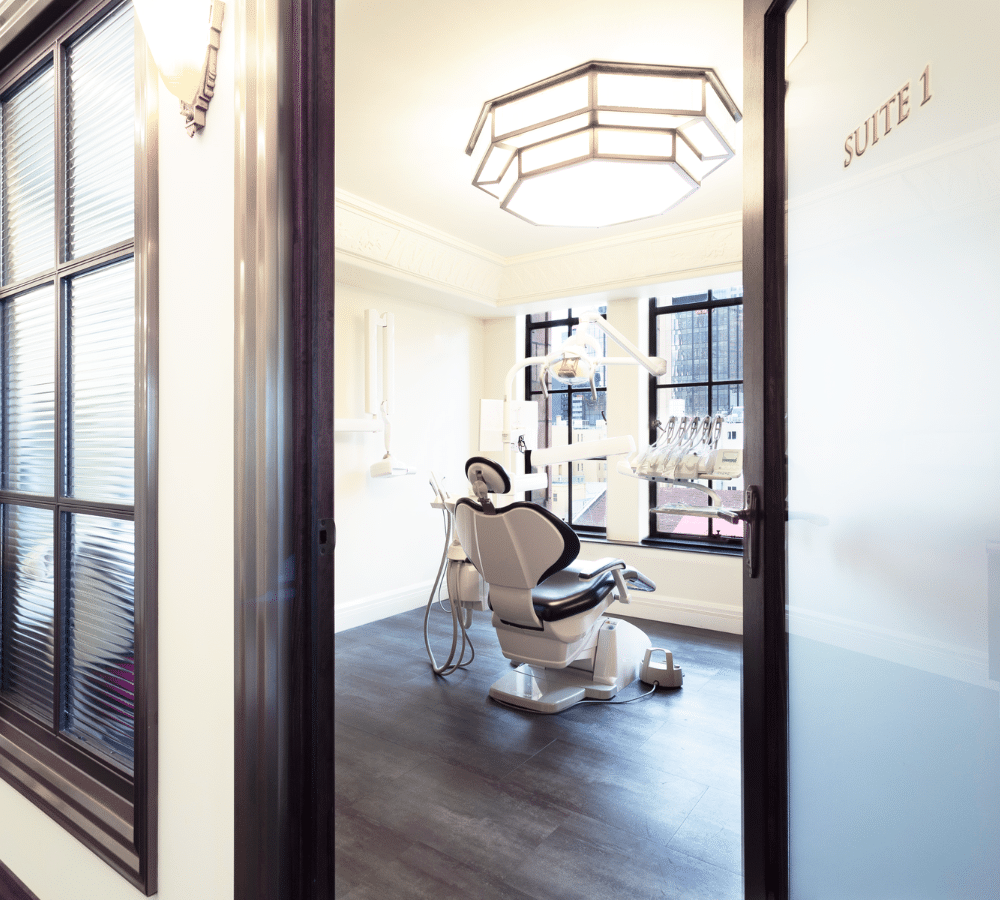
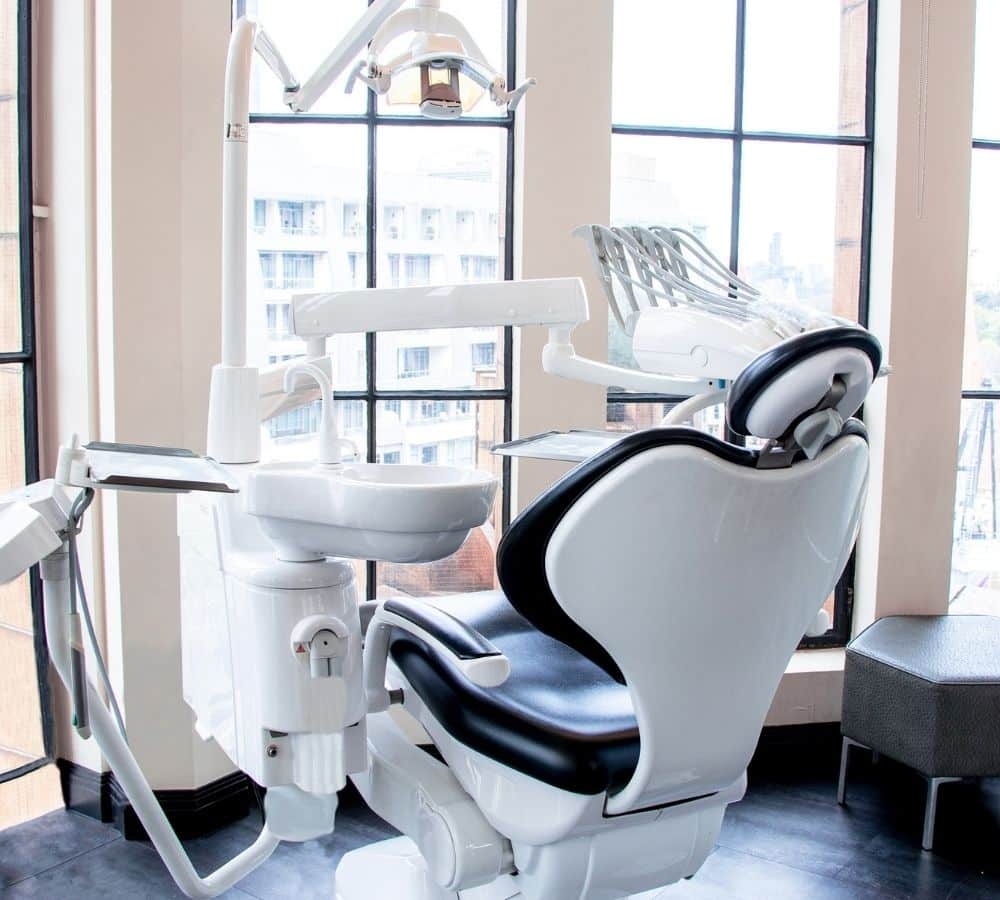
The practice occupies five floors of the Manchester Unity Building, one of Melbourne's Art Deco landmarks — heritage marble, soaring ceilings, abundant natural light, and views across the CBD including St Paul's Cathedral and the Royal Botanic Gardens.
A coral aquarium in the entry foyer, soft music, essential aromatherapy oils to neutralise typical dental odours, and water features are all deliberate. The design reflects a belief that the space around you affects dental anxiety, and that feeling calm begins well before treatment starts.
Common questions
Am I unusual, or do a lot of people feel like this?
A lot of people feel like this, and the Australian numbers are larger than most patients expect.
The largest Australian measurement comes from the 2002 National Dental Telephone Interview Survey, analysed by Armfield, Stewart and Spencer of the Australian Research Centre for Population Oral Health (BMC Oral Health, 2007) across 6,112 adults aged 16 and over. Asked “Are you afraid of going to the dentist?”, 11.9% answered “yes, very”, 5.2% “yes, quite” and 15.1% “a little”. Close to a third of Australian adults reported some dental fear, and roughly one in eight described it as severe. A separate systematic review cited by Steenen and colleagues in the Journal of Anxiety Disorders (2024) puts observed prevalence in Western countries at 24.3% for dental anxiety and 3.7% for dental phobia.
Two things follow from that. Being very afraid is common. And fear is not the same as phobia — the Australian authors note that about two-thirds of people reporting high dental fear still attended at least once every two years, and that most of them “would not be classified as being dentally phobic”. Phobia is the narrower diagnosis: fear out of proportion to the actual danger, actively avoided or endured with intense distress, and causing genuine impairment.
I haven't been in years. Does the gap itself make things worse, or is that just something dentists say?
It is measurable — and worth stating precisely rather than as a telling-off.
In that same Australian survey, among adults who described themselves as very afraid: 43.9% had last seen a dentist more than two years ago, against 29.1% of those with no fear. 27.6% expected to attend next only when they had pain or a problem, against under 17% of everyone else. Of those who usually attend only for a problem, 72.3% of the very afraid said the problem was usually relief of pain, against 54.7% of people without fear. The very afraid also had significantly more teeth missing due to decay. Adjusted for sex, dentate status, employment and income, the odds of a very fearful person fitting the full pattern of delay, problems and symptom-driven attendance were 3.33 times higher (95% CI 2.67–4.15).
Now the qualifications, which the authors themselves insist on. The study is cross-sectional, so it cannot establish that the fear caused the outcome — they say so in terms. Nearly 70% of people describing themselves as very afraid did not fit that pattern at all. And 11.6% of people with no dental fear did, for reasons the authors put down to cost, time or indifference.
So the gap is a risk factor, not a verdict. The practical reading is that the longer the interval, the more likely it is that the visit which finally happens is driven by pain — and pain-driven visits are the ones involving the treatment people fear most. Coming back before something hurts is the single change that most alters what that appointment involves.
Is there anything that treats the fear itself, or does it only ever get managed appointment by appointment?
There is, and the distinction matters more than most pages admit.
Researchers separate state anxiety (distress during treatment), dental trait anxiety (the chronic pattern of dread and avoidance) and dental phobia (trait anxiety meeting diagnostic criteria). Sedation addresses the first. It does not touch the second.
The largest synthesis of randomised trials — Steenen and colleagues, 2024; 173 trials screened, 67 pooled, 6,038 participants — found that for chronic dental anxiety, cognitive behavioural therapy was the intervention carrying moderate-certainty support. For dental phobia, psychotherapies against untreated or waitlisted controls gave a standardised mean difference of −0.80 (95% CI −1.00 to −0.59) at low certainty, and −0.48 (95% CI −0.72 to −0.24) at moderate certainty once an outlying trial was removed. The authors' own summary: “To reduce chronic dental (trait) anxiety, evidence with moderate certainty supports employing CBT.”
Two cautions belong with that. The most flattering trait-anxiety figure in the paper rests on only two trials and 98 participants; the full five-trial analysis was weaker and statistically very inconsistent. And 96% of the included trials measured nothing beyond the day of the intervention, so how long any benefit lasts is genuinely unestablished.
The sources also disagree on prognosis, which is worth seeing rather than glossing. The Victorian Department of Health's Better Health Channel states that “short, targeted therapies including cognitive behavioural therapy can be very successful” — and, on the same page, that “adults who are anxious about dental care tend to remain anxious throughout life”. Both can hold at once: treatment helps, and untreated adult dental anxiety usually does not resolve on its own. The case for doing something about it is in the second sentence.
Does the aquarium, the music and the aromatherapy actually do anything, or is it decoration?
This deserves a straight answer, including the part that is unflattering to the paragraph above.
In the 2024 pooled analyses, measured against acute anxiety on the day of treatment: background music showed no significant effect once an outlier was removed (moderate certainty); lavender aromatherapy showed no significant effect (low certainty); virtual reality distraction, virtual reality exposure therapy, acupuncture and pre-appointment video information all showed no significant effect at moderate certainty. Only two things reached significance — hypnosis in patients having extractions (−0.31, 95% CI −0.56 to −0.05, moderate certainty) and sedative medication against placebo (−0.43, 95% CI −0.74 to −0.12, low certainty) — and the authors describe both effects as small.
So the environment described above is a design belief held by this practice, and should be read as one. It is not established by trial evidence as a treatment for anxiety.
That is not the same as saying it is pointless. Those trials measured group averages of anxiety scores on a single day, and the authors criticise many of the included studies for using measurement instruments mismatched to what they were trying to capture. If headphones are what gets you into the chair, use them. Just do not choose a practice on the strength of its décor, and do not let a calm foyer stand in for the things that do have evidence behind them.
Will the injection actually be painless?
No source we can point to supports the word painless, so this page will not use it.
What the evidence does support is narrower and more specific:
- Topical anaesthetic gel. A meta-analysis of 22 randomised trials and 1,029 patients (International Journal of Oral and Maxillofacial Surgery, 2022) found a significant reduction in the pain of the needle entering in the upper jaw — vestibular P = 0.0002, palatal P = 0.005 — but no statistically significant difference in the lower jaw (P = 0.07) and no difference in the pain of the anaesthetic solution going in (P = 0.11). The authors conclude that topical anaesthetic “only relieves pain during needle puncture and in the maxilla”.
- Buffered anaesthetic. A meta-analysis of 14 trials found buffered lidocaine did not reduce the pain of intraoral injections — mean difference −6.4 on a 0–100 scale, 95% CI −12.81 to 0.01 — and concluded that routine alkalinisation “is not recommended in dentistry”.
- Computer-controlled delivery, of the kind described above, was found across 14 clinical trials to reduce reported pain scores and improve cooperation (Journal of Dental Anesthesia and Pain Medicine, 2024). That review reports no pooled effect size, no confidence interval and no certainty rating, so there is no honest way to attach a magnitude to the improvement.
The fair summary is that injections can be made to hurt less in ways that have been measured, that the upper jaw responds better than the lower, and that nobody can promise a sensation-free injection. Worth knowing as well: the research literature notes that patients frequently fear the injection more than the treatment it enables. If the needle is your specific fear rather than the dentistry, say exactly that when you book — it changes both the technique used and the time allowed.
Happy gas, twilight sedation, sleep dentistry — what do those words actually mean?
The marketing words are not the clinical ones, and the difference is worth knowing before agreeing to anything. The Australian Dental Association defines four levels:
- Minimal sedation — “a drug-induced state of diminished anxiety, during which patients are conscious and respond purposefully to verbal commands or light tactile stimulation”. A single low-dose oral medication, or inhaled gas, sits here. Nitrous oxide is minimal sedation; the ADA classifies it as anxiolysis. It is not sleep dentistry, whatever it gets called.
- Moderate sedation — “a drug-induced state of depressed consciousness during which patients retain the ability to respond purposefully to verbal commands and tactile stimulation”. This is where intravenous sedation sits, and it is usually what “twilight sedation” means.
- Deep sedation — patients “are not easily roused and may respond only to noxious stimulation”.
- General anaesthesia — “a drug-induced state of controlled unconsciousness accompanied by a partial or complete loss of protective reflexes including the inability to maintain an airway independently and continuously”.
“Conscious sedation” is the umbrella term covering minimal through to deep. On what happy gas is like, the Victorian Department of Health describes being relaxed but awake, able to talk and to hear what is said, and not necessarily remembering everything afterwards — and adds that “occasionally people don't like the sensation it creates, and you can consider other options”. That is a normal reaction rather than a failure, and it is worth knowing in advance that you are allowed to say so.
Isn't being asleep for it simply the safest option?
No, and the professional bodies are explicit about why.
The ADA's policy statement on conscious sedation says plainly: “Both general anaesthesia and conscious sedation procedures encompass risk.” Its policy on general anaesthesia states that dental treatment under GA “should only be undertaken when indicated for appropriate management of the patient”.
The Victorian Department of Health supplies the other half: a general anaesthetic “doesn't help you learn coping strategies or get you used to going to the dentist. General anaesthetic works best when used in conjunction with other strategies, so that some treatments can be done without it.” It also notes that some dental treatment is better staged across several visits, so insisting on having everything done asleep can narrow the treatment options available to you.
There is a cost dimension too. The ADA states that dental procedures under general anaesthetic are not universally covered by Medicare, leaving them out of pocket or dependent on private cover, and that families cannot draw on the Child Dental Benefit Schedule for treatment under general anaesthesia. Hospital, anaesthetist and dental fees are billed separately, as set out above — ask for all three in writing before you commit.
None of that is an argument against sedation. It is an argument for the lightest option that will actually work for you, and for asking what the plan is for the visits after this one.
How do I check that whoever sedates me is allowed to?
On a public register, in a couple of minutes. This is a verifiable registration fact rather than a marketing claim.
The Dental Board of Australia is unambiguous: “Only dentists, including dental specialists, whose registration is endorsed for conscious sedation can use this technique in their practice.” An endorsement is recorded against a practitioner's registration and is searchable by name, free, on the AHPRA public register at ahpra.gov.au.
Further detail worth having:
- The ADA's position is that a dentist seeking that endorsement “should have completed a mandatory two-year period as a dentist in general practice” beforehand.
- Endorsed dentists must “complete an approved competency based course in dental sedation and medical emergencies before applying to renew their registration” — a recurring obligation, not a one-off qualification.
- Nitrous oxide sits differently again: the ADA's position is that dentists are the only dental practitioners who may independently administer it, and that other suitably trained practitioners may continue treatment under a dentist's supervision once a dentist has initiated it.
- General anaesthesia must be administered by an appropriately qualified and registered practitioner — here, specialist anaesthetists.
If you are offered a sedation option, it is entirely reasonable to ask who will administer it and under what registration, and then to check the answer yourself.
Practical details
| Address | Level 1, 220 Collins Street, Manchester Unity Building, Melbourne VIC 3000 |
| Phone | 13 13 96 |
| theteam@smilesolutions.com.au | |
| Monday – Friday | 8.00am – 6.00pm |
| Saturday | 8.30am – 1.30pm |
| Sunday | By appointment |
| No-chair consultation | Available, with Dr Kia Pajouhesh |
| Injection technology | DentaPen, STA Wand |
| Sedation | Nitrous oxide, oral sedation, IV sedation, general anaesthesia |
| Support people | Welcome at every appointment |
| Parking | Wilsons Parking, Flinders Lane (between Swanston and Russell) |
Specialist registration — including that of specialist anaesthetists and paediatric dentists — can be verified free on the AHPRA public register at ahpra.gov.au. Every practitioner and their registration category is listed on the practice's own pages as well. If you would rather ask a question before booking, the contact page is the place to start.
General information only — it is not a diagnosis, a treatment plan, a quote or a promise of any particular clinical outcome, and it does not replace advice from your treating practitioner. Sedation and general anaesthesia are medical procedures that carry risks, and whether any of them is suitable for you can only be determined by a pre-anaesthetic assessment. This page does not name or recommend any prescription medicine; what is prescribed, if anything, is a decision for your treating practitioner. How well any anxiety-management approach works varies between individuals. Fees are indicative and subject to change; confirm at your consultation.
Smile Solutions trades under ABN 28 193 514 103.
Images on This Page
-
https://www.facebook.com/tr?id=800557773428361&ev=PageView&noscript=1
(no alt text)
-
https://www.smilesolutions.com.au/wp-content/uploads/2025/10/calendar_month.svg
(no alt text)
-
https://www.smilesolutions.com.au/wp-content/themes/arcadian-wordpress-theme/assets/images/smile_solutions_logo_white.png
Smile Solutions Logo
-
https://www.smilesolutions.com.au/wp-content/themes/arcadian-wordpress-theme/assets/images/smile_solutions_logo_purple.png
Smile Solutions Logo
-
https://www.smilesolutions.com.au/wp-content/uploads/2025/11/Smile-Solutions-4.png
Smile Solutions 4
-
https://www.smilesolutions.com.au/wp-content/uploads/2025/09/Smile-Solutions-Level-10.png
Smile Solutions Level 10
-
https://www.smilesolutions.com.au/wp-content/uploads/2014/07/Ortho-Tower.jpg
Orthodontic Tower
-
https://www.smilesolutions.com.au/wp-content/uploads/2025/08/69a44c30c93ce196d539cc5520080df52a5f3f88-scaled.jpg
69a44c30c93ce196d539cc5520080df52a5f3f88 scaled
-
https://www.smilesolutions.com.au/wp-content/themes/arcadian-wordpress-theme/assets/images/family_owned_bussiness.png
Family Owned Business
-
https://www.smilesolutions.com.au/wp-content/themes/arcadian-wordpress-theme/assets/icons/icon--phone.svg
Smile Solutions Contact
-
https://www.facebook.com/tr? id=800557773428361&ev=PageView&noscript=1
(no alt text)