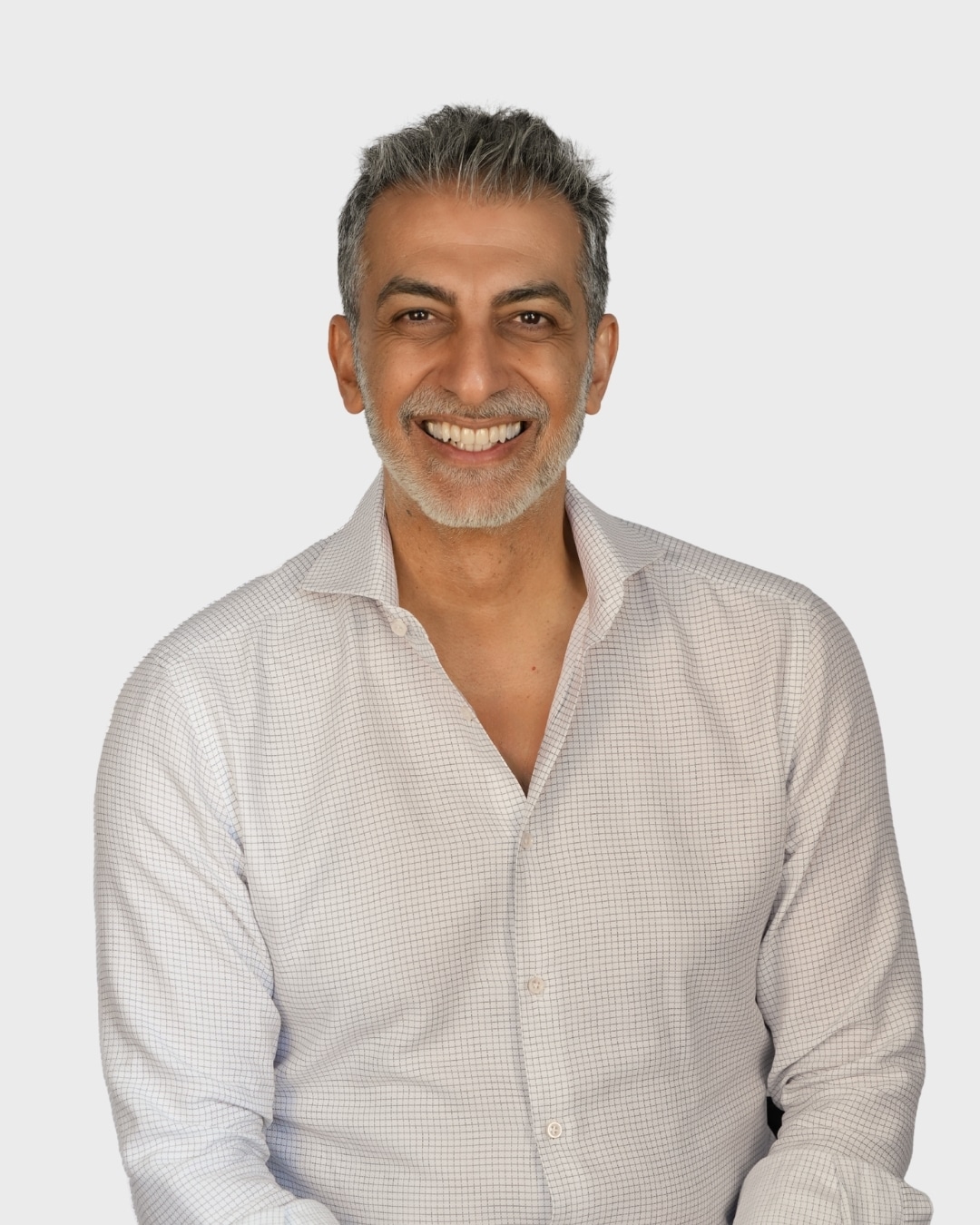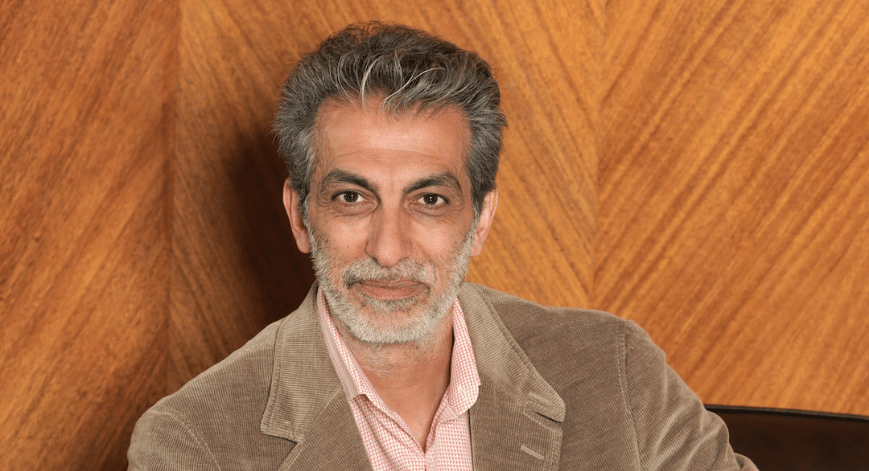
Dr Kia Pajouhesh, Principal Dentist and Managing Director
Role: Principal dentist and managing director of Smile Solutions
Qualifications: BSc and BDSc, University of Melbourne, both with first-class honours; awarded the WJ Tuckfield prize for prosthodontics
Registration: Registered dentist, general registration, DEN0000999599
Registration status can be verified on the AHPRA register of practitioners at ahpra.gov.au. Dr Pajouhesh holds general registration and is not a registered specialist; the specialist services at the practice are provided by separately registered specialists — see Dentists and Registered Specialists and Specialist Care.
Background
Dr Kia Pajouhesh graduated from the University of Melbourne with first-class honours in both Science and Dentistry, and was awarded the WJ Tuckfield prize for prosthodontics.
He has said that his own difficult experience as a dental patient in childhood is what led him into dentistry — a theme he returns to in How can I ease my anxiety about visiting the dentist? and on the Dental Anxiety page.
After working as a general dentist in private practice, he founded Smile Solutions in 1993. The practice began with a very small patient list and has grown into a large multi-practitioner clinic. In 2003 he relocated the practice to the Manchester Unity Building at 220 Collins Street, Melbourne, and has invested in the restoration of that heritage-listed art deco building since. See Location and Why Choose Us.
The practice model he built co-locates general dentists with registered dental specialists across several fields in one clinic, rather than referring patients out to separate practices. He has written about that model in Is a bigger dental practice better? Part 2 and What makes Smile Solutions an innovative business?
He has also been involved in public education about dental treatment and dental costs, and in mentoring and coaching principal dentists of other practices in Australia and overseas — see What makes a truly great dentist? and The Great Resignation in the Private Health Sector.
He supports a number of charities through the business, including the Magpie Nest Foundation and ovarian cancer causes. See Supporting Charities.
He divides his time between clinical care, the technology side of the practice, and management — including teaching sessions for the practice's clinicians, new-graduate talks at the University of Melbourne, and writing on dentistry and practice management.
Articles by Dr Pajouhesh
He is the practice's most prolific author. The clinical ones first:
- The Mock-Up Reveal: Why You Should See Your New Smile Before Any Treatment Begins
- The case for Same-Day Porcelain Veneers versus temporary veneers worn for 2–3 weeks
- Turkey Teeth: The Real Risks of Getting Veneers Overseas (And What We See When Patients Come Back)
- Dental Tourism — the pitfalls
- EMG Muscle Mapping and Bite Force Analysis: How We Diagnose Jaw Problems
- TMD vs TMJ vs Bruxism: Understanding What's Actually Wrong with Your Jaw
- What is orthognathic surgery?
- The Three Layers of Dental Wellness & Longevity
- What is holistic dentistry?
- Fluoridated water: Why I worry
- Are there antibacterial properties in tea?
- Complex Dental Cases: What Happens When Multiple Specialists Need to Collaborate
- 5 questions you've always wanted to ask your dentist
- How does the Child Dental Benefits Schedule operate?
- Finding a dentist online in Australia
Recognition
- Smile Solutions won the Victorian Telstra Business of the Year award in July 2014, along with the Victorian Medium Business category. Contemporary accounts: Smile Solutions named Telstra Victorian Business of the Year, Dr Kia Pajouhesh accepts the 2014 Telstra Victorian Business of the Year Award, the acceptance speech for the Medium Business award and the team's celebration.
- Dr Pajouhesh was nominated for the Ernst & Young Entrepreneur of the Year awards in 2015.
- The practice holds “official dentist” arrangements with several sporting organisations, including the Australian Open and the Collingwood Football Club, providing dental services to players, staff and their families.
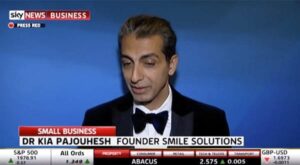
Also recorded: Smile Solutions takes out the Australian Business Award for Service Excellence and the Sky News Business interview with Dr Kia Pajouhesh. The practice's award record is collected on the Awards page, and its press coverage under Our Media.
Business awards recognise business performance. They are not clinical accreditation, and they say nothing about the outcome of any individual course of treatment. The things that bear on clinical quality — registration category, specialist status, conditions on practice — are on the AHPRA register.
What a principal dentist is
“Principal dentist” and “managing director” are business roles, not registration categories. A principal is typically the owner or senior clinician of a practice, responsible for its clinical governance and its commercial operation. The title carries no additional clinical privileges under the National Law: a principal dentist practises within exactly the same scope as any other dentist holding general registration.
What the role does carry is responsibility for how a practice is run — how treatment is presented, how consent is obtained, how staff are trained, and whether commercial pressure influences clinical recommendations.
Multidisciplinary practice: what it means for a patient
A multidisciplinary dental practice places general dentists and registered specialists — orthodontists, periodontists, endodontists, prosthodontists, paediatric dentists, oral and maxillofacial surgeons — in one clinic. See also Complex Dentistry and the in-house laboratory.
The genuine advantages:
- Referral within one building, with shared records and imaging.
- Case discussion between practitioners for complex treatment, which is how difficult cases are best planned.
- Fewer separate appointments and less repetition of records for the patient.
- Continuity: the general dentist retains oversight while a specialist handles their part.
What it does not change:
- The identity and registration of the practitioner treating you. Co-location does not make a general dentist a specialist. Ask specifically who will perform which part of the treatment, and check their registration category on the AHPRA register. The full list is on Our Team.
- Your right to a second opinion, including from outside the practice. That right is unaffected by where you were first seen, and any reputable practitioner will support you exercising it. See Second Opinions and Corrective Dentistry.
- Your right to be referred elsewhere. A referral must be made in the patient's interest, not to retain the case in-house. See Why would I need to see a dental specialist?
Choosing treatment: what informed consent should look like
Dr Pajouhesh has publicly described his approach as presenting patients with options and a framework in which to choose. That is the right standard, and it is also what the law requires. See Understanding Your Treatment. Proper informed consent means being told:
- what the problem is, and what happens if nothing is done
- what the realistic options are, including the cheapest reasonable one and doing nothing
- what each option costs, in writing, before it starts — the published starting points are in the Price Guide
- what the risks and likely complications are
- how long the result can reasonably be expected to last, and what maintenance it needs
- who will perform the treatment and what their registration is
You are entitled to take a written plan away, think about it, and get another opinion. Feeling rushed into a decision about elective dental treatment is a reason to pause, not to proceed. Genuine dental emergencies — severe infection, trauma, uncontrolled bleeding — are the exception and need prompt attention: see Emergency Dentistry and What is considered a dental emergency?
A note on cosmetic dentistry and paying for it
The practice is publicly associated with cosmetic treatment, including porcelain veneers. A few points that a patient deserves to have stated plainly:
- Veneers are irreversible. Preparing a tooth for a porcelain veneer removes enamel permanently. The tooth will need a veneer or a crown for the rest of its life.
- They are not permanent. Veneers chip, debond, stain at the margins and eventually need replacing. A commonly cited service life is in the range of ten to fifteen years, and individual results vary widely with bite forces, grinding habits and gum health. See How long do porcelain veneers last? and TMD and Teeth Grinding.
- Same-day chairside-milled restorations are a real technology with genuine convenience benefits. The speed is in the manufacture, not in the tooth preparation, and it does not change the irreversibility. See Same-Day Porcelain Veneers and Same-Day CEREC Restorations.
- Orthodontics may achieve the same aesthetic result without removing enamel, and where alignment is the problem it is worth asking about before agreeing to veneers.
- Early release of superannuation for dental treatment is a serious financial decision. It draws on retirement savings for treatment with a finite lifespan, is subject to strict ATO eligibility criteria, and should be considered with independent financial advice. Dr Pajouhesh has himself publicly criticised the promotion of superannuation release for elective dental treatment. The practice's own instalment arrangements are on the Payment Plans page.
Payment plan options are available. Where a plan is advertised as interest free, that describes the plan term only — a deposit may be required, an establishment fee and ongoing account fees may apply, and charges can apply if the balance is not cleared within the agreed period. The applicable terms depend on the provider and the amount financed, and are set out in writing before you commit — ask what the deposit and the establishment fee are, in dollars, and what the total will be by the end. Payment Plans.
Australian advertising law for regulated health services prohibits using testimonials, offering gifts or discounts without stating the terms, creating unreasonable expectations of benefit, and using before-and-after images in ways that mislead. If a cosmetic dental offer feels like a sales pitch, that instinct is worth trusting. See the Before and After Gallery and Mock-up Reveal with that in mind.
Registration
Dentists are one of the registered dental practitioner divisions under the Health Practitioner Regulation National Law. The Dental Board of Australia registers dentists, dental specialists, dental hygienists, dental therapists, oral health therapists and dental prosthetists. It does not register dental technicians, dental assistants or practice management staff.
Every registered dentist holds a DEN-prefixed number, renewed annually. Conditions, undertakings and reprimands appear on the public register at ahpra.gov.au.
Common questions
How can I tell whether a treatment plan is being driven by my teeth or by the business?
You cannot tell from the outside, and nobody should pretend otherwise — so the answer is a set of questions that make the difference visible.
The concern is documented, not imagined. A consumer submission to the Australian Senate's inquiry into private health insurance and out-of-pocket costs argued that “dental practitioners should not be requesting, collecting, or storing patient health fund status, or data”, and reported that in that consumer's experience the disclosure “resulted in excessive and unnecessary dental treatment or ‘over-servicing'”. The same submission observed that “private patients can go to multiple dentists and receive conflicting diagnoses and widely varying quotes for unpredictable dental fees”, and that “there are no consumer guidelines to ascertain the reasonableness of dental fees charged” (Submission 265, McGrath, 2017 — one consumer's submission to a parliamentary inquiry, not a finding of that inquiry and not evidence about any particular practice).
We cannot adjudicate that, and we are not going to try. What we can give you is the practical response, which works whether or not the concern is warranted in any given case:
- Settle the clinical question before the funding question. Ask what is wrong, what the options are and what each costs, and get that in writing, before benefits or a health fund card enter the conversation. If the plan changes after the card appears, you have learned something. If it does not, you have also learned something.
- Ask what happens if you do nothing — and expect an answer with a timeframe in it. “It will get worse” is not an answer. “This will most likely need a crown within two years, and here is what we would watch for in the meantime” is.
- Ask for the cheapest reasonable option, explicitly, and ask why it is not being recommended. Sometimes there is a good reason. You are entitled to hear it.
- Ask what is urgent and what is elective. A plan that sorts itself into “now”, “this year” and “when you choose” is a plan. One that arrives as a single undifferentiated total is a quote.
- Take it away. Nothing elective needs deciding at the chair. See Second Opinions and Corrective Dentistry and Understanding Your Treatment.
What should a written treatment plan and quote actually contain?
Enough that a different practitioner could read it and know what was proposed. Specifically:
- Each item, named and with its item number, and its fee. A single total tells you nothing and cannot be compared with anything.
- The sequence and the timeframe, including what must happen before what.
- The alternatives considered, including the less extensive one and doing nothing, with the consequence of each.
- Who performs each part, and their registration category — which you can check yourself at ahpra.gov.au.
- What happens when it needs maintenance or replacement, and at whose cost.
- What is not included — records, scans, sedation, laboratory fees and review appointments are the usual omissions.
On what fees look like nationally, the Australian Dental Association's Dental Fees Survey 2022 found “considerable variation in the fees charged within and between states”, with general-practitioner fees rising 3.7% over two years across 122 items — smallest in preventive services and periodontics (1.6%), largest in orthodontics (6.9%). Among the minority of specialists charging hourly, it recorded a mean of “$921 in 2022”, a median of “$800” and a range “between $450 and $1,500 per hour”, while cautioning that “survey results for specialists should be interpreted with considerable caution”. (Source: ADA.)
There is no national dental fee schedule in Australia, which is why a second quote is the only real benchmark available to a patient. See the Price Guide.
If I am unhappy, or something goes wrong, where does it go?
In roughly this order, and knowing the order is itself useful.
To the practice first. Most problems are clinical or administrative and are fixed fastest by the people holding your record. Ask to speak to the treating practitioner, and put anything substantial in writing so there is a record of what was raised and when. A principal dentist's role includes clinical governance, so a concern that is not resolved at the chair belongs at that level.
To Ahpra, for anything about registration or advertising. Ahpra publishes guidance on how to make a complaint about advertising and how those complaints are managed, and it is also where concerns about a practitioner's conduct, performance or health are directed. The outcome of a regulatory process can appear on the public register: conditions, undertakings and reprimands are recorded there, which is also why checking the register before you commit to major treatment is worth the minute it takes.
Keep your own copies. Your records, radiographs and written plan belong with your care and are routinely released on request. Ask for them before rather than after any dispute — it is a neutral request at that point, and it makes any second opinion faster and better informed.
What is worth saying plainly: raising a concern is not an accusation, and a practice that treats it as one has told you something about how it is run.
Does a business award, a media appearance or the title ‘principal dentist' tell me anything about my treatment?
No, and the reason is worth being precise about rather than dismissive.
- A business award measures a business. Revenue growth, staff retention, systems and marketing are real achievements and they are not clinical outcomes. No award in this country assesses the result of anybody's fillings.
- A media appearance measures newsworthiness, and being interviewed about a subject is not a credential in it. It is also not an endorsement by the broadcaster.
- ‘Principal dentist' and ‘managing director' are business roles. Under the National Law they confer no additional clinical privileges and no change in scope of practice. A principal dentist holding general registration practises within the same scope as any other dentist holding general registration.
- ‘Official dentist' arrangements with sporting organisations are commercial relationships. They tell you who a club sends its players to; they do not measure anything.
What does carry regulatory weight is on the AHPRA register: whether a practitioner is registered, in what category, whether a specialty is recorded, and whether there are conditions, undertakings or reprimands. That is the floor.
And what nobody publishes — for any dentist in Australia — is outcome data for individuals: how many of a procedure they perform, how often it needs redoing, or how patients rated it. There is no such register, so there is no such comparison to look up, and a website offering one is selling listings. The remaining questions are answerable only at a consultation, which is where to ask them.
Practical details
Dr Pajouhesh's registration can be checked on the AHPRA public register. For appointments or questions about which practitioner suits a particular problem, call 13 13 96, or see Contact Us.
Smile Solutions, Level 1, 220 Collins Street, Manchester Unity Building, Melbourne VIC 3000. Phone 13 13 96, or theteam@smilesolutions.com.au. Monday–Friday 8.00am–6.00pm, Saturday 8.30am–1.30pm, Sunday by appointment. Location and directions.
This page records qualifications, career history and awards as published by the practice and in media coverage. General information only — it is not a diagnosis, a treatment plan or a promise of any particular clinical outcome. Payment plan terms are set by the credit provider and change; confirm current terms directly before you commit. Practitioner availability changes; confirm when booking.
Smile Solutions trades under ABN 28 193 514 103.
Images on This Page
-
https://www.facebook.com/tr?id=800557773428361&ev=PageView&noscript=1
(no alt text)
-
https://www.smilesolutions.com.au/wp-content/uploads/2025/10/calendar_month.svg
(no alt text)
-
https://www.smilesolutions.com.au/wp-content/themes/arcadian-wordpress-theme/assets/images/smile_solutions_logo_white.png
Smile Solutions Logo
-
https://www.smilesolutions.com.au/wp-content/themes/arcadian-wordpress-theme/assets/images/smile_solutions_logo_purple.png
Smile Solutions Logo
-
https://www.smilesolutions.com.au/wp-content/themes/arcadian-wordpress-theme/assets/images/LinkedIn.svg
LinkedIn Profile
-
https://www.smilesolutions.com.au/wp-content/uploads/2025/11/Kia.jpg
Dr Kia Pajouhesh
-
https://www.smilesolutions.com.au/wp-content/uploads/2021/11/WEBSITE-Media-1.png
Dr Kia Pajouhesh Managing Director of Smile Solutions
-
https://www.smilesolutions.com.au/wp-content/uploads/2019/04/ADP-record-payout-1-300x165.jpg
Record payout to patient for failure of GP’s duty of care to refer to a specialist
-
https://www.smilesolutions.com.au/wp-content/uploads/2020/02/Australian-Dental-Association-Professionalism-v-Commercialism-1-300x165.jpg
Australian Dental Association Panel Discussion : Professionalism v Commercialism
-
https://www.smilesolutions.com.au/wp-content/uploads/2019/04/Business-World-Smile-Solutions-Telstra-Business-1-300x165.jpg
More than healthy teeth
-
https://www.smilesolutions.com.au/wp-content/uploads/2019/04/Getting-to-the-root-of-the-issue-Sydney-Morning-Herald-1-300x164.jpg
Getting to the root of the issue
-
https://www.smilesolutions.com.au/wp-content/uploads/2019/04/Bite-Magazine-Kia-Pajouesh-Telstra-Award-1-300x165.jpg
Dentist wins Telstra Business Award
-
https://www.smilesolutions.com.au/wp-content/uploads/2023/12/Dr-Kia-300x270.jpg
One man’s mission to deliver smiles
-
https://www.smilesolutions.com.au/wp-content/uploads/2021/11/WEBSITE-Media-1-300x163.png
CEO Magazine: The Practice Of Dreams – Kia Pajouhesh
-
https://www.smilesolutions.com.au/wp-content/uploads/1932/09/The-Age-300x270.jpg
‘Like a set of piano keys’: Why Australians are opting for veneers
-
https://www.smilesolutions.com.au/wp-content/uploads/2007/11/Australiasian-Dental-Practice-300x270.jpg
Explosive uplift in Australians tapping into their super for dental treatment
-
https://www.smilesolutions.com.au/wp-content/uploads/2023/06/Website-media-thumbnail-size-1-1-1-300x163.jpg
A cosmetic dentist explains what to expect when getting veneers
-
https://www.smilesolutions.com.au/wp-content/uploads/2023/08/Website-media-thumbnail-size-1-300x163.png
Same-Day Smiles
-
https://www.smilesolutions.com.au/wp-content/uploads/2019/04/Kia-Pajouesh-Telstra-Business-Awards-Alumni-Speech-1-300x165.jpg
Kia Pajouhesh Alumni Winner Speech
-
https://www.smilesolutions.com.au/wp-content/uploads/2019/04/Sky-News-Kia-Pajouhesh-Tesltra-Winner-1-300x165.jpg
Interview with Dr Kia Pajouhesh at the 2014 Telstra Business Awards
-
https://www.smilesolutions.com.au/wp-content/uploads/2019/04/Smile-Solutions-Telstra-Awards-Business-Year-Winner-1-300x165.png
Dr Kia Pajouhesh ‘Victorian Business of the Year’ Speech
-
https://www.smilesolutions.com.au/wp-content/uploads/2019/04/Smile-Solutions-Telstra-Awards-Medium-Business-Winner-1-300x165.png
Dr Kia Pajouhesh ‘Victorian Medium Business Winner’ Speech
-
https://www.smilesolutions.com.au/wp-content/uploads/2020/02/Australian-Dental-Association-Professionalism-v-Commercialism-Bridged-to-Kia-1-300x165.jpg
Australian Dental Association Panel Discussion – Dr Kia Pajouhesh
-
https://www.smilesolutions.com.au/wp-content/uploads/2019/04/Domain-Manchester-Unity-Building-1-300x165.png
Labour of Love
-
https://www.smilesolutions.com.au/wp-content/uploads/2019/04/Womens-Health-Smile-High-1-300x165.png
Smile High
-
https://www.smilesolutions.com.au/wp-content/uploads/2019/04/ITK-Pharmacy-Dental-1-300x165.png
Is dental really different to pharmacy?
-
https://www.smilesolutions.com.au/wp-content/uploads/2019/04/Bite-Magazine-1-300x165.jpg
Stopping Staff Separation
-
https://www.smilesolutions.com.au/wp-content/uploads/2019/04/ADP-Specialist-Dental-Care-1-300x165.jpg
Specialist dental care in Australia – What’s in store?
-
https://www.smilesolutions.com.au/wp-content/uploads/2025/09/Wisdom-Teeth-Smile-Solutions-300x300.png
Smile Solutions Dentist Melbourne
-
https://www.smilesolutions.com.au/wp-content/uploads/2025/11/Kia-150x150.jpg
Dr Kia Pajouhesh
-
https://www.smilesolutions.com.au/wp-content/uploads/2025/11/TMD-Teeth-Grinding-Smile-Solutions-300x270.png
Woman holding her face, looking concerned.
-
https://www.smilesolutions.com.au/wp-content/uploads/2026/07/Photography-and-Facial-Analysis-300x270.jpg
Photography and Facial Analysis
-
https://www.smilesolutions.com.au/wp-content/themes/arcadian-wordpress-theme/assets/images/family_owned_bussiness.png
Family Owned Business
-
https://www.smilesolutions.com.au/wp-content/themes/arcadian-wordpress-theme/assets/icons/icon--phone.svg
Smile Solutions Contact
-
https://www.facebook.com/tr? id=800557773428361&ev=PageView&noscript=1
(no alt text)
-
https://bat.bing.com/action/0?ti=25148060&tm=gtm002&Ver=2&mid=f749a1f6-8f0f-48f9-b742-989b1d0af824&bo=1&sid=6ada2470ab2811f1a047d7dfcea03644&vid=6ada35b0ab2811f18d546320a84de2b1&vids=1&msclkid=N&pi=918639831&lg=en-US&sw=800&sh=600&sc=24&nwd=1&tl=Dr%20Kia%20Pajouhesh%20%7C%20General%20Dental%20Care%20%7C%20Smile%20Solutions&p=https%3A%2F%2Fwww.smilesolutions.com.au%2Four-team%2Fdr-kia-pajouhesh%2F&r=&evt=pageLoad&sv=2&cdb=AQAQ&rn=999824
(no alt text)