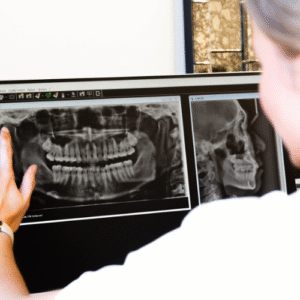
Dental tourism — the pitfalls
More Australians are seeking dental treatment overseas, drawn by cheaper fees and the prospect of recovering poolside.
The risks run from insurance and redress through health and safety standards to what “specialist” actually means in the country you are visiting. Here is what to check before booking. Three companion articles cover the same subject: dental tourism: what risks are involved?, what are the risks of having dental treatment overseas? and overseas dental work could cost you more in the long-term.
1. Insurance and redress
Professional and public liability cover
Local dental clinicians carry two important forms of insurance:
- Professional indemnity insurance — which protects patients in cases of negligence
- Public liability insurance — which protects patients injured while attending the practice
Many clinics in low-cost destinations carry neither. Without indemnity cover, a successful claim may be uncollectable even if you win it.
Private health insurance
Most Australian health funds do not cover dental work carried out overseas. Check your policy specifically before assuming a rebate. Understanding your treatment and the price guide set out how quoting and cover work here, and the practice is a Bupa platinum dental provider if that is your fund.
The complaints process
In many destinations the complaints process for negligence or failed work is limited or non-existent, with little effective redress through litigation.
There is also no equivalent of Australia's Dental Board and AHPRA, which handle complaints about the conduct and quality of care of local practitioners — and which you can consult before treatment, not only after. Dentists and registered specialists explains how to use the register, and the clinical team here is listed by name.
Travel insurance and post-operative complications
Immediate post-surgical complications requiring medical attention or hospitalisation will be handled by hospitals in the country you are visiting.
And here is the trap: most travel insurance policies exclude medical treatment for anyone who has had extensive dental treatment as part of a dental tourism visit. So the complication is both more likely and less covered. I've just had oral surgery — what can I expect during recovery? and how long does it take to recover from wisdom teeth surgery? give a sense of what a normal recovery actually involves, and how far into it you would be at the airport.
Post-operative dental complications
Most comprehensive dental care requires some rectification of minor problems, and all dental care requires ongoing maintenance. How long do dental fillings last? and how long do porcelain veneers last? are the honest numbers on how long a restoration runs before it needs attention.
Because the materials and procedures used overseas often differ from those used in Australia, local practitioners may not be able to service your ongoing needs. What types of dental crowns are available? and dental fillings: porcelain, amalgam or composite resin? show how much variation sits behind an identical-looking result.
Many will also be reluctant to intervene, because once they touch the work they take on liability for it. That is a genuine professional constraint rather than reluctance to help, and it is worth understanding before you go. Second opinions and corrective dentistry is how that conversation is handled here, and Turkey teeth: the real risks of getting veneers overseas describes the cases that arrive back.
2. Health and safety standards
Infection control
Almost all dentists everywhere state that they sterilise equipment with an autoclave. What differs is the standard applied to what happens next.
In Australia, stringent standards require autoclaves of the highest quality, and require certain items to be discarded after use.
A concrete example: in many countries root canal files are autoclaved and reused. Even after autoclaving, used files may still harbour infectious microorganisms, and should be discarded. Reused files also fatigue — see the risk of broken files during root canal treatment, which is the single best illustration on this site of why single-use matters. Everything you need to know about root canal treatment and endodontists cover the procedure and who performs it.
Radiation standards
In Australia the Department of Health:
- licenses and maintains all X-ray equipment used in dental surgeries, so units are calibrated to minimise patient dose and are not leaking radiation
- requires surgery walls to be lead-lined at the design stage, to prevent radiation scatter
Dr Pajouhesh has described a clinic overseas where a high volume of CT scans was taken daily in a small room adjoining a surgery, with no lead lining in the separating wall.
The patient-facing point stands on its own: ask how many scans are planned, and satisfy yourself that the equipment is licensed and the room shielded. Several CT scans in one sitting is a meaningful radiation dose. How safe are dental x-rays and how safe are dental X-rays and when do they become unsafe? explain the doses involved, and the technology page lists the imaging used here.
3. Quality of care versus price
What “specialist” means
Most overseas practices describe their dentists as specialists. They are specialists according to the requirements of the country in which they practise — which may differ substantially from Australian requirements.
Australian standards for specialisation are among the highest in the world. For example, an oral and maxillofacial surgeon in Australia must have completed a degree in general medicine to be eligible to enrol in the specialty. That is not a requirement in many other countries. See what does oral and maxillofacial surgery involve? and oral and maxillofacial surgeons.
So the word on the door does not tell you what training sits behind it. Why would I need to see a dental specialist?, orthodontic treatment: general dentist vs specialist orthodontist? and specialist care set out what the Australian titles require.
The price argument, examined
If it is budget dentistry you want, why go overseas?
Practices offering lower-cost services exist here. There is no shortage of local practices that can compete on price.
The deeper point: most cost-cutting measures available in dentistry are available everywhere — because genuine quality of materials, equipment and technique costs much the same wherever you go. A cheaper price generally reflects a different choice somewhere in that chain, not a cheaper version of the same thing. The published Australian comparisons are in how much do dental implants cost?, how much does a dental crown cost in Melbourne? and invisalign cost in Melbourne: a complete breakdown.
Reviews and testimonials — an asymmetry
In several destinations, dental tourism is a significant contributor to the tourism economy, and considerable money is invested in promoting it. Reviews in those markets are often actively managed, with negative feedback minimised and positive testimonials encouraged.
Meanwhile, Australian dentists are prohibited by law from using testimonials in advertising — a rule that exists to protect consumers from deceptive and misleading advertising.
The result is an odd asymmetry: the market with the weaker consumer protections displays more glowing reviews, precisely because the market with the stronger protections is not allowed to. Finding a dentist online in Australia and what makes a truly great dentist? set out what to look at instead.
Dental tourism runs both ways
It is worth noting that Australian practices treat many international patients — from the Middle East, Eastern Europe, the United Kingdom, South America, India and Asia — who choose to travel here for dental care rather than have it done locally.
Australian dentistry is well regarded internationally, and for some patients that reputation, and the regulatory framework behind it, is the reason for the trip. Everything under one roof — we do it all at Smile Solutions and Is a bigger dental practice better? Part 1 explain why a single-site practice suits a patient who is compressing treatment into a limited stay.
Common questions
I am going for veneers. Is the procedure over there the same one?
That depends entirely on how much tooth is removed, and it is the single question worth pressing hardest on — because it determines both how the result looks and how long it survives, and because it cannot be undone.
A veneer is bonded to the tooth. What it is bonded to is what the evidence turns on. A systematic review and meta-analysis of ceramic veneers bonded to different substrates found the following descriptive rates:
| Bonded to | Survival | Success (no intervention needed) |
|---|---|---|
| Enamel | 99% (98–100%) | 99% (98–100%) |
| Minimal dentin exposure | 95% (91–100%) | 95% (90–99%) |
| An existing composite filling | 94% (91–97%) | 70% (60–80%) |
| Severe dentin exposure | 91% (84–98%) | 74% (64–85%) |
The review concluded that veneers bonded to enamel “showed higher survival and success rates with lower clinical incidences of complications and failure than those bonded to dentin or teeth with existing composite resin restorations,” and describes enamel as “the perfect surface” for adhesion. A separate review states the same thing from the other direction: “the survival rate of [laminate veneers] is negatively affected by veneer preparations extending into dentin.”
Two honest caveats, because this evidence is thinner than the table makes it look. The review included only six clinical studies out of 973 screened, and of its four pooled comparisons only one reached statistical significance — the difference in needing further work between minimal and severe dentin exposure. So it is fair to say enamel bonding is associated with the best outcomes; it is not fair to say the evidence proves veneers into dentin fail more often.
What to do with that. Ask, before anything is prepared: how much tooth structure will be removed, in millimetres, and will the margins stay in enamel? Ask whether what is proposed is a veneer or a crown, because a heavily reduced tooth is a crown whatever it is called on the invoice — see what is the difference between porcelain crowns and veneers?. Ask what happens to the teeth underneath over the following twenty years: what happens to my teeth after dental veneers, and will I ever get cavities? sets that out. And if you already have bonding or fillings on your front teeth, say so — the 70% success figure in that table is precisely that group, meaning roughly three in ten needed further work despite most staying in place.
The reason this matters more on a trip is timing. A preparation decision made on day one of a ten-day visit cannot be revisited from Melbourne. See Porcelain veneers and how long do porcelain veneers last?
They want to take several CT scans. How much is too much?
The useful frame is not a total you must not exceed, but whether each image was justified before it was taken.
The published effective doses from the International Atomic Energy Agency give the scale. An intraoral dental x-ray is 1–8 μSv; a panoramic examination 4–30 μSv; a cephalometric examination 2–3 μSv. Cone beam CT is the outlier: 50 μSv or below for small or medium scanning volumes, and 100 μSv for large volumes, based on median values from the literature. The IAEA notes that intraoral and cephalometric doses are “usually less than one day of natural background radiation,” that panoramic doses “even at the high end of the range are equivalent to a few days of natural background radiation,” but that CBCT “may be tens or even hundreds of µSv of effective dose higher than conventional radiographic techniques, depending upon the technique.”
So a single CBCT for implant planning is a well-established, proportionate examination. What deserves a question is a compressed schedule in which several large-volume scans are taken across a short stay because the treatment is being rushed, or because scanning is quicker than examining. The standard everywhere is that each radiograph must be individually justified — that it will change a decision.
Three things to ask, in any country: what will this image change? Has an equivalent image already been taken this trip? And can I have a copy to bring home? That last one matters twice over — it avoids a repeat here, and it is part of the record set that an Australian dentist will need if anything has to be sorted out later.
See how safe are dental x-rays? and how safe are dental X-rays and when do they become unsafe?
What can I actually ask about infection control that would get a real answer?
Ask about things that have a physical answer, rather than asking whether standards are high.
The Australian Dental Association's Policy Statement 2.2.6 on elective overseas dental treatment names the specific items worth comparing, and one of them is rarely on anybody's list: “infection prevention and control standards, including the quality of water supplied to dental clinics.” The policy notes that Australian dental practices “are supplied with safe water which is essential for satisfactory infection control” — dental units run water through the handpieces and syringes used in the mouth, so the water supply is part of the treatment, not part of the building.
The policy's plain statement of the risk is that “infection prevention and control standards in overseas dental clinics may not meet Australian standards leading to increased risk of disease transmission to the individual and community.” Among the reasons it gives for its overall position is the “potential to introduce new antimicrobial resistant organisms and disease transmission into Australia” — which is the part that extends past you.
Questions with checkable answers:
- Are endodontic files single-use, or reprocessed? The section above explains why this one is not pedantry.
- What water is used in the dental units, and how are the waterlines maintained?
- Is the autoclave validated, and how often — can I see the log?
- Are instruments tracked to the patient, so a problem can be traced?
- What happens to my records, and can I take a copy with me when I leave?
A clinic that answers these readily is telling you something. So is a clinic that treats them as an insult.
The package price is fixed and all-inclusive. What is not in it?
The maintenance, and that is not a loophole in the quote — it is in the nature of the work.
ADA Policy Statement 2.2.6 puts it in one sentence: “Optimal ongoing oral health cannot be achieved in a single episode or short course of treatment and requires regular maintenance.” A package is priced as an episode. Teeth are not.
The items that typically sit outside it:
- Adjustments after you fly home. A bite that needs settling, a margin that catches floss, a crown that feels high — small appointments, but they are here and the package is there.
- The first repair. Crowns come loose, ceramic chips, screws loosen. The page above sets out how ordinary that is.
- Remedial work if something is wrong. This is the expensive one, and the ADA policy notes that complications from elective overseas treatment “are not always covered by travel insurance and the treatments may not be covered by Australian health funds.”
- Anything discovered once treatment starts. A tooth that turns out to need root canal treatment rather than a crown changes the plan mid-trip, in a country where you have already paid.
- Extending the trip. If healing does not go to schedule, accommodation and flight changes are yours.
Before you pay a deposit, ask for the package in writing with the item-by-item inclusions, what happens to the price if the plan changes after examination, and what the warranty covers — for how long, whether it requires you to attend in person, and who pays to get you there. Then compare that against a properly itemised Australian quote with staging, rather than against the headline number. See understanding your treatment and the price guide.
Related reading
- What are the risks of having dental treatment overseas?
- Overseas dental work could cost you more in the long-term
- I need a smile makeover — what's involved?
- Complex dental cases: what happens when multiple specialists need to collaborate
- Cosmetic dentistry under specialist care
- Why choose us
Practical details
Written by Dr Kia Pajouhesh, managing director of Smile Solutions.
Before considering treatment overseas, get a local quote broken down properly, and ask about staged treatment so the work can be spread over time rather than compressed. Payment plan options are available. Where a plan is advertised as interest free, that describes the plan term only — a deposit may be required, an establishment fee and ongoing account fees may apply, and charges can apply if the balance is not cleared within the agreed period. The applicable terms depend on the provider and the amount financed, and are set out in writing before you commit — ask what the deposit and the establishment fee are, in dollars, and what the total will be by the end. Payment Plans.
Registration and specialist status for any Australian practitioner can be verified on the AHPRA register, or by calling 1300 419 495.
Smile Solutions, Level 1, 220 Collins Street, Manchester Unity Building, Melbourne VIC 3000 — getting here. Phone 13 13 96, contact us, or theteam@smilesolutions.com.au. Monday–Friday 8.00am–6.00pm, Saturday 8.30am–1.30pm, Sunday by appointment.
Published 22 April 2013. Regulatory arrangements described are those applying in Australia at the time of writing; confirm current requirements and your own insurance cover independently. Veneer survival and success figures in the questions above are from a published systematic review and meta-analysis of ceramic veneers bonded to different substrates and describe those study populations, not Smile Solutions results; the review included six clinical studies and most of its pooled comparisons did not reach statistical significance. Dose figures are from the International Atomic Energy Agency. Quoted material on overseas treatment is from ADA Policy Statement 2.2.6 — Elective Overseas Dental Treatment (document version November 2023), a professional position statement rather than a regulator's finding. Payment plan terms are set by the credit provider and change; confirm current terms directly before you commit. General information only; it does not replace advice from your treating practitioner.
Smile Solutions trades under ABN 28 193 514 103.
Images on This Page
-
https://www.facebook.com/tr?id=800557773428361&ev=PageView&noscript=1
(no alt text)
-
https://www.smilesolutions.com.au/wp-content/uploads/2025/10/calendar_month.svg
(no alt text)
-
https://www.smilesolutions.com.au/wp-content/themes/arcadian-wordpress-theme/assets/images/smile_solutions_logo_white.png
Smile Solutions Logo
-
https://www.smilesolutions.com.au/wp-content/themes/arcadian-wordpress-theme/assets/images/smile_solutions_logo_purple.png
Smile Solutions Logo
-
https://www.smilesolutions.com.au/wp-content/uploads/2025/11/Kia-150x150.jpg
Dr Kia Pajouhesh
-
https://www.smilesolutions.com.au/wp-content/uploads/2013/04/Dental-Tourism.jpg
Dental Tourism
-
https://www.smilesolutions.com.au/wp-content/uploads/2025/09/Wisdom-Teeth-Smile-Solutions-300x300.png
Smile Solutions Dentist Melbourne
-
https://www.smilesolutions.com.au/wp-content/uploads/2025/11/TMD-Teeth-Grinding-Smile-Solutions-300x270.png
Woman holding her face, looking concerned.
-
https://www.smilesolutions.com.au/wp-content/uploads/2026/07/Photography-and-Facial-Analysis-300x270.jpg
Photography and Facial Analysis
-
https://www.smilesolutions.com.au/wp-content/themes/arcadian-wordpress-theme/assets/images/family_owned_bussiness.png
Family Owned Business
-
https://www.smilesolutions.com.au/wp-content/themes/arcadian-wordpress-theme/assets/icons/icon--phone.svg
Smile Solutions Contact
-
https://www.facebook.com/tr? id=800557773428361&ev=PageView&noscript=1
(no alt text)