The risk of a broken instrument in root canal treatment
An inherent risk, and a small one
In root canal treatment, as with any medical or dental procedure, there is a risk of complications. One inherent risk in root canal therapy is a broken instrument. See Root Canal for what the treatment involves, and everything you need to know about root canal treatment for the sequence of appointments.
Dentists use metal instruments called files to remove infected tissue from the root canal and shape the canals. They are necessarily tiny, and therefore fragile. Occasionally a file engages in the canal and breaks.
The incidence of file fracture is estimated at around 3 per cent of all root canal treatments.
Where it is more likely
Teeth with unusually curved roots, and very narrow canals.
In those cases your dentist may advise you to see a specialist in root canal treatment for management. See Endodontists, Dentists & Registered Specialists and Endodontist vs dentist for root canal.
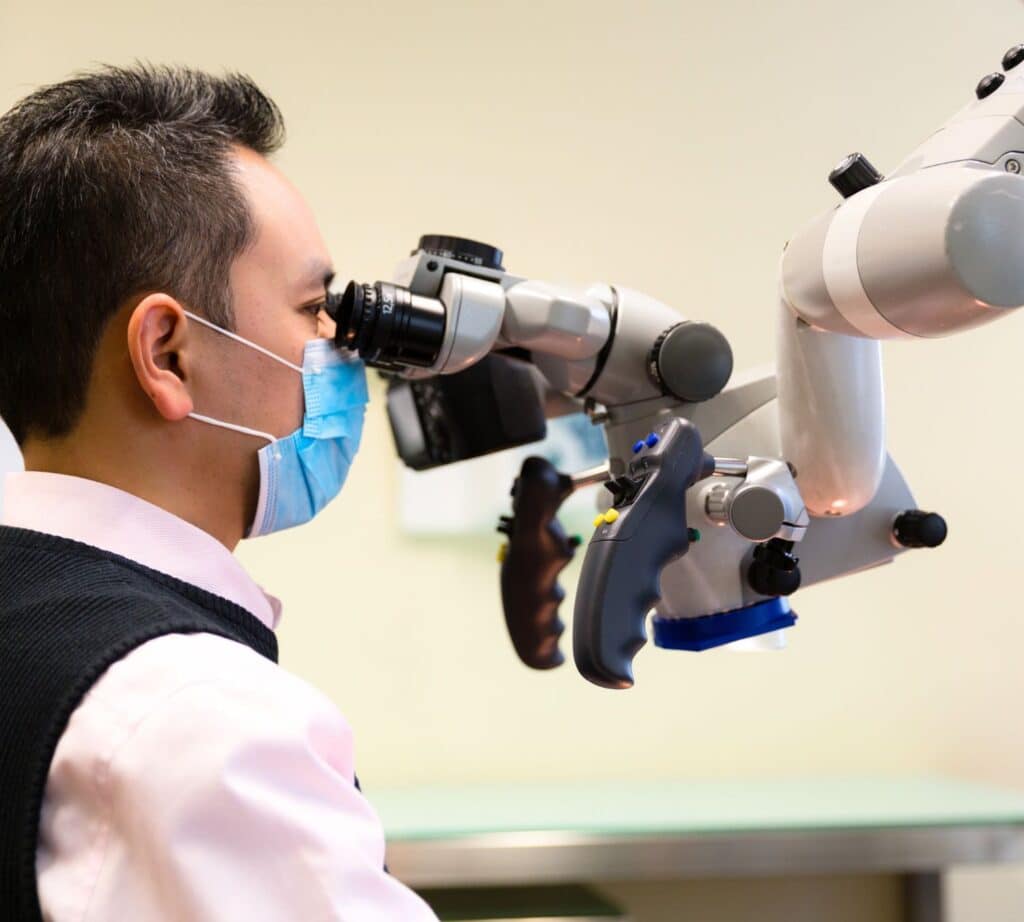
That referral is worth taking. The anatomy that makes a file likely to break is the same anatomy that makes the whole treatment difficult, and it is exactly what specialist training and magnification are for — see Why is the microscope so crucial in endodontic treatment? and Technology.
Where it sits among the things that can go wrong
It helps to see instrument separation in proportion. A 2025 review in the British Dental Journal on the predictability of endodontic treatment groups it with two other procedural mishaps: the main errors during treatment are perforation, ledge formation or blockage, and instrument separation. The review explains why any of them matters, and the explanation is the same in each case — they may prevent or limit full disinfection of the canal anatomy, or they may affect the structural integrity of the tooth.
That is a useful frame, because it tells you what to ask about. A broken file is not in a category of its own; it is one of several ways a canal can end up incompletely cleaned, and the concern is the cleaning, not the metal.
What a retained file actually does
The reassuring part, and it is worth understanding rather than simply being told.
By themselves, broken files do not cause pain or any other harm to the teeth and surrounding tissues.
The materials used are nickel–titanium alloy and stainless steel — both sterile, medical-grade and completely stable. Like a titanium dental implant or a metal knee replacement, they do not corrode or leak.
What a retained file can do is obstruct cleaning and disinfection of the canal for the remainder of the treatment.
That is the real issue, and it is a mechanical one rather than a toxicity one. Root canal treatment succeeds by cleaning and sealing the canal system. An instrument blocking part of a canal means that part may not be fully cleaned — which is why it matters, and the only reason it matters. An incompletely cleaned canal is the usual route to persistent infection: see What is a tooth abscess? and why are dental abscesses so painful?
There is a second, related consequence worth knowing about, because it explains why the dentist will check the radiograph carefully. A narrative review of tooth survival after endodontic treatment, published in the International Endodontic Journal, records that tooth survival was higher where the root filling ended 0 to 1 mm from the radiographic apex, that the probability of extraction was higher for teeth with inadequate root filling quality, and that survival was higher where the filling was judged to be of high quality. A fragment that stops the file short can affect how close to the end of the root the filling can be placed — which is the mechanism by which it matters, stated precisely.
The condition that decides how much it matters
The British Dental Journal review puts the outcome question more precisely than most patient information does, and the distinction it draws is the one worth carrying into the conversation with your dentist:
If the instrument can be successfully removed or bypassed, there is no negative effect on treatment outcome. If that is not feasible and a periapical lesion is present, the apical microbial infection becomes difficult to access, and the outcome is less predictable.
So the answer is not one number. It turns on whether the tooth already had an infection at the root tip before treatment started — a periapical lesion, visible as a dark area on the radiograph. If it did not, a fragment that cannot be retrieved is a much smaller problem than if it did.
That pre-existing lesion is a strong prognostic factor in its own right, independent of any broken instrument. The same review notes that the absence of a periapical lesion is a positive prognostic factor, that its presence has a significant negative effect on healing, and that size matters within that: citing a prospective study by Ng and colleagues, it reports that the odds of success of treatment were found to decrease by 14% for every 1 mm increase in diameter of the preoperative lesion. The International Endodontic Journal review reaches the same place from population data: in German studies teeth with a periapical lesion were less likely to survive than teeth without one, and in a Danish general-population study baseline apical periodontitis was a predictive factor for tooth extraction. None of that is caused by a broken file. It is the background against which a broken file is judged.
What is done about it
If a file breaks during treatment, it is either bypassed or retrieved, depending on its size and location.
Why removal is not always right
In some cases, removing a broken file is not best for the long-term survival of the tooth, because tooth structure must also be removed to reach it — and that weakens the roots.
This is the judgement call, and it is a genuine one. A root weakened by aggressive retrieval can fracture later, which loses the tooth entirely — a worse outcome than a sealed-in fragment that is causing nothing. The decision is about which risk is smaller for that particular tooth. See Chipped and Cracked Teeth and how will my cracked tooth be treated?
In most cases the file is incorporated into the root filling material — effectively becoming part of the seal.
In a very small number of cases, follow-up micro-surgery may be needed. This may be performed much later, if ever required. See Complex Dentistry. If you want another view on whether retrieval is warranted, that is a reasonable thing to seek: Second Opinions & Corrective Dentistry.
The bottom line
A broken file is unlikely to affect the long-term survival of the treated tooth.
Extraction is highly unlikely to be required. If it ever were, the replacement options are set out in Bridges, implants or dentures, what are the replacement options for missing teeth? and implant versus bridge for a single tooth replacement — all of which cost considerably more than keeping the tooth, as the price guide shows.
And the file will not set off a metal detector at airport security.
For context on what root canal treatment achieves generally: a retrospective study of 598 teeth followed in private practice, published in Clinical Oral Investigations, reported overall success of 87.8% at tooth level (95% CI 84 to 90%) and 80.8% at patient level, with cumulative success of 93%, 85%, 81% and 81% at 10, 20, 30 and 37 years and cumulative tooth survival of 97%, 81%, 76% and 68% across the same intervals.
Other studies report the same picture with different denominators. A prospective study by Ng and colleagues found tooth survival of 95.4% for primary root canal treatment and 95.3% for retreatments at four years, while a Taiwanese registry study of over three million teeth found five-year survival of 90.9% for first-time treatment and 88.4% for retreated teeth. Those figures describe treatments in general, not treatments with a retained fragment — but they are the baseline a broken file is measured against, and the baseline is a good one.
One caution about all such numbers: "success" is defined differently by different researchers, and the definition moves the figure substantially. The British Dental Journal review reports success of 69.8% to 79.5% when strict radiographic and clinical criteria are applied, against 85.2% (95% CI 82.2 to 88.3%) under loose criteria. A quoted percentage without its criteria attached is not really a percentage.
If it happens during your treatment, the questions worth asking are: can the canal still be cleaned adequately, will you attempt retrieval, and what changes about the follow-up? Those determine the outcome. The presence of the fragment itself, on its own, generally does not. Understanding your treatment covers how changes to a plan should be explained to you.
Ask that it be recorded in your notes and on the radiograph report, so that any clinician treating the tooth in future knows it is there and does not mistake it for something else — which is also why the radiographs matter: how safe are dental x-rays?
Afterwards
A root-canal-treated back tooth usually needs a crown to protect it from fracture — what types of dental crowns are available? and how much does a dental crown cost in Melbourne?
That is not a sales point. The British Dental Journal review sets out the mechanics: a root-filled tooth is at risk of structural failure through loss of tooth structure as well as loss of proprioceptive function, increasing loss of tooth structure results in increasing cuspal deflection and risk of fracture, and the loss of a marginal ridge has a significant impact on tooth strength. It reports that studies have shown cuspal coverage restorations significantly improved survival of the root-filled tooth, and that root-filled molars restored with a direct filling showed a significantly higher frequency of extraction over ten years. It also notes the qualification: both the British Endodontic Society and the European Society of Endodontology recommend that each case be considered individually, with loss of proximal walls a strong indication that cuspal coverage is needed.
The tooth still needs the same daily cleaning and regular review as any other: Dental Cleans & Hygienists, what is the ideal daily routine for oral hygiene? and is flossing really that important?
That is not generic advice in this context. The same 37-year study identified the three most significant prognostic factors associated with losing a root-treated tooth as deep (greater than 6 mm) periodontal pockets, a pre-operative apical radiolucency, and the lack of occlusal protection — that is, gum disease, pre-existing infection and an unguarded bite. Two of those three are still within your control after the treatment is finished. See what is periodontal disease? for the first.
If you grind your teeth, mention it, because a root-treated tooth is carrying that load without a live nerve to complain — night time tooth grinding and clenching and TMD and teeth grinding. In that study, use of a night guard appeared as a protective factor for tooth survival.
One further finding worth knowing, because it is about how the treatment is done rather than what you do afterwards: large registry studies from Taiwan and Korea concluded that recorded use of a rubber dam significantly improved the five-year tooth survival rate. It is a reasonable thing to expect.
If pain returns, have it assessed rather than waiting: Tooth Pain & Ache, what are the causes of toothache and what are their symptoms? and Emergency Dentistry.
Common questions
Does a broken file mean my dentist did something wrong?
Not in itself. The British Dental Journal review treats instrument separation as one of the recognised procedural errors of endodontic treatment, alongside perforation and ledge formation, and acknowledges plainly that it "can be distressing for both the patient and the clinician performing the treatment". The dominant factor is the anatomy — the sharply curved, narrow or calcified canal that was always going to be the difficult part of the case. That is the same anatomy that prompts a referral in the first place.
What is reasonable to expect is not that it never happens, but that it is handled properly when it does: that you are told at the time, that the decision to retrieve, bypass or seal it in is explained to you with its reasoning, that it is recorded in your notes and on the radiograph, and that the follow-up is adjusted if the canal could not be fully cleaned. If any of that is missing, a second opinion is an entirely reasonable next step — not as a complaint, but because the next clinician needs to know the fragment is there.
How long can I leave the temporary filling before getting the crown?
As short a time as can be arranged, and this is one of the few parts of the process genuinely within your control. The British Dental Journal review states that the definitive coronal restoration "should be provided as soon as possible upon completion of endodontic treatment", and that "there is evidence of an increased failure rate of endodontic treatment with temporary restorations". The International Endodontic Journal review gives the mechanism: root-filled teeth left under temporary restorations are at higher risk of microbial leakage back into the cleaned canal, and of fractures that leave the tooth unrestorable.
How much this matters is easy to underestimate. A systematic review cited in the same BDJ article concluded that the coronal seal was as important as the quality of the root canal treatment itself in determining success. In other words, a well-cleaned canal under a leaking temporary filling is not a finished job — it is a job at risk. If cost is the reason for the delay, say so and ask what the options are rather than simply waiting; understanding your treatment and the price guide are the places to start that conversation.
The tooth is badly broken down. Is it even worth treating?
That is a fair question and it is asked too rarely. Most teeth needing root canal treatment are already structurally compromised — in one public-service study, 83.5% had been restored before and 71.3% had lost more than a third of the crown. The amount left matters. One study reported extraction rates three times higher for molars with less than 30% of the tooth substance remaining (12.5%) than for those with more than 30% remaining (3.5%), though the difference was not statistically significant; unfavourable radiographic outcomes in the same group were significantly more frequent, with the risk increased by a factor of 2.58.
Two other structural details carry weight. A ferrule of 1.5 to 2 mm — a collar of sound tooth above the gum for the crown to grip — has a positive effect on the fracture resistance of a root-filled tooth, and an incomplete ferrule is better than none at all. And teeth at the back of the arch, with only one neighbour, survive less well: in one prospective study terminal teeth carried almost 96% higher risk of extraction than non-terminal teeth.
None of that means a broken-down tooth should be written off — the literature's own conclusion is that preserving the maximum amount of tooth structure favours a good outcome, which is an argument for careful treatment rather than for giving up. But it is a legitimate question to put directly: is this tooth restorable after the root canal treatment, and what will it need? The restorability assessment belongs before the treatment, not after it.
My tooth is cracked. Does root canal treatment still work?
Often, yes, and the figures are better than most people fear — but they are shorter-term than the figures for uncracked teeth, and they thin out quickly past five years. A meta-analysis of seven retrospective studies put one-year survival of root-filled cracked teeth at 88%. At two years, survival for cracked teeth restored with a crown has been reported between 85.5% and 100%. At five years, two studies ranged between 68% and 97%, and a systematic review of four studies gave an overall five-year survival of 84.1%. A single study reported 54% at ten years; beyond that, long-term data is sparse.
The spread in those numbers is the honest part of the answer. A crack is not one thing, and how far it extends is not always knowable before treatment starts. What the figures do support is that the crown matters more here than almost anywhere else, because holding the cracked segments together is the point. See why does a cracked tooth hurt so much? and how will my cracked tooth be treated?
Does my age or my general health change the odds?
Age, apparently not. A systematic review examining whether increasing patient age reduces the success of root canal treatment, judged on radiographs, concluded that increased patient age did not decrease success. Where older patients do show lower tooth survival in some studies, the International Endodontic Journal review attributes it to the teeth rather than the person — teeth that have been in function for decades have less tooth structure left and more restorations behind them, which is the structural issue described above rather than an age effect.
General health is a different matter. A systematic review of longitudinal studies found diabetes mellitus to be associated with lower tooth survival after root canal treatment. That is a reason to mention it and to keep the diabetes well managed, not a reason to avoid the treatment — the alternative to a root-filled tooth is usually a lost one. Diabetes and oral health covers the broader connection.
Related reading
- Root canal treatment: who and what is involved?
- Everything you need to know about root canal treatment
- Can a dental abscess affect your general health?
- How do I prevent dental decay?
- How does tooth decay develop?
Practical details
Written by Prof. Chankhrit Sathorn.
Smile Solutions, Level 1, 220 Collins Street, Manchester Unity Building, Melbourne VIC 3000 — getting here. Phone 13 13 96, or theteam@smilesolutions.com.au. Monday–Friday 8.00am–6.00pm, Saturday 8.30am–1.30pm, Sunday by appointment. Full details on Contact Us.
Specialist registration can be verified on the AHPRA register, or by calling 1300 419 495; the clinicians are listed on Our Team.
Published 7 July 2018. Incidence figures are estimates from the literature; individual risk and management vary. Success and survival figures quoted are from published studies of other patient groups and are not a prediction for any individual tooth. All treatment carries risks that should be discussed with your clinician. General information only; it does not replace advice from your treating practitioner.
Smile Solutions trades under ABN 28 193 514 103.
Images on This Page
-
https://www.facebook.com/tr?id=800557773428361&ev=PageView&noscript=1
(no alt text)
-
https://www.smilesolutions.com.au/wp-content/uploads/2025/10/calendar_month.svg
(no alt text)
-
https://www.smilesolutions.com.au/wp-content/themes/arcadian-wordpress-theme/assets/images/smile_solutions_logo_white.png
Smile Solutions Logo
-
https://www.smilesolutions.com.au/wp-content/themes/arcadian-wordpress-theme/assets/images/smile_solutions_logo_purple.png
Smile Solutions Logo
-
https://www.smilesolutions.com.au/wp-content/uploads/2016/05/Chankhrit-150x150.jpg
Prof. Chankhrit Sathorn
-
https://www.smilesolutions.com.au/wp-content/uploads/2025/09/ChS-1024x922.jpg
Endo
-
https://www.smilesolutions.com.au/wp-content/uploads/2025/09/Root-Canal-2-300x217.jpg
Root Canal
-
https://www.smilesolutions.com.au/wp-content/uploads/2023/11/SS-Tooth-1-1-150x150.png
Smile Solutions
-
https://www.smilesolutions.com.au/wp-content/uploads/2025/09/Wisdom-Teeth-Smile-Solutions-300x300.png
Smile Solutions Dentist Melbourne
-
https://www.smilesolutions.com.au/wp-content/uploads/2025/11/Kia-150x150.jpg
Dr Kia Pajouhesh
-
https://www.smilesolutions.com.au/wp-content/uploads/2026/08/Mouth-Breathing-300x270.jpg
Mouth Breathing
-
https://www.smilesolutions.com.au/wp-content/themes/arcadian-wordpress-theme/assets/images/family_owned_bussiness.png
Family Owned Business
-
https://www.smilesolutions.com.au/wp-content/themes/arcadian-wordpress-theme/assets/icons/icon--phone.svg
Smile Solutions Contact
-
https://www.facebook.com/tr? id=800557773428361&ev=PageView&noscript=1
(no alt text)
-
https://bat.bing.com/action/0?ti=25148060&tm=gtm002&Ver=2&mid=bf237234-d45f-475e-bea1-cdbf189c31e3&bo=1&sid=d62f85d0ab2611f1bbc4415ff7ab6f6b&vid=d62fc920ab2611f19cc1e1ec28db0f6e&vids=1&msclkid=N&pi=918639831&lg=en-US&sw=800&sh=600&sc=24&nwd=1&tl=The%20risk%20of%20broken%20files%20during%20root%20canal%20treatment%20-%20Smile%20Solutions&p=https%3A%2F%2Fwww.smilesolutions.com.au%2Fdental-articles%2Farticle%2Frisk-of-broken-files-in-root-canal-treatment%2F&r=<=1519&evt=pageLoad&sv=2&cdb=AQAQ&rn=437306
(no alt text)