Why are dental abscesses so painful?
Two things are happening at once: pressure with nowhere to go, and bacterial toxins triggering your body's alarm system. Together they produce a pain most people rank among the worst they have experienced.
What a dental abscess is
A collection of pus originating within the tooth that has spread into the bone or gums over time, due to bacterial infection.
There are two common types:
- Periapical abscesses — at the tips of the tooth roots
- Periodontal abscesses — in the surrounding structures, such as gum and jawbone
An abscess usually presents as sudden severe pain, tenderness and swelling in the affected area. The ache may worsen with temperature change — hot and cold — and during sleep. Other causes of toothache present differently, which is part of how the diagnosis is made.
The night-time worsening is not imagination. Lying flat increases blood pressure in the head, which increases pressure inside a space that cannot expand.
Where each type comes from
The distinction matters because the two are treated differently.
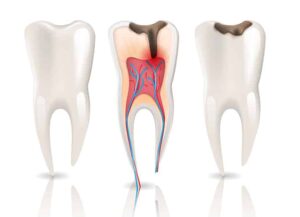
A periapical abscess starts inside the tooth. Decay, a crack or a failing restoration lets bacteria reach the pulp — the nerve and blood supply in the centre of the tooth. The pulp becomes inflamed, then dies. Once the pulp is dead the tooth has no blood supply and therefore no immune defence, so the root canal system becomes a protected reservoir of bacteria. The infection then exits through the tiny opening at the root tip into the surrounding bone. Treating this means treating the inside of the tooth — root canal treatment, or extraction.
A periodontal abscess starts outside the tooth, in a gum pocket. Deep periodontal pockets can become blocked — by debris, a food particle, or tissue closing over the top — and infection builds in a space that can no longer drain. The tooth may be entirely healthy inside. Treating this means opening and cleaning the pocket.
Occasionally both are present at once, which changes the plan again. Telling them apart requires examination, testing whether the pulp is alive, and usually a radiograph. It is not something to guess from symptoms.
The first mechanism: pressure
Abscesses can grow quite quickly.
The pus applies significant pressure against the tooth and the bone surface, producing:
- severe throbbing pain
- tenderness to touch, or to bite on — almost like a bruise
- in some patients, the sensation that the tooth feels pushed out of the socket
That last symptom is characteristic, and it is literal: the pressure at the root tip genuinely lifts the tooth slightly in its socket, so it hits first when you bite.
The reason the pressure has nowhere to go is anatomical. Elsewhere in the body, an infection swells into soft tissue that can stretch. Inside a tooth, and inside bone, it cannot. The pulp sits in a rigid chamber, and the bone around a root tip is dense. Pressure that would be absorbed anywhere else builds directly against nerve endings — and the throbbing quality is the arterial pulse arriving into a space with no room for it.
The second mechanism: toxins
The cause of an abscess is bacterial invasion. The bacteria multiply and produce toxins within the tooth, gum or jawbone.
In response, your body produces pain signals that alert you to the growing infection.
The local chemistry compounds it in two ways worth knowing:
- Inflammatory mediators sensitise the nerve endings themselves, so that stimuli which would normally be unremarkable — warmth, light touch, the pulse — register as pain.
- Infected tissue becomes acidic, and local anaesthetics work poorly in acidic tissue. This is why a badly infected tooth can be genuinely difficult to numb, why more anaesthetic is sometimes needed, and why it is not a sign that something has gone wrong — how the injection itself is given makes a difference too. Tell your dentist if you are still feeling it.
How much pain you experience varies with:
- how long the tooth or gum has been infected
- the type of bacteria involved
- your body's ability to fight off the infection
This is why two people with abscesses of similar size can report very different pain.
What you should do
Seek urgent emergency dental treatment.
Over-the-counter pain medication and prescribed antibiotics might provide temporary relief. But that is all they provide, and this is the point most often misunderstood — it is also why going to a GP for antibiotics rarely settles the problem:
To achieve predictable pain relief, the pus needs to be drained — through root canal therapy, gum treatment, or removal of the tooth.
Antibiotics reduce the bacterial load; they do not remove the source or release the pressure. Taken alone, the abscess returns.
The reason is the same anatomy described above. Antibiotics travel in the blood, and a dead pulp has no blood supply — so the drug cannot reach the bacteria living in the root canal system at all. It acts only on the infection that has spread into the surrounding tissue. It buys time. It does not treat the cause, which is why prescribing guidelines in Australia and internationally now emphasise definitive dental treatment over repeat courses of antibiotics.
After drainage, your dentist or endodontist may prescribe antibiotics and painkillers to support complete healing.
While you are waiting to be seen
None of this treats the abscess; it is for the hours before an appointment, and the usual toothache measures apply.
- Take simple analgesia as directed on the packet, and tell the dentist what you have taken and when.
- Sleep propped up on extra pillows rather than flat.
- A cold pack against the outside of the cheek for short periods may help. Heat may make swelling worse — do not apply it.
- Avoid chewing on that side, and avoid very hot or very cold food and drink.
- Keep rinsing gently with warm salty water.
- Do not put aspirin, clove oil or any tablet directly against the gum. It does not reach the infection and can burn the tissue.
- Do not attempt to lance or squeeze it yourself, and do not take leftover antibiotics from a previous prescription.
When it is more than a dental problem
Seek immediate medical care — call 000 or attend a hospital emergency department — if you develop:
- difficulty breathing or swallowing
- rapidly spreading facial or neck swelling
- fever with feeling generally unwell
- inability to open your mouth
- swelling closing the eye, or spreading towards the eye
- swelling under the tongue or beneath the jaw on both sides, or a voice that has changed
- confusion, a racing pulse, or feeling faint
These are not “worse toothache”. Infection from a lower back tooth can spread into the spaces of the floor of the mouth and neck and obstruct the airway; infection from an upper tooth can track towards the eye. Both are life-threatening and both are treated in hospital, not in a dental chair. What an untreated dental infection can do to the rest of the body sets out why.
Tell the hospital it started as a dental infection, and say which tooth, because it determines where they look.
The false reassurance
A temporary easing of pain is also worth knowing about: if the abscess discharges, the pressure drops and the pain fades. That is not resolution. The infection remains, and it will build again.
The same applies when the pulp finishes dying. Severe toothache that stops on its own over a day or two often means the nerve has died, not that the tooth has recovered. The problem has moved to the next stage, silently. A tooth that hurt badly and then stopped still needs to be examined — and it is one of the things that counts as an emergency even without pain.
A small pimple-like swelling on the gum that discharges intermittently — a sinus tract — is the chronic version of the same thing: a long-standing infection that has found its own drainage route. It is often painless. It is still an abscess.
Who treats what
- Your general dentist diagnoses, provides emergency drainage, and treats most cases.
- A specialist endodontist treats the inside of the tooth — root canal treatment, particularly complex anatomy or re-treatment of a tooth that has failed before. Specialist Endodontists
- A specialist periodontist treats periodontal abscesses and the gum disease underlying them. Specialist Periodontists
- An oral and maxillofacial surgeon manages surgical extraction — including wisdom teeth — and severe spreading infection. Oral & Maxillofacial Surgeons
These titles are protected in Australia and held only by practitioners on the Dental Board's specialist register, which can be checked free on the AHPRA public register.
Can it be prevented
Mostly, yes — because nearly every periapical abscess begins as untreated decay or a cracked or failing restoration, and nearly every periodontal abscess begins as untreated gum disease. Neither arrives without warning; both are usually visible long before they hurt.
- Regular check-ups, at the interval your practitioner recommends, so decay is found while it is still small.
- Treat a cavity when it is found, rather than waiting for symptoms — enamel has no nerve supply, so early decay is painless. Tooth Fillings.
- Take gum disease seriously. Bleeding gums are the early sign.
- Have a cracked tooth assessed, particularly if you grind.
- Do not ignore a tooth that was sensitive and then went quiet.
Common questions
I got antibiotics and the pain settled. Do I still have to see a dentist?
Yes, and the evidence on this is unusually clear.
The Cochrane review of systemic antibiotics for symptomatic apical periodontitis and acute apical abscess in adults (2024 update) describes the standard of care as follows: "Clinical guidelines recommend that the first-line treatment for these conditions should be removal of the source of inflammation or infection by local operative measures, and that systemic antibiotics are currently only recommended for situations where there is evidence of spreading infection (cellulitis, lymph node involvement, diffuse swelling) or systemic involvement (fever, malaise)."
The reason to act on that rather than on how you feel is the review's most striking finding, which is a negative one: "We found no studies which compared the effects of systemic antibiotics with a matched placebo delivered without a surgical intervention for symptomatic apical periodontitis or acute apical abscess in adults." In other words, there is no randomised evidence at all that antibiotics on their own — without the tooth being opened, cleaned or removed — resolve these conditions.
The Australian Journal of General Practice puts the same point in one sentence for doctors: "Antibiotic treatment without dental treatment to remove the cause always fails."
What settled is the spread of infection into the surrounding tissue, which is where the drug can reach. The reservoir inside a dead tooth has no blood supply and is untouched. Book the appointment while you are comfortable — it is a far better appointment to have than the one at 2am a fortnight later. What should I do in a dental emergency?
Do antibiotics even help with the pain?
On the published evidence, surprisingly little — once the tooth itself is being treated.
The same Cochrane review found only three trials with 134 participants in total, all in adults without signs of spreading infection or systemic involvement, and all comparing antibiotics against placebo on top of the dental treatment and pain relief both groups received.
In the trial testing a single dose before treatment (72 participants, judged at low risk of bias), pain on a 0–10 scale was median 3.0 in both groups at 24 hours, 1.0 versus 2.0 at 48 hours, and 0 in both groups at 72 hours and seven days — none of it statistically significant. Swelling at seven days was 4 of 36 on placebo versus 2 of 36 on the antibiotic, a difference well inside chance. The review rates the certainty of that evidence as low.
In the two trials testing a seven-day course afterwards (62 participants), the differences in pain at 24, 48 and 72 hours and at seven days all had confidence intervals straddling zero, and the review rates the certainty as very low.
The review's conclusion for the first comparison is that the antibiotic "results in little to no difference in participant-reported pain or swelling at any of the time points" when given alongside proper endodontic treatment, and that the evidence for the second is "very uncertain". It closes with a caution that matters beyond your own tooth: "Since antibiotic use is recognised as a major contributor to antimicrobial resistance, dental professionals should be judicious in their use of these agents."
Two things this does not mean. It does not mean antibiotics are useless in dentistry — every trial here excluded people with spreading or systemic infection, which is exactly the group for whom antibiotics are indicated. And it is not a reason to stop a course you have been prescribed. It is a reason not to treat a prescription as the treatment. Whether medication is appropriate is a decision for the practitioner who examines you; nothing here is advice about any medicine.
How often does a dental infection actually put someone in hospital?
Often enough that it is counted as a public health problem rather than a rarity.
The Australian Institute of Health and Welfare reports that dental conditions caused 88,600 potentially preventable hospital admissions in Australia in 2023–24, a rate of 3.3 per 1,000 population — and that this rate has risen from its 2019–20 low of 2.6 per 1,000. A potentially preventable hospitalisation is, by definition, an admission that timely care outside hospital could have avoided.
A 2023 systematic review of Australian studies in Dentistry Journal puts that in proportion: dental-related hospitalisations "account for 10% of total potentially preventable hospitalisations and 22% of PPH due to acute conditions", making dental conditions the second highest cause. The same review found that once someone with a severe dental infection is admitted, the mean length of stay ranged across studies from 2.6 to 4.18 days, with individual stays from 1 to 21 days.
The finding most worth reading twice is about what happened before those admissions. Previous treatment was reported in 33% to 74.7% of cases, and the review's abstract summarises it as: "Empirical antibiotics were utilised in up to 75% of cases prior to hospital presentation." Most of the people who ended up in hospital had already been given antibiotics. That is the pattern this whole page is trying to interrupt.
Deaths do occur and are rare. The same review identified six patients reported across two Australian studies as having died following dental infection, out of 2,196 reported cases across nine studies — three from sepsis with multiorgan failure. The review's authors are explicit that these are case series and that the figure should not be converted into a rate. It is a reason to take airway symptoms seriously, not a reason to be frightened of a sore tooth. The list under When it is more than a dental problem above is the one that matters.
Root canal or extraction — how do I decide?
It is a genuine choice in many cases, and it is worth making it deliberately rather than by default.
What the evidence says about keeping the tooth. A peer-reviewed analysis of endodontic treatment outcomes reports overall success of 87.8% at the tooth level (95% CI 84% to 90%) and 80.8% at the patient level (95% CI 75% to 86%). That is a good result for a tooth that was, at the point of treatment, infected and dying. It is not a guarantee, and the figure describes groups of teeth in published studies rather than yours.
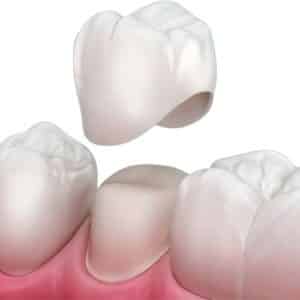
What tips the balance toward keeping it. How much sound tooth is left to build on, whether the tooth can be sealed properly afterwards, whether the root anatomy is treatable, and what replacing it would involve. A root-filled back tooth usually needs a crown afterwards, and that cost belongs in the comparison from the start rather than arriving as a surprise later.
What tips the balance toward removing it. A tooth broken below the gum, a root fracture, advanced bone loss from gum disease around it, or a tooth that has already failed re-treatment. A hopeless tooth kept for sentiment is an infection waiting to recur.
What is not a good reason to extract. That it is quicker, or cheaper on the day. Replacing a missing back tooth with a bridge or an implant costs considerably more than the root canal would have, and doing nothing lets the neighbouring and opposing teeth drift. Bridges, implants or dentures compares the replacements.
The questions to ask are specific: what is the prognosis for this particular tooth, what restoration will it need afterwards and what does that cost, and what is the plan if I choose extraction instead. See Root Canal Therapy, Everything you need to know about root canal treatment and Specialist Endodontists.
It is Sunday and I am in agony. Is the hospital emergency department the answer?
It depends entirely on which problem you have, and the distinction is worth knowing before you are making the decision at 3am.
Go to an emergency department, or call 000, without hesitation if you have difficulty breathing or swallowing, rapidly spreading facial or neck swelling, swelling under the tongue or beneath the jaw on both sides, a changed voice, inability to open your mouth, swelling closing or spreading toward the eye, fever with feeling generally unwell, or confusion, a racing pulse or faintness. These are airway and sepsis problems. They are managed in hospital and nowhere else, and the RACGP guidance for doctors assessing them is specific: "Check particularly for swelling below the level of the mandible and in the upper neck", and "if any of these are present keep the patient sitting up; do not lie flat."
For a painful tooth with no spreading swelling and no systemic signs, an emergency department is generally not where the problem gets fixed. Hospitals rarely provide definitive dental treatment — the pus still needs to be drained by opening the tooth, cleaning the pocket or removing the tooth, and that is a dental procedure. You may well be given pain relief and told to see a dentist, which is a long night for an outcome you can get faster by calling a practice at opening time. That is much of what sits behind the AIHW's 88,600 potentially preventable admissions.
What to do instead overnight: the measures under While you are waiting to be seen above, and ring a dental practice the moment it opens rather than waiting for a routine appointment. Say the word "abscess" or "swelling" when you ring — practices hold emergency slots, and the triage question is always about swelling and how long it has been there. If in any doubt about the airway signs, do not weigh it up. Go.
Related reading
Emergency Dentistry · What is considered a dental emergency? · What should I do in a dental emergency? · Tooth Pain and Toothaches · Root Canal Therapy · When root canal treatment is needed · What is periodontal disease? · Chipped or Cracked Teeth · What a cavity actually is
Practical details
Smile Solutions holds emergency appointment slots each day, and has registered specialist endodontists on site for root canal treatment, periodontists for gum treatment, and oral and maxillofacial surgeons for surgical extraction.
Smile Solutions, Level 1, 220 Collins Street, Manchester Unity Building, Melbourne VIC 3000. Phone 13 13 96, or theteam@smilesolutions.com.au. Monday–Friday 8.00am–6.00pm, Saturday 8.30am–1.30pm, Sunday by appointment.
Registration for any practitioner, and whether they hold specialist registration, can be verified free on the AHPRA public register at ahpra.gov.au.
Published 11 December 2017.
General information only — it is not a diagnosis, a treatment plan, a quote or a promise of any particular clinical outcome, and it does not replace advice from your treating practitioner. A dental abscess is an infection that requires urgent professional treatment and can become life-threatening; nothing on this page is a substitute for being seen. Nothing here is medical or medication advice — take analgesia only as directed on the packaging or by a practitioner, and do not use antibiotics that were not prescribed for this episode. All treatment carries risks, and which treatment is appropriate can only be determined after examination. Success percentages, hospitalisation figures and trial results quoted are group results from published studies and national statistics, with their own populations and definitions; they are not predictions for any individual.
Smile Solutions trades under ABN 28 193 514 103.
Images on This Page
-
https://www.facebook.com/tr?id=800557773428361&ev=PageView&noscript=1
(no alt text)
-
https://www.smilesolutions.com.au/wp-content/uploads/2025/10/calendar_month.svg
(no alt text)
-
https://www.smilesolutions.com.au/wp-content/themes/arcadian-wordpress-theme/assets/images/smile_solutions_logo_white.png
Smile Solutions Logo
-
https://www.smilesolutions.com.au/wp-content/themes/arcadian-wordpress-theme/assets/images/smile_solutions_logo_purple.png
Smile Solutions Logo
-
https://www.smilesolutions.com.au/wp-content/uploads/2023/11/SS-Tooth-1-1-150x150.png
Smile Solutions
-
https://www.smilesolutions.com.au/wp-content/uploads/2017/12/Dental-pain.jpg
Why are dental abscesses so painful?
-
https://www.smilesolutions.com.au/wp-content/uploads/2025/09/Root-Canal-2-300x217.jpg
Root Canal
-
https://www.smilesolutions.com.au/wp-content/uploads/2026/08/Mouth-Breathing-300x270.jpg
Mouth Breathing
-
https://www.smilesolutions.com.au/wp-content/uploads/2025/09/Dental-Crown-at-Smile-Solutions-300x300.jpg
Dental Crown at Smile Solutions
-
https://www.smilesolutions.com.au/wp-content/themes/arcadian-wordpress-theme/assets/images/family_owned_bussiness.png
Family Owned Business
-
https://www.smilesolutions.com.au/wp-content/themes/arcadian-wordpress-theme/assets/icons/icon--phone.svg
Smile Solutions Contact
-
https://www.facebook.com/tr? id=800557773428361&ev=PageView&noscript=1
(no alt text)
-
https://bat.bing.com/action/0?ti=25148060&tm=gtm002&Ver=2&mid=78ad75dc-273f-461f-84ba-3329ea3b58c2&bo=1&sid=ed6c1420ab2711f186116bce2e1ca899&vid=ed6c5ff0ab2711f19b119d6b6c301621&vids=1&msclkid=N&pi=918639831&lg=en-US&sw=800&sh=600&sc=24&nwd=1&tl=Why%20are%20dental%20abscesses%20so%20painful%3F%20-%20Smile%20Solutions&p=https%3A%2F%2Fwww.smilesolutions.com.au%2Fdental-articles%2Farticle%2Fdental-abscesses-painful%2F&r=&evt=pageLoad&sv=2&cdb=AQAQ&rn=546402
(no alt text)