What is a tooth abscess?
A tooth abscess is a collection of pus caused by bacterial infection in or around a tooth. There are two main types, and they arise from different places:
- Periapical — at the root tip, generally from infection of the nerve pulp inside the tooth
- Periodontal — in the gum tissue and bone surrounding the tooth
Both need treatment. The reason is simple and worth stating first: an abscess is a bacterial infection in a confined space, and it does not resolve on its own. healthdirect, the Australian government-funded health service, says the same in one line — "a tooth abscess will not get better on its own" — and adds the reason for not waiting: "an untreated abscess might get worse and can lead to life-threatening complications."
Pain that goes away does not mean the infection has. The Australian Journal of General Practice describes the sequence precisely: decay causes poorly localised pain first, and then "when pulp necrosis finally occurs, there is no pain" — until an acute abscess develops. The quiet interval is the nerve dying, not the problem resolving.
This is not a rare situation. The Australian Institute of Health and Welfare counts hospital admissions for dental conditions that timely non-hospital care could have avoided: about 88,600 such admissions in 2023–24, a rate of roughly 3 in every 1,000 Australians, and a rate that has risen from a low of 2.6 per 1,000 in 2019–20.
Read this part first
Go to a hospital emergency department immediately — not a dental appointment — if you have:
- Difficulty breathing or swallowing
- Swelling spreading to the eye, under the jaw, or into the neck
- A high fever with rapidly worsening swelling
- Inability to open your mouth
The Australian Journal of General Practice sets out what clinicians look for in these cases, and the list is worth knowing because several items are things you can notice yourself: swelling below the level of the jaw and in the upper neck; trismus — not being able to open the mouth more than about 2 cm between the teeth; being unable to speak in sentences; being unable to control saliva; pain or difficulty swallowing; stridor, a harsh noise on breathing in; and the tongue pushed up against the roof of the mouth. Its instruction where any of these are present is blunt: "keep the patient sitting up; do not lie flat."
Dental infections can spread through the tissue spaces of the head and neck. As that paper puts it, "once the infection has spread beyond the confines of the jaws, there is an increasing risk of airway obstruction and septicaemia." This is uncommon, but it is genuinely dangerous when it happens, and it can progress within hours. See Can a dental abscess affect your general health?.
For anything urgent that is not in that list, see Emergency Dentistry, Tooth Pain & Ache, what is considered a dental emergency? and what should I do in a dental emergency?
Periapical abscess
What it is
A periapical abscess arises at the root tip of a tooth. It usually occurs secondary to decay, but it can also follow trauma or a previous root canal treatment that has failed. See Tooth Fillings and Chipped and Cracked Teeth. healthdirect's list of what lets bacteria in is the same one: decay, a cracked or injured tooth, a deep filling, a failed root canal treatment, partially grown or impacted teeth, and gum disease.
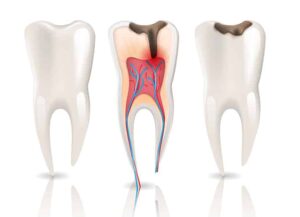
The sequence: when decay advances far enough to reach the nerve within the tooth, bacteria from the mouth travel down through the root canal and reach the apex — the root tip — and the tissues around it. There they provoke acute inflammation and the formation of pus, producing an abscess at the root of the tooth. How does tooth decay develop? and the stages of dental decay follow that path from the first white spot.
Should it be treated?
Yes. A periapical abscess tends to be quite painful — Why are dental abscesses so painful? explains the mechanism. More importantly, this type of infection can spread through the tissue spaces of the head and neck, causing serious infection and swelling.
Typical symptoms:
- Severe, throbbing, often continuous pain
- Pain on biting, and the tooth feeling “raised” or longer than the others
- Extreme sensitivity to heat, and sometimes relief from cold
- Pain that wakes you at night
- Swelling of the gum, face or jaw
- A pimple-like swelling on the gum that may discharge, with a bad taste
healthdirect adds two more to watch for: fever, and a loose tooth that feels wobbly or pushed out. How these differ from ordinary toothache is set out in what are the causes of toothache and what are their symptoms? and common signs and symptoms of a toothache.
One symptom pattern is worth understanding. When an abscess finds a route to drain through the gum, the pain often stops. People take this as recovery. It is not — it is a chronic infection that has found an outlet, and it continues destroying bone.
How it is treated
Periapical abscesses are treated with root canal treatment. The sequence:
- All decay is removed from the tooth
- Fine file instruments clean the infected nerve tissue out of the root canal system
- Mechanical filing is accompanied by irrigation with solutions that chemically remove bacteria and infection
- The abscess is drained
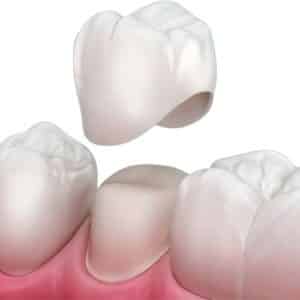
- The root canal system is filled with a biocompatible material and sealed with a filling or a crown — what types of dental crowns are available?
Root canal treatment: who and what is involved? walks through the appointments, and everything you need to know about root canal treatment answers most of what people ask beforehand; for complex anatomy or a retreatment, see Endodontists, Endodontist vs dentist for root canal and why is the microscope so crucial in endodontic treatment?
If the tooth is judged unrestorable — typically because the crown of the tooth is too heavily broken down to support a restoration — it may need to be extracted instead. Extraction also drains the infection.
The practical trade-off: root canal treatment keeps your own tooth, requires more appointments, and costs more up front, but avoids the ongoing consequences of a gap. Extraction is faster and cheaper, but the space then needs managing — an implant, a bridge, or accepting the gap and the drift that follows. See Bridges, implants or dentures, what are the replacement options for missing teeth? and the price guide for what each costs.
Periodontal abscess
What it is
A periodontal abscess is a collection of pus accumulating in a periodontal pocket — the space between the gum and the tooth root. These tend to form in people with a history of periodontitis (gum disease), when a deepened pocket beside a tooth closes over at the top and the contents can no longer drain. See What is periodontal disease?, what is gum disease? and Bleeding Gums.
It can also follow food or debris — a popcorn husk, a seed — becoming lodged in a pocket.
Should it be treated?
Yes. The pain is generally less than with a periapical abscess, but it will still cause discomfort and swelling. Although rare, periodontal abscesses can produce systemic signs of infection — fever, tender lymph nodes, and facial cellulitis — which is exactly why they need management rather than waiting.
There is also a local reason to act quickly: bone loss around a tooth during an acute periodontal abscess can be rapid, and lost bone does not come back. A few days can cost a tooth its long-term prognosis.
How it is treated
Treatment requires drainage of the pus. Under local anaesthetic this is usually achieved:
- Through the pocket, by debridement — thorough cleaning of the root surface — which reopens the drainage path, or
- By lancing the swelling to allow external drainage
Irrigation with saline throughout the procedure is recommended.
Where the periodontal disease is advanced and the tooth is beyond saving, drainage can be achieved by extracting the tooth.
Drainage settles the acute episode. It does not treat the underlying gum disease, which needs its own course of periodontal treatment afterwards — otherwise the abscess recurs. See Periodontists, Dental Cleans & Hygienists and when do you need deeper cleaning?
Antibiotics
Antibiotics are generally not sufficient, and often not necessary, for a tooth abscess.
This surprises people, and it is worth explaining. An abscess is a walled-off collection of pus with a poor blood supply, so antibiotics penetrate it badly. The definitive treatment is drainage and removal of the source — the infected pulp, or the debris in the pocket.
The published position on this is unusually consistent. The Australian Journal of General Practice states it flatly: "antibiotic treatment without dental treatment to remove the cause always fails," and "if treated with antibiotics alone, the infection will not resolve and will become progressively worse." healthdirect's treatment list carries the same qualifier in brackets — antibiotics "(although antibiotics alone are not enough to treat a tooth abscess)".
A Cochrane review updated in 2024 examined the question directly. It sets out the guideline position first: the first-line treatment is removal of the source by local operative measures, and systemic antibiotics are recommended only where there is evidence of spreading infection — cellulitis, lymph node involvement, diffuse swelling — or systemic involvement, such as fever and malaise. It then found three trials with 134 participants in total. A single pre-operative dose given alongside root canal treatment "results in little to no difference in participant-reported pain or swelling at any of the time points" — median pain was 3 out of 10 in both groups at 24 hours, and zero in both by 72 hours (low-certainty evidence). For a seven-day post-operative course, the evidence was very uncertain, with differences at every time point whose confidence intervals crossed zero.
The most telling finding is what was missing: the reviewers "found no studies which compared the effects of systemic antibiotics with a matched placebo delivered without a surgical intervention." There is no randomised evidence at all that antibiotics on their own resolve these infections. Their closing note is that antibiotic use "is recognised as a major contributor to antimicrobial resistance" and prescribing should be judicious.
This is also why a GP is not the right first stop for a dental infection: I have a toothache — should I see my GP for antibiotics?
Antibiotics are considered where those spreading or systemic signs are present, or where the patient is immunocompromised. Diabetes in particular cuts both ways here, and poorly controlled blood glucose makes these infections both likelier and harder to settle: diabetes and dental health: the two-way street that most people don’t know about. Even then, they are an adjunct to drainage, not a replacement for it.
The corollary matters for anyone who has been prescribed antibiotics: finishing the course is not the end of treatment. The tooth still needs the root canal treatment or the extraction. An abscess that settled on antibiotics and was then left alone will come back.
While you wait for the appointment
- Take over-the-counter pain relief according to the packet directions — see also how can I relieve a toothache?
- Rinse with warm salty water
- Keep the area as clean as you can
- Avoid very hot or very cold food and drink
- Sleep propped up if the area is throbbing
- Do not place aspirin against the gum — it burns the tissue
- Do not apply heat to a facial swelling; it can encourage the infection to spread
- Do not attempt to lance it yourself
Preventing the next one
Both types trace back to the same two causes — decay reaching the nerve, and gum disease deepening a pocket. Both are largely preventable, and both are usually silent until they are not: regular examination and professional cleaning are what catch them at the stage where treatment is small. See General Dentistry, Dental Cleans & Hygienists and Bad Breath, which is sometimes the first sign of an untreated pocket.
At home it comes down to the ordinary things done consistently — what is the ideal daily routine for oral hygiene?, is flossing really that important? and how do I prevent dental decay? Caught early enough, a cavity does not always need a filling at all: can you reverse tooth decay, and do I need a filling?
Common questions
My dentist wants to take the tooth out today. Shouldn’t the infection be cleared up with antibiotics first?
That belief is widespread and the Australian literature contradicts it directly. Australian Family Physician (RACGP) puts it in these words: "A widely believed myth is that a course of antibiotics is necessary before extraction of an infected tooth to prevent seeding into the cervicofacial spaces. Waiting for the infection to settle before extracting the tooth can result in life-threatening consequences as the infection spreads along the tissue planes. Teeth can be extracted in the presence of an acute infection; indeed, extraction of the offending tooth is often curative."
The principle underneath it is the one this page keeps returning to: the infection has a source, and the treatment that works is the one that removes the source. The same paper calls it "a pitfall to assume that a course of antibiotics will definitively treat an established infection", because that assumption "often leads to prolonged morbidity".
There is a second reason not to accumulate courses. In the Royal Adelaide Hospital series reported in the Australian Journal of General Practice, 10.8% of admitted patients carried resistant organisms, and all of them had had multiple prior courses of antibiotics. Repeated prescribing for an infection whose source was never removed is how that happens.
If you are told to wait a week on a prescription before anything else is done, it is entirely reasonable to ask what is being waited for, and what will be different at the end of the week.
It flares up, settles, and comes back every few months. Is that different from a one-off abscess?
It is usually the same infection, and the settling is the least reassuring part of it. Each quiet interval is pus finding somewhere to drain, not bacteria being cleared — and bone is being lost in the background the entire time.
The Australian Journal of General Practice published a coronial case built on exactly this pattern: a patient managed with "analgesics and at least one course of antibiotics over a four‑month period" before the infection spread beyond control. That is the reason recurrence is treated as a prompt to deal with the tooth, not as evidence that the problem is mild because it keeps going away.
If you can date the first episode, say so at the appointment. "This is the third time since March" changes the assessment more than "it hurts".
I have no fever. Does that mean it is not serious?
Not necessarily, and this is the single most useful thing to know if you are trying to judge your own urgency at home. NSW Health’s Emergency Care Institute states plainly that in dental abscess "fever and systemic symptoms may be absent". A normal temperature does not rule out an infection that is spreading.
The same clinical tool lists the signs of a spreading submandibular infection in the order they appear — submandibular pain, swelling, trismus, inability to protrude the tongue, drooling, difficulty swallowing — and then adds the calibration that matters: "dysphonia and dyspnoea are late signs." A changed voice and breathlessness arrive at the end of the sequence, so using them as your trigger to act is waiting too long.
Use the red-flag list near the top of this page instead. Swelling below the jawline or into the neck, not being able to open your mouth normally, trouble swallowing or managing your own saliva, or being unable to poke your tongue out — any of those means a hospital emergency department, not a dental booking.
How quickly should I feel better once treatment starts, and what if I do not?
healthdirect gives a usable benchmark: "You should start feeling better within 2 to 3 days after starting treatment. If you don’t, you may need more tests or a different treatment."
That is the sentence to hold onto, because the natural instinct after a difficult appointment is to give it more time. Expect the area to be sore for a day or two after drainage — local anaesthetic covers the procedure itself, and what is used to manage discomfort afterwards is discussed with you at the time. What you should not do is push through a second week of no improvement without going back.
After a severe infection that needed hospital care, recovery is longer. The Australian Journal of General Practice series notes that persistent firm swelling, scarring from drainage and persistent trismus were common and "took 1–2 months to settle".
What does an abscess cost to treat — and what does it cost to leave?
The treatment cost depends entirely on which treatment the tooth needs, and the honest answer is that nobody can quote it without looking at the tooth: draining a periodontal abscess and cleaning the pocket, root canal treatment and a subsequent crown, and extraction followed by replacing the tooth are three very different figures. Our published fees are on the price guide, and payment plans are available, with terms and eligibility explained on that page.
The cost of not treating it is documented more precisely than most people expect. A Royal Adelaide Hospital series reported in the Australian Journal of General Practice found the average cost for high-risk patients was $12,228, a total of $5.65 million over seven years, and set that against "the average cost of a single tooth extraction in private dental practice, which is $181 (125 times less expensive)". A separate audit at Nepean Hospital in New South Wales, published in Dentistry Journal in 2024, reported a mean patient age of 40.1 years, with incision and drainage required in 37.2% of the patients admitted.
Those are published figures describing hospital populations in other states, not Smile Solutions fees and not a prediction for you. They are quoted here for one reason: the cheapest version of this problem is the early one.
It is the middle of the night. What do I do until morning?
First, re-read the red-flag list. Difficulty breathing or swallowing, swelling moving towards the eye or down into the neck, or not being able to open your mouth are emergency department presentations at any hour, and the advice in the literature is to stay sitting up rather than lying flat.
If it is pain without those signs, the measures in the section above — cold avoided, area kept clean, head propped up, over-the-counter pain relief taken according to the packet — are what will get you to morning. For advice overnight, healthdirect operates a helpline on 1800 022 222, known as NURSE-ON-CALL in Victoria, staffed by a registered nurse 24 hours a day, seven days a week.
Then book. The relief that arrives overnight is not the infection resolving, and the appointment is still the treatment.
Related reading
- Why are dental abscesses so painful?
- Can a dental abscess affect your general health?
- I have a toothache — what could be the cause?
- The risk of broken files during root canal treatment
- How long do dental fillings last?
Practical details
Specialist registration can be verified on the AHPRA register, or by calling 1300 419 495; the clinicians are listed on Our Team.
Smile Solutions, Level 1, 220 Collins Street, Manchester Unity Building, Melbourne VIC 3000 — getting here. Phone 13 13 96, or theteam@smilesolutions.com.au. Monday–Friday 8.00am–6.00pm, Saturday 8.30am–1.30pm, Sunday by appointment. Full details on Contact Us.
Published 23 February 2017. General information only; it does not replace advice from your treating practitioner. Figures quoted are from published sources describing populations, not predictions for any individual. Decisions about whether any medicine is appropriate are for your treating practitioner. In a dental emergency, seek immediate care; for spreading facial swelling or difficulty breathing or swallowing, attend a hospital emergency department.
Smile Solutions trades under ABN 28 193 514 103.
Images on This Page
-
https://www.facebook.com/tr?id=800557773428361&ev=PageView&noscript=1
(no alt text)
-
https://www.smilesolutions.com.au/wp-content/uploads/2025/10/calendar_month.svg
(no alt text)
-
https://www.smilesolutions.com.au/wp-content/themes/arcadian-wordpress-theme/assets/images/smile_solutions_logo_white.png
Smile Solutions Logo
-
https://www.smilesolutions.com.au/wp-content/themes/arcadian-wordpress-theme/assets/images/smile_solutions_logo_purple.png
Smile Solutions Logo
-
https://www.smilesolutions.com.au/wp-content/uploads/2023/11/SS-Tooth-1-1-150x150.png
Smile Solutions
-
https://www.smilesolutions.com.au/wp-content/uploads/2018/04/Dental-abscess.jpg
What is a tooth abscess? Should I have it treated? If so, how?
-
https://www.smilesolutions.com.au/wp-content/uploads/2025/09/Root-Canal-2-300x217.jpg
Root Canal
-
https://www.smilesolutions.com.au/wp-content/uploads/2026/08/Mouth-Breathing-300x270.jpg
Mouth Breathing
-
https://www.smilesolutions.com.au/wp-content/uploads/2025/09/Dental-Crown-at-Smile-Solutions-300x300.jpg
Dental Crown at Smile Solutions
-
https://www.smilesolutions.com.au/wp-content/themes/arcadian-wordpress-theme/assets/images/family_owned_bussiness.png
Family Owned Business
-
https://www.smilesolutions.com.au/wp-content/themes/arcadian-wordpress-theme/assets/icons/icon--phone.svg
Smile Solutions Contact
-
https://www.facebook.com/tr? id=800557773428361&ev=PageView&noscript=1
(no alt text)
-
https://bat.bing.com/action/0?ti=25148060&tm=gtm002&Ver=2&mid=8fc8760c-c72c-4810-93dd-d816a90b1165&bo=1&sid=56155840ab2711f1b331395736e8f24a&vid=56156270ab2711f1957b7f61920c2464&vids=1&msclkid=N&pi=918639831&lg=en-US&sw=800&sh=600&sc=24&nwd=1&tl=What%20is%20a%20tooth%20abscess%3F%20Should%20I%20have%20it%20treated%3F%20If%20so,%20how%3F%20-%20Smile%20Solutions&p=https%3A%2F%2Fwww.smilesolutions.com.au%2Fdental-articles%2Farticle%2Ftooth-abscess-treated%2F&r=&evt=pageLoad&sv=2&cdb=AQAQ&rn=749650
(no alt text)