Dental Crowns
What is a dental crown, and when do I need one instead of a veneer?
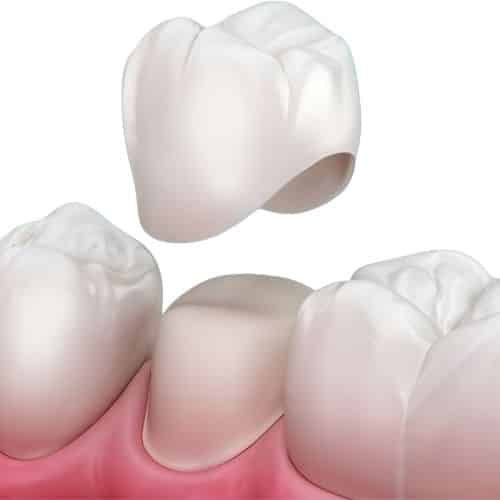
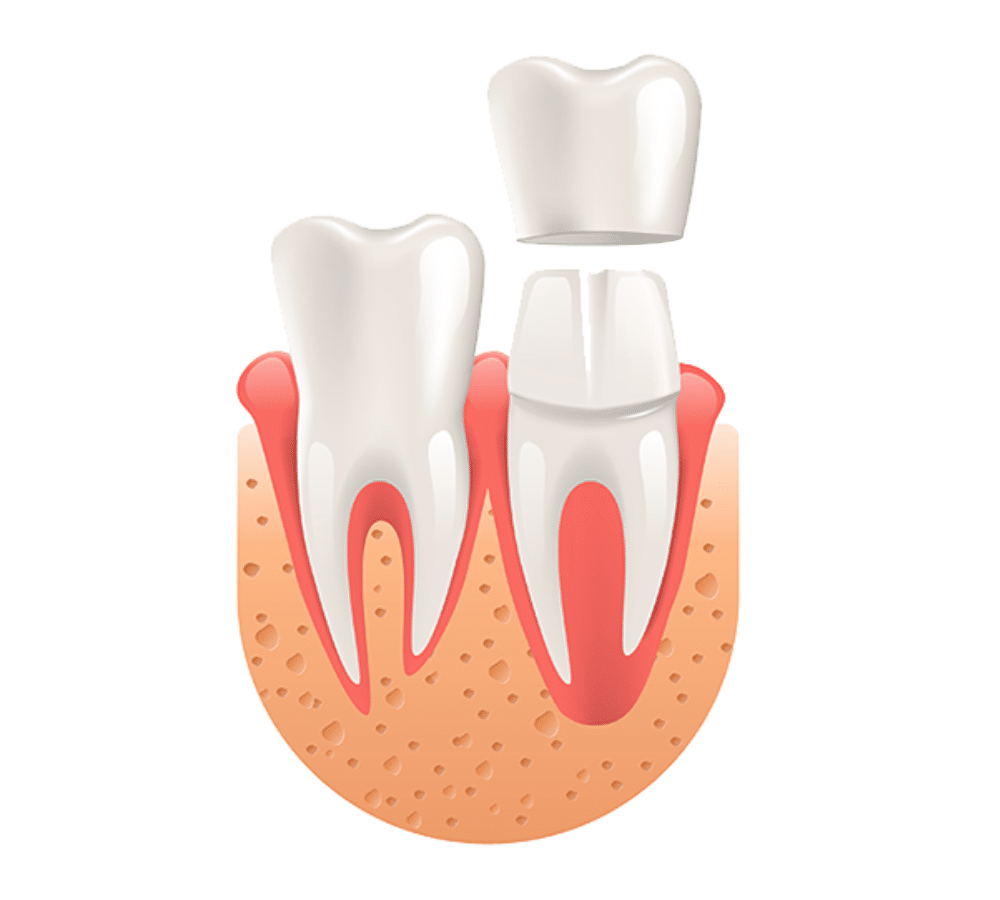
A dental crown — sometimes called a cap — is a custom-made restoration bonded over a prepared tooth to restore its appearance and function.
The practical distinction from a veneer is the amount of tooth left. A veneer is a thin facing that needs healthy enamel to bond to. A crown covers the whole tooth, and is used when there is not enough enamel left to support a veneer.
Crowns are commonly used for:
- heavily repaired or broken teeth
- teeth with large, discoloured fillings
- teeth that need protection after root canal therapy
A crown can be fitted over almost any prepared tooth and, with proper care, can last 15 years or more.
Worth knowing before you agree to one: a crown requires the tooth to be reduced on all sides, and that removal is permanent and cannot be undone. Where enough healthy enamel remains, a more conservative option — a filling, an onlay, or a veneer — may achieve the same result while keeping more of the tooth. Ask what the conservative options are and why they have been ruled out for your tooth.
Smile Solutions is at Level 1, 220 Collins Street, Manchester Unity Building, Melbourne CBD.
The question that decides whether a crown will survive: the ferrule
This is the most useful technical concept for a patient to understand, and it is almost never explained.
For a crown to hold, it needs to grip a collar of sound tooth structure above the gum, all the way round — known as a ferrule. The working figure most clinicians use is about 1.5 to 2 mm of sound tooth height, circumferentially.
That collar is what stops the crown levering off and stops the root splitting under load. A crown placed on a tooth with no ferrule is relying on cement and hope, and those are the crowns that come off repeatedly or end in a cracked root.
So when a tooth is broken down near the gum, there are only a few honest options:
- Crown lengthening — minor gum, and sometimes bone, surgery to expose more tooth height. See Gummy Smile for how that procedure works, and Specialist Periodontists.
- Orthodontic extrusion — gently pulling the root up over weeks to bring sound tooth above the gum.
- Extraction and replacement — where neither is practical. See Dental Implants and Dental Bridges.
If you are told a tooth is “borderline”, this is usually what is meant. Ask directly: is there enough sound tooth above the gum to hold a crown, all the way round?
Core build-ups and posts
Where much of the tooth is missing, the dentist first rebuilds a foundation for the crown to sit on — a core build-up, usually in composite. This is normal and is often a separate item on the quote, which is why the total can exceed the headline crown fee.
In root-treated teeth with very little structure left, a post may be cemented into the root canal to retain that core. Two things are worth knowing:
- A post does not strengthen a tooth. It only retains the core. This is a common misconception.
- Posts carry a risk of root fracture, and a vertically fractured root usually cannot be saved.
Modern practice is therefore to avoid a post where the tooth has enough structure without one. Ask whether a post is planned and whether it can be avoided.
Why root-treated back teeth are usually crowned
After root canal treatment a back tooth is typically hollow and has lost the cusp support that a large access cavity used to provide. Left with only a filling, it is markedly more likely to split — and a split root-treated tooth is often unsalvageable, which wastes the root treatment entirely.
Covering the cusps — with a crown, or often an onlay, which removes less tooth — substantially improves the odds. That is the reason a crown is recommended after root canal treatment on a molar, and it is a structural argument rather than a cosmetic one. See Root Canal.
Front teeth after root treatment often do not need a crown, because they take less load and usually have more structure remaining. If a crown is proposed on a root-treated front tooth, ask what makes it necessary.
The three crown materials
Material choice is a trade-off between strength, appearance, how much tooth must be removed, and how kind the crown is to the teeth it bites against. There is no single best answer, which is why it is a discussion rather than a default.
Porcelain (all-ceramic) crowns
For back teeth, made from reinforced ceramics such as lithium disilicate or zirconia, chosen for load-bearing strength.
For front teeth, either a ceramic material alone, or two layers — a high-strength core covered with a ceramic layer. All-ceramic crowns for front teeth are designed to closely resemble natural teeth in shape and colour, which is why they are the usual choice where the crown will be visible.
Metal crowns
Usually gold alloy, and in use since the early 1900s. Their advantage is minimal tooth preparation — metal is strong even in thin sections, so less healthy tooth structure has to be removed. Well designed and constructed, metal crowns are very durable and resistant to fracture, and they are gentle on the opposing teeth. The obvious limitation is appearance.
PFM (porcelain-fused-to-metal) crowns
Introduced in the 1970s. A metal core provides strength and durability; overlying porcelain gives a far more tooth-like appearance than metal alone.
It is common for a thin metal margin to remain visible around the neck of the crown on the tongue side — this is deliberate, because it preserves more tooth structure than hiding the margin would.
Choosing between them
| Tooth removed | Appearance | Strength | Kind to opposing teeth | |
|---|---|---|---|---|
| Gold / metal | Least | Poorest | Excellent | Best |
| PFM | Most | Good, metal line possible | Very good | Moderate |
| Lithium disilicate | Moderate | Excellent | Good | Good if polished |
| Zirconia | Moderate | Good; more opaque when strongest | Highest | Needs careful polishing |
A note on the last column. A ceramic surface that has been adjusted and not re-polished is abrasive, and can wear the natural tooth biting against it. If your crown is adjusted at fitting, it should be polished afterwards — reasonable to ask about.
How the crown procedure works
There are two routes, and they differ substantially in how much of your time they take.
Laboratory-fabricated: two visits
- First appointment. The tooth is prepared to the required shape and moulds are taken. A temporary cap is placed to protect the prepared tooth.
- The crown is designed and constructed at a dental laboratory using techniques that produce an exact fit.
- Second appointment, a few weeks later. The crown is fitted and bonded in place with bonding cement.
All crown types can be made this way, and laboratory fabrication still gives a technician the most scope for individual colour and character on a front tooth. See Smile Solutions Laboratory.
CEREC: one visit
Ceramic crowns can instead be designed and milled on site in the dental surgery during the appointment, using CEREC CAD/CAM technology. The tooth is prepared and the crown fitted in a single appointment — no temporary crown, no moulds of your teeth, and a considerably shorter overall process. See Same-Day CEREC Restorations.
Living with a temporary crown
If you are on the two-visit route, the fortnight in between has a few rules:
- Avoid sticky and very hard foods on that side — chewing gum and toffee are the classic causes of a temporary coming off
- Floss carefully: pull the floss out sideways rather than snapping it up, which lifts the temporary off
- Some sensitivity is normal, since a temporary insulates less well than the final crown
- If it comes off, keep it and phone the practice. The prepared tooth can drift and become sensitive if left uncovered, so it should be re-fitted rather than left until the next appointment
What can go wrong
Crowning a tooth is routine and generally very successful. It is not risk-free, and a complete discussion covers:
- Sensitivity after preparation, usually settling over weeks
- The nerve may not survive the preparation, in which case root canal treatment is needed afterwards — more likely where the tooth was already heavily restored or deeply decayed
- Decay at the margin, where crown meets tooth
- Fracture or debonding, particularly under heavy grinding
- Root fracture, especially in posted, root-treated teeth — usually unrestorable
- Appearance — shade matching is a skill, and a single crown among natural teeth is the hardest case of all
- Gum response at the margin, particularly if the crown edge sits deep under the gum
Whitening comes before crowning, never after. Ceramic does not whiten; it is matched to your teeth on the day it is made. See Teeth Whitening.
When a crown is not the right answer
- When an onlay would do. If only one or two cusps need protecting, an onlay preserves more tooth. Ask.
- When the tooth is unrestorable. A crown on a tooth with a vertical root fracture, severe bone loss or inadequate ferrule buys a short and expensive reprieve. Extraction and replacement is sometimes the more honest plan.
- Where the cause has not been addressed. Crowning a tooth broken by grinding, without managing the grinding, sets up the next fracture.
Who performs the work
At our Melbourne CBD practice, crown and veneer procedures are performed by experienced cosmetic dentists or specialist prosthodontists. Fillings are performed by general dentists.
Prosthodontists are Dental Board–registered specialists in the restoration and replacement of teeth. They cover veneers, crown and bridge work, occlusal rehabilitation and dental implants, and work closely with dental technicians so that each custom prosthesis is natural-looking and comfortable in daily wear.
Note that “cosmetic dentist” is not a recognised specialty in Australia — it describes an area of interest, not a registration category. Prosthodontics is. Ask which applies to the clinician treating you, and check it at ahpra.gov.au. See Specialist Prosthodontists and Cosmetic Dentistry Under Specialist Care.
Caring for a crown
Crowns function like natural teeth, and they fail like natural teeth: they can still fracture, and the tooth underneath can still decay.
- Brush and floss the crown exactly as you would any other tooth.
- Attend regular dental check-ups. See Dental Cleans & Hygienists.
- Remineralising toothpastes help reduce the risk of decay around the crown margin.
The margin where crown meets tooth is the vulnerable point. That is where plaque collects and where decay starts, and it is the reason flossing a crowned tooth matters more, not less.
If you grind your teeth, say so. Bruxism is the commonest cause of ceramic fracture, and a nightguard is cheaper than a remake. See TMD & Teeth Grinding.
What crowns cost
Costs vary depending on the tooth being crowned, the materials used, and the clinician performing the treatment. Smile Solutions quotes after examination rather than publishing a price list.
Ask for the quote to state the item numbers and what is included — in particular whether the temporary crown, any core build-up, any post, and any required root canal treatment are inside the figure or additional. Read those item numbers to your health fund to establish your gap. See Price Guide.
Most extras policies treat a crown as major dental, often with a waiting period of around twelve months and an annual limit that a single crown can consume. Check both before booking.
Interest-free payment plans are available through Payright for treatment from $150 to $20,000, over 3 to 30 months. Other finance options may also be available; provider eligibility, fees and terms can change. Fees and terms apply; ask for them in writing. See Payment Plans.
Common questions
Do I need a crown, or would an onlay preserve more tooth?
It depends on how much sound tooth remains, where it remains and the forces on that tooth. An onlay can preserve more natural structure in a suitable case; a crown covers all surfaces. The clinician should explain why the proposed restoration is the least destructive predictable option.
Does every root-canal-treated tooth need a post?
No. A post is used only when there is not enough remaining tooth structure to retain the core. It does not strengthen the root and introduces its own risks. Ask whether a core build-up or post is required and whether it is included in the quote.
Can a crown be completed in one appointment?
Some CEREC crowns can be designed, made and fitted in one visit. Laboratory-made crowns generally require two visits and a temporary crown between them. The appropriate route depends on the tooth, material and clinical situation.
How long does a crown last?
The page gives a typical figure of 15 years or more with proper care, but this is not a guarantee. Remaining tooth structure, the crown margin, bite forces, grinding, hygiene and decay risk all affect longevity.
Can a crowned tooth still decay?
Yes. Decay can start at the margin where the crown meets the tooth. Cleaning between the teeth, regular professional review and managing decay risk remain important after a crown is fitted.
Should I whiten my teeth before choosing a crown colour?
If whitening is part of your plan, it is usually considered before the final shade is selected because crown materials do not whiten later. Allow the shade to settle, then match the restoration to the planned result.
What if I grind my teeth?
Tell the clinician before treatment. Grinding increases the risk of ceramic fracture and may change the material or design recommended. A protective nightguard may be advised after treatment.
Practical details
| Address | Level 1, 220 Collins Street, Manchester Unity Building, Melbourne VIC 3000 |
| Phone | 13 13 96 |
| theteam@smilesolutions.com.au | |
| Monday – Friday | 8.00am – 6.00pm |
| Saturday | 8.30am – 1.30pm |
| Sunday | By appointment |
| Typical lifespan | 15 years or more with proper care |
| Appointments | Two for laboratory crowns; one for CEREC |
| Tooth reduction | All surfaces, and permanent |
| Ferrule needed | About 1.5–2 mm of sound tooth, all round |
| Performed by | Cosmetic dentists or specialist prosthodontists |
| Parking | Wilsons Parking, Flinders Lane (between Swanston and Russell) |
Specialist registration can be verified free on the AHPRA public register at ahpra.gov.au.
General information only — it is not a diagnosis, a treatment plan, a quote or a promise of any particular clinical outcome, and it does not replace advice from your treating practitioner. Suitability, longevity and outcomes vary between individuals, and crown treatment carries risks that should be discussed with your clinician before you consent. Lifespan figures are typical ranges, not guarantees. Fees are indicative and subject to change; confirm at your consultation.
Smile Solutions trades under ABN 28 193 514 103.
Images on This Page
-
https://www.facebook.com/tr?id=800557773428361&ev=PageView&noscript=1
(no alt text)
-
https://www.smilesolutions.com.au/wp-content/uploads/2025/10/calendar_month.svg
(no alt text)
-
https://www.smilesolutions.com.au/wp-content/themes/arcadian-wordpress-theme/assets/images/smile_solutions_logo_white.png
Smile Solutions Logo
-
https://www.smilesolutions.com.au/wp-content/themes/arcadian-wordpress-theme/assets/images/smile_solutions_logo_purple.png
Smile Solutions Logo
-
https://www.smilesolutions.com.au/wp-content/uploads/2025/11/Smile-Solutions-4.png
Smile Solutions - Melbourne CBD
-
https://www.smilesolutions.com.au/wp-content/uploads/2025/09/Dental-Crown-at-Smile-Solutions.jpg
Dental Crown at Smile Solutions
-
https://www.smilesolutions.com.au/wp-content/uploads/2025/09/Dental-Crowns-at-Smile-Solutions.png
Porcelain Crowns at Smile Solutions
-
https://www.smilesolutions.com.au/wp-content/uploads/2025/08/69a44c30c93ce196d539cc5520080df52a5f3f88-scaled.jpg
69a44c30c93ce196d539cc5520080df52a5f3f88 scaled
-
https://www.smilesolutions.com.au/wp-content/themes/arcadian-wordpress-theme/assets/images/family_owned_bussiness.png
Family Owned Business
-
https://www.smilesolutions.com.au/wp-content/themes/arcadian-wordpress-theme/assets/icons/icon--phone.svg
Smile Solutions Contact