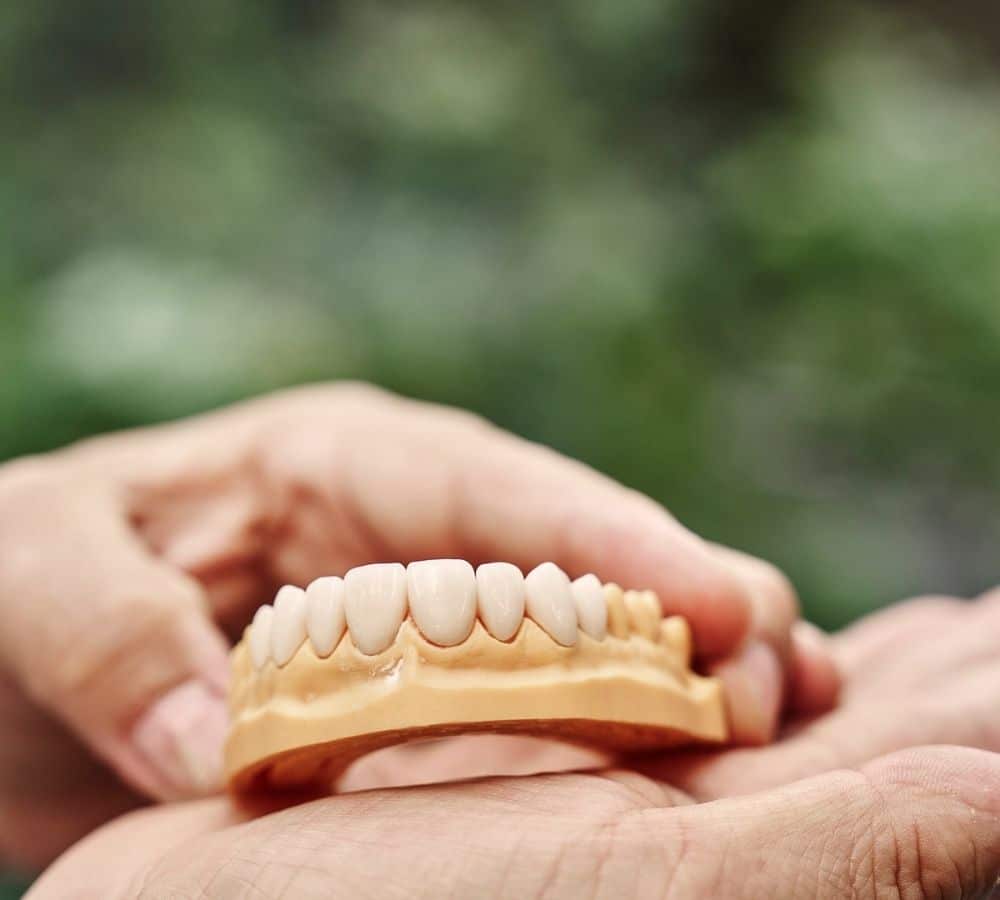
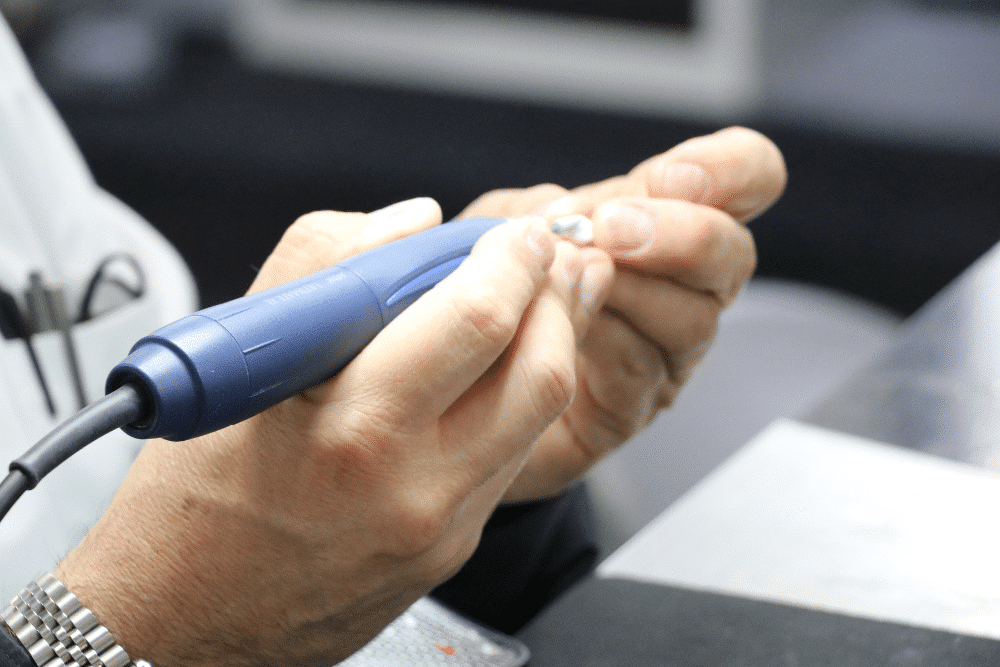
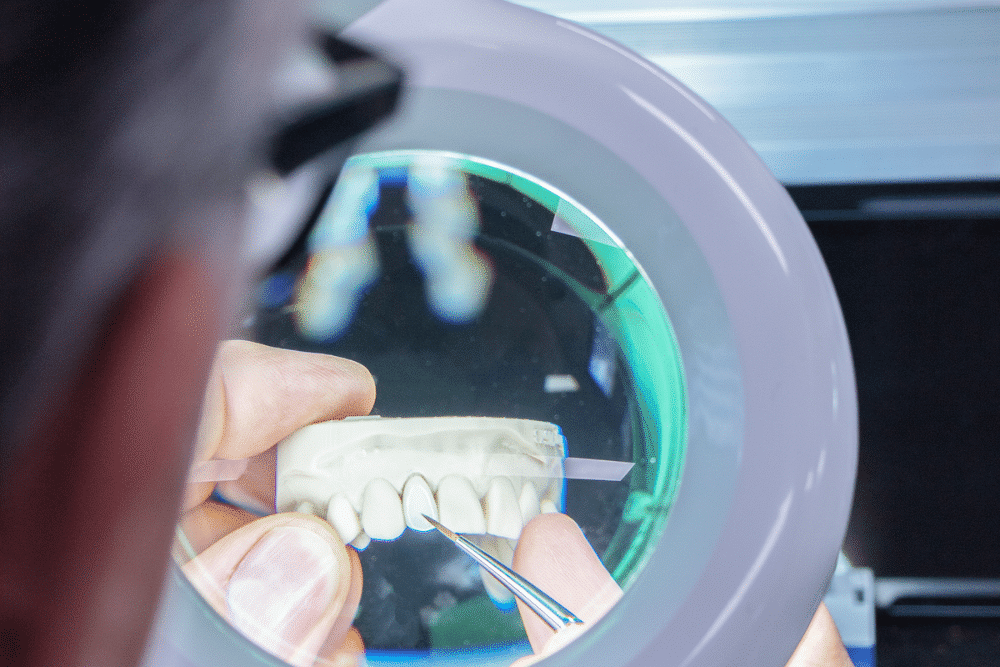
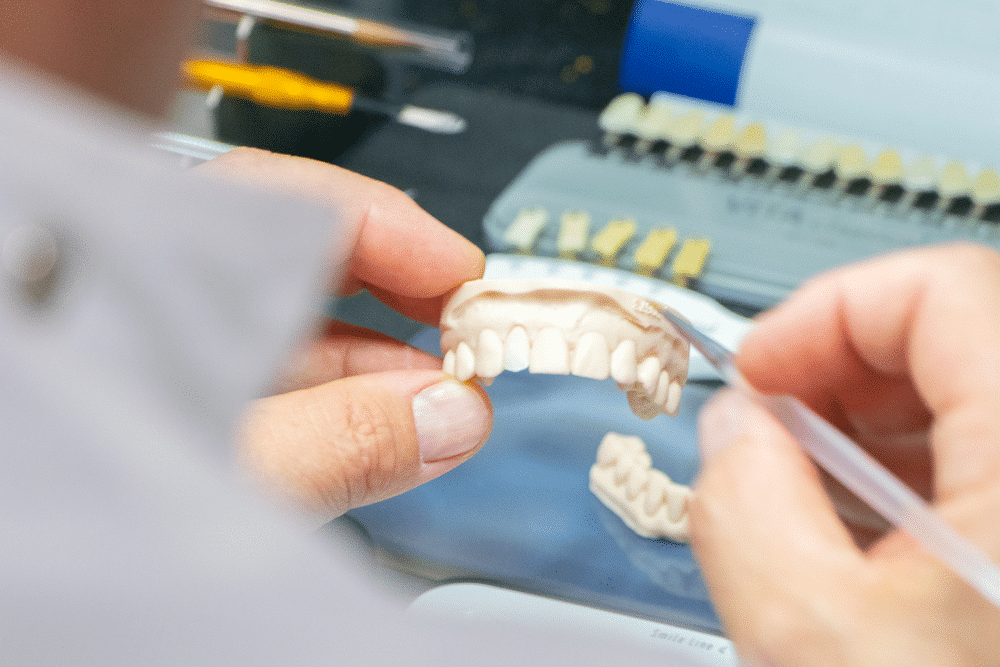
In-House Laboratory
Why does an in-house dental laboratory matter?
Most dental practices send restorations to an external laboratory, and some send them overseas. Smile Solutions manufactures its own — in Melbourne, in a laboratory that works exclusively for the practice's own patients and no other business.
Three things follow from that, and they are the whole argument:
- You can meet the person making your teeth.
- Nothing is sent offshore, and only TGA-approved materials are used.
- Turnaround compresses, in some cases to a single day.
We are at Level 1, 220 Collins Street, Manchester Unity Building, Melbourne CBD.
What the laboratory makes
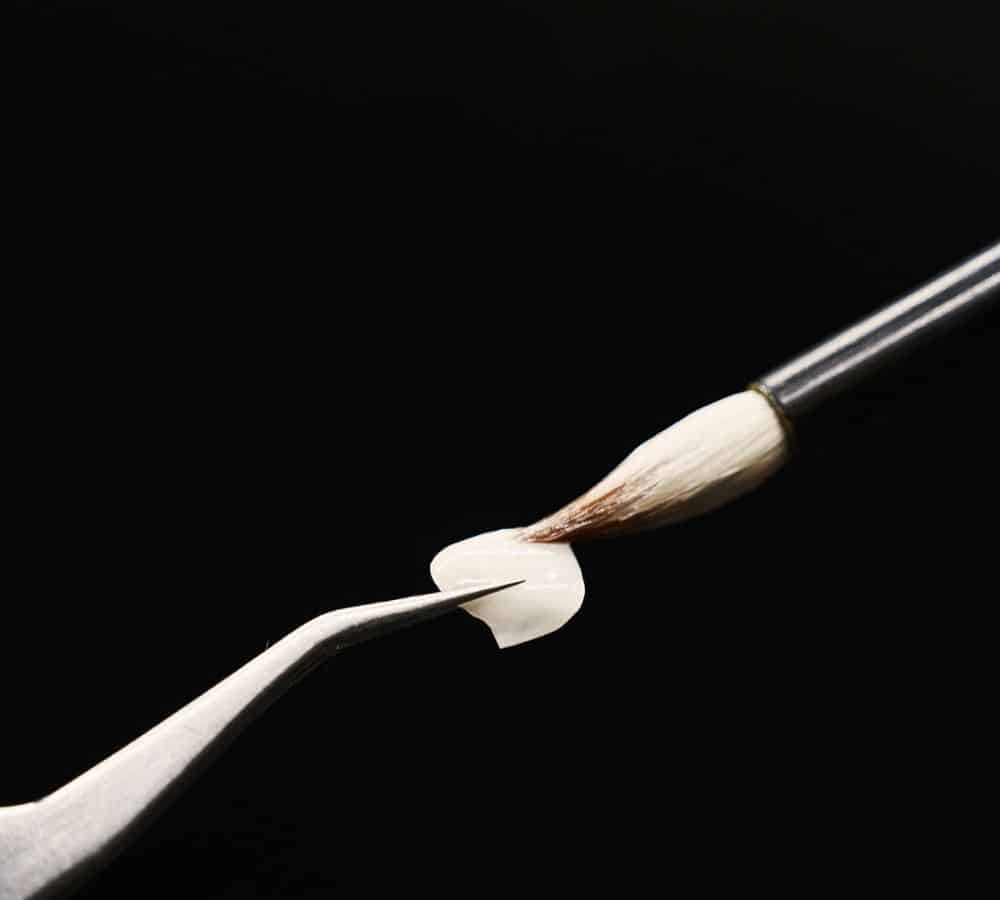
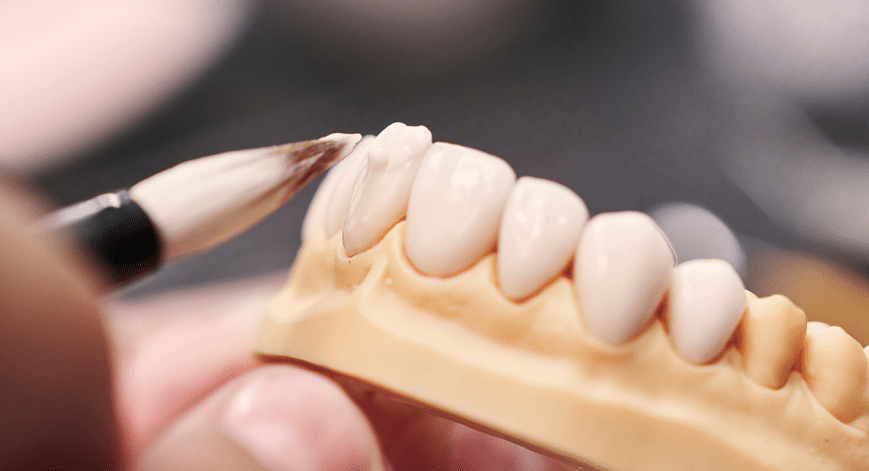
- Porcelain restorations — veneers, crowns, bridges
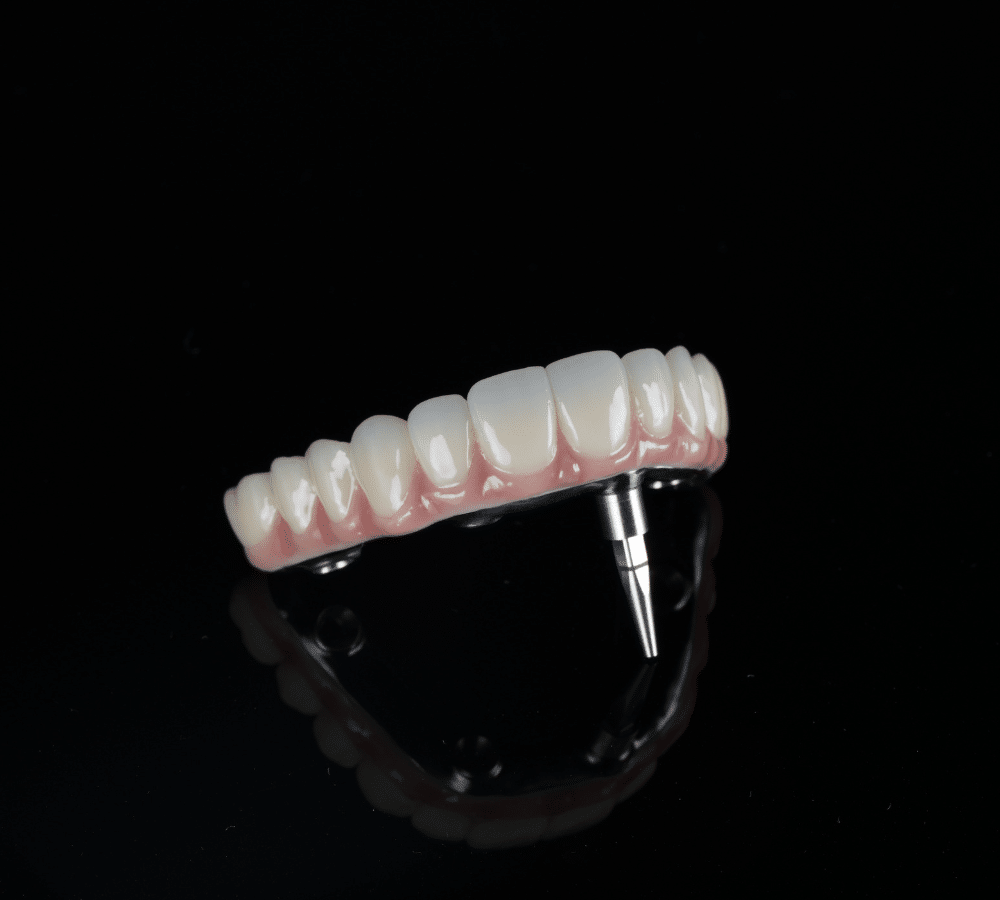
- Dental implant components and prostheses
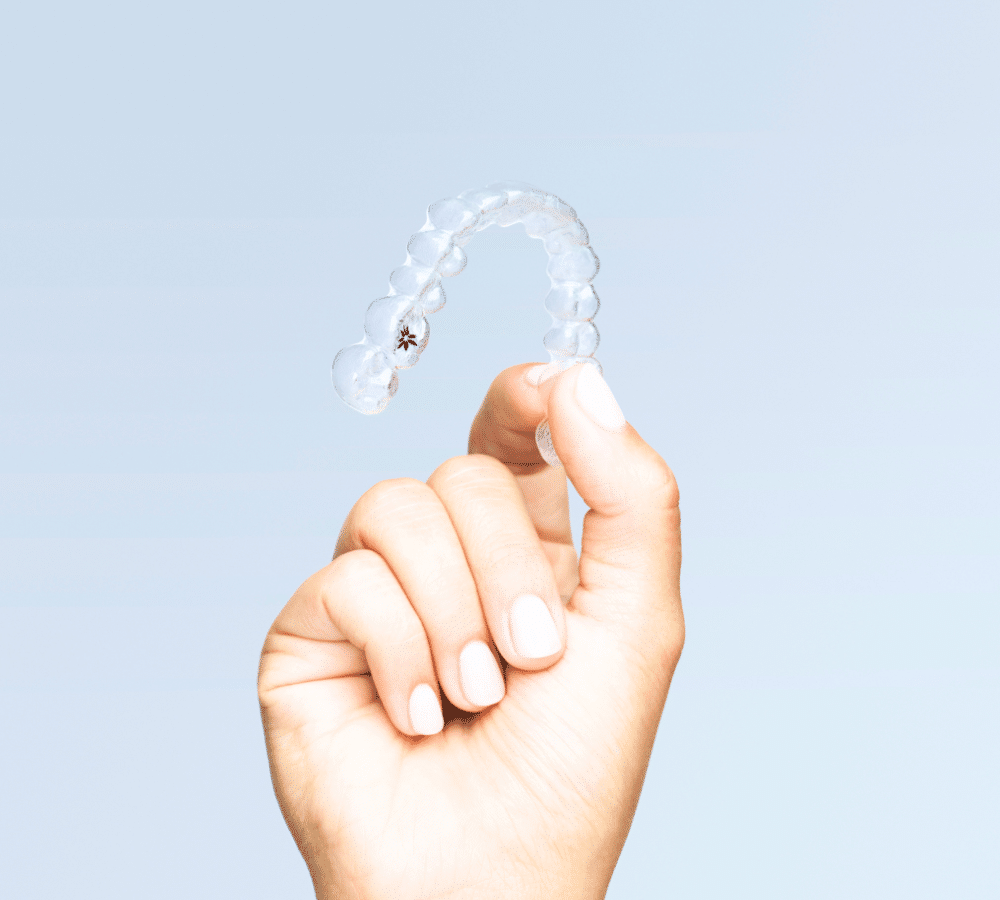
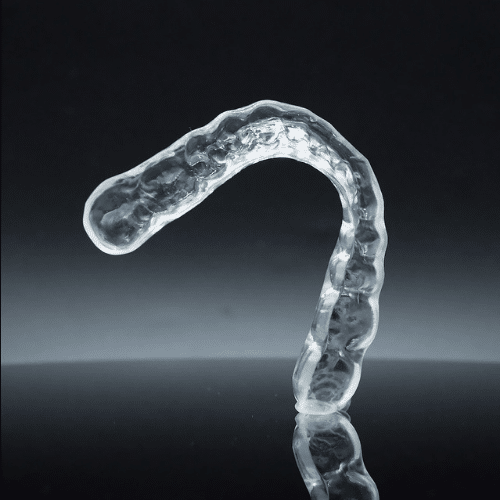
- Orthodontic appliances — including palatal expanders
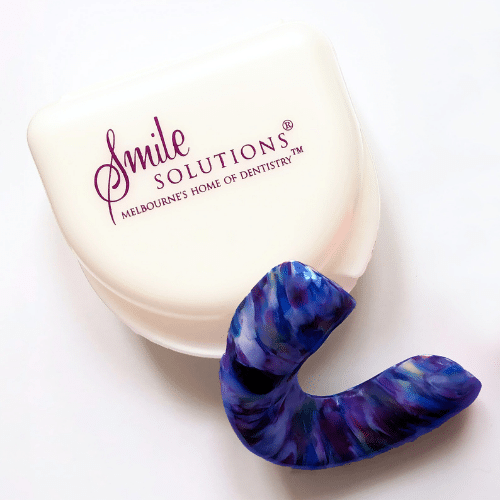
- Sports mouthguards — custom dual-laminated
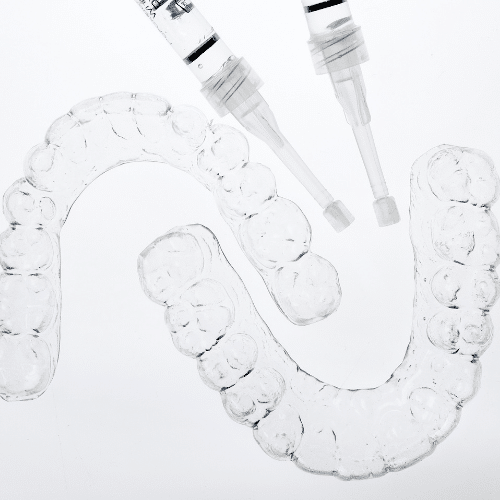
- Trays for take-home whitening
- Specialty splints — including the six TMD splint designs and mandibular advancement splints for sleep apnoea
The team of ceramists, dental technicians and dental prosthetists works closely with the practice's dentists and registered specialists rather than receiving instructions by courier.
The multi-layering technique for porcelain veneers
This is the technical detail that separates a veneer that looks like a tooth from one that looks like a veneer.
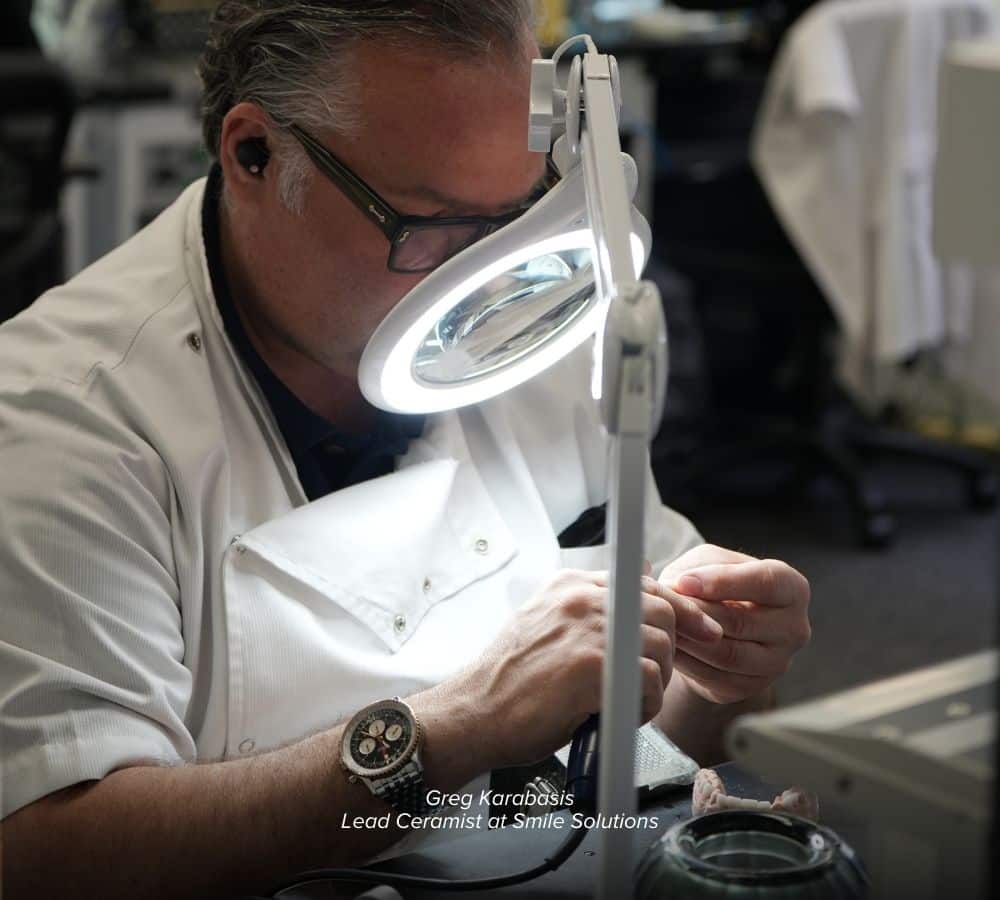
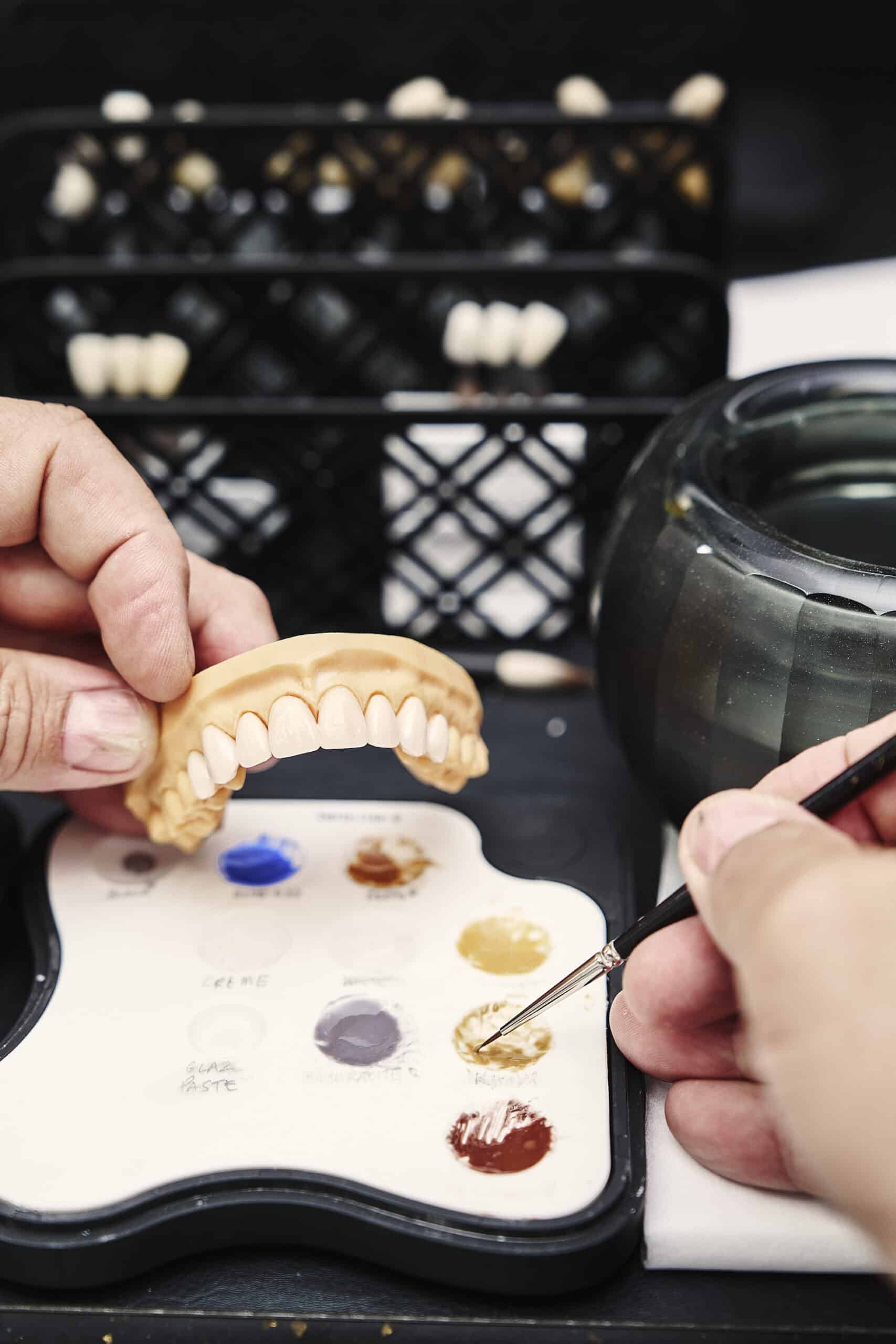
Rather than milling a veneer from a single block of uniform porcelain, the multi-layering technique applies several thin layers of porcelain to build up the restoration.
Natural teeth are not one colour. Enamel is translucent at the edge and more opaque toward the gum; dentine underneath is warmer and more saturated. Layering reproduces that structure — attending to translucency, colour and texture — so the veneer behaves like a tooth under light instead of reflecting it flatly.
Milling from a single block is not a lesser method, it is a different one: it is what makes same-day CEREC restorations and same-day porcelain veneers possible in one visit. Which approach suits a given tooth depends on where it sits and how much of it shows, and the same trade-off runs through the difference between composite and porcelain veneers.
How laboratory-made work fails, and why that shapes the design
This is the honest part of the page. A restoration is a manufactured object carrying load in a wet, warm, chemically hostile environment, and a proportion of them develop problems. The best long-term evidence for laboratory-built structures comes from implant dentistry, because implant-supported work has been followed in cohort studies for decades.
The ITI Academy's consensus statements, drawing on systematic reviews of prospective and retrospective cohort studies, report the following for implant-supported fixed partial dentures — bridges carried entirely on implants:
| Complication (implant-supported fixed partial dentures) | Reported incidence |
|---|---|
| Suprastructure-related: veneer and framework fracture | 14.0% after 5 years |
| Connection-related: screw loosening or fracture | 7.3% after 5 years |
| Implant fracture | 0.4% after 5 years; 1.8% after 10 years |
| Loss of retention of a cemented restoration | 2.9% within 5 years; 16.2% within 10 years |
| Patients with no biologic or technical complication at all | 61.3% after 5 years |
For combined tooth- and implant-supported bridges the pattern shifts: suprastructure complications 9.8% after 5 years, but connection-related complications 4.3% after 5 years rising to 26.4% after 10 years, and loss of retention of cemented restorations 6.2% within 5 years and 24.9% within 10 years. (Source: ITI Academy, Implant Survival and Complications consensus statements, drawing on Pjetursson et al. 2004 and Lang et al. 2004.)
Three things follow, and together they are why an in-house laboratory is a clinical argument rather than a convenience:
- Read "veneer fracture" carefully. In this literature it means the ceramic veneering layer chipping off the framework of an implant suprastructure — a layered structure built on metal or zirconia and screwed or cemented onto implants. It is not the same event as a porcelain laminate veneer on a natural tooth, and these figures should not be read across to porcelain veneers. They are cited here because they describe the failure mode of exactly the kind of layered, laboratory-built object this laboratory makes.
- The most common technical problem is the part the laboratory made, not the implant. Suprastructure complications at 14.0% over five years run far ahead of implant fracture at 0.4%. Framework design, material choice, occlusal scheme and fit are where the risk actually sits — which is an argument for the technician being in the same building as the clinician, and for both of them seeing the patient.
- Screw loosening is a maintenance event rather than a failure. It is one reason screw-retained work is often preferred to cemented work for implant restorations: a loose screw can be retightened, while the cemented figures above show what retrieval costs when a cemented restoration lets go instead.
One honest caveat about those numbers. The consensus statements note that "the implant types and components reported in the literature have been modified, and some of them are no longer available", and that data on the complete absence of complications was available from only four of the twenty-one cohort studies. These are long-run studies of older systems. They describe the shape of the risk; they are not a prediction for any individual case. The clinical side of the decision is set out in What do I need to know about dental implants? and What are the different types of dental implants?.
Sports mouthguards, and the standard they are made to
A custom mouthguard is one of the cheapest things a dental laboratory makes and one of the most consequential.
The Australian Dental Association's Policy Statement 2.2.5 states that "the most effective protection against oral damage is a custom fitted mouthguard, where precision fit and quality materials offer maximum comfort & injury prevention". Over-the-counter guards, it says, "provide better protection than no mouthguard, however their protection varies depending on the design, comfort, adaptation and thickness of the final product" — and, decisively, "quality control of at-home custom adaptation is not achievable." That last sentence is the whole case for a laboratory-made guard over a boil-and-bite one; the practical comparison is in Getting a new mouthguard — a trip to the chemist or the dentist?.
Fabrication is not improvised, either. The same ADA policy points to the Australian Standard HB209-2003, "Handbook: Guidelines for the Fabrication, Use and Maintenance of Sports Mouthguards".
The ADA also groups sports into four risk levels, with protection matched to the risk:
- Mouthguard strongly recommended — off-road bike riding, skateboarding, rock climbing, white-water rafting, trampolining, combat sports, football, basketball, squash and field hockey.
- Head protection worn, which may remove the need for a mouthguard — full-face helmets in ice hockey, goalkeepers in field hockey, cricket, rollerblading and cycling.
- Not normally worn, but justifiable in certain circumstances — high diving, surfboarding and skiing.
- Impractical or not warranted because the risk of injury is low — swimming, athletics, aerobics and rowing.
Three further points from the same policy are worth knowing before ordering one:
- The need for a mouthguard should be assessed by a dentist, based on risk factors including the individual's sporting or occupational activities and their dental anatomy.
- Protective equipment should be used during training as well as competition — a large share of injuries do not happen on match day.
- Certain occupations carry their own risk. The policy names physical impact from work equipment for labourers, tradespeople and riggers, and tooth abrasion from dust or particles for miners, bricklayers and tilers.
The ADA adds that children with prominent front teeth may be at higher risk of injury and may benefit from orthodontic assessment and early treatment to reduce it, and that oral piercing jewellery may increase the risk and degree of oral injury. (Source: Australian Dental Association, Policy Statement 2.2.5 — Prevention and Management of Oral Injuries.) For children specifically, see Should my child wear a mouthguard?.
Meet the creator of your smile
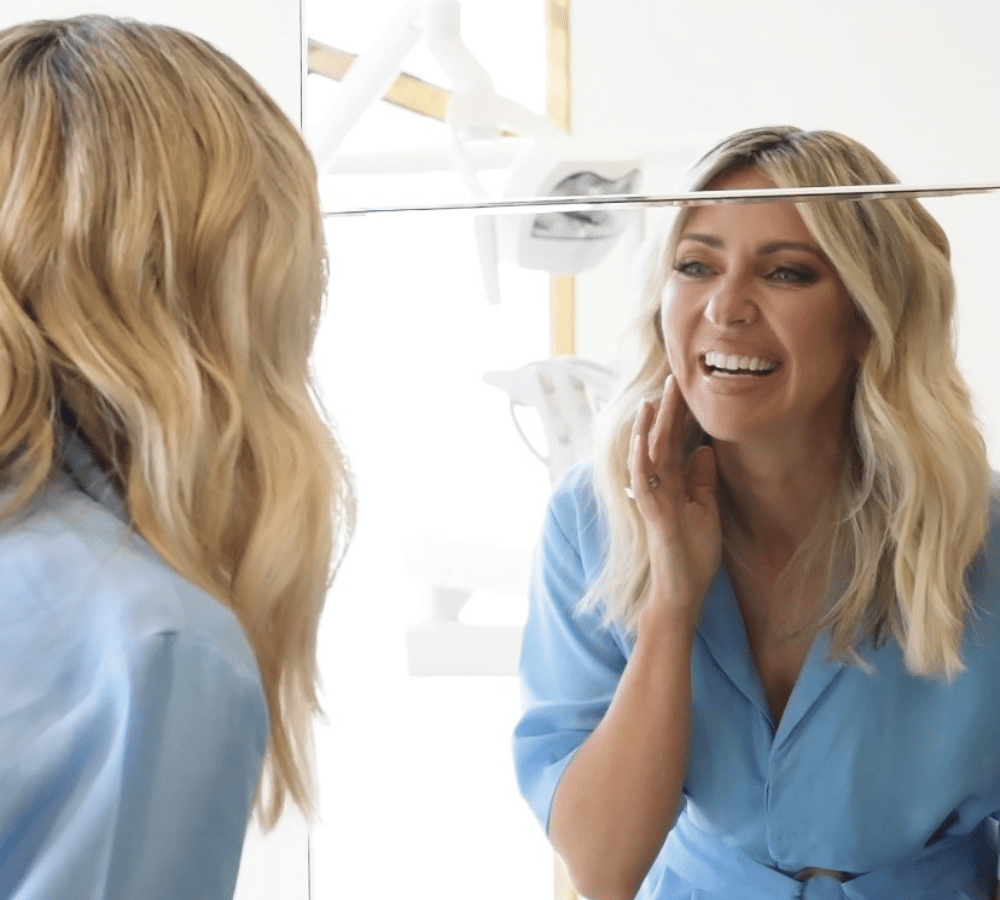
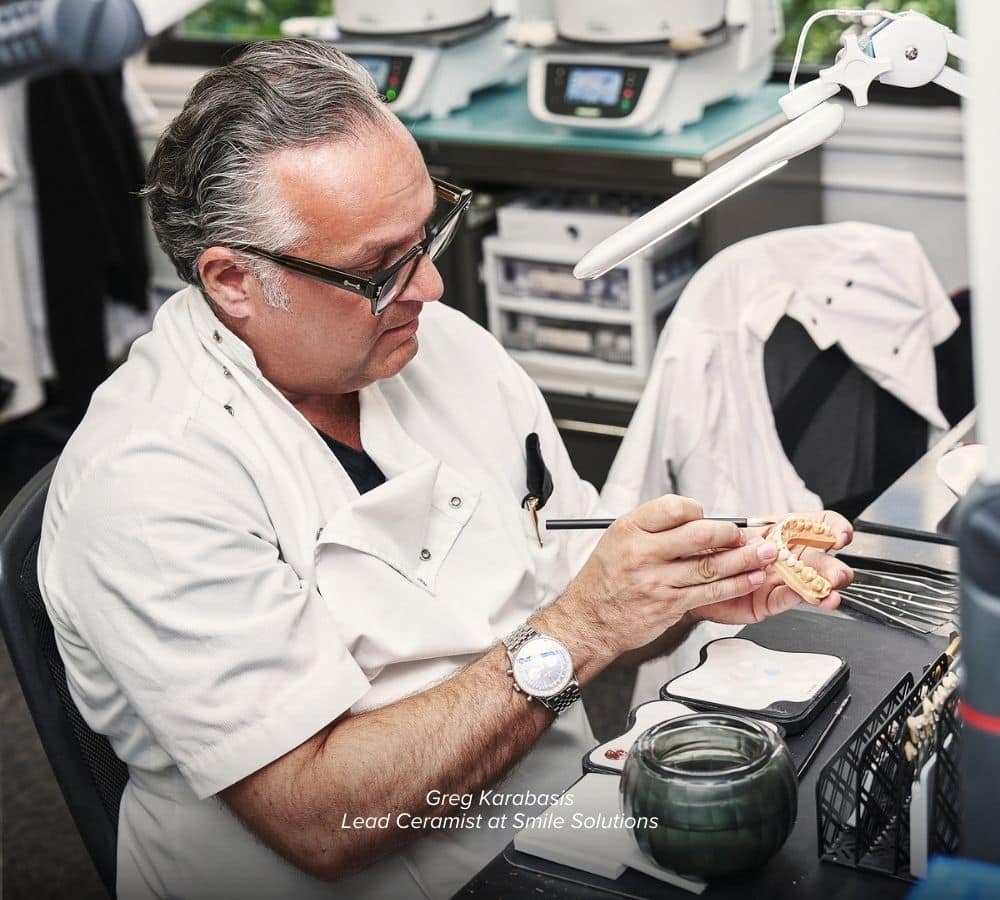
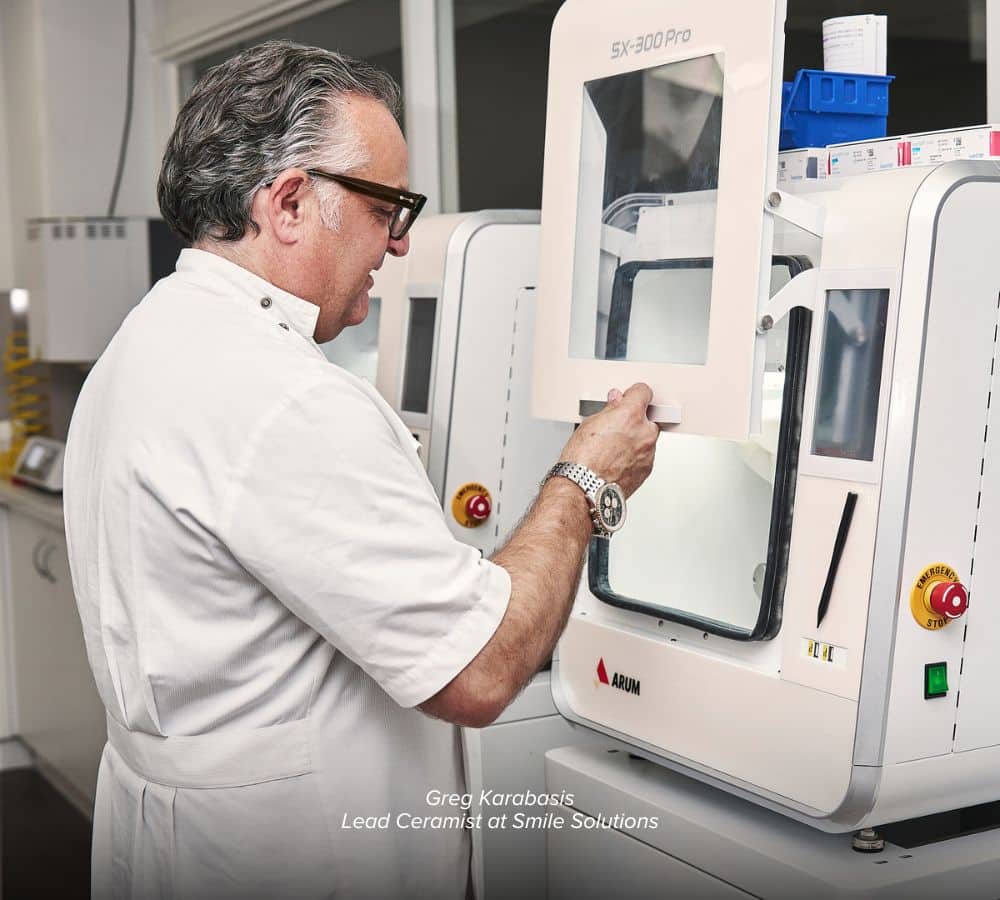
During your initial appointment and throughout treatment, you can meet and consult with the lead ceramist who will craft your restorations.
No faceless off-site or overseas provider. The ceramists work on site, in a dedicated ceramic studio, and stay involved at each step.
This matters practically for shade matching. A ceramist who sees you under natural light, in person, can read the colour, translucency and character of your natural teeth in a way that a photograph and a shade tab cannot convey.
The laboratory team
| Name | Role | Qualifications |
|---|---|---|
| Greg Karabasis | Master Ceramist | Dip. Dental Technology (RMIT) |
| Agne Diliartaite | Senior Dental Technician | Dip. Dental Technology |
| Natalie Bilos | Dental Technician | — |
| Talija Batinovic | Dental Technician | — |
Greg Karabasis has worked in the dental industry for 32 years, and was founder and Company Director of one of Australia's largest dental laboratories for 28 years. He holds accreditations with Noritake, Ivoclar, Straumann, Sirona and Exocad, has presented his work in Australia, South Korea and China, and is a former Vice President of the Victorian Crown and Bridge Society.
Natalie Bilos individually makes each of the practice's custom TMD and bruxism splints — the appliances described in how a night guard is used to treat TMD.
Preview before you commit
The laboratory supports a reversible preview of a smile makeover — a physical mock-up using temporary resin applied over your natural teeth.
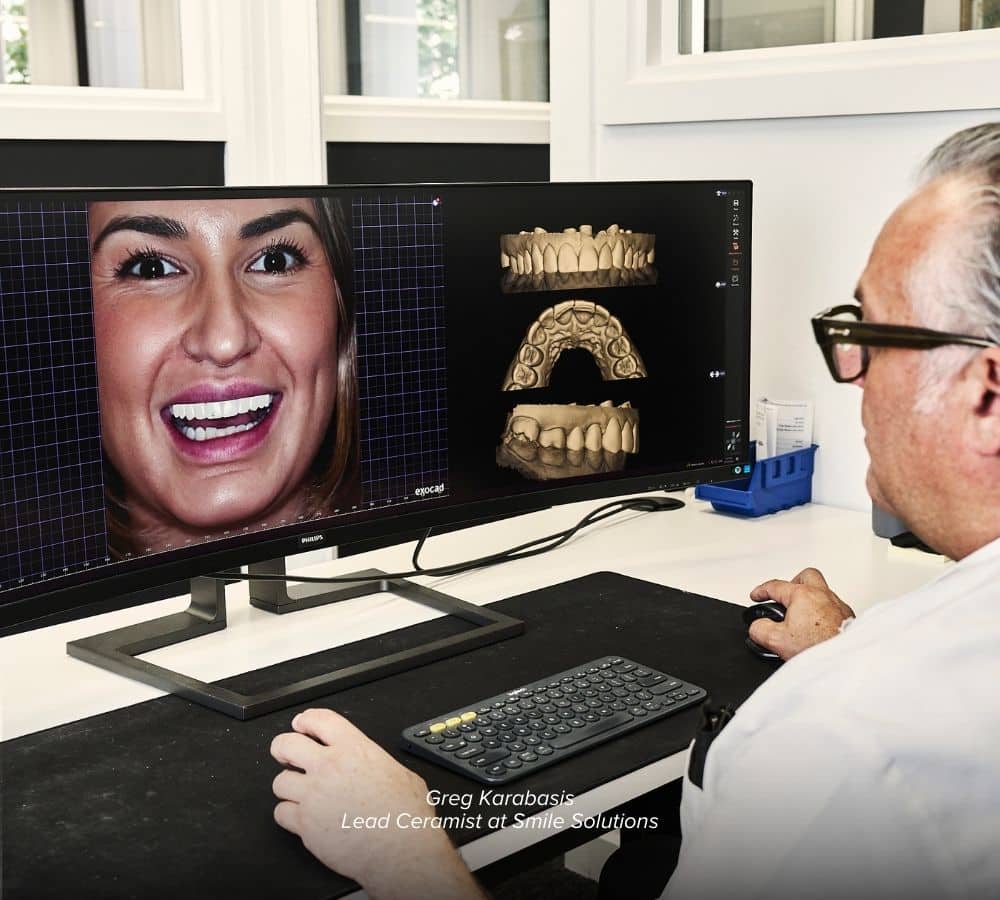
It begins with a digital reveal on a large screen with the master ceramist, then a physical mock-up fabricated by your cosmetic dentist. The process causes no harm to any natural teeth.
With a mock-up you can:
- view and feel proposed changes to shape, size, length, position and colour
- preview options — how many veneers, and whether a gum lift would help
- meet the master ceramist and cosmetic dentist before committing
The demonstration video features Dr Ryan Sherry (DEN0002124765), Registered Dentist, General Registration. A mock-up is an elective step, and your dentist will review other options where appropriate.
The equipment
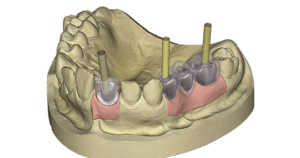
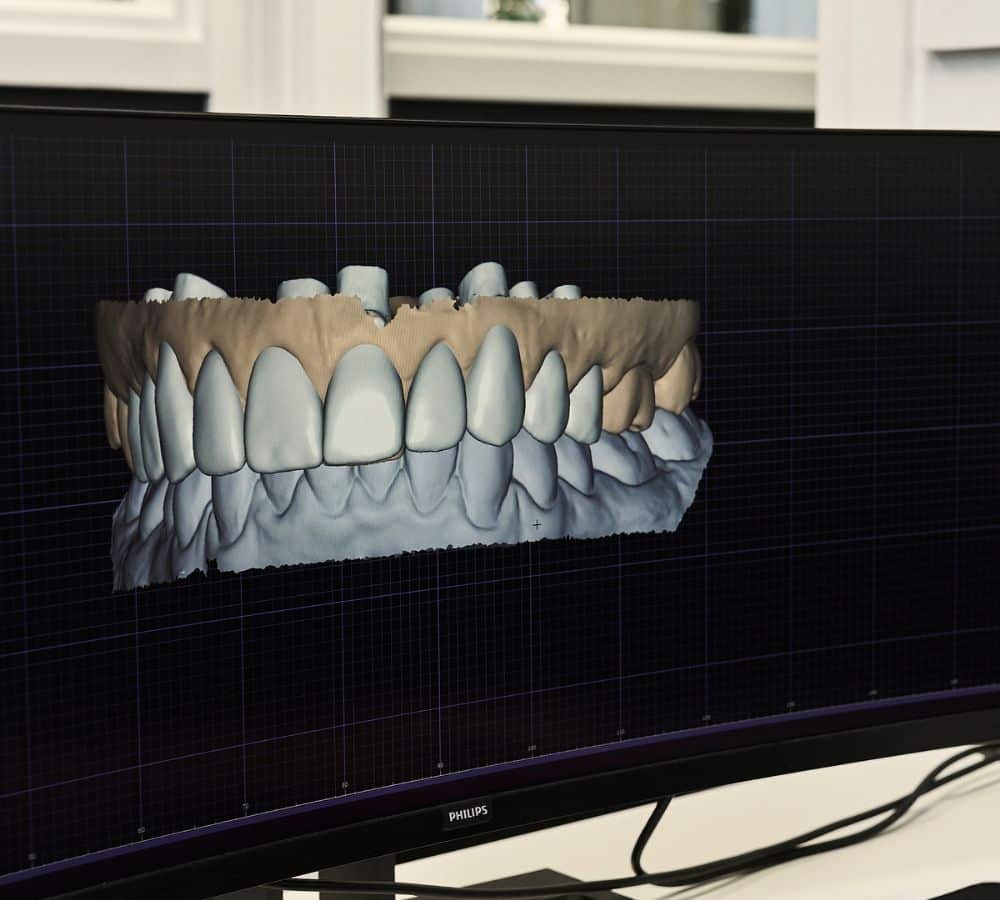
Exocad DentalCAD — design software for implant restorations, allowing planning and visualisation of implant placement, customisation of prosthetic components, and streamlined workflow.
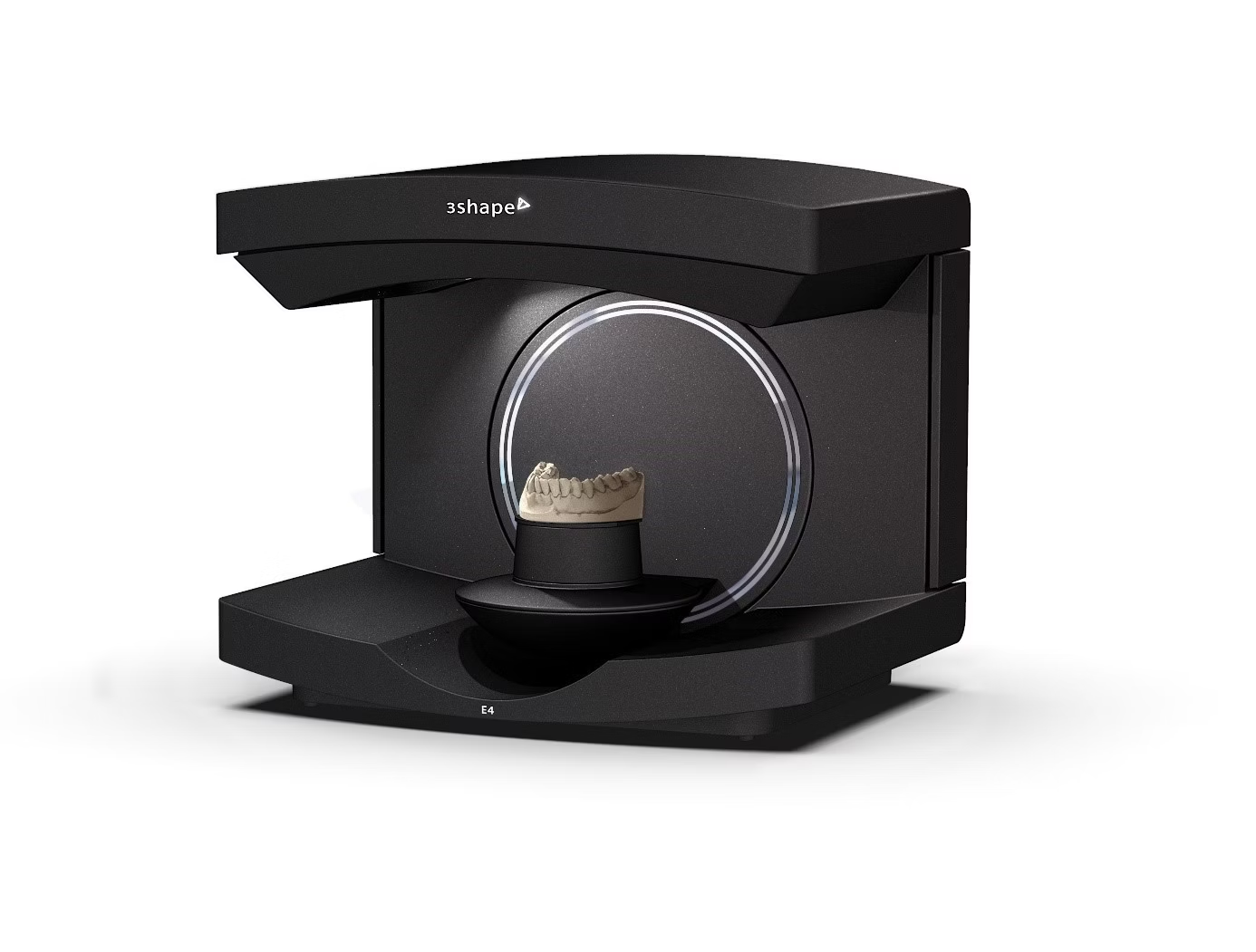
E4 Lab Scanner — generates highly accurate digital impressions, with precise detailing for fit and appearance.
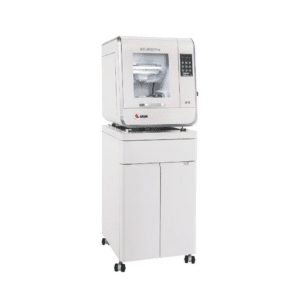
Arum 5-Axis wet/dry milling machines — precise cutting and shaping of dental materials, handling a range of materials with both wet and dry milling.
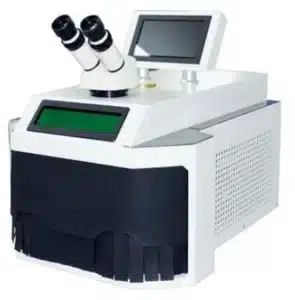
Dentaurum Laser Welder — used in making metal frameworks for dentures and orthodontic appliances. A concentrated laser beam melts and fuses metal surfaces with high accuracy, producing strong, durable joints without needing additional adjustment.
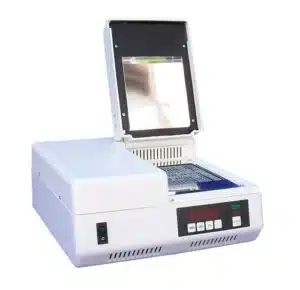
Otoflash Flash Curing Device — fast, efficient curing of resin-based dental materials used in crowns, bridges and veneers, with precise control settings for consistent results and reduced processing time.
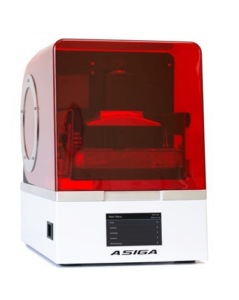
Asiga Max 3D printer — compact DLP (Digital Light Processing) printer for high-precision dental prints, working from a wide range of materials. DLP flashes a single image of each layer and cures the resin with light, producing fast, detailed prints.
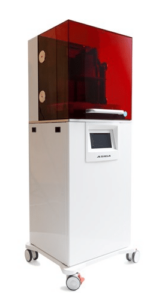
Asiga Pro Max 4K UV — high-resolution printer with a 4K UV LED light source, for dental models and appliances.
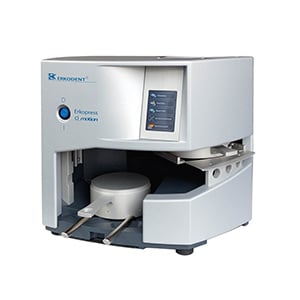
Erkopress — vacuum forming machine for custom appliances such as orthodontic retainers, mouthguards and bleaching trays, applying precise consistent pressure for accurate fit.
Alongside these, the practice's iTero and 3Shape Trios scanners and its fleet of 3D printers are what allow the workflow to compress to a one-day turnaround where needed. The chairside side of that equipment is set out under the practice's technology.
Materials
Only TGA-approved products are purchased for the manufacture of appliances — no unregulated imports or cost-cutting substitutes, and no work is sent offshore.
Common questions
How long should a custom mouthguard last, and how do I look after it?
Longer than most people assume, with one important exception.
The Australian Dental Association's consumer guidance is that a custom mouthguard, "if it is used, stored, and fit checked by your dentist, it can last you multiple sporting seasons as long as you are no longer growing". That final clause is the exception, and it is the whole answer for children and teenagers: while the jaws and teeth are still changing, the guard stops fitting the mouth it was made for, and a guard that does not fit does not protect. Bring it to the check-up and have the fit assessed rather than assuming last season's still works.
The ADA's care list is short and worth following:
- do not store it in direct sunlight
- wash it in cool or warm water — not hot, which distorts the material
- store it dry and safely in a protective case
- write your name on both the mouthguard and the case
That last one sounds trivial until you have seen a club's lost property box.
One piece of context on why this is worth the trouble: the ADA and Sports Medicine Australia jointly promote a "no mouthguard, no play" policy for sporting clubs, and encourage all Australian clubs to sign up and make wearing one mandatory. If your club has not, it is a reasonable thing to raise.
I am having orthodontic treatment. Can I wear a mouthguard over braces?
This is the one situation where the usual advice is reversed, and it surprises people.
The ADA's policy describes over-the-counter boil-and-bite mouthguards as offering "little or no protection" and being liable to dislodge during play — but adds that they "may be appropriate during orthodontic treatment". The reason is practical: teeth are moving, sometimes every few weeks, so a rigid guard made to an exact impression is out of date almost immediately, and one made over fixed appliances can lock onto them.
So do not stop wearing protection while you are in braces, and do not assume the custom guard you had made beforehand still fits. Ask your orthodontist what to wear during treatment for your particular appliance and sport, and plan to have a properly made custom guard once the appliances come off and the teeth have settled.
The risk argument is not abstract. The ADA notes that children with prominent front teeth may be at higher risk of injury, which is often exactly why they are in orthodontic treatment in the first place.
My new crown does not match the tooth next to it. What now?
Say so before it is cemented, if you possibly can — that is by far the easiest point to change it.
Matching a single restoration to the teeth around it is genuinely one of the hardest things in the discipline, for the reason described above: a natural tooth is not one colour. Enamel is translucent at the edge and more opaque toward the gum, the dentine underneath is warmer, and the surface has texture that scatters light. A restoration that is the right shade on a tab can still read wrong in your face because its translucency or surface is wrong. That is what the multi-layering technique is for, and it is why the ceramist seeing you in daylight is not a marketing flourish.
What to do: ask to see the restoration tried in, in natural light, before any permanent cement is used, and take a mirror to a window if there is one. Ask for a second opinion from the person who made it — here, that person is in the building.
If a mismatch appears later rather than at fitting, that is a different problem and worth knowing about in advance. The ADA's consumer guidance is explicit that "sometimes crowns, bridges and veneers can chip, fracture or no longer match the colour of your teeth and need to be replaced". Natural teeth continue to change colour over the years; ceramic does not. A restoration that matched perfectly in 2015 may not in 2035, and that is the material behaving normally rather than a fault.
The laboratory belongs to the practice recommending the work. Is that a conflict?
It is a fair thing to notice, and the honest answer is that it cuts both ways.
The clinical argument for it is set out above and is real: the complication data shows that the most common technical problems in laboratory-built restorations are in the part the laboratory made, not the implant underneath it — so having the technician in the same building as the clinician, able to see the patient and to be called back when something does not fit, removes a courier and several days from every correction.
The argument against is simply that a business that manufactures restorations has an interest in restorations being prescribed. That is worth holding in mind here and at any practice with a laboratory, in-house or not.
The protection is not really ownership structure; it is the standard applied to the advice. The National Law prohibits advertising a regulated health service in a way that directly or indirectly encourages the indiscriminate or unnecessary use of regulated health services, because any intervention carries inherent risk. Applied to your own appointment, the working version is to ask what the problem is, what happens if nothing is done, what the least invasive option would achieve, and to get the plan and the costs in writing before agreeing. A second opinion elsewhere is always available and no reasonable clinician will take offence at one.
Related reading
- Everything you need to know about CEREC technology at Smile Solutions
- What kind of mouth guard should I use?
- Getting a new mouthguard — a trip to the chemist or the dentist?
- Should I wear a mouthguard while playing sports?
- Bridges, implants, or dentures for replacing missing teeth?
- Prosthodontists — the specialists who prescribe much of the laboratory's most complex work
- Before and after gallery
- Contact the practice
Practical details
| Address | Level 1, 220 Collins Street, Manchester Unity Building, Melbourne VIC 3000 |
| Phone | 13 13 96 |
| theteam@smilesolutions.com.au | |
| Monday – Friday | 8.00am – 6.00pm |
| Saturday | 8.30am – 1.30pm |
| Sunday | By appointment |
| Laboratory location | On site, Melbourne |
| Works for | Smile Solutions patients only |
| Offshore work | None |
| Materials | TGA-approved only |
| Fastest turnaround | One day |
| Parking | Wilsons Parking, Flinders Lane (between Swanston and Russell) |
All photos and videos published by the practice are shared with patient consent, with no filters or AI alteration. Results, recovery times and potential risks vary for each individual. This information is general in nature and intended for people over 18.
Smile Solutions trades under ABN 28 193 514 103.
Images on This Page
-
https://www.facebook.com/tr?id=800557773428361&ev=PageView&noscript=1
(no alt text)
-
https://www.smilesolutions.com.au/wp-content/uploads/2025/10/calendar_month.svg
(no alt text)
-
https://www.smilesolutions.com.au/wp-content/themes/arcadian-wordpress-theme/assets/images/smile_solutions_logo_white.png
Smile Solutions Logo
-
https://www.smilesolutions.com.au/wp-content/themes/arcadian-wordpress-theme/assets/images/smile_solutions_logo_purple.png
Smile Solutions Logo
-
https://www.smilesolutions.com.au/wp-content/uploads/2025/11/Smile-Solutions-4.png
Smile Solutions 4
-
https://www.smilesolutions.com.au/wp-content/uploads/2026/01/157.jpg
Brush and dental material close-up
-
https://www.smilesolutions.com.au/wp-content/uploads/2023/04/WEBSITE-Media-2.png
Dental model with brush application
-
https://www.smilesolutions.com.au/wp-content/uploads/2025/11/All-on-4-at-Smile-Solutions.png
All-on-4 at Smile Solutions
-
https://www.smilesolutions.com.au/wp-content/uploads/2025/11/Invisalign-No-Brace-at-Smile-Solutions.png
Orthodontic Appliances
-
https://www.smilesolutions.com.au/wp-content/uploads/2025/09/Sports-Mouthguards-Smile-Solutions.png
Sports Mouthguard
-
https://www.smilesolutions.com.au/wp-content/uploads/2025/11/Smile-Solutions-Whitening-Trays.png
Whitening Trays
-
https://www.smilesolutions.com.au/wp-content/uploads/2025/11/Speciality-Splints.png
Specialty Splints
-
https://www.smilesolutions.com.au/wp-content/uploads/2025/11/Smile-Solutions-6.png
Smile Solutions
-
https://www.smilesolutions.com.au/wp-content/uploads/2024/04/Exo-Cad-300x158.png
Exo Cad
-
https://www.smilesolutions.com.au/wp-content/uploads/2024/07/E4-Lab-Scanner-.avif
E4 Lab Scanner
-
https://www.smilesolutions.com.au/wp-content/uploads/2019/05/Arum-5-Axis-wetdry-milling-machines-300x300.png
Arum 5 Axis wetdry milling machines
-
https://www.smilesolutions.com.au/wp-content/uploads/2024/04/Dentaurum-Laser-Welder-295x300.webp
Dentaurum Laser Welder
-
https://www.smilesolutions.com.au/wp-content/uploads/2024/04/Otoflash-Flash-Curing-Device-300x290.webp
Otoflash Flash Curing Device
-
https://www.smilesolutions.com.au/wp-content/uploads/2024/04/Asiga-e1720437541600-162x300.png
Asiga 3D printer
-
https://www.smilesolutions.com.au/wp-content/uploads/2024/04/Asiga-Pro-Max-e1720437599427-239x300.png
Asiga Pro Max 4K UV 3D
-
https://www.smilesolutions.com.au/wp-content/uploads/2024/07/Erkopress.jpeg
Erkopress
-
https://www.smilesolutions.com.au/wp-content/uploads/2026/01/194.jpg
194
-
https://www.smilesolutions.com.au/wp-content/uploads/2026/01/190.jpg
190
-
https://www.smilesolutions.com.au/wp-content/uploads/2026/01/189.jpg
189
-
https://www.smilesolutions.com.au/wp-content/uploads/2026/01/195.jpg
195
-
https://www.smilesolutions.com.au/wp-content/uploads/2026/01/178.jpg
178
-
https://www.smilesolutions.com.au/wp-content/uploads/2025/09/imgi_28_7.png
imgi 28 7
-
https://www.smilesolutions.com.au/wp-content/uploads/2025/09/imgi_29_8.png
imgi 29 8
-
https://www.smilesolutions.com.au/wp-content/uploads/2025/09/imgi_30_9.png
imgi 30 9
-
https://www.smilesolutions.com.au/wp-content/uploads/2026/01/WEBSITE-Images.jpg
WEBSITE Images
-
https://www.smilesolutions.com.au/wp-content/uploads/2026/01/Smile-Lab-4-scaled.jpg
Smile Lab 4 scaled
-
https://www.smilesolutions.com.au/wp-content/uploads/2025/08/69a44c30c93ce196d539cc5520080df52a5f3f88-scaled.jpg
69a44c30c93ce196d539cc5520080df52a5f3f88 scaled
-
https://www.smilesolutions.com.au/wp-content/themes/arcadian-wordpress-theme/assets/images/family_owned_bussiness.png
Family Owned Business
-
https://www.smilesolutions.com.au/wp-content/themes/arcadian-wordpress-theme/assets/icons/icon--phone.svg
Smile Solutions Contact