Snoring & Sleep Apnoea
What is obstructive sleep apnoea, and how is it treated?
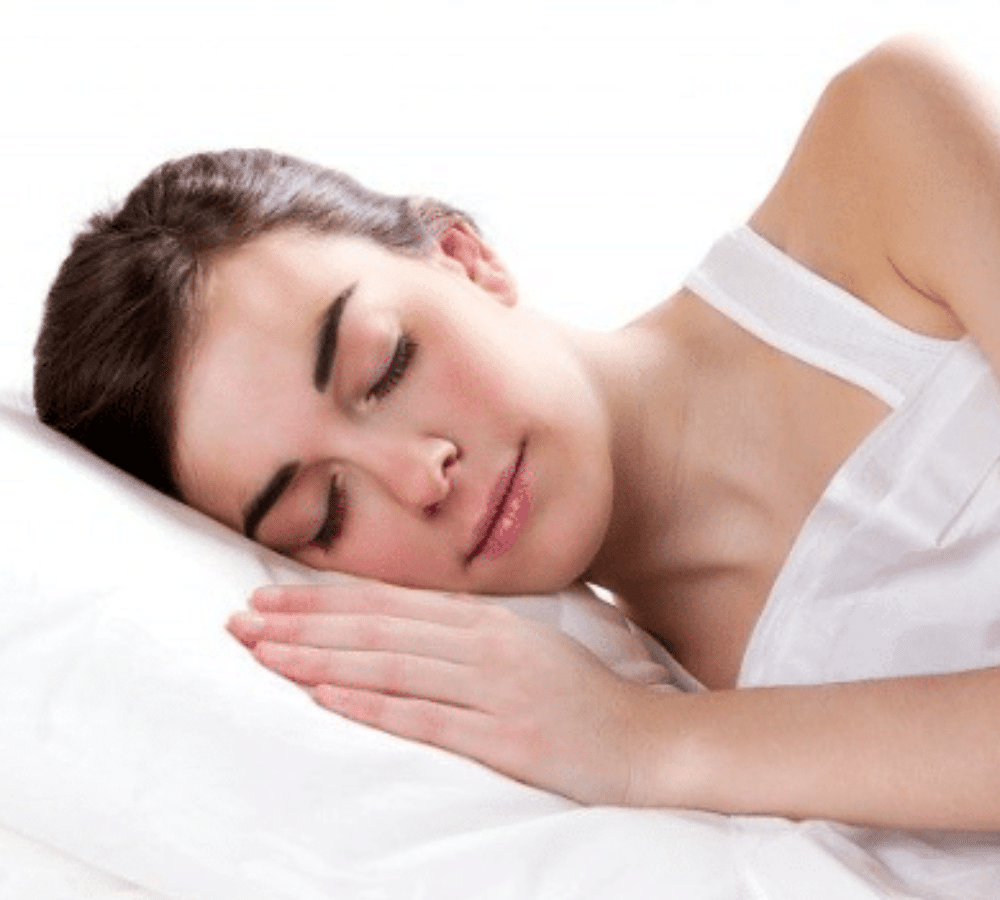
Obstructive sleep apnoea (OSA) is a condition where breathing is repeatedly interrupted during sleep because the upper airway collapses.
When we sleep, our muscles relax — including the throat muscles. In some people they relax enough for the throat to close above the voice box, blocking the airway and stopping breathing. Each of those events is an apnoea.
The result is a lack of restful sleep, leaving the sufferer continuously tired and seriously affecting daily activities. Snoring can be both a precursor and a symptom of OSA — though snoring alone does not mean you have it.
It is common. The Australian Dental Journal's 2025 practical guide to oral appliance therapy puts Australian primary snoring at about 8 per cent, and moderate-to-severe OSA (an apnoea-hypopnoea index of 15 or more) at 10 per cent of men aged 30–49, 17 per cent of men 50–70, 3 per cent of women 30–49 and 9 per cent of women 50–70. Other good Australian sources use different cohorts and reach different numbers, so treat any single figure as an estimate.
OSA is a medical condition. It is diagnosed by a doctor on a sleep study, and its overall management belongs with your GP or sleep physician. That is the Australian Dental Association's formal position, not a house rule: Policy Statement 6.7 states that ‘Initial diagnosis of Sleep Apnoea must be made by an appropriate medical practitioner. If a dental appliance is required, it should be managed by a dentist’ — and that monitoring whether the therapy is still working is a medical responsibility too. What a dental practice contributes is assessment of the airway and jaw, and appliance therapy where that is the appropriate treatment — alongside medical care, not instead of it.
Smile Solutions is at Level 1, 220 Collins Street, Manchester Unity Building, Melbourne CBD.
Symptoms
- Loud snoring or disrupted breathing during sleep — irregular patterns, pauses, or sudden gasping and choking. A partner or family member is often the first to notice
- Waking tired despite enough sleep — fragmented sleep and disrupted REM cycles leave you unrefreshed
- Excessive daytime tiredness — struggling to stay awake, needing afternoon naps, or waking from a nap with a gasp
- Difficulty concentrating or memory problems — poor short-term memory, reduced alertness, mental fogginess
- Morning headaches, irritability or mood changes — from reduced oxygen levels and disrupted sleep
- Unusual dream patterns or restless sleep — vivid or disrupted dreams from fragmented REM
These are reasons to be assessed, not a diagnosis — most of them have other explanations. The RACGP says the same of the formal screening questionnaires: a positive result ‘by itself does not confirm a diagnosis of OSA, and the patient should proceed to sleep study testing’. If you are falling asleep while driving, stop driving and see a doctor promptly. Untreated OSA affects your legal fitness to drive, and it must be disclosed for a commercial licence.
Signs a dentist may notice first, because the mouth records things you cannot see: a scalloped tongue, worn or flattened teeth, a dry mouth in the mornings, redness at the back of the throat, and jaw muscle tenderness. See TMD & Teeth Grinding and Bad Breath, since chronic mouth breathing dries the mouth overnight.
On grinding, the evidence is genuinely divided, and it is worth knowing that before anyone screens you on the strength of it. A 2024 systematic review and meta-analysis of 14 studies in Sleep Medicine Reviews found that the odds of sleep bruxism in people with OSA did not differ significantly from controls (OR 1.23, 95% CI 0.47–3.20), with no gradient across mild, moderate or severe OSA. A 2025 review of 11 studies in the Journal of Clinical Medicine found grinding much more common in people with OSA — 49.7 per cent in one large polysomnographic study against a general prevalence of 8 to 13 per cent — but concluded that ‘the causal relationship remains unclear’, and two of its studies pointed the other way. So grinding is not established as a marker for sleep apnoea and is no substitute for a sleep study. What the literature does support is the reverse: treating the apnoea tends to reduce grinding.
Why it matters beyond tiredness
The ADA's own policy records that sleep-disordered breathing ‘has been associated with hypertension, cardiovascular disease, stroke and premature death’. OSA is associated with an increased risk of:
- irregular heartbeat
- heart disease
- high blood pressure
- stroke
- heart attacks
- reduced blood oxygen levels
One limit on all of that: treating the breathing is not the same as proving the risk falls. The Cochrane review of oral appliances says long-term data on cardiovascular health ‘are required’, so nothing here should be read as a claim that a splint protects your heart.
Risk factors you can influence: maintain a healthy body weight, avoid alcohol, avoid smoking, seek treatment for allergies affecting the airways, and sleep on your side rather than your back.
Diagnosis: the sleep study
Accurate diagnosis requires a sleep study, monitoring your breathing, snoring, oxygen levels, brain and heart activity, body position and movements across a normal night.
In most cases the study can be done at home. Severe cases may still need an overnight hospital study. Results go to a sleep physician, who reports to your treating dentist.
Out-of-pocket fee for the study is normally $200–$300, subject to change and to your cover.
What the study measures
- Oxygen saturation — how much oxygen is in your blood through the night, and how often it drops below safe levels
- Heart rate — patterns and irregularities associated with breathing events
- REM and non-REM sleep cycles — time spent in each stage, and whether sleep architecture is disrupted
- Respiratory events — how many times breathing stops (apnoeas) or is significantly reduced (hypopnoeas) per hour, producing the AHI (Apnoea Hypopnoea Index) used to classify severity
- Body position — whether breathing changes on your back versus your side
- Body movements — limb movements and restlessness
- Brain activity — EEG, in full clinic-based studies, to classify sleep stages precisely
Your sleep physician classifies the condition as mild, moderate or severe and recommends a treatment pathway. Broadly, an AHI of 5 to 15 events an hour is mild, 15 to 30 moderate, and above 30 severe — the RACGP anchors the two lower boundaries, defining the presence of OSA as an AHI of 5 or more and moderate-to-severe OSA as an AHI above 15. The number is read alongside your oxygen levels and symptoms rather than on its own; the same guidance notes that ‘many patients with moderate–severe OSA do not experience excessive sleepiness’, while people who are minimally symptomatic ‘might not benefit from medical treatment apart from management of their risk factors’. Ask for your AHI and your lowest oxygen saturation; they are the two figures every later decision refers back to.
Finding where the obstruction actually is
Not all sleep apnoea is the same, and this is the step most often skipped.
At the Collins Street Imaging facility on Level 9, we use Cone Beam CT (CBCT) scanning to produce detailed three-dimensional images of your airway. Specialist orofacial radiologists assess the scan to identify the point of constriction — at the level of the nose, soft palate, tongue base, or lower pharynx. See Our Technology.
That localisation informs the treatment:
| Site of obstruction | Likely direction |
|---|---|
| Nasal | ENT referral or nasal dilators |
| Soft palate collapse | Laser treatment, considered as an adjunct |
| Narrow arch and palate | Orthodontic expansion |
| Structural jaw abnormality | Referral to oral and maxillofacial surgeon |
This diagnostic-first approach is intended to ensure you receive the right treatment, not the most convenient one. A splint prescribed for a nasal obstruction will not work, however well it is made. A CBCT scan is an anatomical picture taken while you are awake and upright; it complements a sleep study rather than replacing it, and like all radiography it is taken only where clinically justified. The Australian Dental Journal guide adds a caution worth repeating: methods of predicting appliance success ‘involving CBCT and other awake measurements are not yet better than clinical assessments’. The scan shows where the airway is narrow, not whether a splint will work for you.
Mandibular advancement splints
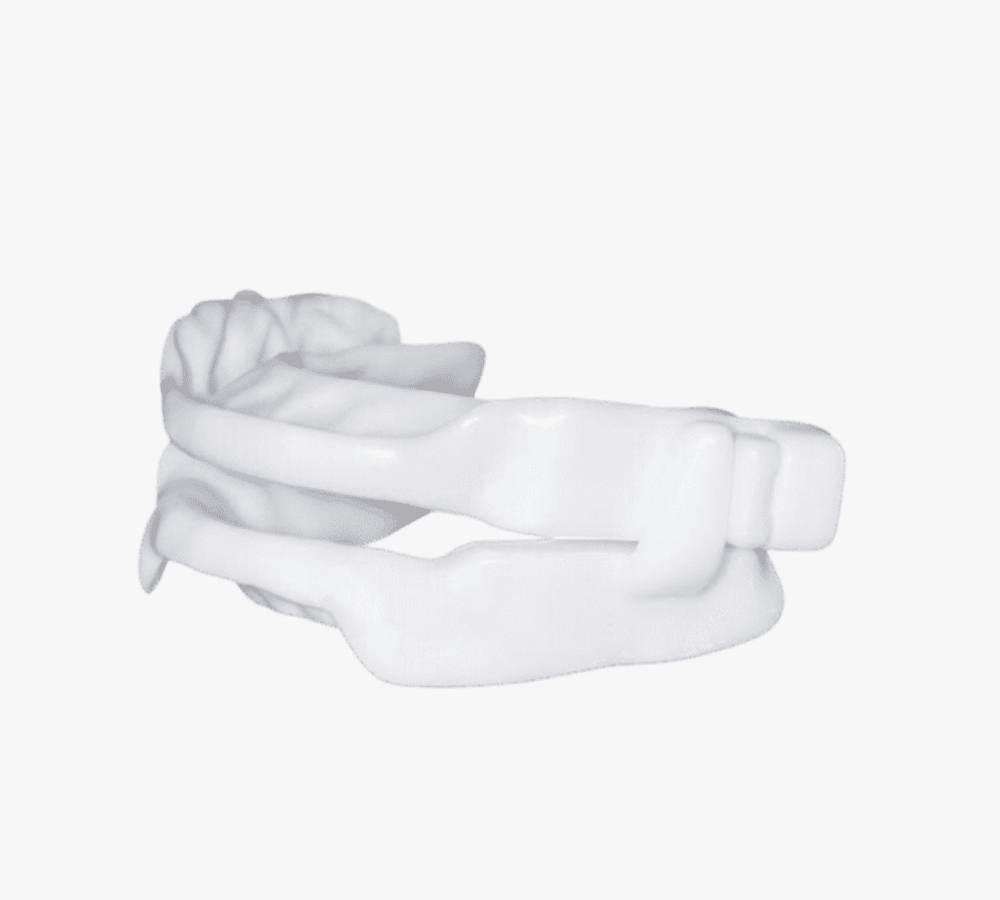
A mandibular advancement splint (MAS) is a custom-made device worn like a mouthguard during sleep. It moves the lower jaw forward from its natural position, opening the airway and reducing obstruction and snoring.
Oral appliance therapy is a well-established treatment for snoring and for mild to moderate OSA, and for patients with severe OSA who cannot tolerate CPAP. That is exactly how ADA Policy 6.7 frames it: oral appliances ‘can be a first-line therapeutic option for adults with snoring and mild to moderate forms of Obstructive Sleep Apnoea’, and ‘may also be indicated for people with severe OSA who are not compatible with continuous positive airway pressure (CPAP) therapy’.
What the numbers look like. The Cochrane review of oral appliances in adults pooled 17 randomised studies and 831 participants; against an inactive control appliance, an active one reduced daytime sleepiness (Epworth −1.81, 95% CI −2.72 to −0.90) and reduced the AHI by 10.78 events an hour (95% CI −15.53 to −6.03, five studies). Its searches run only to June 2008, and the newer Australian Dental Journal guide states plainly that ‘OA therapy is less successful at reducing the AHI than CPAP’. That guide reports the ORCADES cohort of 337 patients who could not use CPAP: at two to three months, 76.2 per cent had halved their AHI, 63.5 per cent were below an AHI of 10 and 36 per cent reached a complete response below 5 — best results in mild OSA, worst in severe. At five years, 52 per cent still maintained a halving of their AHI. So it works for most suitable people, less well than CPAP, and the effect can fade. Follow-up testing is used to confirm the effect rather than assuming it.
We use custom nylon splints. The lightweight, thin design allows you to open and close your mouth comfortably, speak, and sip water without removing it. Unlike acrylic resin appliances, nylon splints are less prone to fracture. They are made in the practice's own laboratory — see Smile Solutions Laboratory.
Custom and adjustable is the recommendation, not an upgrade. The Australian Dental Journal guide recommends ‘a custom-fabricated, titratable, bi-bloc design’ and states that ‘the use of a temporary or non-titratable OA is not recommended’; the Sleep Health Foundation tells patients that ‘over-the-counter devices don't work consistently enough’.
It is not the same thing as a sports mouthguard or a grinding splint, even though all three look broadly similar. A sports guard protects against impact; a grinding splint absorbs load; a mandibular advancement splint holds the jaw forward to keep the airway open. Wearing the wrong one does not treat the problem you have. See Sports Mouthguards.
How yours is made
1. Comprehensive examination. A thorough examination of your teeth first, so any necessary dental treatment is completed before the device is made — delaying it changes the fit of the splint. You need enough sound teeth to anchor a splint, which is why it is not suitable for everyone. See Dental Cleans & Hygienists.
2. Digital scan and fabrication. A digital scan of your teeth and bite using impression-free technology, replacing traditional moulds. Your custom splint is fabricated in just over two weeks.
3. Insert appointment. Your dentist confirms the fit and explains how to use it. There are several splint styles; yours is chosen to suit your mouth, jaw and symptoms.
4. Titration. Most splints are adjustable, and the jaw is advanced gradually over following weeks to the least amount that controls the symptoms. More advancement is not automatically better — it increases side effects — so the aim is the smallest effective position. The Australian Dental Journal guide agrees: ‘A level of 50% of maximal protrusion appears to be effective in many cases’, and forward movement should be kept to the minimum that works precisely in order to limit changes to the face and bite.
5. Confirming it works. A repeat sleep study, usually while wearing the splint, is how the effect is verified. Feeling better is encouraging but not proof, because the events that matter happen while you are asleep.
Living with a splint
- Rinse and brush it with cool water and a soft brush each morning; never hot water, which distorts it
- Store it dry, in its case, away from heat and pets
- Expect a settling period of a week or two, with morning jaw stiffness that usually eases within an hour
- Bring it to every dental appointment so the fit and your bite can be checked
- Replace it when it no longer fits, has cracked, or after dental work changes your teeth
On morning bite wafers: some manufacturers supply a small ‘morning repositioner’ and suggest it prevents the bite changing. The Australian Dental Journal guide reports that a cephalometric study with over a year of follow-up and a randomised trial both found ‘significant upper incisor retroclination and lower incisor proclination despite morning occlusal guide use’, and concludes their use for that purpose ‘is not recommended’. Use one if your dentist advises it, but do not rely on it as protection.
Side effects to be aware of
- tenderness or discomfort in teeth and jaw joints
- excess saliva production, or a dry mouth
- temporary or permanent changes to tooth position and bite
- irritation of the soft tissue of the mouth
That third one deserves a conversation before you start, because the figures are not small. The Australian Dental Journal guide states that ‘long-term OA therapy is associated with craniofacial and dentoalveolar changes that can be progressive and irreversible’, that bite changes can appear within one to two years of continual use ‘regardless of the patient's age’, and that they occur with all appliance designs. On study models at five years, ‘as many as 85% of patients show some occlusal changes, but few are aware’ of them; in one group followed for a mean of 11 years, all of them showed some change, averaging 1.9 mm less overjet and 2.3 mm less overbite — though not generally with gum disease or bone loss. ADA Policy 6.7 accordingly requires long-term appliance use to be monitored for both jaw-joint function and tooth movement. A splint is also a lifelong device for as long as the condition persists — it treats while it is worn and does nothing on the nights it is not.
Myofunctional therapy
The muscles of the tongue, throat and face help keep the airway open during sleep. When those muscles are weak or poorly coordinated, the soft tissue of the throat is more likely to collapse.
Smile Solutions' orofacial myologist provides tailored programs of targeted exercises to strengthen the tongue, pharyngeal muscles, and the muscles of the lips and face.
The evidence is thinner than this treatment's popularity suggests. A 2026 systematic review in the Journal of Clinical Medicine records that randomised trials ‘have not found advantages of supervised myofunctional therapy in adult OSA patients’. So it is reasonable to try as an adjunct alongside splint therapy and medical care, it depends on doing the exercises consistently over months, and it should not be presented — or bought — as a treatment that resolves the condition. Orofacial Myofunctional Therapy.
Palatal and arch expansion
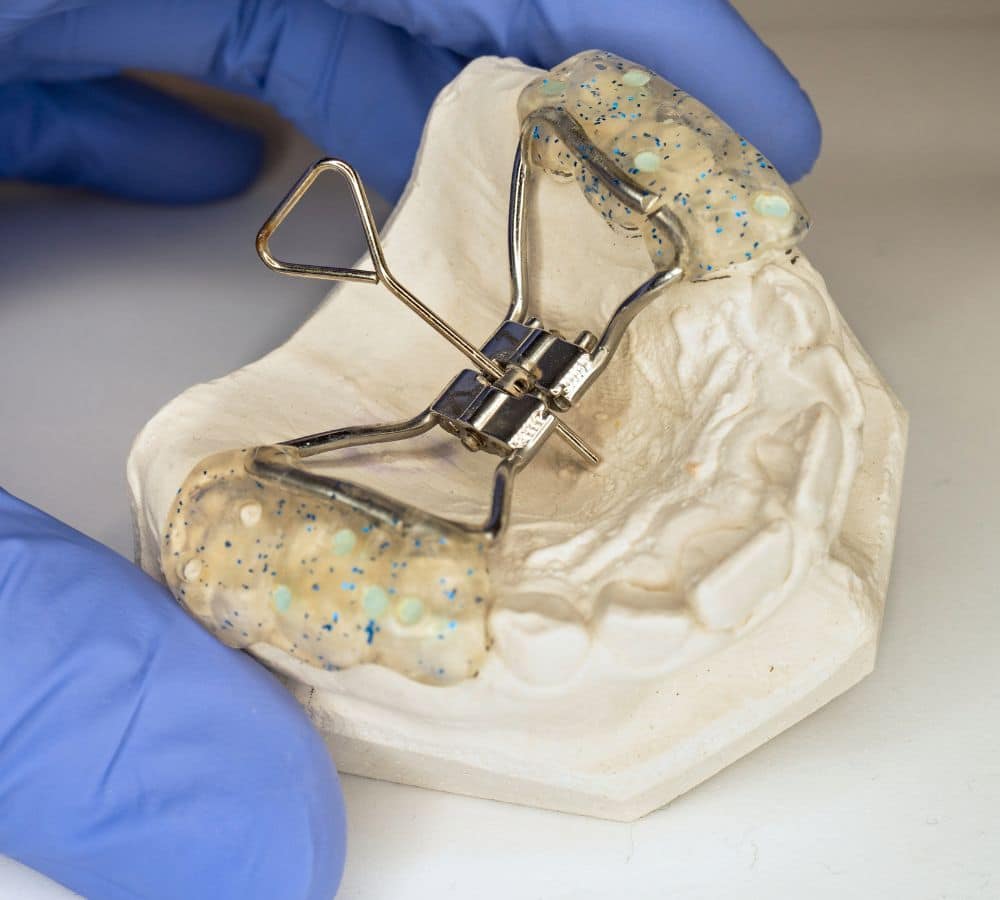
For some patients the underlying anatomy includes a narrow palate or underdeveloped upper jaw restricting the space available for the tongue and limiting airflow through the nasal cavity. Orthodontic palatal expansion widens the upper jaw, and specialist orthodontists assess the palate and dental arches as part of the sleep apnoea workup. Expansion appliances are fabricated in the in-house laboratory for rapid turnaround and precision fit. See Children's Orthodontics.
What expansion has not been shown to do is treat a child's sleep apnoea, and a page like this should say so. A systematic review updated to February 2026 in the Journal of Clinical Medicine looked for controlled prospective evidence and concluded that ‘extreme caution is warranted before recommending RME as a treatment for pediatric OSA’: the only trial comparing expansion against watchful waiting found no significant difference in AHI change between the children who were expanded and those who simply grew, and of three newer randomised trials one found three devices ‘equally ineffective in reducing AHI’, one a marginal effect and one none. Because paediatric OSA can improve as a child grows, gains seen without an untreated comparison group ‘cannot be distinguished from the known potential for spontaneous improvement’. Cochrane's review of oral and functional orthopaedic appliances in children, resting on a single 23-child trial rated very low quality, likewise finds ‘insufficient evidence to support or refute’ their effectiveness. The practical consequence is a selection rule rather than a prohibition: expansion is for a demonstrably narrow upper jaw, not for a sleep-study number on its own — the reviewers found trial children often had maxillary widths ‘within or near normal ranges’. If expansion is proposed for your child, ask what the measured discrepancy is, and what the plan is if the AHI does not change.
For structural upper airway obstruction — deviated nasal septum, enlarged turbinates, nasal polyps — the team works with ENT specialists. Structural jaw abnormalities that cannot be managed conservatively go to the oral and maxillofacial surgeon; where the jaws themselves are the constriction, advancing both surgically is a recognised treatment in selected patients. See Jaw Surgery.
The point of this coordination: structural causes are identified and treated rather than masked by appliance therapy alone. See Complex Dentistry.
Laser treatment
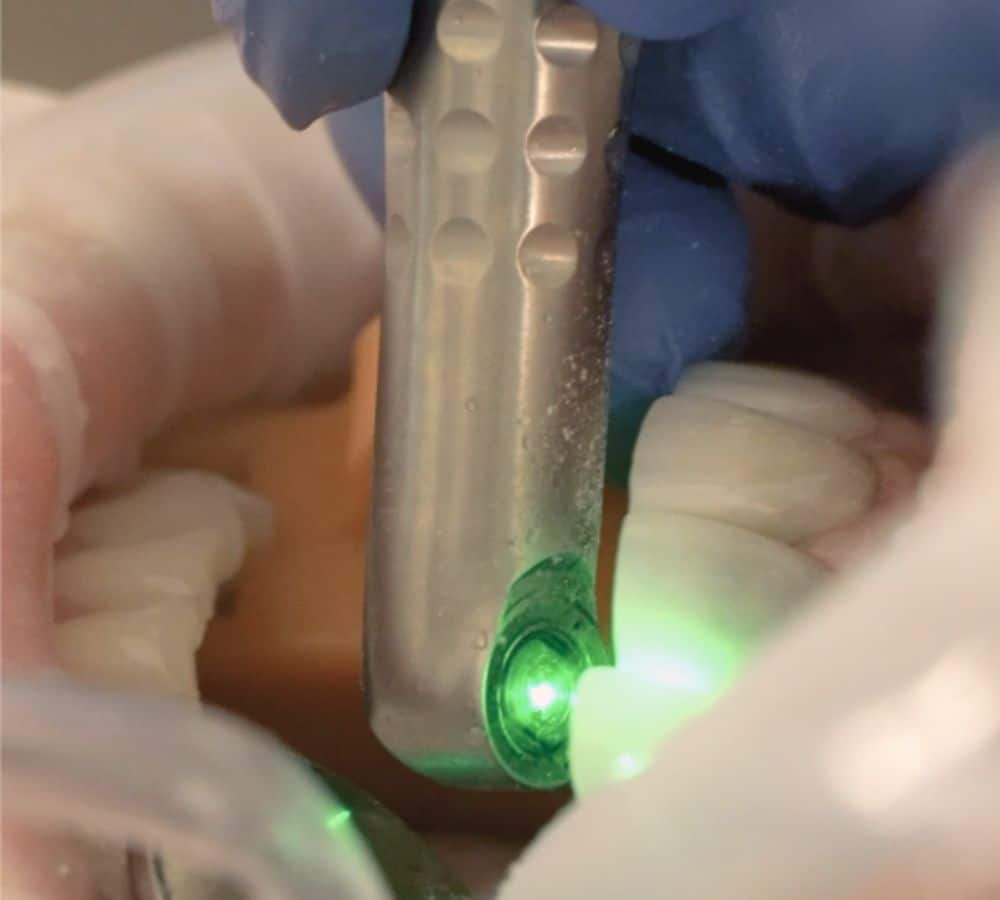
Laser therapy of the soft tissue at the back of the throat is offered with the aim of widening the airway and reducing obstruction.
Be clear about its standing. We can find no Cochrane review and no Australian professional position establishing laser treatment for obstructive sleep apnoea; the evidence base is considerably weaker than for CPAP or a properly fitted oral appliance, and it should be considered an adjunct rather than a replacement for either. Any decision to change or stop prescribed therapy belongs to your sleep physician. Laser Dentistry.
Children
Snoring and disrupted sleep are not normal in children.
Mouth breathing, snoring, restless sleep, night sweats and difficulty waking can all indicate sleep-disordered breathing — and left unaddressed these can affect growth, behaviour, learning and development. OSA affects an estimated 1 to 4 per cent of children, and an overnight sleep study remains the standard way to diagnose it.
Specialist paediatric dentists assess children from infancy through adolescence for airway and breathing dysfunction. Specialist orthodontists evaluate the palate and arches for narrow or underdeveloped structures. The orofacial myologist treats mouth breathing, tongue thrust and incorrect swallowing patterns.
The most common cause of OSA in children is enlarged tonsils and adenoids, and the first-line treatment for that is medical and surgical rather than dental — Cochrane calls adeno-tonsillectomy ‘the most common treatment for obstructive sleep apnoea syndrome in childhood’, with obesity, neuromuscular disorders and craniofacial anomalies the other recognised risk factors. Surgery is not a certainty either: it ‘fails to improve AHI in over 20% of the patients’, and a considerable proportion of children improve spontaneously as they grow. A child with these symptoms should be seen by a GP or paediatrician, and paediatric OSA is diagnosed on a sleep study. Paediatric Dentists and Children's Dentistry.
Two questions worth asking
Are nasal dilators helpful? Generally a safe and low-risk option. They simply open the nasal cavity wider. We have seen good results for patients with mild nasal symptoms or obstructions, including improved comfort for patients also wearing a splint — the dilator ensures adequate nasal airflow while the splint positions the jaw forward. They do not treat sleep apnoea and may add no benefit for everyone, but are considered worth trying.
Is mouth taping safe? Generally not recommended for patients with obstructive sleep apnoea. OSA patients often have reduced oxygen levels overnight. If your airway is obstructed or your nasal septum deviated, mouth breathing may be necessary for your body to get adequate oxygen, and taping the mouth shut can dangerously reduce oxygen intake.
It may be appropriate only for people thoroughly assessed and cleared of airway obstruction, septal deviation and other structural issues — habitual mouth breathers whose lips simply rest slightly open. Consult your dentist or sleep physician first. A sleep study and clinical assessment should always come before mouth taping.
Alternatives
CPAP. A mask attached to a unit delivering pressurised air to force the airway open. CPAP is the treatment of choice in severe cases and the most effective treatment for OSA overall — Cochrane calls it ‘the current first choice therapy’ and says an oral appliance ‘should not be considered as first choice therapy for OSAH, where symptoms and sleep disruption are severe’; the Australian Dental Journal guide calls CPAP ‘the gold standard therapy’; and the Sleep Health Foundation tells patients it ‘will stop sleep apnoea straight away in almost all people who use it’, while an oral appliance ‘will usually improve your sleep apnoea, but it may not completely stop it’. Some patients find CPAP difficult to tolerate, and that is often fixable — mask type, humidification and pressure settings all matter — so raise it with your sleep physician before abandoning it.
Surgery. Procedures include opening breathing passages in the nose, removing tonsils or excess throat tissue, reducing tongue size, or bringing the upper or lower jaw forward.
Weight loss, alcohol reduction and positional therapy are genuinely effective for many people and are not a consolation prize. The Sleep Health Foundation's own predictors point the same way: a splint works best in mild to moderate OSA, where the apnoea is much better on your side than on your back, and in people who are not overweight.
Some people use CPAP and a splint together — CPAP at home, the splint when travelling, or both in combination where a physician recommends it. That is a decision for your sleep physician, and it is worth asking about rather than treating the two as mutually exclusive.
If you need dental treatment and have OSA
Worth flagging in both directions. Tell any dentist, surgeon or anaesthetist that you have sleep apnoea — diagnosed or suspected — before any sedation or general anaesthetic. It changes how the airway is managed and sometimes where the procedure is performed. See Sleep Dentistry.
Your clinicians
| Clinician | Role | Qualifications |
|---|---|---|
| Dr Kia Pajouhesh | General Dentist, founder | BSc, BDSc (Melb) |
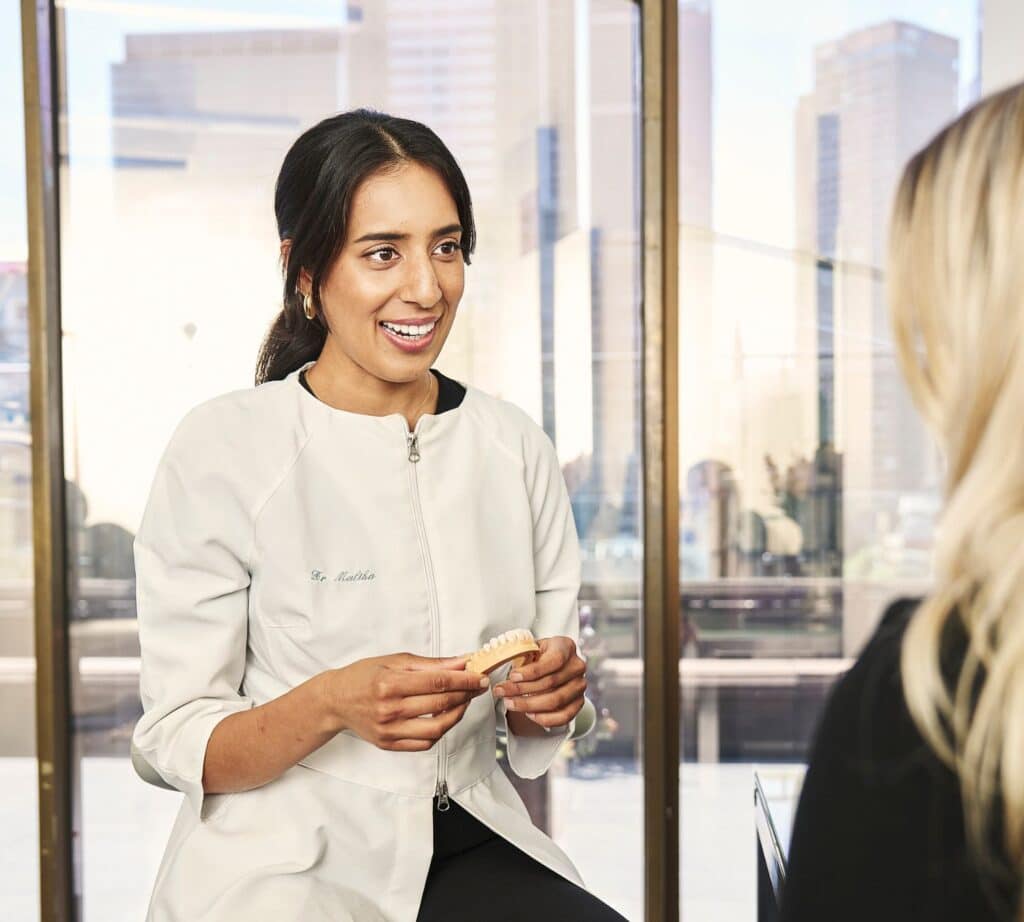
| Dr Maliha Siddiqui (DEN0001785009) | Registered Dentist | BDSc (Hons) (Melb) |
| Dr Natasha Hremias | Registered Dentist | BDS (Adel) |
| Dr Susan Hinckfuss (DEN0001008678) | Specialist Paediatric Dentist | BDSc (Melb), DCD (Melb) |
| Monica Cain | Oral Hygiene and Dental Therapy | Dip.OHT (Melb) |
Dr Natasha Hremias holds certification from the Australasian Sleep Association, so sleep apnoea management here is guided by a practitioner trained specifically in dental sleep medicine. Note that dental sleep medicine is not a registered dental specialty — that is the ADA's own wording in Policy 6.7, background point 3.1 — so no one should be described as a specialist in it. Registration for each clinician can be checked on the AHPRA public register at ahpra.gov.au. See Dentists & Registered Specialists and Our Team.
Costs and health funds
Your dentist discusses a personalised treatment plan including cost at consultation, and provides the relevant item numbers so you can take the quote to your health fund to determine your coverage.
The sleep study itself normally carries an out-of-pocket fee of $200–$300. Fees, rebates and eligibility are set by your fund and by Medicare and change over time; confirm before committing. Price Guide and Payment Plans.
Referrals from other practitioners
GPs, ENT specialists, respiratory physicians, cardiologists and other allied health practitioners are welcome to refer patients to the sleep apnoea clinic.
Patients referred by their GP or specialist receive priority triage. No formal referral letter is required, though referral letters are welcomed and help with history, previous sleep studies and CPAP trials.
Call 13 13 96 or email theteam@smilesolutions.com.au.
Common questions
Can a dentist diagnose obstructive sleep apnoea?
No. ADA Policy 6.7 states that the initial diagnosis ‘must be made by an appropriate medical practitioner’, on a sleep study and clinical assessment. Dental and airway clinicians can identify risk, contribute to assessment and provide prescribed oral-appliance care.
What role does the dental team have?
The team can assess teeth, jaws, bite and airway-related anatomy, make and adjust a mandibular advancement splint where appropriate, monitor dental side effects and coordinate with the GP or sleep physician. The ADA describes both medical and dental expertise as necessary and calls a team approach essential.
Is a mandibular advancement splint an alternative to CPAP?
It can be appropriate for selected people, particularly in some mild or moderate cases or when CPAP is not tolerated, and that is how the ADA frames it. It is not automatically suitable for every severity — Cochrane says an appliance should not be first choice where symptoms and sleep disruption are severe. Do not stop or alter prescribed CPAP without the treating medical clinician.
How do we know whether a splint works?
Symptoms alone are not enough. Effectiveness is confirmed with a repeat sleep study while wearing the adjusted splint, and the result should be reviewed with the clinician managing the sleep disorder. Group averages — 76.2 per cent halving their AHI at two to three months in the ORCADES cohort, 52 per cent still doing so at five years — describe those patients, not you.
Can a sleep-apnoea splint change my bite?
Yes, and on the published figures it is likely rather than merely possible: some occlusal change in as many as 85 per cent of patients at five years, and in one group followed for a mean of 11 years, in all of them, averaging 1.9 mm less overjet and 2.3 mm less overbite. Most people do not notice. Baseline records, the smallest effective jaw advancement and ongoing review are how it is managed, and morning repositioners are not recommended as protection against it.
What does the AHI number mean?
The apnoea-hypopnoea index records breathing events per hour of sleep. The page uses conventional ranges of 5–15 for mild, 15–30 for moderate and over 30 for severe; the RACGP anchors the first two, defining OSA as an AHI of 5 or more and moderate-to-severe as above 15. Your sleep physician interprets it alongside oxygen levels, symptoms and health history — and many people with moderate-to-severe OSA are not especially sleepy.
How is suspected sleep apnoea in a child handled?
Children need medical assessment because causes and treatment differ from adults. Enlarged tonsils or adenoids, obesity, neuromuscular conditions, craniofacial anomalies and growth may all be involved, and adeno-tonsillectomy is the most common treatment. An adult oral appliance should not be treated as the default answer, and controlled evidence does not show that palatal expansion treats a child's apnoea.
What if I am falling asleep while driving?
Stop driving and seek prompt medical advice. Excessive sleepiness creates an immediate safety risk. A dental appointment or oral appliance is not a substitute for urgent medical assessment and effective management.
Practical details
| Address | Level 1, 220 Collins Street, Manchester Unity Building, Melbourne VIC 3000 |
| Imaging | Collins Street Imaging, Level 9 — CBCT airway assessment |
| Phone | 13 13 96 |
| theteam@smilesolutions.com.au | |
| Monday – Friday | 8.00am – 6.00pm |
| Saturday | 8.30am – 1.30pm |
| Sunday | By appointment |
| Sleep study | Usually at home; $200–$300 out of pocket |
| Severity | AHI 5–15 mild, 15–30 moderate, 30+ severe |
| Splint fabrication | Just over two weeks |
| Splint material | Custom nylon |
| Effect confirmed by | Repeat sleep study wearing the splint |
| Referrals | Accepted; GP referrals triaged as priority |
| Parking | Wilsons Parking, Flinders Lane (between Swanston and Russell) |
General information only — it is not a diagnosis, a treatment plan, a quote or a promise of any particular clinical outcome, and it does not replace advice from your treating practitioner. Obstructive sleep apnoea is a medical condition diagnosed by a medical practitioner on a sleep study, and nothing on this page is a reason to alter or stop prescribed therapy, including CPAP. Oral appliance therapy carries the side effects set out above, including permanent bite change, and how well any treatment works varies considerably between individuals. Figures quoted from published studies describe the groups those studies measured and are not predictions about you. Severity thresholds quoted here are the conventional ranges and are interpreted by your sleep physician alongside your other results. If you are falling asleep while driving, stop driving and see a doctor. Fees and rebates are indicative and subject to change; confirm at your consultation and with your fund.
Smile Solutions trades under ABN 28 193 514 103.
Images on This Page
-
https://www.facebook.com/tr?id=800557773428361&ev=PageView&noscript=1
(no alt text)
-
https://www.smilesolutions.com.au/wp-content/uploads/2025/10/calendar_month.svg
(no alt text)
-
https://www.smilesolutions.com.au/wp-content/themes/arcadian-wordpress-theme/assets/images/smile_solutions_logo_white.png
Smile Solutions Logo
-
https://www.smilesolutions.com.au/wp-content/themes/arcadian-wordpress-theme/assets/images/smile_solutions_logo_purple.png
Smile Solutions Logo
-
https://www.smilesolutions.com.au/wp-content/uploads/2025/11/Smile-Solutions-4.png
Smile Solutions - Melbourne CBD
-
https://www.smilesolutions.com.au/wp-content/uploads/2026/03/Sid-1024x922.jpg
Sid
-
https://www.smilesolutions.com.au/wp-content/uploads/2025/09/Sleep.png
Sleep
-
https://www.smilesolutions.com.au/wp-content/uploads/2025/09/Smile-Solutions-Level-10.png
Smile Solutions Level 10
-
https://www.smilesolutions.com.au/wp-content/uploads/2025/09/Laser-Dentistry-for-Obstructive-Sleep-Apnoea.jpg
Laser Dentistry for Obstructive Sleep Apnoea
-
https://www.smilesolutions.com.au/wp-content/uploads/2014/07/Ortho-Tower.jpg
Orthodontic Tower
-
https://www.smilesolutions.com.au/wp-content/uploads/2025/09/Palatal-and-arch-expansion.jpg
Palatal and arch
-
https://www.smilesolutions.com.au/wp-content/uploads/2018/11/SHi-Specialist-Paediatric-Dentist.jpg
SHi Specialist Paediatric Dentist
-
https://www.smilesolutions.com.au/wp-content/uploads/2025/09/Snoring-Sleep-Apnoea-1.png
Snoring Sleep Apnoea 1
-
https://www.smilesolutions.com.au/wp-content/uploads/2025/08/69a44c30c93ce196d539cc5520080df52a5f3f88-scaled.jpg
69a44c30c93ce196d539cc5520080df52a5f3f88 scaled
-
https://www.smilesolutions.com.au/wp-content/themes/arcadian-wordpress-theme/assets/images/family_owned_bussiness.png
Family Owned Business
-
https://www.smilesolutions.com.au/wp-content/themes/arcadian-wordpress-theme/assets/icons/icon--phone.svg
Smile Solutions Contact
-
https://www.facebook.com/tr? id=800557773428361&ev=PageView&noscript=1
(no alt text)