Children’s Orthodontics
When should my child first see an orthodontist?
Between seven and ten years of age is the recommendation in the Australian Society of Orthodontists’ assessment guide. If concerns arise earlier, discuss them with your child’s dentist rather than waiting for a particular age.
That is considerably earlier than most parents expect, and the reason is timing rather than urgency. The opportunity for certain types of growth modification reduces as a child's facial bones mature. An assessment before age 10 identifies whether early intervention would help, while it is still possible.
An assessment is not a commitment to treatment, and for a great many children the correct answer at seven is “nothing yet, let's review in a year”. See when should I take my child to an orthodontist.
Smile Solutions is at Level 1, 220 Collins Street, Manchester Unity Building, Melbourne CBD.
What normally happens, and roughly when
Knowing the usual sequence makes it far easier to tell an ordinary stage from something worth asking about.
| Age | What usually happens | Worth mentioning if |
|---|---|---|
| 6–7 | First adult molars arrive behind the baby teeth; lower front teeth are replaced | The adult tooth comes up behind the baby tooth — common, usually fine, but have it looked at |
| 7–8 | Upper front teeth are replaced | They come in very prominent, or a gap or tooth looks unusual |
| 9–11 | Baby molars and canines are replaced | Nothing has moved for a year, or one side is well ahead of the other |
| 11–13 | Second adult molars arrive; the full adult set is essentially in place | A tooth is clearly missing, or an adult tooth has not arrived long after its partner on the other side |
| 17–21 | Wisdom teeth, if present | — |
Two things that alarm parents and usually should not. New adult front teeth often arrive with gaps and looking too large for the face — the face grows into them. And the lower adult teeth erupting behind the baby ones is common, and the baby teeth usually loosen and fall out on their own.
One thing that should prompt a call rather than a wait: an adult tooth that has not appeared six months after its twin on the other side. Asymmetry in eruption is the most reliable early sign of a blocked, missing or extra tooth.
Signs worth acting on
If you notice any of these, a consultation is worthwhile even in primary school:
- a crossbite — upper teeth sitting inside the lower teeth
- mouth breathing or snoring
- a noticeably crowded mouth as adult teeth erupt
- thumb or finger sucking past age 4
- an asymmetric jaw or face
- front teeth that stick out well beyond the lower lip, which are at higher risk of being broken in a fall
Add to that list: a jaw that shifts sideways to close, difficulty biting through food with the front teeth, persistent food packing, or your child avoiding smiling in photographs — the last is not a clinical sign, but it is a reason to have a conversation.
What happens at the first visit
It is a consultation, not a procedure, and nothing is fitted on the day.
- A look at how the teeth meet, how the jaws relate, and how the face has developed
- Photographs of the teeth and face, which become the baseline every future review is compared against
- Feeling above the upper canine teeth from about age nine — a two-second check with a fingertip that is one of the highest-value things in children's orthodontics (see below)
- An x-ray, if the age and findings warrant it, to see unerupted teeth, count what is there, and confirm nothing is blocked
- A plain answer: treat now, review later, or nothing needed
“Review in twelve months” is a real answer and a good one. Monitoring appointments are short, and they exist so that if a window does open, it is not missed.
What early intervention actually is
Early intervention orthodontics — sometimes called Phase 1 — means assessing and treating concerns before all adult teeth have erupted. It focuses on guiding jaw growth, improving function, and creating the best foundation for the permanent teeth.
It does not mean braces straight away. Many children are simply monitored with regular reviews every 6 to 12 months. Where treatment is recommended, it is timed to suit the child's growth, and may reduce or simplify the need for braces later.
Early treatment focuses on functional problems that affect the health of the teeth, rather than appearance.
How two-phase treatment is usually shaped, when it is recommended at all: a Phase 1 of roughly nine to twelve months somewhere between ages seven and ten, aimed at one specific problem; then a resting period of a year or more with periodic reviews while the remaining adult teeth come through; then Phase 2 in the early teens, usually full braces, to align and finish the bite. Phase 1 is not a shorter version of braces — it has a defined job, and when that job is done the appliance comes out.
What it can address
- crowding or spacing
- crossbites or a narrow upper jaw
- protruding front teeth
- underbite or deep bite
- jaw growth or asymmetry concerns
- thumb sucking and other oral habits
- snoring or breathing concerns
- difficulty with tooth eruption
What it may achieve
Treating early works with the child's natural growth, and depending on the case may:
- improve jaw development
- create space for adult teeth
- reduce the likelihood of tooth extractions
- lower the complexity of future orthodontic treatment
- support better breathing, sleep and oral function
- reduce the risk of impacted teeth
- lower the risk of dental trauma to protruding teeth
- improve oral hygiene and ease of cleaning
- improve confidence
Where the evidence is strong, and where it is not
This deserves saying plainly, because two-phase treatment is over-sold in some places.
Early treatment has clear, well-supported indications — a posterior or anterior crossbite, an erupting tooth blocked out or impacted, a habit actively deforming the bite, and prominent upper front teeth where the risk of trauma is real.
Where the concern is crowding alone, the evidence is weaker. Studies comparing two-phase treatment with a single course of braces in adolescence generally find similar final results, with the two-phase route costing more and taking longer overall. Early treatment in that situation is a reasonable option, not a necessity.
So it is fair — and expected — to ask: what specifically are we treating now, what happens if we wait, and will a second phase still be likely? A specialist should be able to answer all three without hesitation.
The canine check, and why it matters at nine
The upper canines take the longest, most awkward path of any tooth, and they are the teeth most likely to become impacted — stuck in the bone instead of coming through.
From around age nine or ten, a clinician can feel for a firm bulge above each upper canine. If that bulge cannot be felt by about age ten or eleven, an x-ray is warranted, because an impacted canine sitting in the wrong place can silently resorb the root of the tooth beside it — damage that is painless, invisible, and occasionally costs a healthy adult front tooth.
Why this earns a section of its own: when the problem is caught in that window, simply removing the baby canine at the right moment often lets the adult tooth correct its own path, avoiding what would otherwise be surgical exposure and a long period of orthodontic traction. It is one of the clearest examples of early intervention genuinely changing the treatment a child ends up needing.
Habits, and how they are actually managed
Thumb and finger sucking is normal in infancy and self-resolving for most children. It matters if it continues once the adult front teeth are coming through, because sustained pressure can tip the upper front teeth forward, hold an open bite between the front teeth, and narrow the upper jaw.
The usual sequence is gentler than parents expect:
- Most children stop on their own, and pressure or shaming works poorly and costs more than it gains
- Reward-based approaches first — charts, agreed goals, and targeting the times it happens most, which is usually tiredness, screens and bedtime
- A reminder such as a plaster or a glove at night for a child who wants to stop and cannot
- A fixed appliance only if those have failed and the bite is being affected — it works by removing the satisfaction rather than by punishment
Dummy use behaves similarly and is generally easier to stop. Tongue thrusting and an habitual open-mouth posture can hold an open bite open and undo orthodontic work, which is where myofunctional assessment comes in. Orofacial Myofunctional Therapy.
The reassuring part: where a habit stops early enough, a mild open bite often improves on its own without any appliance at all.
Missing, extra and blocked teeth
These are found at the assessment, usually before anyone has noticed anything wrong.
- Missing adult teeth are more common than people think, most often the upper lateral incisors or the second premolars. Finding this early matters, because the plan — close the space orthodontically, or hold it for an implant or bridge in adulthood — changes what happens with braces.
- Extra teeth can block an adult tooth from coming through. The classic case is a single upper front tooth that never arrives; the answer is usually removing the extra tooth and then guiding the adult one down.
- Retained baby teeth with no adult tooth beneath can last for years, but they wear and eventually fail, so they are planned for rather than ignored.
- Early loss of a baby molar allows the teeth behind it to drift forward and close the space the adult tooth needed — which is what space maintainers prevent.
The non-extraction approach
Wherever possible, Smile Solutions aims to take a predominantly non-extraction approach.
Beginning treatment while a child is still growing lets specialist orthodontists guide jaw development, create space naturally, and reduce — in some cases eliminate — the need for extractions or jaw surgery later. See Jaw Surgery.
This is stated honestly rather than absolutely: tooth removal is not always avoidable or inappropriate. Modern techniques can often correct crowding without extractions, but in some cases removing one or more teeth is the best route to a stable, functional, healthy result. Avoiding extraction is a goal, not a promise, and it should never be pursued at the cost of a stable bite.
Managing crowding early
Dental crowding occurs when there is not enough space for permanent teeth to develop and align correctly.
For younger children, simple removable appliances may expand the dental arches, maintain space for developing teeth and guide development.
For children aged approximately 6 to 10, rapid maxillary expansion (RME) is one of the most useful tools available. RME gently widens the upper jaw (palate) while the facial bones are still developing, creating additional space for crowded teeth.
In appropriate cases this may also support improved nasal breathing and reduce snoring, and may reduce the likelihood of needing extractions or jaw surgery later. Expansion is uncomfortable for a few days, a temporary gap between the front teeth is normal and closes, and the expander has to be held in place afterwards while new bone fills in.
What the age window is actually about: the two halves of the upper jaw are joined by a growth join down the middle of the palate, and while that join is still open it can be widened gently. Once it fuses in the late teens, widening the jaw the same way is no longer possible — which is why expansion is an option for a ten-year-old and a surgical question for a twenty-five-year-old. That single fact is the strongest argument for an early assessment.
Practically, for the family: an expander is turned at home with a small key, usually once or twice a day for a few weeks, and the first few days bring pressure, a lisp and some difficulty eating. Speech settles within a week or two, the gap that opens between the front teeth is expected and closes by itself, and the appliance then stays passive for months while new bone fills the join.
Jaw growth, breathing and sleep
Some children have a growth imbalance between the upper and lower jaws, affecting bite, facial development and airway. Childhood snoring, mouth breathing or disrupted sleep may signal airway obstruction.
Sleep-disordered breathing
This occurs when a child has difficulty breathing during sleep, disrupting rest and oxygen levels. In some cases it includes obstructive sleep apnoea, where breathing briefly stops.
Signs may include:
- snoring or loud breathing
- mouth breathing
- tooth grinding
- daytime fatigue or hyperactivity
- behavioural or learning difficulties
- night terrors, sleepwalking, or bedwetting
- headaches or difficulty concentrating
The behavioural signs are the ones most often missed, because tiredness in children frequently presents as hyperactivity rather than sleepiness.
Where breathing concerns are linked to a narrow upper jaw, a palatal expander may be recommended, and expanding the palate can increase nasal airway space.
Be clear about the limits of that, though. The most common cause of obstructive sleep apnoea in children is enlarged tonsils and adenoids, and the first-line treatment for it is medical and surgical, not dental. Paediatric OSA is diagnosed by a doctor, usually on a sleep study; an orthodontic assessment can flag concern and contribute to treatment, but it does not diagnose the condition and orthodontics is not a substitute for medical care. If your child has these symptoms, see your GP or paediatrician as well. Snoring & Sleep Apnoea.
Assessment involves specialist orthodontists working alongside specialist paediatric dentists, oral and maxillofacial surgeons, sleep specialists, ENT specialists and the in-house osteopath — with myofunctional assessment, osteopathic support and referral to sleep medicine specialists where appropriate, all coordinated within one practice.
If your child snores, mouth breathes, or has disrupted sleep, raise it at the orthodontic consultation. Orofacial Myofunctional Therapy.
Treatment options
Space maintainers. When a baby tooth is lost prematurely — often from decay — adjacent teeth drift, leaving insufficient space for the permanent tooth. Space maintainers, fixed or removable, hold that space open.
Removable expander plates. Used from ages six to eight to expand the arches or maintain premolar spaces. Early treatment often continues with fixed braces once all teeth have erupted.
Conventional and clear braces. we use Empower braces in stainless steel or porcelain, which eliminate elastic ties for a more discreet and more easily cleaned appliance. Orthodontic Braces.
Invisalign Teen. Clear removable aligners, taken out for eating, brushing, sport and special occasions — but requiring 22 hours per day of wear to work. Aligners are only as effective as the wearing; for a teenager who will not wear them, fixed braces are the better choice, and there is no failure in saying so up front. Invisalign.
For how long treatment typically runs, see how long will my child need to wear braces.
Cleaning, and the mark that does not come off
This is the part of children's orthodontics most within a family's control, and the one with the most permanent consequence.
Plaque left sitting around a bracket dissolves mineral out of the enamel underneath it. When the braces come off, that shows as a chalky white square around where each bracket sat — and those marks are frequently permanent. They are not a reflection of the orthodontics; they are a reflection of the cleaning.
What actually prevents them:
- Brushing after every meal during treatment, not twice a day
- Angling the brush at the gum line and around every bracket, which is where plaque hides
- Interdental brushes or a floss threader daily
- Fluoride toothpaste — spit, do not rinse
- Cutting back the frequency of sugary drinks and snacks, which matters more with braces than without
- Professional cleans every six months, or more often if the gums look puffy — Dental Cleans & Hygienists
Braces do not replace the general dentist. Check-ups continue throughout treatment. See Children's Dentistry and kids' teeth cleaning tips.
Risks to know about
Orthodontic treatment in children carries the same recognised risks as in adults:
- Permanent white decalcification marks on the enamel around brackets, caused by plaque. This is the most common preventable complication and it depends almost entirely on cleaning.
- Root resorption — shortening of the roots during movement, usually minor.
- Gum inflammation and recession.
- Relapse, which is why retention is lifelong.
- Discomfort for several days after fitting and adjustments.
- Appliances break, and a broken appliance extends treatment.
Ask your specialist which of these apply to your child's plan.
Sport, comfort and retainers
Sport. Children with braces can keep playing. For contact sports, a custom-fitted dual laminated mouthguard protects both teeth and braces. Invisalign Teen aligners can be removed for contact sport, with a protective mouthguard worn instead. Sports Mouthguards.
Comfort. Most children adapt quickly, with initial sensitivity usually settling within the first week. Empower self-ligating brackets use light-force wires and reduced-friction technology.
For the first few days after fitting or an adjustment: soft food, orthodontic wax over anything rubbing, warm salt-water rinses, and ordinary pain relief if needed. Avoid the appliance-breakers — hard lollies, toffee, muesli bars, ice, popcorn kernels, whole apples and corn on the cob, and chewing pens.
Retainers. Without consistent retainer use, teeth gradually shift back toward their original position. Retention is a lifelong commitment, and retainers wear out and need replacing over the years at your own cost. The team will explain what your child's situation requires.
Worth setting expectations early with a teenager: the retainer is not the end of treatment, it is the rest of it. Keep it in its case, never in a serviette or a school bag pocket, and never in a hot car. If one stops fitting, call — do not force it.
What the family signs up for
Being realistic about this at the start prevents most of the friction later:
- Appointments every six to eight weeks, usually in school hours, for eighteen months to two years
- A few days of soreness after each of the early adjustments
- Brushing after meals, including at school
- Elastics worn as instructed, where they are part of the plan — this is the single biggest determinant of how long treatment runs
- Breakages happen, and each one costs an extra visit and some lost progress
- Two-phase treatment means a gap in the middle, which is expected rather than a stall
Willingness matters more than age. A motivated eleven-year-old does better than a reluctant fifteen-year-old, and where motivation is genuinely absent, it is usually better to wait than to start.
Anxious children
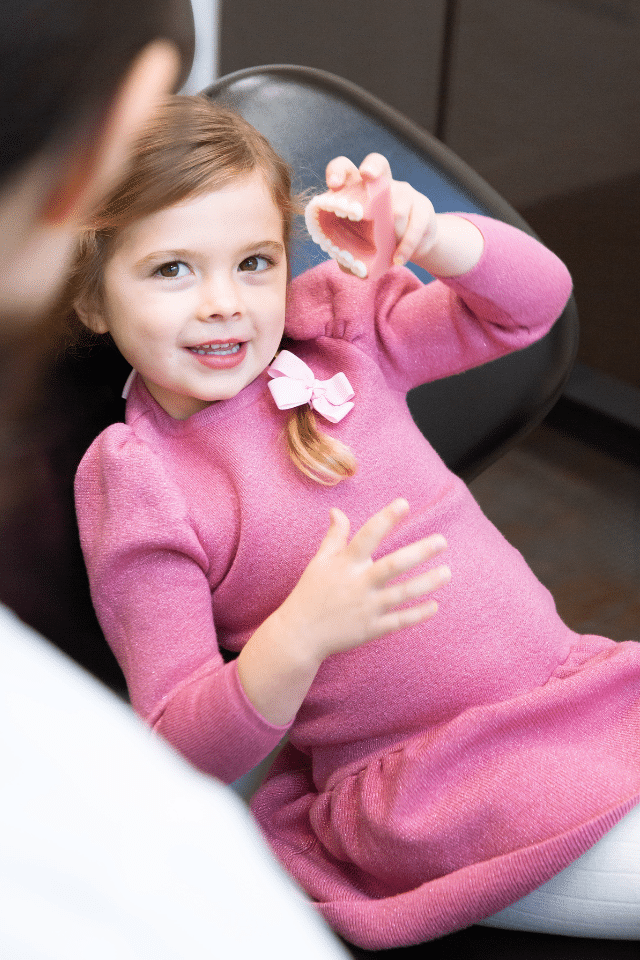
Children nervous about treatment are supported with the same gentle approach used across the practice, including tell-show-do communication and “teddy bear therapy” for younger children. See the practice's dental anxiety information for the full range of options, including nitrous oxide and, where necessary, general anaesthesia administered by a specialist anaesthetist. Dental Anxiety and your child's first visit to the dentist.
Who provides the treatment
Early intervention orthodontics is provided by board-registered specialist orthodontists and specialist paediatric dentists, working collaboratively — not by general dentists. Both specialties complete an additional three or more years of full-time postgraduate university training beyond general dentistry, and hold specialist registration with the Dental Board of Australia.
| Clinician | Role | Qualifications |
|---|---|---|
| Dr Susan Hinckfuss | Specialist Paediatric Dentist | BDSc (Melb), DCD (Melb) |
| Dr David Austin | Specialist Orthodontist | BDSc (Melb), MDS Orth (HK), MOrth, RCS (Edin) |
| Dr Andrea Phatouros | Specialist Orthodontist | BDSc (WA), MDSc Orth (WA), FRACDS |
| Dr Joshua Ch'ng | Specialist Orthodontist | BDSc (Melb), FRACDS, D.Clin.Dent (Melb) |
They work with the practice's oral and maxillofacial surgeons, prosthodontists, periodontists, general dentists and oral health therapists under one roof — with shared records and coordinated care, and without external referrals. A child's orthodontic care can be coordinated alongside their overall dental health, from their first baby tooth through to adult retention. Specialist Orthodontists and Specialist Paediatric Dentists.
Where treatment happens
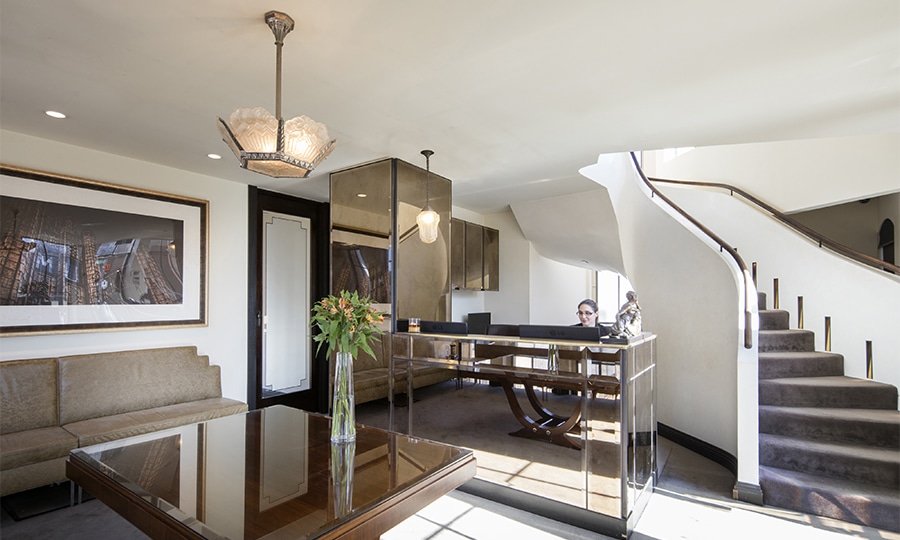
The dedicated Orthodontic Centre occupies Level 12 and the Tower of the Manchester Unity Building, with natural light and views across the city.
For a child nervous about a first visit, arriving somewhere visually memorable and non-threatening makes a genuine difference.
Cost
Cost varies with the child's individual needs, complexity and duration of care.
Payment plans are available through third-party finance providers, subject to approval; see Payment Plans for current options. Where a plan is advertised as interest free, that describes the plan term only — a deposit may be required, an establishment fee and ongoing account fees may apply, and charges can apply if the balance is not cleared within the agreed period. Approval and the applicable terms are set by the finance provider and depend on the amount financed; they are set out in writing before you commit — ask what the deposit and the establishment fee are, in dollars, and what the total will be by the end. Payment Plans.
When comparing quotes, check whether the figure covers records and imaging, every adjustment visit, any extractions, retainers, and reviews after the braces come off — and, for two-phase treatment, whether Phase 2 is included or charged separately. Price Guide.
Health funds usually treat orthodontics as its own category, commonly with a lifetime limit and a waiting period rather than an annual reset. Because children's treatment can span three or four years and two phases, it is worth asking your fund exactly how the limit applies across that period before treatment starts. The Child Dental Benefits Schedule does not cover orthodontics at all — see Child Dental Benefits Schedule.
Your specialist orthodontist discusses all treatment options, costs and payment arrangements at consultation. Complimentary Orthodontic Consultation.
Common questions
What exactly are we treating now, and what happens if we wait?
Ask for both halves, and press on the second one. A useful answer names one specific problem — a crossbite, a blocked canine, a habit that is moving teeth, prominent upper incisors — and says what is expected to change if nothing is done for a year or two.
Two things make waiting cost something. The first is a growth window: while the join down the middle of the palate is still open it can be widened gently, and once it fuses in the late teens that route closes. The second is injury. The ADA’s policy statement on oral injury and mouthguards notes that “children with prominent front teeth may be a higher risk of injury and may benefit from orthodontic assessment and early treatment to reduce this risk”.
Against that, for a great many children waiting costs nothing at all. The ADA notes that “all the adult teeth do not have to be present in the mouth for an assessment to be done”, and that the Australian Society of Orthodontists recommends an assessment between the ages of seven and ten precisely so early intervention can be considered if it is needed (teeth.org.au). “Review in a year” is a finding, not a fob-off — so ask what specifically is being watched, and what would bring you back sooner.
Will a second phase still be likely?
Ask it in those words, and ask for a likelihood rather than “possibly”.
It matters because two-phase treatment is two courses of treatment: an appliance now with a defined job, a resting period of a year or more, then usually full braces in the early teens. If a second phase is likely anyway, the value of the first has to come from something the second cannot do — widening a jaw while the palatal join is still open, unblocking an erupting tooth, stopping a habit that is deforming the bite, or reducing trauma risk to prominent incisors.
If the first phase is being offered mainly to deal with crowding, the honest position is the one set out above: studies comparing two-phase treatment with a single course of braces in adolescence generally find similar final results, with the two-phase route costing more and taking longer. That makes it a reasonable option, not a necessity.
Then ask the money version of the same question, because the two are rarely asked together: is Phase 2 inside the quoted fee or charged separately, and when will the decision about it be made?
Is this one of the situations where early treatment is well supported?
The best question on this list, because the answer differs sharply by problem.
Well supported: a posterior or anterior crossbite, a tooth blocked out or impacted, an active habit deforming the bite, and prominent upper front teeth where trauma risk is real — the ADA’s mouthguard policy links prominent front teeth directly to injury risk and to early orthodontic assessment.
Weaker: crowding alone, where a single course of braces later often reaches a similar place.
Airway and snoring deserve a more sceptical answer, because this is where children’s orthodontics is most over-sold — including by people who believe it. A 2026 systematic review update in the Journal of Clinical Medicine searched for controlled prospective evidence on rapid maxillary expansion as a treatment for paediatric obstructive sleep apnoea and concluded that “extreme caution is warranted before recommending RME as a treatment for pediatric OSA”. The only comparison against watchful waiting remains “a single RCT that found no significant difference in AHI change between RME and observation”, and the authors note that improvements seen in trials without an untreated comparator “cannot be distinguished from the known potential for spontaneous improvement in growing children”.
That is not an argument for ignoring a narrow jaw, and it does not mean expansion has no place — widening the upper jaw for crowding is a different proposition from widening it to treat apnoea. What it does mean is that a snoring or mouth-breathing child needs a medical pathway and not only a dental one. OSA “affects 1–4% of the pediatric population”, polysomnography — a sleep study — “is considered the gold standard for diagnosing pediatric OSA”, and the Sleep Health Foundation notes that “often children snore because of large tonsils and adenoids”. The ADA’s own policy on sleep-disordered breathing requires that oral appliance therapy sit within “a multi-disciplinary and collaborative setting using evidence-based guidance”. So: see the GP or paediatrician as well, and ask anyone who offers expansion for a breathing problem what evidence they are relying on. See Snoring & Sleep Apnoea.
Have the upper canines been checked?
Worth asking by name from about age nine — and ask what was found, not whether it was done.
The check takes seconds: a fingertip feeling for a firm bulge in the gum above each upper canine. If that bulge cannot be felt by around ten or eleven, an x-ray is warranted. The reason is that a canine sitting in the wrong place can resorb the root of the incisor beside it, and the damage is painless and invisible until it has already happened.
Caught in that window, the fix is often nothing more than removing the baby canine at the right moment and letting the adult tooth correct its own path. Missed, the same problem can mean surgical exposure, months of orthodontic traction, and occasionally the loss of a healthy adult front tooth. It is the cheapest high-value check in children’s orthodontics, which is exactly why it is worth naming.
Are any adult teeth missing or extra?
Ask because the answer changes the plan rather than merely the timeline — and because it is usually found on an x-ray before anyone has noticed anything.
If an adult tooth is missing — most often an upper lateral incisor or a second premolar — the choice is between closing the space orthodontically and holding it open for a replacement in adulthood. That decision determines how the braces are set up, which is why it belongs at the beginning rather than being discovered at the end. If an extra tooth is blocking an adult tooth, it usually has to come out before the adult tooth can be guided down.
The eruption sign that should prompt a call rather than a wait is the one given above: an adult tooth that has not appeared about six months after its twin on the other side. Ask for the x-ray findings in plain words, and ask what the plan is for each affected tooth at eight, at thirteen, and at twenty.
What will my child have to do daily, and what breaks the plan?
The daily list is short, and it is most of the game.
Cleaning comes first, because it carries the one permanent consequence. The ADA recommends that people wearing braces brush after every meal, since food gets caught around the brackets, and that floss threaders or interdental brushes replace plain string floss, which becomes difficult with a wire in the way. Its brushing sequence is specific: take out any elastics or removable appliances first, use a pea-sized amount of toothpaste, brush at the gum line with the brush held at 45 degrees to the gums, then turn the brush to clean the top and then the underside of each bracket — and afterwards “spit out the excess toothpaste but do not rinse your mouth with water”, which leaves the fluoride where it can work (teeth.org.au). Plaque left around a bracket dissolves mineral out of the enamel beneath it, and the chalky white square that leaves behind is often permanent.
Then wear. Elastics exactly as instructed, and — if aligners are the plan — the wear time. The ADA describes aligner wear as “at all times other than when eating and drinking liquids other than water”, and warns that juice or soft drink held against the teeth under a tray can damage them. For a removable appliance, less wear is not slower progress; it is progress that partly undoes itself between wears.
What breaks the plan: missed appointments, broken appliances (hard lollies, toffee, muesli bars, ice, popcorn kernels, whole apples, corn on the cob, chewed pens), and lost retainers. And one thing that is not a breakage but behaves like one — a child who genuinely does not want to start. Willingness matters more than age, and starting reluctantly usually costs more than waiting a year.
What is included in the fee, and what is charged later?
Ask for the list in writing, and check it against these items: records and imaging, every adjustment visit, any extractions, the retainers at the end, reviews after the braces come off, replacement of anything lost or broken, and — for two-phase treatment — whether Phase 2 is inside the figure or quoted separately later.
Two things are worth knowing before you compare quotes.
The Child Dental Benefits Schedule does not cover orthodontics. Services Australia lists “orthodontic dental work” among the services it will not cover, alongside cosmetic dental work and any dental services in a hospital. The CDBS is still worth claiming for the ordinary check-ups and cleans that continue throughout orthodontic treatment — up to “$1,158 for each eligible child over 2 consecutive calendar years”, with the cap indexed each 1 January — but it will not contribute to braces. See Child Dental Benefits Schedule.
There is no national dental fee schedule in Australia. A consumer submission to the Senate inquiry into the value and affordability of private health insurance put the consequence plainly: without one, patients “can go to multiple dentists and receive conflicting diagnoses and widely varying quotes”, and there are “no consumer guidelines to ascertain the reasonableness of dental fees charged”. The ADA’s own Dental Fees Survey 2022 found orthodontics had the largest fee increase of any service category over the two years to 1 July 2022, at 6.9 per cent, with “considerable variation in the fees charged within and between states”. Comparing quotes is reasonable, and so is asking for the whole figure in writing before anything is fitted.
We missed an assessment at seven. Have we left it too late?
Missing a particular birthday does not establish that a treatment opportunity has been lost. The ASO's assessment guide recommends an assessment between seven and ten; timing beyond that depends on the child's teeth, growth and the problem being considered. Arrange an assessment and explain any concerns. Ask what can be addressed now and whether timing changes the available options, rather than assuming that an older child must need more extensive treatment.
If the orthodontist recommends monitoring, what should we leave the appointment with?
Ask for a clear review interval, the finding being monitored and the changes that should prompt an earlier call. Keep the next review in your calendar and continue ordinary dental care in the meantime. Monitoring is a plan with a purpose, not a promise that treatment will never be needed. If the family moves or changes dentist, request a summary of the assessment so the next clinician knows what was being followed.
Does paying for early treatment mean later braces are included?
Do not assume so. Early treatment and a later course of braces may be separate clinical stages with separate fees. Request a written description of the first stage's goal, what would count as completion, and whether another stage is anticipated. The quote should explain whether later records, appliances, adjustments and retention are included or would be quoted again. If a second phase remains uncertain, ask when that decision will be reviewed.
My child is reluctant to wear an appliance. Should we start anyway?
Raise that before agreeing to treatment. Ask the orthodontist to explain which daily tasks the proposed appliance requires and involve your child in a realistic discussion about school, meals, cleaning and wear. The clinician can assess whether monitoring, a different approach or support with the routine is appropriate. Avoid promising that motivation will appear once treatment starts; the plan should account for what the child and family can manage.
Related pages: Orthodontics, Orthodontic Braces, Invisalign, Jaw Surgery, Children's Dentistry, Specialist Paediatric Dentists, Specialist Orthodontists, Sports Mouthguards.
Practical details
| Address | Level 1, 220 Collins Street, Manchester Unity Building, Melbourne VIC 3000 |
| Orthodontic Centre | Level 12 and Tower |
| Phone | 13 13 96 |
| theteam@smilesolutions.com.au | |
| Monday – Friday | 8.00am – 6.00pm |
| Saturday | 8.30am – 1.30pm |
| Sunday | By appointment |
| First assessment | Ages 7–10 (ASO assessment guide); earlier concerns should be discussed |
| Canine check | From about age 9 |
| RME window | Approximately ages 6–10 |
| Phase 1 duration | Typically 9–12 months |
| Monitoring reviews | Every 6–12 months |
| Retention | Lifelong |
| Parking | Wilsons Parking, Flinders Lane (between Swanston and Russell) |
Orthodontics and paediatric dentistry are two of the thirteen recognised dental specialties in Australia, and specialist registration can be verified free on the AHPRA public register at ahpra.gov.au.
General information only — it is not a diagnosis, a treatment plan, a quote or a promise of any particular clinical outcome, and it does not replace advice from your treating practitioner. Whether a child needs early treatment, and what it can achieve, depends on the individual case and can only be determined from records and examination; growth, response to treatment and timelines vary considerably between children, and the eruption ages given here are typical ranges rather than rules. Orthodontic treatment carries the risks set out above, and retention is lifelong. Where this page describes breathing and sleep, those are medical matters for your child's doctor. Fees are indicative and subject to change; confirm at your consultation. Health fund and payment plan terms are set by the relevant fund or credit provider and change; confirm current terms directly before you commit.
Smile Solutions trades under ABN 28 193 514 103.
Images on This Page
-
https://www.facebook.com/tr?id=800557773428361&ev=PageView&noscript=1
(no alt text)
-
https://www.smilesolutions.com.au/wp-content/uploads/2025/10/calendar_month.svg
(no alt text)
-
https://www.smilesolutions.com.au/wp-content/themes/arcadian-wordpress-theme/assets/images/smile_solutions_logo_white.png
Smile Solutions Logo
-
https://www.smilesolutions.com.au/wp-content/themes/arcadian-wordpress-theme/assets/images/smile_solutions_logo_purple.png
Smile Solutions Logo
-
https://www.smilesolutions.com.au/wp-content/uploads/2025/11/Smile-Solutions-4.png
Smile Solutions - Melbourne CBD
-
https://www.smilesolutions.com.au/wp-content/uploads/2025/09/Childrens-Orthodontics-at-Smile-Solutions.png
Childrens Orthodontics at Smile Solutions
-
https://www.smilesolutions.com.au/wp-content/uploads/2025/09/Collins-Street-Orthodontics-5.jpg
Collins Street Orthodontics 5
-
https://www.smilesolutions.com.au/wp-content/uploads/2025/08/69a44c30c93ce196d539cc5520080df52a5f3f88-scaled.jpg
69a44c30c93ce196d539cc5520080df52a5f3f88 scaled
-
https://www.smilesolutions.com.au/wp-content/themes/arcadian-wordpress-theme/assets/images/family_owned_bussiness.png
Family Owned Business
-
https://www.smilesolutions.com.au/wp-content/themes/arcadian-wordpress-theme/assets/icons/icon--phone.svg
Smile Solutions Contact
-
https://www.facebook.com/tr? id=800557773428361&ev=PageView&noscript=1
(no alt text)