Specialist Orthodontists
What does an orthodontist do that a general dentist doesn't?
Orthodontists focus on correcting the position of the teeth to improve the bite (occlusion), and on the appearance of the jaw and face.
The reason that matters clinically: a malocclusion is not only an appearance problem. An improper bite can indicate jaw dysfunction or problems with the underlying bone structure — overbite, underbite, cross-bite, crowded or impacted teeth.
At Smile Solutions, all orthodontic treatment is carried out by board-registered specialist orthodontists.
We are at Level 1, 220 Collins Street, Manchester Unity Building, Melbourne CBD.
General dentist or specialist orthodontist?
Both matter, and they do different jobs.
A general dentist provides comprehensive dental care for patients of all ages — routine check-ups, preventive care, and treatment of common problems. Some general dentists provide Invisalign and other orthodontic treatment and can manage mild alignment concerns, as well as supporting oral health during orthodontic treatment. Where more complex alignment or bite issues are identified, they refer to an orthodontist.
This is lawful and often entirely appropriate. What differs is training and the range of cases routinely handled, not permission.
A specialist orthodontist has completed a dental degree followed by an additional three or more years of full-time postgraduate training in orthodontics, and holds specialist registration with the Dental Board of Australia. They focus specifically on facial growth and dental development, and are trained in diagnosing and treating crooked teeth, bite problems and jaw misalignment — across braces, Invisalign and lingual braces, for children, teenagers and adults.
“Orthodontist” is a protected title. A general dentist doing orthodontic work cannot lawfully use it, so the word itself is something you can check on the register. See Dentists & Registered Specialists and orthodontic treatment: dentist vs specialist orthodontist.
If you have concerns about crooked teeth, bite issues or jaw alignment, seeing an orthodontist is often recommended. For routine dental care and ongoing maintenance, your general dentist remains essential.
What the extra three years actually covers
The training is not “more practice at the same thing”. It is a different syllabus:
- Growth and development — how the face and jaws change from childhood to adulthood, and therefore what can be guided and when the window closes.
- Cephalometric analysis — measuring the relationship between the jaws and the skull from a side-on radiograph, which is what separates a dental problem from a skeletal one.
- Biomechanics — predicting how a given force moves a given tooth, and controlling the unwanted movement that force also causes elsewhere. Anchorage, in other words: the difference between moving the tooth you meant to move and moving everything.
- Surgical-orthodontic planning, for cases where teeth alone cannot correct the discrepancy.
- A supervised case load across the full range of severity, including the cases most practitioners rarely see.
Where that shows in practice is bite correction and difficult cases, rather than straightening visible front teeth — which is why the distinction matters less for mild crowding and a great deal for everything else.
When a case is clearly specialist territory
A useful list, because “complex” is vague:
- A skeletal discrepancy — where the jaws, not just the teeth, are mismatched. See Jaw Surgery
- Impacted teeth, particularly upper canines needing surgical exposure and traction
- Missing adult teeth, where space has to be either closed or held for a future implant
- Open bites and significant crossbites
- Severe crowding, or any case where extractions are being considered
- Growth guidance in children, which is time-limited — see Children's Orthodontics
- Cases combined with restorative work, where teeth must finish in positions that suit the crowns or veneers to follow
- Previous orthodontic treatment that relapsed or did not finish well
The treatments
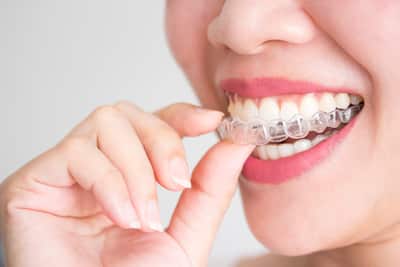
Invisalign
A series of clear aligners worn over the teeth. Removable, so they come out for eating, drinking and cleaning, and far less visible than braces. They rely on being worn around 22 hours a day, and they are not suitable for every case. See Invisalign.
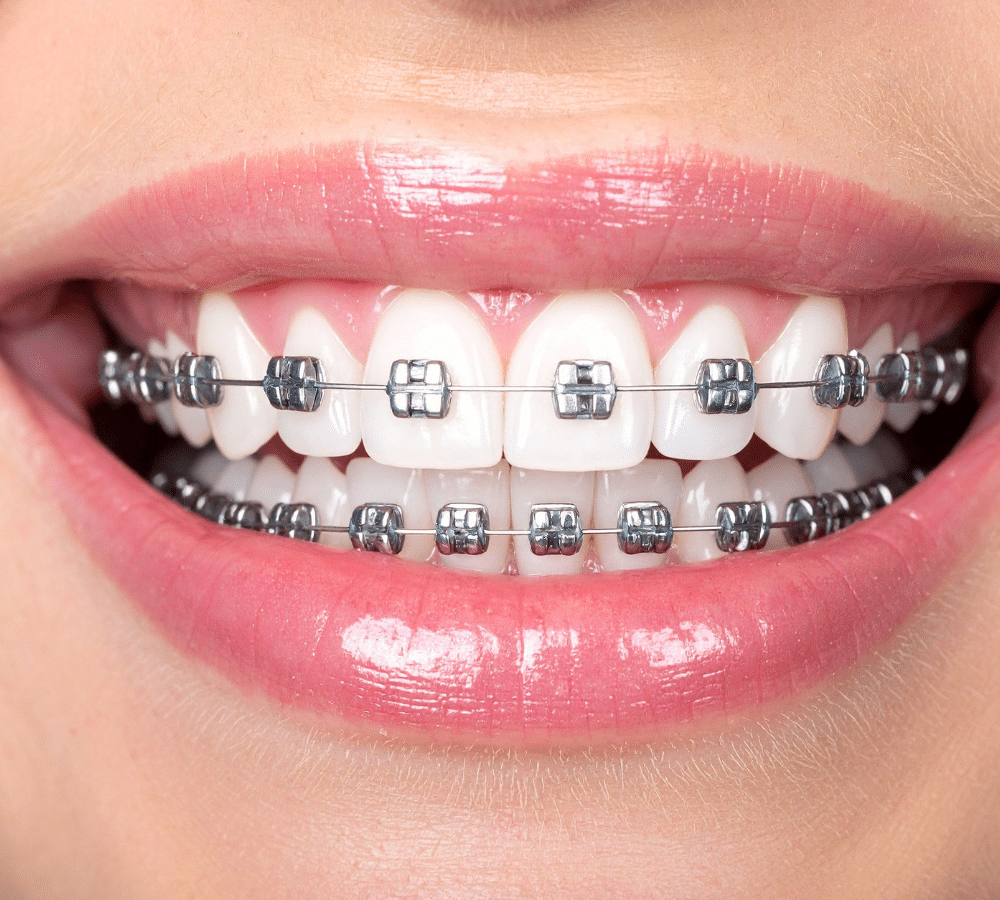
Traditional braces
Metal or clear brackets attached to each tooth, with an arch wire running through slots in the brackets. When tensioned, the wire slowly moves the teeth.
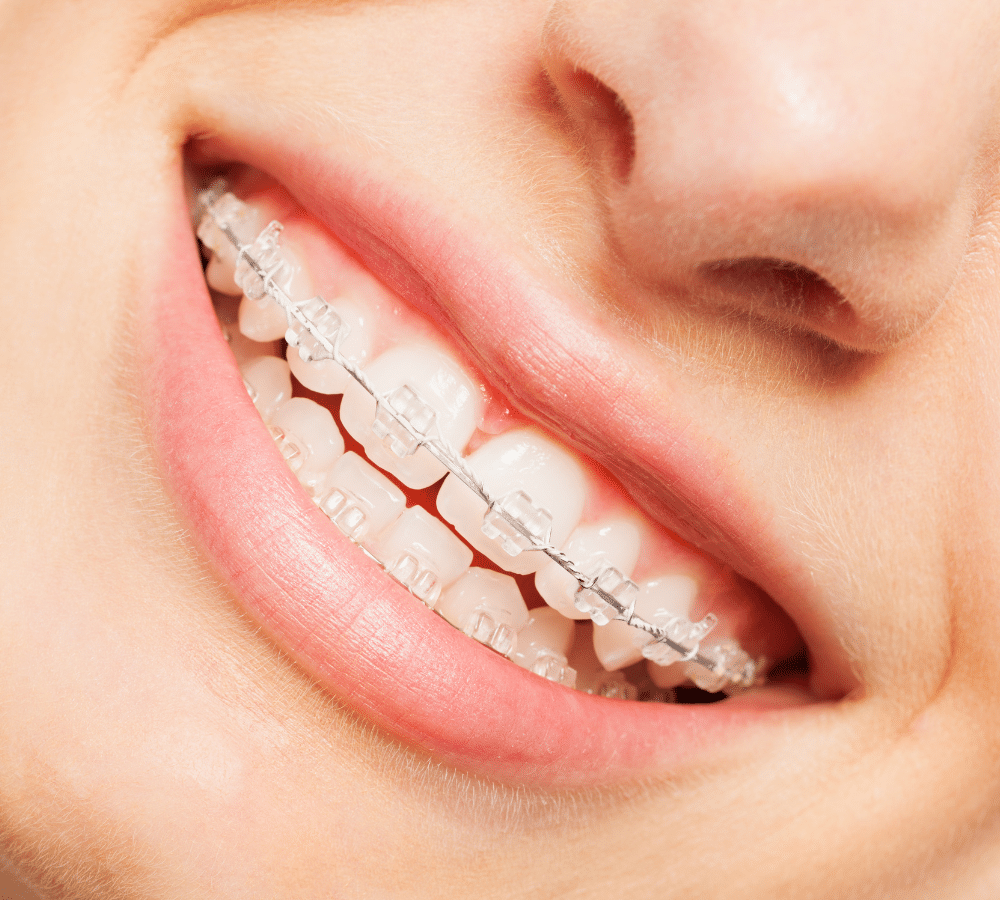
Clear (ceramic) braces
Tooth-coloured ceramic brackets that blend with natural teeth, working on the same principle as metal braces. More discreet, more brittle, and more expensive.
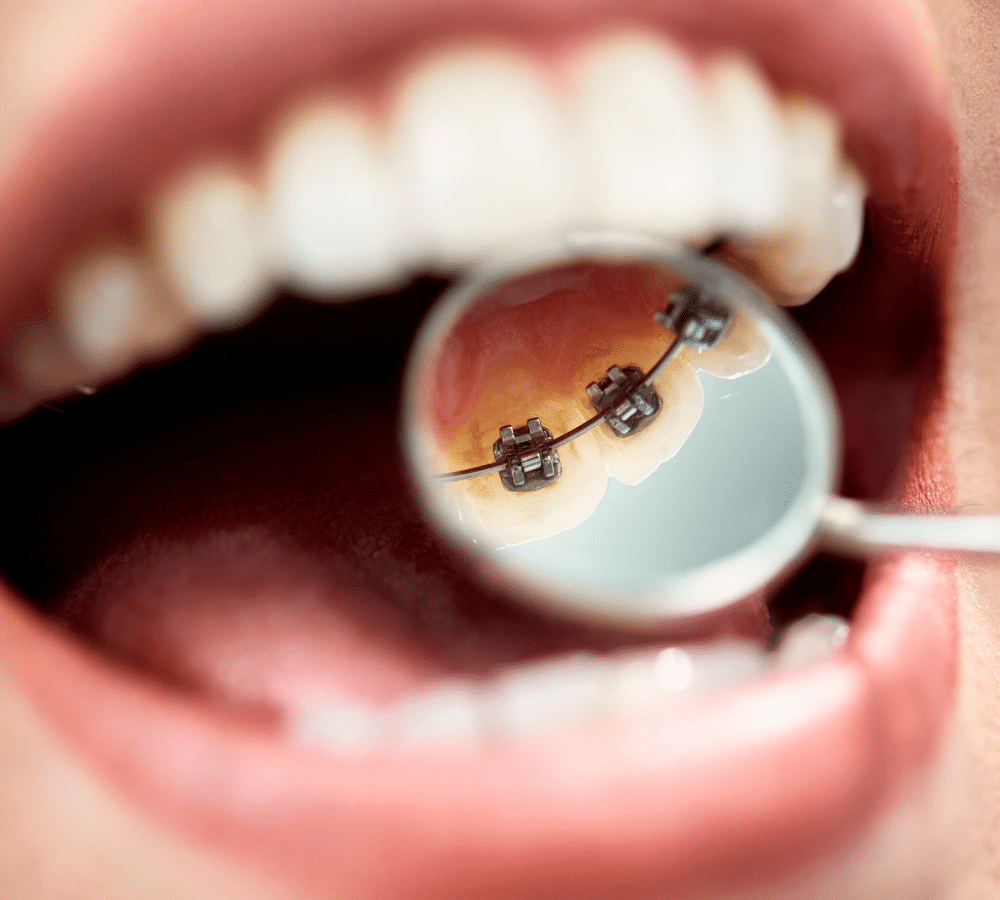
Internal lingual braces
Metal brackets fitted to the back of the teeth — the tongue side — with an arch wire. They straighten teeth as conventional braces do, but are hidden from view. They affect speech at first and may not suit deep bites.
At your consultation, the orthodontist examines your teeth and bite and discusses which options actually suit your case. Which appliance is appropriate is a clinical decision informed by records, not simply a preference — and an orthodontist who tells you a preferred option will not work for you is doing their job. Orthodontic Braces and which orthodontic treatment is best for me.
What happens at the consultation
The first appointment is assessment and discussion; nothing is fitted.
Expect an examination of the teeth, bite and facial proportions, a conversation about what actually bothers you, and a recommendation about records. A full plan comes after records — photographs, a scan or impressions, an OPG and usually a lateral cephalogram — because the skeletal relationship cannot be assessed by looking.
A price quoted without records is a price, not a plan. It is entirely reasonable to expect the finished plan to state the diagnosis, the proposed appliance, whether extractions or other adjuncts are needed, the expected duration, the retention regime, and the total fee with what it includes. See Complimentary Orthodontic Consultation.
How to compare two orthodontic opinions
Second opinions are common in orthodontics and genuinely useful, because plans legitimately differ. What to compare:
- Extraction versus non-extraction, and the reasoning for each. Both can be correct for the same mouth; what matters is whether the reasoning is about your bone and your bite rather than a blanket philosophy.
- The appliance, and whether each clinician says the same thing about what it can achieve in your case.
- The duration, and what would extend it.
- The retention plan, which is where quotes most often differ silently.
- What the fee includes — records, all adjustments, extractions, retainers, post-treatment reviews.
- Who you actually see at each visit.
If two plans differ materially, ask each clinician what they think of the other approach. A reasoned answer tells you more than either plan on its own. See Second Opinions & Corrective Dentistry.
Direct-to-consumer aligners
Aligners ordered online without an in-person examination are a different proposition from orthodontic treatment, and the difference is not the plastic.
What is missing is the examination and the radiographs. Without them, gum disease, decay, shortened roots, unerupted or impacted teeth and skeletal discrepancies are all invisible — and moving teeth through diseased bone causes damage that is expensive and sometimes impossible to reverse. There is also no clinician monitoring progress in person, and no one accountable if the bite ends up worse than it started.
The price difference reflects what has been left out. If cost is the obstacle, a specialist opinion about which limited treatment would actually help you is a better first step.
What to know before starting
- Treatment commonly takes 18 months to two years, sometimes less and sometimes considerably more, and depends partly on you — elastics worn, aligners in, appointments kept.
- Orthodontic treatment carries recognised risks: permanent white decalcification marks where plaque sits around brackets, root resorption, gum recession, and discomfort after adjustments.
- Extractions are sometimes necessary to create space, and whether they are is a judgement made from records.
- Retention is lifelong. Teeth move throughout life; a result is only held by a retainer, and retainers need replacing over the years at your own cost.
Ask what applies to your case, and what the plan is if a tooth does not respond as expected.
If you are already in treatment elsewhere
Transfers happen — people move city, or change practice mid-treatment — and they are more manageable when you know what to ask for.
Request your records, including the original diagnosis and plan, the progress notes, the radiographs and any digital treatment plan. You are entitled to them, and you do not need to explain why.
Expect a transfer assessment. The new orthodontist has to examine what has been done, decide whether the existing plan is achievable, and quote for completing it — a fee that is separate from what you have already paid. A mid-treatment transfer is rarely a simple continuation, and an honest clinician will tell you where the plan needs changing rather than inheriting it silently.
Adults
Orthodontics is not limited by age — bone remodels throughout life. What changes in an adult is the context: the gums must be healthy first, existing crowns and implants constrain what can move, an implant cannot be moved at all, and growth is no longer available to help, so a skeletal discrepancy is corrected by moving teeth to compensate or by surgery.
Adult treatment is also frequently the first stage rather than the whole plan, positioning teeth so that restorative work afterwards can be conservative. See Specialist Prosthodontists and Bleeding Gums.
Your orthodontists
| Clinician | Qualifications |
|---|---|
| Dr David Austin | BDSc (Melb), MDS Orth (HK), MOrth, RCS (Edin) |
| Dr Andrea Phatouros | BDSc (WA), MDSc Orth (WA), FRACDS |
| Dr Joshua Ch'ng (DEN0001857728) | BDSc (Melb), FRACDS, D.Clin.Dent (Melb) |
You can verify any clinician free on the AHPRA public register at ahpra.gov.au, or by calling 1300 419 495. See Our Team.
How they work with the rest of the team
The orthodontists collaborate with:
- paediatric dentists, on cases involving children's teeth and early intervention
- prosthodontists and cosmetic dentists, on adult cases involving oral health and restoration
- oral and maxillofacial surgeons, where jaw surgery is needed alongside orthodontics
Children's Orthodontics covers early intervention in children, and Specialist Care sets out how the disciplines fit together.
Do I need a referral?
No. You do not need a referral to see a specialist orthodontist at Smile Solutions.
Cost
Orthodontic fees depend on the appliance and the complexity and duration of the case, and specialist fees are higher than general practice fees.
When comparing quotes, check what is included: records and imaging, every adjustment visit, any extractions, the retainers at the end, and reviews after the braces come off. Price Guide and Payment Plans.
One financial point specific to this specialty: orthodontics usually sits in its own health fund category, commonly with a lifetime limit and a waiting period rather than an annual reset — and several funds pay an orthodontic rebate only where a registered specialist orthodontist provides the treatment. That single condition can be worth more than any advertised discount, so check it with your fund before committing anywhere. See specialist orthodontist vs general dentist for Invisalign.
You still need your general dentist
This is the point patients most often miss once treatment starts.
Your orthodontist looks after the braces and the treatment plan. Your general dentist keeps the teeth and gums healthy underneath them.
Once braces are fitted, visit your general dentist every six months — or as advised — for a check-up and clean. Cleaning around brackets is harder, plaque accumulates faster, and decalcification marks left by two years of poor cleaning are permanent. See Dental Cleans & Hygienists and General Dentistry.
Common questions
Do I need a referral to see a specialist orthodontist?
No. The page states that patients can book directly. Your general dentist's records and knowledge of your dental health can still be valuable when treatment is being planned.
What is the difference between an orthodontist and a dentist providing orthodontics?
Both are registered dental practitioners, but an orthodontist has completed additional recognised specialist training and is registered in orthodontics. A general dentist may provide orthodontic treatment within their competence. AHPRA records show whether a practitioner has specialist registration.
How is the right appliance chosen?
The diagnosis, tooth and jaw relationships, movements required, oral health, age and ability to follow instructions matter more than the brand. Braces, clear aligners, ceramic appliances and lingual braces each have different strengths and limitations.
Why are records needed before a plan is given?
Photographs, scans or models, radiographs and examination findings show the tooth positions, roots, bone and jaw relationships. A visual estimate alone cannot reliably determine extractions, treatment mechanics, duration or risk.
Will I need teeth removed?
Not necessarily. Extraction decisions depend on crowding, tooth and jaw position, facial proportions, gum and bone limits and the proposed mechanics. Ask what the extraction and non-extraction plans would each achieve and compromise.
How long will treatment take?
Duration depends on complexity, biology, appliance choice, broken appointments, appliance wear and oral health. The clinician should give a realistic range and explain what could extend it rather than promise an exact finish date.
Will I need retainers forever?
Yes. The page states that retention is lifelong because teeth continue to move over time. Ask which retainers are included, how they are monitored and what repair or replacement costs.
Do I still see my general dentist during orthodontic treatment?
Yes. The orthodontist manages tooth movement, while the general dentist continues checks, prevention and treatment of decay or gum problems. The page recommends general dental visits about every six months or as individually advised.
Practical details
| Address | Level 1, 220 Collins Street, Manchester Unity Building, Melbourne VIC 3000 |
| Phone | 13 13 96 |
| theteam@smilesolutions.com.au | |
| Monday – Friday | 8.00am – 6.00pm |
| Saturday | 8.30am – 1.30pm |
| Sunday | By appointment |
| Specialist training | Three or more years beyond the dental degree |
| Referral needed | No |
| Plan follows | Records, not a visual estimate |
| General dentist visits | Every six months during treatment |
| Retention | Lifelong |
| Parking | Wilsons Parking, Flinders Lane (between Swanston and Russell) |
Orthodontics is one of the thirteen recognised dental specialties in Australia, and specialist registration can be verified free on the AHPRA public register at ahpra.gov.au.
General information only — it is not a diagnosis, a treatment plan, a quote or a promise of any particular clinical outcome, and it does not replace advice from your treating practitioner. Orthodontic treatment carries the risks set out above, which appliance is suitable can only be determined from records and examination, and treatment times and results vary between individuals. Retention is lifelong, and a result is not permanent without it. Nothing here is a claim that specialist treatment produces a superior outcome in any individual case; it describes training, registration and how to verify both. Fees and health fund rebates are indicative and subject to change; confirm at your consultation and with your fund.
Smile Solutions trades under ABN 28 193 514 103.
Images on This Page
-
https://www.facebook.com/tr?id=800557773428361&ev=PageView&noscript=1
(no alt text)
-
https://www.smilesolutions.com.au/wp-content/uploads/2025/10/calendar_month.svg
(no alt text)
-
https://www.smilesolutions.com.au/wp-content/themes/arcadian-wordpress-theme/assets/images/smile_solutions_logo_white.png
Smile Solutions Logo
-
https://www.smilesolutions.com.au/wp-content/themes/arcadian-wordpress-theme/assets/images/smile_solutions_logo_purple.png
Smile Solutions Logo
-
https://www.smilesolutions.com.au/wp-content/uploads/2025/11/Smile-Solutions-4.png
Smile Solutions - Melbourne CBD
-
https://www.smilesolutions.com.au/wp-content/uploads/2025/09/Smile-Solutions-Orthodontics.png
Smile Solutions Orthodontics
-
https://www.smilesolutions.com.au/wp-content/uploads/2018/11/hygiene-benefits-invisalign.jpg
Invisalign No Braces
-
https://www.smilesolutions.com.au/wp-content/uploads/2025/09/Smile-Solutions-Braces.png
Traditional braces
-
https://www.smilesolutions.com.au/wp-content/uploads/2025/09/Clear-Braces-Smile-Solutions.png
Clear Braces
-
https://www.smilesolutions.com.au/wp-content/uploads/2025/09/Lingual-Braces-Smile-Solutions.png
Internal Lingual Braces
-
https://www.smilesolutions.com.au/wp-content/uploads/2025/08/69a44c30c93ce196d539cc5520080df52a5f3f88-scaled.jpg
69a44c30c93ce196d539cc5520080df52a5f3f88 scaled
-
https://www.smilesolutions.com.au/wp-content/themes/arcadian-wordpress-theme/assets/images/family_owned_bussiness.png
Family Owned Business
-
https://www.smilesolutions.com.au/wp-content/themes/arcadian-wordpress-theme/assets/icons/icon--phone.svg
Smile Solutions Contact
-
https://www.facebook.com/tr? id=800557773428361&ev=PageView&noscript=1
(no alt text)