Orthodontic treatment: general dentist or specialist orthodontist?
The difference in training
If you are thinking about straightening your teeth, it helps to understand what separates the two.
General dentists clean teeth, place fillings, and treat the range of issues affecting teeth and mouth. Think of a dentist as your family doctor — well placed to manage general problems of the teeth, mouth and gums, and to refer you on where a more specialised problem needs specialist input. See General Dentistry.
Orthodontics is the area of dentistry specialising in straightening teeth and correcting bite problems. See Orthodontics and Specialist Orthodontists.
In Australia, orthodontists:
- Have already qualified as a dentist
- Have completed a further three years of university training in orthodontics, holding a masters degree in the field
- Must be registered as a specialist orthodontist with AHPRA — see Dentists & Registered Specialists
- Can straighten teeth and correct bite problems and imbalances in jaw growth
- Work closely with general dentists and other specialists — oral surgeons, periodontists, cosmetic dentists
- Treat children, teenagers and adults — see Children's Braces & Invisalign
Always check the AHPRA website to confirm the registration of a specialist. “Specialist orthodontist” is a protected title with a legal meaning; “special interest in orthodontics” is not, and the register is the only way to tell them apart. The Smile Solutions clinicians and their registrations are listed on Our Team.
What “specialist” actually means in law
This is the part most articles skip, and it is the part that makes the register worth checking.
The Dental Board of Australia recognises thirteen dental specialties, approved by the Australian Health Workforce Ministerial Council. The Board's own wording is that “there are 13 dental specialties in Australia which are approved by the Australian Health Workforce Ministerial Council”, and orthodontics is one of them. The others are dento-maxillofacial radiology, endodontics, forensic odontology, oral and maxillofacial surgery, oral medicine, oral and maxillofacial pathology, oral surgery, paediatric dentistry, periodontics, prosthodontics, public health dentistry (community dentistry) and special needs dentistry. Several of those are practised here — see Specialist Care, Endodontists, Paediatric Dentists and Prosthodontists.
Specialist registration is not simply a second degree. Under the Board's Specialist registration standard, an applicant must have completed a minimum of two years general dental practice — which the Board notes may be achieved by experience outside Australia, subject to its assessment and approval — and met all other requirements for general registration as a dentist. In other words a specialist orthodontist is a fully registered general dentist first, with a period of general practice behind them, and the specialty on top of that. (Source: Dental Board of Australia, Specialist Registration.)
AHPRA publishes an online register of all dental practitioners, and that register records the specialty or specialties of any dentist who holds specialist registration. That is why “check the register” is concrete advice rather than a platitude: the specialty is a field on the public record, not something you have to infer from a website.
The titles themselves are protected by statute. Under the National Law, section 115 provides that a person must not knowingly or recklessly take or use the titles “dental specialist”, “medical specialist” or a specialist title for a recognised specialty unless the person is registered under that specialty. Section 118 extends the same protection to the phrase “specialist health practitioner”, and to any word or description that would induce a belief that someone holds specialist registration. These are offences under the National Law, and penalties can apply — they are not merely professional guidance. (Source: AHPRA advertising guidelines, Appendix 2 — title protection.)
AHPRA's advertising guidelines put the advertising side of it plainly: only a registered health practitioner who holds specialist registration in a recognised specialty may use the relevant specialist title in advertising, and that restriction extends to the name of the business as well as to advertising aimed at the public. A practitioner may not present themselves to the public as holding specialist registration when they do not.
None of that makes a general dentist's orthodontic work improper. It makes the label precise. A dentist who has taken further training in aligners and says so is describing real training; they are simply not making — and must not make — a claim of specialist registration.
Scope of practice: the standard that actually governs who does what
There is a second registration standard that answers the practical question more usefully than the title does.
The Board's Scope of practice registration standard applies to every practitioner registered with the Board, and requires dental practitioners to practise within the scope of their education, training and competence at all times. (Source: Dental Board of Australia, FAQ: Specialist registration.) The Board's patient-facing material puts the same duty as “only provide treatments in which they are educated, trained and competent”.
So the live question is not whether a general dentist is allowed to move teeth. It is whether this clinician's training and experience match this case — and that is a fair thing to ask about directly.
Three questions that get you a straight answer:
- “Are you registered as a specialist, and in which specialty?” The answer is checkable on the AHPRA register in under a minute.
- “Who does the treatment planning, and who does the adjustments?” In some arrangements these are different people.
- “What would make you refer this case on?” A clinician with a clear threshold for referral is describing their scope of practice honestly.
An overseas-trained orthodontist must either hold a qualification approved by the Board, or come through the Board's qualification equivalence pathway. A practitioner registered as a dental specialist in New Zealand may apply under the Trans-Tasman Mutual Recognition Act, and the Board may impose conditions where the New Zealand scope of practice is narrower than the Australian one. The register shows the outcome, including any conditions.
Which one for orthodontic treatment?
Orthodontic treatment is provided by both general dentists and specialist orthodontists, and many general dentists deliver good results for straightforward alignment cases.
The additional specialist training matters most where the case is complex — significant bite problems, jaw growth imbalances, impacted teeth, or cases where extractions or surgery form part of the plan. Those are the situations the three additional years are specifically about. See also Complex Dentistry.
The Australian Society of Orthodontists recommends that patients see a specialist orthodontist for orthodontic treatment. That is the professional body's stated position, and it is worth knowing when weighing your options.
A practical approach: see a general dentist for your regular check-ups, and ask for a referral for a specialist orthodontic assessment if you are interested in straightening your teeth or correcting your bite. Your general dentist may also advise it if they have concerns about your teeth and bite.
If you have already been given a plan you are unsure about, a second assessment is a normal thing to seek — see Second Opinions & Corrective Dentistry.
The same question arises specifically for aligners — see Specialist orthodontist vs general dentist: which is best for Invisalign?.
What orthodontic treatment involves
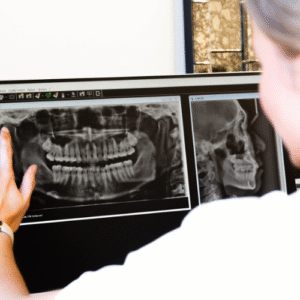
A thorough oral examination, and records — impressions, photographs and X-rays. See Technology.
From those, a treatment plan is proposed detailing options, duration, frequency, risks, benefits and costs.
That list is the standard to hold any plan to. Risks and duration are the two items most often glossed over, and both should be in writing before you commit. How do I know which orthodontic treatment is best for me? sets out the risks in full, and Understanding Your Treatment covers what a written plan should contain.
The options
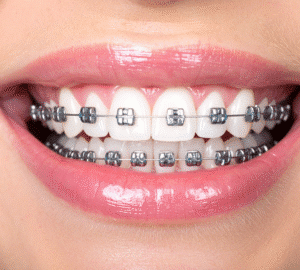
Braces — offering a high degree of control and accuracy in moving teeth, and available in ceramic form to minimise visible metal. Full treatment generally requires wearing braces for around two years, with adjustments every four to eight weeks. See How long does orthodontic treatment take? and All your conventional braces questions answered.
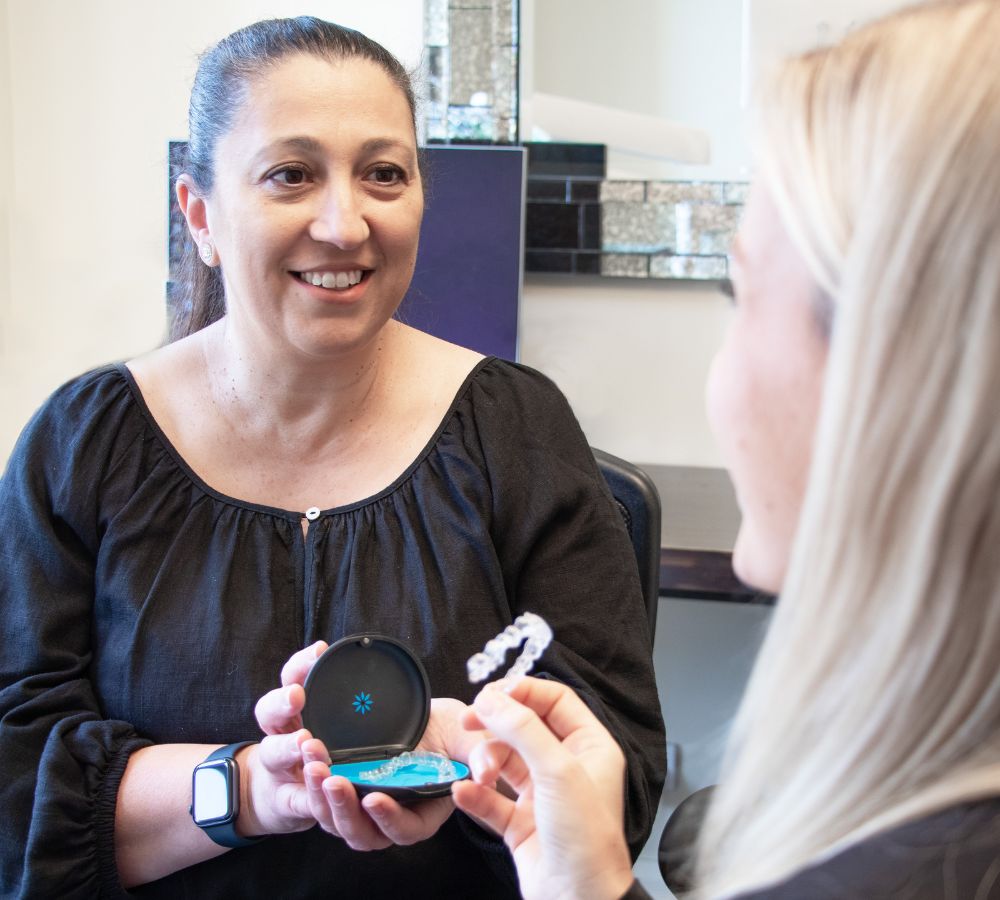
Sequential clear aligners — such as Invisalign or Invisalign Teen. Clear and less visible than braces, and a suitable alternative in some patients. Conventional braces vs lingual braces vs Invisalign sets out where each fits.
Arch expanders, removable plates and headgear — many of these are suited to growing children, and can influence jaw growth at the right stage. See When should I take my child to see an orthodontist?.
Extraction of some teeth — sometimes considered for crowding, to provide space for alignment.
That last one deserves a note. Extraction in orthodontics is a planning decision, not a failure — in a crowded arch there is sometimes no room to align teeth without creating space, and expanding beyond what the bone supports produces an unstable result.
Afterwards
Discreet retainers are worn to hold the teeth in their final position.
Patients can usually be weaned off them, but in some cases they are worn permanently.
Retention is part of the treatment, not an optional extra. Teeth drift throughout life, and treatment without retention relapses — see Will my teeth need retainers after I've had braces?.
Making an appointment
You do not need a referral. If you have no regular general dentist, you can contact any specialist orthodontic practice directly for an assessment. See Complimentary Orthodontic Consultation and Contact Us. Confirm the current terms when you book — what the appointment includes, whether records such as scans or radiographs are part of it or charged separately, and whether any deposit applies.
The orthodontist will advise you to have a check-up with a general dentist before starting treatment, so that both work together on your care. Untreated decay or gum disease should be addressed before teeth are moved. See Tooth Fillings and Bleeding Gums.
If you do start orthodontic treatment, continue seeing your general dentist for check-ups and cleaning. This keeps your teeth healthy during treatment — and it matters more during orthodontics than at any other time, because appliances make cleaning harder at exactly the point when plaque control is most important. See Dental Cleans & Hygienists and What are the most common complaints associated with conventional braces?.
Cost
See What is the cost of braces?, the Price Guide and Payment Plans. Specialists generally charge more than general dentists, so a like-for-like comparison of quotes requires knowing who is doing the work.
Payment plan options are available. Where a plan is advertised as interest free, that describes the plan term only — a deposit may be required, an establishment fee and ongoing account fees may apply, and charges can apply if the balance is not cleared within the agreed period. The applicable terms depend on the provider and the amount financed, and are set out in writing before you commit — ask what the deposit and the establishment fee are, in dollars, and what the total will be by the end. Payment Plans.
Common questions
How do I actually check the register, and what will it tell me?
It is a public search and it takes about a minute. The register is published by AHPRA and the Dental Board's own patient-facing prompt is simply “Check if your health practitioner is qualified, registered and their current registration status.” Search by the practitioner's name rather than the practice name.
What it will tell you:
- Whether the person is registered at all, and their current registration status.
- Their specialty or specialties, if they hold specialist registration. The Board states that the register “also includes details of the specialty or specialties for dentists who hold specialist registration” — so this is a recorded field, not something to be inferred from how a website is worded.
- Any conditions on their registration. As this page notes for overseas-registered practitioners, conditions can be imposed where a scope of practice is narrower than the Australian one, and the register shows the outcome.
What it will not tell you: how many cases like yours they have treated, how they plan, or whether they are the right fit. The register answers a legal question, not a clinical one — which is why the three scope-of-practice questions above still matter after you have looked someone up.
One practical note. If a practitioner's own material says “special interest in orthodontics” or similar, that is not a coded way of claiming specialist registration; it is a description of training, and it should return no specialty on the register. The two are different statements and the register is what distinguishes them.
What about mail-order or at-home aligners — is that a third option?
The Australian Dental Association's position is unambiguous, and it is worth quoting rather than paraphrasing.
“The Australian Dental Association (ADA) do not recommend Australians have DIY orthodontic treatment.” Describing the direct-to-consumer model — companies that provide tooth-straightening “directly to you without having to visit a dentist or orthodontist” — the ADA states that “There are many risks to this treatment. They can lead to permanent damage to your teeth, gums, and jaw joints.”
Its recommendation instead is “that you have in-person treatment with a dentist or orthodontist which includes a thorough assessment before starting treatment and ongoing supervision.”
The two phrases doing the work there are thorough assessment before starting and ongoing supervision. Everything this page describes under what orthodontic treatment involves — the examination, the records, the plan setting out options, duration, frequency, risks, benefits and costs, and the adjustments every four to eight weeks — is the thing the direct-to-consumer model removes. That is how it is cheaper. It is not a different brand of the same product.
One specific reason supervision matters here: as this page notes, untreated decay or gum disease should be addressed before teeth are moved. Nobody who has not examined your mouth knows whether you have either.
At what age should my child be assessed?
Earlier than most parents expect, and earlier than the age at which treatment would usually start.
The Australian Society of Orthodontists recommends that children have an orthodontic assessment between the ages of 7 and 10. The ADA adds the point that removes the most common objection: “All the adult teeth do not have to be present in the mouth for an assessment to be done. An examination at this age can allow for early intervention treatment should it be needed.”
So an assessment at that age is not the start of treatment. In many cases it results in nothing but a review date. What it is for is catching the situations where doing something while a child is still growing is easier than doing something later — which is the same reasoning behind the arch expanders, plates and headgear listed above as “suited to growing children” because they “can influence jaw growth at the right stage.”
Two things worth raising specifically at that appointment, both from ADA material: a thumb-sucking habit that is still going, because past habits of that kind are among the things orthodontic treatment later has to correct; and prominent front teeth, because the ADA notes that children with them “may be at higher risk of injury and may benefit from orthodontic assessment and early treatment to reduce this risk.”
When should I take my child to see an orthodontist?, children's braces and Invisalign and how long will my child need to wear braces?.
Are clear aligners actually invisible, and what will I have to change?
On visibility, the ADA is careful in a way that advertising often is not — and its wording is worth having in front of you:
- Clear aligners: “Although the aligners are clear plastic, they are not invisible.”
- Ceramic braces: “They are not completely invisible but are less obvious than metal braces.”
- Lingual braces, fixed to the inside surface of the teeth: “practically invisible.”
Three different levels of discretion, none of them described as total. It is also the ADA's position that “Your dentist or orthodontist will advise you if clear aligners are suitable for your individual situation” — suitability is a clinical finding, not a menu choice.
On what changes day to day, aligners ask more of the patient than braces do, because the appliance comes out. The ADA's instruction is that “The trays should be worn at all times other than when eating and drinking liquids other than water.” Follow the specific wear-time instruction your own clinician gives you, which will be more precise than that.
The habit that causes the most avoidable damage is drinking with the trays in. The ADA is explicit: “Drinking liquids such as fruit juice or soft drink while wearing clear aligners can trap the liquids against the teeth, which can cause damage to the teeth if it happens frequently.” A tray holds a sugary or acidic drink against the enamel instead of letting saliva clear it — which converts an ordinary drink into a prolonged acid exposure. Water is the only thing that goes in with them.
See Invisalign, hygiene benefits of Invisalign and conventional braces vs lingual braces vs Invisalign.
How do I keep my teeth clean once the appliance is in?
This is the single most consequential thing you do during treatment, and the ADA sets out a method rather than an exhortation.
With braces, it recommends brushing after every meal, because food gets caught around the brackets. Either a manual or an electric toothbrush can be used. Its sequence:
- Remove any rubber bands or removable appliances, and rinse or clean them before putting them back.
- Place a pea-sized amount of toothpaste on the brush.
- Start at the gum line, holding the brush at a 45-degree angle to the gums with the bristles split evenly over the teeth and gums, moving in small circular or back-and-forward motions.
- Turn the brush so the bristles face downwards to clean the top of the brackets.
- Turn it again to clean at an upward angle along the bottom of the brackets.
- Spit out the excess but do not rinse with water — “This allows the fluoride paste to sit on the teeth for longer, increasing protection.”
Steps 4 and 5 are the ones people skip, and the ledge above and below a bracket is exactly where a white mark appears after debanding.
Between the teeth, the ADA acknowledges that string floss is tricky with braces, and names the alternatives: floss threaders made for braces, and interdental brushes — which clean both between the teeth and between the brackets.
With aligners, teeth are brushed and flossed as normal, and the trays are cleaned at the same time, ideally twice a day. The ADA's method: clean the trays with an antibacterial liquid soap and a spare toothbrush, then rinse well with warm water.
Dental cleans and hygienists and what are the most common complaints associated with conventional braces?.
Is there any reason to do this other than appearance?
Yes, and it is worth separating from the cosmetic case because it changes how the decision is weighed.
The ADA describes orthodontics as the field concerned with “the diagnosis, prevention, and correction of crooked teeth, jaws, and unfavourable bite patterns”, and lists what it treats as crooked or crowded teeth; incorrect biting patterns; severe misalignment of teeth and/or jaws; and past habits such as thumb sucking that have affected the position of the tooth and development of the jaw bones.
It then states the point directly: “Orthodontic treatment is not just about straight teeth. It can correct a bad biting pattern, help with sleep apnoea, and prevent uneven wear of the teeth.”
Of those, uneven wear is the one most often underestimated, because it is slow and silent. Teeth that meet badly wear each other at a rate the person never notices until a front edge has thinned or chipped — and enamel does not grow back, so the repair is restorative work rather than an adjustment. What is acid wear and how can I avoid it? covers the chemical version of the same loss; TMD and teeth grinding and snoring and sleep apnoea cover the other two.
None of that means orthodontics is indicated for everyone with imperfect alignment, and no page can tell you whether it is indicated for you. It means that if you have been putting off an assessment because you are comfortable with how your teeth look, appearance is not the only thing the assessment is looking at.
Practical details
Written by Dr Andrea Phatouros.
Smile Solutions, Level 1, 220 Collins Street, Manchester Unity Building, Melbourne VIC 3000. Phone 13 13 96, or theteam@smilesolutions.com.au. Monday–Friday 8.00am–6.00pm, Saturday 8.30am–1.30pm, Sunday by appointment.
Specialist registration can be verified on the AHPRA register, or by calling 1300 419 495.
Published 1 December 2018. Suitability, treatment time and results vary between individuals; orthodontic treatment carries risks that should be discussed with your clinician. Statements about the register, the specialties and the specialist registration standard are from the Dental Board of Australia; the title-protection provisions are from AHPRA's advertising guidelines. Statements about direct-to-consumer orthodontics, aligner and brace visibility, aligner wear and cleaning, brushing with braces, the age-7-to-10 assessment and what orthodontics treats are from the Australian Dental Association's consumer guidance on teeth straightening and braces, and from its policy statement on the prevention and management of oral injuries. General information only; it does not replace advice from your treating practitioner. Payment plan terms are set by the credit provider and change; confirm current terms directly before you commit.
Smile Solutions trades under ABN 28 193 514 103.
Images on This Page
-
https://www.facebook.com/tr?id=800557773428361&ev=PageView&noscript=1
(no alt text)
-
https://www.smilesolutions.com.au/wp-content/uploads/2025/10/calendar_month.svg
(no alt text)
-
https://www.smilesolutions.com.au/wp-content/themes/arcadian-wordpress-theme/assets/images/smile_solutions_logo_white.png
Smile Solutions Logo
-
https://www.smilesolutions.com.au/wp-content/themes/arcadian-wordpress-theme/assets/images/smile_solutions_logo_purple.png
Smile Solutions Logo
-
https://www.smilesolutions.com.au/wp-content/uploads/2016/05/Andrea-150x150.jpg
Dr Andrea Phatouros
-
https://www.smilesolutions.com.au/wp-content/uploads/2016/05/Andrea-2.jpg
Andrea
-
https://www.smilesolutions.com.au/wp-content/uploads/2025/09/Smile-Solutions-Braces-300x270.png
Traditional braces Smile Solutions Specialist Orthodontist
-
https://www.smilesolutions.com.au/wp-content/uploads/2025/09/Root-Canal-2-300x217.jpg
Root Canal
-
https://www.smilesolutions.com.au/wp-content/uploads/2023/11/SS-Tooth-1-1-150x150.png
Smile Solutions
-
https://www.smilesolutions.com.au/wp-content/uploads/2025/09/Wisdom-Teeth-Smile-Solutions-300x300.png
Smile Solutions Dentist Melbourne
-
https://www.smilesolutions.com.au/wp-content/uploads/2025/11/Kia-150x150.jpg
Dr Kia Pajouhesh
-
https://www.smilesolutions.com.au/wp-content/themes/arcadian-wordpress-theme/assets/images/family_owned_bussiness.png
Family Owned Business
-
https://www.smilesolutions.com.au/wp-content/themes/arcadian-wordpress-theme/assets/icons/icon--phone.svg
Smile Solutions Contact
-
https://www.facebook.com/tr? id=800557773428361&ev=PageView&noscript=1
(no alt text)