Cosmetic Dentistry
What does cosmetic dentistry cover at Smile Solutions, and where do I start?
Cosmetic dentistry addresses the appearance of teeth — colour, shape, alignment and proportion. In practice the same treatments frequently do structural work as well: restoring tooth structure, supporting function, or repairing damage that affects chewing or speech. The line between cosmetic and restorative dentistry is thinner than the labels suggest.
Which treatment suits you depends on your oral health, clinical needs and personal preferences, and can only be settled after a thorough assessment and discussion with a dentist. Outcomes vary between individuals, and every procedure carries risks and limitations that should be discussed during consultation.
We are at Level 1, 220 Collins Street, Manchester Unity Building, Melbourne CBD.
Where to start: the complimentary smile consultation
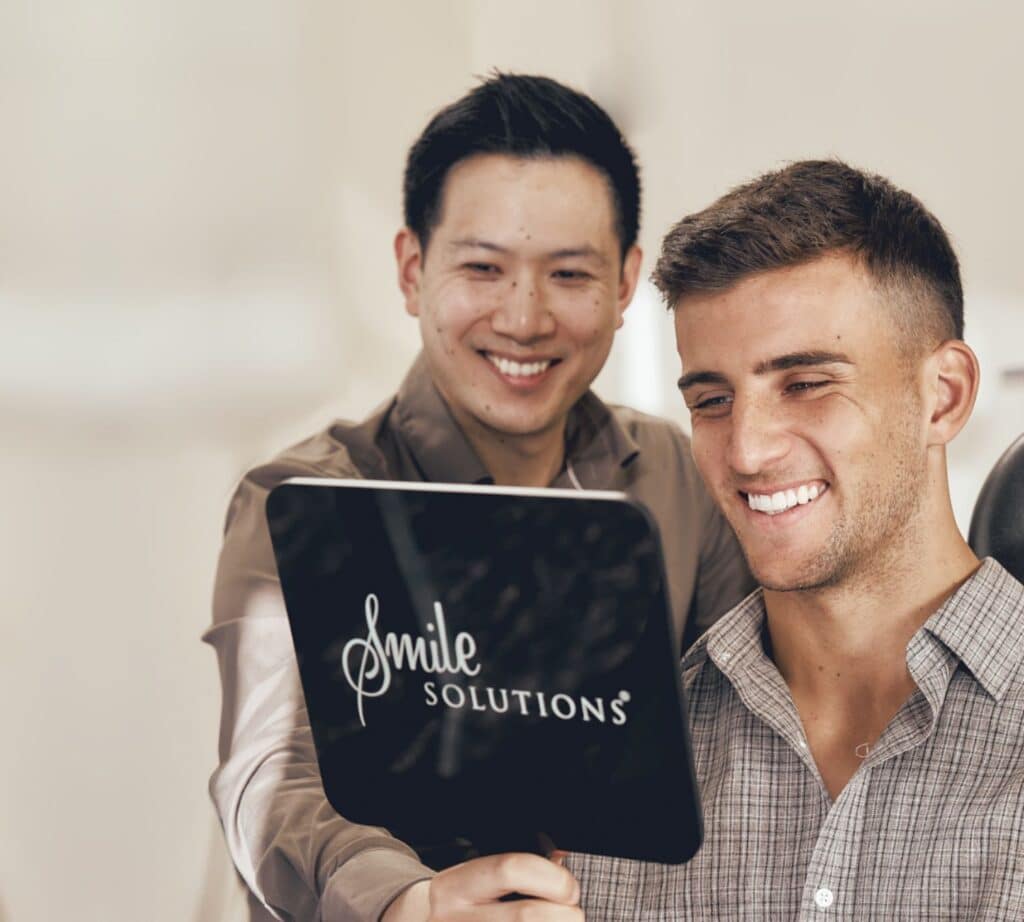
If you want to improve your smile but do not know which treatment applies, we offer a complimentary 60-minute cosmetic consultation. It is designed for people exploring their options rather than those who have already decided.
This appointment is a discussion only. It does not include a check-up, x-rays, scans or any clinical treatment. A $50 refundable deposit is required to secure the booking. Complimentary Smile Consultation.
Start from the concern, not the treatment
Most people arrive naming a procedure they have read about. It is more useful to start from what actually bothers you, because the same complaint often has several answers at very different levels of invasiveness.
| What bothers you | Options usually worth discussing, least invasive first |
|---|---|
| The colour | Whitening; then bonding or veneers only if whitening cannot reach it |
| A chip on a front tooth | Composite bonding; a veneer if the chip is large or recurring |
| Crooked or crowded teeth | Orthodontics or Invisalign — which move teeth instead of cutting them |
| A gap between the front teeth | Bonding, orthodontics, or veneers — in that order of tooth loss |
| Teeth that look short or worn | Find the cause first (grinding, erosion, bite), then bonding, veneers or crowns |
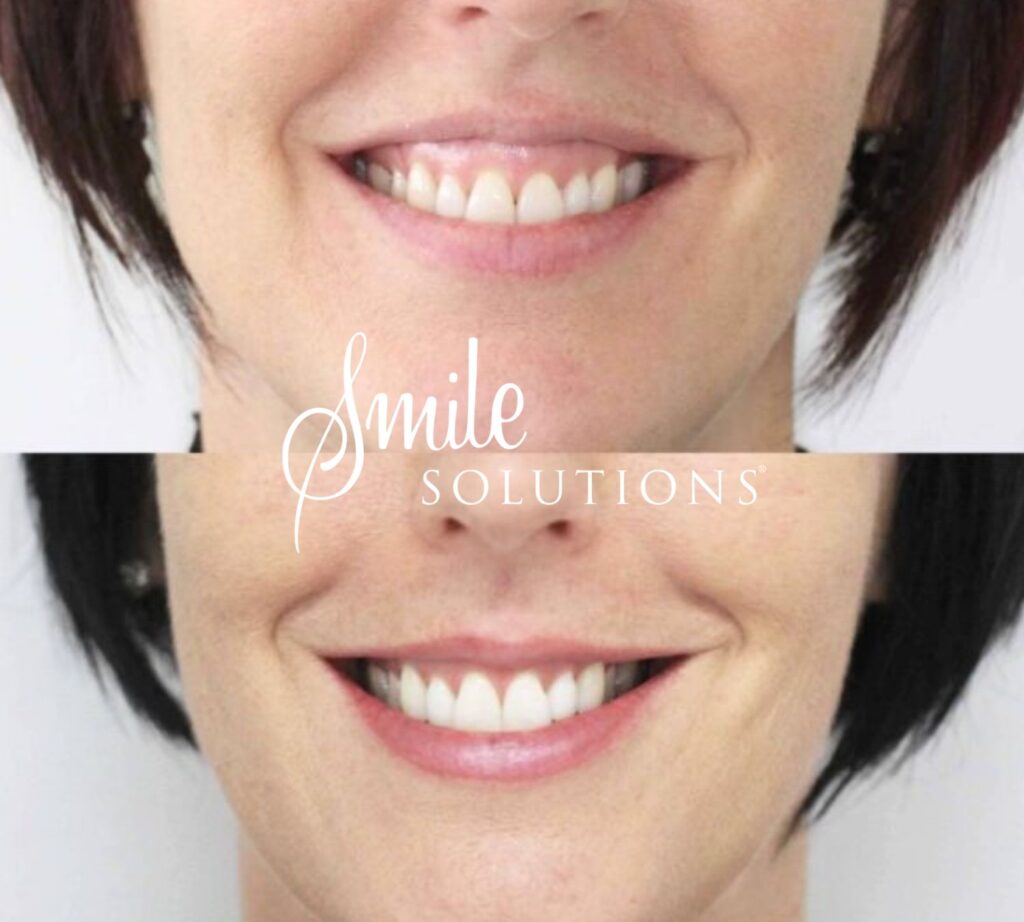
| Too much gum showing | Gummy smile treatment — gum lift, muscle relaxants, or orthodontics, depending on the cause |
| A dark single tooth | Internal whitening after root canal treatment; a veneer or crown if that is not enough |
| An old crown or filling that no longer matches | CEREC porcelain or a laboratory restoration, shade-matched to the current teeth |
| A missing tooth | Implants or a bridge — a restorative question before a cosmetic one |
The table is a conversation starter, not a diagnosis. Several of these look identical from the outside and are told apart only by examination.
The treatments
Porcelain veneers and crowns
Custom-made restorations that fit over or bond to natural teeth. They may be recommended to protect teeth that are chipped or broken, or that have had root canal treatment, while also changing appearance. Veneers are thin facings; crowns cover the whole tooth and are used where there is not enough enamel to support a veneer. See Porcelain Veneers, Dental Crowns and Same-Day Porcelain Veneers.
Composite bonding
A minimally invasive treatment in which tooth-coloured resin is applied directly to the tooth. It can repair small chips or cracks, mask discolouration, close small gaps, or adjust tooth shape. Because little or no tooth structure is removed, it is among the more conservative cosmetic options. See Composite Bonding.
Teeth whitening
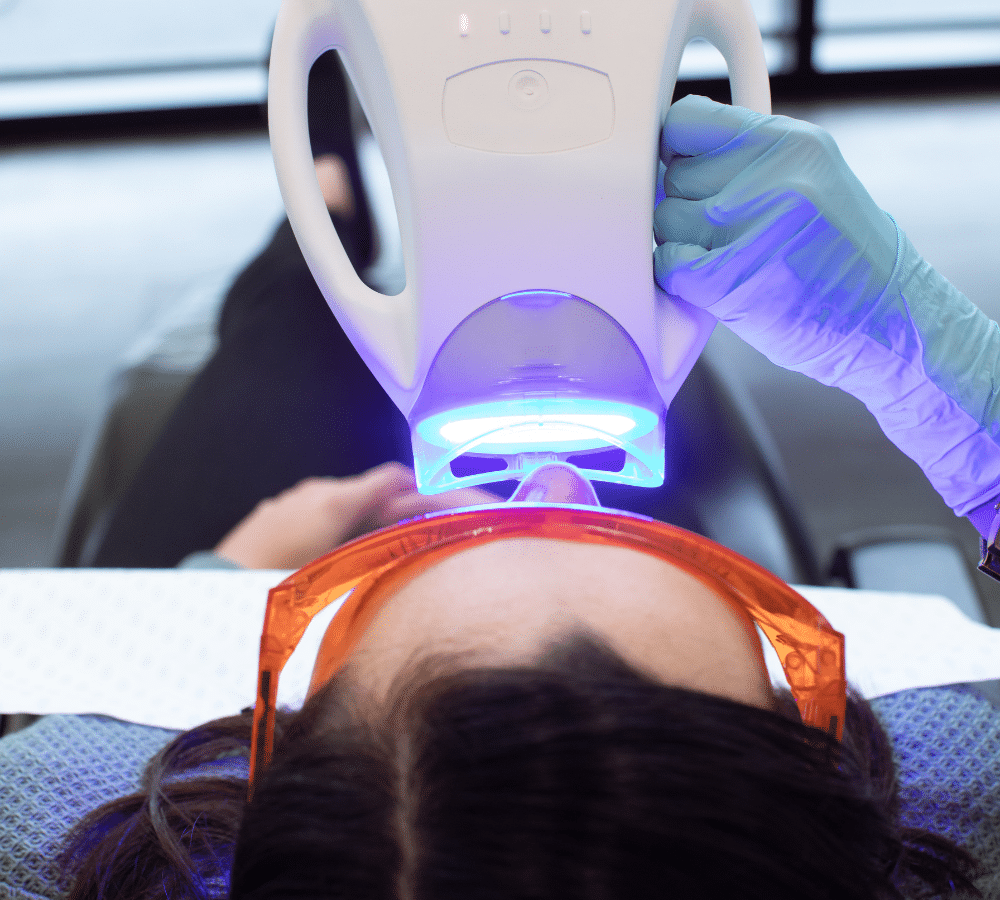
Discolouration comes from age, diet and oral hygiene habits, and sometimes from trauma to the tooth. We offer Zoom! WhiteSpeed in-chair whitening and a take-home kit using the Pola system. Whitening works on staining within the enamel; it does not change the colour of veneers, crowns or fillings. See Professional Teeth Whitening.
CEREC porcelain restorations
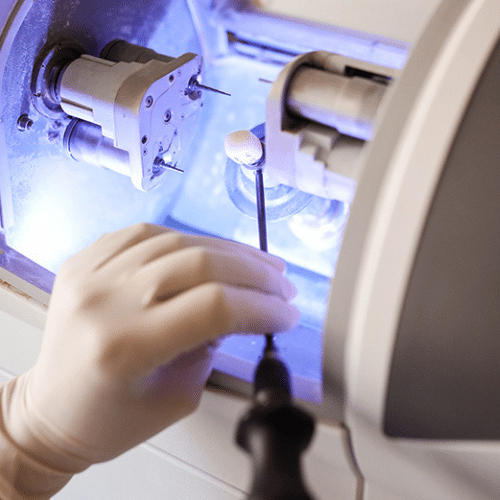
Custom porcelain fillings, onlays and crowns designed and milled on site, and fitted in a single appointment — no impression putty, no temporary restoration, no second visit. See Same-Day CEREC Restorations.
Gummy smile treatment
Where a smile reveals a disproportionate amount of gum, treatment options include a periodontal gum lift performed by a specialist periodontist, or muscle relaxant injectables to reduce upper lip movement. See Gummy Smile.
Orthodontics and Invisalign
Braces, lingual braces, clear braces and Invisalign improve function, health and appearance. Aligned teeth are easier to clean, which reduces the risk of decay and gum disease. Complimentary orthodontic consultations are available. See Orthodontics and Invisalign.
What a clinician is actually looking at
A cosmetic assessment is more systematic than “what would you like changed”, and knowing the vocabulary makes the consultation far more productive.
- How much tooth shows at rest and when you smile. This changes with age — upper teeth show less over time, lower teeth more — and it is why a design appropriate at 25 can look wrong at 60.
- The smile line — whether the edges of the upper front teeth follow the curve of the lower lip.
- Gum display and symmetry, including whether the gum margins sit level across the front teeth.
- Midline — whether the centre line between the front teeth aligns with the face, and whether it is upright or canted.
- Tooth proportion — the width-to-height relationship of each tooth, and how each appears relative to its neighbours.
- The shade, taken in natural light, and how your teeth graduate in colour from the edge to the gum.
- The bite, because how the teeth meet determines whether any of the above will survive.
The bite is the one people skip and the one that decides longevity. A cosmetic result that ignores how the teeth come together is porcelain waiting to chip.
The order things happen in
Where a plan involves more than one treatment, the sequence is not arbitrary — doing it out of order costs money.
- Health first. Decay, gum disease and failing restorations are treated before anything cosmetic. See Bleeding Gums and Tooth Fillings.
- Hygiene. A clean removes surface stain, and teeth are often lighter afterwards than people expected — which sometimes changes the plan. Dental Cleans & Hygienists.
- Position. Orthodontics moves teeth into place so that any restorative work afterwards can be conservative. Straightening first frequently means thinner veneers, or none at all.
- Colour. Whitening comes next, and the final shade is allowed to settle before anything is matched to it.
- Restorations. Bonding, veneers and crowns are made to the shade you have settled on.
- Protection and maintenance. A nightguard if you grind, and the recall interval that keeps the work alive.
Steps 3 and 4 are the ones most often skipped, and skipping them is what turns a conservative plan into an expensive one.
How cosmetic work is staffed here
All clinicians practise from a single location, which means general dentists and specialists collaborate on cases in person and treatment plans get peer review rather than being carried by one clinician alone.
Complex cosmetic treatment is performed by Dental Board–registered specialists — prosthodontists, periodontists, oral and maxillofacial surgeons, and dual medically qualified dental surgeons — rather than by a general dentist working across multiple fields. See Cosmetic Dentistry Under Specialist Care, Specialist Prosthodontists and Specialist Periodontists.
Clinicians identified on the practice's cosmetic pages include:
| Clinician | Registration | Role |
|---|---|---|
| Dr Maliha Siddiqui | DEN0001785009 | Registered Dentist, General Registration |
| Dr Joshua Ch'ng | DEN0001857728 | Registered Dentist, Specialist Registration in Orthodontics |
| Dr Casey Edgar | DEN0001923606 | Registered Dentist, General Registration |
The in-house laboratory
Smile Solutions operates its own dental laboratory in Melbourne, set up exclusively to service the practice's own patients. Its ceramists and technicians do not work with clinicians outside Smile Solutions.
Two consequences matter for patients: no work is sent offshore, and only TGA-approved products are used in manufacturing appliances. It also means the ceramist can see the patient directly for shade matching rather than working from photographs.
That last point is worth dwelling on. A natural tooth is not one colour — it is translucent at the edge, more saturated near the gum, and it carries surface texture and small characterisations that photographs flatten. A single front tooth matched to its neighbour is the hardest task in aesthetic dentistry, and it is markedly easier when the person building the restoration can look at the patient.
Costs and payment
We do not publish a general price list for cosmetic treatment. Fees depend on the tooth involved, the materials used and the clinician performing the work, and are quoted after examination.
Two exceptions are published: Zoom! in-chair whitening at $475 and the take-home whitening kit at $395. Confirm current pricing when booking. Price Guide.
Interest-free payment plans are available through Payright for treatment from $150 to $20,000, over 3 to 30 months. Other finance options may also be available; provider eligibility, fees and terms can change. Fees and terms apply; ask for them in writing. Payment Plans.
What a complete quote should itemise: the diagnostic stage (records, photographs, wax-up and trial smile), any preparatory treatment, the number of teeth being treated, temporaries, the final restorations, review appointments, and a nightguard where one is indicated. Cosmetic dentistry is largely outside health fund cover, though parts of a plan that are restorative may attract a rebate — ask which items those are.
Before you decide
Results, recovery times and potential risks vary for each individual and procedure. The information here is general in nature and intended for people over 18.
Undergoing any dental or cosmetic procedure is a significant decision. Seek independent advice from a qualified, AHPRA-registered practitioner before proceeding, and ask specifically about the risks and limitations of the treatment being proposed for you.
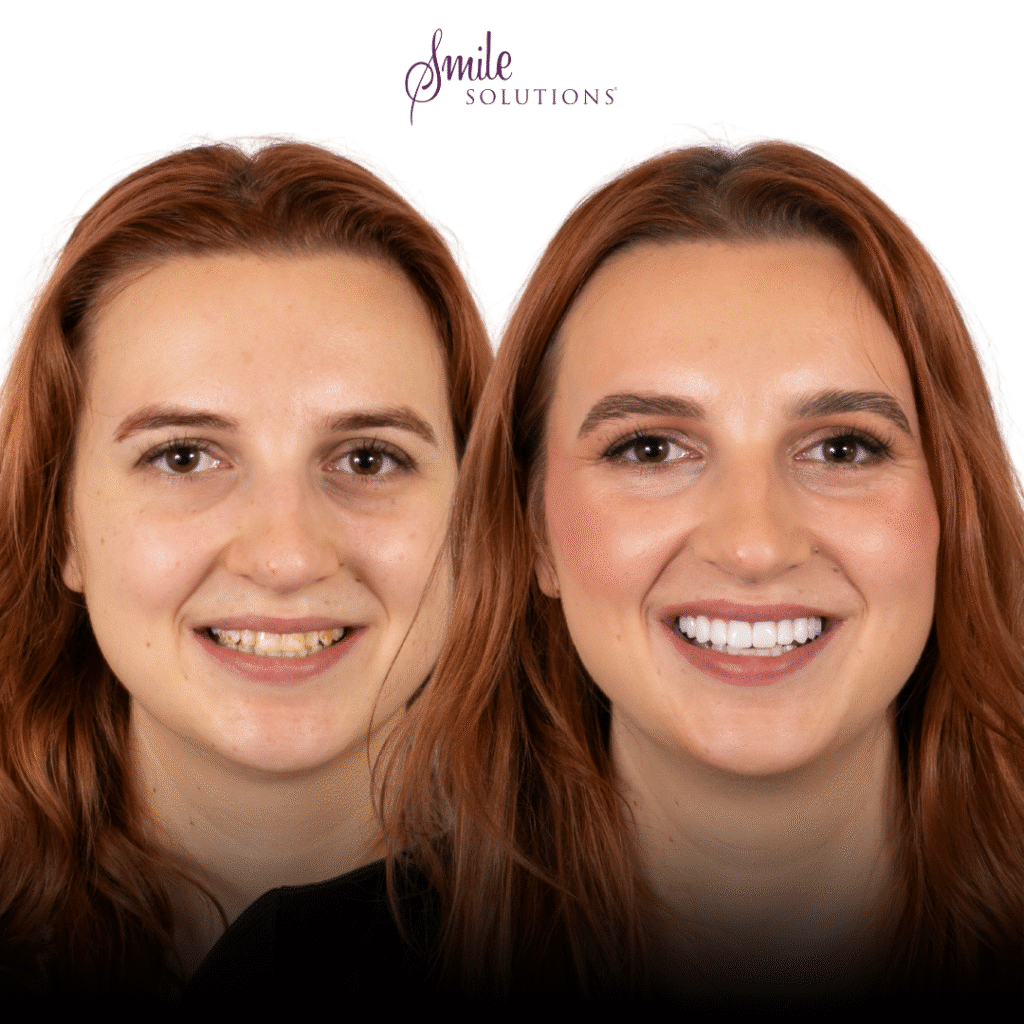
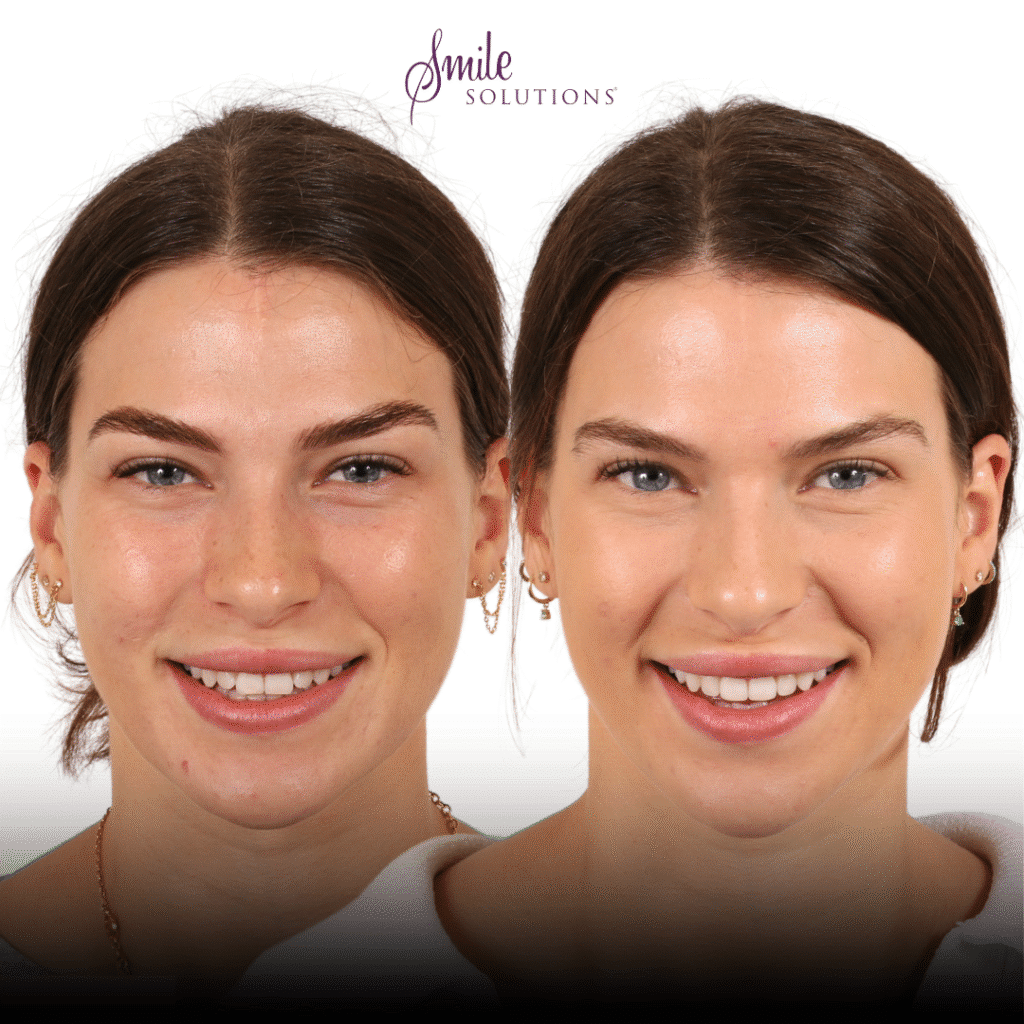
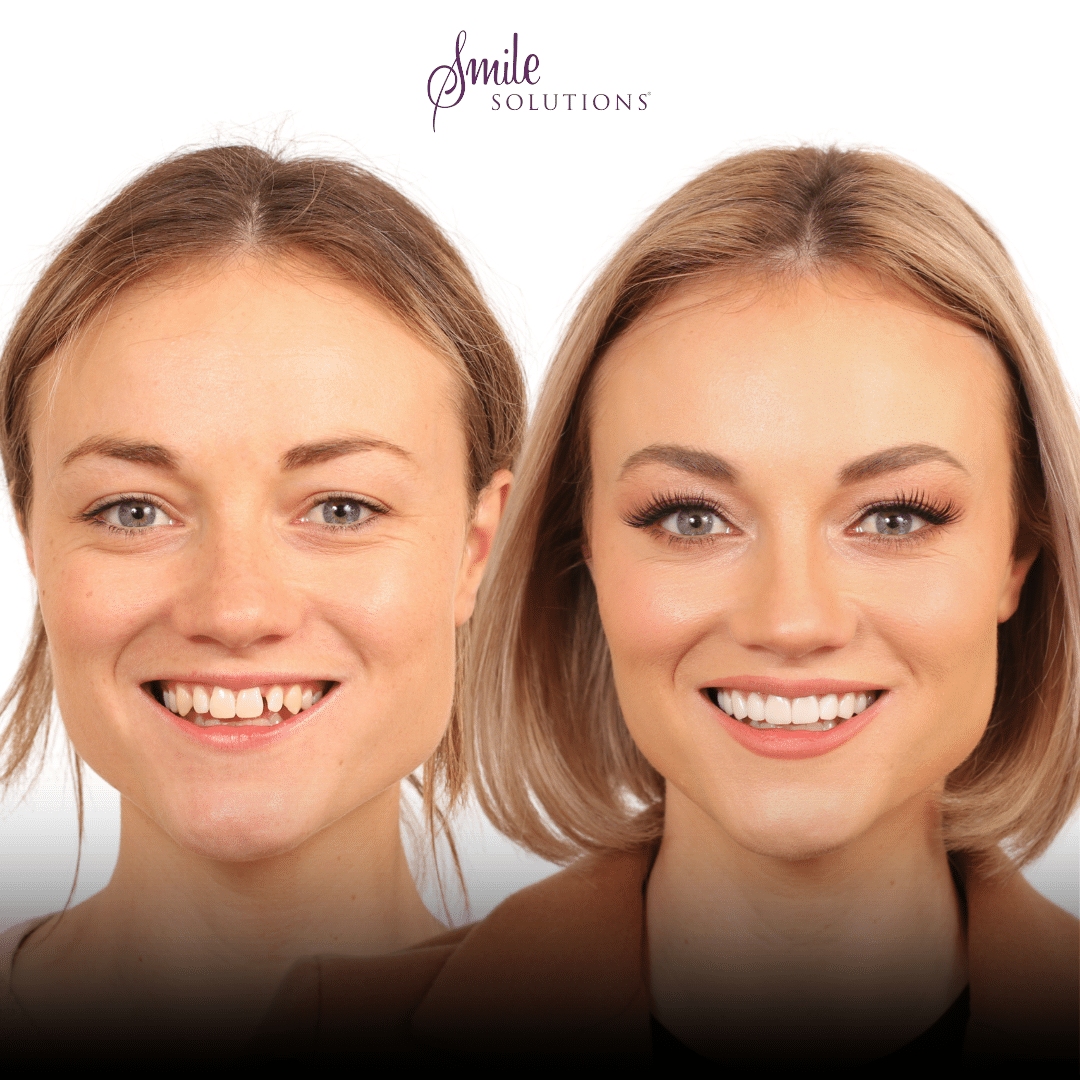
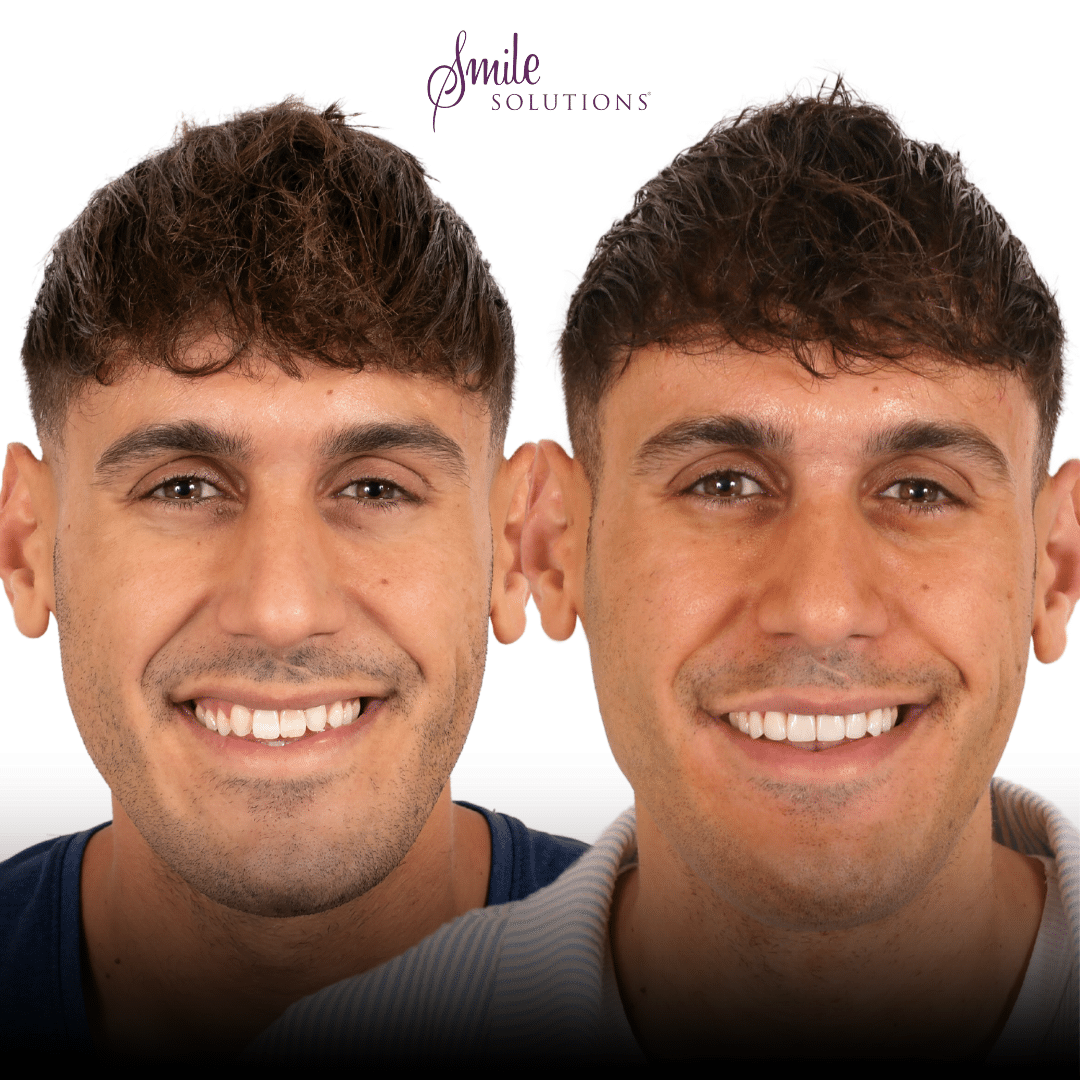
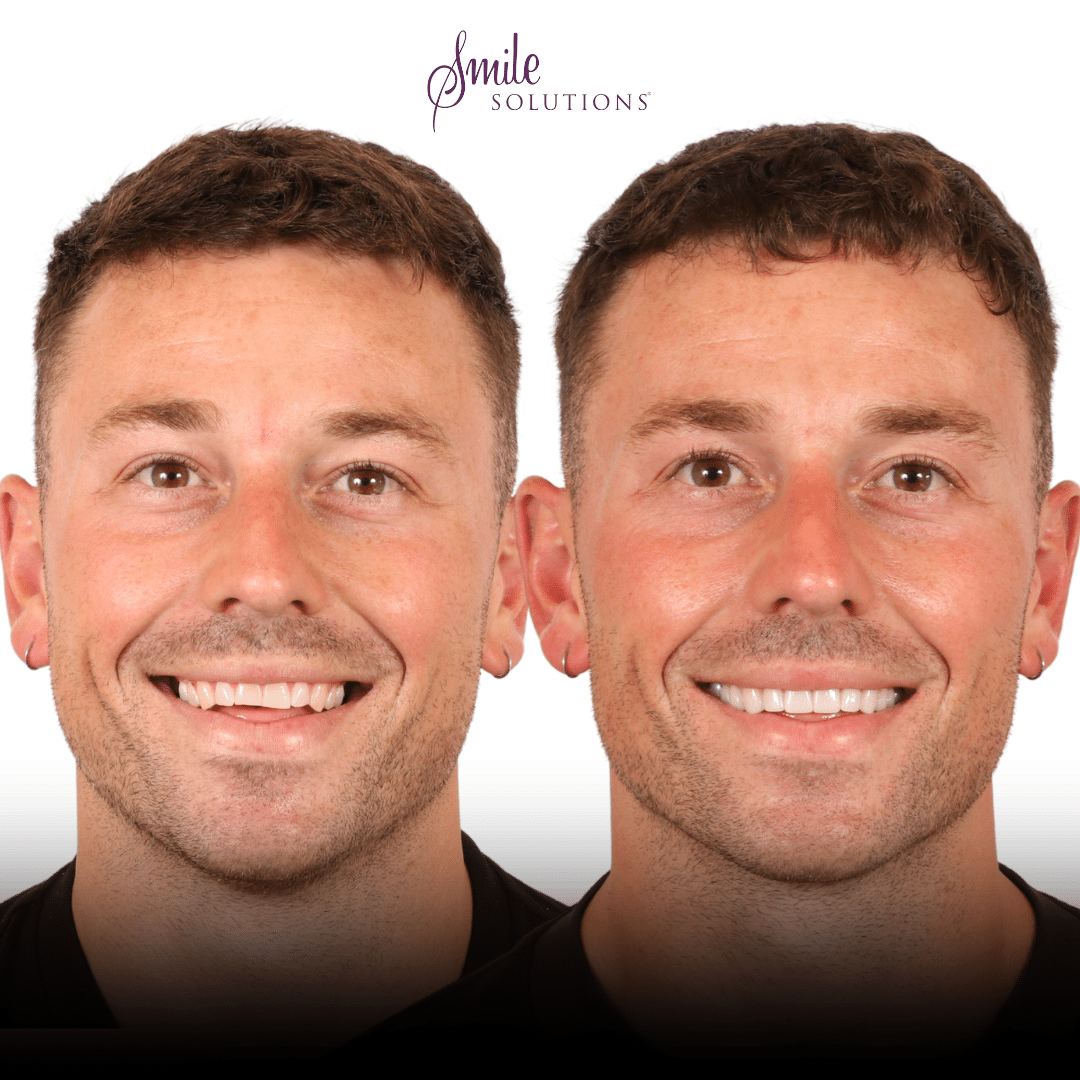
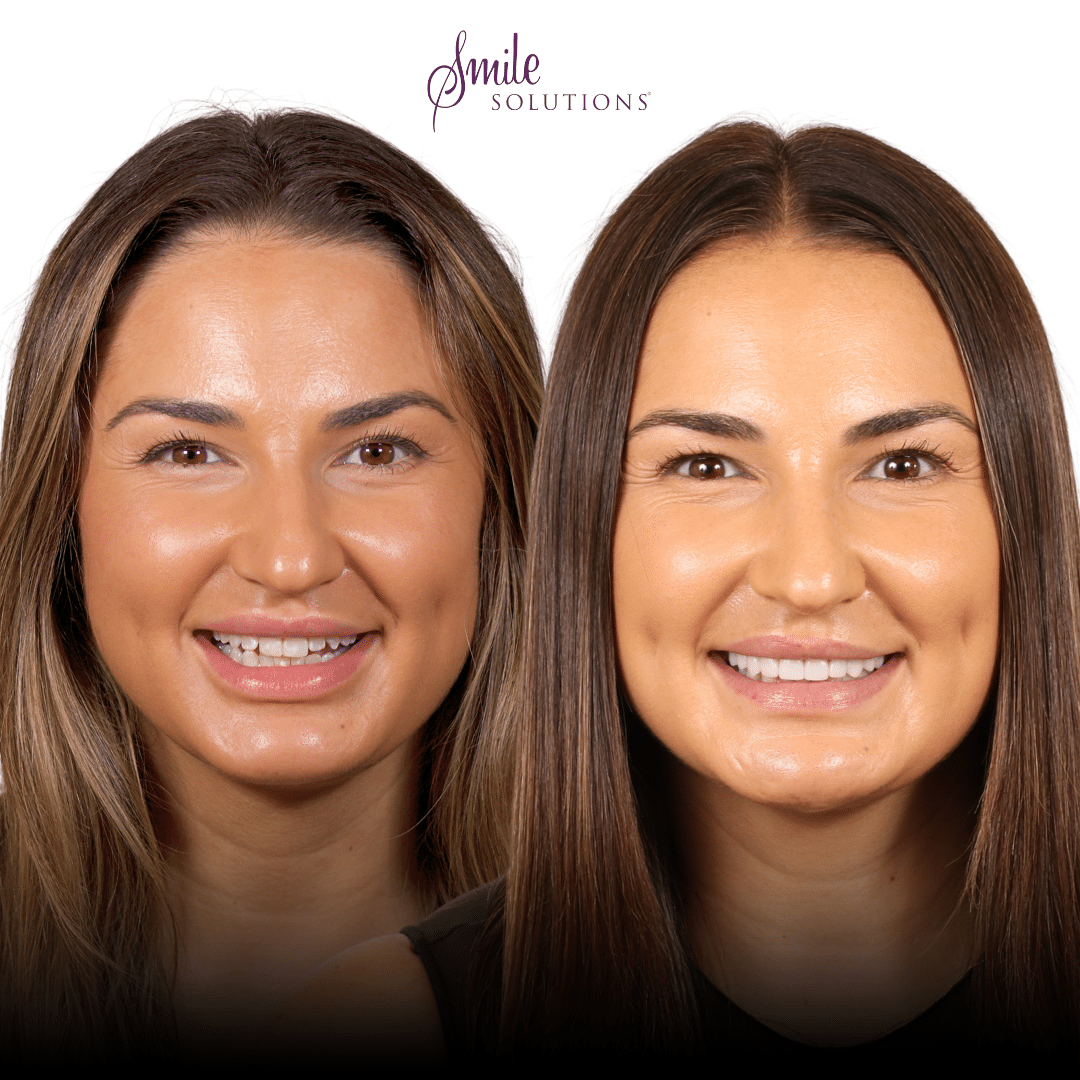
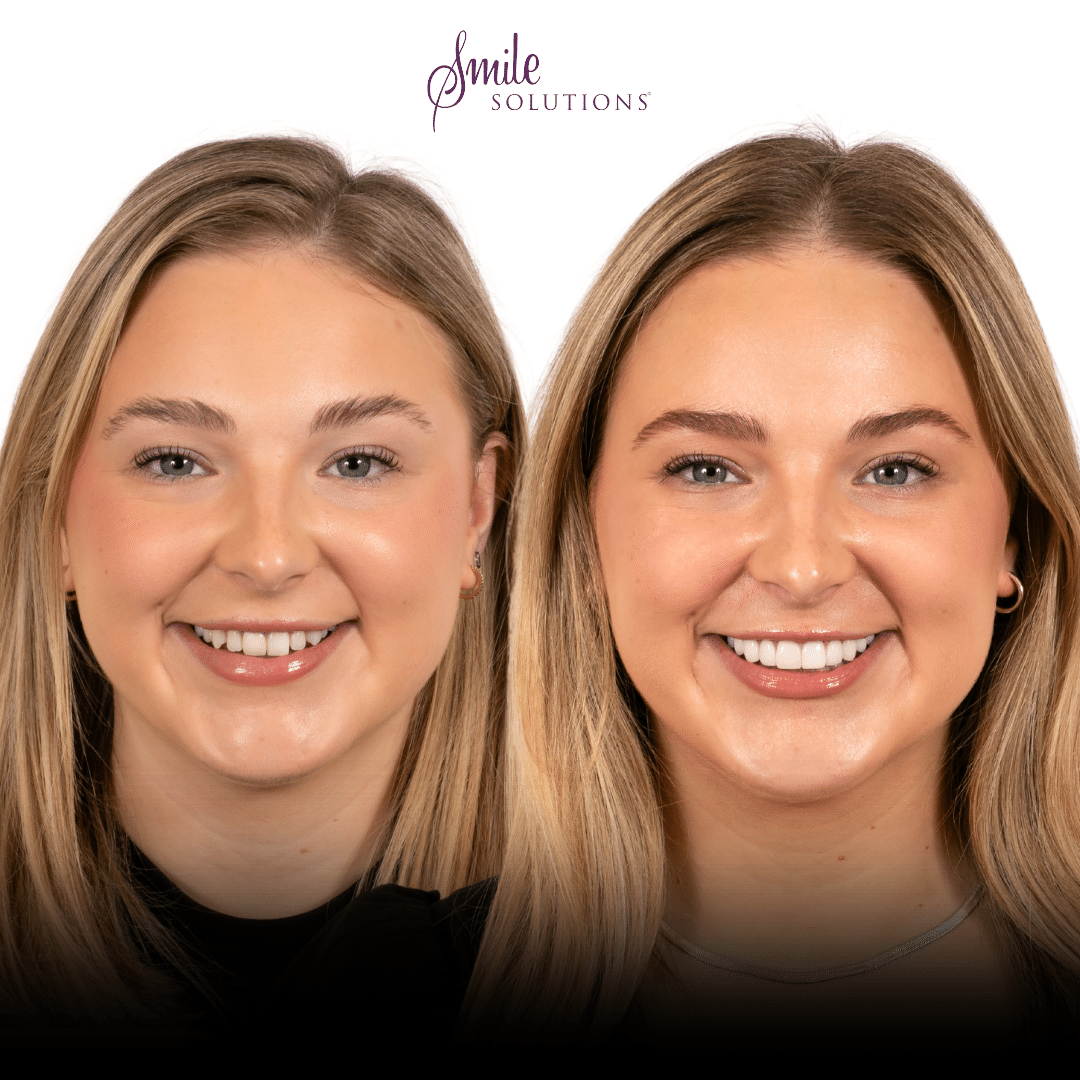
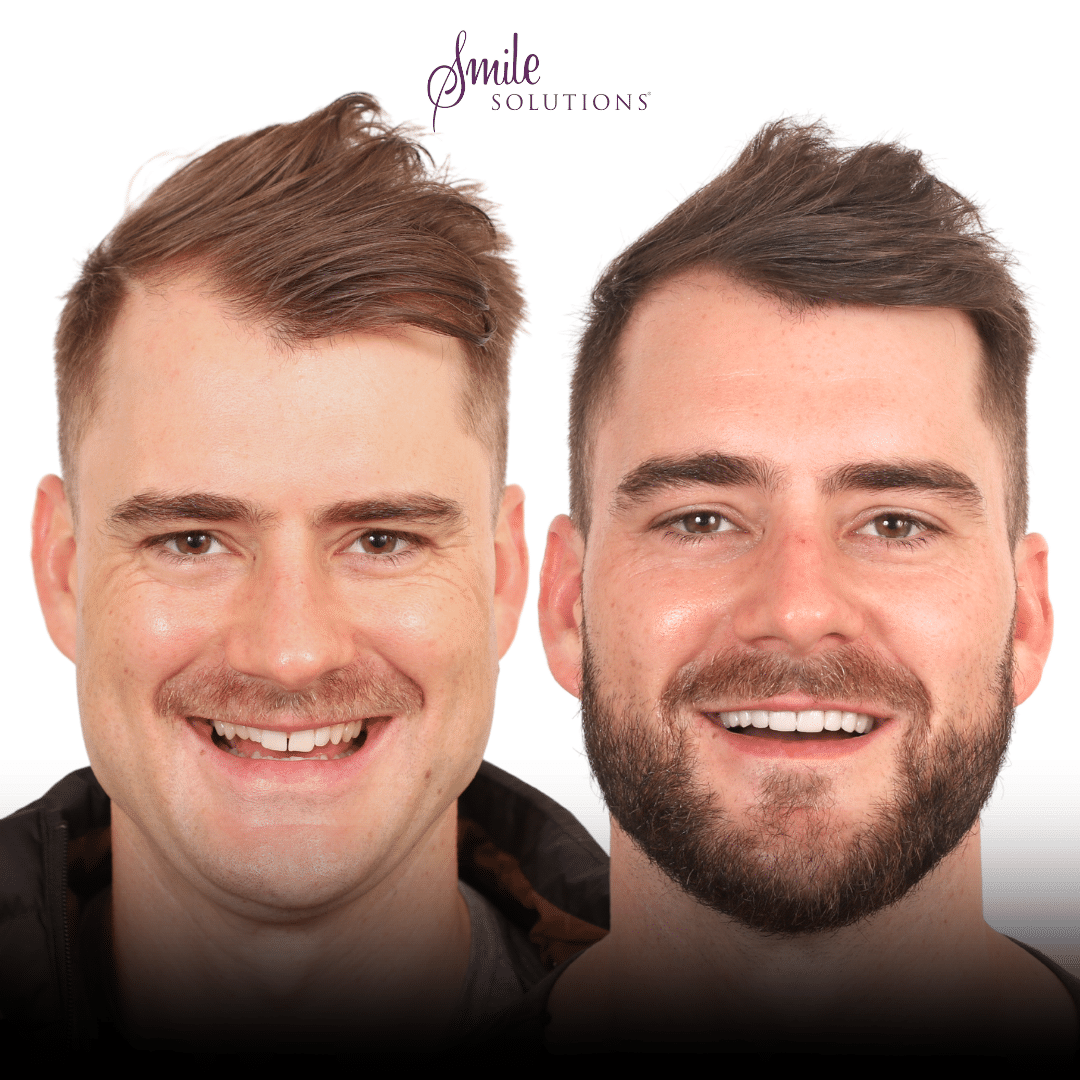
All before-and-after photography published by the practice is shared with patient consent, with no filters or AI alteration applied. "After" images are typically taken around two weeks post-procedure. Before & After Gallery.
A note on how to read any before-and-after, anywhere: check whether the lighting, angle and lip position match between the two images, and whether the “after” is wet and freshly polished. Those variables change an image more than most treatments do. The useful question is not “do I like this result” but “was this person's starting point anything like mine”.
Common questions
Veneers, bonding or crowns — which should I be asking for?
Start from least invasive and work up. That order is the single most useful thing on this page:
- Whitening — removes nothing from the tooth.
- Orthodontics — moves teeth rather than cutting them.
- Composite bonding — added to the tooth; little or no enamel removed, and repairable.
- Porcelain veneers — enamel permanently removed from the front of the tooth.
- Crowns — the whole tooth reduced.
Many people arrive asking for veneers when whitening and alignment would get them most of the way there, without touching the teeth. Ask for the conservative option to be explained even if you do not choose it.
How do the options actually compare?
| Whitening | Bonding | Porcelain veneers | Crowns | |
|---|---|---|---|---|
| Tooth removed | None | Little or none | Enamel from the front | The whole tooth reduced |
| Reversible | Yes | Usually | No | No |
| Visits | One, or take-home | Usually one | Two, or one with CEREC | Two, or one with CEREC |
| Stains over time | Teeth re-stain | Yes | Resists staining | Resists staining |
| Repairable in the chair | n/a | Yes | Rarely — usually replaced | Rarely — usually replaced |
| Best for | Colour only | Small chips, gaps, shape | Shape, colour and proportion together | Teeth already heavily broken or root-treated |
Read the “tooth removed” row first. It is the only row that cannot be revisited later.
Are veneers reversible?
No. Porcelain veneers and crowns are irreversible. Healthy enamel is removed permanently, and the tooth will need a restoration on it for the rest of your life — including every replacement, decades from now.
Composite bonding is the reversible-ish alternative: it is added rather than subtracted, it can be repaired chairside, and it can usually be removed.
This is the question to ask before any cosmetic treatment: how much tooth is removed, and can it be undone?
How long will they last, and what happens then?
Everything fails eventually — and what matters is the state the tooth is in when it does.
Composite bonding stains and chips sooner but is straightforward and cheap to repair. Porcelain veneers and crowns last considerably longer, and when they fail they are replaced, which usually means removing a little more tooth.
Ask for the replacement cost and the expected cycle up front, and factor both into the comparison. Price Guide covers what a complete quote must contain.
Will whitening work on my crowns, veneers or fillings?
No. Whitening changes natural enamel only. Existing restorations stay exactly the colour they are.
The practical consequence catches people out: whiten your natural teeth and any visible crown, veneer or white filling may no longer match — which can mean replacing them afterwards, at additional cost.
So the correct sequence is: whiten first, settle on the final shade, then replace or place any restorations to match it. Doing it the other way round is expensive.
Does whitening damage teeth, and will it hurt?
Professionally supervised whitening at appropriate concentrations does not damage enamel. Sensitivity during and shortly after treatment is common, and it is temporary — usually settling within a day or two, and manageable with a desensitising toothpaste started beforehand.
Tell your clinician if you already have sensitive teeth, gum recession or exposed root surfaces, because those change the plan.
Whitening is elective and it does not treat disease. It is also not suitable for everyone — which is why an examination is needed first.
What is a trial smile, and should I insist on one?
Yes, insist on it for anything involving multiple front teeth.
A diagnostic wax-up is a physical model of the proposed result; a trial smile (mock-up) is that design placed directly onto your teeth without preparing them. You can see it in daylight, photograph it, speak with it, and show it to someone who will tell you the truth.
If you do not like it, nothing has been lost. That is the entire point, and it is why the sequence matters: wax-up, then trial smile, then — only then — preparation.
A digital simulation on a screen is not the same thing. See Mock-up Reveal and why you should see your new smile before treatment begins.
Does gum disease or decay have to be treated first?
Yes, and this is not a delaying tactic. Veneering teeth with untreated periodontal disease produces a good-looking result on a failing foundation, and the gum recession that follows will expose the margins within a few years — visible dark lines at the gum edge, and the work needing replacement early.
Healthy foundation first, appearance second. Any practice willing to reverse that order is telling you something.
I grind my teeth. Does that change things?
Substantially. Porcelain placed in a mouth that grinds, without a plan for the grinding, will chip — and that is a predictable outcome, not bad luck.
Expect a nightguard to be part of the plan, and expect it to be discussed before treatment rather than after the first fracture. See TMD & Teeth Grinding.
Is a ‘cosmetic dentist’ a specialist?
No. Cosmetic dentistry is not one of the thirteen recognised dental specialties in Australia, and the term carries no regulatory meaning — nor do ‘smile designer’ or ‘implantologist’.
Plenty of excellent clinicians describe themselves this way. The point is that the title tells you nothing you can verify, so check the individual on the AHPRA register instead. See Dentists & Registered Specialists.
What about getting veneers done overseas?
The recurring pattern is not bad porcelain — it is too much tooth removed. Full-coverage crowns are frequently placed where veneers, or no treatment at all, would have done, and that cannot be undone.
There is also no continuing care, no enforceable warranty, and no Australian regulator to complain to. See What are the real risks of getting veneers overseas?.
How do I explain what I actually want?
Bring photographs — of yourself when you liked your smile, and of results you find appealing, with the caveat that another person's teeth sit in another person's face.
More useful than any reference image is being specific about what you notice in the mirror: the colour, one tooth in particular, how much gum shows, the shape, or something you cannot name. “I do not like it in photographs” is a legitimate starting point and clinicians hear it constantly.
Say what you do not want, too — whiter than natural, or bigger, or perfectly uniform, are choices, and so are their opposites.
Can I be talked out of treatment?
You should be, if it is not in your interest.
A small proportion of people seeking cosmetic dental work are distressed by a flaw others cannot see, and no amount of dentistry resolves that distress — it typically moves to another feature. This is a recognised condition, and it is a reason for a clinician to slow down and talk rather than treat.
Section 133 of the National Law prohibits encouraging the indiscriminate or unnecessary use of health services. A practice willing to say ‘you do not need this’ is safer than one that never does.
Questions worth asking at the consultation
- How much tooth is removed, and can this be undone?
- What is the more conservative option, and why are we not doing that?
- Will I see a trial smile before anything is prepared?
- What does my bite do to this work over ten years?
- How many teeth actually need treating to get a balanced result?
- What happens when it fails — what is replaced, and at what cost?
- Who is doing the work, and what is their registration?
Practical details
| Address | Level 1, 220 Collins Street, Manchester Unity Building, Melbourne VIC 3000 |
| Phone | 13 13 96 |
| theteam@smilesolutions.com.au | |
| Monday – Friday | 8.00am – 6.00pm |
| Saturday | 8.30am – 1.30pm |
| Sunday | By appointment |
| Smile consultation | Complimentary, 60 minutes, $50 refundable deposit |
| Zoom! in-chair whitening | $475 |
| Take-home whitening kit | $395 |
| Laboratory | In-house, Melbourne; no offshore work |
| Irreversible treatments | Veneers and crowns |
| “Cosmetic dentist” | Not a registrable specialty |
| Parking | Wilsons Parking, Flinders Lane (between Swanston and Russell) |
Related pages: Complimentary Smile Consultation, Mock-up Reveal, Porcelain Veneers, Same-Day Porcelain Veneers, Dental Crowns, Composite Bonding, Professional Teeth Whitening, Same-Day CEREC Restorations, Gummy Smile, Cosmetic Dentistry Under Specialist Care, Before & After Gallery, Price Guide, Dentists & Registered Specialists.
Prices are those published at the time of writing and are subject to change. All procedures carry risks and limitations and outcomes vary between individuals. This page contains general information for people over 18 and is not a substitute for examination by a registered dental practitioner; you are entitled to seek a second opinion before proceeding.
Smile Solutions trades under ABN 28 193 514 103.
Images on This Page
-
https://www.facebook.com/tr?id=800557773428361&ev=PageView&noscript=1
(no alt text)
-
https://www.smilesolutions.com.au/wp-content/uploads/2025/10/calendar_month.svg
(no alt text)
-
https://www.smilesolutions.com.au/wp-content/themes/arcadian-wordpress-theme/assets/images/smile_solutions_logo_white.png
Smile Solutions Logo
-
https://www.smilesolutions.com.au/wp-content/themes/arcadian-wordpress-theme/assets/images/smile_solutions_logo_purple.png
Smile Solutions Logo
-
https://www.smilesolutions.com.au/wp-content/uploads/2025/11/Smile-Solutions-4.png
Smile Solutions - Melbourne CBD
-
https://www.smilesolutions.com.au/wp-content/uploads/2025/09/c20ad0172e16ad37cb5b692f6ef93b9ca2f833a1-682x1024.jpg
c20ad0172e16ad37cb5b692f6ef93b9ca2f833a1
-
https://www.smilesolutions.com.au/wp-content/uploads/2025/11/107-1024x1024.png
Smile Solutions
-
https://www.smilesolutions.com.au/wp-content/uploads/2025/11/189-1024x1024.png
Smile Solutions
-
https://www.smilesolutions.com.au/wp-content/uploads/2025/09/Professional-Teeth-Whitening-Smile-Solutions.png
Professional Teeth Whitening Smile Solutions
-
https://www.smilesolutions.com.au/wp-content/uploads/2025/09/CEREC-restorations-Smile-Solutions.png
CEREC Restoration Smile Solutions
-
https://www.smilesolutions.com.au/wp-content/uploads/2025/09/Smile-Solutions-Orthodontics-1024x922.jpg
Ortho at Smile Solutions
-
https://www.smilesolutions.com.au/wp-content/uploads/2025/09/Gummy-Smile-1024x922.jpg
Gummy Smile
-
https://www.smilesolutions.com.au/wp-content/uploads/2026/01/Ryan3.png
Ryan3
-
https://www.smilesolutions.com.au/wp-content/uploads/2026/01/Ryan7.png
Ryan7
-
https://www.smilesolutions.com.au/wp-content/uploads/2026/01/Ryan6.png
Ryan6
-
https://www.smilesolutions.com.au/wp-content/uploads/2026/01/Casey1.png
Casey1
-
https://www.smilesolutions.com.au/wp-content/uploads/2025/11/23.png
23
-
https://www.smilesolutions.com.au/wp-content/uploads/2026/01/Ryan10.png
Ryan10
-
https://www.smilesolutions.com.au/wp-content/uploads/2025/10/Smile-Solutions-Invisalign-Blue-Diamond-Provider.png
Smile Solutions Invisalign Blue Diamond Provider
-
https://www.smilesolutions.com.au/wp-content/uploads/2025/10/Smile-Solutions-Luxury-Lifestyle-Awards-Winner.png
Smile Solutions Luxury Lifestyle Awards Winner
-
https://www.smilesolutions.com.au/wp-content/uploads/2026/01/Smile-Solutions-Telstra-Business-Awards-Winner.png
Smile Solutions Telstra Business Awards Winner
-
https://www.smilesolutions.com.au/wp-content/uploads/2026/01/WEBSITE-Smile-Solutions-Award-Tiles.png
WEBSITE Smile Solutions Award Tiles
-
https://www.smilesolutions.com.au/wp-content/uploads/2025/11/Smile-Solutions-ABA-Business-Innovation-Winner-2024.png
Smile Solutions ABA Business Innovation Winner 2024
-
https://www.smilesolutions.com.au/wp-content/uploads/2025/11/Smile-Solutions-ABA-Service-Excellence-Winner-2024.png
Smile Solutions ABA Service Excellence Winner 2024
-
https://www.smilesolutions.com.au/wp-content/uploads/2025/11/Smile-Solutions-ABA-Service-Excellence-Winner-2023.png
Smile Solutions ABA Service Excellence Winner 2023
-
https://www.smilesolutions.com.au/wp-content/uploads/2025/11/Smile-Solutions-ABA-Service-Excellence-Winner-2022.png
Smile Solutions ABA Service Excellence Winner 2022
-
https://www.smilesolutions.com.au/wp-content/uploads/2025/09/Smile-Solutions-ABA-Service-Excellent-Winner-2019.png
Smile Solutions ABA Service Excellent Winner 2019
-
https://www.smilesolutions.com.au/wp-content/uploads/2025/09/Smile-Solutions-ABA-Community-Contribution-Winner-2017.png
Smile Solutions ABA Community Contribution Winner 2017
-
https://www.smilesolutions.com.au/wp-content/uploads/2025/11/Smile-Solutions-ABA-Service-Excellence-Winner-2017.png
Smile Solutions ABA Service Excellence Winner 2017
-
https://www.smilesolutions.com.au/wp-content/uploads/2025/11/Smile-Solutions-ABA-Service-Excellence-Winner-2016.png
Smile Solutions ABA Service Excellence Winner 2016
-
https://www.smilesolutions.com.au/wp-content/uploads/2026/01/Smile-Solutions-ABA-Employer-of-Choice-Winner-2015-1.png
Smile-Solutions-ABA-Employer-of-Choice-Winner-2015
-
https://www.smilesolutions.com.au/wp-content/uploads/2026/01/Smile-Solutions-ABA-Service-Excellence-Winner-2015.png
Smile-Solutions-ABA-Service-Excellence-Winner-2015
-
https://www.smilesolutions.com.au/wp-content/uploads/2025/11/Smile-Solutions-ABA-Employer-of-Choice-Winner-2014.png
Smile Solutions ABA Employer of Choice Winner 2014
-
https://www.smilesolutions.com.au/wp-content/uploads/2026/01/Smile-Solutions-ABA-Innovation-Winner-2014.png
Smile Solutions ABA Innovation Winner 2014
-
https://www.smilesolutions.com.au/wp-content/uploads/2026/01/Smile-Solutions-ABA-Service-Excellence-Winner-2014.png
Smile Solutions ABA Service Excellence Winner 2014
-
https://www.smilesolutions.com.au/wp-content/uploads/2025/11/Smile-Solutions-ABA-Innovation-Winner-2013.png
Smile Solutions ABA Innovation Winner 2013
-
https://www.smilesolutions.com.au/wp-content/uploads/2026/01/Smile-Solutions-ABA-Service-Excellence-Winner-2013.png
Smile Solutions ABA Service Excellence Winner 2013
-
https://www.smilesolutions.com.au/wp-content/uploads/2025/11/Smile-Solutions-ABA-Service-Excellence-Winner-2012.png
Smile Solutions ABA Service Excellence Winner 2012
-
https://www.smilesolutions.com.au/wp-content/uploads/2025/08/69a44c30c93ce196d539cc5520080df52a5f3f88-scaled.jpg
69a44c30c93ce196d539cc5520080df52a5f3f88 scaled
-
https://www.smilesolutions.com.au/wp-content/themes/arcadian-wordpress-theme/assets/images/family_owned_bussiness.png
Family Owned Business
-
https://www.smilesolutions.com.au/wp-content/themes/arcadian-wordpress-theme/assets/icons/icon--phone.svg
Smile Solutions Contact
-
https://www.facebook.com/tr? id=800557773428361&ev=PageView&noscript=1
(no alt text)
-
https://bat.bing.com/action/0?ti=25148060&tm=gtm002&Ver=2&mid=ca8bca26-8718-4a99-a7c6-ba8ce62408de&bo=1&sid=b321c6c0ab2711f187d4415e543e1fb5&vid=b321f9b0ab2711f185523b8912cec7b0&vids=1&msclkid=N&pi=918639831&lg=en-US&sw=800&sh=600&sc=24&nwd=1&tl=Cosmetic%20Dentistry%20Melbourne%20%7C%20Smile%20Solutions&p=https%3A%2F%2Fwww.smilesolutions.com.au%2Fcosmetic-dentistry%2F&r=&evt=pageLoad&sv=2&cdb=AQAQ&rn=140355
(no alt text)