Composite Bonding
What is composite bonding, and how is it different from composite veneers?
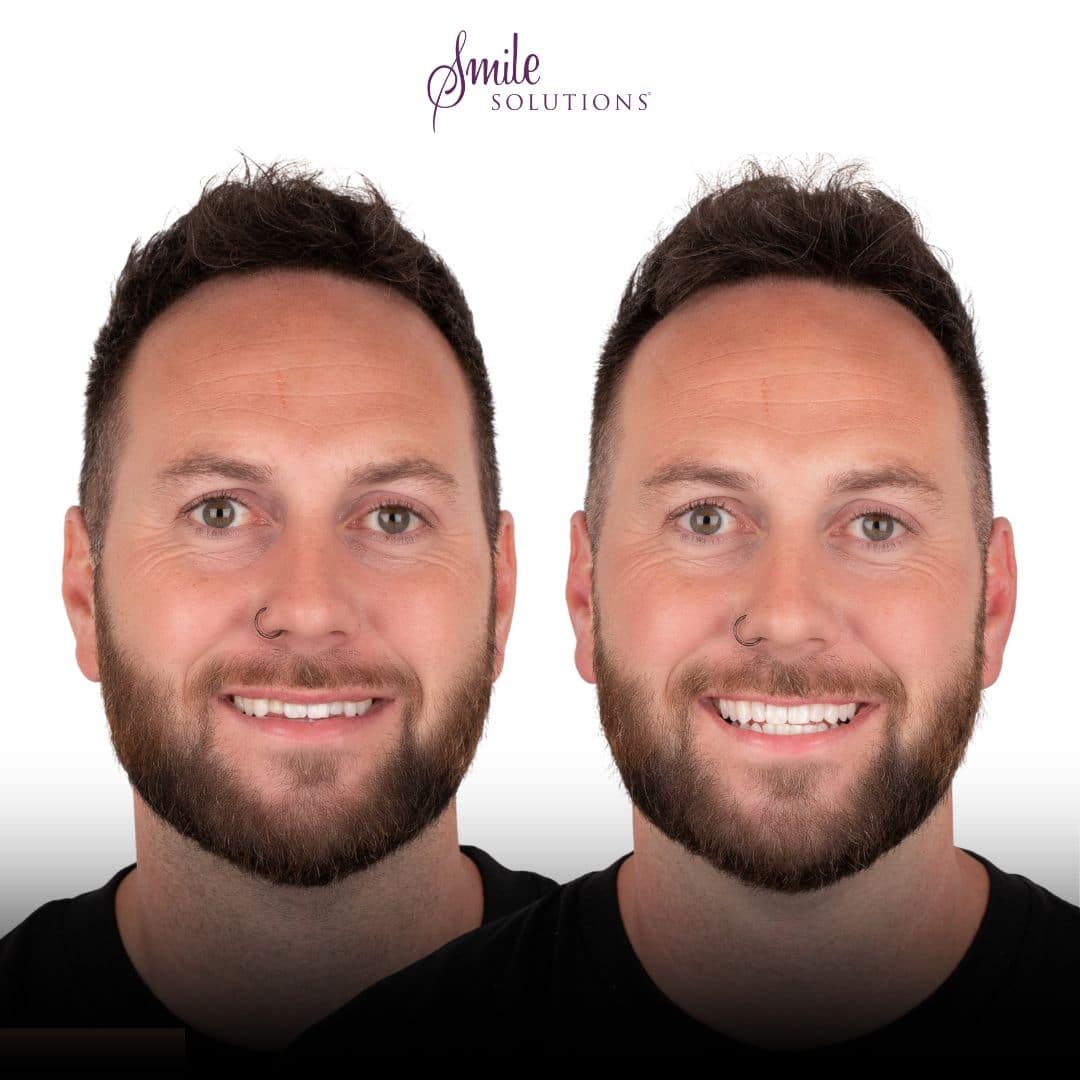
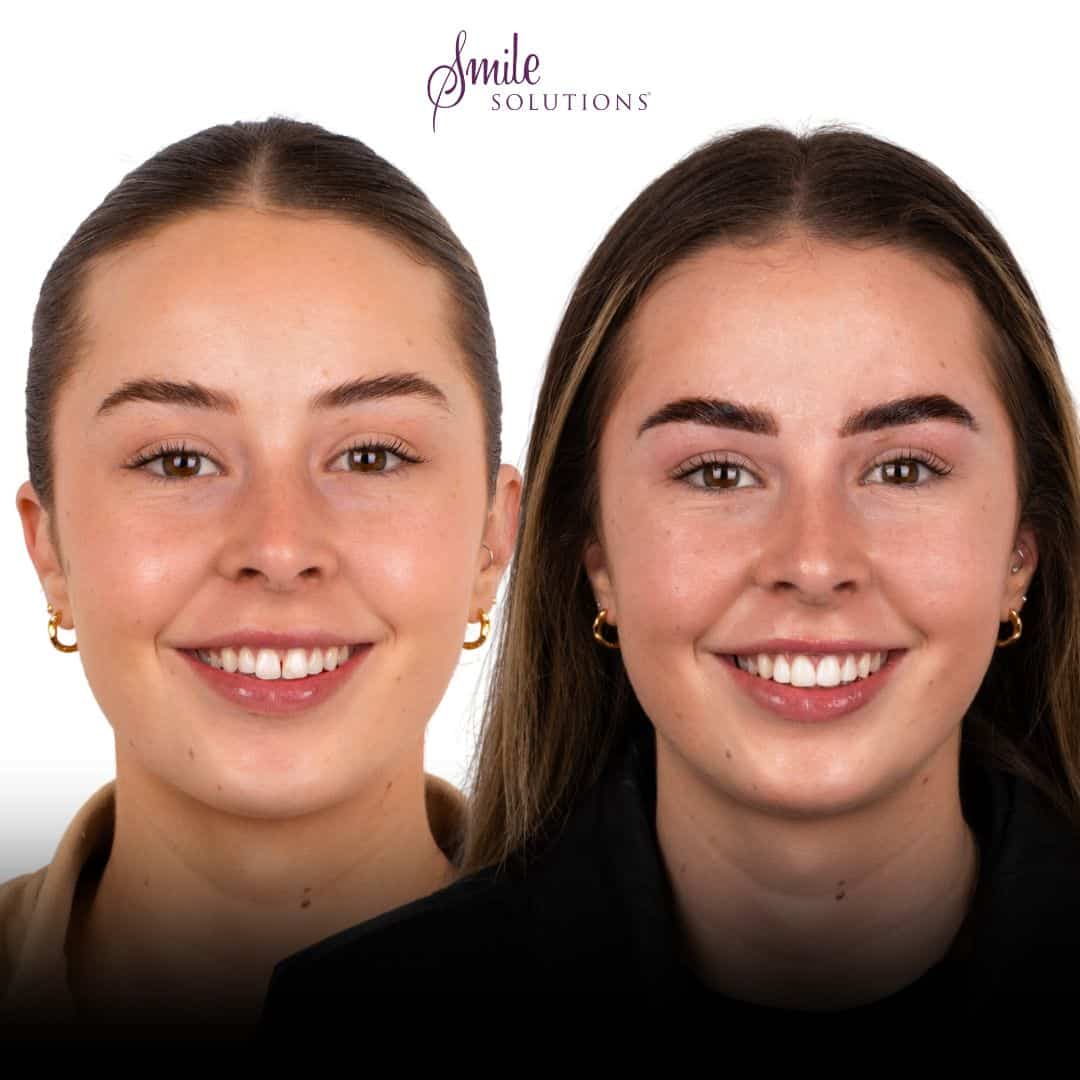
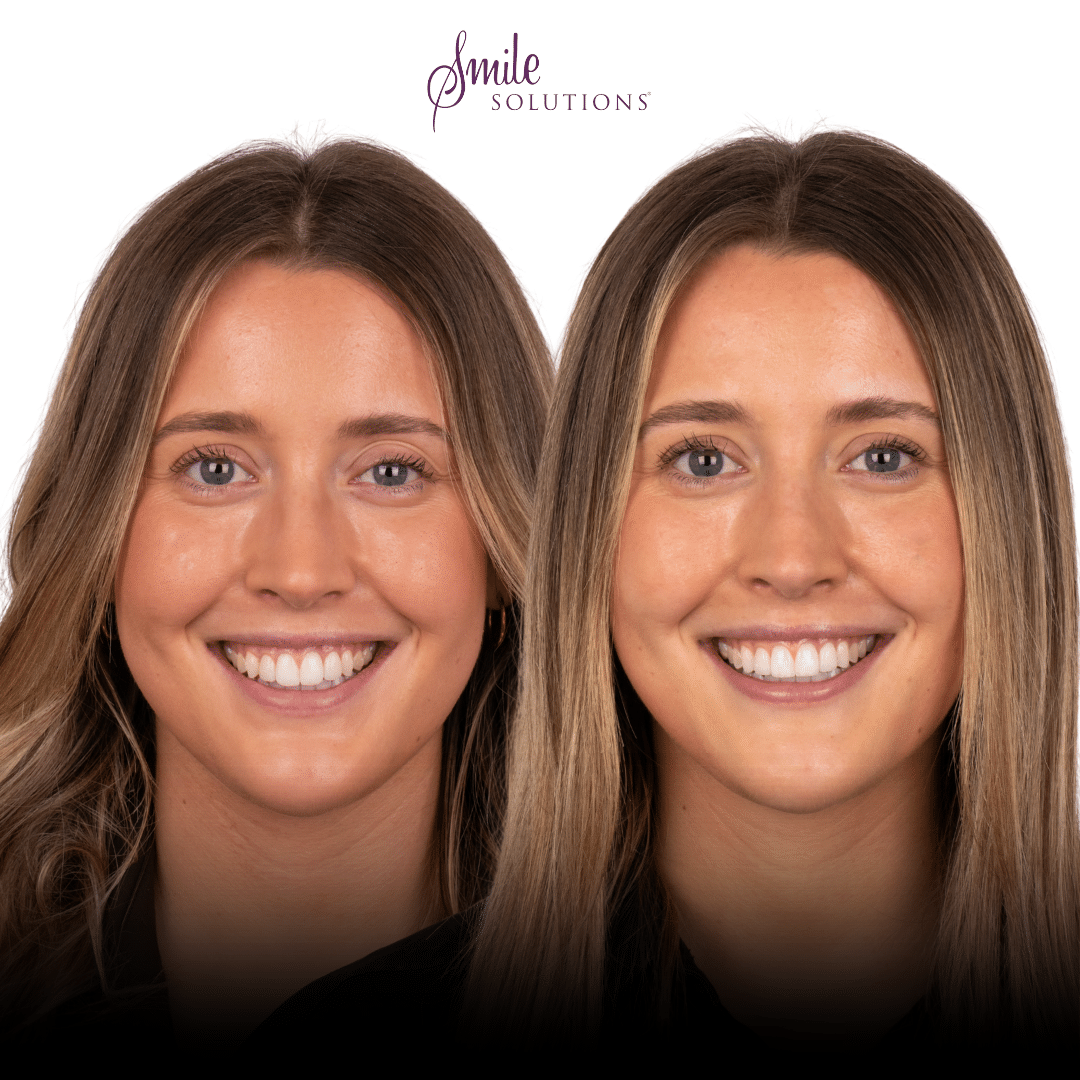
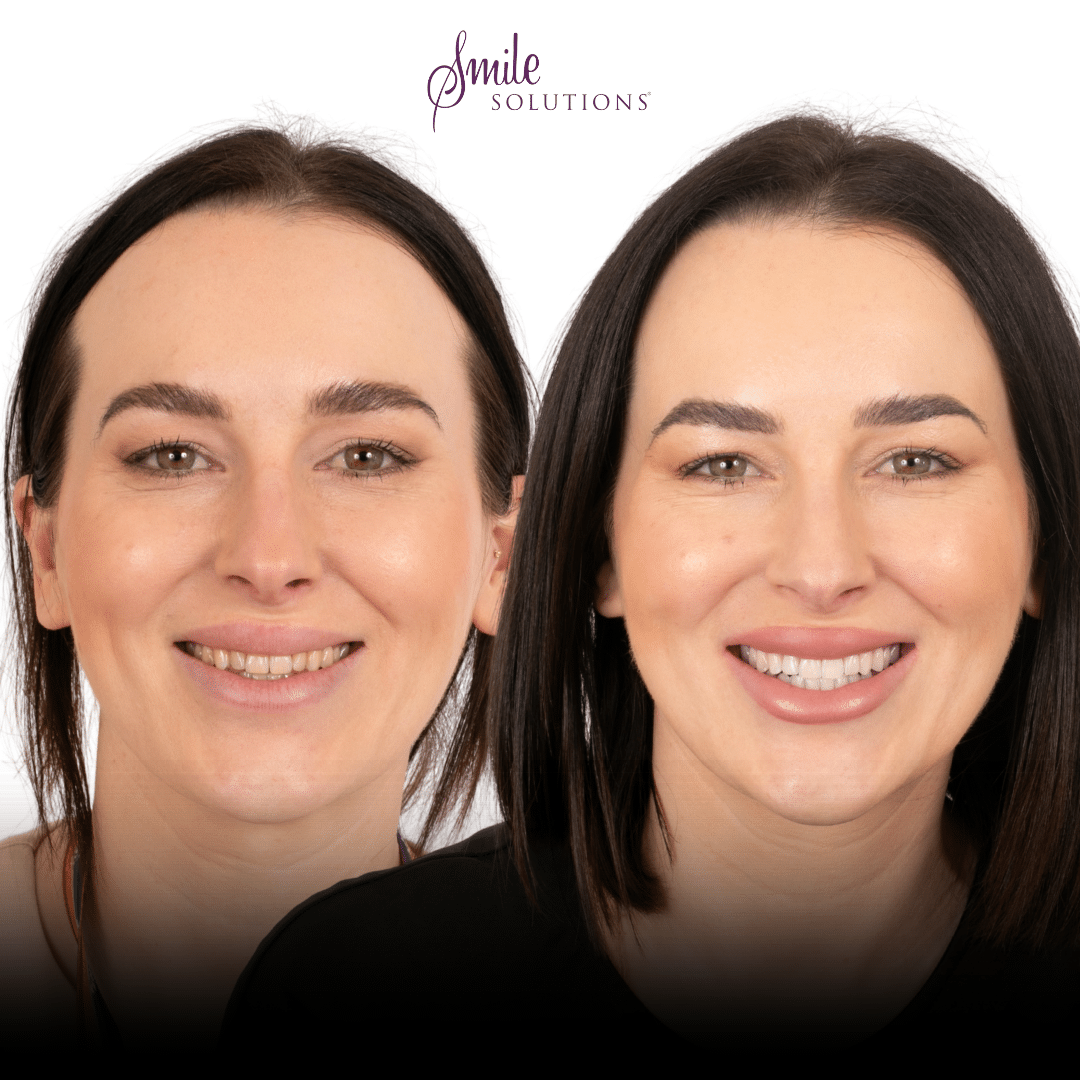
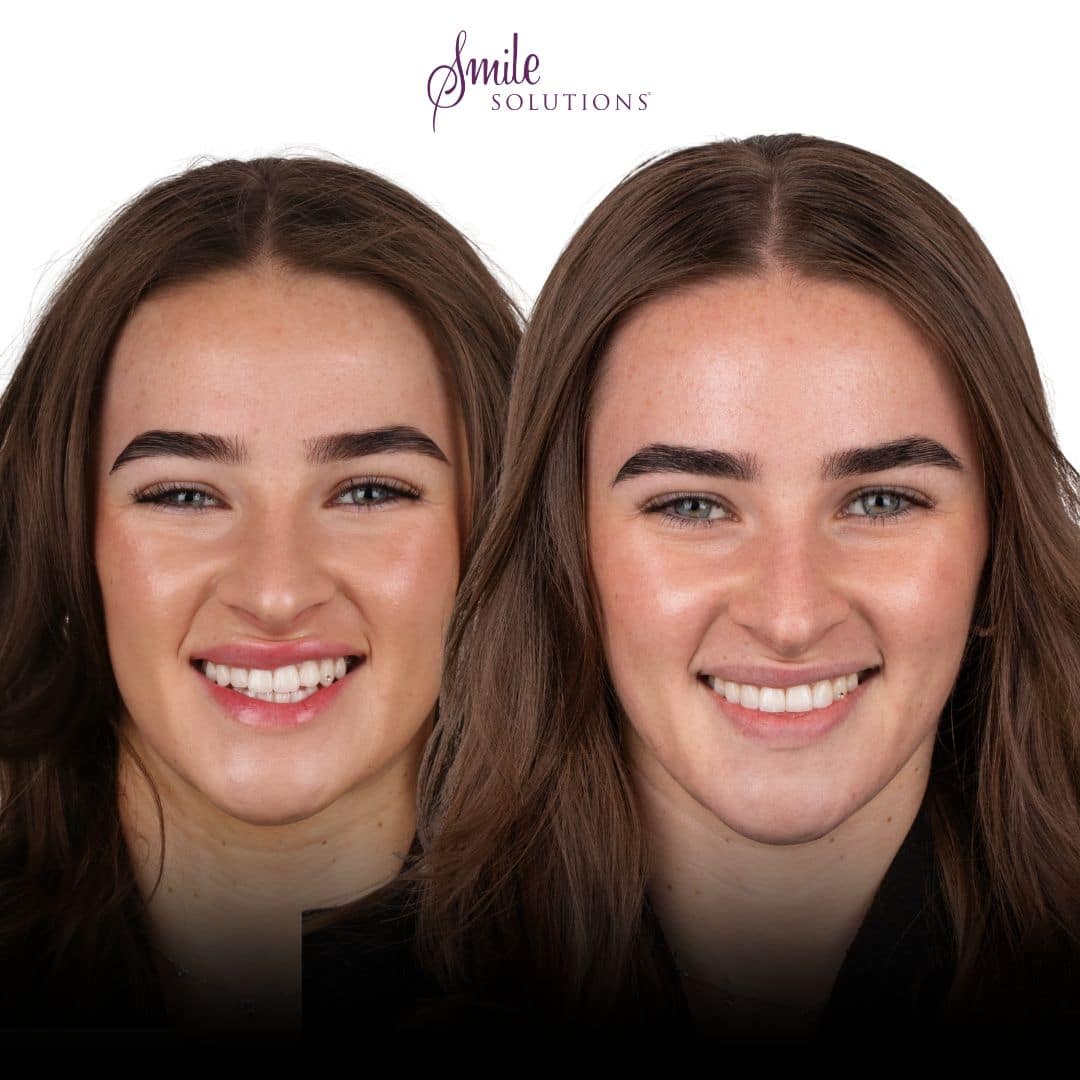
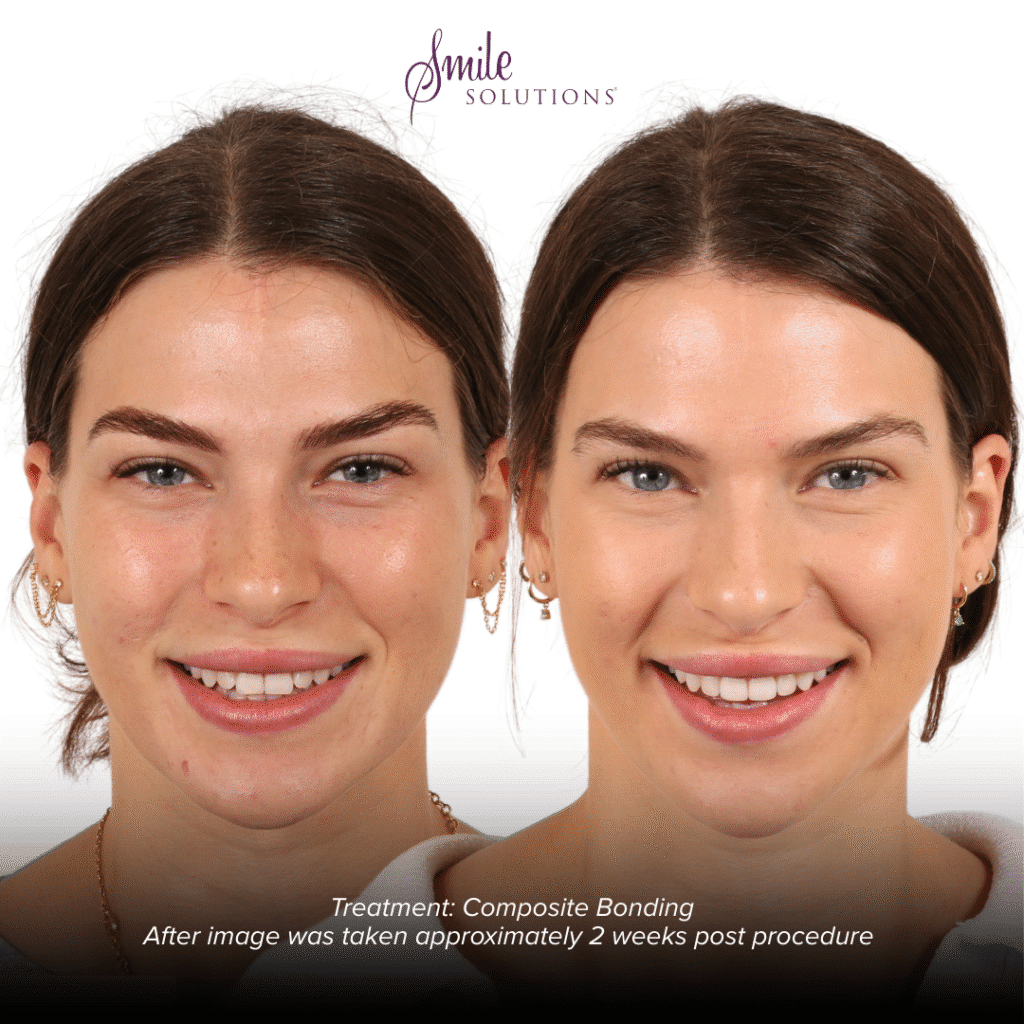
Composite bonding is a cosmetic treatment in which a tooth-coloured resin is applied directly to a tooth to address chips, cracks, misalignment, unevenness, discolouration or wear.
There is essentially no difference between “bonding” and “composite veneers”. The terms describe scale, not technique. Bonding usually refers to a targeted correction — a minor chip on a single tooth. Composite veneers usually refers to covering the entire front surface of several teeth to create a uniform appearance.
The Australian Dental Association describes composite resin veneers in the same terms: the white filling material used for cavities, applied directly to the front surface of the tooth and shaped by the dentist in the chair, usually completed in one appointment.
The defining characteristic is that it is minimally invasive: the procedure often requires little to no tooth reduction, frequently needs no anaesthetic, and after planning and assessment can usually be completed in a single visit.
Smile Solutions is at Level 1, 220 Collins Street, Manchester Unity Building, Melbourne CBD.
How the material actually sticks
Worth understanding, because it explains why the preparation steps are not optional.
Composite does not glue itself to a tooth. The enamel surface is etched for a few seconds, which opens a microscopically rough surface; a bonding resin flows into that roughness and is set with a light; and the composite then chemically joins to that resin. The bond is mechanical at the enamel and chemical through the adhesive layer.
Two practical consequences:
- The tooth has to stay dry. Saliva contaminating an etched surface ruins the bond, which is why the dentist isolates the teeth and why the appointment is not rushed. Most bonding that debonds early failed at this step.
- Bonding to enamel is far stronger than bonding to dentine or to an old restoration. It is why bonding works best on teeth that still have their enamel, and why heavily broken-down teeth are better served by a crown.
What composite bonding can do
- Repair small chips and cracks in a tooth — see Chipped & Cracked Teeth
- Mask discoloured teeth
- Close small gaps between teeth
- Reshape and resize teeth to make them appear more uniform and improve overall symmetry
- Rebuild worn edges, where the wear is mild and the cause has been addressed
- Soften the dark triangles that can open between the gums and the teeth
Treatment can be tailored for subtle enhancement or more noticeable change.
On those dark triangles, since they are a common and poorly explained complaint: they appear when the gum between two teeth recedes or fails to fill the space, usually after gum disease, ageing, or orthodontic movement. Composite can close them by broadening the tooth slightly at the contact point. The trade-off is that the tooth becomes fractionally wider and the margin sits near the gum, so the area needs careful cleaning — and where gum disease caused the recession, that has to be stable first. See Bleeding Gums.
What it cannot do
Equally worth knowing, and rarely said plainly:
- It does not straighten teeth. Composite can disguise mild irregularity by changing the visible outline, but genuinely crowded or rotated teeth need orthodontics. Masking significant crowding with resin usually means adding bulk that looks thick and traps plaque. See Orthodontics and Invisalign.
- It does not fix a bite problem, and adding material to biting edges without accounting for the bite is how bonding chips within months.
- It will not reliably lighten a very dark tooth. Composite is somewhat translucent, so a dark underlying shade shows through unless enough thickness is added to block it — which then changes the tooth's contour.
- It is not a substitute for a crown on a heavily broken-down or root-treated tooth. Where too little natural tooth remains, bonding has nothing solid to hold on to. See Dental Crowns.
- It does not treat decay or gum disease. Both must be stabilised first, or the work is being built on a moving foundation. See Tooth Fillings.
If the teeth are worn, find out why first
Rebuilding worn edges without establishing the cause is the most common way composite work fails quickly, because whatever wore the teeth down is still running.
The three causes look different to a clinician:
- Grinding and clenching — flat, matched wear facets on opposing teeth, often with a scalloped tongue and morning jaw ache. See TMD & Teeth Grinding.
- Acid erosion — smooth, rounded, glassy surfaces and thinning edges that look translucent. Causes include reflux, frequent acidic drinks, and vomiting.
- Abrasion — notching at the gum line from heavy brushing.
Each has a different answer, and the answer comes before the composite. Where the cause is medical, it belongs with your doctor. Where it is grinding, expect a nightguard in the plan.
Whiten first — the sequencing rule that catches people out
Composite resin does not respond to tooth whitening. Bleaching agents lighten natural enamel and dentine; they do not lighten set resin. So:
- If you intend to whiten your teeth, do it before the bonding, not after. The composite is then matched to your lighter shade.
- Allow the shade to settle first. Teeth are dehydrated and temporarily lighter immediately after whitening, and rebound over the following days. Most clinicians wait about two weeks after whitening before matching a shade.
- If you whiten later, your natural teeth lighten and the bonding stays exactly as it was — so previously invisible work becomes visible, and the only fix is replacing it.
The same logic applies to porcelain. See Teeth Whitening.
The process
1. Consultation and design. You discuss your goals, and the smile is designed around your facial shape, tooth colour and individual characteristics rather than a generic template.
2. Shade selection. You and your dentist select the shade that best matches your natural teeth. This is collaborative, and it is the single largest factor in whether the result looks natural. Shade is best judged in daylight, early in the appointment before the teeth dry out.
3. Application. The tooth surface is cleaned and lightly etched so the resin can grip, an adhesive is applied, and the composite is placed — often in layers of different translucency, because a real tooth is not one flat colour. It is more saturated near the gum and more translucent at the biting edge, and reproducing that is what separates natural-looking work from an opaque white block. A curing light sets each layer.
4. Shaping and polishing. The dentist refines the contour, checks the bite, trims excess and polishes. The polish matters more than people expect — a poorly polished surface picks up stain far faster and feels rough to the tongue. Surface roughness is in fact the complication most often reported in clinical trials of composite veneers.
Because composite veneers are crafted chairside without a dental laboratory, the whole sequence typically fits into one appointment.
How long that appointment actually is: a single small chip is often twenty minutes. Six front teeth is commonly two to three hours in the chair, because each tooth is built, shaped and polished individually. Knowing that in advance prevents the most common scheduling complaint, and it is a reason to be wary of anyone offering to do eight teeth in forty-five minutes.
Freehand or injection-moulded?
There are two ways to place larger cases, and it is a fair thing to ask about.
Freehand means the dentist sculpts the composite directly, by eye and by hand. In experienced hands it produces excellent, highly individual work, and it allows changes in real time.
Injection moulding starts with a wax-up — the proposed shape modelled first — from which a clear silicone template is made. The composite is then injected through that template onto the teeth, reproducing the approved design. The advantages are consistency, symmetry between left and right, and the ability to see and approve the shape before any material is placed.
The second approach is worth asking about for anything involving multiple front teeth, because it converts the design from something you hope for into something you have already looked at. See Mock-Up Reveal.
Edge bonding, or the whole face of the tooth?
Another distinction worth making explicitly, because the two are priced and planned differently.
Edge bonding adds material only to the biting edges — correcting chips, evening out lengths, and restoring wear. It is conservative, quick, and often the entire answer where the colour is already acceptable. See Edge Work & Composite Bonding.
Full-face composite veneers cover the whole visible surface, and are what is needed when colour or shape has to change across the tooth.
Many people who ask for veneers need edge bonding. It is cheaper, faster, and removes nothing — so it is worth having the narrower option costed before committing to the wider one.
How long does it last?
No authority publishes a lifespan in years for composite bonding. What the research reports is survival — the proportion of restorations still in place at a stated point.
A 2023 systematic review and meta-analysis of resin composite laminate veneers pooled survival across randomised trials at 88% (95% CI 81–94%), with mean follow-up between 24 and 97 months — 91% where the composite was placed directly on the tooth, 84% for the indirect, laboratory-made version. Its authors are blunt about the trade-off: patients choosing this minimally invasive option “should be well informed about the high mechanical and aesthetic complication rates of the materials as well as the high maintenance care”.
A ten-year practice-based evaluation measured the gap against ceramic. Counting only outright replacement, the annual failure rate for direct composite veneers was 3.9% at five years and 4.1% at ten, against 1.4% and 1.2% for ceramic. Counting any intervention at all — a repair, a repolish, a remake — it was 9.1% and 10% for direct composite against 2.9% and 2.8% for ceramic. The authors concluded that ceramic veneers show higher longevity than direct resin composite.
How long yours lasts depends heavily on your own mouth. What shortens it:
- Grinding or clenching, which is the largest single factor. If you grind, expect a nightguard to be part of the plan. See TMD & Teeth Grinding.
- Biting habits — nails, pens, thread, packaging, ice
- Heavy staining exposure — coffee, tea, red wine, turmeric, smoking
- Bonding placed on biting edges of lower front teeth, which take the most load
- Poor cleaning at the margins, where the resin meets the tooth
Those are population figures from research cohorts, not a guarantee for your teeth.
Aftercare, especially the first 48 hours
Composite is fully set when you leave, but the surface takes up stain most readily while it is new:
- Avoid strongly staining food and drink for the first 48 hours — coffee, tea, red wine, curry, beetroot, berries
- Avoid smoking in that window for the same reason
- Do not use the bonded teeth to bite hard items — that restriction is permanent, not temporary
- Brush normally, and floss carefully around the margins rather than snapping floss down onto them
- A whitening toothpaste will not lighten the composite, and abrasive ones can dull its polish
Mild sensitivity for a few days is common where any preparation was done, and it settles. Come back rather than wait if the bite feels high, if floss shreds on a new margin, if an edge feels sharp, or if the gum beside the new work stays sore — all four are quick adjustments at the time and long-running problems if left.
What good work looks like at the review
You are entitled to check the result, and these are the things clinicians themselves look for:
- The margin cannot be felt with a fingernail or the tongue where composite meets tooth
- Floss passes cleanly and does not shred or catch
- The gum beside the work is pink and not inflamed within a couple of weeks
- The surface has texture, not a uniform flat gloss — real teeth are not perfectly smooth
- The edges are translucent rather than opaque white
- Left and right match in length and width
- The bite feels even, front and back
Raise anything on that list at the review appointment, not a year later.
Maintenance
Composite is a maintained restoration rather than a fit-and-forget one.
- Repolishing every 6 to 12 months at a routine hygiene visit restores lustre and removes surface stain, and materially extends how long the work looks good. See Dental Cleans & Hygienists.
- Expect minor touch-ups over the years — an edge chip, a stained margin.
- Plan for replacement eventually. Budgeting for bonding as a maintained, replaceable restoration rather than a permanent one is the realistic framing.
- Tell the hygienist the teeth are bonded. Some polishing pastes and powders are more abrasive than composite tolerates, and the technique is adjusted for it.
Two genuine advantages over porcelain
It is repairable. A chipped composite can usually be repaired chairside in one short appointment by adding and re-polishing. A chipped porcelain veneer generally cannot be repaired properly and needs remaking, at full cost.
It can be reversible. Where composite is added to a tooth with no drilling at all — sometimes called additive or no-prep bonding — it can be removed later and the tooth returns to how it was. That is a real difference from porcelain veneers, which usually require permanent enamel reduction. Ask specifically whether your tooth will be drilled, because once enamel is removed the decision cannot be undone.
Risks and limitations
The complications most often reported in trials of composite veneers are surface roughness, colour mismatch and marginal discolouration — notably different from ceramic, where fracture and debonding dominate. In full:
- Chipping and fracture, particularly at biting edges
- Staining at the margins where resin meets tooth, which can outline the work over time
- Decay underneath if margins are rough or cleaning is poor — the resin does not decay, the tooth beneath it does
- Gum irritation where material overhangs the gum margin
- Bite changes if material is added without checking how the teeth meet
- Colour mismatch over time, as natural teeth darken slowly and composite does not
- Adding bulk where a tooth is built out to mask crowding, which can look thick and feel unfamiliar to the lip
Outcomes vary between individuals and no result can be guaranteed.
Composite versus porcelain veneers — the honest comparison
This is the decision most patients actually face, and the trade-off runs in both directions.
| Composite veneers | Porcelain veneers | |
|---|---|---|
| Made | Directly on the tooth, chairside | Custom-made, in a laboratory or chairside |
| Visits | Usually one | Usually two |
| Tooth reduction | Often none | Usually some, and permanent |
| Reversible | Sometimes, if no drilling | No |
| Upfront cost | Lower | Higher |
| Strength | Less strong | More durable |
| Staining | Slightly porous; can discolour | Resists staining |
| Repair if chipped | Usually repairable chairside | Usually needs remaking |
| Maintenance | Repolishing every 6–12 months | Less maintenance |
| Long-term cost | Rises with repolishing and replacement | Can be more cost-effective over time |
| Reported survival | 88% (95% CI 81–94%) pooled in trials, follow-up 2–8 years | 95.5% at 10 years, pooled across 25 studies |
Composite is applied using dental bonding — the same method used for composite fillings. It is cheaper to start and faster to complete, but it is slightly porous, so over time it can lose lustre or discolour.
Porcelain is a thin, custom-made shell covering the front surface of the tooth. It is more durable, resists staining and needs less maintenance, which can make it more cost-effective over a long enough horizon. See Porcelain Veneers and Same-Day Porcelain Veneers.
A reasonable middle path exists: composite first, to live with the shape and decide whether you like it, then porcelain later if you want the durability. You pay twice, but you make the irreversible decision with far better information.
What drives the cost
Fees are quoted per tooth after examination, and the variables are worth knowing so you can compare quotes properly:
- How many teeth are being treated, and whether it is edge work or full-face
- Whether a wax-up and trial smile are included in the fee or charged separately
- Whether any preparatory treatment — hygiene, fillings, whitening — is included
- Whether a nightguard is part of the plan
- What repairs and repolishing cost afterwards, and what is covered in the first year
Cosmetic bonding is generally not claimable from a health fund, though the same material used to restore a decayed or broken tooth usually is. Ask which items on your quote fall into which category. See Price Guide.
Is it right for me?
Composite bonding is not suitable for everyone.
In general it works well for people with healthy teeth who need only minor to moderate adjustments. Your dentist will assess your teeth, your bite and your aesthetic goals before recommending it, and will discuss risks, limitations and alternatives.
Composite veneers are an elective cosmetic procedure. Suitability and outcomes differ between patients.
The Design Your Smile consultation
If you are considering composite bonding but not certain, we offer a complimentary Design Your Smile consultation. You meet a treatment coordinator and experienced cosmetic dentists to discuss the options available for your expectations and budget, and to visualise how the final result would look before committing.
Call 13 13 96 to book. Note that this appointment is a discussion only — it does not include a check-up, x-rays, scans or any clinical treatment — and a $50 refundable deposit is required to secure it. See Complimentary Cosmetic Consultation and Mock-Up Reveal.
For more complex cases, cosmetic work at the practice is planned alongside registered specialists — see Cosmetic Dentistry Under Specialist Care and Dentists & Registered Specialists.
Common questions
Will composite bonding require enamel removal?
Often little or no tooth reduction is needed, but that depends on the starting tooth position, the planned shape and whether old restorations must be removed. Ask the dentist to show which surfaces would be changed before treatment.
Can composite bonding usually be completed in one appointment?
Often yes. The page states that six front teeth commonly take two to three hours, although planning, whitening, bite management or a more complex case can add visits.
Should I whiten before composite bonding?
Yes, if whitening is part of your plan. Composite does not lighten with whitening products, so the teeth are normally whitened first, allowed to settle and then matched with composite.
Does composite stain or chip?
It can. Composite is more prone than porcelain to surface roughness, colour change, marginal staining and chipping. Polishing, repairs and eventual replacement should be included in your long-term cost expectations.
What if I grind or clench my teeth?
Grinding increases the chance of wear and fracture. The cause and bite should be assessed before bonding, and the plan may include design changes, management of the grinding and a protective appliance.
Can composite bonding be repaired?
Small defects can often be repaired or repolished without replacing the whole restoration. Whether repair is appropriate depends on the size, location, colour and condition of the remaining material. Ask for current repair and replacement costs before proceeding.
Is composite or porcelain the better choice?
Neither is automatically better. Composite is generally faster, less destructive and cheaper initially but needs more maintenance. Porcelain costs more and is irreversible when enamel is removed, but generally resists staining and wear better. Suitability depends on the teeth, bite, goals and willingness to maintain the result.
Practical details
| Address | Level 1, 220 Collins Street, Manchester Unity Building, Melbourne VIC 3000 |
| Phone | 13 13 96 |
| theteam@smilesolutions.com.au | |
| Monday – Friday | 8.00am – 6.00pm |
| Saturday | 8.30am – 1.30pm |
| Sunday | By appointment |
| Appointments needed | Usually one |
| Chair time, six front teeth | Commonly 2–3 hours |
| Reported survival | 88% (95% CI 81–94%) in pooled trials, follow-up 2–8 years |
| Tooth reduction | Little to none |
| Anaesthetic | Often not required |
| Repolishing | Every 6–12 months |
| Whiten before, not after | Composite does not lighten |
| Staining window | First 48 hours |
| Parking | Wilsons Parking, Flinders Lane (between Swanston and Russell) |
Interest-free payment plans are available through Payright for treatment from $150 to $20,000, over 3 to 30 months. Other finance options may also be available; provider eligibility, fees and terms can change. Fees and terms apply; ask for them in writing. See Payment Plans.
Results, recovery times and potential risks vary for each individual and procedure. This information is general in nature and intended for people over 18. Seek independent advice from a qualified, AHPRA-registered practitioner before proceeding.
Smile Solutions trades under ABN 28 193 514 103.
Images on This Page
-
https://www.facebook.com/tr?id=800557773428361&ev=PageView&noscript=1
(no alt text)
-
https://www.smilesolutions.com.au/wp-content/uploads/2025/10/calendar_month.svg
(no alt text)
-
https://www.smilesolutions.com.au/wp-content/themes/arcadian-wordpress-theme/assets/images/smile_solutions_logo_white.png
Smile Solutions Logo
-
https://www.smilesolutions.com.au/wp-content/themes/arcadian-wordpress-theme/assets/images/smile_solutions_logo_purple.png
Smile Solutions Logo
-
https://www.smilesolutions.com.au/wp-content/uploads/2025/11/Smile-Solutions-4.png
Smile Solutions - Melbourne CBD
-
https://www.smilesolutions.com.au/wp-content/uploads/2025/11/Dental-Payment-Plans.png
Smile Solutions Melbourne
-
https://www.smilesolutions.com.au/wp-content/uploads/2023/01/Smile.jpg
Smile
-
https://www.smilesolutions.com.au/wp-content/uploads/2025/11/180.png
Smile Solutions
-
https://www.smilesolutions.com.au/wp-content/uploads/2026/03/WEBSITE-BAs.jpg
WEBSITE BAs
-
https://www.smilesolutions.com.au/wp-content/uploads/2025/11/174.png
Smile Solutions
-
https://www.smilesolutions.com.au/wp-content/uploads/2025/11/168.png
Smile Solutions
-
https://www.smilesolutions.com.au/wp-content/uploads/2026/03/Smile-CB.jpg
Smile CB
-
https://www.smilesolutions.com.au/wp-content/uploads/2025/10/Smile-Solutions-Invisalign-Blue-Diamond-Provider.png
Smile Solutions Invisalign Blue Diamond Provider
-
https://www.smilesolutions.com.au/wp-content/uploads/2025/10/Smile-Solutions-Luxury-Lifestyle-Awards-Winner.png
Smile Solutions Luxury Lifestyle Awards Winner
-
https://www.smilesolutions.com.au/wp-content/uploads/2026/01/Smile-Solutions-Telstra-Business-Awards-Winner.png
Smile Solutions Telstra Business Awards Winner
-
https://www.smilesolutions.com.au/wp-content/uploads/2026/01/WEBSITE-Smile-Solutions-Award-Tiles.png
WEBSITE Smile Solutions Award Tiles
-
https://www.smilesolutions.com.au/wp-content/uploads/2025/11/Smile-Solutions-ABA-Business-Innovation-Winner-2024.png
Smile Solutions ABA Business Innovation Winner 2024
-
https://www.smilesolutions.com.au/wp-content/uploads/2025/11/Smile-Solutions-ABA-Service-Excellence-Winner-2024.png
Smile Solutions ABA Service Excellence Winner 2024
-
https://www.smilesolutions.com.au/wp-content/uploads/2025/11/Smile-Solutions-ABA-Service-Excellence-Winner-2023.png
Smile Solutions ABA Service Excellence Winner 2023
-
https://www.smilesolutions.com.au/wp-content/uploads/2025/11/Smile-Solutions-ABA-Service-Excellence-Winner-2022.png
Smile Solutions ABA Service Excellence Winner 2022
-
https://www.smilesolutions.com.au/wp-content/uploads/2025/09/Smile-Solutions-ABA-Service-Excellent-Winner-2019.png
Smile Solutions ABA Service Excellent Winner 2019
-
https://www.smilesolutions.com.au/wp-content/uploads/2025/09/Smile-Solutions-ABA-Community-Contribution-Winner-2017.png
Smile Solutions ABA Community Contribution Winner 2017
-
https://www.smilesolutions.com.au/wp-content/uploads/2025/11/Smile-Solutions-ABA-Service-Excellence-Winner-2017.png
Smile Solutions ABA Service Excellence Winner 2017
-
https://www.smilesolutions.com.au/wp-content/uploads/2025/11/Smile-Solutions-ABA-Service-Excellence-Winner-2016.png
Smile Solutions ABA Service Excellence Winner 2016
-
https://www.smilesolutions.com.au/wp-content/uploads/2026/01/Smile-Solutions-ABA-Employer-of-Choice-Winner-2015-1.png
Smile-Solutions-ABA-Employer-of-Choice-Winner-2015
-
https://www.smilesolutions.com.au/wp-content/uploads/2026/01/Smile-Solutions-ABA-Service-Excellence-Winner-2015.png
Smile-Solutions-ABA-Service-Excellence-Winner-2015
-
https://www.smilesolutions.com.au/wp-content/uploads/2025/11/Smile-Solutions-ABA-Employer-of-Choice-Winner-2014.png
Smile Solutions ABA Employer of Choice Winner 2014
-
https://www.smilesolutions.com.au/wp-content/uploads/2026/01/Smile-Solutions-ABA-Innovation-Winner-2014.png
Smile Solutions ABA Innovation Winner 2014
-
https://www.smilesolutions.com.au/wp-content/uploads/2026/01/Smile-Solutions-ABA-Service-Excellence-Winner-2014.png
Smile Solutions ABA Service Excellence Winner 2014
-
https://www.smilesolutions.com.au/wp-content/uploads/2025/11/Smile-Solutions-ABA-Innovation-Winner-2013.png
Smile Solutions ABA Innovation Winner 2013
-
https://www.smilesolutions.com.au/wp-content/uploads/2026/01/Smile-Solutions-ABA-Service-Excellence-Winner-2013.png
Smile Solutions ABA Service Excellence Winner 2013
-
https://www.smilesolutions.com.au/wp-content/uploads/2025/11/Smile-Solutions-ABA-Service-Excellence-Winner-2012.png
Smile Solutions ABA Service Excellence Winner 2012
-
https://www.smilesolutions.com.au/wp-content/uploads/2025/11/Smile-CB-9-1024x1024.png
Composite Veneers Smile Solutions
-
https://www.smilesolutions.com.au/wp-content/uploads/2025/08/69a44c30c93ce196d539cc5520080df52a5f3f88-scaled.jpg
69a44c30c93ce196d539cc5520080df52a5f3f88 scaled
-
https://www.smilesolutions.com.au/wp-content/themes/arcadian-wordpress-theme/assets/images/family_owned_bussiness.png
Family Owned Business
-
https://www.smilesolutions.com.au/wp-content/themes/arcadian-wordpress-theme/assets/icons/icon--phone.svg
Smile Solutions Contact
-
https://www.facebook.com/tr? id=800557773428361&ev=PageView&noscript=1
(no alt text)
-
https://bat.bing.com/action/0?ti=25148060&tm=gtm002&Ver=2&mid=835e3a27-c1af-4f45-a3f8-c867210db6e5&bo=1&sid=1d50aec0ab2911f19594a1b377f0a609&vid=1d50f120ab2911f1af6041f624057195&vids=1&msclkid=N&pi=918639831&lg=en-US&sw=800&sh=600&sc=24&nwd=1&tl=Composite%20Bonding%20%7C%20Smile%20Solutions&p=https%3A%2F%2Fwww.smilesolutions.com.au%2Fcosmetic-dentistry%2Fcomposite-bonding%2F&r=&evt=pageLoad&sv=2&cdb=AQAQ&rn=169666
(no alt text)