Edge Work Composite Bonding
What is edge work composite bonding, and why after Invisalign?
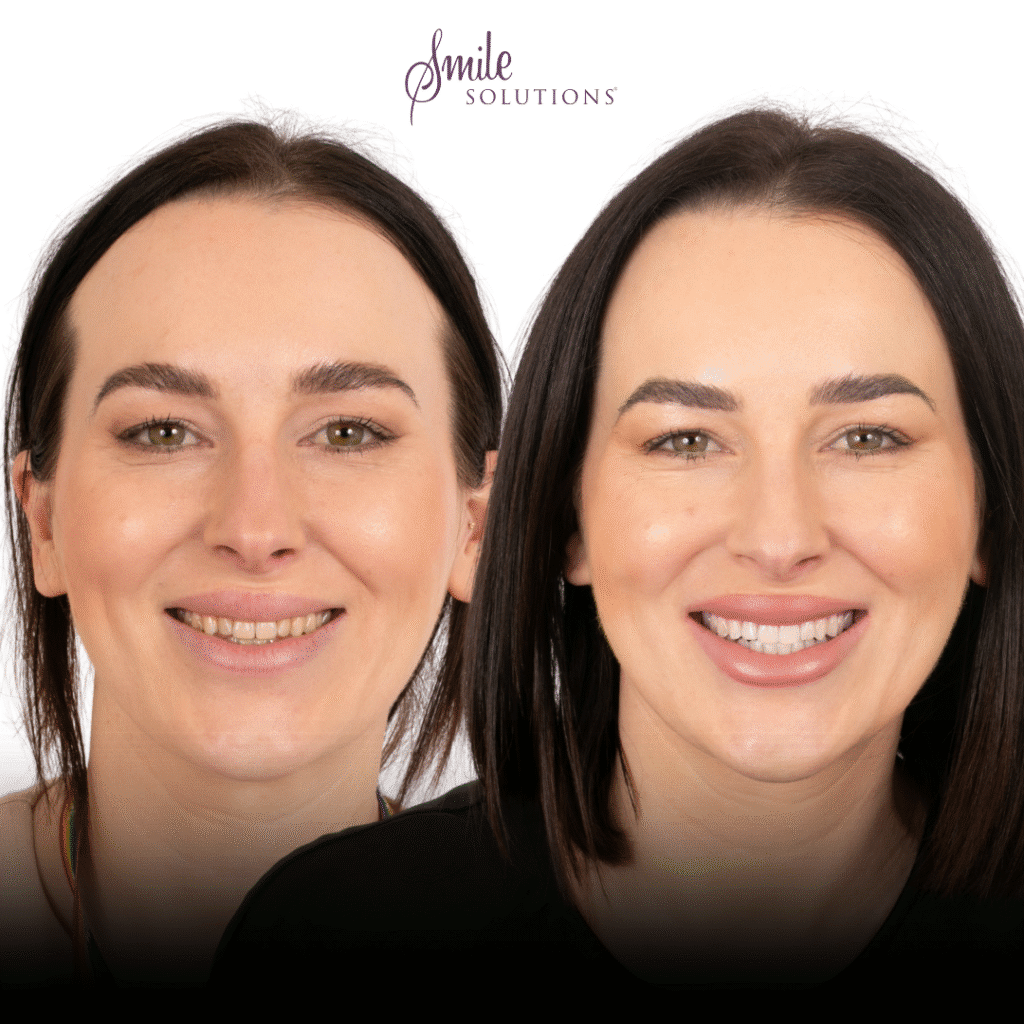
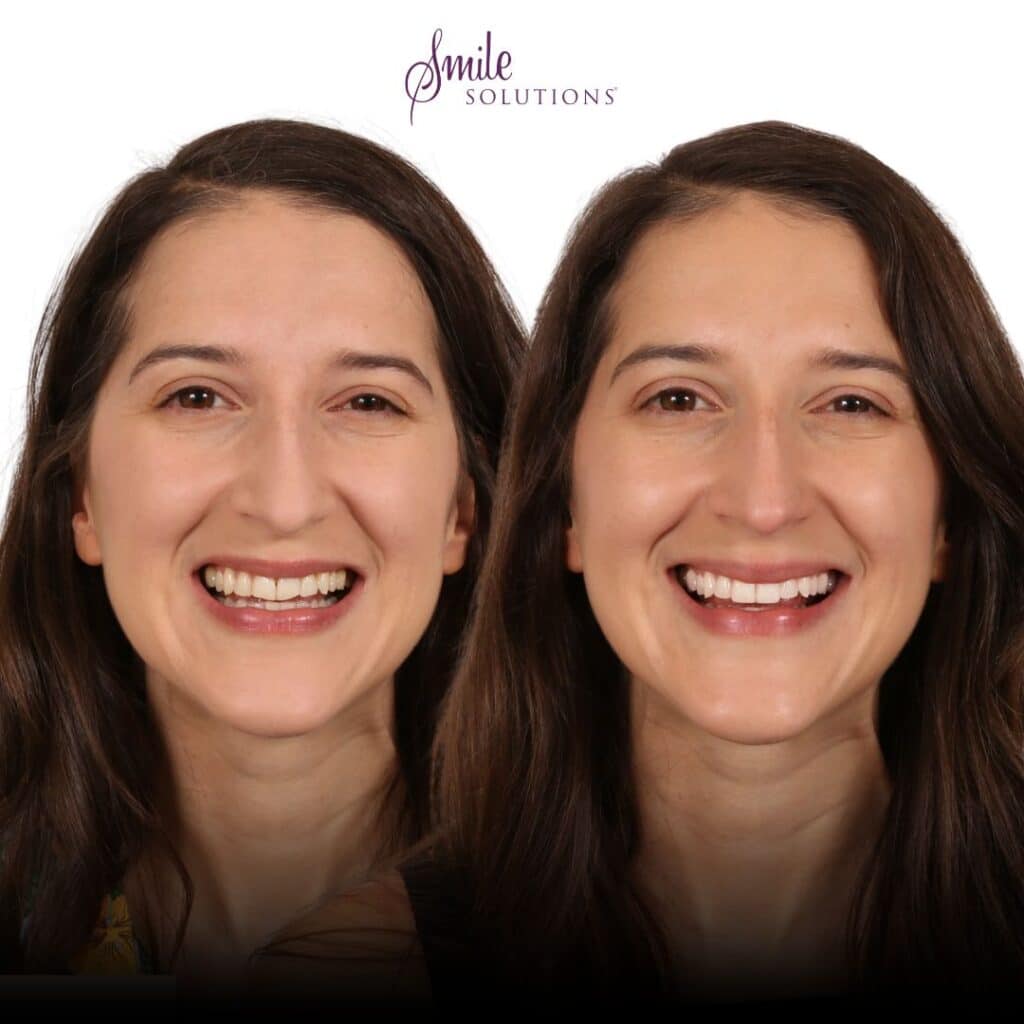
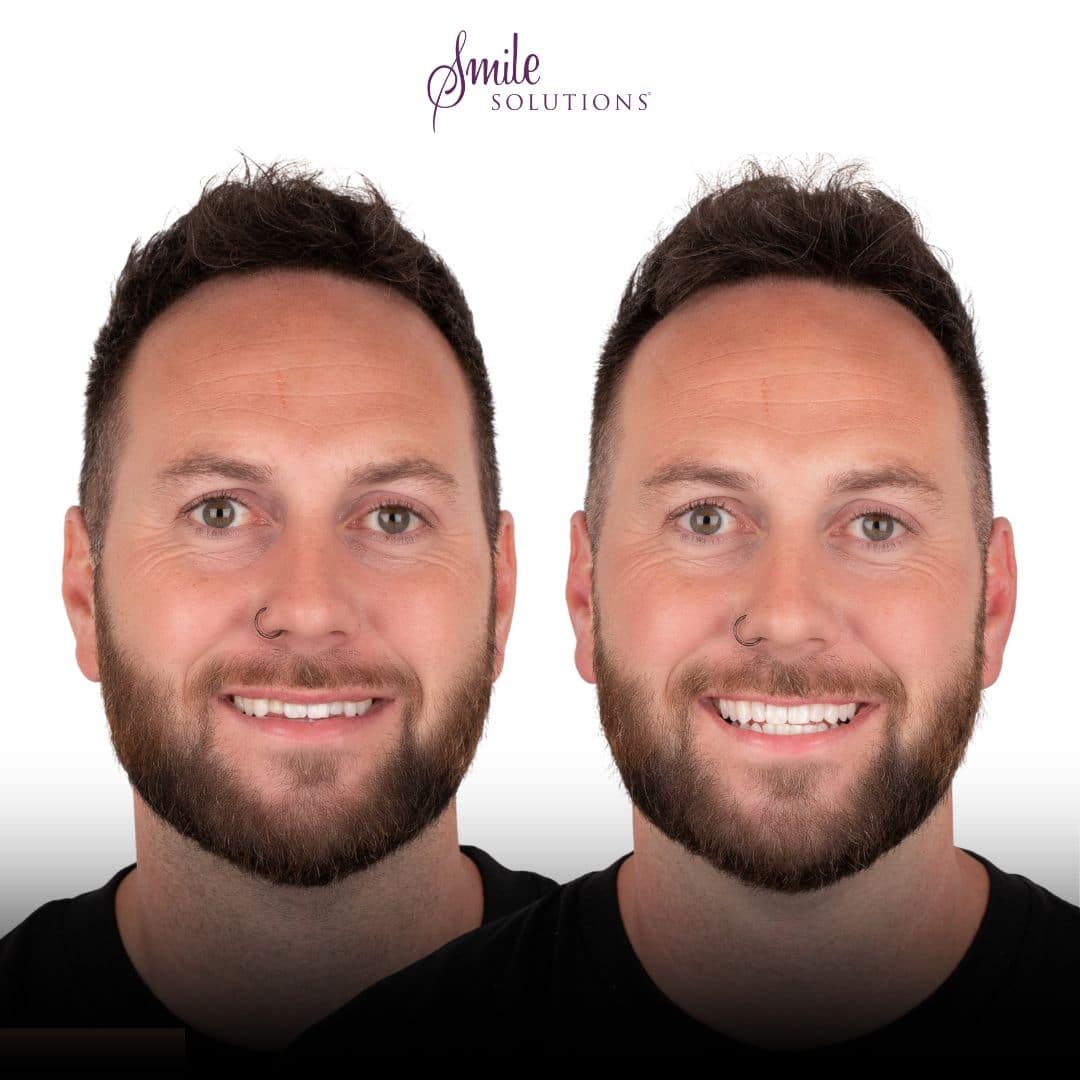
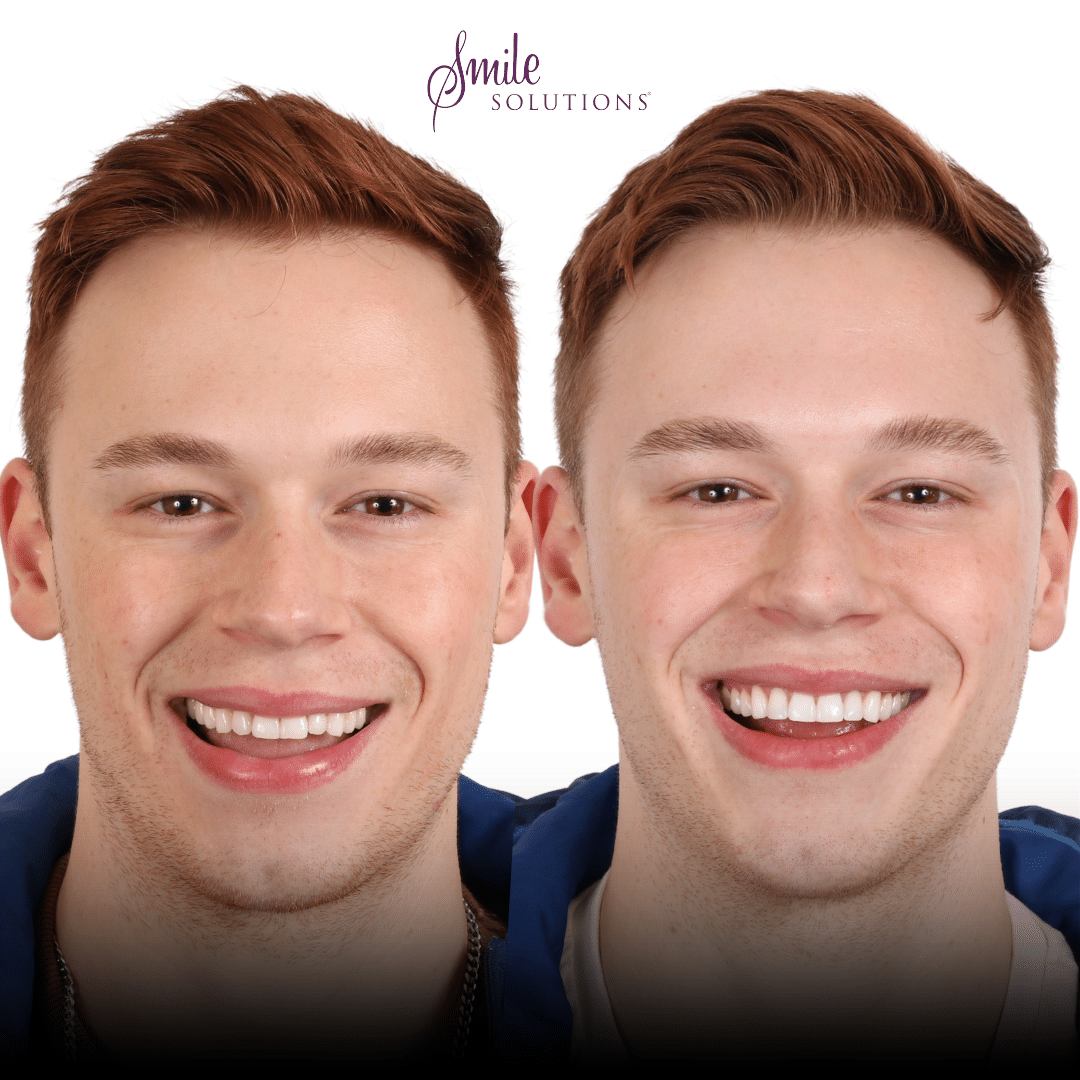
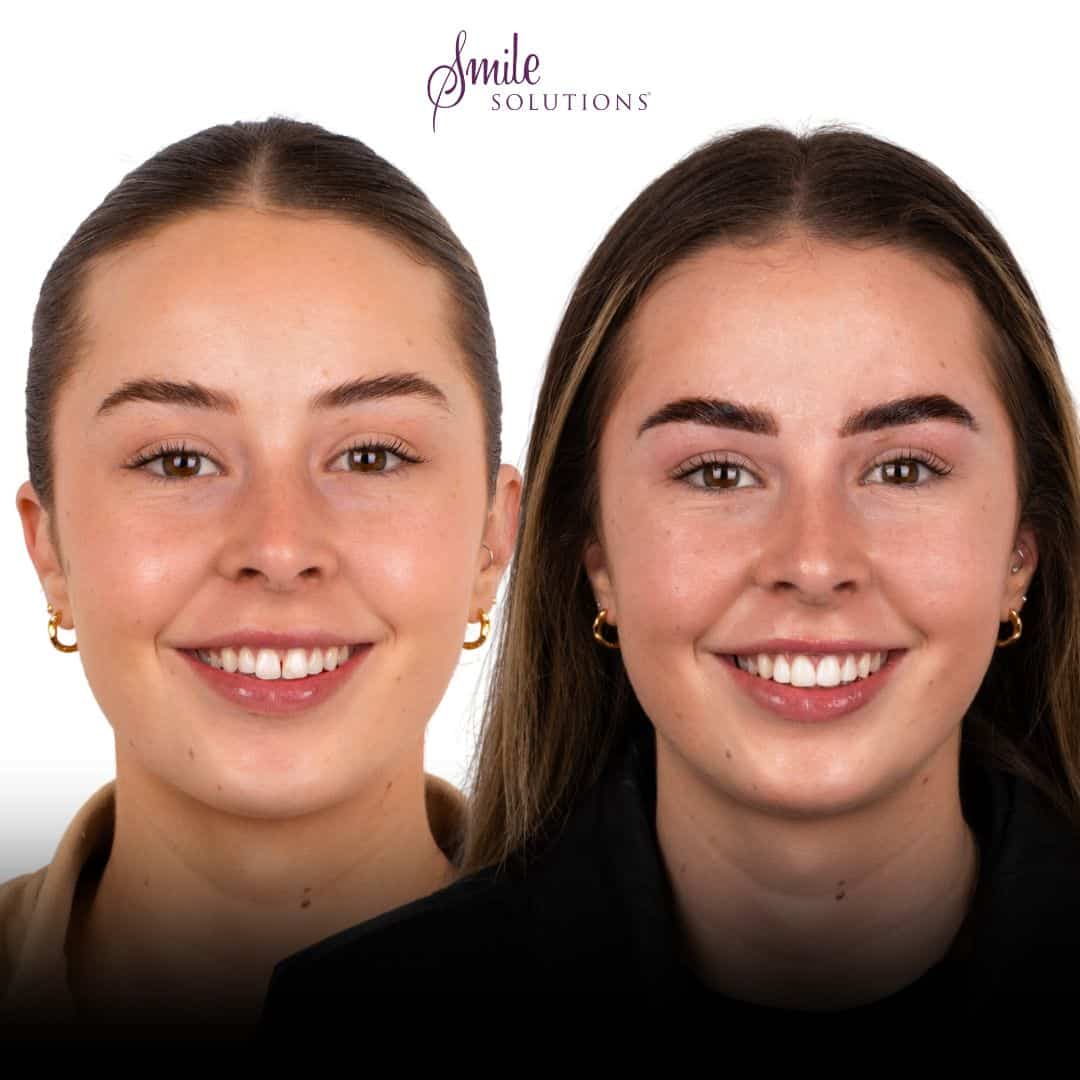
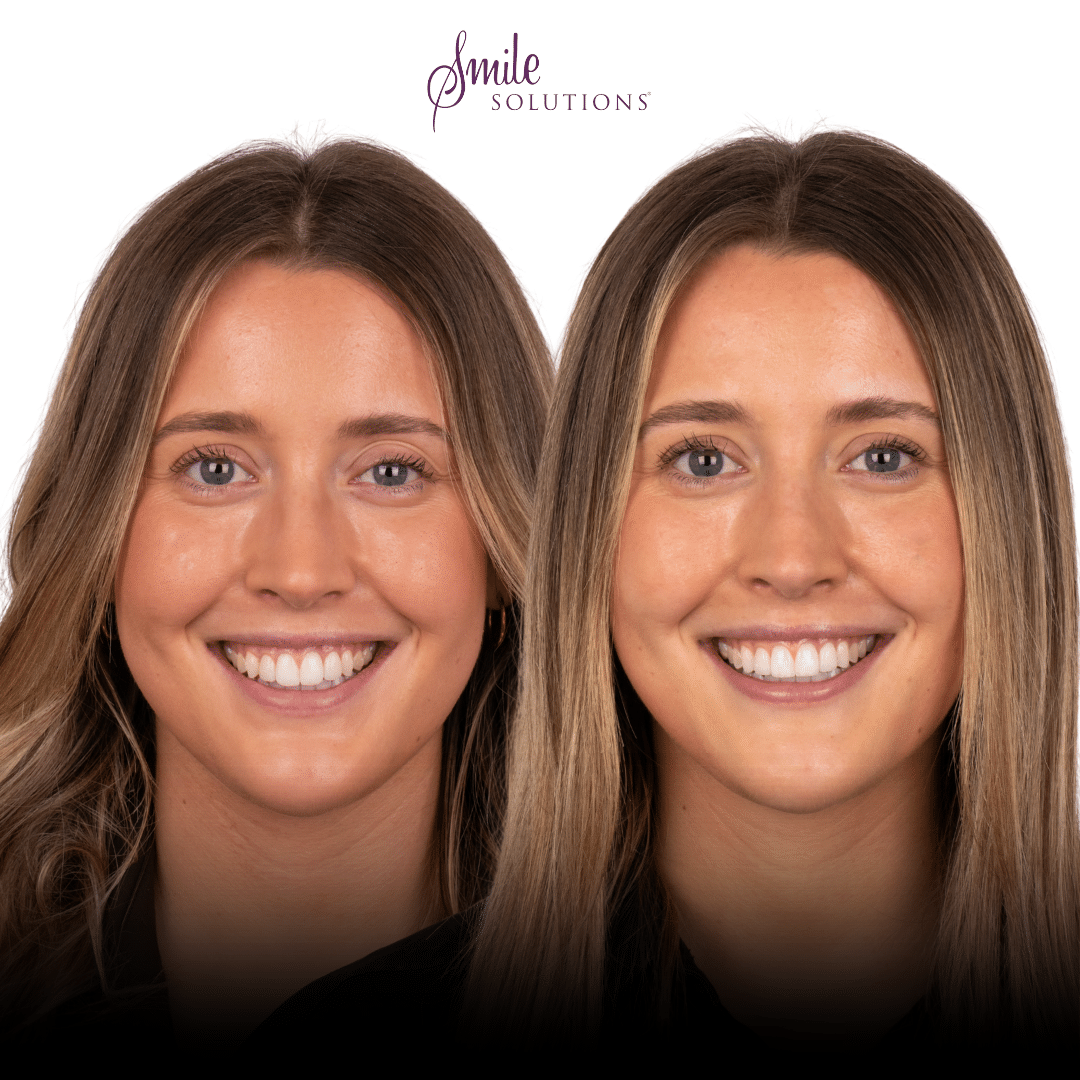
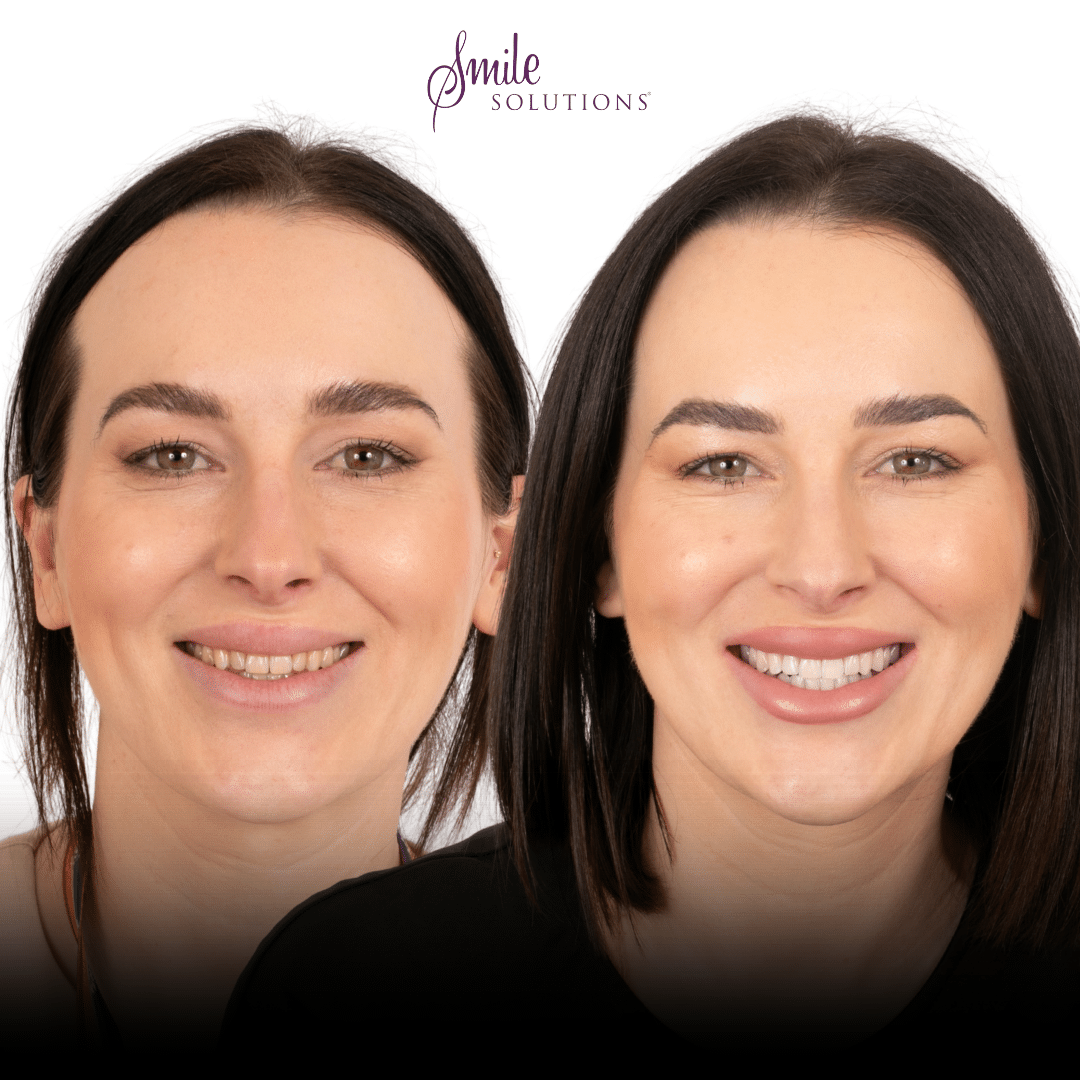
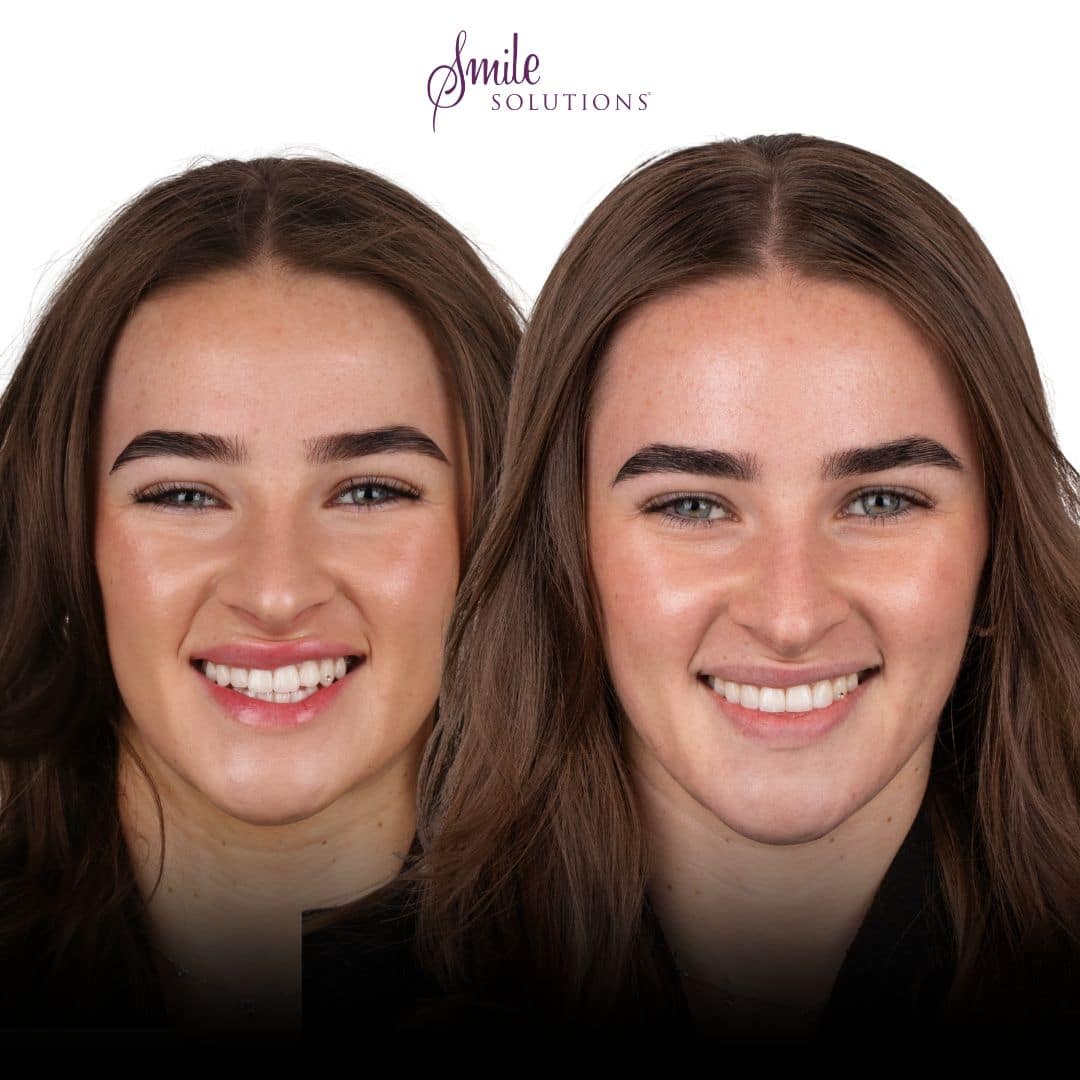
When Invisalign treatment finishes and your teeth are aligned, small imperfections previously hidden by crowding become visible — uneven or worn edges, slight asymmetries between the front teeth.
Edge work composite bonding is a gentle, minimally invasive procedure that refines those edges. The defining characteristic, and the reason it exists as a distinct treatment:
It builds up, not down. No natural tooth structure is shaved or cut.
Smile Solutions is at Level 1, 220 Collins Street, Manchester Unity Building, Melbourne CBD.
Why this rather than veneers
Many patients choose Invisalign over porcelain veneers precisely because they want to protect their natural teeth and avoid unnecessary intervention. Edge work bonding honours that choice rather than undoing it at the last step.
- No tooth structure is removed — the procedure adds material
- Far less expensive than porcelain veneers
- Conservative — your teeth remain your teeth
- Can produce a polished, refined look or a subtler improvement — your choice
- Combined with professional whitening, it delivers a complete result without any invasive procedure
The contrast is measurable, and it is worth stating precisely. Edelhoff and Sorensen, in the Journal of Prosthetic Dentistry (2002), weighed how much tooth different preparation designs remove. A traditional porcelain laminate veneer covering the facial surface took about 16.7% of the coronal tooth structure; a partial veneer took 8.2%; a complete veneer 30%; and all-ceramic crown preparations between 64% and 71.9%. Edge work removes none.
Read those figures with their qualifiers, because they matter. That study was in vitro, measured by weight on typodont resin teeth, and it examined anterior teeth only. It tells you the relative cost in tooth structure of each design, not what will happen in a particular mouth, and it says nothing about molars.
There is also a consequence to removing enamel that healthdirect Australia names plainly among the risks of veneers: “your teeth could become more sensitive because some enamel is removed.” That is the risk edge work does not carry.
This is the same material and technique described on Composite Bonding, applied to a specific problem: the edges, after alignment.
What it corrects
The imperfections that become more noticeable once teeth are straight:
- uneven or worn tooth edges
- asymmetry between the front teeth
- insufficiently defined canines
- dark triangular spaces between teeth
- wear caused by a previous malocclusion
Bonding is often complemented by gentle recontouring of adjacent teeth to produce a balanced, symmetrical result.
Where the wear came from matters. If the edges are worn because of grinding or acid erosion, the cause needs addressing or the new composite wears too — see TMD & Teeth Grinding. A night splint is frequently part of the plan.
What it costs
Smile Solutions publishes indicative per-tooth pricing, which is unusual and makes comparison possible:
| Guide price | |
|---|---|
| Upper tooth, minimal bonding | From $500 |
| Upper tooth, more elaborate bonding | $750 – $950 |
| Lower tooth | Around $550 |
| Recontouring of adjacent teeth | Included |
The total depends on the number of teeth treated and the complexity of the work. A cosmetic consultation produces a personalised treatment plan and quotation.
On the consultation: it is offered at no charge, and it is a discussion and a mock-up — not a check-up, and not clinical treatment. What it covers, and any deposit required to secure the appointment, are confirmed when you book.
On whitening: it is included for patients on an Invisalign pricing package, subject to the conditions published on Invisalign — which at the time of writing require the plan to be paid in full, or on a payment plan with a deposit of $2,000 or more. Confirm the current conditions before you rely on the inclusion.
On payment plans: plan options are available. Where a plan is advertised as interest free, that describes the plan term only — a deposit may be required, an establishment fee and ongoing account fees may apply, and charges can apply if the balance is not cleared within the agreed period. The applicable terms depend on the provider and the amount financed, and are set out in writing before you commit — ask what the deposit and the establishment fee are, in dollars. See Payment Plans.
Confirm current pricing when booking. Price Guide.
The complete smile journey
What makes this work is that it is planned from the start, not bolted on at the end.
1. Check-up and x-rays. Every orthodontic patient receives an initial check-up and x-rays as part of their Invisalign journey, at no additional charge — so treatment begins with a complete clinical picture and no surprises later. What is included is confirmed at booking, and radiographs are taken where there is a clinical reason for them rather than automatically. See How safe are dental X-rays?.
2. Hygiene program throughout treatment. You are enrolled in the hygiene program from the beginning, so teeth and gums stay healthy through alignment. A healthy foundation is what makes the result last. See Dental Cleans & Hygienists.
3. Invisalign with a specialist orthodontist. Treatment is carried out by a board-registered specialist orthodontist, planned to broaden and align the dental arches, eliminate crowding, establish a healthy bite with ideal overbite and overjet, and precisely position each tooth — including subtle extrusion and intrusion — to create even, harmonious incisal edges.
That last detail matters: much of the edge alignment is achieved orthodontically, so less bonding is needed afterwards.
4. Cosmetic consultation — before Invisalign finishes. As treatment nears completion you meet a cosmetic dentist, with no obligation or pressure. They assess your smile, discuss what edge work could achieve in your case, and create a temporary resin mock-up so you can preview the result. Together you decide exactly where bonding or recontouring would be applied, and discuss expected outcome, longevity, costs and considerations.
This planning happens before Invisalign is complete, so the cosmetic dentist and orthodontist can work toward the same final result rather than one reacting to the other. See Cosmetic Dentistry and Cosmetic Dentistry Under Specialist Care.
5. Teeth whitening, on the conditions set out above — either in-chair Zoom whitening at the practice's dedicated Teeth Whitening Centre, or take-home whitening with custom trays. See Teeth Whitening.
Whitening is completed approximately two weeks before any bonding. This is deliberate: composite resin cannot be whitened later, so it must be colour-matched to your newly whitened teeth. Bonding first and whitening afterwards leaves you with mismatched edges permanently.
On the whitening itself, one legal point is worth knowing. Schedule 10 of the Poisons Standard states that teeth whitening products containing more than 6% hydrogen peroxide or 18% carbamide peroxide may only be sold, supplied and used by registered dental practitioners as part of their dental practice, and the Australian Dental Association takes the position that only registered practitioners educated and competent in whitening should use or supply products above that strength. Those provisions are formalised in state and territory poisons legislation. It is the reason in-chair and dentist-supplied take-home whitening are not the same product you can buy over a counter.
6. Edge work composite bonding. Carefully sculpted composite resin added to the edges of the teeth, with gentle recontouring where needed.
7. Retainers. Custom retainers preserve the alignment. Teeth naturally tend to move over time, so wearing them as directed is what protects the whole investment — and retention is indefinite rather than for a year. See Braces for how retention works.
8. Ongoing hygiene and maintenance. Regular hygiene appointments and examinations monitor both alignment and the condition of the bonding.
Practical questions
Is it right for me? It suits patients who have completed Invisalign or orthodontic treatment and want a polished finish without the invasiveness of veneers — particularly for minor edge asymmetries, worn edges, or imperfections more visible now teeth are straight.
Does it hurt? The procedure is gentle and minimally invasive. In most cases no anaesthetic is required.
How long does it take? Typically a single appointment of 1–2 hours.
Will it look natural? The resin is colour-matched to your whitened teeth. The result is designed to enhance your smile rather than transform it.
Can I see it first? Yes. A resin mock-up is created at the cosmetic consultation — non-bonded resin placed on your teeth so you can see and approve the proposed result before anything is permanently applied. You are always in control.
What if I want it replaced later? Replacement is simple. The old composite is removed and new material applied in a single visit, with no damage to your natural tooth structure.
What are the downsides? Composite stains over time in a way porcelain does not, particularly with coffee, tea, red wine and smoking; it can chip on a biting edge; and it needs polishing and occasional repair. Lim and colleagues at the University of Hong Kong, reviewing resin composite laminate veneers in the Journal of Evidence-Based Dental Practice (2023), found that “the incidence of surface roughness was the most reported” complication, ahead of colour mismatch and marginal discolouration — and their own advice to patients was to expect high maintenance care. Those are the trade-offs against its two real advantages: it removes no tooth, and it is reversible.
It is also worth being clear that bonding is elective. The Australian Dental Association's consumer guidance on crowns, bridges and veneers makes both points that apply here: these are elective treatments, and “having a crown, bridge or veneer does not mean no treatment will ever be required again” for the tooth.
How long it lasts
With proper care, edge work composite bonding typically lasts between 7 and 10 years, depending on lifestyle factors and everyday wear. That range is the practice's clinical experience, not a published figure — and it is worth knowing how it sits against the evidence that does exist.
For composite veneers — a larger application of the same material — the 2023 review by Lim and colleagues pooled survival across randomised controlled trials at 88% (95% CI 81–94%), with mean follow-up ranging from 24 to 97 months, which is roughly two to eight years rather than ten. Within that, the direct technique — composite placed and shaped in the mouth, as edge work is — showed a 91% survival rate, against a lower figure for indirect, laboratory-made composite veneers.
Two honest caveats. Edge work is a much smaller restoration than a full composite veneer, so those figures do not transfer directly — the maintenance expectation is the same, the survival percentage is not measuring the same thing. And the longest follow-up in that review was about eight years, so a ten-year claim sits beyond the window anybody has published.
If it becomes chipped, worn or stained, it can be repaired or replaced with a simple, minimally invasive procedure — another advantage over porcelain, where a fracture usually means remaking the restoration.
That figure is a typical range, not a guarantee, and how long yours lasts depends on your bite, whether you grind, and what you eat and drink.
Why it works here
The whole journey — consultation, Invisalign, whitening, bonding and maintenance — happens under one roof with one team:
- the same x-rays, clinical records and treatment coordinators from start to finish
- specialist orthodontists and cosmetic dentists actively collaborating on the plan
- your cosmetic dentist planning the finishing touches before Invisalign is complete
Related pages: Invisalign, Orthodontics, Composite Bonding, Porcelain Veneers, Teeth Whitening, Cosmetic Dentistry, Specialist Orthodontists, Contact Us.
Practical details
| Address | Level 1, 220 Collins Street, Manchester Unity Building, Melbourne VIC 3000 |
| Phone | 13 13 96 |
| theteam@smilesolutions.com.au | |
| Monday – Friday | 8.00am – 6.00pm |
| Saturday | 8.30am – 1.30pm |
| Sunday | By appointment |
| Appointment | One, 1–2 hours |
| Anaesthetic | Usually not required |
| Tooth structure removed | None |
| Typical lifespan | 7–10 years (practice guidance, not a published figure) |
| Composite veneer survival | 88% (95% CI 81–94%), follow-up 24–97 months (Lim et al. 2023) |
| Traditional porcelain veneer removes | ~16.7% of coronal tooth structure (anterior, in vitro; Edelhoff & Sorensen 2002) |
| Guide price | From $500 per upper tooth |
| Whitening | Two weeks before bonding |
| Parking | Wilsons Parking, Flinders Lane (between Swanston and Russell) |
Prices are as published by the practice and are subject to change; confirm when booking. Offers and inclusions described here — the consultation, the check-up and x-rays, whitening and payment plans — are each subject to their own conditions, which are set out before you commit; confirm the current terms directly. Results, recovery times and potential risks vary for each individual. Survival percentages quoted are for full composite laminate veneers, from the studies named, with the follow-up periods stated; the 7–10 year range for edge work is the practice's clinical experience rather than published evidence, and no authority publishes a lifespan in years for bonded composite. Tooth-reduction percentages are from an in vitro study of anterior preparations on typodont teeth. This information is general in nature and intended for people over 18. Seek independent advice from a qualified, AHPRA-registered practitioner before proceeding.
Smile Solutions trades under ABN 28 193 514 103.
Images on This Page
-
https://www.facebook.com/tr?id=800557773428361&ev=PageView&noscript=1
(no alt text)
-
https://www.smilesolutions.com.au/wp-content/uploads/2025/10/calendar_month.svg
(no alt text)
-
https://www.smilesolutions.com.au/wp-content/themes/arcadian-wordpress-theme/assets/images/smile_solutions_logo_white.png
Smile Solutions Logo
-
https://www.smilesolutions.com.au/wp-content/themes/arcadian-wordpress-theme/assets/images/smile_solutions_logo_purple.png
Smile Solutions Logo
-
https://www.smilesolutions.com.au/wp-content/uploads/2025/11/Smile-Solutions-4.png
Smile Solutions - Melbourne CBD
-
https://www.smilesolutions.com.au/wp-content/uploads/2025/11/168-1024x1024.png
Smile Solutions
-
https://www.smilesolutions.com.au/wp-content/uploads/2026/07/Smile-CB-1024x1024.jpg
Smile CB
-
https://www.smilesolutions.com.au/wp-content/uploads/2023/01/Smile.jpg
Smile
-
https://www.smilesolutions.com.au/wp-content/uploads/2025/11/180.png
Smile Solutions
-
https://www.smilesolutions.com.au/wp-content/uploads/2026/03/WEBSITE-BAs.jpg
WEBSITE BAs
-
https://www.smilesolutions.com.au/wp-content/uploads/2025/11/174.png
Smile Solutions
-
https://www.smilesolutions.com.au/wp-content/uploads/2025/11/168.png
Smile Solutions
-
https://www.smilesolutions.com.au/wp-content/uploads/2026/03/Smile-CB.jpg
Smile CB
-
https://www.smilesolutions.com.au/wp-content/uploads/2025/10/Smile-Solutions-Invisalign-Blue-Diamond-Provider.png
Smile Solutions Invisalign Blue Diamond Provider
-
https://www.smilesolutions.com.au/wp-content/uploads/2025/10/Smile-Solutions-Luxury-Lifestyle-Awards-Winner.png
Smile Solutions Luxury Lifestyle Awards Winner
-
https://www.smilesolutions.com.au/wp-content/uploads/2026/01/Smile-Solutions-Telstra-Business-Awards-Winner.png
Smile Solutions Telstra Business Awards Winner
-
https://www.smilesolutions.com.au/wp-content/uploads/2026/01/WEBSITE-Smile-Solutions-Award-Tiles.png
WEBSITE Smile Solutions Award Tiles
-
https://www.smilesolutions.com.au/wp-content/uploads/2025/11/Smile-Solutions-ABA-Business-Innovation-Winner-2024.png
Smile Solutions ABA Business Innovation Winner 2024
-
https://www.smilesolutions.com.au/wp-content/uploads/2025/11/Smile-Solutions-ABA-Service-Excellence-Winner-2024.png
Smile Solutions ABA Service Excellence Winner 2024
-
https://www.smilesolutions.com.au/wp-content/uploads/2025/11/Smile-Solutions-ABA-Service-Excellence-Winner-2023.png
Smile Solutions ABA Service Excellence Winner 2023
-
https://www.smilesolutions.com.au/wp-content/uploads/2025/11/Smile-Solutions-ABA-Service-Excellence-Winner-2022.png
Smile Solutions ABA Service Excellence Winner 2022
-
https://www.smilesolutions.com.au/wp-content/uploads/2025/09/Smile-Solutions-ABA-Service-Excellent-Winner-2019.png
Smile Solutions ABA Service Excellent Winner 2019
-
https://www.smilesolutions.com.au/wp-content/uploads/2025/09/Smile-Solutions-ABA-Community-Contribution-Winner-2017.png
Smile Solutions ABA Community Contribution Winner 2017
-
https://www.smilesolutions.com.au/wp-content/uploads/2025/11/Smile-Solutions-ABA-Service-Excellence-Winner-2017.png
Smile Solutions ABA Service Excellence Winner 2017
-
https://www.smilesolutions.com.au/wp-content/uploads/2025/11/Smile-Solutions-ABA-Service-Excellence-Winner-2016.png
Smile Solutions ABA Service Excellence Winner 2016
-
https://www.smilesolutions.com.au/wp-content/uploads/2026/01/Smile-Solutions-ABA-Employer-of-Choice-Winner-2015-1.png
Smile-Solutions-ABA-Employer-of-Choice-Winner-2015
-
https://www.smilesolutions.com.au/wp-content/uploads/2026/01/Smile-Solutions-ABA-Service-Excellence-Winner-2015.png
Smile-Solutions-ABA-Service-Excellence-Winner-2015
-
https://www.smilesolutions.com.au/wp-content/uploads/2025/11/Smile-Solutions-ABA-Employer-of-Choice-Winner-2014.png
Smile Solutions ABA Employer of Choice Winner 2014
-
https://www.smilesolutions.com.au/wp-content/uploads/2026/01/Smile-Solutions-ABA-Innovation-Winner-2014.png
Smile Solutions ABA Innovation Winner 2014
-
https://www.smilesolutions.com.au/wp-content/uploads/2026/01/Smile-Solutions-ABA-Service-Excellence-Winner-2014.png
Smile Solutions ABA Service Excellence Winner 2014
-
https://www.smilesolutions.com.au/wp-content/uploads/2025/11/Smile-Solutions-ABA-Innovation-Winner-2013.png
Smile Solutions ABA Innovation Winner 2013
-
https://www.smilesolutions.com.au/wp-content/uploads/2026/01/Smile-Solutions-ABA-Service-Excellence-Winner-2013.png
Smile Solutions ABA Service Excellence Winner 2013
-
https://www.smilesolutions.com.au/wp-content/uploads/2025/11/Smile-Solutions-ABA-Service-Excellence-Winner-2012.png
Smile Solutions ABA Service Excellence Winner 2012
-
https://www.smilesolutions.com.au/wp-content/uploads/2025/08/69a44c30c93ce196d539cc5520080df52a5f3f88-scaled.jpg
69a44c30c93ce196d539cc5520080df52a5f3f88 scaled
-
https://www.smilesolutions.com.au/wp-content/themes/arcadian-wordpress-theme/assets/images/family_owned_bussiness.png
Family Owned Business
-
https://www.smilesolutions.com.au/wp-content/themes/arcadian-wordpress-theme/assets/icons/icon--phone.svg
Smile Solutions Contact
-
https://www.facebook.com/tr? id=800557773428361&ev=PageView&noscript=1
(no alt text)