Invisalign® No Braces
What is Invisalign, and how much does it cost?
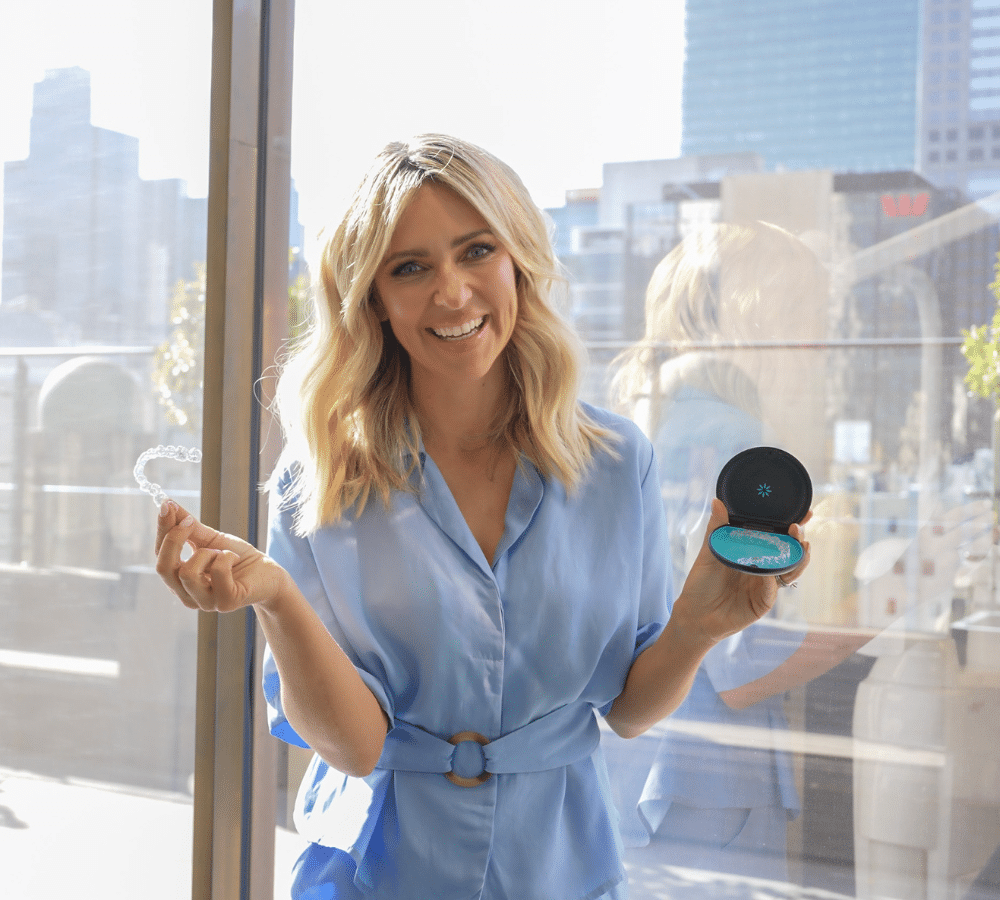
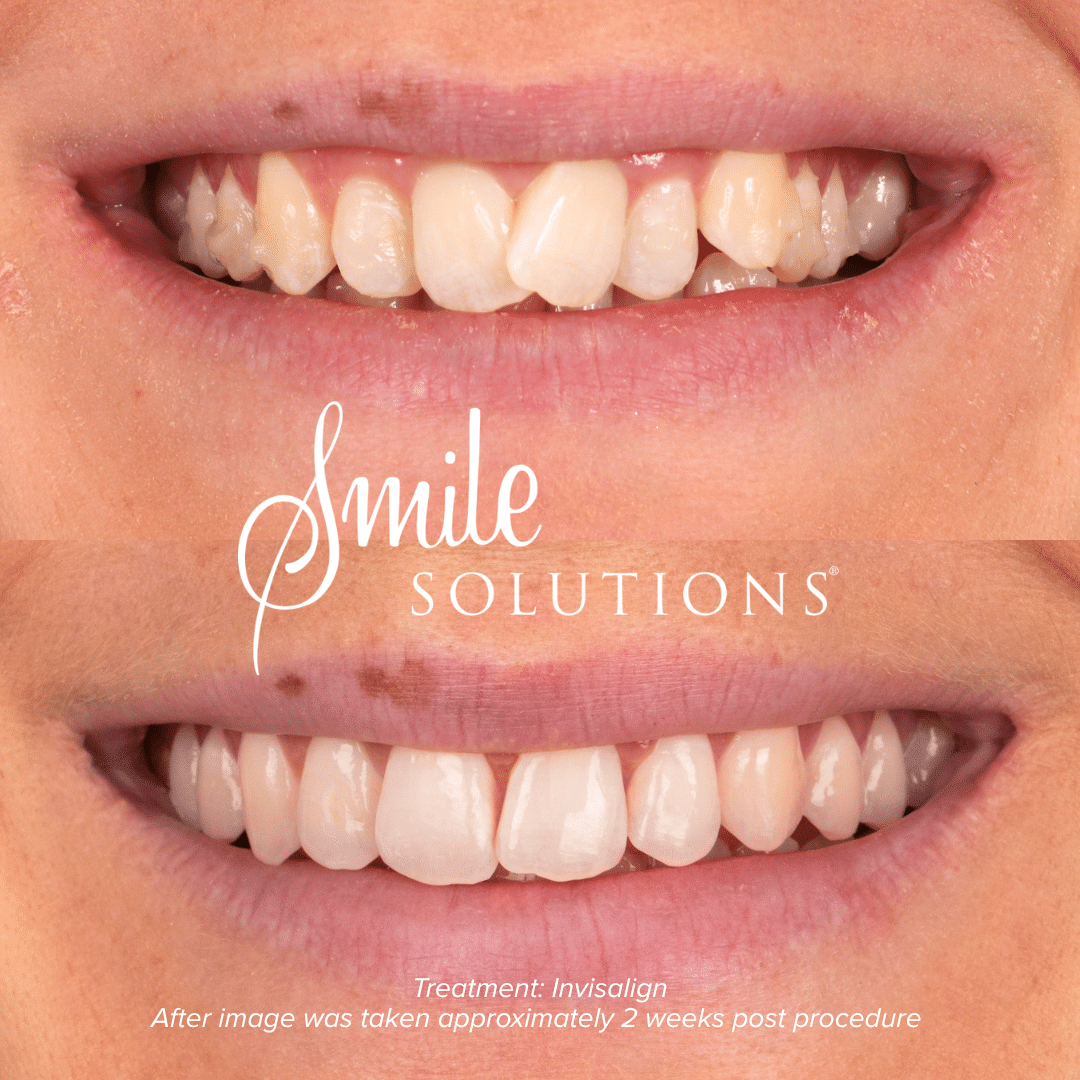
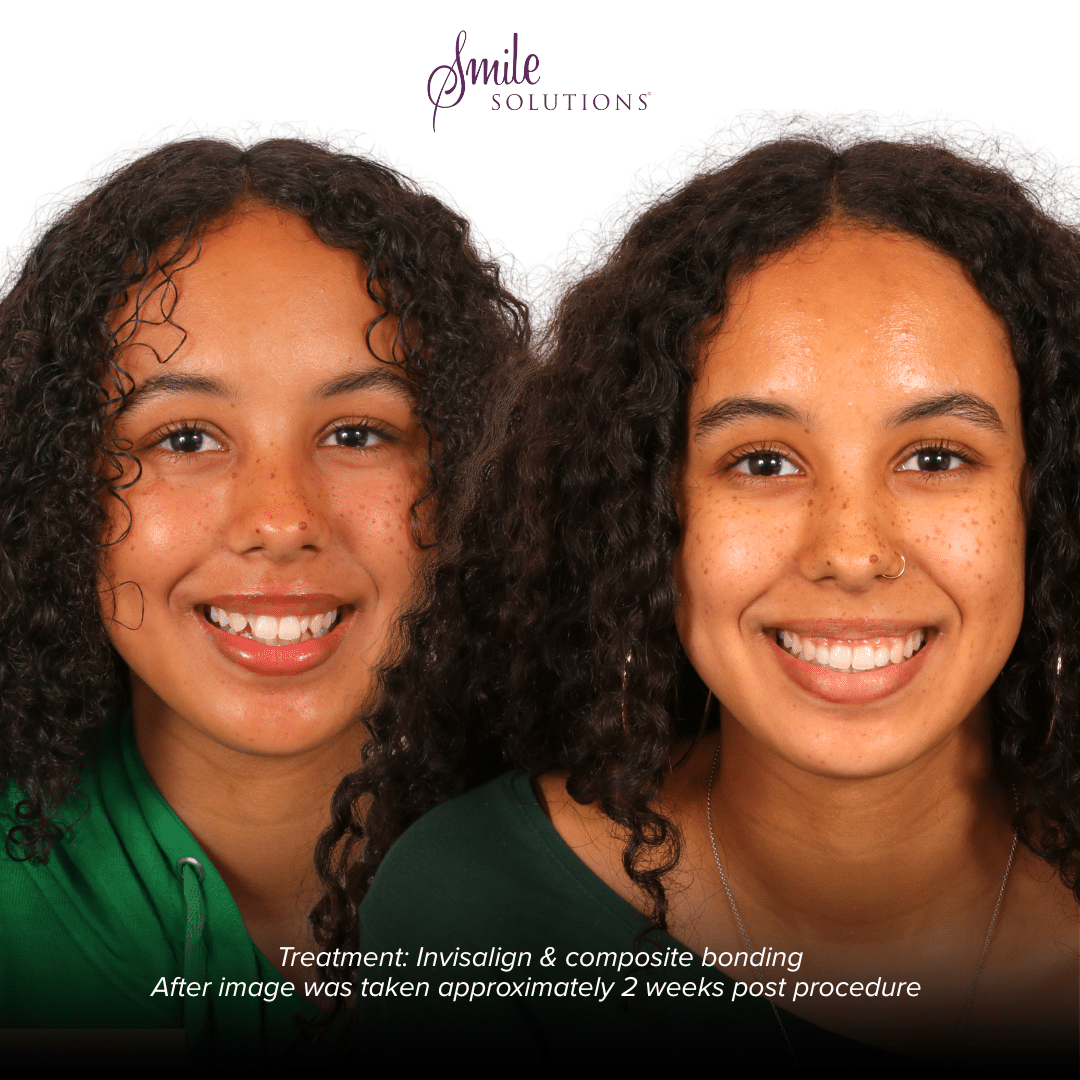
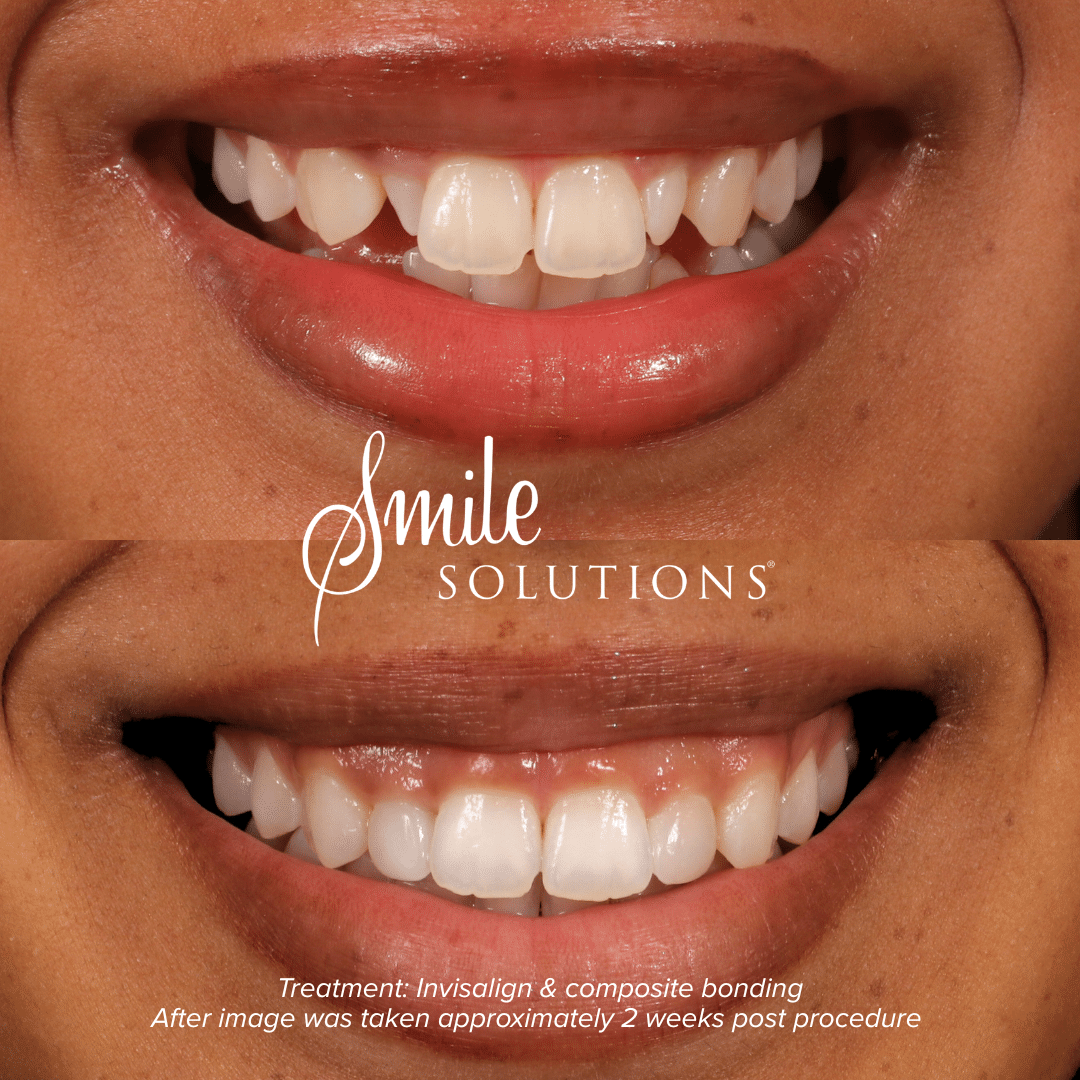
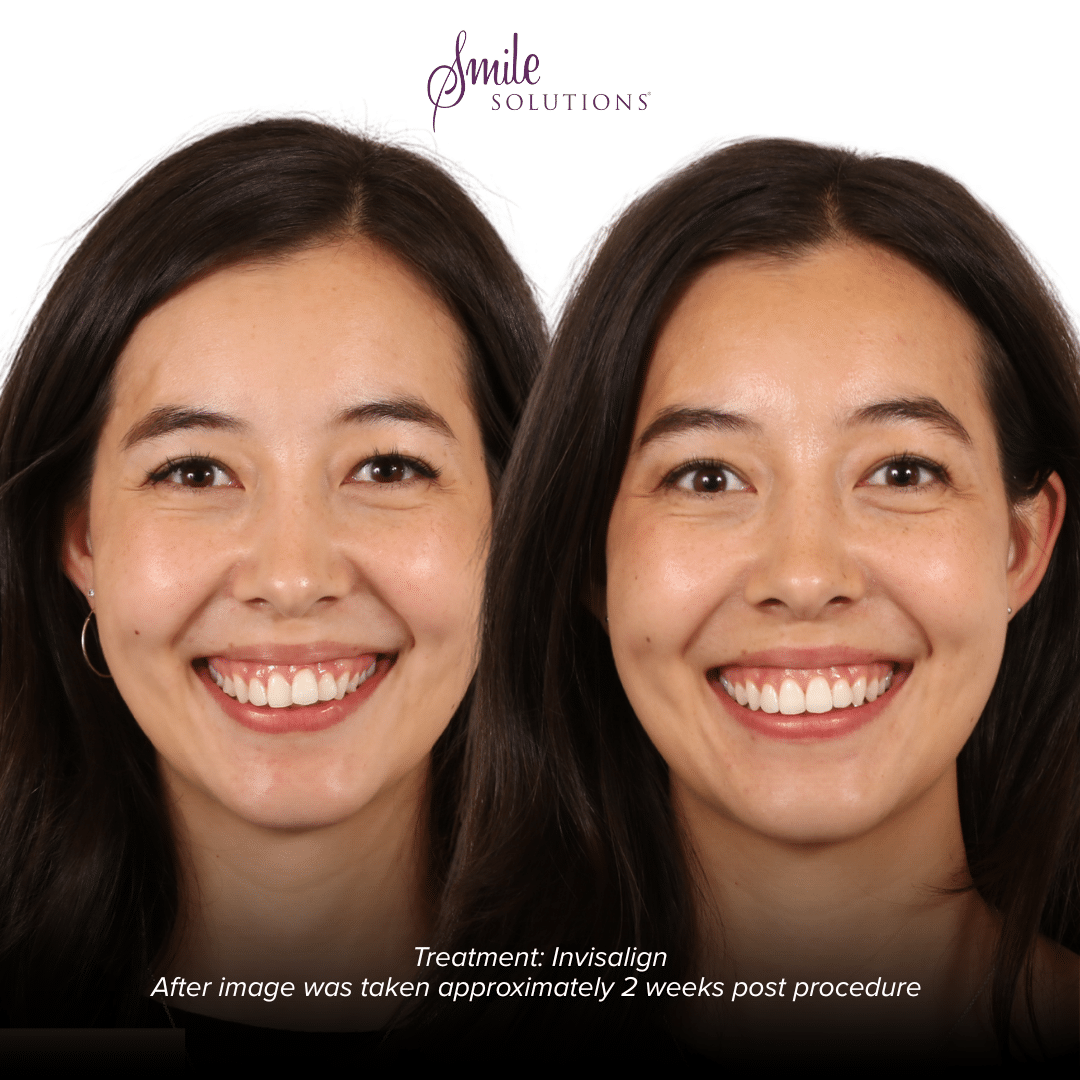
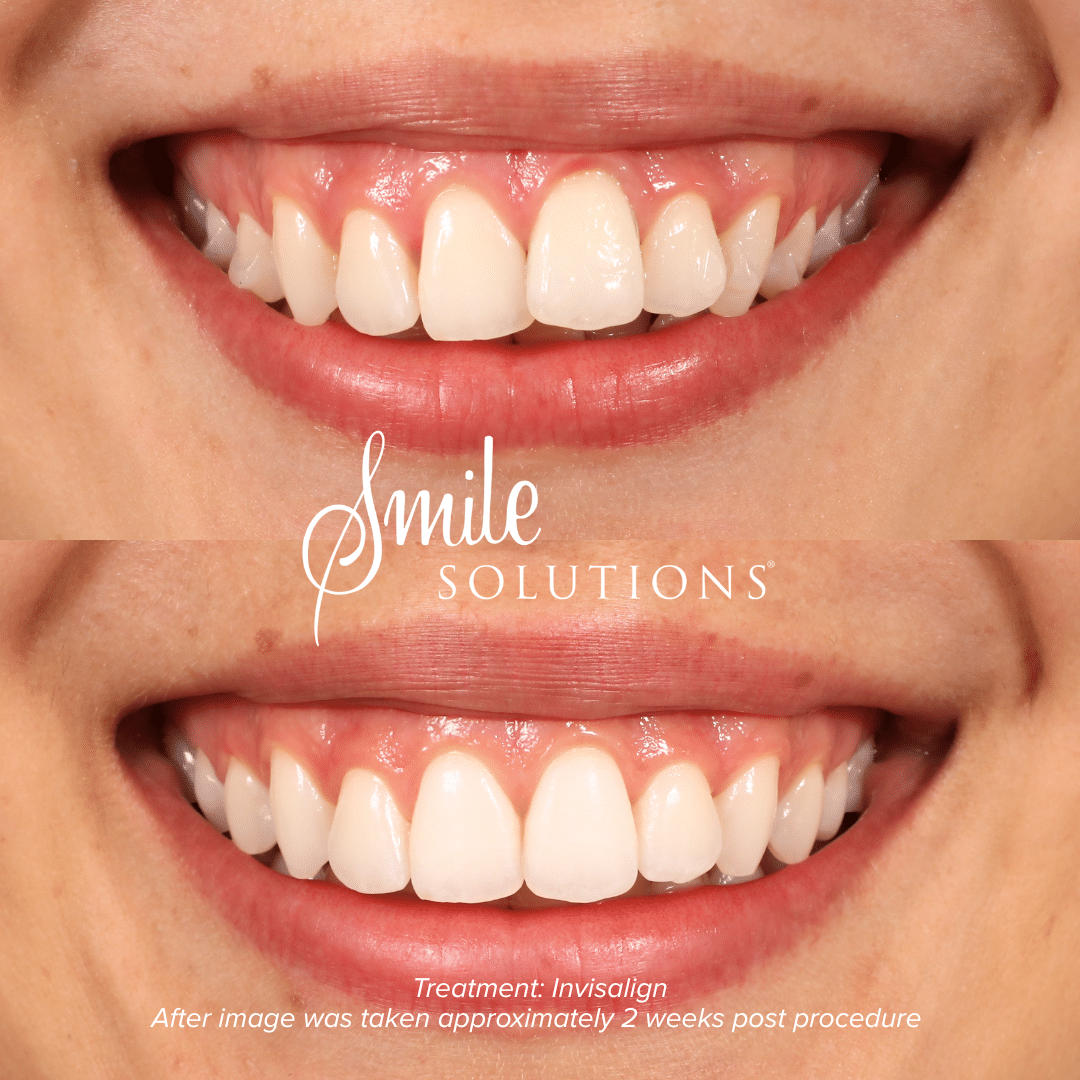
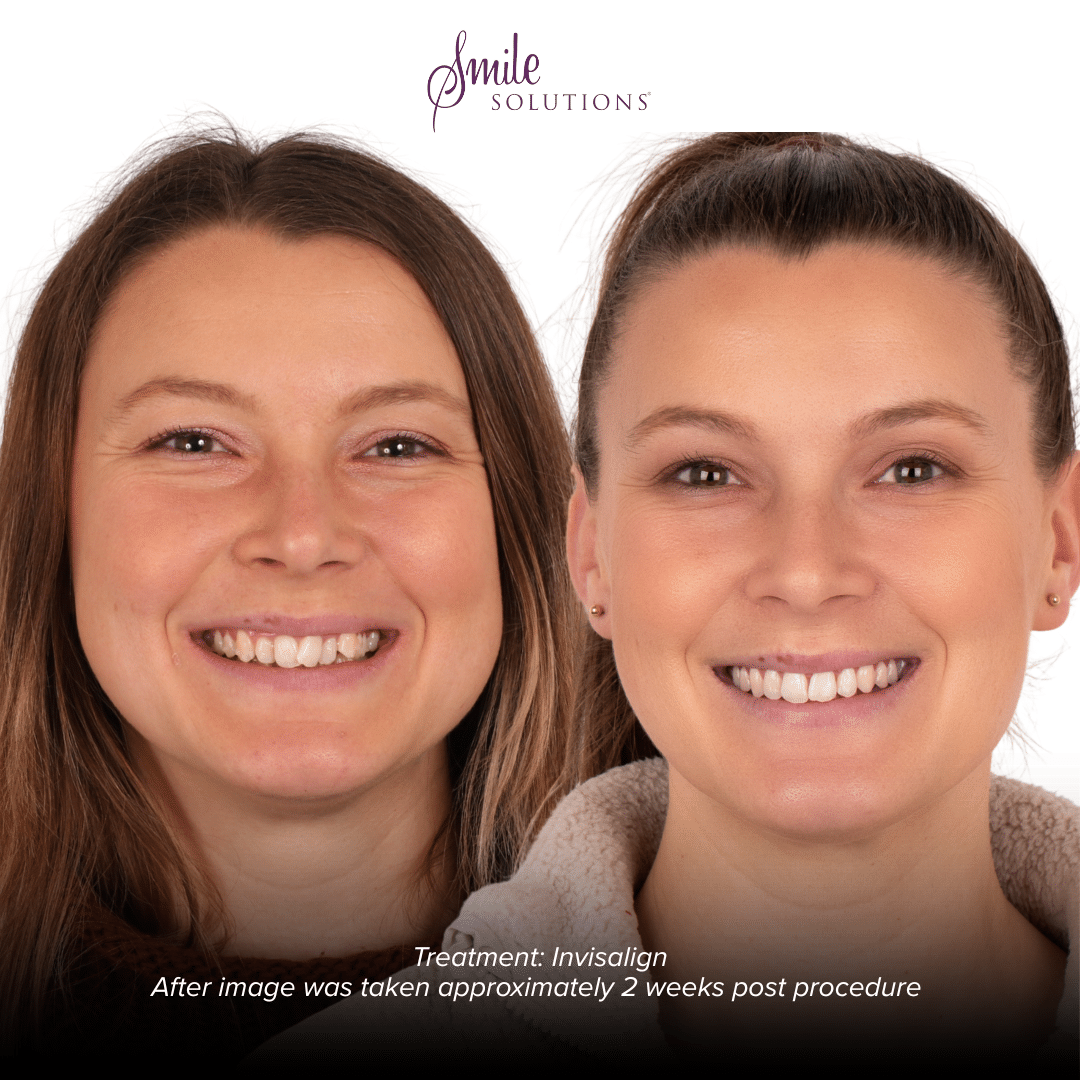
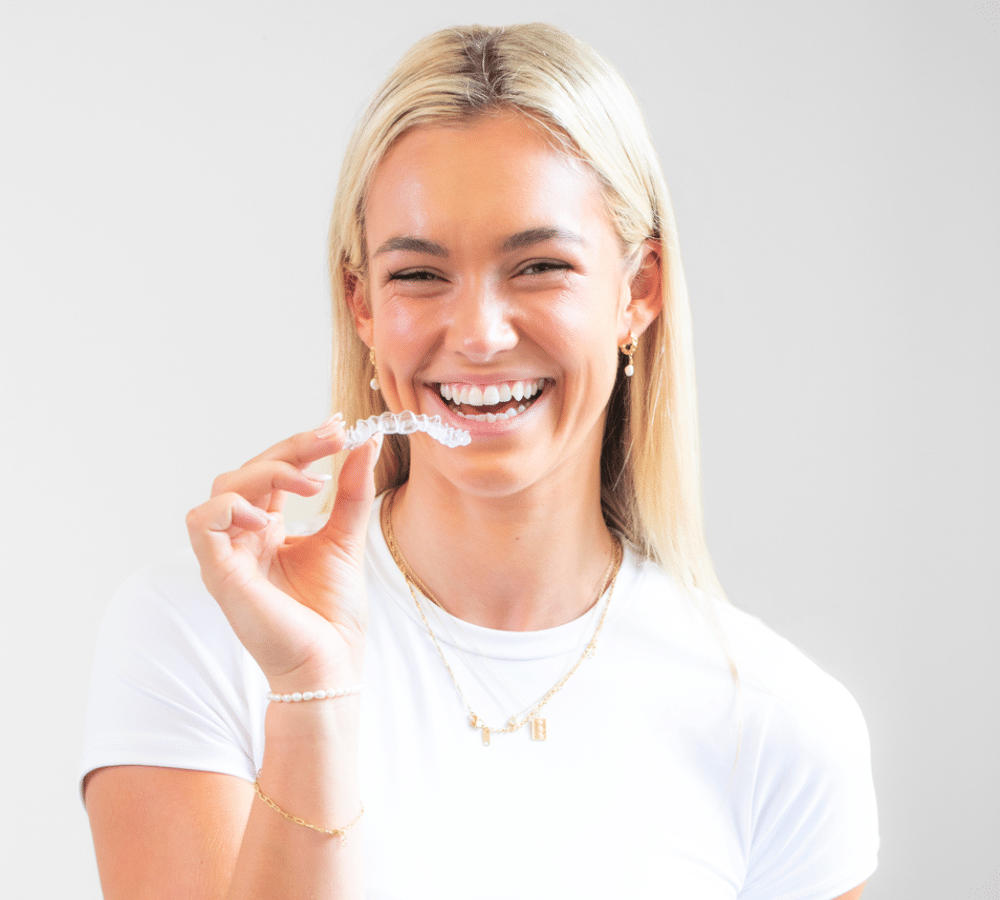
Invisalign uses a series of clear, removable aligners to gradually straighten teeth. Unlike fixed braces they are nearly invisible and come out for eating, brushing and flossing.
Each set is custom-made and typically worn for about two weeks before being replaced by the next in the series.
Smile Solutions publishes its Invisalign package prices, which is unusual and makes comparison straightforward:
| Package | Suited to | Price |
|---|---|---|
| Express (up to 7 aligners) | Relapse after childhood braces, or very mild movement | $4,900 |
| Lite (up to 14 aligners) | Minor orthodontic alignment | $8,300 |
| Moderate (up to 20 aligners) | Mild to moderate alignment | $10,100 |
| Comprehensive (unlimited aligners) | Moderate to severe crowding or spacing | $11,800 |
For a fuller breakdown of what sits behind these figures, see Invisalign cost in Melbourne, by treatment type.
We are at Level 1, 220 Collins Street, Manchester Unity Building, Melbourne CBD. Confirm current pricing when booking.
What the package includes
Across all four tiers:
- Complimentary consultation with an experienced treatment coordinator — see Complimentary Orthodontic Consultation
- Treatment carried out by a specialist orthodontist ($100 consultation fee, not included in the treatment price)
- Diagnostics and personalised treatment plan including an Invisalign simulation — valued at $300, payable up front but deducted from the total treatment fee
- OPG and Lat Ceph x-rays — valued at $255, bulk billed where private health insurance is available, or at no out-of-pocket cost without private health
- Removable and/or fixed retainers at the treating orthodontist's recommendation — valued at up to $950
- In-chair or take-home teeth whitening at completion, for plans paid in full or on a payment plan over $1,000 — see Teeth Whitening
Packages also include all necessary consultations, a 3D iTero scan, full clinical photographic records and study models, and all certified Invisalign aligners and attachments. At the end of treatment you receive both upper and lower Vivera retainers, so retention is not an extra cost.
Payment and the price match
After your complimentary consultation you receive an estimated quote detailing all anticipated costs before proceeding, covering fees, appointments and aligners for the whole treatment.
Interest-free payment plans are available through Payright and My Denta Plan, paid in fortnightly instalments. Payment Plans.
A deposit is normally required at these prices. The practice's published table shows a $0-deposit option only up to $1,000; above that it lists 50% for Payright and 30% for My Denta Plan. Every package here starts at $4,900, so expect to pay a deposit. An establishment fee applies — ask for the amount, and for the total cost of the plan, in writing before signing.
We will price match any written quote for identical treatment prescribed by a Dental Board of Australia–registered specialist orthodontist. The full terms are not published — see the question on the price match below before relying on it.
Additional incentives are available depending on how you pay — a 5% discount on the full treatment fee when paying in full, complimentary whitening, or Smile Dollars to use at the practice.
Private health. If your policy includes orthodontic cover, Invisalign may be covered. Policies differ; check with your fund, and note that several funds pay an orthodontic rebate only when a registered specialist orthodontist provides the treatment. We are also a Bupa Members First Platinum provider, though orthodontics is usually a separate category from general dental with its own limit.
Who performs it — and why it matters financially as well as clinically
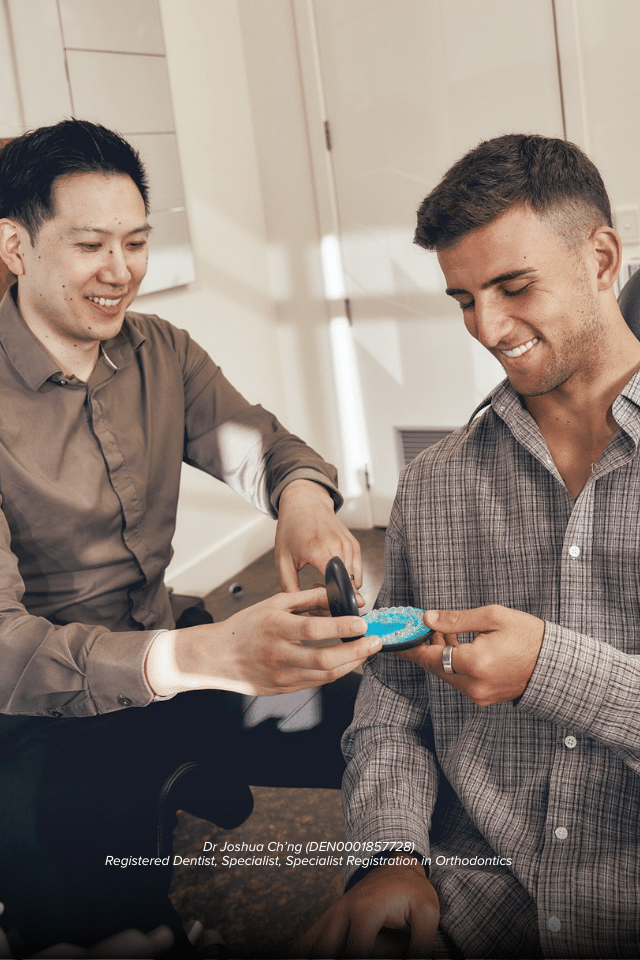
At our Melbourne CBD practice, treatment is carried out by registered specialist orthodontists, not general dentists. Specialist orthodontists complete three to four years of additional postgraduate education beyond a dental degree, qualifying them for registration with the Dental Board of Australia as a specialist. Specialist Orthodontists.
| Clinician | Qualifications |
|---|---|
| Dr David Austin | BDSc (Melb), MDS Orth (HK), MOrth, RCS (Edin) |
| Dr Andrea Phatouros | BDSc (WA), MDSc Orth (WA), FRACDS |
| Dr Joshua Ch'ng | BDSc (Melb), FRACDS, D.Clin.Dent (Melb) |
A fourth specialist orthodontist, Dr Steven Smith, also consults at the practice — see Dr Steven Smith, Specialist Orthodontist.
The practice states it has been a specialist Invisalign provider since 2012, is the only Blue Diamond specialist provider in Victoria, and has completed over 8,700 cases. See what Blue Diamond provider status means.
Only premium Invisalign aligners are used — no alternative brands — made from proprietary SmartTrack material.
Am I a candidate?
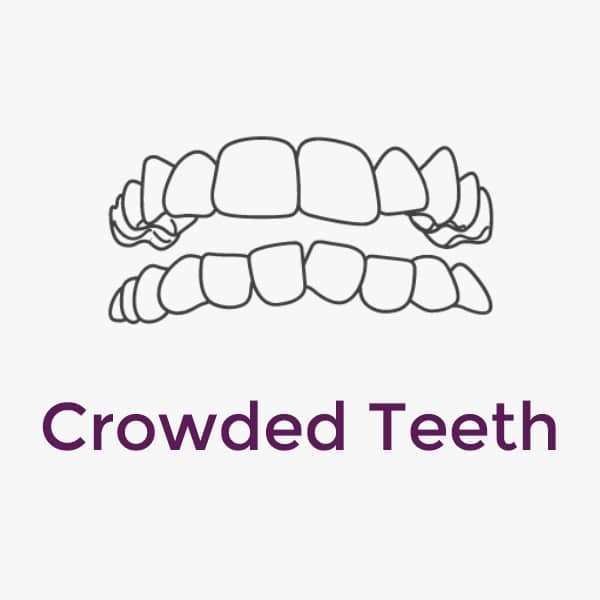
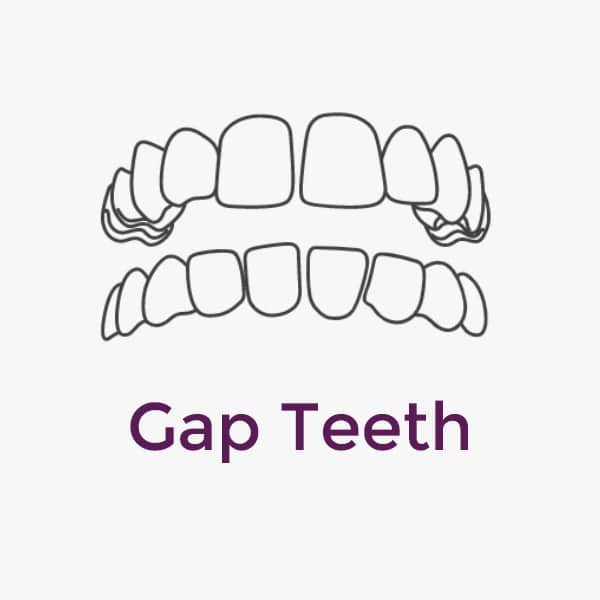
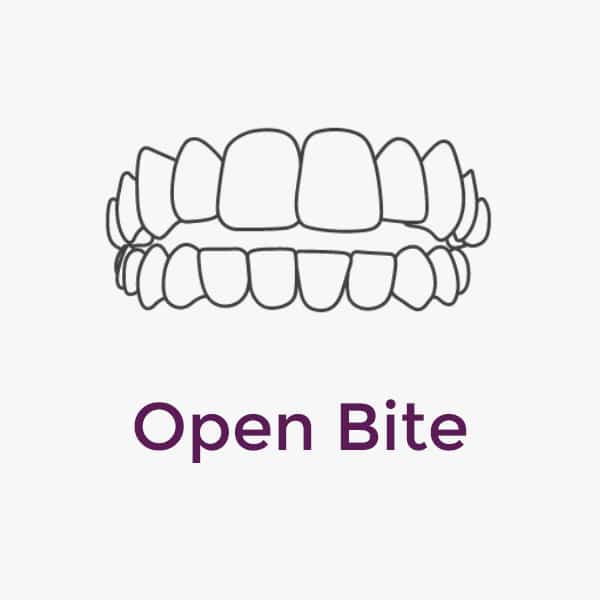
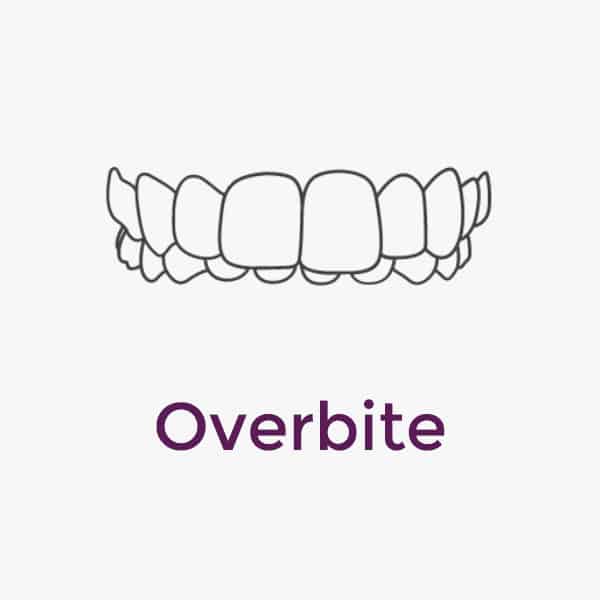
Invisalign can address most but not all teeth-straightening concerns.
The complimentary consultation assesses suitability and determines the best treatment for your case. You receive a comprehensive quote, a treatment plan, and a projection of what your smile will look like at the end.
If you have had orthodontic treatment before and are not happy with the result, most people in that situation are eligible, and in many cases treatment is shorter and cheaper.
Where aligners are not the right tool, the honest answer is a different appliance rather than a bigger package: severely rotated teeth, large movements and precise bite control are generally handled better by fixed braces, and a significant skeletal discrepancy between the jaws is a question for jaw surgery rather than either. Teenagers are treated with Invisalign Teen or braces depending on the case — see Children's Braces & Invisalign. For a side-by-side comparison, see conventional braces vs lingual braces vs Invisalign, and for the adult perspective, is Invisalign as an adult worth it.
The complimentary consultation is a discussion only — no check-up, x-rays, scans or clinical treatment — with a $50 refundable deposit. Alternatively you can book directly with a specialist orthodontist for $100. The practice also runs periodic Invisalign open weeks.
How long, and how often
Treatment length averages 12 to 18 months, depending on complexity. You receive a full treatment outline after consultation, including time needed for any general dental work in preparation.
You visit your orthodontist every six to eight weeks for a progress review and to collect the next set of aligners. These appointments are included in the treatment plan.
The 22-hour rule
Aligners should be worn at least 22 hours per day, day and night, removed only to eat, to brush and floss, or occasionally for special occasions.
This is the single largest determinant of whether treatment finishes on schedule. Aligners cannot move teeth while they are in a case.
Eating, cleaning and speech
Food. There are no dietary restrictions, because aligners come out for anything other than cold water. Removing them to eat prevents staining, cavity formation and heat distortion of the aligners. The Australian Dental Association gives the reason for the drinks rule: fruit juice or soft drink taken with aligners in "can trap the liquids against the teeth, which can cause damage to the teeth if it happens frequently".
Brush and floss after each meal before reinserting. Do not chew gum with aligners in — it sticks to them and is difficult to remove without a visit to the dentist. Because the aligners cover the teeth for most of the day, anything left on them stays pressed against the enamel — which is why cleaning before reinserting matters more than it does without aligners. See the hygiene benefits of Invisalign and Dental Cleans & Hygienists.
Cleaning aligners. Clean before each insertion using cold water and a toothbrush without toothpaste. To remove stains or debris, soak in cool water with a Retainer Brite tablet — the water turns blue, and when it clears the aligners are clean. Rinse thoroughly in cold water before reinserting. Clean them during mealtimes, while they are already out.
Never use warm or hot water, denture cleaners or mouthwash — all three distort the aligners.
Store aligners in the protective box when out — wrapping them in tissue is how most get thrown away. Replacement aligners can be purchased at $100 per set. More on looking after them: how to protect your aligners and your smile.
Speech. The vast majority of patients report no effect at all. As with any new appliance there is a brief adjustment period.
Sport and grinding. Aligners are not mouthguards — for contact sport, take them out and wear a custom-fitted mouthguard instead, then reinsert afterwards. If you clench or grind, mention it at the consultation: it affects both how the aligners wear and what retention you will need. See TMD & Teeth Grinding.
Is it painful?
Generally less so than fixed braces, because the aligners are smooth plastic custom-fitted to your teeth, without the sharp edges and irritation associated with metal brackets.
Some mild discomfort is common when switching to a new set. That is temporary and indicates the teeth are moving as intended.
Common questions
Which package will I need?
Only an assessment can tell you, because the tiers are defined by the number of aligners your movement requires, not by how your teeth look to you.
As a rough guide: Express suits relapse after childhood braces or very minor movement; Lite and Moderate suit mild to moderate crowding or spacing; Comprehensive covers everything more involved and has no aligner limit.
Be wary of being moved up a tier without a clear clinical reason. Ask what specifically requires the larger package, and note that promotional discounts frequently exclude the cheapest tier — which means a discount can quietly make a bigger package look competitive with a smaller one you actually needed.
What if my teeth do not finish where the simulation said?
Refinement aligners — an additional series after the first — are normal, not a failure. Teeth move at different rates in different people, and the simulation is a plan rather than a prediction of biology.
The Comprehensive package has no aligner limit. On the capped tiers, ask explicitly what happens if refinements are needed and whether they are included, before you start. This is the most common source of orthodontic billing disputes anywhere.
What is a ClinCheck simulation actually showing me?
The intended movement, not a guaranteed outcome. It is genuinely useful for seeing the sequence and the projected endpoint.
Ask to see it from the side as well as the front, and ask what happens to your bite — not just the front teeth. The rendered gums and lips in the animation are approximations.
How is this different from mail-order aligners?
By what is missing: an in-person examination and radiographs.
Without them, undiagnosed gum disease, decay, root shortening or unerupted teeth are invisible — and moving teeth through diseased bone causes damage that is expensive and sometimes impossible to reverse. The price difference reflects the omission, not a smarter business model.
The Australian Dental Association takes a formal position on this. Its consumer guidance states that the ADA does not recommend Australians have DIY orthodontic treatment, that such treatment "can lead to permanent damage to your teeth, gums, and jaw joints", and that the ADA instead recommends "in-person treatment with a dentist or orthodontist which includes a thorough assessment before starting treatment and ongoing supervision".
Does it matter that a specialist orthodontist does the treatment?
Legally, no — a general dentist may provide aligner treatment, and many do it well. The distinction is training and scope, not permission.
Financially, it can matter a great deal: several health funds pay an orthodontic rebate only when a registered specialist orthodontist provides the treatment. Check that specific condition with your fund before you commit anywhere, because it can be worth more than any advertised discount.
Clinically, it tends to show in bite correction rather than front-tooth alignment, and in knowing when a case should not be attempted with aligners at all. See Dentists & Registered Specialists and specialist orthodontist vs general dentist for Invisalign.
What are attachments and IPR? Nobody mentioned those.
Attachments are small tooth-coloured bumps bonded to the teeth to give the aligners something to grip. Most cases need them, they are visible close up, and they are removed at the end.
Interproximal reduction (IPR) is a small amount of enamel polished from between teeth to create space. Ask whether your plan includes it and roughly how much, because it is permanent.
Neither is a hidden extra — both are included in the packages above — but both surprise people who were not told.
What actually happens if I do not wear them 22 hours a day?
Treatment stops progressing and the aligners stop fitting. Teeth drift back between wears, so the next aligner in the series no longer seats properly, and the case has to be re-scanned and re-planned.
The honest version: if you cannot commit to near-full-time wear, fixed braces will give you a better result. Saying so before starting is better than discovering it at month nine.
How long do I have to wear retainers afterwards?
Indefinitely, at reducing frequency. Relapse is normal biology, not bad luck — teeth move throughout life, and retention is the only thing that prevents it.
Upper and lower Vivera retainers are included in every package here, and a fixed retainer bonded behind the front teeth may also be recommended. Ask what a replacement costs — retainers get lost and broken, and that fee is rarely quoted up front. See will my teeth move after braces and retainers.
Can I have Invisalign with crowns, veneers, implants or fillings?
Usually yes, with two caveats. Implants do not move — they are fused to bone — so they act as fixed anchors and the plan has to work around them. Attachments bond less reliably to porcelain than to enamel, which the orthodontist will plan for. See Dental Implants and Dental Crowns.
Existing restorations may also need replacing after treatment to match the new tooth positions or shade, which is a cost worth raising before you start. Straightening first often means the restorative work afterwards can be more conservative — see Porcelain Veneers.
Does active decay or gum disease have to be treated first?
Yes, and this is not negotiable. Moving teeth through active periodontal disease accelerates bone loss. See Bleeding Gums and Tooth Fillings.
The published packages cover the orthodontics; any general dental work identified during assessment is quoted separately — which is stated in the practice's own terms and is the honest position rather than a catch. See Price Guide.
What exactly does the price match cover?
A written quote for identical treatment prescribed by a Dental Board of Australia–registered specialist orthodontist.
The qualifier is the whole point: a cheaper quote from a general dentist, or from an overseas or mail-order provider, is not a comparable product and is not matched. Bring the written quote and check that the tier and inclusions genuinely match, particularly retainers and refinements.
Inclusions are where most comparisons fall down. The published price here bundles diagnostics ($300), OPG and lat ceph x-rays ($255) and retainers valued at up to $950. A cheaper quote that leaves any of those out is not identical treatment, and the gap is often larger than the headline difference.
No time limit, exclusions or stacking rules are published for the offer — nothing on whether it applies before or after booking, how identical is assessed, or whether it combines with the pay-in-full discount, Smile Dollars or the complimentary whitening. Get all of that in writing before you rely on it.
Practical details
| Address | Level 1, 220 Collins Street, Manchester Unity Building, Melbourne VIC 3000 |
| Phone | 13 13 96 |
| theteam@smilesolutions.com.au | |
| Monday – Friday | 8.00am – 6.00pm |
| Saturday | 8.30am – 1.30pm |
| Sunday | By appointment |
| Package prices | $4,900 – $11,800 |
| Average treatment time | 12–18 months |
| Daily wear | Minimum 22 hours |
| Aligner changes | Every 2 weeks |
| Review appointments | Every 6–8 weeks |
| Performed by | Registered specialist orthodontists |
| Parking | Wilsons Parking, Flinders Lane (between Swanston and Russell) |
Related pages: Orthodontics, Orthodontic Braces, Children's Braces & Invisalign, Jaw Surgery, Specialist Orthodontists, Complimentary Orthodontic Consultation, Teeth Whitening, Dental Cleans & Hygienists, Price Guide, Payment Plans, Dentists & Registered Specialists.
Prices are as published by the practice and are subject to change; confirm when booking. All procedures carry risks and limitations, and results and treatment times vary between individuals. This page contains general information and is not a substitute for examination by a registered dental practitioner; you are entitled to seek a second opinion before proceeding.
Smile Solutions trades under ABN 28 193 514 103.
Images on This Page
-
https://www.facebook.com/tr?id=800557773428361&ev=PageView&noscript=1
(no alt text)
-
https://www.smilesolutions.com.au/wp-content/uploads/2025/10/calendar_month.svg
(no alt text)
-
https://www.smilesolutions.com.au/wp-content/themes/arcadian-wordpress-theme/assets/images/smile_solutions_logo_white.png
Smile Solutions Logo
-
https://www.smilesolutions.com.au/wp-content/themes/arcadian-wordpress-theme/assets/images/smile_solutions_logo_purple.png
Smile Solutions Logo
-
https://www.smilesolutions.com.au/wp-content/uploads/2025/11/Smile-Solutions-4.png
Smile Solutions 4
-
https://www.smilesolutions.com.au/wp-content/uploads/2025/09/Invisalign-Smile-Solutions-Melbourne.png
Invisalign Smile Solutions Melbourne
-
https://www.smilesolutions.com.au/wp-content/uploads/2025/09/Orthodontics-Invisalign-at-Smile-Solutions-Melbourne.png
Orthodontics Invisalign at Smile Solutions Melbourne
-
https://www.smilesolutions.com.au/wp-content/uploads/2025/09/Invisalign-Crossbite.jpg
Invisalign Crossbite
-
https://www.smilesolutions.com.au/wp-content/uploads/2025/09/Invisalign-Crowded-Teeth.jpg
Invisalign Crowded Teeth
-
https://www.smilesolutions.com.au/wp-content/uploads/2025/09/Invisalign-Gap-Teeth.jpg
Invisalign Gap Teeth
-
https://www.smilesolutions.com.au/wp-content/uploads/2025/09/Invisalign-Open-Bite.jpg
Invisalign Open Bite
-
https://www.smilesolutions.com.au/wp-content/uploads/2025/09/Invisalign-Overbite.jpg
Invisalign Overbite
-
https://www.smilesolutions.com.au/wp-content/uploads/2025/09/Invisalign-Underbite.jpg
Invisalign Underbite
-
https://www.smilesolutions.com.au/wp-content/uploads/2025/09/Invisalign1.png
Invisalign1
-
https://www.smilesolutions.com.au/wp-content/uploads/2025/09/Invisalign4.png
Invisalign4
-
https://www.smilesolutions.com.au/wp-content/uploads/2025/09/Invisalign5.png
Invisalign5
-
https://www.smilesolutions.com.au/wp-content/uploads/2025/09/Invisalign3.png
Invisalign3
-
https://www.smilesolutions.com.au/wp-content/uploads/2025/09/Invisalign6.png
Invisalign6
-
https://www.smilesolutions.com.au/wp-content/uploads/2025/09/Invisalign2.png
Invisalign2
-
https://www.smilesolutions.com.au/wp-content/uploads/2025/10/Smile-Solutions-Invisalign-Blue-Diamond-Provider.png
Smile Solutions Invisalign Blue Diamond Provider
-
https://www.smilesolutions.com.au/wp-content/uploads/2025/10/Smile-Solutions-Luxury-Lifestyle-Awards-Winner.png
Smile Solutions Luxury Lifestyle Awards Winner
-
https://www.smilesolutions.com.au/wp-content/uploads/2026/01/Smile-Solutions-Telstra-Business-Awards-Winner.png
Smile Solutions Telstra Business Awards Winner
-
https://www.smilesolutions.com.au/wp-content/uploads/2026/01/WEBSITE-Smile-Solutions-Award-Tiles.png
WEBSITE Smile Solutions Award Tiles
-
https://www.smilesolutions.com.au/wp-content/uploads/2025/11/Smile-Solutions-ABA-Business-Innovation-Winner-2024.png
Smile Solutions ABA Business Innovation Winner 2024
-
https://www.smilesolutions.com.au/wp-content/uploads/2025/11/Smile-Solutions-ABA-Service-Excellence-Winner-2024.png
Smile Solutions ABA Service Excellence Winner 2024
-
https://www.smilesolutions.com.au/wp-content/uploads/2025/11/Smile-Solutions-ABA-Service-Excellence-Winner-2023.png
Smile Solutions ABA Service Excellence Winner 2023
-
https://www.smilesolutions.com.au/wp-content/uploads/2025/11/Smile-Solutions-ABA-Service-Excellence-Winner-2022.png
Smile Solutions ABA Service Excellence Winner 2022
-
https://www.smilesolutions.com.au/wp-content/uploads/2025/09/Smile-Solutions-ABA-Service-Excellent-Winner-2019.png
Smile Solutions ABA Service Excellent Winner 2019
-
https://www.smilesolutions.com.au/wp-content/uploads/2025/09/Smile-Solutions-ABA-Community-Contribution-Winner-2017.png
Smile Solutions ABA Community Contribution Winner 2017
-
https://www.smilesolutions.com.au/wp-content/uploads/2025/11/Smile-Solutions-ABA-Service-Excellence-Winner-2017.png
Smile Solutions ABA Service Excellence Winner 2017
-
https://www.smilesolutions.com.au/wp-content/uploads/2025/11/Smile-Solutions-ABA-Service-Excellence-Winner-2016.png
Smile Solutions ABA Service Excellence Winner 2016
-
https://www.smilesolutions.com.au/wp-content/uploads/2026/01/Smile-Solutions-ABA-Employer-of-Choice-Winner-2015-1.png
Smile-Solutions-ABA-Employer-of-Choice-Winner-2015
-
https://www.smilesolutions.com.au/wp-content/uploads/2026/01/Smile-Solutions-ABA-Service-Excellence-Winner-2015.png
Smile-Solutions-ABA-Service-Excellence-Winner-2015
-
https://www.smilesolutions.com.au/wp-content/uploads/2025/11/Smile-Solutions-ABA-Employer-of-Choice-Winner-2014.png
Smile Solutions ABA Employer of Choice Winner 2014
-
https://www.smilesolutions.com.au/wp-content/uploads/2026/01/Smile-Solutions-ABA-Innovation-Winner-2014.png
Smile Solutions ABA Innovation Winner 2014
-
https://www.smilesolutions.com.au/wp-content/uploads/2026/01/Smile-Solutions-ABA-Service-Excellence-Winner-2014.png
Smile Solutions ABA Service Excellence Winner 2014
-
https://www.smilesolutions.com.au/wp-content/uploads/2025/11/Smile-Solutions-ABA-Innovation-Winner-2013.png
Smile Solutions ABA Innovation Winner 2013
-
https://www.smilesolutions.com.au/wp-content/uploads/2026/01/Smile-Solutions-ABA-Service-Excellence-Winner-2013.png
Smile Solutions ABA Service Excellence Winner 2013
-
https://www.smilesolutions.com.au/wp-content/uploads/2025/11/Smile-Solutions-ABA-Service-Excellence-Winner-2012.png
Smile Solutions ABA Service Excellence Winner 2012
-
https://www.smilesolutions.com.au/wp-content/uploads/2025/09/Invisalign-Melbourne-Smile-Solutions.png
Invisalign Melbourne Smile Solutions
-
https://www.smilesolutions.com.au/wp-content/uploads/2025/08/69a44c30c93ce196d539cc5520080df52a5f3f88-scaled.jpg
69a44c30c93ce196d539cc5520080df52a5f3f88 scaled
-
https://www.smilesolutions.com.au/wp-content/themes/arcadian-wordpress-theme/assets/images/family_owned_bussiness.png
Family Owned Business
-
https://www.smilesolutions.com.au/wp-content/themes/arcadian-wordpress-theme/assets/icons/icon--phone.svg
Smile Solutions Contact
-
https://www.facebook.com/tr? id=800557773428361&ev=PageView&noscript=1
(no alt text)
-
https://bat.bing.com/action/0?ti=25148060&tm=gtm002&Ver=2&mid=90a5e38a-f50d-4548-8618-e9b1411f6f5d&bo=1&sid=022c0990ab2711f1ba12ab3f2fc9a7c6&vid=022c66b0ab2711f1b1970990091eaa97&vids=1&msclkid=N&pi=918639831&lg=en-US&sw=800&sh=600&sc=24&nwd=1&tl=Invisalign%20Melbourne%20%7C%20Invisalign%20Orthodontists%20-%20Smile%20Solutions&p=https%3A%2F%2Fwww.smilesolutions.com.au%2Forthodontics%2Finvisalign%2F&r=&evt=pageLoad&sv=2&cdb=AQAQ&rn=81030
(no alt text)