Will my teeth need retainers after braces?
Yes — and indefinitely. After any orthodontic treatment, whether Invisalign or conventional braces, retainers hold the teeth in their new positions and keep them straight. See Orthodontics.
This is the part of orthodontics most often underestimated. Braces are the visible, finite phase; retention is the permanent one. Treating retainers as optional is the most common reason people who had braces as teenagers have crooked teeth again in their thirties.
Why retainers are necessary
There is a very high likelihood of teeth moving after braces are removed, or after Invisalign treatment — particularly in the first few months. This is because the gums and bone around the teeth need to readjust and firm up. Until they have, the teeth sit in bone that has been actively remodelling and has not yet stabilised.
There is also a longer-term reason: as we age, the face matures and the jaws continue to change shape, which can produce tooth movement and crowding of the lower front teeth. That happens to people who never had braces at all — so retention is not correcting a flaw in the treatment; it is holding a position against a process that never stops. Why do teeth shift? sets out the mechanisms.
That ongoing crowding matters for more than appearance: crowded teeth are harder to clean, which raises the risk of decay and gum disease. See Dental Cleans & Hygienists, Bleeding Gums, what is gum disease?, periodontal (gum) disease and What are the hygiene benefits of Invisalign?.
Decay follows the same logic — it starts between teeth, where crowding puts surfaces out of reach: how does tooth decay develop?, can you reverse tooth decay, and do I need a filling? and how long do dental fillings last?
And retention protects more than the appearance. The Australian Dental Association makes the point that orthodontic treatment is not just about straight teeth — it can correct a bad biting pattern, help with sleep apnoea, and prevent uneven wear of the teeth (ADA, Teeth straightening and braces). Those are the things relapse quietly takes back. A corrected bite that is allowed to drift does not merely look different; it loads the teeth unevenly again, which is the slow route to wear and cracking. Where the bite relates to breathing, see Snoring and Sleep Apnoea.
The wisdom teeth myth
Some people believe erupting wisdom teeth push the other teeth forward. Research does not support this. Tooth movement occurs whether wisdom teeth have been removed or not.
That matters practically: removing wisdom teeth is not a substitute for wearing a retainer, and it should not be undertaken on that basis alone. (Wisdom teeth may need removing for other reasons, which is a separate question for your dentist or oral surgeon — see Wisdom Teeth, how long does it take to recover from wisdom teeth surgery? and what costs are involved with wisdom teeth removal?)
Types of retainer
| Type | What it is |
|---|---|
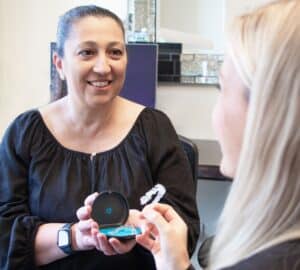
| Removable | A retainer plate, taken in and out |
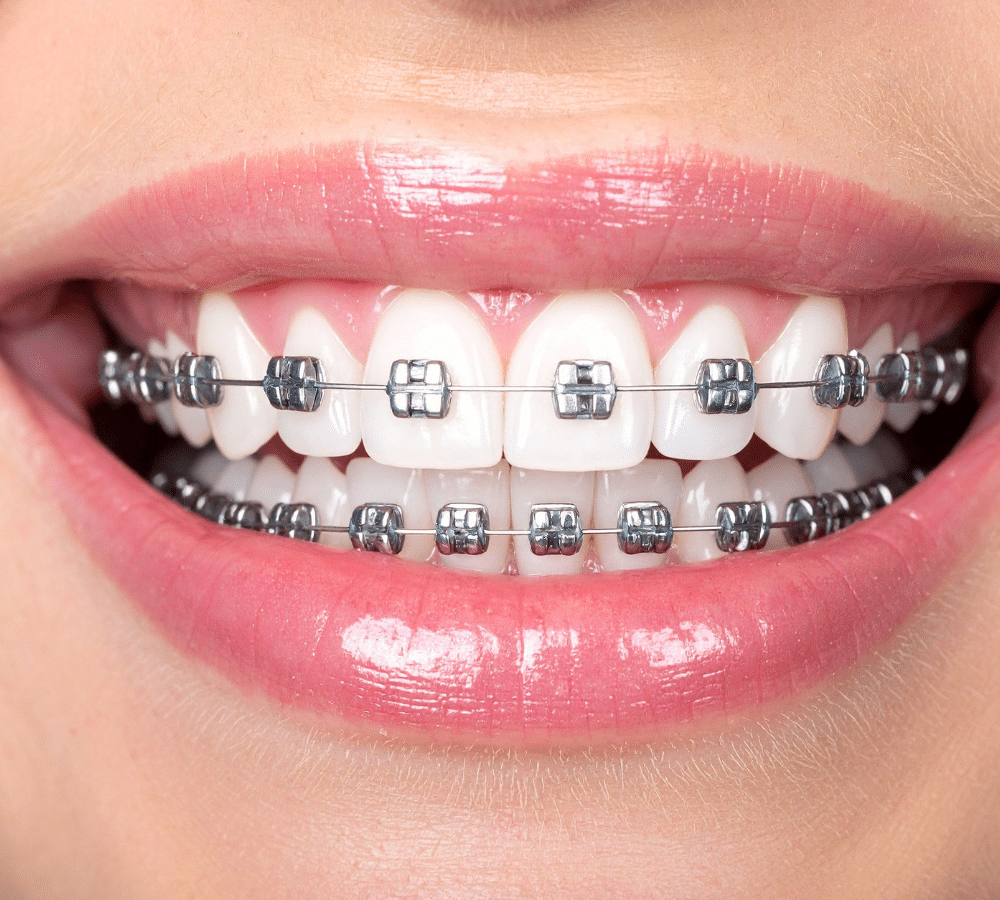
| Fixed | A wire bonded behind the upper or lower front teeth, or both |
The two are often used together, and each has trade-offs worth knowing.
Removable retainers are easy to clean around, but they only work while they are in. They also get lost, left in napkins, and chewed by dogs — which is why it is worth asking what a replacement costs. The wear discipline is the same as for aligners: How to protect your aligners and your smile.
Fixed retainers work whether you remember them or not, which is their great advantage. But they make cleaning between those teeth harder, they can debond without you noticing, and a partially debonded wire can actually move teeth in unintended directions. Have them checked at every dental visit — see General Dentistry. Cleaning around a bonded wire takes superfloss or an interdental brush rather than an ordinary flossing stroke: is flossing really that important?, what is the ideal daily routine for oral hygiene? and which toothbrushes do dentists recommend? Calculus builds up behind lower bonded wires faster than anywhere else in the mouth, and when it does, when do you need deeper cleaning? describes what is then required.
One general brushing point from the ADA's orthodontic guidance, which applies whether or not you have a bonded wire: after brushing, spit out the excess toothpaste but do not rinse your mouth with water. The reason given is that this allows the fluoride paste to sit on the teeth for longer, increasing protection. It is a small change and most people do the opposite by habit.
How long to wear them
Initially: wear removable retainers full-time, day and night, for a set period — typically three to six months, depending on whether a wire is also bonded behind the teeth.
After that: progress to wearing them at night only — and continue indefinitely.
Fixed bonded wires should also be kept in place indefinitely.
A note on where those figures come from. The three-to-six-month full-time period and the switch to nights is this practice's own protocol. Retention regimes vary between clinicians, and there is no independently published Australian consumer standard for retainer wear among the reference material behind this page. Your own orthodontist's written instructions for your case take precedence over any general figure, including this one. If you no longer have them, ask for them again rather than working from memory.
There is no age at which teeth stop moving, so there is no point at which retention safely stops. Nightly wear is a small ongoing habit that protects a substantial investment — see What is the cost of braces? for the size of that investment, and understanding your treatment for what should have been set out in writing at the start.
If you grind your teeth at night, say so: a retainer and a nightguard are different appliances with different jobs, and the plan needs to account for both. See TMD and Teeth Grinding, Night-time tooth grinding and clenching, what is bruxism and how is it managed? and how can a night guard be used to treat TMD? A grinding habit will also wear through a thin retainer faster than normal use does.
Practical points
- If a retainer suddenly feels tight, you have missed too many nights and the teeth have started to move. Go back to wearing it more often; if it will not seat at all, contact your orthodontist rather than forcing it — Contact Us
- Keep it in its case — not in a napkin, a pocket or a bag
- Clean it daily, cold water and a soft brush. Never boiling water, which distorts the plastic, and never a dishwasher
- Have fixed retainers checked at every dental visit for debonding
- Know what a replacement costs, and get one made before the old one becomes unusable — see the Price Guide
- Tell any new dentist that you have a bonded retainer, so it is monitored
If your teeth have already moved, do not buy a kit
This is where the real risk sits, and it is worth being blunt about it. Relapse is common and visible, and there is an entire online industry selling aligners direct to the public to fix exactly that.
The Australian Dental Association's position is unambiguous: the ADA do not recommend Australians have DIY orthodontic treatment. Its stated reasoning is that there are many risks to this treatment — they can lead to permanent damage to your teeth, gums, and jaw joints, and that the ADA recommends that you have in-person treatment with a dentist or orthodontist which includes a thorough assessment before starting treatment and ongoing supervision (ADA, Teeth straightening and braces).
The relevance to retention is direct. A relapsed bite is precisely the situation in which a mail-order kit is most tempting, and also the one in which an assessment matters most — because the teeth moved for a reason, and the reason has not gone anywhere. If your retainer no longer fits, the sensible and usually cheaper fix is a new retainer prescribed after an examination, not a treatment course bought without one. The ADA also notes that the Australian Society of Orthodontists maintains a search tool for finding a specialist orthodontist.
The bottom line
Following this advice after orthodontic treatment gives you the best chance of keeping your teeth straight long term. Skipping it does not undo the treatment overnight, but it makes gradual relapse very likely — and retreatment costs considerably more than a retainer. Where relapse has already happened, a short course of aligners is often enough, prescribed and supervised: see Conventional braces vs lingual braces vs Invisalign and how to get straight teeth without braces? Or Invisalign
Common questions
I stopped wearing my retainer years ago and the teeth have moved. Can I just start wearing it again?
Usually not, and forcing it is the wrong move. A retainer is built to hold teeth exactly where they were on the day it was fitted. Once they have drifted, the old plate no longer matches the arch — so it either will not seat at all, or it seats on some teeth and not others. A retainer that seats on only some teeth is applying force, not holding a position, and that is how an old retainer makes things worse instead of better.
The honest sequence is an examination first, then a decision. If the drift is small, a new retainer made to the current position may be all you want: it stops further movement, even though it does not undo what has already happened. If you want the teeth back where they were, that is retreatment, not retention — usually a short supervised course of aligners or braces, followed by a fresh retainer. Conventional braces vs lingual braces vs Invisalign compares the routes.
Where the Australian Dental Association is unambiguous is about where not to take this problem. Its position is that it does not recommend Australians have DIY orthodontic treatment, because there are many risks — they “can lead to permanent damage to your teeth, gums, and jaw joints” (ADA, Teeth straightening and braces). A relapsed bite is precisely what direct-to-consumer aligners are marketed into, and precisely the case where an in-person assessment matters most.
What does a replacement retainer cost, and will my health fund pay for it?
Ask for the figure in writing before anything is made, because you cannot look it up. Australia has no national dental fee schedule. A submission to the Commonwealth Parliament's inquiry into private health insurance and dental fees puts the consequence for patients plainly: “There are no consumer guidelines to ascertain the reasonableness of dental fees charged.” Prices differ between practices and there is no published benchmark to judge one against. The Price Guide is the starting point here, and a written quote before treatment is something you are entitled to ask for at any practice.
On the fund side, only your fund can tell you what it will pay — the practice cannot answer it for you, and a verbal estimate at reception is not an answer. Ask for the item numbers to appear on the written quote, then put those numbers to your fund before the appointment rather than after it.
One point on the direction of travel: the ADA's own fee survey found fees rising across every service category, with “the largest increase in Orthodontics (6.9%)”. So a retainer replaced promptly is likely to be a smaller number than one replaced two years later — quite apart from the fact that the later case may need the teeth moved back first, which is a different order of cost entirely.
Do I have to go back to an orthodontist for retention, or can my regular dentist look after it?
Either can, and it is useful to know why. Orthodontics is one of the thirteen dental specialties recognised by the Dental Board of Australia. The ADA describes it as “a specialty field in dentistry” and, in the same guidance, notes that “many general dentists also perform orthodontic treatment”. So a general dentist checking a bonded wire at a routine visit is entirely normal and does not mean anything has been downgraded.
What matters is that somebody is actually checking. A bonded retainer is the one appliance in the mouth that nobody looks at, because it causes no trouble at all until it does. Tell any new dentist you have one, and ask for it to be included in the examination rather than assuming it was.
The point to go back to the clinician who did the original treatment — or to a specialist orthodontist — is when a new retainer has to be made, or when the bite itself has changed rather than just a tooth or two. Specialist registration is a matter of public record and you can check it yourself on the AHPRA register; the ADA also notes that the Australian Society of Orthodontists maintains a search tool for finding one.
My bonded wire has come away from one tooth but nothing hurts. Does that need attention now?
Yes — and the absence of pain is exactly why people leave it for months. A wire bonded across several teeth but attached at only some of them is no longer holding a position; it is a spring. Teeth can move in directions nobody intended, and because the wire is still visibly there, the assumption at home is that retention is still working. This is the one retainer problem that quietly gets worse rather than simply stopping.
You will usually notice it as a sharp edge on the tongue, a tooth that suddenly feels different when you bite, or floss catching where it never used to. Ring and describe it rather than waiting for the next scheduled check-up — Contact Us.
In the meantime: do not bend the wire back into place and do not pull it off. If a loose end is cutting your tongue, orthodontic wax over it is a reasonable holding measure until it can be looked at properly.
Is there any independent evidence on how long a retainer actually has to be worn?
Not in the reference material behind this page, and that is worth saying plainly rather than implying more certainty than exists. The ADA's consumer guidance on teeth straightening covers braces, clear aligners, direct-to-consumer treatment and cleaning technique — it does not set a retention regime, and we cannot point to an Australian consumer-facing standard that does. The three-to-six months full time, then nights indefinitely set out above is this practice's protocol, and retention regimes differ legitimately between clinicians and between individual cases.
Two things follow. First, your own orthodontist's written instructions for your case outrank any general figure, including the one on this page. Ask for them again if you have lost them; a retention instruction is part of your record, not something you are expected to remember from a conversation years ago. See understanding your treatment for what should have been set out in writing when the braces came off.
Second, the thing genuinely not in dispute is the direction of travel. Teeth move throughout life, in people who never had orthodontic treatment as well as in those who did. That is why no clinician is going to give you a date after which retention stops mattering — the process the retainer is holding against does not have one.
Related reading
- How long does orthodontic treatment take?
- How long does my child need to wear braces?
- When should I take my child to see an orthodontist?
- How do I know which orthodontic treatment is best for me?
- All your conventional braces questions answered
- Orthodontic treatment: general dentist vs specialist orthodontist?
- Specialist Orthodontists
Practical details
Orthodontics is a recognised dental specialty. Specialist registration can be verified on the AHPRA register, or by calling 1300 419 495; the clinicians are listed on Our Team.
Smile Solutions, Level 1, 220 Collins Street, Manchester Unity Building, Melbourne VIC 3000 — getting here. Phone 13 13 96, or theteam@smilesolutions.com.au. Monday–Friday 8.00am–6.00pm, Saturday 8.30am–1.30pm, Sunday by appointment.
Published 16 May 2014, by Dr Andrea Phatouros. General information only; it does not replace advice from your treating practitioner. Outcomes vary between individuals. Material attributed to the Australian Dental Association above is quoted from its consumer guidance and should be checked against the current version.
Smile Solutions trades under ABN 28 193 514 103.
Images on This Page
-
https://www.facebook.com/tr?id=800557773428361&ev=PageView&noscript=1
(no alt text)
-
https://www.smilesolutions.com.au/wp-content/uploads/2025/10/calendar_month.svg
(no alt text)
-
https://www.smilesolutions.com.au/wp-content/themes/arcadian-wordpress-theme/assets/images/smile_solutions_logo_white.png
Smile Solutions Logo
-
https://www.smilesolutions.com.au/wp-content/themes/arcadian-wordpress-theme/assets/images/smile_solutions_logo_purple.png
Smile Solutions Logo
-
https://www.smilesolutions.com.au/wp-content/uploads/2016/05/Andrea-150x150.jpg
Dr Andrea Phatouros
-
https://www.smilesolutions.com.au/wp-content/uploads/2025/09/Smile-Solutions-Braces.png
Traditional braces Smile Solutions Specialist Orthodontist
-
https://www.smilesolutions.com.au/wp-content/uploads/2016/05/Andrea-2-300x270.jpg
Andrea
-
https://www.smilesolutions.com.au/wp-content/uploads/2025/09/Root-Canal-2-300x217.jpg
Root Canal
-
https://www.smilesolutions.com.au/wp-content/uploads/2023/11/SS-Tooth-1-1-150x150.png
Smile Solutions
-
https://www.smilesolutions.com.au/wp-content/uploads/2025/09/Wisdom-Teeth-Smile-Solutions-300x300.png
Smile Solutions Dentist Melbourne
-
https://www.smilesolutions.com.au/wp-content/uploads/2025/11/Kia-150x150.jpg
Dr Kia Pajouhesh
-
https://www.smilesolutions.com.au/wp-content/themes/arcadian-wordpress-theme/assets/images/family_owned_bussiness.png
Family Owned Business
-
https://www.smilesolutions.com.au/wp-content/themes/arcadian-wordpress-theme/assets/icons/icon--phone.svg
Smile Solutions Contact
-
https://www.facebook.com/tr? id=800557773428361&ev=PageView&noscript=1
(no alt text)