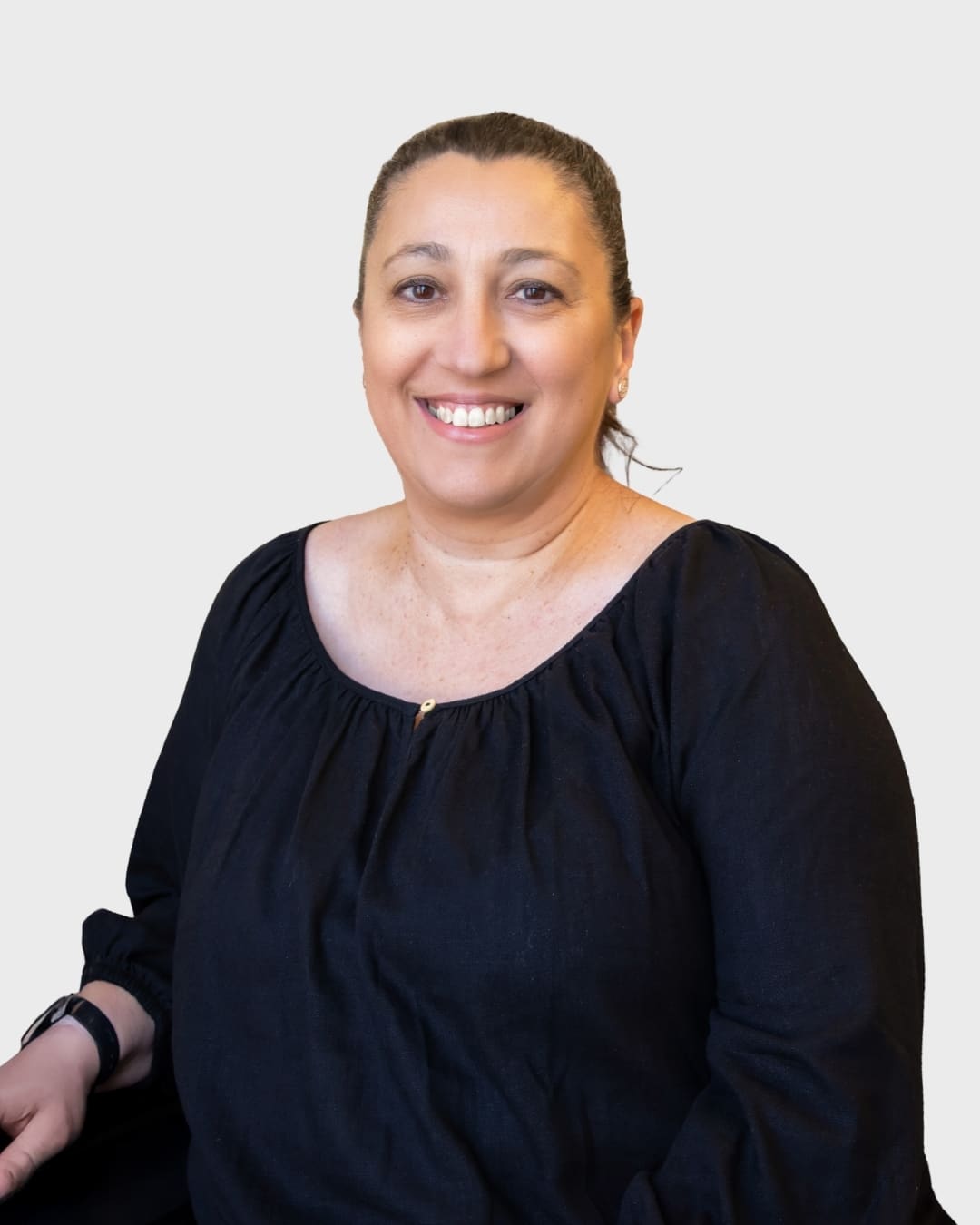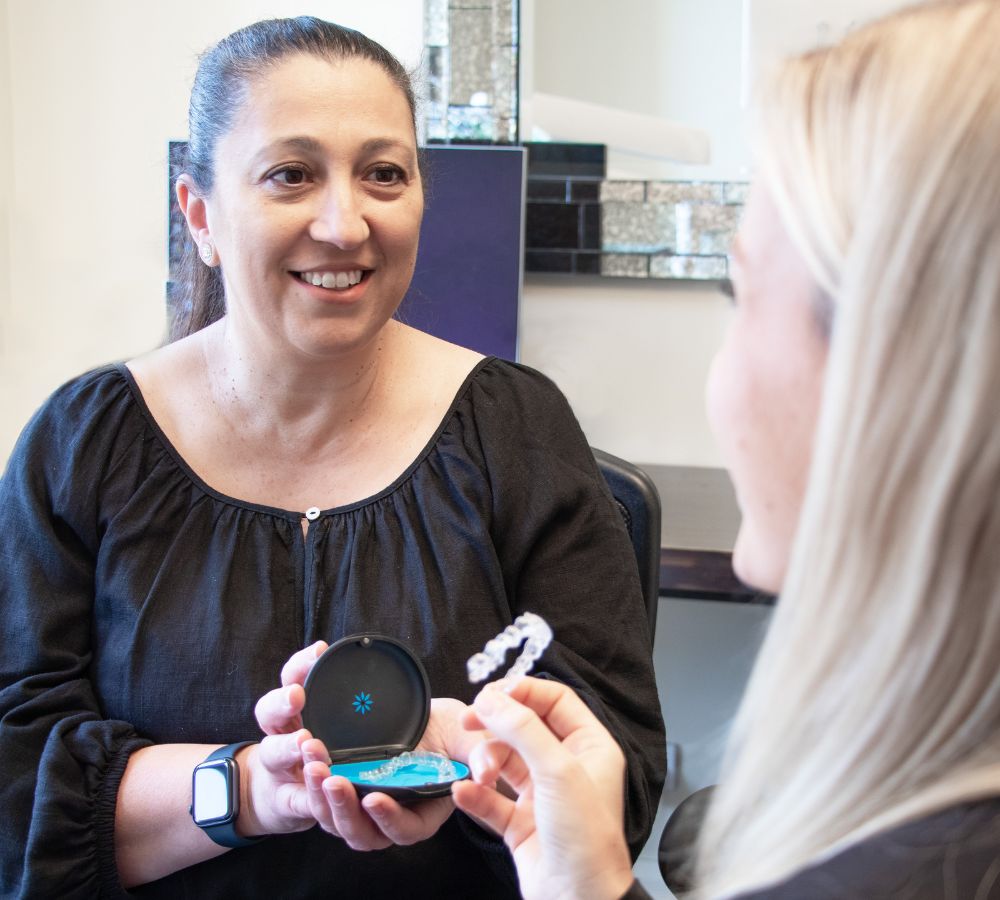
Dr Andrea Phatouros, Specialist Orthodontist
Role: Specialist Orthodontist, Smile Solutions
Qualifications: BDSc (WA), MDSc Orth (WA), FRACDS
Registration: DEN0001008158 — Registered Dentist, Specialist, with Specialist Registration in Orthodontics
Specialist registration can be verified on the AHPRA register. The specialty page is Specialist Orthodontists; the other specialists here are listed on Dentists and Registered Specialists and under Specialist Care.
Background
Dr Phatouros completed her Bachelor of Dental Science in 1991 at the University of Western Australia, where she then worked in private dental practice and subsequently became responsible for the first-year dental program for undergraduate dental students.
In 1994 she became a Fellow of the Royal Australasian College of Dental Surgeons.
In 2005 she completed her specialist training in Orthodontics at the University of Western Australia, where she was awarded the Postgraduate Clinical Award for Excellence in Clinical Presentation.
She continued working in specialist private practice in Perth, where she also continued teaching orthodontics for both the undergraduate dental program and the postgraduate orthodontic program.
She has written two of the practice's orthodontic articles:
- Orthodontic treatment: general dentist vs specialist orthodontist?
- Will my teeth need retainers after I've had braces?
What "specialist orthodontist" means on the register
Orthodontics is one of a closed and published list of dental specialties, and the word "specialist" is a protected title rather than a description.
The Dental Board of Australia states that "there are 13 dental specialties in Australia which are approved by the Australian Health Workforce Ministerial Council": dento-maxillofacial radiology, endodontics, forensic odontology, oral and maxillofacial surgery, oral medicine, oral and maxillofacial pathology, oral surgery, orthodontics, paediatric dentistry, periodontics, prosthodontics, public health dentistry (community dentistry), and special needs dentistry (Dental Board of Australia, Specialist Registration).
The Board's requirements for specialist registration are that an applicant has "completed a minimum of two years general dental practice (this requirement may be achieved by experience outside Australia, subject to assessment and approval by the Board)" and has "met all other requirements for general registration as a dentist". The Board is explicit that "all dentists who wish to apply for specialist registration must have general registration and be on the Register of practitioners under the division of dentists" (Dental Board of Australia, FAQ: Specialist registration).
You do not have to take any of this on trust. Ahpra "publishes an online register of all dental practitioners that provides the profession and the public with up-to-date information about a dental practitioner's registration status", and that register "also includes details of the specialty or specialties for dentists who hold specialist registration" (Dental Board of Australia, Specialist Registration). Looking up any practitioner whose page you are reading — here or anywhere — takes about a minute, and it is the only authoritative answer.
The list itself has been revised. The Board announced in September 2017 that "a revised list of recognised dental specialties, related specialist titles, and definitions has been published", taking effect from 1 October 2017, reflecting "minor technical changes to the specialities of oral medicine, oral pathology and forensic odontology" that "align the specialist titles with international nomenclature" (Dental Board of Australia, Revised List of recognised dental specialties).
What an orthodontist does
Orthodontics is one of the recognised dental specialties in Australia. It concerns the diagnosis, prevention and treatment of irregularities of the teeth and jaws — how teeth are positioned, how the bite meets, and how the jaws relate to one another. The general term for that irregularity is malocclusion: see What is malocclusion of the teeth? and Treatment of malocclusion.
The Australian Dental Association describes the field as "a specialty field in dentistry that involves the diagnosis, prevention, and correction of crooked teeth, jaws, and unfavourable bite patterns", and notes — usefully, because it is often forgotten — that "many general dentists also perform orthodontic treatment" (ADA, Teeth Straightening and Braces).
The ADA lists what orthodontics treats as "crooked or crowded teeth", "incorrect biting patterns", "severe misalignment of teeth and/or jaws" and "past habits such as thumb sucking that have affected the position of the tooth and development of the jaw bones". And it makes the point that the purpose is not only appearance: "orthodontic treatment is not just about straight teeth. It can correct a bad biting pattern, help with sleep apnoea, and prevent uneven wear of the teeth."
Treatment covers:
- Fixed braces — metal and ceramic
- Lingual braces, fitted behind the teeth
- Clear aligners, including Invisalign
- Functional and growth-modification appliances in children — see Children's Braces and Invisalign
- Retainers, fixed and removable
- Orthodontic preparation for jaw surgery, in significant skeletal cases
- Alignment before restorative or cosmetic work
On the appliances themselves, the ADA notes that "traditional metal braces have been used for about a hundred years and are still commonly used to straighten teeth", that ceramic braces are "the same as metal braces but made from white or tooth-coloured ceramic material" and "are not completely invisible but are less obvious", and that lingual braces are "stuck to the inside surface of the teeth making them practically invisible". Of aligners it says, plainly, "although the aligners are clear plastic, they are not invisible", and that "your dentist or orthodontist will advise you if clear aligners are suitable for your individual situation."
The options are compared in Benefits of conventional braces vs lingual braces vs Invisalign and How do I know which orthodontic treatment is best for me?, with the practicalities in All your conventional braces questions answered and What are the most common complaints associated with conventional braces?
The distinction that decides what is achievable
Braces and aligners move teeth. They do not move jaws.
A tooth-position problem can be corrected orthodontically at any age. A significant mismatch in jaw size or position is a different problem: in a growing child it can often be guided, using the growth that is still available; in an adult who has finished growing, correcting it usually requires surgery, and orthodontics alone can only camouflage it. See What is orthognathic surgery? and, for what recovery is like, What can I eat and drink following jaw surgery?
That is why the Australian Association of Orthodontists recommends an assessment between the ages of eight and ten, even where the teeth look straight. The point of that appointment is usually not to start treatment — most children need only monitoring — but to establish whether a window exists that will later close. The ADA makes the same argument in its own terms: "all the adult teeth do not have to be present in the mouth for an assessment to be done", and "an examination at this age can allow for early intervention treatment should it be needed" (ADA, Teeth Straightening and Braces). See When should I take my child to see an orthodontist?, How long does my child need to wear braces? and Children's Dentistry.
What specialist training adds
A specialist orthodontist has completed a three-year full-time postgraduate qualification after a dental degree, restricted to this field. General dentists may also provide orthodontic treatment, and many do so competently; the difference is in the depth of training in diagnosis and treatment planning. See Why would I need to see a dental specialist? and Specialist Orthodontist vs General Dentist: Which Is Best for Invisalign?
Where it matters most:
- Diagnosis — deciding what actually needs to move, in what order, and whether space must be created
- Skeletal cases, and the growth timing that governs them
- Extraction decisions, which are difficult to reverse
- Complex movements — rotations, impacted teeth, significant vertical change
- Cases where aligners are not the right tool, and saying so. On what aligners do well, see How to get straight teeth without braces? Or Invisalign, What are the hygiene benefits of Invisalign?, How to protect your aligners and your smile and Why should I choose a Blue Diamond Invisalign provider?
How long any of it takes is set out in How long does it take to have orthodontic treatment?
Whoever provides the treatment, one boundary applies to all of them. The Dental Board's Scope of practice registration standard, in effect since 1 July 2020, "requires dental practitioners to practise within the scope of their education, training, and competence at all times" (Dental Board of Australia, FAQ: Specialist registration).
Do-it-yourself aligners: the profession's position
This needs saying on an orthodontist's page, because the alternative is marketed hard and the risk is not obvious.
The Australian Dental Association describes direct-to-consumer orthodontics as treatment "provided directly to you without having to visit a dentist or orthodontist", and its position is unambiguous: "the Australian Dental Association (ADA) do not recommend Australians have DIY orthodontic treatment. There are many risks to this treatment. They can lead to permanent damage to your teeth, gums, and jaw joints." What it recommends instead is "in-person treatment with a dentist or orthodontist which includes a thorough assessment before starting treatment and ongoing supervision" (ADA, Teeth Straightening and Braces).
The two words doing the work there are assessment and supervision. Moving teeth is mechanically straightforward; the hard parts are knowing which teeth should not be moved, recognising a root resorbing or a periodontal problem worsening, and stopping. None of those are visible in a home impression kit.
Caring for your teeth while they are moving
Orthodontic appliances make cleaning harder at exactly the moment it matters most, and permanent white marks on the enamel are the avoidable consequence.
The ADA's advice is specific: "for people wearing braces, brushing after every meal is recommended as food can get stuck around the brackets", and "both manual and electric toothbrushes can be used for cleaning around braces". On technique, it says to hold the brush "at a 45-degree angle to the gums" at the gum line, then to turn it to clean the tops and undersides of the brackets — and, at the end, "spit out the excess toothpaste but do not rinse your mouth with water. This allows the fluoride paste to sit on the teeth for longer, increasing protection."
Between the teeth, the ADA notes that "cleaning between your teeth with string floss can be tricky while wearing braces" and that "interdental brushes can help to clean between the teeth as well as between the orthodontic brackets", with floss threaders as the other option.
For aligners, there is one trap worth knowing: trays "should be worn at all times other than when eating and drinking liquids other than water", because "drinking liquids such as fruit juice or soft drink while wearing clear aligners can trap the liquids against the teeth, which can cause damage to the teeth if it happens frequently". The trays "can be cleaned with an antibacterial liquid soap and a spare toothbrush", rinsed with warm water.
Retention is permanent
Whatever moved the teeth, retention is lifelong. Teeth continue to drift with age, in people who never had braces as much as in those who did — see Why do teeth shift?
Expect nightly retainer wear indefinitely, or a fixed wire bonded behind the front teeth. Anyone who had braces as a teenager and now has crowded lower front teeth is the evidence for this. Ask what retention is included in the quoted fee and what replacements cost.
What it costs, and the consultation
Published starting points are in the Price Guide, with the detail in What is the cost of braces? and Invisalign Cost in Melbourne: A Complete Breakdown by Treatment Type.
The practice offers a complimentary orthodontic consultation. Confirm the current terms when you book — what the appointment includes, whether records such as scans or radiographs are part of it or charged separately, and whether any deposit applies.
Common questions
My child's teeth look perfectly straight. Why would anyone assess them at eight?
Because the assessment is about the jaws and the timing, not about how the teeth look today — and because the thing being checked for is a window that closes.
Braces and aligners move teeth; they do not move jaws. In a child who is still growing, a mismatch in jaw size or position can often be guided using the growth that remains. In an adult who has finished growing, the same problem usually needs surgery, or has to be camouflaged rather than corrected. So the question at eight is not "do these teeth need straightening" but "is there anything here that will be much harder to fix in six years". Most children are simply monitored, and that is a normal and successful outcome of the appointment.
On the age itself, two figures are in circulation and the difference is worth knowing rather than glossing over. The Australian Dental Association, citing the Australian Society of Orthodontists, states that "children have an orthodontic assessment between the ages of 7 – 10". This page says eight to ten, attributing it to the Australian Association of Orthodontists. The bodies named are not the same, and the ranges differ by a year at the front. We cannot reconcile them from an independent source, so we are showing you both rather than picking one.
Practically, the disagreement does not change what you should do, because the two ranges overlap almost entirely: somewhere around seven to ten, once the first adult teeth are through. The ADA's own justification is the useful sentence — "all the adult teeth do not have to be present in the mouth for an assessment to be done", and "an examination at this age can allow for early intervention treatment should it be needed". If your child has a crossbite, a markedly protruding upper front tooth, a jaw that shifts to one side when closing, or a thumb-sucking habit still going strong, raise it at the next check-up rather than waiting for a birthday.
I am in my fifties. Is it too late, and what should be checked before I start?
No, and the ADA says so in a single line: orthodontic treatment "can be performed on children, adolescents, and adults". Teeth move by the same biological process at fifty as at fifteen; what changes is the surrounding context, and that is what an adult assessment is for.
Three things are worth asking to have assessed before anything is planned.
Gum health first. Teeth are moved through bone, and bone lost to periodontal disease does not return. The peer-reviewed literature describes periodontitis as "a highly prevalent but largely hidden chronic inflammatory disease", with severe periodontitis affecting 10–15% of adults in most populations studied and moderate periodontitis 40–60%. "Largely hidden" is the operative phrase — you are unlikely to know. Ask for a periodontal assessment as part of the orthodontic one, and see Specialist Periodontists.
Then the existing dental work. Crowns, bridges, implants, root-filled teeth and heavily restored teeth all behave differently from untouched ones when force is applied, and an implant does not move at all. The plan has to be built around what is actually in your mouth.
Then what is realistically achievable. An adult jaw relationship is fixed unless surgery is part of the plan, so it is worth asking directly whether what is being proposed corrects the bite or camouflages it — and what the difference will mean in ten years. See What is orthognathic surgery?
One thing that does not change with age: retention is lifelong, and adults drift as readily as anyone else.
Do I need a referral, and could my own dentist do this instead?
A referral is useful rather than compulsory, and your general dentist may well be able to do the treatment. The ADA is explicit on the second half: orthodontics is "a specialty field in dentistry", and "many general dentists also perform orthodontic treatment". Neither of those is a criticism of the other.
What a referral carries is the part worth having: the history, existing radiographs, what your dentist has been watching and for how long, and the specific question they want answered. Without it the first appointment starts from nothing, and you may repeat an exposure that did not need repeating.
The honest way to choose is by the complexity of the case rather than by title. Specialist training is three full-time postgraduate years restricted to this field, and what it buys is depth in diagnosis and planning — which matters most in skeletal cases, extraction decisions, impacted teeth, complex rotations, and in recognising the cases where aligners are the wrong tool. A straightforward alignment in a healthy adult mouth is well within general practice. Ask what the alternatives to the proposed plan are, and what would make the case complex; the quality of that answer tells you more than the qualification does.
If you want to look for a registered specialist independently, the ADA notes that the Australian Society of Orthodontists maintains a search tool, and specialist registration itself is free to check on the AHPRA register.
The consultation is advertised as complimentary. What does that actually include, and what will the whole thing cost?
Ask what is in it before you attend, because "complimentary consultation" describes an appointment, not a treatment plan. The practice does offer a complimentary orthodontic consultation, and the terms to confirm when you book are set out above: what the appointment includes, whether records such as scans or radiographs form part of it or are charged separately, and whether any deposit applies. Those are the three places a "free" appointment usually acquires a cost, and all three are reasonable to ask about on the phone.
On the full cost, ask for it as a written, itemised quote covering the whole course rather than a monthly figure. Four things belong in it: the active treatment; the records; the retention — retainers and their replacement, which are the most commonly omitted line and the one that lasts longest; and what happens if treatment runs longer than planned or needs refinement at the end.
There is no independent benchmark to check any of it against. Australia has no national dental fee schedule, and a submission to the Commonwealth Parliament on private health insurance and dental fees states the consequence plainly: "there are no consumer guidelines to ascertain the reasonableness of dental fees charged." The ADA's fee survey also found orthodontics rising faster than any other category, with "the largest increase in Orthodontics (6.9%)" across the period it measured. So the quote in your hand is the document that matters — keep it, and put its item numbers to your health fund before you start rather than after.
Published starting points are in the Price Guide, with more detail in What is the cost of braces?
Practical details
Orthodontics is a recognised dental specialty. Specialist registration can be verified on the AHPRA register, or by calling 1300 419 495. The full clinical team is on Our Team, and bookings through Contact Us.
Smile Solutions, Level 1, 220 Collins Street, Manchester Unity Building, Melbourne VIC 3000. Phone 13 13 96, or theteam@smilesolutions.com.au. Monday–Friday 8.00am–6.00pm, Saturday 8.30am–1.30pm, Sunday by appointment. Location and directions.
This page records qualifications and career history as published by the practice. General information only; it does not replace advice from your treating practitioner. Outcomes vary between individuals, and all treatment carries risks. Recommendations quoted from the Australian Dental Association and the Dental Board of Australia are those publishers'.
Smile Solutions trades under ABN 28 193 514 103.
Images on This Page
-
https://www.facebook.com/tr?id=800557773428361&ev=PageView&noscript=1
(no alt text)
-
https://www.smilesolutions.com.au/wp-content/uploads/2025/10/calendar_month.svg
(no alt text)
-
https://www.smilesolutions.com.au/wp-content/themes/arcadian-wordpress-theme/assets/images/smile_solutions_logo_white.png
Smile Solutions Logo
-
https://www.smilesolutions.com.au/wp-content/themes/arcadian-wordpress-theme/assets/images/smile_solutions_logo_purple.png
Smile Solutions Logo
-
https://www.smilesolutions.com.au/wp-content/uploads/2016/05/Andrea.jpg
Dr Andrea Phatouros
-
https://www.smilesolutions.com.au/wp-content/uploads/2016/05/Andrea-2.jpg
Andrea
-
https://www.smilesolutions.com.au/wp-content/uploads/2016/05/Andrea-2-300x270.jpg
Andrea
-
https://www.smilesolutions.com.au/wp-content/uploads/2016/05/Andrea-150x150.jpg
Dr Andrea Phatouros
-
https://www.smilesolutions.com.au/wp-content/uploads/2025/09/Smile-Solutions-Braces-300x270.png
Traditional braces Smile Solutions Specialist Orthodontist
-
https://www.smilesolutions.com.au/wp-content/themes/arcadian-wordpress-theme/assets/images/family_owned_bussiness.png
Family Owned Business
-
https://www.smilesolutions.com.au/wp-content/themes/arcadian-wordpress-theme/assets/icons/icon--phone.svg
Smile Solutions Contact
-
https://www.facebook.com/tr? id=800557773428361&ev=PageView&noscript=1
(no alt text)
-
https://bat.bing.com/action/0?ti=25148060&tm=gtm002&Ver=2&mid=59bb00ff-b420-4f17-98d2-815b297be1f6&bo=1&sid=7a1a2660ab2811f197f99b133d54121e&vid=7a1a9ea0ab2811f1b6e7c305b8ddcb73&vids=1&msclkid=N&pi=918639831&lg=en-US&sw=800&sh=600&sc=24&nwd=1&tl=Dr%20Andrea%20Phatouros%20%7C%20Specialist%20Orthodontist%20%7C%20Smile%20Solutions&p=https%3A%2F%2Fwww.smilesolutions.com.au%2Four-team%2Fdr-andrea-phatouros%2F&r=&evt=pageLoad&sv=2&cdb=AQAQ&rn=284505
(no alt text)