What is malocclusion?
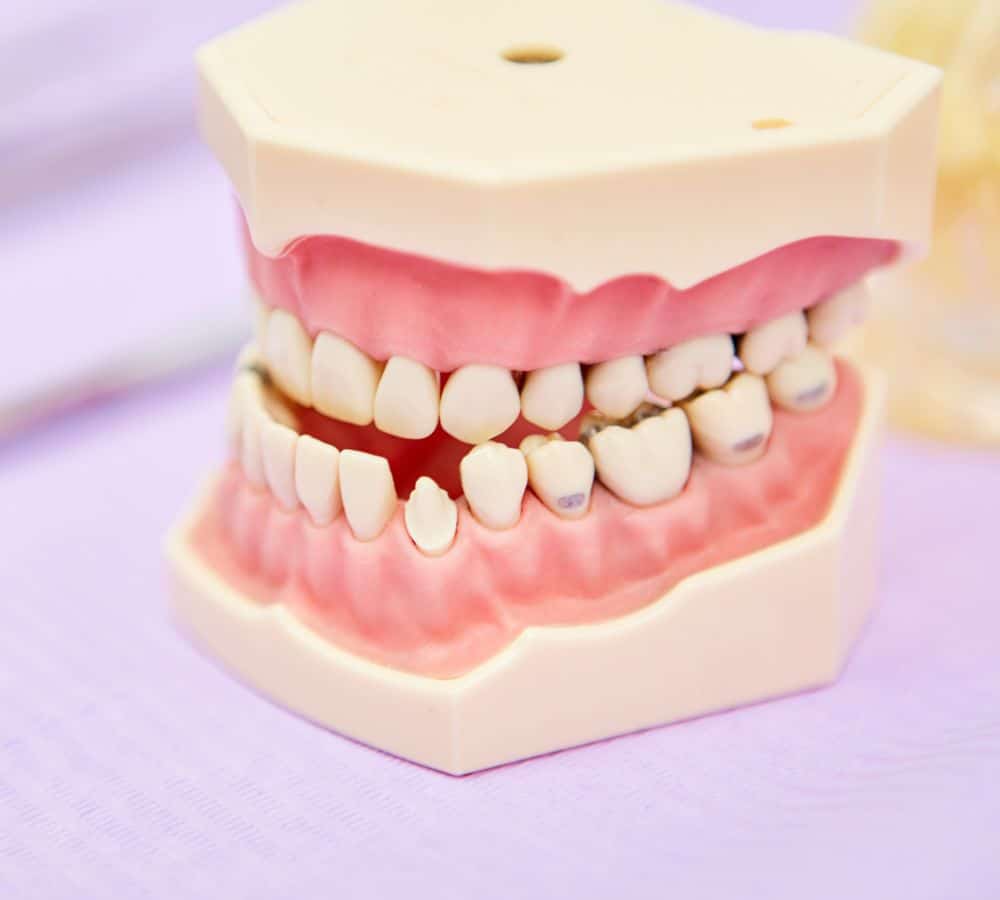
In dentistry, occlusion refers to the position of the teeth when the jaws are closed. In a healthy occlusion the top and bottom teeth line up with one another. When they do not line up well as they bite together, that is a malocclusion — a “bad bite”.
The practical distinction to hold on to: some malocclusions cause functional problems, some cause only aesthetic ones, and many mild cases need no treatment at all. Which category yours falls into determines whether treatment is worth doing. Treatment of malocclusion is the longer companion piece, which sets out the tooth-related and skeletal types and what each one needs.
Typical causes
- Crooked teeth
- Crowding — too many teeth for the space available, sometimes including extra teeth
- Problems with the jaw bone, the joint, or the surrounding musculature — see what causes TMJ pain and how is it treated? and TMD and teeth grinding
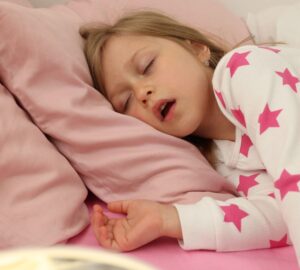
Underlying most of these is a mismatch between tooth size and jaw size, which is largely inherited. Habits contribute too — prolonged thumb sucking or dummy use, early loss of baby teeth allowing neighbours to drift, and prolonged mouth breathing. Why do teeth shift? covers the drift; mouth breathing: the silent habit that’s changing your face and your health and orofacial myofunctional therapy cover the breathing pattern and what is done about it. Order and appearance of baby teeth is useful background if the concern is a child.
The Australian Dental Association's own consumer guidance lists much the same set. It gives what orthodontics treats as “crooked or crowded teeth”, “incorrect biting patterns”, “severe misalignment of teeth and/or jaws”, and “past habits such as thumb sucking that have affected the position of the tooth and development of the jaw bones” (Teeth straightening and braces, teeth.org.au).
A gap left by an adult tooth that was never replaced produces the same effect from the other direction: what are the replacement options for missing teeth?.
The two kinds of concern
Functional — wear of the teeth, or of fillings and crowns; jaw pain; headache. See what is the cause of my jaw pain?, what are the most common symptoms of TMD? and night time tooth grinding and clenching. Also difficulty cleaning crowded teeth, which raises decay and gum disease risk — is flossing really that important? matters more, not less, when teeth overlap — and in some cases difficulty chewing or speaking.
Aesthetic — usually crooked teeth, and gum recession where teeth sit outside the bone. Recession does not reverse, and it brings sensitivity with it; bleeding gums and when do you need deeper cleaning? cover the gum side. If appearance is the whole of the concern, how can I change my smile naturally is worth reading before committing to treatment.
There are two further consequences that get less attention than they deserve, and the ADA names both. Straightening teeth, it says, “is not just about straight teeth. It can correct a bad biting pattern, help with sleep apnoea, and prevent uneven wear of the teeth” (teeth.org.au). On the airway side of that, see snoring and sleep apnoea.
The third is injury risk. The ADA's Policy Statement 2.2.5 — Prevention and Management of Oral Injuries records that “children with prominent front teeth may be a higher risk of injury and may benefit from orthodontic assessment and early treatment to reduce this risk”. Where treatment is already under way, the same policy notes that over-the-counter boil-and-bite mouthguards, which it rates poorly in general, “may be appropriate during orthodontic treatment” — because a custom guard made around brackets stops fitting as the teeth move. See sports mouthguards.
Where moderate to severe malocclusion is present, it should be treated with orthodontics — the discipline specialising in the diagnosis, prevention and treatment of this problem. Mild malocclusion with no functional consequence is a legitimate thing to leave alone.
Treatment options
Orthodontists offer several approaches:
- Teeth straightening — by far the most common. How do I know which orthodontic treatment is best for me? and how long does it take to have orthodontic treatment?
- Removal of teeth, to relieve crowding — including, sometimes, wisdom teeth
- Replacing missing teeth — dental bridges, dental implants and bridges, implants, or dentures for replacing missing teeth?
- Muscle relaxation techniques — how can a night guard be used to treat TMD? and what is the best way to treat TMJ?
- Jaw surgery, for significant skeletal discrepancies — jaw surgery, what is orthognathic surgery? and oral and maxillofacial surgeons
One point worth being clear about, because it decides what is achievable: braces and aligners move teeth; they do not move jaws. A tooth-position problem can be corrected orthodontically. A significant jaw-size or jaw-position discrepancy in an adult usually needs surgery, or, in a growing child, appliances that guide growth while growth is still available. That is why an early orthodontic assessment — around ages 8 to 10 — matters: it puts the timing decision in your hands rather than leaving it to chance. See when should I take my child to see an orthodontist?, how long does my child need to wear braces? and children’s braces and Invisalign.
The published Australian recommendation sits at a similar point. The ADA states that “the Australian Society of Orthodontists’ recommend children have an orthodontic assessment between the ages of 7 – 10”, and adds the part parents most often get wrong: “all the adult teeth do not have to be present in the mouth for an assessment to be done” — an examination at that age is what allows early intervention to be considered at all. Waiting for the last baby tooth to fall out can mean waiting past the point where growth could have been used.
And whatever moves teeth, retention is lifelong. Teeth drift throughout life, and without a retainer they will move back — will my teeth need retainers after I’ve had braces?.
A short history
Teeth straightening is nothing new. Ancient remains have been found with metal bands wound around the teeth, and with crude retainers in place — thought to have been intended to prevent the dental arch collapsing in the afterlife.
In the eighteenth century the French dentist Pierre Fauchard pioneered a range of dental instruments, including a U-shaped piece of iron known as a blandeau, used to expand the arch. That method was later combined with removal of the premolar teeth to treat overcrowding — an approach still recognisable today.
Modern orthodontics is generally dated to the mid-nineteenth century, when Edward Angle introduced his classification of malocclusion. Angle’s Class I, II and III system, which describes how the first molars meet, is still in use. Around the same period the wire crib, gum elastics and rubber banding entered treatment, fundamentally resembling braces as we know them.
What is available now
Smile Solutions offers treatment by specialist orthodontists, using:
| Appliance | Notes |
|---|---|
| Traditional metal and wire braces | The widest range of achievable movement, and the longest track record |
| Lingual braces | Fixed braces placed behind the teeth, so they are not visible from the front |
| Clear plastic aligners (Invisalign) | Removable; require 20–22 hours’ wear daily; suit many but not all cases |
| Retainers | Required after any orthodontic treatment, indefinitely |
For the comparison in full, see braces, Invisalign, benefits of conventional braces vs lingual braces vs Invisalign, all your conventional braces questions answered and what are the most common complaints associated with conventional braces?. On aligners specifically: exploring Invisalign, what are the hygiene benefits of Invisalign? and how to protect your aligners and your smile.
Which is appropriate depends on the case rather than on preference alone. A good assessment will tell you where aligners are suitable and where a fixed appliance is the more predictable choice. Who does the assessment matters as well: orthodontic treatment — general dentist vs specialist orthodontist? and specialist orthodontist vs general dentist: which is best for Invisalign?.
One expectation worth setting before you choose, in the ADA's words: “although the aligners are clear plastic, they are not invisible.” Lingual braces are the option it describes as “practically invisible”, being fixed to the inside surface of the teeth.
Keeping the teeth clean while they move
This is where treatment is most often undermined, and it is worth taking seriously, since crowded teeth were already harder to clean before an appliance was added to them.
For fixed braces, the ADA recommends brushing after every meal, because food lodges around the brackets, and notes that manual and electric brushes both work. Its technique instruction is to start at the gum line with the brush at a 45-degree angle to the gums, then turn the brush to clean the top of the brackets and again to clean along the bottom of them. One detail in that sequence is easy to miss and costs nothing: “after brushing, spit out the excess toothpaste but do not rinse your mouth with water. This allows the fluoride paste to sit on the teeth for longer, increasing protection.” See the benefits of fluoride and what is the ideal daily routine for oral hygiene?.
For cleaning between teeth, the ADA acknowledges that string floss can be tricky while wearing braces and points to floss threaders and interdental brushes, the latter of which clean both between the teeth and between the brackets.
For aligners there is one rule that catches people out. The trays “should be worn at all times other than when eating and drinking liquids other than water” — and the reason is specific: “drinking liquids such as fruit juice or soft drink while wearing clear aligners can trap the liquids against the teeth, which can cause damage to the teeth if it happens frequently.” A sugary drink taken through an aligner is held against the enamel rather than washed past it. The aligners themselves can be cleaned with an antibacterial liquid soap and a spare toothbrush, rinsed well with warm water.
A warning the ADA states plainly
On mail-order and direct-to-consumer teeth straightening — treatment supplied “without having to visit a dentist or orthodontist” — the position is unambiguous: “the Australian Dental Association (ADA) do not recommend Australians have DIY orthodontic treatment. There are many risks to this treatment. They can lead to permanent damage to your teeth, gums, and jaw joints.”
What the ADA recommends instead is worth quoting because it identifies what is actually missing from the mail-order model: “in-person treatment with a dentist or orthodontist which includes a thorough assessment before starting treatment and ongoing supervision.” The assessment and the supervision are the product. Sending someone an impression kit supplies neither. The same reasoning applies to treatment compressed into a holiday abroad — see dental tourism: the risks involved.
What it costs
Fees depend on the appliance, the complexity and the length of treatment. See what is the cost of braces?, Invisalign cost in Melbourne: a complete breakdown by treatment type and the price guide.
Two external figures are worth having in mind. The ADA's Dental Fees Survey 2022, which reports fees charged by members in private practice as at 1 July 2022 from 3,819 valid responses, found that across all service categories orthodontics had the largest increase, at 6.9% over the preceding two years, against an average rise of 3.7% across the 122 items surveyed. It is a self-reported member survey rather than a price list, and it says nothing about any individual practice's fees — but it does indicate the direction of travel.
The second is a common and expensive misunderstanding: the Child Dental Benefits Schedule does not cover orthodontics. Services Australia lists the services it will not cover as “orthodontic dental work”, “cosmetic dental work” and “any dental services in a hospital”. Parents who have budgeted around the CDBS cap for braces have budgeted around the wrong scheme. See the Child Dental Benefit Schedule and how does the Child Dental Benefits Schedule operate?
Payment plan options are available. Where a plan is advertised as interest free, that describes the plan term only — a deposit may be required, an establishment fee and ongoing account fees may apply, and charges can apply if the balance is not cleared within the agreed period. The applicable terms depend on the provider and the amount financed, and are set out in writing before you commit — ask what the deposit and the establishment fee are, in dollars, and what the total will be by the end. Payment Plans.
A complimentary orthodontic consultation is offered as a first step. Confirm the current terms when you book — what the appointment includes, whether records such as scans or radiographs are part of it or charged separately, and whether any deposit applies.
Common questions
My bite is off and my jaw hurts. Will straightening my teeth fix the pain?
Probably not, and this is the most important thing on this page to get right, because it is the reason a great deal of unnecessary irreversible treatment gets done.
The National Academies of Sciences, Engineering, and Medicine reviewed the question in 2020 and concluded that ‘occlusion should not be considered a contributing cause for the common TMDs'. It reached that after noting a critical review of 68 years of research which examined 18 human and 10 animal studies of experimental occlusal interferences and ‘did not find evidence… that these interferences resulted in TMDs', and a large study in which the occlusal characteristics that did show a relationship ‘only accounted for 5 percent of the variability in the clinical signs and symptoms of TMDs'. On treatment it is equally direct: ‘treatment of the occlusion for TMDs also has no supporting evidence'.
The Australian position is the same. The RACGP, writing for general practitioners in 2018, states: ‘Malocclusion of the teeth should be noted if present; however, this does not contribute to the manifestation of TMD and orthodontic referral is not recommended for this finding alone.'
That does not mean your jaw pain is imaginary or that nothing helps. It means orthodontics is the wrong instrument for it. The BMJ's 2023 guideline gave its strong recommendations in favour to cognitive behavioural therapy, supervised jaw exercise and stretching, therapist-assisted mobilisation, manual trigger point therapy, supervised postural exercise, and usual care including education and reassurance — and a strong recommendation against irreversible oral splints.
So: treat the jaw problem as a jaw problem. If you also want your teeth straightened, that is a separate decision with its own reasons. What are the most common symptoms of TMD?
The ADA says straightening can help sleep apnoea. Does that mean braces treat it?
No, and the gap between those two sentences is wide enough to be worth setting out. The ADA's consumer line — quoted above — is that straightening ‘can correct a bad biting pattern, help with sleep apnoea, and prevent uneven wear of the teeth'. That is a statement about what orthodontic treatment can contribute to, not a claim that it is a treatment for obstructive sleep apnoea.
For children in particular, the evidence is thin to the point of being absent. The Cochrane review of oral and functional orthopaedic appliances for obstructive sleep apnoea in children searched 686 trials and found one suitable for inclusion, in which 32 children were randomised and 23 finished. Its conclusion: ‘There is insufficient evidence to support or refute the effectiveness of oral appliances and functional orthopaedic appliances for the treatment of obstructive sleep apnoea in children.' It adds that such appliances ‘may be considered in specified cases as an auxiliary in the treatment of children who have craniofacial anomalies which are risk factors for apnoea' — a narrow indication, not a general one. The review also records that ‘The most common treatment for obstructive sleep apnoea syndrome (OSAS) in childhood is adeno-tonsillectomy.'
Practical consequence: if sleep apnoea is suspected, it needs diagnosing and managing as a sleep disorder, by the practitioners who do that — not addressed by starting orthodontic treatment and hoping. If you are already having orthodontic treatment and you or your child snore or stop breathing at night, say so; it belongs in the medical history either way. Snoring and sleep apnoea
My teeth were straight and now the bottom front ones have crowded. Is that my wisdom teeth?
Almost certainly not, and the Australian professional answer is unusually blunt about it. The ADA's own consumer factsheet poses the question and answers it: ‘Sometimes people worry that the wisdom teeth may cause their other teeth to become crooked. There is currently no evidence that supports this theory.'
The Cochrane review on removing asymptomatic impacted wisdom teeth reaches the same place from the trial side. The only randomised study it could include on this question followed 77 analysed adolescents who had already had orthodontic treatment, measuring dimensional change in the dental arch at 66 months — and it was rated at high risk of bias. There is no body of evidence showing that taking wisdom teeth out prevents later crowding.
What does explain it is simpler and is already on this page: teeth drift throughout life, which is why retention after orthodontic treatment is described here as lifelong rather than temporary. If your lower front teeth have crowded since treatment, the question to ask is what happened to your retainer, not what to do about your wisdom teeth.
None of that is an argument against removing a wisdom tooth that has its own problem — the ADA lists infection, decay, pain, cysts and repeated gum infection among genuine reasons. It is an argument against removing a healthy one to protect your front teeth. Wisdom teeth
How do I judge whether the treatment being proposed is worth it?
By separating the two questions the page opens with — is this functional or aesthetic — and then asking what each proposal actually delivers.
Questions that produce useful answers:
- Which specific problem is being treated, and what happens if I do nothing for two years? Mild malocclusion with no functional consequence is a legitimate thing to leave alone, and a clinician who says so is giving you good advice, not a weak sell.
- Is this a tooth-position problem or a jaw problem? As above, appliances move teeth. If the discrepancy is skeletal and you are an adult, be clear about what can and cannot be achieved without surgery.
- Is anything irreversible being proposed — extractions, reshaping enamel between the teeth, adjusting the bite by grinding? Ask what it buys and whether the plan works without it.
- What is the retention plan, and what does it cost annually? Retention is for life. A quote that ends at the day the braces come off is incomplete.
- Who will supervise it, and how often will I be seen? This is the ADA's own stated objection to the mail-order model — ‘a thorough assessment before starting treatment and ongoing supervision'.
And on how the claims themselves should read: AHPRA's advertising guidelines say advertising must not ‘minimise, underplay or under-represent the risk or potential risk associated with a treatment or procedure', nor make ‘claims about providing a superior regulated health service'. A treatment description that contains no risks is not a complete one. A second opinion before irreversible work is normal, and costs far less than the work.
Related reading
- Treatment of malocclusion
- Why do teeth shift?
- Why would I need to see a dental specialist?
- Children’s dentistry
- Understanding your treatment and second opinions and corrective dentistry
Practical details
Orthodontics is a recognised dental specialty. Specialist registration can be verified on the AHPRA register, or by calling 1300 419 495. The practice’s registered specialists are identified as such within the full team.
Smile Solutions, Level 1, 220 Collins Street, Manchester Unity Building, Melbourne VIC 3000 — getting here. Phone 13 13 96, contact us, or theteam@smilesolutions.com.au. Monday–Friday 8.00am–6.00pm, Saturday 8.30am–1.30pm, Sunday by appointment.
Published 7 June 2016. General information only; it does not replace advice from your treating practitioner. Outcomes vary between individuals, and all treatment carries risks. Payment plan terms are set by the credit provider and change; confirm current terms directly before you commit. Third-party material is quoted as attributed to its publisher.
Smile Solutions trades under ABN 28 193 514 103.
Images on This Page
-
https://www.facebook.com/tr?id=800557773428361&ev=PageView&noscript=1
(no alt text)
-
https://www.smilesolutions.com.au/wp-content/uploads/2025/10/calendar_month.svg
(no alt text)
-
https://www.smilesolutions.com.au/wp-content/themes/arcadian-wordpress-theme/assets/images/smile_solutions_logo_white.png
Smile Solutions Logo
-
https://www.smilesolutions.com.au/wp-content/themes/arcadian-wordpress-theme/assets/images/smile_solutions_logo_purple.png
Smile Solutions Logo
-
https://www.smilesolutions.com.au/wp-content/uploads/2023/11/SS-Tooth-1-1-150x150.png
Smile Solutions
-
https://www.smilesolutions.com.au/wp-content/uploads/2016/06/Malocclusion.jpg
What is malocclusion of the teeth?
-
https://www.smilesolutions.com.au/wp-content/uploads/2025/09/Root-Canal-2-300x217.jpg
Root Canal
-
https://www.smilesolutions.com.au/wp-content/uploads/2026/08/Mouth-Breathing-300x270.jpg
Mouth Breathing
-
https://www.smilesolutions.com.au/wp-content/uploads/2025/09/Dental-Crown-at-Smile-Solutions-300x300.jpg
Dental Crown at Smile Solutions
-
https://www.smilesolutions.com.au/wp-content/themes/arcadian-wordpress-theme/assets/images/family_owned_bussiness.png
Family Owned Business
-
https://www.smilesolutions.com.au/wp-content/themes/arcadian-wordpress-theme/assets/icons/icon--phone.svg
Smile Solutions Contact
-
https://www.facebook.com/tr? id=800557773428361&ev=PageView&noscript=1
(no alt text)
-
https://bat.bing.com/action/0?ti=25148060&tm=gtm002&Ver=2&mid=85d4d116-4f4e-4aef-b287-1cb3cc5bde0a&bo=1&sid=d7a6a6a0ab2611f1ba85b12fe61f8b0f&vid=d7a6ef90ab2611f1a144d792a5b467c9&vids=1&msclkid=N&pi=918639831&lg=en-US&sw=800&sh=600&sc=24&nwd=1&tl=What%20is%20malocclusion%20of%20the%20teeth%3F%20-%20Smile%20Solutions&p=https%3A%2F%2Fwww.smilesolutions.com.au%2Fdental-articles%2Farticle%2Fwhat-is-malocclusion-of-the-teeth%2F&r=&evt=pageLoad&sv=2&cdb=AQAQ&rn=462758
(no alt text)