Why do I have sensitive teeth?
A sudden sharp pain after a cold drink is the classic presentation. Other people find sensitivity triggered by hot drinks, sweets, or even touching the area with a toothbrush.
The two most common causes:
- Gum recession, exposing part of the tooth root
- Worn enamel, exposing the middle layer of the tooth (dentine)
Both work the same way. Enamel has no nerve supply; dentine does. Dentine is full of microscopic tubules running toward the nerve, and when those are exposed, cold, sweet and touch reach the nerve directly. That is why sensitivity feels like a short, sharp shock rather than a dull ache. If enamel is the hardest substance in the body, why do teeth break? covers why the hardest tissue in the body is still the one that gives way.
First: the symptoms that are not a dental appointment
Sensitivity is usually a nuisance rather than an emergency. The following are not. Go to a hospital emergency department, or call 000, if you have:
- Facial swelling that is spreading — particularly toward the eye, or down into the neck or under the jaw
- Difficulty breathing or swallowing, or a change in your voice
- Fever together with dental pain
- Bleeding from the mouth that will not stop
These point to a spreading infection or a bleed that needs hospital care the same day, not an appointment next week. The Emergency Care Institute at NSW Health's Agency for Clinical Innovation lists the features that suggest a spreading infection in the mouth or neck as "swelling", "trismus", "inability to protrude tongue", "drooling" and "dysphagia", and adds a warning worth taking literally: "dysphonia and dyspnoea are late signs." A changed voice or breathlessness means the problem is already advanced, so act at the drooling or difficulty-swallowing stage. An infection that starts in a tooth can track into the tissues of the face and neck: can a dental abscess affect your general health? sets out why that is taken seriously, and why are dental abscesses so painful? explains the mechanism.
For pain, a broken tooth or a lost filling that is urgent but is not one of the above, emergency dentistry explains what can be seen on the day.
One thing not to do while you wait: do not hold aspirin, or any other tablet, against the gum. It does not reach the nerve, and it burns the gum tissue chemically — leaving an ulcerated patch that then has to heal on top of the original problem. Over-the-counter pain relief works by being swallowed, taken according to the packet.
What wears teeth down
Teeth can be worn over time by:
- Hard toothbrushing — firm bristles, heavy pressure, or a scrubbing motion. Over brushing: what can it do to my teeth? and how much pressure should I apply when brushing? cover the technique, which is the single most correctable cause on this list
- Acidic food and drink — as ADA Policy Statement 2.2.2 puts it, "Exposure to acid from the consumption of acidic or sugar-sweetened foods and beverages can lead to softening and loss of tooth structure", and "The combination of sugar and food acid can be particularly destructive". See how does acidic food affect your teeth? and what is acid wear and how can I avoid it?
- Stomach acid, such as from gastric reflux — the pattern of wear is distinctive, and what is dental erosion and how is it addressed? describes it
- Tooth grinding — night time tooth grinding and clenching, and TMD and teeth grinding
A dry mouth makes every one of those worse, because saliva is what buffers the acid and carries minerals back to the tooth surface. It is common: the Better Health Channel reports that "About 10% of the general population and 25% of older people have dry mouth, which means they don't have enough saliva", and that "about 600 drugs and medications, both legal and illegal, are known to cause dry mouth". If your mouth is persistently dry, that belongs in the conversation about sensitivity rather than being treated separately.
Other causes
Sensitivity is a symptom, not a diagnosis, and several quite different problems produce it:
- Tooth decay — why do I need a filling?, and can you reverse tooth decay? for the early stage where a filling may not yet be needed
- Leaking fillings — see how long do dental fillings last?, and what do I do if a temporary filling comes out?
- Tooth fracture — chipped and cracked teeth
- Recent tooth whitening — common and usually temporary. The Australian Dental Association's position on bleaching says exactly that: "The most common side-effects are transient tooth sensitivity and soft tissue irritation during or immediately following treatment." The do's and don'ts of home teeth whitening covers managing it, and teeth whitening covers the supervised alternative
- Recent changes to your bite
Those distinctions matter, because desensitising toothpaste is the right answer for exposed dentine and completely useless for a cracked tooth or a failing filling.
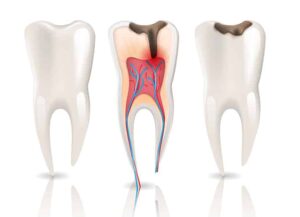
Sensitivity that behaves differently is worth flagging. A short sharp response to cold that stops immediately is typical of exposed dentine. Pain that lingers after the stimulus is removed, pain to heat, pain that wakes you, or pain on biting suggests something else — an inflamed nerve, a crack, or decay — and needs prompt assessment rather than a change of toothpaste. Tooth pain and ache sorts the patterns out, and where the nerve is already involved, everything you need to know about root canal treatment and root canal describe what follows.
The pattern that means a crack
This distinction is worth learning, because the two feel similar and the treatments are nothing alike. The European Society of Endodontology's position statement on longitudinal cracks and fractures lists the early clinical features of a cracked tooth as "Thermal sensitivity" together with "Short sharp pain upon mastication or releasing from pressure", noting that at an advanced stage "Symptoms may be relieved when the cusp fractures off". The bite test used to diagnose one aims to "reproduce the patient's symptoms, particularly sudden sensitivity and sharp pain when biting hard foods and/or clenching, which ceases upon the release of pressure".
So the signature is pain on release, not on pressure — that brief jolt as you let go of something hard. It is also why a crack is easy to miss on a routine x-ray: the same position statement reports that "only 2% of CTs with vital pulps had evidence of a crack on a radiograph", and that detection relies on other methods — "Fibre optic transillumination and/or the use of stains such as methylene blue are recommended", with "a dental operating microscope or loupes" described as "critical in detecting dentinal cracks". A negative x-ray is not a clean bill of health for a tooth that hurts on release.
Not every line in a tooth is a crack, either. Craze lines are defined as a "Superficial, coronal crack line confined to the enamel with no compromise of the integrity of the tooth", are "typically asymptomatic", occur "naturally through mastication and becoming more prominent with age", and "Treatment of craze lines is not indicated, except for aesthetic reasons". If you have noticed fine vertical lines in your front teeth and they do not hurt, that is very likely what they are.
How sensitive teeth are treated
The best way to find the right treatment is to have your dentist check your teeth to work out the cause. Treatment follows the diagnosis.
For less severe sensitivity from exposed dentine:
- Desensitising toothpaste — the mainstay. It works either by blocking the dentine tubules or by calming the nerve, and it takes two to four weeks of consistent use to reach full effect. Most people abandon it too early. A useful tip: rub a little onto the sensitive area with a finger before bed and do not rinse. With so many toothpastes on the market, how can I make a wise choice? covers reading the label
- Tooth mousse or similar calcium-phosphate products
- High-strength fluoride, prescribed on assessment. What it does, in Australian Prescriber's description, is assist "in the prevention of dental caries by promoting remineralisation with fluorapatite and fluoro-hydroxyapatite, thereby increasing enamel resistance to acid attack" — see selecting a toothpaste: fluoride or non-fluoride and the benefits of fluoride
Where the cause is exposed tooth roots:
- Gum grafts or white fillings may be able to cover the sensitive area. Grafting is specialist work — see periodontists
Where the problem is more serious — cracks, existing fillings, decay, or bite issues:
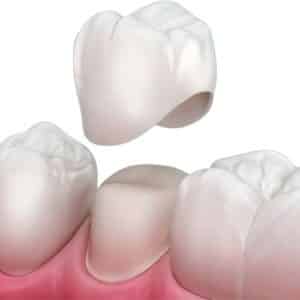
- Larger fillings, crowns, or root canal treatment. What types of dental crowns are available? compares the materials, and what does restorative dentistry mean? puts the options in order of how much tooth each one removes
Be clear-eyed about what treatment offers. Desensitising measures reduce and manage the sensation; they do not switch it off, and a proportion of people need more than one approach before the response settles. Nothing here is instant, and anyone promising that it is should be asked how.
Preventing further sensitivity
Once the cause is treated, adjusting how you clean your teeth usually prevents it recurring:
- Switch to a soft-bristled brush — which toothbrushes do dentists recommend?
- Use a gentle stroke rather than a scrubbing motion — let the bristles do the work
- Use a less abrasive toothpaste; whitening toothpastes tend to be the most abrasive. A review in Frontiers in Dental Medicine makes the same point about over-the-counter whitening products generally: whitening dentifrices "usually present a combination of abrasives", whitening rinses can be erosive, "mainly the ones presenting low pH", causing "even greater damage to exposed dentin", and "their inadequate use might also cause teeth sensitivity and gingival irritation". Using a whitening product to fix the look of a sensitive tooth can make the sensitivity worse
- Keep flossing, gently. Stopping because an area is tender allows the gum inflammation that causes recession in the first place — is flossing really that important?
For acidic food and drink:
- Do not brush for at least 30 minutes afterwards — an hour is better. Acid temporarily softens enamel, and brushing straight away abrades away the softened layer
- Drink through a straw, reducing contact with the teeth
- Rinse with plain water afterwards, returning the mouth toward neutral
- Keep acidic items to mealtimes rather than sipping across the day — what impact does wine have on my teeth?, what are sports drinks really doing to your teeth? and six foods to avoid for healthy teeth
For stomach acid, seek the advice of your medical practitioner. Treating the reflux is the intervention that matters; nothing done at the tooth end addresses the cause.
For grinding during sleep, a night guard or splint protects the teeth from further wear — what kind of mouth guard should I use? and how can I stop grinding my teeth when I sleep?.
One thing worth knowing about recession: gum that has receded does not grow back. Correcting the cause stops it progressing, which is why the brushing technique conversation is worth having properly rather than treating the symptom indefinitely.
Where recession is gum disease rather than brushing
Not all recession is mechanical. Where it comes with bleeding, bad breath or deepening pockets, the cause is periodontal, and the treatment is different. Gingivitis is reversible; periodontitis is not — it can be arrested, but bone already lost does not return. It is also common enough to be worth ruling in or out: a review in Diabetologia reports that severe periodontitis affects "10–15% of adults in most populations studied", with moderate periodontitis "affecting 40–60% of adults". What is gum disease? covers the reversible stage, periodontal (gum) disease covers what lies past it, and when do you need deeper cleaning? explains the pocket-depth threshold at which scaling and root planing is recommended.
Expect sensitivity to increase for a few weeks after deep cleaning, as root surface that was covered by inflamed tissue is uncovered. That is the treatment working, not failing.
Keep it monitored
Regular check-ups allow your dentist to monitor the condition and catch further wear or recession early — usually with photographs or models, so change is measured rather than estimated. Sensitivity that is stable is a different situation from sensitivity that is advancing, and only a record over time distinguishes them. How often should I go to the dentist? and dental cleans with our hygienists cover the interval and what happens at the visit.
If you have been told sensitivity needs extensive treatment and you are not sure, understanding your treatment explains how to read a plan, and a second opinion is a reasonable next step.
Common questions
Which desensitising toothpaste should I buy? Do the brands actually differ?
We are not able to answer the brand question from independent sources, and it is worth saying so rather than pretending. We looked for an Australian regulator or professional body comparing desensitising toothpastes head to head, or ranking their active ingredients, and there is nothing in the reference material we hold. What the Australian Dental Association's policy does say is narrower: fluoridated toothpaste sits on its list of proven aids to oral hygiene, and brushing with an age-appropriate fluoride toothpaste is one of its four main oral hygiene strategies.
What is far better established than the choice of tube is the way it is used. Two to four weeks of consistent, twice-daily use before judging it; rubbed onto the tender area with a fingertip at night and not rinsed off. Most people who report that desensitising toothpaste ‘does not work' stopped inside a fortnight or used it only when the tooth hurt.
Set yourself a decision point. If four weeks of genuinely consistent use has changed nothing, that is useful information to bring back — it points away from simple exposed dentine and toward a crack, a leaking restoration or decay. It is not a reason to work through a fifth brand.
Will a mouthwash help?
As an addition, possibly. As the treatment, no — and four independent sources line up on that. The ADA's policy lists mouthrinse among ‘proven aids to oral hygiene' but deliberately leaves it off its short list of main strategies. Healthdirect, the government-funded consumer service, is blunter: ‘most people don't need to use mouthwash. Speak with your dental practitioner about the risks and benefits of using mouthwash regularly.' Australian Prescriber calls it ‘an adjunct to, not a substitute for, regular brushing and flossing' and says it ‘should never be the sole means of oral hygiene'. And the Cochrane review of chlorhexidine tested it only ‘as an adjunct to mechanical oral hygiene procedures'. None of them says mouthwash is useless; none of them treats it as a substitute for cleaning.
There are two specific traps where sensitivity is concerned. A whitening rinse is the wrong product here: the Frontiers in Dental Medicine review notes that whitening rinses can be erosive, ‘mainly the ones presenting low pH', causing ‘even greater damage to exposed dentin'. And if your mouth is already dry, the Better Health Channel advises avoiding ‘alcohol-containing mouthwashes, as these products tend to aggravate dry mouth tissue' — and a dry mouth is one of the things making the sensitivity worse in the first place.
If you want a rinse in the routine, a fluoride one used at a different time from brushing is the version with a rationale behind it. Ask for it to be chosen rather than picking it off the shelf by label.
My teeth are already sensitive. Can I still have them whitened?
It is a conversation to have before booking, not after. The ADA's own position on bleaching states that ‘the most common side-effects are transient tooth sensitivity and soft tissue irritation during or immediately following treatment'. Transient is the operative word — but starting from teeth that are already sensitive is a different starting point from starting from teeth that are not, and the cause of your sensitivity decides whether it is sensible at all.
Exposed dentine, an untreated crack, decay or a leaking filling all change the answer, which is the argument for having the cause diagnosed first rather than treating the appearance and hoping. Whitening will not settle a crack, and it will not improve the colour of a filling or a crown.
One legal point that is worth knowing when comparing a salon or kit against a dental practice. Schedule 10 of the Poisons Standard provides that teeth whitening products containing more than 6% hydrogen peroxide or 18% carbamide peroxide may only be sold, supplied and used by registered dental practitioners as part of their dental practice, and those provisions are formalised in every state and territory's poisons legislation. See teeth whitening and the do's and don'ts of home teeth whitening.
It is one tooth, not all of them. Does that change anything?
Considerably — it changes the whole investigation. Sensitivity spread across many teeth, especially along the gum line, generally points at the causes described above: acid, abrasion, recession, grinding, or a dry mouth. That is a management problem.
Sensitivity in a single tooth is a diagnostic problem, and the two commonest answers are a crack and a dying nerve. The European Society of Endodontology's bite test for a cracked tooth aims to reproduce ‘sudden sensitivity and sharp pain when biting hard foods and/or clenching, which ceases upon the release of pressure' — so a single tooth that jolts as you let go is a crack until shown otherwise, and the same statement reports that only 2% of cracked teeth with living pulps show the crack on a radiograph. A single tooth with pain that lingers after heat or cold, or that wakes you, points instead at the pulp.
Be specific when you describe it. Which tooth, what sets it off, how long the pain lasts after the stimulus stops, and whether it is worse on biting down or on letting go. Those four answers do more diagnostic work than anything else in the appointment.
Could a dry mouth be the whole explanation?
It is more often the driver than people expect, and it is the most commonly missed one. The Better Health Channel — produced in consultation with and approved by the Australian Dental Association Victorian Branch — reports that ‘about 10% of the general population and 25% of older people have dry mouth', and that ‘about 600 drugs and medications, both legal and illegal, are known to cause dry mouth', naming antihistamines, blood pressure medications, sedatives, decongestants, pain relief and antidepressants.
The pattern it produces is characteristic. The same source states that people with dry mouth ‘are more prone to get decay along the gum line (tooth root surface)', that ‘dentine (the inner tooth layer) is less resistance to acids and can decay quickly' without saliva to protect it, and that decay may appear on the lower front teeth, which are normally bathed in saliva from beneath the tongue. Sensitivity along the gum line of several teeth at once, in someone on regular medication, is worth investigating from this direction.
What it does not mean is stopping anything. The Better Health Channel is explicit: ‘Continue to take your medication, even if your medicine is to blame… Do not stop taking your medicine without speaking to your doctor.' What changes instead is the dental side — fluoride products chosen for the situation, avoiding alcohol-containing rinses, and a review interval it describes as every six to twelve months, with ‘more frequent visits if you have a higher risk for tooth decay'. See my mouth always feels dry — what can I do?
Related reading
- Tooth pain and ache
- What is dental erosion and how is it addressed?
- How long do dental fillings last?
- Chipped and cracked teeth
- What is a tooth abscess? Should I have it treated?
- What is bruxism and how is it managed?
- What is the ideal daily routine for oral hygiene?
- Your Smile Solutions hygienist visit: what to expect
Practical details
Specialist registration can be verified on the AHPRA register, or by calling 1300 419 495. The practice's registered specialists are identified as such within the full team.
Smile Solutions, Level 1, 220 Collins Street, Manchester Unity Building, Melbourne VIC 3000 — getting here. Phone 13 13 96, contact us, or theteam@smilesolutions.com.au. Monday–Friday 8.00am–6.00pm, Saturday 8.30am–1.30pm, Sunday by appointment. Published fees are in the price guide.
Published 14 January 2021. General information only; it does not replace advice from your treating practitioner. If reflux is contributing, speak with your doctor.
Smile Solutions trades under ABN 28 193 514 103.
Images on This Page
-
https://www.facebook.com/tr?id=800557773428361&ev=PageView&noscript=1
(no alt text)
-
https://www.smilesolutions.com.au/wp-content/uploads/2025/10/calendar_month.svg
(no alt text)
-
https://www.smilesolutions.com.au/wp-content/themes/arcadian-wordpress-theme/assets/images/smile_solutions_logo_white.png
Smile Solutions Logo
-
https://www.smilesolutions.com.au/wp-content/themes/arcadian-wordpress-theme/assets/images/smile_solutions_logo_purple.png
Smile Solutions Logo
-
https://www.smilesolutions.com.au/wp-content/uploads/2023/11/SS-Tooth-1-1-150x150.png
Smile Solutions
-
https://www.smilesolutions.com.au/wp-content/uploads/2014/07/Ortho-Tower.jpg
Orthodontic Tower
-
https://www.smilesolutions.com.au/wp-content/uploads/2025/09/Root-Canal-2-300x217.jpg
Root Canal
-
https://www.smilesolutions.com.au/wp-content/uploads/2026/08/Mouth-Breathing-300x270.jpg
Mouth Breathing
-
https://www.smilesolutions.com.au/wp-content/uploads/2025/09/Dental-Crown-at-Smile-Solutions-300x300.jpg
Dental Crown at Smile Solutions
-
https://www.smilesolutions.com.au/wp-content/themes/arcadian-wordpress-theme/assets/images/family_owned_bussiness.png
Family Owned Business
-
https://www.smilesolutions.com.au/wp-content/themes/arcadian-wordpress-theme/assets/icons/icon--phone.svg
Smile Solutions Contact
-
https://www.facebook.com/tr? id=800557773428361&ev=PageView&noscript=1
(no alt text)
-
https://bat.bing.com/action/0?ti=25148060&tm=gtm002&Ver=2&mid=c0b595f7-dbd9-48fe-9382-6e7a1ead31da&bo=1&sid=d4bd5940ab2711f1875e8b419c8d5994&vid=d4bd6e00ab2711f184163f13c8bfd667&vids=1&msclkid=N&pi=918639831&lg=en-US&sw=800&sh=600&sc=24&nwd=1&tl=What%20to%20do%20if%20you%20suffer%20from%20sensitive%20teeth%20-%20Smile%20Solutions&p=https%3A%2F%2Fwww.smilesolutions.com.au%2Fdental-articles%2Farticle%2Fwhat-to-do-if-you-suffer-from-sensitive-teeth%2F&r=&evt=pageLoad&sv=2&cdb=AQAQ&rn=302940
(no alt text)