Why do I need a filling?
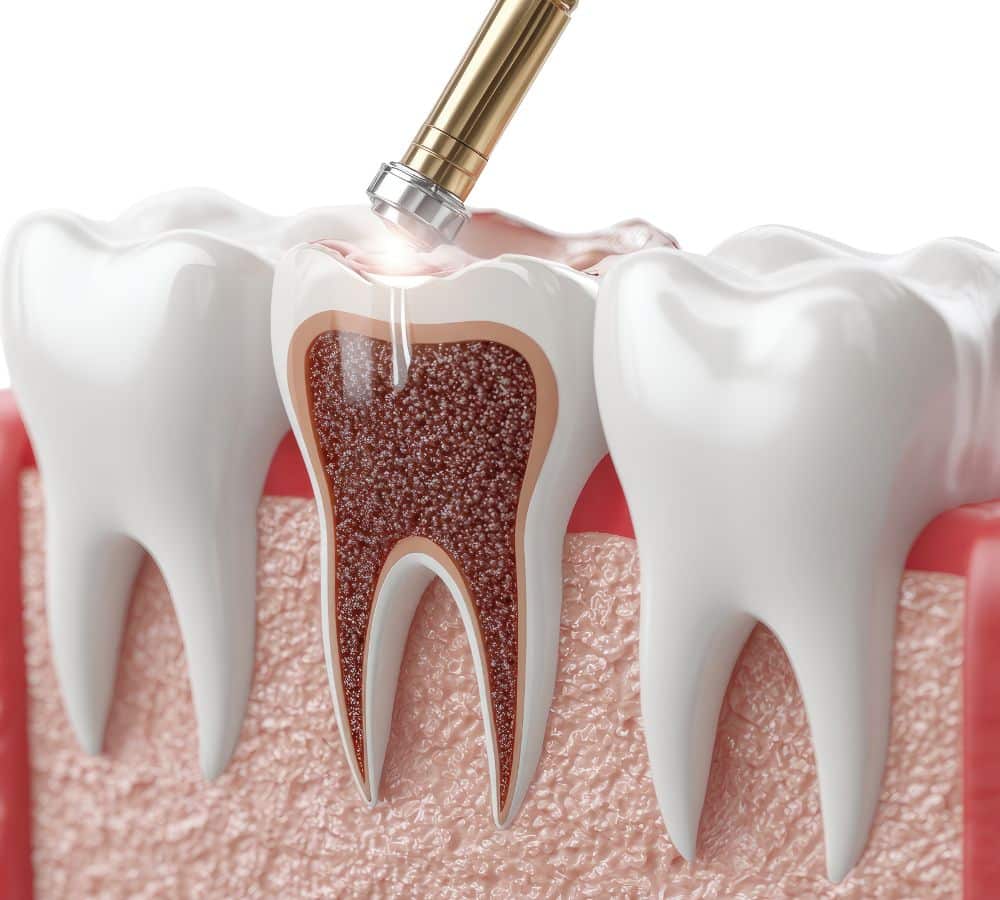
A filling is needed when tooth structure has been lost or damaged and the tooth needs sealing and rebuilding. The purpose is twofold: stop further decay, and restore the function, integrity and shape of the missing tooth structure.
The most important line on this page: most cavities start silently, without symptoms or pain. By the time a tooth hurts, the problem is usually well advanced. That is why regular check-ups matter more than how your teeth feel.
What creates the need
Fillings are normally required where a cavity has been created by one of the following:
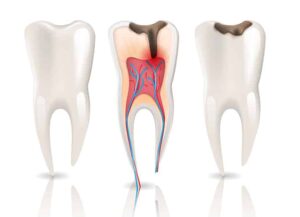
- Tooth decay (caries) — sugary diet and bacteria forming acids that dissolve the enamel and dentine. Left untreated, cavities lead to serious problems including pain, infection and abscess. How does tooth decay develop? and the stages of dental decay trace that from the first white spot to the abscess.
- Enamel loss from wear and abrasion, causing sensitivity — see how dental erosion is addressed and over-brushing, which is a more common cause than people expect
- Fractures caused by trauma — what should I do if I have a chipped tooth?
- Crack lines, from weak tooth structure combined with a heavy bite or grinding — why does a cracked tooth hurt so much? and TMD and teeth grinding
- A broken or lost filling — and if it was a temporary one, what to do if a temporary filling comes out
That list is worth reading as five different problems rather than one. A filling placed for decay without addressing the diet will fail; a filling placed for a crack without addressing the grinding will fail faster. How does your diet affect your teeth? and how does sugar affect your dental health? cover the first; night-time grinding and clenching covers the second.
How the decay actually formed
Worth understanding, because it determines what will stop the next one rather than just repair this one.
The Australian Dental Association describes the process plainly: caries initiation consists of the metabolism of simple carbohydrates by bacteria in the dental plaque, which produces acids. The production of these acids causes the pH of dental plaque to fall below the critical level, leading to softening of tooth structure, which may over time result in the development of dental caries (ADA Policy Statement 2.2.2, Diet and Nutrition).
Three practical consequences follow, and the first two are the ones that change what people do.
Frequency matters as much as quantity. The ADA is explicit that the form, frequency, timing and total amount of sugar intake are significant in the initiation of the caries process. One sweet thing eaten with a meal is a single acid episode. The same amount sipped across a morning is many separate ones. This is why a person who genuinely does not eat much sugar can still be getting fillings — it is the pattern as much as the total.
Sugar plus acid is worse than either alone. The same policy notes that exposure to acid from acidic or sugar-sweetened foods and beverages can lead to softening and loss of tooth structure, and that the combination of sugar and food acid can be particularly destructive. That combination is the profile of most soft drinks, sports drinks and fruit juices.
And the one nobody expects: the ADA notes that medications, including over-the-counter vitamin and mineral tablets, may include sugars — particularly those that are chewable or dissolved in the mouth — or contribute to dry mouth, both of which can contribute to tooth decay or softening and loss of tooth structure. If you have started needing fillings after years of not needing any, a chewable supplement or a recently started medication that dries your mouth is worth raising at the appointment. It is a common explanation and an easy one to miss.
The World Health Organization sets out the same mechanism at population scale, and adds the definition that catches most people out. Plaque forms on the surface of a tooth and converts the free sugars contained in foods and beverages into acids that destroy the tooth over time — where free sugars means all sugars added to foods and beverages by the manufacturer, cook or consumer, plus sugars naturally present in honey, syrups and fruit juices. WHO's recommendation is limiting the intake of free sugars to less than 10% of total energy intake — and ideally to less than 5% — to minimise the risk of dental caries throughout the life course (WHO, Sugars and dental caries). Fruit juice counting as a free sugar is the single most common gap between what a patient believes their sugar intake is and what it actually is.
Signs a filling may be needed
- Visible holes, seen in the mirror or felt with the tongue
- Sensitivity to heat, cold or pressure — what to do if you suffer from sensitive teeth
- Toothache — I have a toothache, what could be the cause?
- Pain on biting or chewing — see tooth pain and ache
- Floss that keeps tearing in a particular gap — an underrated early sign of decay at the contact point, and one reason flossing is worth the trouble
- Discolouration or shadowing of a tooth surface
- A rough tooth surface
Because cavities begin without symptoms, see your dentist for regular check-ups. Your dentist will examine your mouth manually and, where necessary, take radiographs to check between the teeth — which is where a large share of adult decay begins and where nothing is visible to the eye. How safe are dental x-rays? answers the question people usually want to ask at that point.
The five filling materials
| Material | Notes |
|---|---|
| Amalgam | Long track record, hard-wearing, metal-coloured. Placement is declining internationally under an environmental phase-down, not on patient-safety grounds |
| Composite resin | Tooth-coloured; bonds to the tooth, so less healthy structure needs removing. The most common choice |
| Glass ionomer | Also tooth-coloured; releases small amounts of fluoride. Useful in high decay risk and in children, though less wear-resistant |
| Gold | Very durable, requires minimal tooth removal, wears at a rate similar to enamel. Metal-coloured, and expensive |
| Ceramic / porcelain | Custom made, for larger restorations that need the external surfaces of the tooth covered — see same-day CEREC restorations |
Porcelain, amalgam or composite resin? compares the materials in full, and porcelain and composite fillings: differences and costs puts fees beside them.
The right choice depends on your dentist's recommendation, your preference, and your budget — and also on where the tooth is, how much structure remains, and how heavily you bite.
Ask what is proposed and why. If the answer is a large ceramic restoration, it is reasonable to ask whether a smaller bonded filling would do, and if not, why not. If a plan feels larger than the problem, a second opinion is a reasonable step.
What the appointment involves
Placing a filling generally has four stages:
- Anaesthetic (optional). The area is numbed to minimise discomfort. Small, shallow fillings often need none. If the appointment itself is the obstacle, dental anxiety sets out what can be done about it.
- Preparation. Decay, caries or old filling material is removed, or the damaged tooth is reshaped. The tooth is then cleaned and dried.
- Filling. The chosen material is placed into the cavity.
- Adjustment and polish. The filling is adjusted to ensure the bite is correct, and polished smooth.
That final stage matters more than it sounds. A filling left even slightly high changes how your teeth meet, and produces soreness on biting that people often assume is normal healing. If a new filling feels high after the numbness wears off, go back and have it adjusted — it takes minutes, and leaving it can crack the tooth or aggravate the jaw joint.
Afterwards
- Some sensitivity to cold for a few weeks is normal, particularly after a deep filling
- Pain that lingers, wakes you at night, or responds to heat is not normal — report it. It can mean the nerve is involved, which is the territory of root canal treatment
- Avoid chewing on the numb side until sensation returns, to avoid biting your lip or cheek. If you keep catching your cheek once the numbness has gone, why do I bite my cheek after a filling? explains what to do about it
- If something goes wrong out of hours, emergency dentistry is the route in
Fillings do not last forever
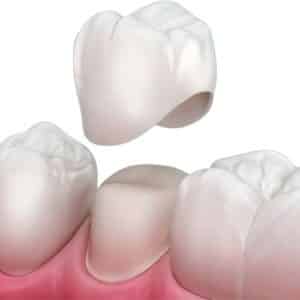
Worth knowing at the outset: no filling is permanent. They wear, the margins leak, and decay can start underneath. Each replacement is a little larger than the last, and over enough replacements a tooth ends up needing a crown. How long do dental fillings last? gives realistic figures by material.
That is the real argument for prevention. The difference between a re-mineralisation programme and a filling is time — decay caught while it is still a white spot can be reversed with fluoride, better cleaning and less frequent sugar, at no cost and with no drilling. Once the surface has broken, that option is gone. Can you reverse tooth decay? is where that line sits; preventing dental decay, the benefits of fluoride and regular hygiene appointments are what keeps you on the right side of it.
What fluoride is doing while that happens
The NHMRC describes two ways in which fluoride acts to reduce tooth decay: reducing demineralisation — where the enamel begins to dissolve — which makes teeth more resistant to decay; and enhancing remineralisation, the recovery of weakened enamel, which helps the repair of early tooth decay. Fluoride also slows the activity of the bacteria that cause decay, and combines with enamel at the tooth surface to make it stronger and better able to resist decay.
The two everyday sources do different parts of that job and are not interchangeable. NHMRC: fluoridated drinking water keeps low levels of fluoride in saliva and in dental plaque all day, while the much higher concentration of fluoride in toothpaste offers additional benefit — together, the two sources offer more protection than using either one alone (NHMRC, Water Fluoridation and Human Health in Australia: Questions and Answers). WHO records the same pairing from the other direction, listing inadequate exposure to fluoride and a lack of plaque removal by toothbrushing with fluoride toothpaste containing 1000–1500 ppm alongside high free-sugar intake as what leads to caries.
See selecting a toothpaste: fluoride or non-fluoride for the practical version of that choice.
Common questions
Will it hurt?
We are not going to tell you it is painless, because that is not a promise anyone can make about a procedure. What can be described is what is done about it: the area is numbed with a local anaesthetic before the tooth is prepared, small and shallow fillings often need no anaesthetic at all, and you can agree a stop signal with the clinician before anything starts.
Afterwards, some sensitivity to cold for a few weeks is normal, particularly with a deep filling. Pain that lingers after the stimulus goes, that wakes you at night, or that responds to heat is a different thing and should be reported rather than waited out.
If the appointment itself is the obstacle, say so when you book. This is more common than most people assume: Australian survey data from the National Dental Telephone Interview Survey found 11.9% of Australians aged 16 and over answered ‘yes, very' to being afraid of going to the dentist, and a further 5.2% answered ‘yes, quite'. Among those who were very afraid, 43.9% had last visited more than two years ago, against roughly 27–29% of everyone else — and the odds of fitting the avoidance-then-emergency pattern were 3.33 times higher (95% CI 2.67–4.15) in the very fearful group.
That is the real cost of not saying anything, because a filling deferred for two years is rarely still a filling. See dental anxiety.
Is amalgam safe? Should I have my old silver fillings replaced?
On safety, we are going to give you an honest gap rather than a reassuring sentence. We searched the independent reference material we hold — Australian regulators, the Dental Board, the ADA, government health services and the peer-reviewed papers in the collection — for a statement on the safety of dental amalgam, mercury exposure from fillings, or composite resin and bisphenol A. There is nothing. The only mentions of amalgam are incidental, describing what teeth in a study happened to be restored with. That is an absence of material in our collection, not a finding either way, and it means this page should not be your source on the question. Ask your treating dentist, who can answer for your specific situation, and ask them what they are basing it on.
On replacing sound fillings, there is something sourceable, and it argues for caution. The NHMRC states that once a tooth is filled, it becomes structurally weaker and will almost certainly require further treatment in the future. Every replacement removes a little more tooth than the last one, because the new preparation has to reach past the old margins. So replacing a filling that is intact, sealed and symptom-free has a real cost in tooth structure, and it needs a reason beyond appearance or age.
Reasons that do justify replacing one: decay underneath or at the margin, a fracture in the filling or the tooth around it, a margin that catches floss or food, persistent sensitivity, or a restoration so large that the remaining walls are at risk.
What actually happens if I just leave it?
Decay does not stop on its own once the surface has broken, and the escalation is well documented. NSW Health's clinical tool for emergency departments states that ‘once a dental abscess or infection has formed, extraction or root canal therapy is usually required to remove the source of the infection', and that ‘definitive treatment of the carious tooth will still be required after treatment of pain and infection'. In other words, waiting does not change what has to be done; it changes how much of it has to be done.
Antibiotics do not substitute for the dental treatment either. The Royal Australian College of General Practitioners puts it in one line: ‘antibiotic treatment without dental treatment to remove the cause always fails.'
And a proportion of this ends in hospital. The Australian Institute of Health and Welfare reports roughly 88,600 potentially preventable hospital admissions for dental conditions in Australia in 2023–24, a rate of about 3 per 1,000 population, up from a low of 2.6 per 1,000 in 2019–20.
The practical sequence is short: a filling becomes a larger filling, a larger filling becomes a crown or a root canal, and a root canal that was left too long becomes an extraction. Each step costs more and leaves you with less tooth. If cost is the reason for waiting, say so — staging the work is a legitimate plan and a far better one than waiting for pain.
Do baby teeth really need filling if they are going to fall out?
Yes, and the scale of the problem in Australia is the argument. The ADA reports that 34% of children aged 5–6 have experienced decay in primary or baby teeth, and that 27% aged 5–10 have untreated tooth decay in primary teeth. NSW Health's clinical tool puts it more bluntly still: ‘dental caries occurs in more than 40% of Australian children and can begin as soon as teeth erupt during infancy.'
The consequences are not deferred until the adult tooth arrives. The ADA's 2024 Children and Young People Oral Health Tracker records that nearly 11 (10.8) in every 1,000 children aged 5–9 are hospitalised for potentially preventable problems due to dental conditions, rising to 14.3 per 1,000 for Indigenous children. A baby tooth can abscess, it can hurt, and infection in one can affect the adult tooth developing above it.
There is also a timing argument the ADA makes directly: decay picked up early ‘can be controlled fairly simply (for example with fluoride applications) before they become established and cause trouble', whereas leaving it until the teeth hurt or break down means ‘simpler interventions are unlikely to work and more complex treatment may be needed'.
On cost, eligible families may be able to use the Child Dental Benefits Schedule, which covers examinations, fillings and extractions. See also when should a child first visit the dentist?
How long should a filling last, and how will I know when it needs replacing?
We are not going to put a number in years on this page, because we could not source one. There is no independent Australian statement in our reference material giving survival figures for amalgam, composite, glass ionomer, gold or chairside-milled ceramic restorations. How long do dental fillings last? discusses the question, and any specific figure you see anywhere — here or elsewhere — is worth asking the source of.
What is established is the direction of travel. The NHMRC's position is that once a tooth is filled it becomes structurally weaker and ‘will almost certainly require further treatment in the future'. A filling is the start of a replacement cycle, not the end of a problem. That is the honest framing, and it is also the strongest argument for the prevention section above.
The signs that one is due are the same ones listed further up this page: floss that shreds in the same spot, a margin you can catch with a fingernail or tongue, new sensitivity in a tooth that had settled, staining along the edge of a white filling, or a piece that has chipped away. None of them is reliably visible to you, which is why they are picked up at the check-up rather than at home.
What determines the lifespan is mostly not the material. It is how big the filling is relative to the remaining tooth, where it sits, how heavily you bite and grind, how clean the margins are kept, and whether the cause that produced the first cavity has changed.
Related reading
- What does restorative dentistry mean? — where a filling sits among the other options
- Selecting a toothpaste: fluoride or non-fluoride
- Which toothbrushes do dentists recommend?
- Will a cracked tooth be treated?
- What types of dental crown are available?
- Dental crowns for children — silver or white?
- How does sugar affect your dental health?
Practical details
Specialist registration can be verified on the AHPRA register, or by calling 1300 419 495. The clinical team is listed by name, with registered specialists identified as such. Published fees are in the price guide.
Smile Solutions, Level 1, 220 Collins Street, Manchester Unity Building, Melbourne VIC 3000 — getting here. Phone 13 13 96, contact us, or theteam@smilesolutions.com.au. Monday–Friday 8.00am–6.00pm, Saturday 8.30am–1.30pm, Sunday by appointment.
Published 5 December 2018. General information only; it does not replace advice from your treating practitioner. The ADA, WHO, NHMRC, NSW Health, RACGP and AIHW material quoted above is attributed to those publishers and should be checked against the current version of each document.
Smile Solutions trades under ABN 28 193 514 103.
Images on This Page
-
https://www.facebook.com/tr?id=800557773428361&ev=PageView&noscript=1
(no alt text)
-
https://www.smilesolutions.com.au/wp-content/uploads/2025/10/calendar_month.svg
(no alt text)
-
https://www.smilesolutions.com.au/wp-content/themes/arcadian-wordpress-theme/assets/images/smile_solutions_logo_white.png
Smile Solutions Logo
-
https://www.smilesolutions.com.au/wp-content/themes/arcadian-wordpress-theme/assets/images/smile_solutions_logo_purple.png
Smile Solutions Logo
-
https://www.smilesolutions.com.au/wp-content/uploads/2023/11/SS-Tooth-1-1-150x150.png
Smile Solutions
-
https://www.smilesolutions.com.au/wp-content/uploads/2018/12/Dental-Filling.jpg
Dental Filling
-
https://www.smilesolutions.com.au/wp-content/uploads/2025/09/Root-Canal-2-300x217.jpg
Root Canal
-
https://www.smilesolutions.com.au/wp-content/uploads/2026/08/Mouth-Breathing-300x270.jpg
Mouth Breathing
-
https://www.smilesolutions.com.au/wp-content/uploads/2025/09/Dental-Crown-at-Smile-Solutions-300x300.jpg
Dental Crown at Smile Solutions
-
https://www.smilesolutions.com.au/wp-content/themes/arcadian-wordpress-theme/assets/images/family_owned_bussiness.png
Family Owned Business
-
https://www.smilesolutions.com.au/wp-content/themes/arcadian-wordpress-theme/assets/icons/icon--phone.svg
Smile Solutions Contact
-
https://www.facebook.com/tr? id=800557773428361&ev=PageView&noscript=1
(no alt text)
-
https://bat.bing.com/action/0?ti=25148060&tm=gtm002&Ver=2&mid=43452316-0e4b-4871-bdcc-a8266b682bfb&bo=1&sid=9c6bb420ab2611f192bfcb9fd1c8bf62&vid=9c6bda30ab2611f183641fe9418ad7a6&vids=1&msclkid=N&pi=918639831&lg=en-US&sw=800&sh=600&sc=24&nwd=1&tl=Why%20do%20I%20need%20a%20filling%3F%20-%20Smile%20Solutions&p=https%3A%2F%2Fwww.smilesolutions.com.au%2Fdental-articles%2Farticle%2Fwhy-do-i-need-a-filling%2F&r=&evt=pageLoad&sv=2&cdb=AQAQ&rn=159054
(no alt text)