What fluoride is actually doing
Some toothpastes now list fluoride-free as a selling point. So it is worth knowing why fluoride is in conventional toothpaste at all. The benefits of fluoride covers the wider evidence; this page is about the tube in your bathroom.
Fluoride takes several forms in toothpaste — sodium fluoride and stannous fluoride being the most common. Applied topically to the tooth surface, it does two distinct things.
1. It changes what your enamel is made of
This is the mechanism most people have never heard, and it is the important one.
After exposure to acid — whether from oral bacteria breaking down carbohydrates, or directly from food and drink such as citrus, vinegar, wine or carbonated drinks — fluoride integrates into the mineral of the teeth, forming a crystal structure called fluorapatite.
Fluorapatite is the most acid-resistant mineral form our teeth can take.
Without fluoride applied regularly through twice-daily brushing, teeth are made up of hydroxyapatite crystals, which are less resistant to acid attack.
The net result of going without: increased vulnerability to decay, and an increased likelihood of needing fillings.
So fluoride is not a coating or a rinse-off additive. It is incorporated into the tooth’s own crystal structure, changing the material your enamel is made from into a tougher version of itself. That is also why can you reverse tooth decay? is a real question with a real answer — early enamel damage can remineralise, and fluoride is what it remineralises with.
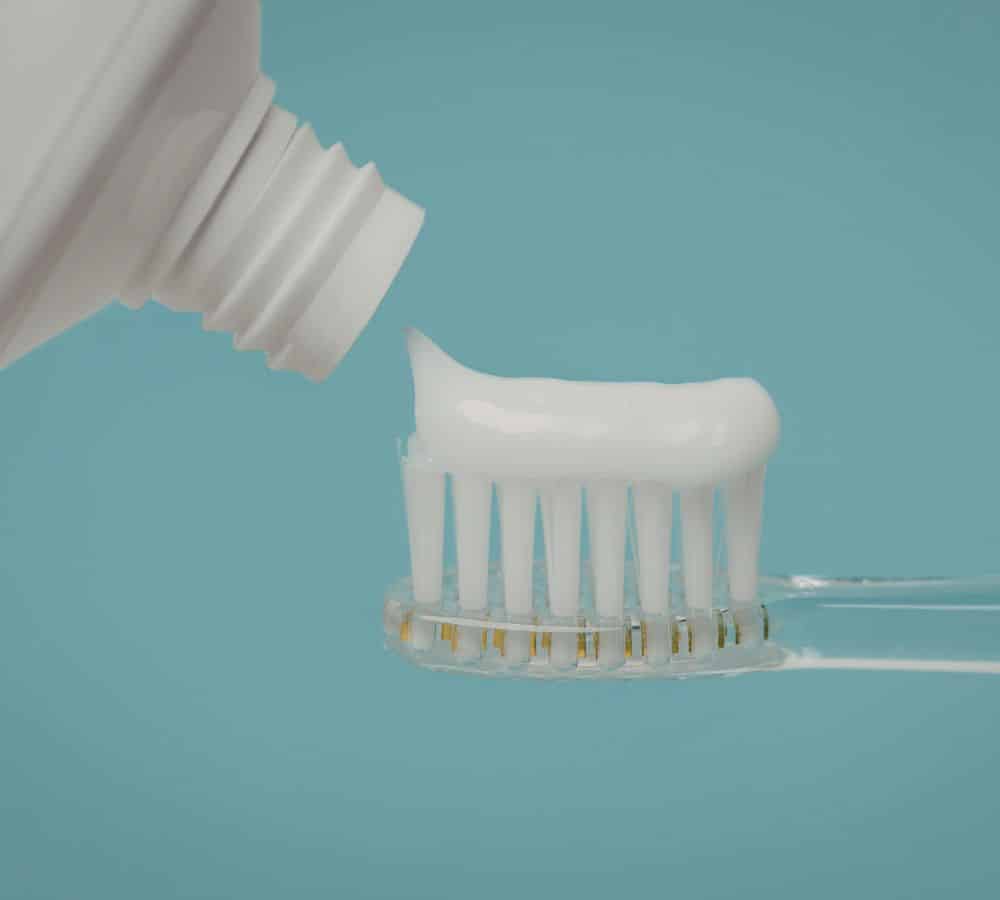
One practical consequence: spit, don’t rinse. Rinsing with water straight after brushing washes away the fluoride you have just applied. That is not just a dental saying — it is step six of the brushing instructions published by the National Health and Medical Research Council: “After brushing, spit out the excess toothpaste but do not rinse your mouth with water. This allows the fluoride paste to sit on the teeth for longer, increasing protection.” See what is the ideal daily routine for oral hygiene?
2. It is antibacterial
Fluoride temporarily immobilises the acid-producing bacteria in the mouth, so they cannot release acid when you eat carbohydrates — at least while you are brushing every 12 hours with a fluoride toothpaste.
Fewer acid attacks means decay is less likely to take hold. How does tooth decay develop? and the stages of dental decay trace what those attacks do over time.
That 12-hourly interval is why the recommendation is twice daily rather than once. It is not arbitrary — it maps to how long the effect lasts. How often should I brush my teeth? covers the frequency question, and over-brushing the other end of it.
How much fluoride is in an ordinary tube
The number is on the packaging, and it is worth knowing what it should say.
The World Health Organization, describing how decay develops, names the three conditions that together produce it: “a continued high intake of free sugars, inadequate exposure to fluoride and a lack of removal of plaque by toothbrushing with fluoride toothpaste containing 1000-1500 ppm concentration can lead to dental caries.”
So 1000 to 1500 parts per million is the concentration the WHO describes as doing the work in an ordinary adult toothpaste. Below that band you are buying something else; a fluoride-free paste is at zero. Note that our own page on choosing among the many toothpastes on the market gives the adult range slightly differently, as 1000–1450 ppm — both are in circulation, and the practical point is the same one.
Is it a drug?
A fair question, given how the fluoride-free products are marketed, and it has a documented answer. The NHMRC addresses it directly: “In Australia, the Therapeutic Goods Administration (TGA) does not require fluoride compounds, such as those added to fluoride toothpaste and to community drinking water supplies, to be registered as medicines if they are used for the prevention of dental decay — nor are they scheduled as drugs or poisons when they are added to community drinking water supplies at optimal levels.”
That is a statement about regulatory classification, not a claim that any dose is safe. The quantity is what matters, which is the subject of the children’s section below.
If my water is already fluoridated, do I still need it in the toothpaste?
Yes — and the reason is that the two work differently rather than doubling up.
The NHMRC answers this one as a set question. “Fluoridated drinking water and toothpaste with fluoride provide important and complementary benefits. Fluoridated water keeps low levels of fluoride in saliva and in dental plaque all day. The much higher concentration of toothpaste offers additional benefit. Together, the two sources offer more protection than using either one alone.”
Low and constant from the water; high and brief from the tube. Neither substitutes for the other, which is why living in a fluoridated area is not a reason to switch to a fluoride-free paste. Fluoridated water — is it good for you? and fluoridated water: why I worry put both sides of that wider debate.
When might you not need fluoride toothpaste?
There are genuine cases, and they are narrower than the marketing suggests.
A diet very low in acids and carbohydrates
If your diet contains very little acid — citrus, vinegar, wine, carbonated drinks — and few carbohydrates, then in theory brushing alone mechanically removes plaque from the teeth. You would not even need toothpaste.
For the vast majority of people eating a modern diet with processed foods and drinks, this simply does not apply.
Worth being precise about what that threshold means. Bread, rice, pasta, potatoes, crackers and fruit all count — not just sugar. Very few people genuinely meet the condition. How does your diet affect your teeth?, how does sugar affect your dental health? and sugar-free soft drinks and teeth set out what actually reaches your teeth in a day; how dental erosion is addressed covers the acid side independent of decay.
Young children
Children under 6 typically do not need full-strength fluoride toothpaste, unless assessed by a dentist as being at high risk of decay — which depends on diet, and on the brushing ability of both child and parent. Protecting your child from dental disease and kids teeth cleaning tips cover both.
- Under 2 years: fluoride-free toothpaste may be used
- Ages 2 to 6: a low-fluoride toothpaste
- From age 6: adult-strength fluoridated toothpaste
Age appropriateness is usually listed on the packaging.
One independent point of difference worth knowing when you are standing in the aisle: the Australian Dental Association’s consumer site says “babies do not need to use toothpaste — start using toothpaste when your child is 18 months old”, which starts the clock earlier than the bands above. If your child is between 18 months and two years, that is a question for your dentist rather than something to resolve from a packet. The ADA also recommends that children have their first dental visit when the first teeth appear in the mouth — see when should a child first visit the dentist? and children’s dentistry.
The reason for the age rule is that young children swallow rather than spit, and swallowing adult-strength fluoride while permanent teeth are forming can cause permanent white mottling of the enamel.
The name for that mottling, and how common it is
It is called dental fluorosis, and the NHMRC describes it precisely: “caused by a high intake of fluoride from multiple sources during the time when teeth are developing inside the jawbone, usually from birth to six or eight years of age”, appearing as “white lines or areas on the surface of both primary and permanent teeth” and identified only after the teeth erupt. The phrase that matters is multiple sources — the risk is the total, not the toothpaste alone.
The honest picture of how much this actually happens in Australia cuts in two directions, and both belong on the page. On the one hand, fluorosis has declined in Australia over the same period that community water fluoridation expanded, and the NHMRC links that decline to “reduced exposure to fluoride from other sources such as toothpaste, which is now available in low fluoride toothpastes for children”, promoted alongside guidance to “use only a small pea-sized amount” and to “encourage children not to swallow toothpaste”. In other words, the low-fluoride children’s ranges exist because the problem was real and the measure worked.
On the other hand, the severity is usually slight. The NHMRC reports that where fluorosis is identified in Australia, “in most cases it is classified as very mild or mild”, that mild to very mild fluorosis “does not affect the function of the teeth, is not of aesthetic concern to those who have it and is associated with a protective benefit against tooth decay in adult teeth”, and that moderate fluorosis is very uncommon and severe fluorosis is rare.
So the sensible reading is neither alarm nor dismissal: use the age-appropriate product, use a pea-sized amount, and supervise until your child reliably spits. Where enamel comes through soft, porous or discoloured for reasons that have nothing to do with fluoride, see everything you need to know about chalky teeth.
Between ages 6 and 14 it is critical to use a fluoridated toothpaste, so that the developing adult teeth are built from highly acid-resistant fluorapatite crystals.
That window matters because it is when the permanent teeth arrive, and newly erupted enamel is not fully mature — the years when fluoride does the most good are the same years children are least able to brush well. The order and appearance of baby teeth explains when the first permanent molars arrive and why parents so often miss them; the role of fissure sealants is the other measure aimed at exactly those teeth.
In summary
If you eat a modern diet containing sugar, simple carbohydrates — starches in potatoes, white rice, white flour — or other dietary acids, you should be using a fluoridated toothpaste to prevent acid damage in the form of decay or erosion.
If you are unsure, discuss your lifestyle and risk factors with your dentist for a more tailored approach. Decay risk varies considerably between people, and the right answer for a low-risk adult is different from the right answer for someone with dry mouth, exposed root surfaces or a run of recent cavities. Dental cleans and hygienists is where that assessment usually happens — see what to expect at a hygienist visit.
Which brand, beyond the fluoride question, matters less: choosing the right toothpaste, choosing the right toothpaste for you, and how to make a wise choice among the many toothpastes on the market.
Common questions
Should I be taking fluoride tablets or drops as well?
Only on professional advice, and in practice you are unlikely to be offered them.
The NHMRC is brief and unambiguous on this: fluoride supplements “in the form of drops or tablets should only be used on the advice of an oral health professional”, and “they are no longer readily available in Australia.”
That second clause is the one that surprises people. Supplements were once a standard recommendation for children in non-fluoridated areas and are still promoted online and sold from overseas. The position here has moved, for the reason set out above: fluorosis is caused by intake from multiple sources during the years teeth are forming, and a supplement adds a source without adding precision.
If you are considering them for a child, raise it at a check-up rather than buying them.
Does the toothpaste matter more, or what I do with it?
What you do with it — and the Australian Dental Association's own list makes the hierarchy explicit.
The ADA names four main oral hygiene strategies:
- brushing for two minutes twice a day
- using an age-appropriate fluoride toothpaste
- cleaning between teeth once a day using floss or interdental brushes
- visiting a dental professional for regular check-ups and professional cleaning
The toothpaste is one item on a list of four, and two of the others are things no product can do for you. The ADA's reason for the list is worth quoting: “tooth decay (dental caries) and gum disease (periodontal disease) are two of the most common diseases experienced by Australians. Plaque is the primary cause of both diseases.” Brushing and interdental cleaning remove plaque; the toothpaste makes the enamel harder to attack and delivers the fluoride to the surface.
On quantity, the NHMRC guidance quoted above is a small pea-sized amount — more paste does not deliver more benefit, and in a young child it delivers more swallowed fluoride. On duration, two minutes is the figure the ADA uses for adults and children alike, with the caveat that babies and toddlers with only a few teeth do not need the full two minutes so long as every surface is reached. And having brushed, spit rather than rinse, for the reason given at the top of this page.
See is flossing really that important? and how often should I go to the dentist?
Do I need a mouthwash as well, or does good toothpaste cover it?
The ADA's answer to this is more precise than either side of the usual argument, and it turns on a distinction between two of its own lists.
Mouthrinse is absent from the four main oral hygiene strategies above. It is present in a separate list of products the ADA describes as “proven aids to oral hygiene”, alongside the toothbrush, fluoridated toothpaste, interdental aids including floss and interdental brushes, and sugar-free chewing gum.
So the ADA's position is neither that mouthwash is unproven nor that it is essential. It is an aid — something that adds to brushing, interdental cleaning and regular professional care, and replaces none of them. Note the company it keeps in that list: sugar-free chewing gum sits in exactly the same category.
One practical consequence follows from the fluoride mechanism described at the top of this page. If you rinse with mouthwash immediately after brushing, you are washing off the concentrated fluoride you just applied, for the same reason you are told not to rinse with water. If you use a mouthwash, use it at a different time of day.
See should I be using mouthwash as well as brushing and flossing? and the truth and myths about mouthwashes.
My water is not fluoridated — tank water, or a filter that removes it. Does that change what I should buy?
It makes the toothpaste your main source rather than your second one, which raises the stakes on getting the concentration and the routine right rather than changing the product.
Recall the NHMRC's framing: the water provides low levels of fluoride in saliva and dental plaque all day, and the toothpaste provides a much higher concentration briefly. Remove the first and the second is doing the whole job on its own. The NHMRC's stated target range for community water supplies — 0.6 to 1.1 mg/L — is described as the level that reduces decay “while avoiding any risk of dental fluorosis of aesthetic concern”, so the two ends of that range are both deliberate.
What this is not a reason to do is buy a higher-strength product off the internet or start supplements, for the reason in the first question above. What it is a reason to do is mention it at your next check-up, particularly for children. Decay risk is assessed on the whole picture — diet, saliva, brushing, history — and water supply is one of the inputs that changes the answer.
I am less worried about my teeth than about fluoride generally. What did the review actually find?
This is a reasonable thing to ask, and there is a specific Australian answer rather than an argument.
In 2016 the NHMRC completed a review of the scientific research relevant to Australia on the potential link between water fluoridation and human health. It “confirmed that community water fluoridation helps to reduce tooth decay, and that there is no reliable evidence that water fluoridation at current Australian levels causes health problems.”
The review was specific about which conditions it looked at. The NHMRC states there is no reliable evidence of an association between community water fluoridation as practised in Australia and “chronic kidney disease, kidney stones, hardening of the arteries (atherosclerosis), high blood pressure, low birth weight, all-cause mortality, musculoskeletal pain, osteoporosis, skeletal fluorosis, thyroid problems or other self-reported ailments such as gastric discomfort, headache, and insomnia”, and separately that there is no association with hip fracture.
On the benefit side, the NHMRC's summary is a generational comparison: “compared to their parents' generation, Australians born after 1970 (when the majority of water fluoridation programs commenced in Australia) have about half the level of tooth decay.”
Two honest caveats. That evidence is about water at Australian levels, which is a different exposure from toothpaste, and it does not make fluorosis go away — the section above is the counterweight, and the NHMRC treats it as a real effect worth managing. If you want the argument rather than the summary, fluoridated water — is it good for you? and fluoridated water: why I worry take it in both directions.
Related reading
- Which toothbrushes do dentists recommend?
- Is flossing really that important?
- The truth and myths about mouthwashes
- Preventing dental decay
- Three oral hygiene tips you need to know
- What to do if you suffer from sensitive teeth
- Does chewing sugar-free gum really help prevent cavities?
Practical details
Smile Solutions, Level 1, 220 Collins Street, Manchester Unity Building, Melbourne VIC 3000 — getting here. Phone 13 13 96, contact us, or theteam@smilesolutions.com.au. Monday–Friday 8.00am–6.00pm, Saturday 8.30am–1.30pm, Sunday by appointment. The clinical team is listed by name.
Published 28 April 2022. Quotations and figures attributed to the World Health Organization, the National Health and Medical Research Council and the Australian Dental Association are those publishers’ own, as at the dates of the documents cited, and are included as general information rather than as advice for any individual child. Product concentrations and age recommendations vary between brands and change over time — read the packaging and check with your dentist. General information only; it does not replace advice from your treating practitioner.
Smile Solutions trades under ABN 28 193 514 103.
Images on This Page
-
https://www.facebook.com/tr?id=800557773428361&ev=PageView&noscript=1
(no alt text)
-
https://www.smilesolutions.com.au/wp-content/uploads/2025/10/calendar_month.svg
(no alt text)
-
https://www.smilesolutions.com.au/wp-content/themes/arcadian-wordpress-theme/assets/images/smile_solutions_logo_white.png
Smile Solutions Logo
-
https://www.smilesolutions.com.au/wp-content/themes/arcadian-wordpress-theme/assets/images/smile_solutions_logo_purple.png
Smile Solutions Logo
-
https://www.smilesolutions.com.au/wp-content/uploads/2023/11/SS-Tooth-1-1-150x150.png
Smile Solutions
-
https://www.smilesolutions.com.au/wp-content/uploads/2017/08/Toothpaste.jpg
Selecting a toothpaste – fluoride or non-fluoride?
-
https://www.smilesolutions.com.au/wp-content/uploads/2025/09/Root-Canal-2-300x217.jpg
Root Canal
-
https://www.smilesolutions.com.au/wp-content/uploads/2026/08/Mouth-Breathing-300x270.jpg
Mouth Breathing
-
https://www.smilesolutions.com.au/wp-content/uploads/2025/09/Dental-Crown-at-Smile-Solutions-300x300.jpg
Dental Crown at Smile Solutions
-
https://www.smilesolutions.com.au/wp-content/themes/arcadian-wordpress-theme/assets/images/family_owned_bussiness.png
Family Owned Business
-
https://www.smilesolutions.com.au/wp-content/themes/arcadian-wordpress-theme/assets/icons/icon--phone.svg
Smile Solutions Contact
-
https://www.facebook.com/tr? id=800557773428361&ev=PageView&noscript=1
(no alt text)
-
https://bat.bing.com/action/0?ti=25148060&tm=gtm002&Ver=2&mid=56fcc0ed-15ff-4fb4-8c21-336b21baa29c&bo=1&sid=d285ef80ab2711f1b0f2e97537551069&vid=d2860820ab2711f19446f92c8e2e48fd&vids=1&msclkid=N&pi=918639831&lg=en-US&sw=800&sh=600&sc=24&nwd=1&tl=Selecting%20a%20toothpaste%20-%20fluoride%20or%20non-fluoride%3F%20-%20Smile%20Solutions&p=https%3A%2F%2Fwww.smilesolutions.com.au%2Fdental-articles%2Farticle%2Fselecting-a-toothpaste-fluoride-or-non-fluoride%2F&r=&evt=pageLoad&sv=2&cdb=AQAQ&rn=520347
(no alt text)