Choosing the right toothpaste for you
Most of us know it is important to brush twice daily and clean between the teeth. Choosing which toothpaste to brush with is where the decision becomes daunting — there are dozens of options and very little to distinguish them on the shelf.
Here is what actually separates them. If you want the whole routine rather than just the paste, start at what is the ideal daily routine for oral hygiene?
The short answer
Buy a toothpaste with fluoride in it, at a concentration appropriate for your age, and stop worrying about the rest. Almost every other claim on the box is secondary. That is also, in three words, the Australian Dental Association's own wording: its list of the main oral hygiene strategies includes "using an age-appropriate fluoride toothpaste", and fluoridated toothpaste appears again in its list of "proven aids to oral hygiene" (Policy Statement 2.2.3, amended October 2025). Selecting a toothpaste: fluoride or non-fluoride takes that one decision seriously, and the benefits of fluoride explains why it earns the place. Then get more out of it with two free habits:
- Spit, don't rinse. Rinsing with water immediately after brushing washes away the fluoride that was about to do the work.
- Brush last thing at night, when saliva flow is lowest and the fluoride has the longest undisturbed contact.
Those two changes do more for most people than switching brands ever will.
A third is about timing rather than product: after anything acidic, wait about an hour before brushing. Acid softens enamel temporarily, and brushing straight away abrades the softened layer off. Healthdirect Australia's version of the rule is shorter — "ideally, wait 30 minutes after eating and drinking to brush your teeth." Brushing your teeth: before or after breakfast? and what is dental erosion and how is it addressed?
What most toothpastes do
Many toothpastes are effective for tartar control and gum health. That is the baseline, and for most people it is enough.
Toothpaste itself is largely a delivery vehicle: a mild abrasive to remove film, a detergent to foam and spread it, humectants to stop it drying out, flavour to make it tolerable — and the active ingredient, which is the part that actually matters.
What it is not is a plaque remover in its own right. Plaque is a biofilm, a structured and adherent bacterial community, and only mechanical disruption removes it — the bristles, and the floss or interdental brush. Pastes, rinses and oils act on what that disruption leaves behind. The ADA's framing of why that matters: tooth decay and gum disease are "two of the most common diseases experienced by Australians", and "plaque is the primary cause of both." Which toothbrushes do dentists recommend?, is flossing really that important? and the truth and myths about mouthwashes
Fluoride — the default recommendation
Dental professionals recommend brushing twice a day with a fluoridated toothpaste, and the majority of toothpastes on the market contain fluoride.
Fluoride is a naturally occurring mineral, proven to help prevent decay and strengthen enamel. The NHMRC describes it doing two things at the tooth surface — "reducing demineralisation (i.e. where the enamel begins to dissolve)" and "enhancing remineralisation (i.e. recovery of weakened enamel)", which "helps the repair of early tooth decay" — and adds that it "slows the activity of bacteria that cause decay and combines with enamel on the tooth surface to make it stronger and better able to resist decay." How does tooth decay develop?, the stages of dental decay and what can I do to strengthen my teeth?
Concentration matters, and it is on the box — usually as parts per million (ppm):
- Standard adult toothpaste: around 1,000–1,500 ppm. The World Health Organization uses exactly that band, listing "a lack of removal of plaque by toothbrushing with fluoride toothpaste containing 1000-1500 ppm concentration" among the conditions that lead to decay
- Children's toothpaste: lower, typically around 500 ppm
- High-fluoride prescription paste: 5,000 ppm, dispensed on clinical advice for people at high decay risk
If you live in a fluoridated area, you are not choosing between the two sources. The NHMRC's position is that they complement each other: fluoridated water "keeps low levels of fluoride in saliva and in dental plaque all day", while "the much higher concentration of fluoride in toothpaste offers additional benefit. Together, the two sources offer more protection than using either one alone."
Non-fluoride and “natural” toothpastes are also available. If you choose one, be aware you are giving up the single most evidence-supported ingredient in the product. That is your decision to make, and it is worth discussing with your dentist or hygienist — particularly if you have had decay before, have a dry mouth, or have exposed root surfaces. The water supply debate is covered from both sides in fluoridated water — is it good for you? and fluoridated water: why I worry; holistic dentistry is where that conversation usually starts here.
How much, and for children
The amount matters more than people expect, because young children swallow toothpaste. Children's dentistry and kids teeth cleaning tips cover the wider routine.
- Under 18 months: generally no toothpaste, unless advised otherwise — clean with a damp cloth or soft brush
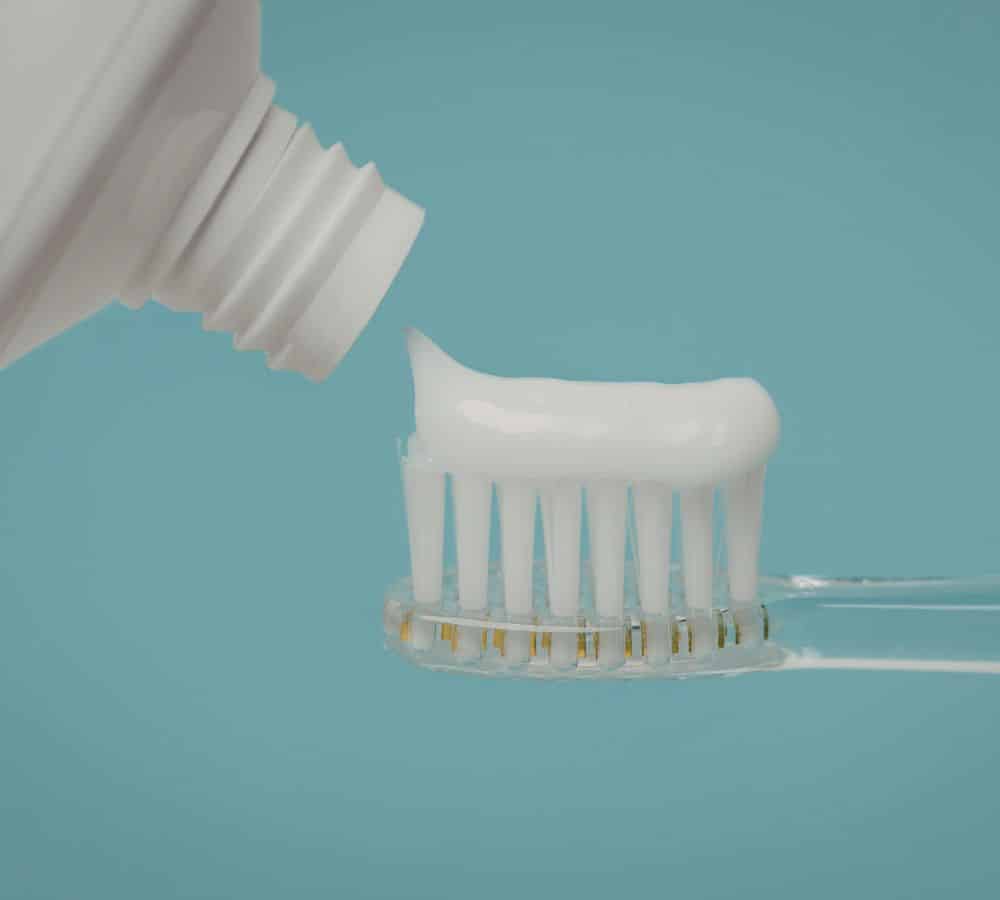
- 18 months to 6 years: a pea-sized amount of low-fluoride children's toothpaste, and teach them to spit, not swallow or rinse
- From 6 years: standard adult fluoride toothpaste
- Supervise brushing until around age seven or eight, and store toothpaste out of reach — children like the taste and will eat it
The NHMRC gives the same two instructions in its own words: "use only a small pea-sized amount; encourage children not to swallow toothpaste."
The reason for the caution is dental fluorosis: excess fluoride while the permanent teeth are forming can leave faint white flecks in the enamel. The NHMRC describes it as arising from "a high intake of fluoride from multiple sources during the time when teeth are developing inside the jawbone, usually from birth to six or eight years of age." At Australian levels it is almost always mild and cosmetic: the NHMRC states that "in most cases it is classified as very mild or mild", that mild fluorosis "does not affect the function of the teeth, is not of aesthetic concern to those who have it and is associated with a protective benefit against tooth decay in adult teeth", and that "moderate dental fluorosis is very uncommon and severe dental fluorosis is rare in Australia." Worth knowing too: fluorosis in Australia has declined over the same period that water fluoridation expanded, which the NHMRC credits to low-fluoride children's toothpaste and the advice above. What causes white spots on teeth? covers the look-alikes, including chalky teeth, which is a different condition entirely. Getting a reluctant child to brush at all is the harder problem: how to encourage your child to brush their teeth and when should a child first visit the dentist?
Formulations for specific problems
This is the useful part of the range — you can choose a toothpaste that suits your specific dental needs rather than a generic one.
Sensitivity. Look for potassium nitrate, which calms the nerve response, or stannous fluoride, which also plugs the exposed dentine tubules. Both need consistent use for several weeks before you judge them, and they work better if you smear a little on the sensitive spot and leave it rather than rinsing. If sensitivity is new, sharp, or lingers after the stimulus is gone, get it examined rather than self-treating — it can indicate a crack, decay or a dying nerve. What to do if you suffer from sensitive teeth, why does a cracked tooth hurt so much? and what are the causes of toothache and what are their symptoms?
One cause of sensitivity no paste fixes: recession from brushing too hard. Gum that has receded does not grow back. Over brushing: what can it do to my teeth? and how much pressure should I apply when brushing my teeth?
High decay risk, dry mouth, exposed roots, orthodontic appliances. A 5,000 ppm prescription-strength paste, on advice. This is one of the most effective interventions available and it is under-used. The Better Health Channel describes the same category for dry mouth: "dental products — these products may contain high fluoride or calcium to help prevent tooth decay." How do I prevent dental decay? and braces
Gum disease. Stannous fluoride formulations have the better evidence, alongside the cleaning that is doing the real work. To be clear about the limits: a paste helps at the margin, but a pocket of 5mm or more is periodontitis and needs professional treatment — floss only reaches about 3mm below the gum margin. What is gum disease?, periodontal (gum) disease, when do you need deeper cleaning? and periodontists. If your gums bleed when you brush, that is the signal: bleeding gums
Dry mouth. Avoid strongly flavoured pastes and those containing sodium lauryl sulphate (SLS), which many people with dry mouth or recurrent ulcers find irritating. SLS-free options exist and are worth trying if your mouth stings after brushing. The Better Health Channel's related warning is about what you rinse with rather than what you brush with: "avoid lollies (especially fruit-flavoured and sour lollies) and alcohol-containing mouthwashes, as these products tend to aggravate dry mouth tissue." My mouth always feels dry! What can I do? and the cause of mouth ulcers and their usual treatments
Tartar control. These slow the mineralisation of plaque into calculus. They do not remove calculus that has already formed; nothing you buy does — that is what dental cleans and hygienists are for.
Whitening toothpastes — with a caution
Whitening toothpastes are widely available, but most work by abrasion rather than by changing the colour of the tooth, and some are abrasive enough to damage enamel over time.
Two things to understand:
- They remove surface stain. They do not change the underlying shade of the tooth. If your teeth have darkened with age, that is the dentine showing through thinning enamel, and no toothpaste reaches it. Teeth and aging: how can I keep my smile looking younger?
- Abrasion is cumulative and permanent. As enamel thins, the yellower dentine beneath shows through more — producing exactly the appearance the product was bought to fix.
There is also a regulatory line worth knowing, because it explains why a supermarket product cannot do what a dental one does. Under Schedule 10 of the Poisons Standard, products containing more than 6% hydrogen peroxide or 18% carbamide peroxide may only be sold, supplied and used by registered dental practitioners. Healthdirect Australia states the consequence plainly: "at-home tooth whitening kits do not contain the same concentration of bleaching agents as those dental practitioners use."
Abrasivity is measured on the RDA scale. Mainstream pastes are formulated to a controlled figure; charcoal products frequently publish no RDA at all, and many contain no fluoride — which trades a proven benefit for an unproven one. Home whitening and charcoal whitening: does it work, is it safe? goes through the claims one by one.
Consult your oral health professional before buying one. The risk is not immediate; it is cumulative, and by the time thinned enamel shows, it does not come back. For an actual change of shade, teeth whitening under supervision is the route with evidence behind it — home teeth whitening versus having your teeth whitened at the dentist compares the two honestly, and published fees are in the price guide.
Flavour
A small but genuinely practical point: toothpastes come in a range of flavours, so there are options if you don't enjoy the classic mint taste.
This matters most for children, and for anyone who has quietly been brushing for less time than they should because they dislike the product. The best toothpaste is the one that gets used for two minutes, twice a day. More than twice is not better — how often should I brush my teeth?
It also matters during pregnancy, where nausea can make a strongly flavoured paste intolerable — a bland or unflavoured option often solves it. Oral health care while pregnant and how do I protect my teeth during pregnancy?
If you're still stuck
Ask your dentist or hygienist. They know your decay history, your gum condition, your sensitivity and your saliva — and can recommend a toothpaste that suits your overall oral health, which no packaging can do. General dentistry, the clinical team, and what does a dental hygienist do?
It is a thirty-second question at an appointment you are already having, and the answer is specific to you.
What matters just as much as the toothpaste
Correct brushing technique and interdental cleaning are of equal importance to product choice. A good toothpaste applied with a scrubbing motion at the wrong angle does very little, and no toothpaste reaches between the teeth — roughly 40 per cent of the tooth surface, and where a large share of decay starts. The brush itself matters more than the paste on it, and healthdirect's advice there is to "replace your toothbrush or toothbrush head every 3 months, or when it looks worn." How to care for your toothbrush
Alongside brushing, cleaning between teeth and regular dental check-ups, it is recommended you see a dental hygienist for a professional clean at the interval you are advised — your Smile Solutions dental hygienist visit: what to expect and how often should I go to the dentist?. This cleans your teeth more thoroughly than you can achieve at home — in particular, it removes hardened calculus, which no toothpaste can touch once it has mineralised onto the tooth.
Common questions
I have braces. Does any of this change?
The paste changes less than the routine does — and the routine becomes considerably more demanding.
The Australian Dental Association is direct about the standard while an appliance is in place: "It is very important to brush and clean between your teeth well while you are having orthodontic treatment. For people wearing braces, brushing after every meal is recommended as food can get stuck around the brackets." Not twice a day — after every meal. It adds that "both manual and electric toothbrushes can be used for cleaning around braces."
On cleaning between the teeth, the ADA notes that string floss "can be tricky while wearing braces" and points to floss threaders for braces or interdental brushes, which "can help to clean between the teeth as well as between the orthodontic brackets."
On the paste itself, two points from this page apply with more force than usual. Orthodontic appliances are listed above among the reasons a 5,000 ppm prescription-strength paste may be recommended, because a bracket creates sheltered surfaces where plaque sits undisturbed. And the spit-don't-rinse rule is one the ADA repeats specifically in its braces sequence: "after brushing, spit out the excess toothpaste but do not rinse your mouth with water. This allows the fluoride paste to sit on the teeth for longer, increasing protection."
With removable clear aligners the trays come out to eat, so the teeth are brushed and flossed as normal — but the ADA warns that drinking anything other than water while wearing them "can trap the liquids against the teeth, which can cause damage to the teeth if it happens frequently." It also says to clean the trays themselves whenever you clean your teeth, with a mild soap and a spare toothbrush, rinsed well in warm water.
The consequence of getting this wrong is visible: white marks around where the brackets were. What causes white spots on teeth? and braces.
Can mouthwash replace the toothpaste, or the brushing?
No, and the ADA puts mouthrinse in a specific category that answers this precisely.
Its oral hygiene policy separates two lists. The main oral hygiene strategies are brushing for two minutes twice a day, an age-appropriate fluoride toothpaste, cleaning between the teeth once a day, and regular professional care. Then there is a second list of "proven aids to oral hygiene", which includes the toothbrush, fluoridated toothpaste, interdental aids, sugar-free chewing gum — and mouthrinse.
So the honest reading is narrow and useful: the ADA regards mouthwash as proven, and as an aid rather than a strategy. It is not that mouthwash does not work. It is that it is not a replacement for any of the four things above, because, as this page says, plaque is a biofilm and only mechanical disruption removes it. Swishing does not disrupt it.
Two practical cautions. Rinsing immediately after brushing — with mouthwash or with water — washes away the fluoride you just applied, so leave a gap or use a rinse at a different time of day. And if your mouth is dry, avoid alcohol-containing rinses: the Better Health Channel warns that they "tend to aggravate dry mouth tissue."
Should I be using mouthwash as well as brushing and flossing my teeth? and the truth and myths about mouthwashes.
My gums bleed when I brush. Should I brush more gently, or use a different paste?
Bleeding is a sign of inflammation, not of brushing too hard — and the usual response to it makes things worse.
The instinct is to avoid the area that bleeds. That leaves plaque where it is, and as the ADA puts it, "plaque is the primary cause" of both tooth decay and gum disease, the "two of the most common diseases experienced by Australians." Gum that is inflamed because plaque is sitting against it bleeds more, not less, when it is left alone.
So the answer is usually to keep cleaning the area properly rather than to stop — but that is only the answer if this is early, reversible gum inflammation. It is not a self-diagnosis you can make from a page, and it is not something a toothpaste fixes. Once gum disease has progressed to periodontitis, the changes are permanent: Diabetes Australia's description is that periodontitis "causes recession of the gum and/or bone surrounding affected teeth, and these changes are irreversible."
Get it assessed rather than managed at home if the bleeding has gone on for more than a week or two of proper cleaning, if your gums are receding, if teeth feel loose, or if there is persistent bad breath. And say so if you have diabetes — Diabetes Australia describes "a two-way relationship between periodontitis and diabetes", with a greater risk of periodontitis when blood glucose sits outside the recommended 4 to 7 mmol/L range, and notes that with optimum blood glucose management "the risk is the same as for a person without diabetes."
Separately, brushing too hard is a real problem, but it causes recession and abrasion rather than bleeding, and no paste reverses it. Bleeding gums, what is gum disease? and over brushing.
I am pregnant, or I have reflux. When should I brush?
Not straight after the acid — and this is the one piece of toothpaste advice where timing matters more than product.
The mechanism is the one described at the top of this page: acid softens enamel temporarily, and brushing the softened layer abrades it away. Healthdirect's general version is "ideally, wait 30 minutes after eating and drinking to brush your teeth." That rule applies with more force to stomach acid than to anything you have eaten, because it is stronger.
So after vomiting or reflux, brushing immediately does more damage than not brushing at all. Rinse with water — or with plain tap water and a little bicarbonate of soda if that suits you — wait, and brush later.
The rest is about making brushing possible at all. Nausea makes strong mint intolerable for a lot of people in pregnancy, and the practical fix is a bland, mildly flavoured or unflavoured paste, a smaller brush head, and brushing at whatever time of day the nausea is least. A less pleasant toothpaste used twice a day beats a better one avoided.
And if reflux is the cause, treat the reflux as a dental matter as well as a medical one. Tell your dentist, because the wear pattern it produces is recognisable and the protective measures — including the higher-fluoride pastes described above — are worth putting in place early. Any medicine for reflux is a matter for your doctor. What is dental erosion and how is it addressed?, oral health care while pregnant and how do I protect my teeth during pregnancy?.
Related reading
- With so many toothpastes on the market, how do I choose?
- Choosing the right toothpaste
- 3 oral hygiene tips you need to know
- How to care for your toothbrush
- Should I be using mouthwash as well as brushing and flossing my teeth?
- Can oil pulling make my mouth healthier and my teeth whiter?
- Dental cleans and hygienists
- Kids teeth cleaning tips
Practical details
Smile Solutions, Level 1, 220 Collins Street, Manchester Unity Building, Melbourne VIC 3000 — getting here. Phone 13 13 96, contact us, or theteam@smilesolutions.com.au. Monday–Friday 8.00am–6.00pm, Saturday 8.30am–1.30pm, Sunday by appointment.
Registration for any practitioner can be verified free on the AHPRA public register at ahpra.gov.au.
Published 14 August 2017. General information only — it is not a diagnosis, a treatment plan or a promise of any particular clinical outcome, and it does not replace advice from your treating practitioner. Product suitability varies between individuals; prescription-strength products are dispensed on clinical advice, and fluoride guidance for children is set by health authorities and changes over time. This page describes product categories rather than recommending brands, deliberately. Do not start fluoride supplements for a child without advice. Do not start, stop or change a prescribed medicine on the basis of this page; speak to the doctor who prescribed it.
Smile Solutions trades under ABN 28 193 514 103.
Images on This Page
-
https://www.facebook.com/tr?id=800557773428361&ev=PageView&noscript=1
(no alt text)
-
https://www.smilesolutions.com.au/wp-content/uploads/2025/10/calendar_month.svg
(no alt text)
-
https://www.smilesolutions.com.au/wp-content/themes/arcadian-wordpress-theme/assets/images/smile_solutions_logo_white.png
Smile Solutions Logo
-
https://www.smilesolutions.com.au/wp-content/themes/arcadian-wordpress-theme/assets/images/smile_solutions_logo_purple.png
Smile Solutions Logo
-
https://www.smilesolutions.com.au/wp-content/uploads/2023/11/SS-Tooth-1-1-150x150.png
Smile Solutions
-
https://www.smilesolutions.com.au/wp-content/uploads/2017/08/Toothpaste.jpg
Choosing the right toothpaste for you
-
https://www.smilesolutions.com.au/wp-content/uploads/2025/09/Root-Canal-2-300x217.jpg
Root Canal
-
https://www.smilesolutions.com.au/wp-content/uploads/2026/08/Mouth-Breathing-300x270.jpg
Mouth Breathing
-
https://www.smilesolutions.com.au/wp-content/uploads/2025/09/Dental-Crown-at-Smile-Solutions-300x300.jpg
Dental Crown at Smile Solutions
-
https://www.smilesolutions.com.au/wp-content/themes/arcadian-wordpress-theme/assets/images/family_owned_bussiness.png
Family Owned Business
-
https://www.smilesolutions.com.au/wp-content/themes/arcadian-wordpress-theme/assets/icons/icon--phone.svg
Smile Solutions Contact
-
https://www.facebook.com/tr? id=800557773428361&ev=PageView&noscript=1
(no alt text)
-
https://bat.bing.com/action/0?ti=25148060&tm=gtm002&Ver=2&mid=8410c1e5-4341-4d8d-a145-13d80c71af2b&bo=1&sid=4aa9b930ab2611f1a5df4187b3a87afb&vid=4aaa7360ab2611f1b62195670c78d922&vids=1&msclkid=N&pi=918639831&lg=en-US&sw=800&sh=600&sc=24&nwd=1&tl=Choosing%20the%20right%20toothpaste%20for%20you%20-%20Smile%20Solutions&p=https%3A%2F%2Fwww.smilesolutions.com.au%2Fdental-articles%2Farticle%2Fchoosing-the-right-toothpaste-for-you%2F&r=&evt=pageLoad&sv=2&cdb=AQAQ&rn=677477
(no alt text)