Three things that decide your oral health at home
Good oral health matters to appearance, but it is also essential to overall physical health. The importance of dental hygiene — a window onto your overall health and health problems linked to poor oral hygiene set out what is and is not established there.
Even a healthy mouth is full of bacteria, most of it harmless. Daily brushing and regular flossing, together with the body's immune system, keep that bacteria from reaching levels that lead to tooth decay and gum disease. The organised form it takes on the tooth is plaque, a biofilm — and only mechanical disruption removes it. Rinses, oils and mouthwashes act on what brushing and interdental cleaning leave behind: the truth and myths about mouthwashes and can oil pulling make my mouth healthier and my teeth whiter?
Missing teeth and bad breath are not the only signs of poor oral health — other serious conditions can follow from inadequate care, which is why regular hygienist visits matter. What does a dental hygienist do? and your Smile Solutions dental hygienist visit: what to expect
These three tips are all easy to implement. What happens at home decides most of the outcome; a professional clean twice a year is a few hours against 730 brushing sessions. The longer version of the same advice is at what is the ideal daily routine for oral hygiene?
Nor is this a house style. It is the Australian Dental Association's own list. Policy Statement 2.2.3 on oral hygiene, amended by the ADA Board in October 2025, names the main strategies as "brushing for two minutes twice a day; using an age-appropriate fluoride toothpaste; clean between teeth once a day using floss or interdental brushes; and visit a dental professional for regular check-ups and professional cleaning" — and, in the same document, states that tooth decay and gum disease are "two of the most common diseases experienced by Australians" and that "plaque is the primary cause of both".
Tip 1: correct brushing technique
Brush twice a day — once in the morning, and again before bed at night. Twice is the standard; more is not better. How often should I brush my teeth?
If breakfast involves juice, citrus or coffee, brush before it rather than after, or wait — the reasoning is in brushing your teeth: before or after breakfast?
To remove plaque adequately, spend a minimum of two minutes brushing each time. Most people substantially overestimate how long they brush; timing it once is a genuine surprise.
The technique matters more than the effort:
- Start by placing the bristles right on the gum line — angled at about 45 degrees into it. This is where plaque begins to form, and it is the spot most people skip
- Gently brush the gum line in a circular motion
- Then brush the inner, outer and biting edges of the teeth
Starting at the gum line rather than the middle of the tooth is the single change that improves most people's brushing.
The details that matter as much as the technique
- Use a soft brush, and use it gently. Hard bristles and heavy pressure do not clean better. They wear away enamel at the gum line and push the gums into recession — damage that does not reverse, and a common cause of sensitivity. Over brushing: what can it do to my teeth?, how much pressure should I apply when brushing my teeth? and what to do if you suffer from sensitive teeth
- Use fluoride toothpaste, and spit, don't rinse. Rinsing with water immediately after brushing washes away the fluoride that was about to do the work. This one costs nothing and is probably the most underrated habit on this page. The World Health Organization is specific about the concentration, listing "a lack of removal of plaque by toothbrushing with fluoride toothpaste containing 1000-1500 ppm concentration" among the conditions that lead to decay — the ppm figure is printed on most tubes. The benefits of fluoride, selecting a toothpaste: fluoride or non-fluoride and choosing the right toothpaste for you
- Electric or manual? Either works with good technique. Oscillating-rotating electric brushes remove somewhat more plaque on average, mostly because they enforce timing and take the pressure decision out of your hands. A pressure sensor is the feature worth paying for. Which toothbrushes do dentists recommend?
- Replace the brush or head every three months, or sooner once the bristles splay. Splayed bristles clean noticeably less well. How to care for your toothbrush
- Do not brush straight after vomiting, reflux, or acidic food and drink. Enamel is temporarily softened, and brushing then scrubs it away. Rinse with water and wait around 30 to 60 minutes. What is dental erosion and how is it addressed? and how does acidic food affect your teeth?
- Brush your tongue, or use a scraper. It holds a substantial share of the bacteria behind bad breath — though note that Healthdirect Australia is careful to say tongue cleaning "does not treat halitosis, but it can help to remove bacteria from your mouth." Should I use a tongue scraper? and what causes bad breath and how can I fix it?
Tip 2: eliminating bacteria between the teeth
A toothbrush does not reach between teeth — that is roughly 40 per cent of the tooth surface left untouched. Floss after brushing, at least once daily. Is flossing really that important? makes the case at length.
Pass a length of floss between the teeth using a low, back-and-forth motion, then curve it around each tooth in a C shape and slide it gently under the gum line. The gum edge is the point of the exercise; snapping floss straight down and out cleans very little.
Practice makes perfect — it is a manual skill, and it does get easier.
If floss is difficult:
- Flossettes can be managed with one hand
- Piksters (interdental brushes) work well for larger spaces between teeth, and where the spaces suit them they clean better than floss, not merely more easily
- Water flossers are a reasonable option around braces, bridges and implants, and for anyone with limited dexterity
The ADA does not rank these against each other. Its 2025 policy lists "interdental aids including floss & interdental brushes" together among its "proven aids to oral hygiene", and asks for cleaning between teeth once a day — not with every brush.
If you are not sure which suits your mouth, a hygienist can look and tell you, and size interdental brushes for you. Using the wrong tool for your spacing is a common reason interdental cleaning fails. Dental cleans and hygienists
A note on bleeding. Gums that bleed when you first start flossing are usually inflamed, not injured. The instinct is to stop; the correct response is to keep going gently, and the bleeding typically settles within a week or two as the inflammation resolves. If it does not settle, that needs looking at rather than tolerating. Bleeding Gums, what is gum disease? and periodontal (gum) disease.
There is a limit to what any of this reaches. Floss goes about 3mm below the gum margin. A pocket of 5mm or more is periodontitis, and at that point the answer is treatment, not a better technique — when do you need deeper cleaning? and periodontists.
Tip 3: you are what you eat
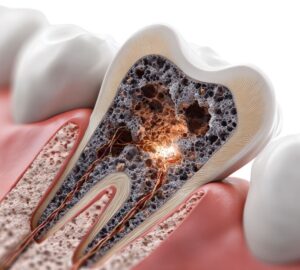
A high intake of sugary foods and soft drinks increases the risk of both tooth decay and tooth erosion. Erosion causes sensitivity, discolouration and cracks over time. How does sugar affect your dental health?, how does your diet affect your teeth? and how does tooth decay develop?
The World Health Organization strongly recommends reducing the intake of free sugars to less than 10% of total energy intake, and suggests going below 5% to further decrease the risk of tooth decay. The ADA's own diet and nutrition policy, approved in November 2023, adopts that recommendation directly.
How often matters more than how much. Every sugar or acid exposure starts an attack on enamel lasting roughly 20 to 40 minutes. A chocolate bar eaten in one sitting is one attack; the same chocolate grazed across an afternoon is many. Six coffees with sugar, sipped slowly at a desk, is one of the worst patterns there is — and one of the most common. The ADA puts the same point formally: "The form, frequency, timing and total amount of sugar intake are significant in the initiation of the caries process."
Practical substitutions:
- replace cordials, soft drinks, juice and sports drinks with water, which is far less acidic. Tap water in Melbourne is fluoridated, which is a free benefit worth taking — fluoridated water: is it good for you?. See also are sugar free soft drinks better for my teeth than regular soft drinks? and what are sports drinks really doing to your teeth?
- try sugar-free chewing gum after meals — it promotes saliva production, which neutralises acid and helps the mouth recover. Xylitol-sweetened gum has the best evidence behind it. The ADA's position is that "sugar-free confectioneries without added acids, including chewing gums, are dentally safe alternatives" — a safe alternative, not a reason to have more of them. Does chewing sugar-free gum really help prevent cavities?
- keep sweet things to mealtimes rather than between them, so the attacks are fewer
- if you must sip something other than water at a desk, finish it rather than nursing it
One correction worth making, because it circulates widely: honey is not a better choice than sugar for your teeth. It is fermentable, it is acidic, and it is stickier, so it clings to tooth surfaces for longer. It may have other merits; protecting enamel is not one of them. This is not a matter of interpretation — the definition of free sugars used by both the WHO and the ADA expressly covers "sugars naturally present in honey, syrups, dried fruit, fruit juices and fruit juice concentrates". Honey sits inside the category the guideline tells you to limit, not outside it, and the same applies to dried fruit, muesli bars and fruit juice. Six foods to avoid for healthy teeth
Saliva is the mouth's own defence — anything that increases it works in your favour, and anything that dries the mouth works against you. If you have a persistently dry mouth, from medication, a medical condition, or mouth breathing, mention it. Dry mouth substantially raises decay risk and is often manageable once identified. The ADA's list of people most at risk from acidic foods and drinks is worth reading in full, because two of its entries are easy to overlook: sipping drinks other than water during interrupted sleep, and chewing or sucking acidic vitamin tablets. My mouth is always dry — why is this and does it affect my teeth? and mouth breathing: the silent habit that's changing your face and your health
What this does not replace
Home care prevents most dental disease. It does not detect it.
Most cavities start silently, and gum disease is usually painless until it is advanced. That is the entire argument for regular examinations — not to clean your teeth, but to find things while they are small. How often should I go to the dentist? and how safe are dental x-rays?, which are what find decay between the teeth. A professional clean also removes calculus (tartar), which has hardened onto the tooth and cannot be brushed off at home by anyone, at any technique level.
Six months suits most people. Some need three or four monthly — patients with periodontitis, heavy calculus, diabetes, a dry mouth, braces or implants. Ask what your interval should be and why. Dental Cleans and Hygienists, and dental hygienist vs dentist explains which appointment does what.
Children
The same principles, with three differences:
- Supervise or brush for them until around age seven or eight. Manual dexterity, not willingness, is the limiting factor.
- Use a toothpaste appropriate to their age, and a smear rather than a blob for toddlers. The ADA's wording is "an age-appropriate fluoride toothpaste".
- Start cleaning between teeth as soon as any two teeth touch, which is usually well before parents expect.
Kids Teeth Cleaning Tips, children's dentistry, how to encourage your child to brush their teeth and protecting your child from dental disease. Where the back teeth have deep grooves, fissure sealants are worth asking about — who is a suitable candidate for dental sealants?
When to stop reading and book
- gums that bleed for more than a couple of weeks despite good cleaning
- teeth that feel loose, or have shifted — why do teeth shift?
- persistent bad breath that survives good hygiene — bad breath
- sensitivity that is new, sharp, or lingers after the stimulus is gone
- an ulcer, lump, or red or white patch that has not healed in two weeks — oral cancer: how your dentist can help with early detection
That last one is not about hygiene, and it is the one worth acting on promptly.
Common questions
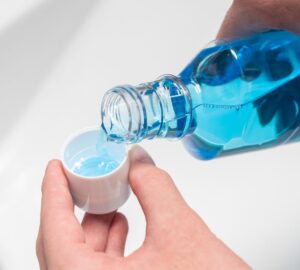
Should I be using a mouthwash as well, or is it a waste of money?
It depends entirely on what you are asking it to do, and the professional sources are careful about the distinction.
The Australian Dental Association puts mouthrinse in its list of "proven aids to oral hygiene" but not in its list of "main oral hygiene strategies". It is an addition, not a replacement for any of the four. Australian Prescriber states the boundary plainly: "Mouthwashes are an adjunct to, not a substitute for, regular brushing and flossing."
For an antiseptic rinse specifically, the evidence is genuinely good and genuinely double-edged. A Cochrane review of chlorhexidine mouthrinse used as an adjunct to mechanical cleaning found that after four to six weeks it reduced gingivitis, on high-quality evidence — and, in the same review, "a large increase in extrinsic tooth staining" in the people using it. Australian Prescriber adds that antiseptic rinses "should only be used for short periods of time and should never be the sole means of oral hygiene", listing staining, increased calculus deposition, taste alteration and a burning sensation among the recognised effects.
So: useful for a defined problem over a defined period, on advice. Not a daily habit to adopt indefinitely, and never a substitute for the two minutes and the floss.
I have read that mouthwash is linked to cancer. Is that real?
The honest answer is that the overall finding is null and two subgroup findings are not, which is why the question refuses to go away.
The largest pooled analysis — 8,981 head and neck cancer cases and 10,090 controls across 12 case-control studies, adjusted for age, sex, pack-years of smoking, alcoholic drinks per day and education — found that for ever having used mouthwash, the odds ratio for all head and neck cancers was 1.01 (95% CI 0.94 to 1.08): no association.
Within that, two signals were statistically significant: oropharyngeal cancer, OR 1.28 (95% CI 1.06 to 1.56), and use more than once a day, OR 1.31 (95% CI 1.09 to 1.58) across five studies.
What that does not establish: that mouthwash causes cancer. These are case-control odds ratios, not causal estimates, and the authors name their own limitations — the retrospective design, and "the limited ability to assess risks of mouthwash use in nonusers of tobacco and alcohol", which is the crux, because tobacco and alcohol are the two dominant risk factors for these cancers and are also common reasons to use mouthwash.
A reasonable reading for a person deciding what to buy: there is no good evidence that occasional use is harmful, the signal that exists is in heavy, long-term, more-than-daily use, and that is exactly the pattern the ADA and Australian Prescriber already advise against for unrelated reasons. If you are rinsing several times a day to cover a smell, the rinse is not the problem to solve.
Does a water flosser count as cleaning between my teeth?
As a practical aid, yes, particularly around braces, bridges and implants, and for anyone whose hands do not manage floss — which is why it is listed above.
As a like-for-like substitute in the professional guidance, no. The ADA's "proven aids" list names "interdental aids including floss & interdental brushes"; a water flosser is not among the items it names, and its "main oral hygiene strategies" ask specifically for cleaning between teeth "using floss or interdental brushes".
That is not a finding that water flossers do nothing. It is a reason not to drop floss or interdental brushes on the strength of having bought one. If you use a water flosser because floss is genuinely unmanageable, say so at your next visit and have someone check whether the between-tooth surfaces are actually coming clean — that is a five-minute answer in the chair and guesswork at home.
I smoke. Is there any point doing all this?
Yes, and there is one further step that does more than all of it.
The ADA's consumer service is direct about the interaction: "Smoking also makes you more likely to get gum disease", and "the bacteria that cause gum disease can build up around and under your gums". Smoking raises the risk of severe gum disease and of oral cancer, and it does that regardless of how well you brush — so good home care in a smoker is doing more work, not less.
The part worth holding on to is the prognosis: "Quitting smoking can improve your oral health significantly even after smoking for a long time." It is not too late to be worth doing.
Two specifics that are easy to miss. Tell the practice you smoke, because your recall interval and gum monitoring should reflect it. And if you are having a tooth taken out, the advice is to avoid smoking for as long as possible afterwards to reduce the risk of complications in the healing socket. Quitline is free on 13 7848.
How do I know whether my technique is actually working?
By the signs rather than by how clean your mouth feels, because the feeling is unreliable — this page opens with a hygienist's observation that most people's assessment of their own brushing does not survive contact with an examination.
Three things are worth watching at home. Bleeding is the most useful: gums that bleed when cleaned are inflamed, and inflammation that persists beyond a couple of weeks of genuinely good cleaning is a reason to be seen rather than to try harder. Roughness at the gum line that you can feel with your tongue is usually calculus, which no technique removes at home. And a smell or taste localised to one spot, or floss that shreds in the same place each time, points at something structural rather than at your technique.
The reliable check is external. Ask at your next appointment which surfaces you are consistently missing — the answer is usually specific and repeatable, most often the inside surfaces of the lower front teeth and the back of the last molars — and ask for your recall interval to be set on your risk rather than on habit. Six months is a default, not a diagnosis.
Practical details
Written by Naomi Hoopmann, Oral Health Therapist at Smile Solutions. What is the difference between a dental therapist and a dental hygienist? explains that role.
Smile Solutions, Level 1, 220 Collins Street, Manchester Unity Building, Melbourne VIC 3000 — getting here. Phone 13 13 96, contact us, or theteam@smilesolutions.com.au. Monday–Friday 8.00am–6.00pm, Saturday 8.30am–1.30pm, Sunday by appointment. Published fees are in the price guide.
Related: Dental Cleans and Hygienists, Bleeding Gums, Bad Breath, Tooth Fillings, Kids Teeth Cleaning Tips.
Registration for hygienists, oral health therapists and dentists can be verified free on the AHPRA public register at ahpra.gov.au. The clinical team is listed by name.
Published 23 May 2018. General information only — it is not a diagnosis, a treatment plan or a promise of any particular clinical outcome, and it does not replace advice from your treating practitioner. Decay risk, gum disease susceptibility and the right cleaning routine vary between individuals; good home care reduces the risk of dental disease rather than guaranteeing its absence.
Smile Solutions trades under ABN 28 193 514 103.
Images on This Page
-
https://www.facebook.com/tr?id=800557773428361&ev=PageView&noscript=1
(no alt text)
-
https://www.smilesolutions.com.au/wp-content/uploads/2025/10/calendar_month.svg
(no alt text)
-
https://www.smilesolutions.com.au/wp-content/themes/arcadian-wordpress-theme/assets/images/smile_solutions_logo_white.png
Smile Solutions Logo
-
https://www.smilesolutions.com.au/wp-content/themes/arcadian-wordpress-theme/assets/images/smile_solutions_logo_purple.png
Smile Solutions Logo
-
https://www.smilesolutions.com.au/wp-content/uploads/2016/05/Naomi-150x150.jpg
Naomi Hoopmann
-
https://www.smilesolutions.com.au/wp-content/uploads/2025/11/Smile-Solutions-7.png
Smile Solutions Melbourne CBD
-
https://www.smilesolutions.com.au/wp-content/uploads/2016/08/Dry-Mouth-300x270.jpg
Dry Mouth
-
https://www.smilesolutions.com.au/wp-content/uploads/2013/12/Stages-of-Dental-Decay-300x270.jpg
Stages of Dental Decay
-
https://www.smilesolutions.com.au/wp-content/uploads/2013/01/Mouthwash-300x270.jpg
Do I need to use mouthwash?
-
https://www.smilesolutions.com.au/wp-content/themes/arcadian-wordpress-theme/assets/images/family_owned_bussiness.png
Family Owned Business
-
https://www.smilesolutions.com.au/wp-content/themes/arcadian-wordpress-theme/assets/icons/icon--phone.svg
Smile Solutions Contact
-
https://www.facebook.com/tr? id=800557773428361&ev=PageView&noscript=1
(no alt text)