Are sugar-free soft drinks better for my teeth than regular soft drinks?
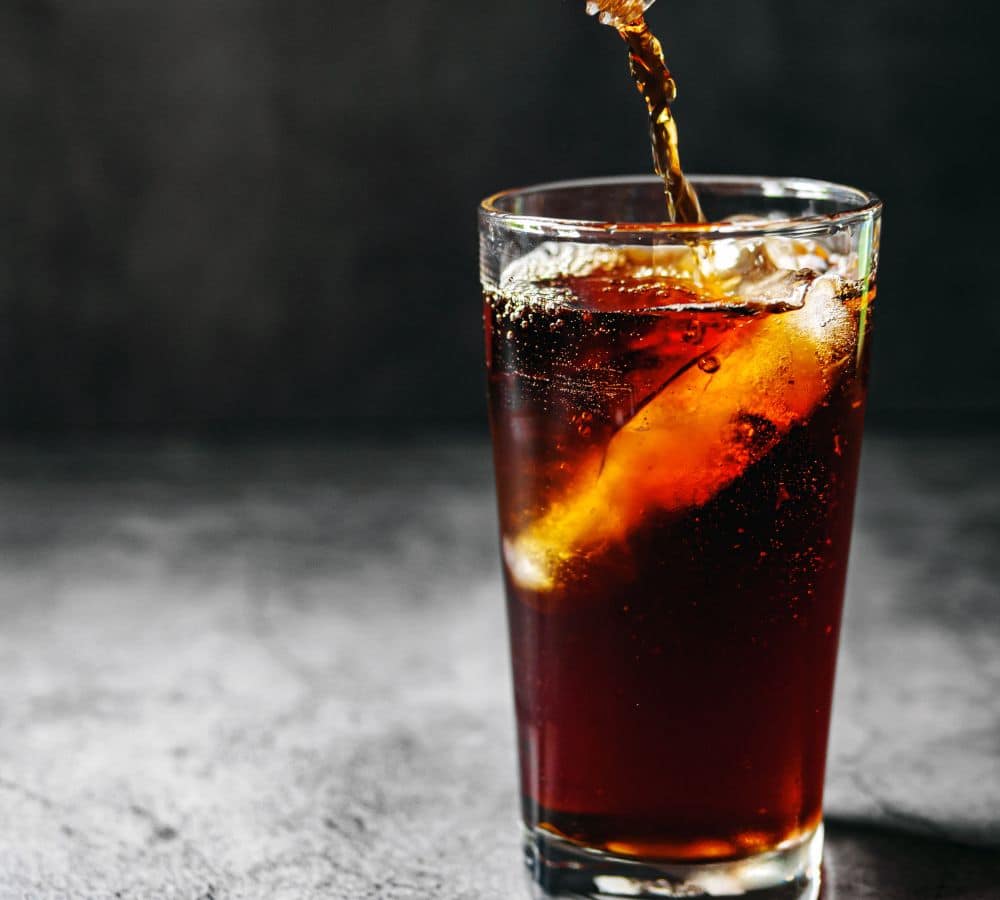
For decay, yes — modestly. For erosion, no. Sugar-free soft drinks strip enamel at broadly the same rate as sugared ones, because the damage in that case comes from the acid in the drink, not from the sugar.
This is the single most common misconception about soft drinks and teeth. Switching to a sugar-free version removes one of the two mechanisms by which a soft drink damages a tooth. The other one is untouched. How does tooth decay develop? covers the first mechanism; what is acid wear and how can I avoid it? covers the second.
What the research found
The Oral Health Cooperative Research Centre, based at the University of Melbourne, published findings in 2015 on exactly this question. Researchers tested 15 soft drinks — including three sugar-free brands — on extracted, healthy, cavity-free human molars.
The CRC’s then chief executive, Professor Eric Reynolds, summarised the result: both sugar-containing and sugar-free soft drinks, including flavoured mineral waters, produced measurable loss of the tooth surface, with no significant difference between the two groups.
The mechanism is straightforward. Sugar-free products still contain high levels of acid — typically citric, phosphoric or carbonic — and those acids strip away the surface layers of enamel directly. Advanced erosion exposes the softer dentine beneath, and eventually threatens the pulp. Damage to tooth enamel occurs within 30 seconds of consuming soft drinks reports separate work on how quickly that process begins, and Victorians’ love of soft drink wreaks havoc with teeth puts local consumption figures alongside it.
A word on what this study does and does not establish. Teeth in a laboratory dish are not teeth in a mouth: there is no saliva washing over them, no pellicle film, no swallowing. Laboratory immersion studies reliably rank drinks by how erosive they are, and they demonstrate the mechanism; they do not tell you how much enamel a particular person will lose from a particular habit. The clinical picture supports the direction of the finding, and the sensible reading is that sugar-free versions are not the protection people assume, rather than that a single can will ruin a tooth.
What erosion looks like
Unlike a cavity, erosion is generalised rather than localised, and its early signs are easy to dismiss:
- Chalkiness or a loss of gloss on the tooth surface — not to be confused with the other causes of white spots on teeth
- Pitting and small surface defects
- Opacity — the enamel losing its translucency
- Sensitivity, particularly to cold and sweet. What to do if you suffer from sensitive teeth covers the management
- Thinning and translucency at the biting edges of the front teeth
- “Cupping” — shallow craters on the tips of molars and canines
- Fillings appearing to stand proud of the tooth surface, because the enamel around them has receded and the filling material has not
The last one is diagnostic: composite and amalgam do not erode, so if a filling looks raised, the tooth around it has been lost. What is dental erosion and how is it addressed? sets out what can be done about it, and if enamel is the hardest substance in the body, why do teeth break? explains why thinned enamel chips and cracks so readily.
Why this is not the same problem as decay
| Decay | Erosion | |
|---|---|---|
| Cause | Acid made by plaque bacteria from sugar | Acid consumed directly |
| Does sugar-free help? | Yes | No |
| Does brushing help? | Yes | Only indirectly; brushing straight after acid makes it worse |
| Pattern | Grooves, contact points, gumline | Broad, smooth, whole-surface |
| Reversible? | Only at the earliest white-spot stage | No — lost thickness does not return |
This is why “I brush twice a day, so why do I have this?” is such a common question from people with erosion. Brushing addresses plaque. It does nothing about a can of sugar-free cola sipped over an hour. What is the ideal daily routine for oral hygiene? and is flossing really that important? describe what good plaque control actually achieves — and where its limits are. On the decay side, can you reverse tooth decay? explains the one window in which damage can still be undone.
The concern for children
Parents are understandably concerned by these findings, because many buy sugar-free substitutes specifically believing they are protecting their children’s teeth.
Professor Reynolds noted that the CRC had seen bad erosion in the teeth of children aged two to three, and signs of erosion in the permanent teeth of older children. He also made a point that has policy implications: banning sugar-containing beverages from schools may have positive effects on obesity, diabetes and dental caries — but it may not reduce the risk of dental erosion, because the sugar-free replacements are similarly acidic.
Children’s enamel is thinner and newly erupted permanent teeth are less mineralised than mature ones, so the same exposure does more damage in a child than in an adult. Protecting your child from dental disease, kids’ teeth cleaning tips and when should a child first visit the dentist? cover the practical side, and children’s dentistry explains how we approach it here. Where enamel was poorly formed to begin with — chalky teeth — the margin for error is smaller again.
What to drink instead
The CRC researchers’ recommendations were simple:
- Fluoridated tap water — the best option for teeth. Melbourne’s supply is fluoridated. It is pH-neutral and it delivers a low background dose of fluoride at the same time. See the benefits of fluoride, and, for the debate about the water supply itself, fluoridated water — is it good for you? alongside fluoridated water: why I worry.
- Milk — not erosive, and it contains calcium and phosphate, which support re-mineralisation. Plain milk only; flavoured milks carry substantial sugar.
Worth knowing about some common substitutes people assume are safe:
- Plain sparkling water is mildly acidic from dissolved carbon dioxide, but far less erosive than flavoured versions. Flavoured sparkling waters usually contain added citric acid and are a genuine erosion risk. Is soda water bad for your teeth? goes into this properly.
- Fruit juice is not a safe alternative — it is often more acidic than soft drink. How does acidic food affect your teeth? and six foods to avoid for healthy teeth list the rest.
- Sports drinks combine acid with sugar and are typically consumed slowly during exercise, when saliva flow is reduced. That is close to a worst case — see sports drinks linked to poor dental health in athletes, what are sports drinks really doing to your teeth? and how exercise can increase your risk of tooth decay.
- Kombucha, cider and wine are all acidic. What impact does wine have on my teeth?
- Herbal and fruit teas — many fruit infusions are surprisingly acidic; plain black and green teas are not, and may have some antibacterial properties of their own.
If you are going to drink it anyway
Erosion risk is driven by contact time and frequency, not volume. Practical steps that make a real difference:
- Drink it reasonably quickly rather than sipping over an hour. Nursing one can across an afternoon is far worse than drinking it in five minutes. The same frequency principle governs sugar and decay.
- Use a straw where practical, so the drink bypasses the front teeth.
- Keep it to mealtimes rather than grazing between meals. How does your diet affect your teeth? and how does sugar affect your dental health? set out why.
- Rinse with water afterwards.
- Wait about an hour before brushing. Acid temporarily softens the enamel surface; brushing immediately physically scrubs away the softened layer, converting a recoverable insult into permanent loss. This is one of the few pieces of dental advice where doing the right thing at the wrong time actively causes harm. Choosing a toothpaste — fluoride or non-fluoride? is worth reading too, since abrasive whitening pastes are a poor match for eroded enamel.
- Finish with something pH-neutral or alkaline — cheese, milk, plain nuts — or chew sugar-free gum to stimulate saliva.
If you have reflux, an eating disorder involving vomiting, or a dry mouth from medication, your erosion risk is elevated independently of what you drink, and it is worth raising with your dentist — my mouth is always dry: why is this, and does it affect my teeth? explains the link. Erosion caught early is a conversation about habits; erosion caught late is a full rehabilitation, often involving crowns and sometimes a prosthodontist. Raising it at a routine check-up or hygienist visit is the cheap version of that conversation.
Common questions
Are the artificial sweeteners themselves bad for my teeth?
For your teeth, the sweetener is not the problem — the acid is. Decay happens when plaque bacteria ferment carbohydrate; the Australian Dental Association describes the process as "the metabolism of simple carbohydrates by bacteria in the dental plaque which produces acids". Non-sugar sweeteners are not fermentable in that way, which is why the decay risk falls when the sugar is removed — and why the erosion risk does not move at all.
The ADA's endorsement of sugar-free products carries a qualifier that this whole page turns on. Its position is that "sugar-free confectioneries without added acids, including chewing gums, are dentally safe alternatives to caries-producing confectionery containing sugar". Without added acids. A sugar-free cola formulated with phosphoric acid, or a sugar-free flavoured water with citric acid, is not in that category however prominently "no sugar" appears on the can.
Beyond teeth, there is a position worth knowing about. The World Health Organization "advises against using non-sugar sweeteners for weight control or reducing the risk of noncommunicable diseases", and notes that this may affect existing policies promoting product reformulation. So the switch to sugar-free is not the unambiguous health win it is usually presented as — for the mouth it removes one of two mechanisms, and for the rest of the body the WHO is not recommending it as a strategy.
The ADA's broader dietary position points the same way: its main objective is "to encourage individuals to consume a recommended limited amount of simple carbohydrate foodstuffs and thus reduce the need for sugar and sugar substitutes". Reduce the need for both, rather than swap one for the other.
How do I tell whether a drink is acidic before I buy it?
Read the ingredients rather than the front of the pack — it takes about ten seconds.
- Look for the acids by name: citric acid, phosphoric acid, malic acid, tartaric acid, or "food acid" followed by a number (330 is citric, 338 is phosphoric). Carbonated drinks also carry carbonic acid from the dissolved gas, which is the milder of the group.
- Flavour is the tell. Plain sparkling water is mildly acidic from carbonation alone; the moment a flavour is added, an acid usually comes with it. That is why the plain and flavoured versions of the same brand are not equivalent.
- For the sugar side, use the per-100-gram column on the nutrition panel rather than per serve, because serving sizes are set by the manufacturer and are not comparable between products. The ADA's consumer thresholds against that column are 5 grams of sugar or less is best, 5 to 10 g is okay, and over 15 g means finding a healthier alternative — and it notes that sugars can appear under more than 50 different names, so the ingredient list matters as much as the panel.
What no label tells you is the pH, which is the number that would actually predict erosion. In its absence, the presence of an added acid plus the habit you have with the drink — sipped or finished — is the best guide available to a shopper.
I have reflux, or I vomit sometimes. What should I do about my teeth?
This matters more than any drink on this page, because the acid arrives more often and is stronger. Stomach acid reaching the mouth — from reflux, from morning sickness in pregnancy, from an eating disorder, or from a medical condition — produces the same erosion pattern as an acidic diet, and the enamel loss is just as permanent.
The single most important habit is counter-intuitive: do not brush straight afterwards. The enamel surface is softened by the acid, and brushing while it is softened removes more tooth structure than it cleans. Rinse with water instead and leave brushing for about an hour, exactly as this page recommends after an acidic drink.
What else helps:
- Tell your dentist plainly, even if it is uncomfortable to raise. It changes what is looked for, how often you should be reviewed, and what protective measures are appropriate. Nobody in that room is shocked by it.
- Treat the cause with your doctor. Reflux is a medical problem with medical management; dentistry can only protect the teeth from its consequences. Any medicine for it is a matter for your prescriber.
- Watch the dry-mouth interaction. The ADA lists "individuals with conditions which lead to a reduction in salivary flow" and "individuals using medication(s) which lead to a reduction in salivary flow" among those for whom acidic foods and drinks should particularly be avoided. Less saliva means less buffering, so the same acid does more damage.
- Ask about protective measures — topical fluoride, a shorter recall interval, and whether anything should be worn at night if reflux is nocturnal.
If eating or vomiting is part of a pattern you are struggling with, your GP is the right first call, and the dental side can be managed alongside it rather than instead of it.
If some enamel has already gone, can it be rebuilt — and what happens if I do nothing?
Early mineral loss can recover. Lost thickness cannot. The NHMRC describes fluoride as "reducing demineralisation (i.e. where the enamel begins to dissolve)" and "enhancing remineralisation (i.e. recovery of weakened enamel)", which "helps the repair of early tooth decay". That is real repair, at the surface, of mineral that has been leached but not yet lost. Once the enamel has physically been dissolved away, no toothpaste, gel or diet restores it — enamel contains no living cells.
What doing nothing looks like is not dramatic, which is the problem: thinning continues, the biting edges become translucent and chip, sensitivity increases as dentine is exposed, and eventually the shape and height of the teeth change enough that restoring them means rebuilding rather than repairing.
And restoration starts its own cycle. The NHMRC's flat statement is worth keeping in mind before assuming that a filling ends the story: "once a tooth is filled, it becomes structurally weaker and will almost certainly require further treatment in the future".
On cost, the honest guidance is to get it priced for your own mouth. The Australian Dental Association's Dental Fees Survey 2022 found "considerable variation in the fees charged within and between states", and where a rehabilitation involves specialists the survey reports a mean hourly rate of $921 and a median of $800, "ranging between $450 and $1,500 per hour" — with the ADA's own caution that the specialist response rate was low and those figures "should be interpreted with considerable caution". Work of that kind is priced by the hours it takes, which is precisely why catching erosion while it is still a conversation about drinking habits is the cheapest dentistry available. See the price guide and understanding your treatment.
Related reading
- When do you need deeper cleaning?
- Three oral hygiene tips you need to know
- How do I prevent dental decay?
- The stages of dental decay
- What can I do to strengthen my teeth?
- Why do I need a filling?
- Tooth fillings
- Seven ways stress can affect your mouth
- Caring for your teeth: 8 steps to dental health
Practical details
This article summarises research published by the Oral Health Cooperative Research Centre at the University of Melbourne in 2015, including comments made at the time by its then chief executive, Professor Eric Reynolds. The CRC’s own publications remain the primary source. Positions and figures attributed to the World Health Organization, the Australian Dental Association and the NHMRC are those organisations’ own, as at the dates of the documents cited.
Specialist registration can be verified on the AHPRA register, or by calling 1300 419 495. The clinical team is listed by name.
Smile Solutions, Level 1, 220 Collins Street, Manchester Unity Building, Melbourne VIC 3000 — getting here. Phone 13 13 96, contact us, or theteam@smilesolutions.com.au. Monday–Friday 8.00am–6.00pm, Saturday 8.30am–1.30pm, Sunday by appointment. Fee ranges are set out in the price guide.
Published 11 December 2015. General information only; it does not replace advice from your treating practitioner.
Smile Solutions trades under ABN 28 193 514 103.
Images on This Page
-
https://www.facebook.com/tr?id=800557773428361&ev=PageView&noscript=1
(no alt text)
-
https://www.smilesolutions.com.au/wp-content/uploads/2025/10/calendar_month.svg
(no alt text)
-
https://www.smilesolutions.com.au/wp-content/themes/arcadian-wordpress-theme/assets/images/smile_solutions_logo_white.png
Smile Solutions Logo
-
https://www.smilesolutions.com.au/wp-content/themes/arcadian-wordpress-theme/assets/images/smile_solutions_logo_purple.png
Smile Solutions Logo
-
https://www.smilesolutions.com.au/wp-content/uploads/2023/11/SS-Tooth-1-1-150x150.png
Smile Solutions
-
https://www.smilesolutions.com.au/wp-content/uploads/2018/08/Soft-Drink.jpg
Damage to tooth enamel occurs within 30 seconds of consuming soft drinks
-
https://www.smilesolutions.com.au/wp-content/uploads/2025/09/Root-Canal-2-300x217.jpg
Root Canal
-
https://www.smilesolutions.com.au/wp-content/uploads/2026/08/Mouth-Breathing-300x270.jpg
Mouth Breathing
-
https://www.smilesolutions.com.au/wp-content/uploads/2025/09/Dental-Crown-at-Smile-Solutions-300x300.jpg
Dental Crown at Smile Solutions
-
https://www.smilesolutions.com.au/wp-content/themes/arcadian-wordpress-theme/assets/images/family_owned_bussiness.png
Family Owned Business
-
https://www.smilesolutions.com.au/wp-content/themes/arcadian-wordpress-theme/assets/icons/icon--phone.svg
Smile Solutions Contact
-
https://www.facebook.com/tr? id=800557773428361&ev=PageView&noscript=1
(no alt text)