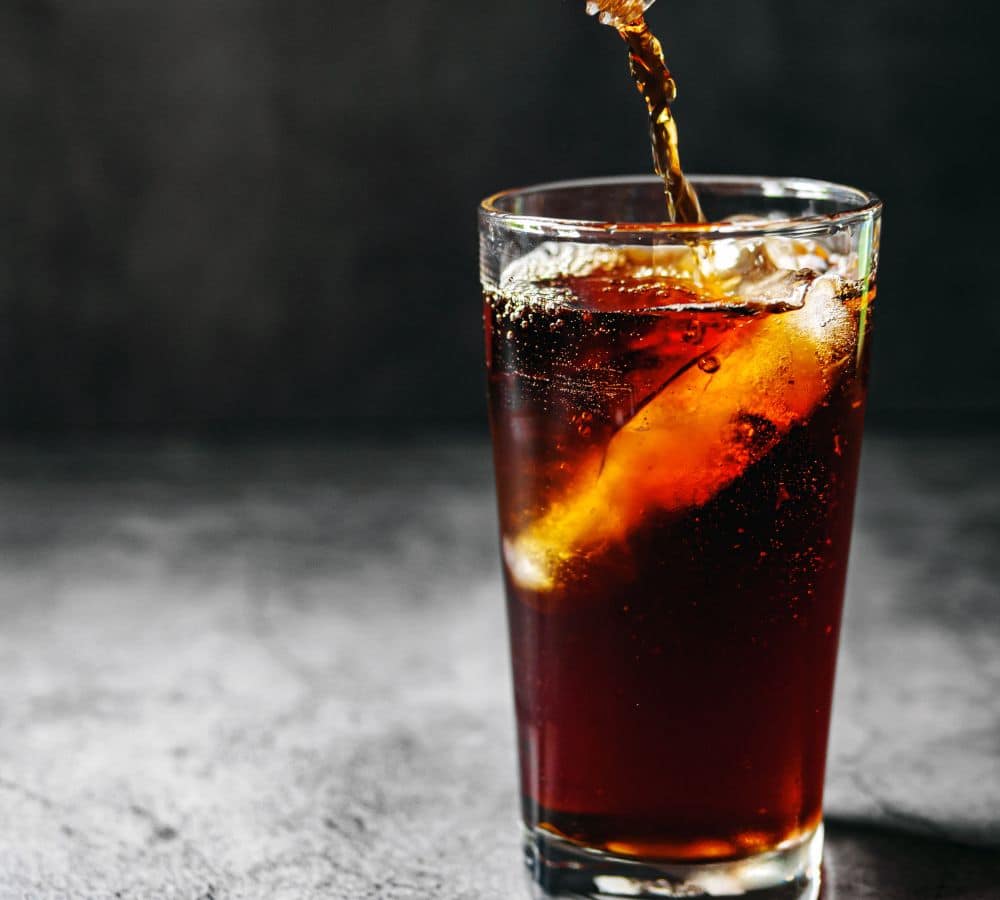
How much damage do soft drinks do to Victorians’ teeth?
Enough that, according to Dental Health Services Victoria, tooth decay was Victoria’s most prevalent health problem — five times more prevalent than asthma — and dental conditions were the most common cause of potentially preventable hospitalisation in Victorians under 19.
Those figures date from 2015 and are quoted here as reported at the time. The mechanism they describe has not changed. How does tooth decay develop? and the stages of dental decay set out that mechanism in full.
The consumption picture
Australians are generally aware of the health effects of a diet high in sugar, but consumption has not fallen accordingly.
As reported in 2015:
- 12 per cent of Victorians drank sugary soft drinks daily
- Australia was among the top ten countries for per capita soft drink consumption
- One can of soft drink can contain up to 10 teaspoons of sugar
Dr Deborah Cole, then chief executive of Dental Health Services Victoria, made the point that sugar-sweetened beverages have a large impact on oral health, and defined the category broadly: all non-alcoholic, water-based beverages with added sugar — soft drinks, energy drinks, fruit drinks and sports drinks.
That definition matters. People who have given up cola but drink sports drinks or bottled iced tea have not removed the problem — see sports drinks linked to poor dental health in athletes and what are sports drinks really doing to your teeth?.
In her words, there are strong links between lifestyle behaviours such as drinking soft drink and increased risk of tooth decay and other dental issues.
Two separate kinds of damage
Soft drinks harm teeth by two independent mechanisms, and confusing them leads people to the wrong substitution.
Decay. Tooth decay is caused by bacteria in the mouth using sugar from foods and drinks to produce acids that dissolve and damage the teeth. Soft drinks have high sugar levels, and drinking them regularly contributes significantly to decay. Sugar: what does it do to your teeth? and how does sugar affect your dental health? follow that chain from the can to the cavity.
Erosion. Soft drinks also have high acid levels — typically phosphoric or citric acid — which dissolve the outer surface of the enamel directly, with no bacteria involved. This is tooth erosion, and it is a different disease with a different pattern and a different management. What is acid wear and how can I avoid it?, what is dental erosion and how is it addressed? and how does acidic food affect your teeth? cover it.
The consequence that catches people out: switching to a sugar-free version removes the decay mechanism but not the erosion one. Sugar-free soft drinks and flavoured mineral waters are similarly acidic, and research by the Oral Health CRC at the University of Melbourne found measurable enamel loss from both sugared and sugar-free soft drinks, with no significant difference between them. Are sugar-free soft drinks better for my teeth? covers that study, and is soda water bad for your teeth? applies the same reasoning to sparkling water.
And erosion is permanent. Enamel dissolved by acid does not grow back — if enamel is the hardest substance in the body, why do teeth break? explains why the hardest tissue in the body is still on a one-way trip. Only the very earliest stage of decay can be turned around at all; can you reverse tooth decay? describes where that line sits.
Why frequency matters more than volume
The most useful single idea for reducing the damage without giving anything up: each exposure starts an acid attack lasting roughly 20 to 40 minutes before saliva restores a safe pH.
So a can drunk in ten minutes is one acid attack. The same can sipped across an afternoon is a continuous one. A person who cuts their total intake but grazes on it all day may be worse off than before. Anything that reduces saliva makes this worse again — a persistently dry mouth, or exercise, which dries the mouth and raises decay risk.
What the WHO and the ADA say
The 2015 Victorian figures above are a snapshot of one state at one moment. The bodies that set the wider position have published since, and their statements are worth having directly rather than paraphrased.
The World Health Organization describes dental caries as the most common noncommunicable disease worldwide, affecting 2.5 billion people — an estimated 2 billion people with caries in permanent teeth and 510 million children with caries in deciduous (baby) teeth. On cause it is unambiguous: the consumption of free sugars in foods and beverages is the most common risk factor for dental caries. WHO defines free sugars as all monosaccharides and disaccharides added to foods and beverages by the manufacturer, cook or consumer, plus sugars naturally present in honey, syrups, fruit juices and fruit juice concentrates — a definition that captures fruit juice alongside soft drink, which surprises people.
WHO's quantified position is that limiting the intake of free sugars to less than 10% of total energy intake — and ideally to less than 5% — minimises the risk of dental caries throughout the life course.
Set the can against that. The Australian Dental Association's consumer material states that on average one can of soft drink contains 10 teaspoons of sugar, which is 1.5 times the daily sugar intake recommended by the WHO. One can; a day and a half's allowance.
The ADA's policy position on sugar makes the frequency argument above in its own words. It describes acids produced in dental plaque causing the pH of plaque to fall below the critical level, softening tooth structure and over time producing decay, and states that the form, frequency, timing and total amount of sugar intake are significant in the initiation of the caries process. It also names the combination this article has been separating out: exposure to acid from acidic or sugar-sweetened foods and beverages can lead to softening and loss of tooth structure, and the combination of sugar and food acid can be particularly destructive. A sugared soft drink delivers both in the same mouthful.
On policy, both bodies land in the same place. WHO lists taxes on sugar-sweetened beverages among its population-wide strategies for reducing free-sugar consumption, alongside nutrition labelling, reformulation targets, public food procurement and service policies, and protecting children from food marketing. The ADA states that governments should apply a tax to sugar-sweetened foods and beverages in Australia to reduce consumption, with the revenue raised used to fund health promotion and oral care for disadvantaged Australians. Whatever you make of that, it is the published position of both organisations, not a fringe one.
WHO also sets out plainly what untreated decay costs the person who has it: physical symptoms such as pain, discomfort or chronic systemic infection; functional limitations such as difficulty eating, speaking, breathing or sleeping; and detrimental impacts on emotional, mental and social wellbeing. In children, it says, decay often leads to absence from school; for adults it is associated with absence from work.
The hospitalisation figure
The statistic worth pausing on is that dental conditions were the most common cause of potentially preventable hospitalisation in young Victorians under 19.
What that means in practice is children going to hospital for general anaesthetic to have decayed teeth removed — for a disease that is almost entirely preventable, and one whose main driver is a pattern of what and how often children drink.
The preventive side of that is unglamorous and well established: protecting your child from dental disease, kids’ teeth cleaning tips, fissure sealants, and getting children seen early — when should a child first visit the dentist? and the first visit. For eligible families, the Child Dental Benefits Schedule covers part of the cost of basic treatment; how it works here sets out what is claimable. Children’s dentistry explains our approach generally.
What to do instead
- Water — fluoridated tap water in Melbourne, which is pH-neutral and provides background fluoride. The benefits of fluoride explains how that works; fluoridated water — is it good for you? and fluoridated water: why I worry put both sides of the debate
- Plain milk — not erosive, and it supplies calcium and phosphate that support re-mineralisation
If you are going to drink a soft drink anyway, the measures that genuinely reduce the harm:
- Drink it reasonably quickly rather than sipping over an hour
- Use a straw where practical
- Keep it to mealtimes rather than between meals — how does your diet affect your teeth? and six foods to avoid for healthy teeth
- Rinse with water afterwards
- Wait about an hour before brushing. Acid temporarily softens enamel; brushing straight away scrubs the softened layer away. What is the ideal daily routine for oral hygiene? and selecting a toothpaste — fluoride or non-fluoride? cover the rest of the routine
- Finish with cheese, milk or plain nuts, which raise the pH
- Chew sugar-free gum to stimulate saliva
Regular examinations catch this early, while it is still a conversation about habits rather than about fillings — how often should I go to the dentist?, is flossing really that important? and when do you need deeper cleaning?.
Common questions
These figures are from 2015. Has anything actually improved since?
Not much, and on the hospital measure it has gone the other way.
The Australian Institute of Health and Welfare counts potentially preventable hospitalisations for dental conditions — its term for hospital stays considered avoidable with timely non-hospital care. In 2023–24 there were about 88,600 such admissions nationally. The rate per 1,000 people reached its lowest point of 2.6 in 2019–20 and its highest of 3.4 in 2023–24. Whatever else has changed, more Australians are going to hospital for dental conditions now than five years ago, not fewer.
On children specifically, the Australian Dental Association reports that 34% of children aged 5–6 have experienced decay in their primary teeth and 27% of 5–10 year olds have untreated decay in them.
On the drinks themselves, the ADA's consumer research found 38% of children had a soft drink two to five times a week, and 24% up to twice a week — and separately that 27% had fruit juice every day, despite 87% of parents saying they were aware these drinks lead to decay. The proportion of children consuming such drinks up to five times a week had fallen by only 6% since 2018.
That last pairing is the one to sit with. Awareness is not the missing ingredient; it is already high. What changes outcomes is what is in the fridge and how often it is reached for.
My child only has soft drink at parties and on weekends. Is that actually a problem?
Probably not, and this is one of the few places where the frequency principle works in your favour rather than against it.
A drink with a meal, at a party, once a week, is a small number of acid attacks in a week that otherwise contains none. The pattern that does the damage is the everyday one — a juice box in the lunchbox each day, a sports drink after every training session, a bottle sipped across an afternoon. The ADA's own survey suggests how common the everyday version is: 38% of children had a soft drink two to five times a week, which is no longer an occasional treat by any reasonable definition.
Three things make the occasional version safer still: have it with food rather than between meals, have it reasonably quickly rather than across an hour, and follow it with water. Do not brush straight afterwards, for the reason given above.
The drink worth reconsidering is the one nobody counts. Juice is included in the WHO's definition of free sugars, and a daily juice is a daily exposure whatever the label says about being natural or having no added sugar.
Would a sugar tax actually reduce tooth decay, or is that just politics?
Both bodies quoted on this page take a position, and the Australian Dental Association's is unusually direct for a policy statement: "A tax on sugar sweetened drinks reduces the consumption of soft drinks and is a cost-effective method of decreasing dental caries." It is stated as a finding, with a citation attached, rather than as an aspiration.
The ADA frames it within a broader recognition that "governments have the ability to influence consumer choice via education, labelling, taxation and other methods", and its position is that any revenue raised should fund health promotion and oral care for disadvantaged Australians. The World Health Organization likewise lists taxes on sugar-sweetened beverages among its population-wide strategies, alongside nutrition labelling, reformulation targets, public food procurement policies and protecting children from food marketing.
Two honest caveats. Neither organisation is a disinterested party on dental policy, and a policy measure that reduces population-level consumption is not the same as one that changes what any individual household does. This page is not the place to settle the politics. What it can tell you is that the dental case for it is a published professional position rather than a fringe view — and that nothing about it changes what is useful at home.
My teeth are already worn and sensitive at the edges. What can be done now?
The first thing is a diagnosis rather than a repair, because erosion, grinding and decay produce different patterns and need different responses. Erosion tends to show as smooth, shiny, cupped or hollowed surfaces — often on the biting edges and the inner surfaces of the upper front teeth — rather than as chips or holes.
The order that matters:
- Find and stop the source. That may be dietary, or it may not be. Reflux and frequent vomiting deliver stomach acid to the teeth, and that pattern erodes from the inside of the arch where you cannot see it. Tell your dentist if either applies; it changes both the diagnosis and the advice.
- Record where it is now. Photographs, scans or models at one visit make it possible to say at the next whether the wear is active or historic. That distinction decides whether anything needs doing at all — a lot of wear is old damage that stopped years ago.
- Protect what is left. Fluoride and re-mineralising products, a change to when and how acidic things are consumed, and a splint if grinding is contributing.
- Restore only what needs restoring. Sensitivity, loss of function or a tooth at risk of fracture are reasons to rebuild a surface; the appearance of wear on its own is a judgement call, and restorations placed on worn teeth need maintaining for the rest of your life.
Enamel does not come back, but the process can be arrested, and a mouth that is monitored is far cheaper to manage than one that is rebuilt. See what is dental erosion and how is it addressed?, what to do if you suffer from sensitive teeth and understanding your treatment.
Related reading
- Damage to tooth enamel occurs within 30 seconds of consuming soft drinks
- Dental Health Week: protect your kids from the Sugar Bandits
- Parents warned to limit children’s sugar consumption at Halloween
- How do I prevent dental decay?
- What impact does wine have on my teeth?
- Dental cleans with our hygienists
- Caring for your teeth: 8 steps to dental health
Practical details
This article summarises Dental Health Services Victoria material published in February 2015, including comments made at the time by its then chief executive, Dr Deborah Cole. The figures quoted relate to that period; DHSV’s own publications remain the primary source. The figures and positions attributed above to the World Health Organization, the Australian Dental Association and the Australian Institute of Health and Welfare are from those organisations’ own published material, which likewise remains the primary source.
Specialist registration can be verified on the AHPRA register, or by calling 1300 419 495. The clinical team is listed by name.
Smile Solutions, Level 1, 220 Collins Street, Manchester Unity Building, Melbourne VIC 3000 — getting here. Phone 13 13 96, contact us, or theteam@smilesolutions.com.au. Monday–Friday 8.00am–6.00pm, Saturday 8.30am–1.30pm, Sunday by appointment. Fee ranges are set out in the price guide.
Published 6 February 2015. General information only; it does not replace advice from your treating practitioner.
Smile Solutions trades under ABN 28 193 514 103.
Images on This Page
-
https://www.facebook.com/tr?id=800557773428361&ev=PageView&noscript=1
(no alt text)
-
https://www.smilesolutions.com.au/wp-content/uploads/2025/10/calendar_month.svg
(no alt text)
-
https://www.smilesolutions.com.au/wp-content/themes/arcadian-wordpress-theme/assets/images/smile_solutions_logo_white.png
Smile Solutions Logo
-
https://www.smilesolutions.com.au/wp-content/themes/arcadian-wordpress-theme/assets/images/smile_solutions_logo_purple.png
Smile Solutions Logo
-
https://www.smilesolutions.com.au/wp-content/uploads/2023/11/SS-Tooth-1-1-150x150.png
Smile Solutions
-
https://www.smilesolutions.com.au/wp-content/uploads/2018/08/Soft-Drink.jpg
Damage to tooth enamel occurs within 30 seconds of consuming soft drinks
-
https://www.smilesolutions.com.au/wp-content/uploads/2025/09/Root-Canal-2-300x217.jpg
Root Canal
-
https://www.smilesolutions.com.au/wp-content/uploads/2026/08/Mouth-Breathing-300x270.jpg
Mouth Breathing
-
https://www.smilesolutions.com.au/wp-content/uploads/2025/09/Dental-Crown-at-Smile-Solutions-300x300.jpg
Dental Crown at Smile Solutions
-
https://www.smilesolutions.com.au/wp-content/themes/arcadian-wordpress-theme/assets/images/family_owned_bussiness.png
Family Owned Business
-
https://www.smilesolutions.com.au/wp-content/themes/arcadian-wordpress-theme/assets/icons/icon--phone.svg
Smile Solutions Contact
-
https://www.facebook.com/tr? id=800557773428361&ev=PageView&noscript=1
(no alt text)