Limiting children's sugar at Halloween
Why this matters more than one night
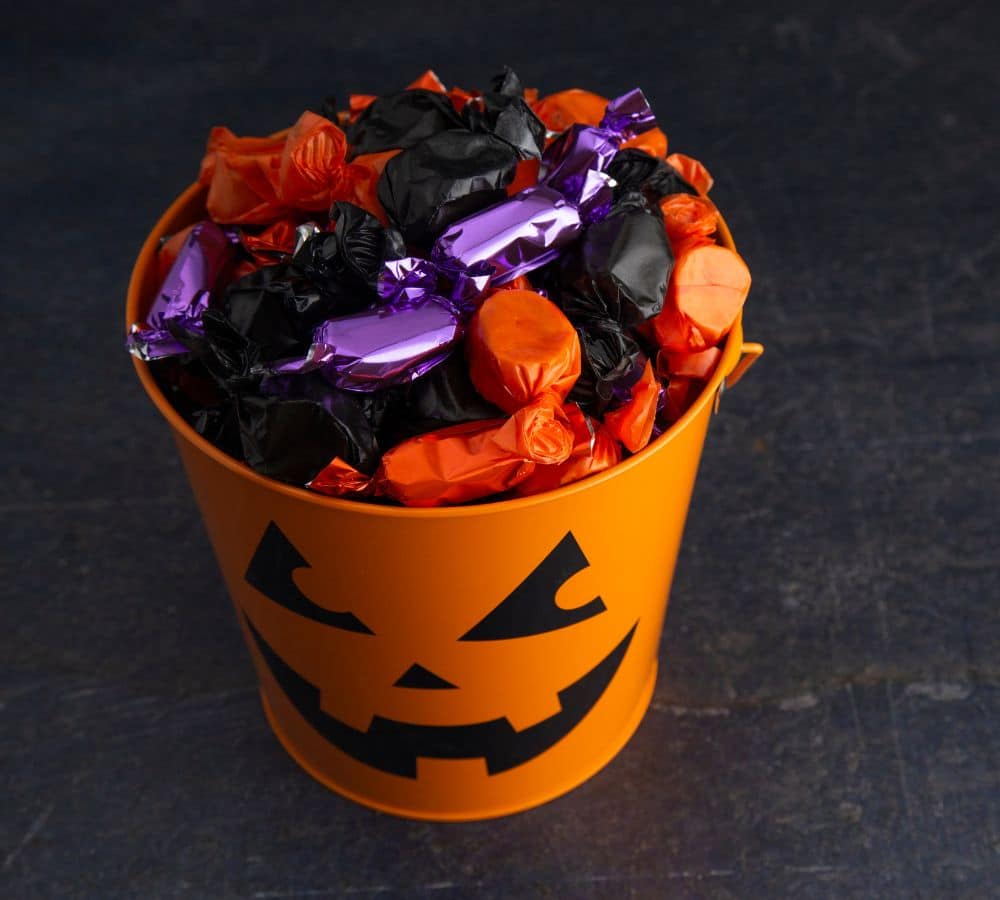
With Halloween approaching, the Australian Dental Association has cautioned that without sensible boundaries around sweet treats, children's oral health suffers in the longer term.
The numbers behind that concern:
Over half of six-year-olds have experienced tooth decay in their baby teeth.
By the time children reach 12, almost half have experienced decay in their permanent teeth.
Protecting your child from dental disease breaks those figures down further, including the finding that decay is not spread evenly — a small group of children carries a very large share of it.
Professor David Manton, then Vice-Chair of the ADA's Oral Health Committee, made three points in summary:
There is a direct relationship between having sugary foods and drinks on a regular basis and tooth decay — it is the number one cause.
Children who have tooth decay early in life are at considerable risk of more dental disease later on.
Tooth decay is entirely preventable.
That last statement is the one worth holding onto. Decay is not bad luck. It is the predictable result of a specific and modifiable set of conditions — how does tooth decay develop? sets out the mechanism, and preventing dental decay the measures that interrupt it.
What the ADA's more recent measurements say
The figures above are as published in 2014, and they are left exactly as they were written. The ADA's more recent public reporting gives different numbers, and a parent reading this page should see both.
In an August 2024 article drawing on its Children and Young People Oral Health Tracker, the ADA reported that 34 per cent of children aged 5–6 years have experienced decay in primary or baby teeth, and that 27 per cent of children aged 5–10 have untreated tooth decay in primary teeth.
We have not altered the older figures. They are a different measurement from a different period, and this is not the page on which to adjudicate between them.
What has not changed is the direction of the ADA's concern, and the same 2024 reporting supplies the sharpest illustration of it. Nearly 11 — 10.8 — in every 1,000 children aged 5 to 9 are hospitalised for potentially preventable problems due to dental conditions, rising to 14.3 per 1,000 for Indigenous children. And only 56 per cent of children visit the dentist before age 5.
Hospitalised is the load-bearing word there. Those are not fillings. They are hospital admissions, for a condition the same organisation describes as preventable.
Globally the picture is the same shape. The World Health Organization records that dental caries is the most common noncommunicable disease worldwide, affecting 2.5 billion people, including 510 million children with caries in their deciduous (first) teeth — and notes that in children, dental caries often leads to absence from school.
The ADA's position on Halloween
The ADA's stated view is not abstinence. It accepts that sugary treats have a place on occasions like Halloween, and encourages moderation — suggesting that families consider a sugar break in the week before and the week after, to offset the sugar hits that come on the night.
That is a practical idea and it works with the biology. What damages teeth is the frequency of acid attacks more than the total quantity of sugar — so reducing the everyday background exposure genuinely does offset a concentrated occasion. How does sugar affect your dental health? and can you reverse tooth decay? explain what happens in the recovery periods between attacks — and why they are the part that actually decides the outcome.
What the daily budget actually is, in teaspoons
It is easier to judge a night like Halloween against a number than against a feeling, so here is the number and its limits.
The Australian Dental Association's consumer guidance states that adults are recommended to have 6 teaspoons or less of free sugar per day, which is 24 grams — one teaspoon being 4 grams. That figure is 5 per cent of an average person's total daily energy intake, and the ADA gives about 8,700 kJ a day as the average adult requirement for a healthy weight. It follows the World Health Organization, which strongly recommends reducing free sugars to less than 10 per cent of total energy intake and suggests a further reduction to below 5 per cent to further decrease the risk of tooth decay.
Two honest limits on that number before you use it.
It is stated for adults. The source gives the 6-teaspoon figure as an adult recommendation, and does not publish a separate children's figure. A child needs less energy than an adult, so a child's 5 per cent is a smaller number of teaspoons — but we are not going to invent that number, and neither the ADA's consumer page nor the WHO fact sheet supplies one. Ask your dentist or a dietitian if you want it for a particular child.
And it is about free sugars, not all sugar. The WHO's definition is “all sugars added to foods and beverages by the manufacturer, cook or consumer, plus sugars naturally present in honey, syrups and fruit juices.” The ADA makes the corollary explicit: natural sugar and added sugar affect the teeth the same way, but whole foods such as fruit and milk bring fibre, vitamins and minerals with theirs — and milk also contains calcium — whereas processed foods high in added sugar often have no or limited nutritional value.
One comparison from the ADA that makes the scale obvious: on average, one can of soft drink contains 10 teaspoons of sugar — about 1.5 times the daily intake the WHO recommends. Victorians, soft drinks and tooth decay follows that further.
Reading the label
The ADA warns that sugars can be called over 50 different names, which is what makes them hard to spot on a label. Names on its list include sucrose, maltose, lactose, fructose, palm sugar, agave nectar, golden syrup, honey, molasses, corn syrup, cane sugar, maltodextrin, raw sugar and brown rice syrup — every one of which is adding sugar to the product.
What to actually do
Set limits on the amount of sugary treats.
Do not let children snack on treats over a long period. This is the most important item on the list and the one most often ignored. A handful of lollies eaten in ten minutes is far less damaging than the same handful grazed across an afternoon — because each new mouthful restarts the acid attack, and the mouth never gets time to recover.
Ensure children brush their teeth well before bed. Saliva flow drops overnight, so whatever remains on the teeth has hours to work. Kids teeth cleaning tips, how to encourage your child to brush — useful on a night when they are overtired and want to go straight to bed — and the benefits of fluoride, which is what that last brush is actually delivering. The WHO names the same three things together as what prevents decay: limiting free sugars, adequate exposure to fluoride, and removal of plaque by toothbrushing with a fluoride toothpaste containing 1000–1500 ppm.
Offer alternatives. Small toys, games and activities — there are many ways to make Halloween fun that do not involve confectionery. Trick-or-treaters generally do not object to a novelty item.
On sugar-free alternatives, the ADA's policy statement is usefully two-handed. It records that “sugar-free confectioneries without added acids, including chewing gums, are dentally safe alternatives to caries-producing confectionery containing sugar” — and then immediately adds that the main objective of oral health education is to encourage a limited amount of simple carbohydrate foods in the first place, “and thus reduce the need for sugar and sugar substitutes.” Sugar-free is the better of two options, not the goal.
One more, for afterwards: water, not juice, and sugar-free gum if brushing is not possible straight away.
The healthy snacks that are not
This is the most useful part of the ADA's advice, because it contradicts what the packaging says.
Check the nutritional information of snacks marketed as healthy. Many are high in sugar, and — crucially — stick to children's teeth, which increases the acid attacks that cause decay.
The ADA's list of the marketed-as-healthy items to watch:
- Dried fruit
- Biscuits, sweet and savoury
- Fruit juice
- Muesli bars
- Crackers
- Children's cereals
- Flavoured milk
- Sweetened yoghurt
- Fruit bars and fruit slice
- Flavoured popcorn
- Canned fruit
- Baked goods and banana bread
Dried fruit and muesli bars deserve particular attention. They are widely regarded as the responsible alternative to lollies, and from a dental standpoint they can be worse — concentrated sugar in a sticky form that adheres to the grooves of molars and stays there. A lolly dissolves and clears. Dried fruit lodges. Those grooves are the reason fissure sealants exist: they are narrower than a toothbrush bristle and cannot be cleaned.
That is not just this practice's view of dried fruit. The Australian Dietary Guidelines place fruit juice and dried fruit together in a section headed “vegetables and fruit to limit”, on the basis that juices “are acidic and frequent consumption may contribute to an increased risk of dental erosion” and that “dried fruit can also stick to the teeth and increase the risk of tooth decay.” Their conclusion is explicit: both “should be consumed only occasionally and in small amounts.”
Savoury crackers are on the list for a different reason: refined starch breaks down into sugars in the mouth and forms a paste that clings to teeth.
None of this means these foods should not be eaten. It means they should be treated as meal-time foods rather than all-day grazing foods, and followed by water or brushing — the same as anything sweet. Protect your kids from the Sugar Bandits covers the same list in the context of everyday lunchboxes, and how does your diet affect your teeth? widens it beyond sugar to acid — including sugar-free soft drinks, which remove the sugar and keep the acid.
The youngest child in the house
Halloween tends to sweep along a younger sibling who is not really the target of it, and the guidance for the very young is firmer than for anyone else.
- The WHO recommends that children under 2 years of age should not consume any sugar-sweetened beverages. Not less — none.
- The Australian Dietary Guidelines state that fruit juice should not be given to infants less than 12 months of age.
- The ADA's policy statement on diet and oral health says that for parents and carers of infants and babies, “sleeping with sweetened pacifiers/dummies, food or bottles with products containing sugar, including milk and fruit juices, should be discouraged.” Note that milk is on that list — anything but water in a bottle at bedtime sits against the teeth all night.
The order and appearance of baby teeth covers what is arriving and when, and when should a child first visit the dentist? the appointment that should already have happened by the first birthday.
The everyday pattern, measured
The conclusion of this page is that the night is not the problem — so it is worth seeing what the everyday pattern actually looks like across Australian families.
In an ADA survey of 25,000 Australian adults published on 30 July 2025:
- 38 per cent of children had a soft drink 2 to 5 times a week, and 24 per cent up to twice a week.
- 27 per cent had fruit juice every day, and 38 per cent between 2 and 5 times a week.
- 87 per cent of parents said they were aware these drinks lead to tooth decay — 11 per cent more parents than in 2017.
- And yet the proportion of children consuming them up to five times a week has declined by only 6 per cent since 2018.
- 76 per cent of children never floss themselves, nor have their parents do it. Is flossing really that important?
- 68 per cent of children brush twice a day; 21 per cent brush once.
The gap between the third and fourth of those is the whole point. Knowing that juice causes decay has risen substantially. Behaviour has barely moved. That is what makes a single well-managed Halloween a smaller matter than a juice box every afternoon — and it is why the boundaries worth setting are the ones that apply on the other 364 days.
Children can have their treats and enjoy the occasion, provided the habits around them are sensible. The night is not the problem. The everyday pattern is.
If a tooth does break on something hard — a toffee apple is a genuine offender — children's dental emergencies has the immediate steps, and emergency dentistry is the route in out of hours.
Common questions
Do I confiscate the bucket, or let them work through it over a few weeks?
This is the real Halloween question, and the instinctive answer is the wrong one.
Rationing feels responsible — two lollies a day for a fortnight sounds far more moderate than a free-for-all. From the teeth's point of view it is the worse of the two options, because it converts one large exposure into fourteen separate ones. As this page has already established, what damages teeth is the frequency of acid attacks more than the total quantity of sugar, and each new mouthful restarts the clock on a mouth that had begun to recover.
The ADA's own framing of the caries process names four variables rather than one: “The form, frequency, timing and total amount of sugar intake are significant in the initiation of the caries process.” Quantity is on that list — it is simply not the only thing on it, and the other three are the ones a rationing plan gets wrong.
What works better in practice:
- Let them choose a decent amount and eat it in one sitting, ideally straight after a meal rather than as a standalone event, so it joins an acid exposure that was already happening.
- Water afterwards, then brush before bed — the one non-negotiable, because saliva flow drops overnight and whatever is left has hours to work.
- Put the remainder out of sight rather than out of reach-with-negotiation, and deal with it in a second sitting a few days later rather than a daily drip.
- Take the ADA's suggestion of a sugar break in the week before and the week after, which is the version of moderation that actually reduces exposures rather than redistributing them.
And be clear with yourself about what you are optimising. If the goal is less sugar for other health reasons, a smaller total is the right answer. If the goal is the teeth, fewer separate occasions beats a smaller daily dose.
Is chocolate better than hard lollies? What about the sour ones?
None of them is good for teeth, but they are not equivalent, and the two variables that separate them are how long it stays on the teeth and whether it is acidic as well as sweet.
Stickiness is the first variable. As this page sets out, a lolly that dissolves and clears does less harm than something that lodges in the grooves of a molar and stays there. That is why the Australian Dietary Guidelines single out dried fruit — “dried fruit can also stick to the teeth and increase the risk of tooth decay” — and why chewy, gummy and toffee-textured sweets are worse than their sugar content alone suggests. On this measure chocolate, which melts and clears comparatively quickly, is at the better end of a bad field.
Acidity is the second, and it is the one parents rarely account for. The ADA is explicit that “Exposure to acid from the consumption of acidic or sugar-sweetened foods and beverages can lead to softening and loss of tooth structure”, and that “The combination of sugar and food acid can be particularly destructive.” Sour lollies are exactly that combination — sugar plus an added acid, held in the mouth deliberately for as long as possible. They attack the enamel chemically while feeding the bacteria that attack it biologically.
The ADA's policy also lists the circumstances in which acidic foods and drinks should be most carefully avoided, and two of them are common in children: individuals with poor oral hygiene, and individuals with low or no fluoride exposure.
A third variable is fracture, not decay. Rock-hard confectionery and toffee apples break teeth, and a broken tooth is the same evening's problem rather than next year's. Children's dental emergencies.
So if you are ranking: sour and chewy at the bottom; sticky and long-lasting next; something that melts and clears at the top of a poor list. And nothing changes the two rules that matter more than the ranking does — in one sitting, then water and a proper brush before bed.
Does “no added sugar” or “natural” mean it is safer for teeth?
No, and this is one of the few places where the dental answer differs sharply from what the front of the packet implies.
Start with the definition. The World Health Organization's free sugars include “all sugars added to foods and beverages by the manufacturer, cook or consumer, plus sugars naturally present in honey, syrups and fruit juices” — and the ADA's version adds fruit juice concentrates to that list. So a bar advertised as having no added sugar, sweetened instead with fruit juice concentrate or with apple purée, still delivers free sugars to the teeth. The label is accurate and the implication is not.
The ADA answers the underlying question directly. Asked whether natural sugar and added sugar affect teeth the same way, its consumer guidance says: yes. The qualification it adds is nutritional rather than dental — whole foods such as fruit and milk bring fibre, vitamins and minerals with their sugars, and milk also brings calcium, whereas processed foods high in added sugar often have no or limited nutritional value.
That distinction is real and it matters for the rest of a child's health. It does not make the sugar in a fruit bar gentler on enamel than the sugar in a lolly — and if the fruit bar is stickier, it can sit on the teeth for longer.
Which brings you back to the label. The ADA warns that sugars appear under more than 50 different names, and the list on this page includes several that read as wholesome: honey, agave nectar, golden syrup, molasses, brown rice syrup, palm sugar, raw sugar. Every one is adding sugar.
The practical reading of a package: ignore the front, read the ingredients, and if something ending in -ose or any of the names above appears in the first few, treat it as a sweet regardless of what the marketing calls it. Then apply the same two rules — mealtime rather than grazing, water or brushing afterwards.
They are exhausted and refusing to brush. What is the actual minimum that counts?
On this one night the answer is firmer than usual, because the risk is concentrated exactly where the brushing would have helped.
Brushing before bed is the one to fight for. Saliva flow drops during sleep, so anything left on the teeth stays in contact for hours with nothing clearing it. A skipped morning brush after a light breakfast and a skipped night brush after a bucket of confectionery are not the same omission.
What the WHO names as the three things that prevent decay, together: limiting free sugars, adequate exposure to fluoride, and removal of plaque by toothbrushing with a fluoride toothpaste containing 1000–1500 ppm. A bedtime brush is doing two of those three at once.
If a full two minutes is genuinely not achievable tonight:
- Get fluoride toothpaste onto the teeth at all, even briefly, and prioritise the back teeth and the surfaces where the teeth touch.
- Spit, don't rinse. Rinsing with water immediately washes away the fluoride that was about to do the work.
- If nothing else is possible, water — a proper drink and a swill — is better than going to bed on it, and it is not a substitute for a brush.
- Sugar-free gum is the ADA-recognised stopgap where brushing is not possible straight away; it records that “sugar-free confectioneries without added acids, including chewing gums, are dentally safe alternatives”. Not for the very young, for obvious reasons.
One timing note that cuts the other way. If the evening finished with something acidic — sour lollies, juice, a fizzy drink — the enamel is temporarily softened, and brushing immediately adds abrasion to that. Where you can, give it about an hour, or rinse with water and brush a little later. On a school night that is often the difference between a fight at 9pm and a calm brush at 9.45.
How to encourage your child to brush their teeth has the approaches that work when it is not a one-off.
How would I know if a problem is actually starting?
You can check yourself, it takes about ten seconds, and the ADA teaches parents exactly how.
Lift your child's top lip and roll down their bottom lip, and look at the surfaces of the teeth. What you are looking for is white, brown or black spots that do not come off. The ADA's instruction is direct: make an appointment with your dentist if you see them, because those spots can be a sign of tooth decay.
Two details do most of the work in that sentence. “Do not come off” distinguishes decay from food and stain — anything that wipes away with a brush is not what you are looking for. And white is on the list alongside brown and black. Early decay is frequently white rather than dark, and white is the stage at which the ADA says it “can be controlled fairly simply (for example with fluoride applications) before they become established and cause trouble.” The same source warns what happens if you wait: “Leaving it till the teeth hurt or break down means simpler interventions are unlikely to work and more complex treatment may be needed.”
The ADA is also explicit that this check does not replace a check-up by a dentist. It is a way of noticing something between appointments.
Other things worth reporting rather than watching: a tooth that has become sensitive to cold or to sweet things; a child chewing consistently on one side; a dark shadow visible through the enamel; or a tooth that hurts at night. And do not wait for pain as the signal to book — across ADA surveys, around a third of parents reported their child's first dental visit was for pain or a problem, which is the most difficult possible introduction for a child.
If you are due, be due. When should a child first visit the dentist?, the stages of dental decay and what causes white spots on teeth?, which covers the several innocent explanations as well.
Related reading
- Children's dentistry — the service page
- When should a child first visit the dentist?
- Should your child see a specialist paediatric dentist?
- The stages of dental decay
- Everything you need to know about chalky teeth
- Dental crowns for children — silver or white?
- Victorians, soft drinks and tooth decay
Practical details
Smile Solutions, Level 1, 220 Collins Street, Manchester Unity Building, Melbourne VIC 3000 — getting here. Phone 13 13 96, contact us, or theteam@smilesolutions.com.au. Monday–Friday 8.00am–6.00pm, Saturday 8.30am–1.30pm, Sunday by appointment. The clinical team is listed by name.
Eligible families may be able to use the Child Dental Benefits Schedule — see how the schedule operates. Published fees are in the price guide.
Published 27 October 2014. This article summarises material published by the Australian Dental Association, including its Dental Health Week campaign, with statements attributed to Professor David Manton as at that date. Decay prevalence figures in the opening section are as at the date of publication and have been left unchanged; the 2024 and 2025 figures are attributed separately to the ADA's Children and Young People Oral Health Tracker (August 2024) and the ADA's survey of 25,000 Australian adults (30 July 2025). Free-sugar definitions, the global caries figures and the under-2 beverage recommendation are from the World Health Organization; the teaspoon, energy and soft-drink figures, the hidden-sugar names, the lift-the-lip check and the early-decay statements are from the Australian Dental Association's consumer guidance; the dried fruit, fruit juice and infant statements are from the Australian Dietary Guidelines (Eat For Health, NHMRC); the sugar-free confectionery, food-acid and infant-feeding positions are from the ADA's policy statement on diet and oral health. General information only; it does not replace advice from your treating practitioner.
Smile Solutions trades under ABN 28 193 514 103.
Images on This Page
-
https://www.facebook.com/tr?id=800557773428361&ev=PageView&noscript=1
(no alt text)
-
https://www.smilesolutions.com.au/wp-content/uploads/2025/10/calendar_month.svg
(no alt text)
-
https://www.smilesolutions.com.au/wp-content/themes/arcadian-wordpress-theme/assets/images/smile_solutions_logo_white.png
Smile Solutions Logo
-
https://www.smilesolutions.com.au/wp-content/themes/arcadian-wordpress-theme/assets/images/smile_solutions_logo_purple.png
Smile Solutions Logo
-
https://www.smilesolutions.com.au/wp-content/uploads/2023/11/SS-Tooth-1-1-150x150.png
Smile Solutions
-
https://www.smilesolutions.com.au/wp-content/uploads/2014/10/Halloween.jpg
Parents warned to limit children’s sugar consumption during Halloween
-
https://www.smilesolutions.com.au/wp-content/uploads/2025/09/Root-Canal-2-300x217.jpg
Root Canal
-
https://www.smilesolutions.com.au/wp-content/uploads/2026/08/Mouth-Breathing-300x270.jpg
Mouth Breathing
-
https://www.smilesolutions.com.au/wp-content/uploads/2025/09/Dental-Crown-at-Smile-Solutions-300x300.jpg
Dental Crown at Smile Solutions
-
https://www.smilesolutions.com.au/wp-content/themes/arcadian-wordpress-theme/assets/images/family_owned_bussiness.png
Family Owned Business
-
https://www.smilesolutions.com.au/wp-content/themes/arcadian-wordpress-theme/assets/icons/icon--phone.svg
Smile Solutions Contact
-
https://www.facebook.com/tr? id=800557773428361&ev=PageView&noscript=1
(no alt text)
-
https://bat.bing.com/action/0?ti=25148060&tm=gtm002&Ver=2&mid=82b1ef6b-9f08-4943-b00a-800dbe13f1a2&bo=1&sid=23f6e3d0ab2711f1989f19e0b034ec12&vid=23f710f0ab2711f1b1ec63f9c34e7c9c&vids=1&msclkid=N&pi=918639831&lg=en-US&sw=800&sh=600&sc=24&nwd=1&tl=Parents%20warned%20to%20limit%20children's%20sugar%20consumption%20during%20Halloween%20-%20Smile%20Solutions&p=https%3A%2F%2Fwww.smilesolutions.com.au%2Fdental-articles%2Farticle%2Fparents-warned-limit-childrens-sugar-consumption-halloween%2F&r=&evt=pageLoad&sv=2&cdb=AQAQ&rn=338928
(no alt text)