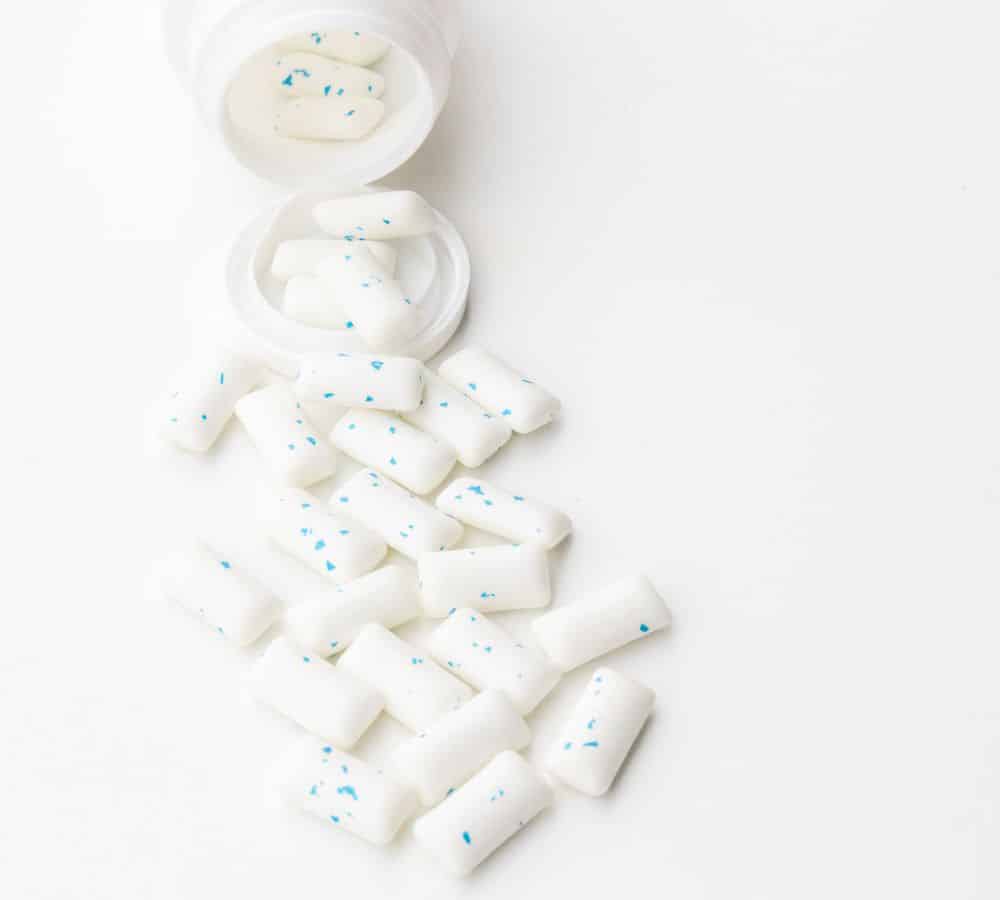
Does chewing sugar-free gum really help prevent cavities?
Research generally suggests the answer is yes — it does help. The emphasis matters: gum is an addition to a routine, not a substitute for one.
That is also, precisely, the Australian Dental Association's position. Its Policy Statement 2.2.3 on oral hygiene, amended by the ADA Board in October 2025, lists sugar-free chewing gum among the "proven aids to oral hygiene" — in the same list as fluoridated toothpaste, floss and mouthrinse. It is deliberately not in the ADA's list of main oral hygiene strategies, which is brushing twice a day for two minutes, an age-appropriate fluoride toothpaste, cleaning between the teeth daily, and regular professional care. Proven aid, not a strategy.
It is also one of the few pieces of dental advice that costs almost nothing, takes no willpower, and works by a mechanism you can understand in a sentence.
How it works
Even after good brushing and flossing, plaque quickly begins to colonise the mouth again. Some of the bacteria in plaque produce acids which, over time, damage the enamel — causing unsightly decalcification marks, or cavities that require fillings. Why do I need a filling? and tooth fillings cover what happens once that line is crossed.
Chewing sugar-free gum after meals and snacks neutralises and rinses off those acids. The mechanism is saliva:
- The mere act of chewing stimulates saliva flow — by a large multiple over resting flow
- More saliva neutralises acids and washes away food remnants
- Increased saliva flow also increases the amount of calcium and phosphate in saliva — which helps strengthen tooth enamel
That third point is the one people miss. Saliva does not only dilute acid; it delivers the minerals that repair early enamel damage. Can you reverse tooth decay? explains how far that repair goes, and where it stops.
The underlying picture is worth holding, because it explains a lot of dental advice at once. Decay is not an event, it is a balance. The ADA's formal description of the acid side: "the metabolism of simple carbohydrates by bacteria in the dental plaque ... produces acids", and those acids drop plaque pH "below the critical level leading to softening of tooth structure." The NHMRC describes the other side — "reducing demineralisation" and "enhancing remineralisation (i.e. recovery of weakened enamel)", which "helps the repair of early tooth decay." A cavity forms when the first outruns the second for long enough. Gum tips the balance back, by shortening the time the mouth spends acidic. How does your diet affect your teeth?, how does sugar affect your dental health? and how does acidic food affect your teeth? develop the same balance from the diet side; preventing dental decay is the summary.
Recommended: chew for approximately twenty minutes after meals and snacks.
Who benefits most
The effect is modest for someone with low decay risk and excellent saliva. It is considerably more useful for:
- anyone with a dry mouth, from medication, a medical condition, or mouth breathing — my mouth is always dry, my mouth always feels dry! What can I do?, what causes dry mouth during running? and mouth breathing: the silent habit
- people who graze or sip through the day, where the mouth rarely returns to neutral — what are sports drinks really doing to your teeth?, are sugar free soft drinks better for my teeth? and six foods to avoid for healthy teeth
- orthodontic patients, who have more places for plaque to sit — though see the caution below on fixed braces; with removable aligners the position differs, and what are the hygiene benefits of Invisalign? covers that
- people with exposed root surfaces from gum recession, which decay far faster than enamel — what to do if you suffer from sensitive teeth and periodontal (gum) disease
- anyone who cannot brush after lunch at work or school — which is most people
The ADA's own list of people at high risk from acidic foods and drinks overlaps with that almost exactly: "individuals with poor oral hygiene; individuals with low or no fluoride exposure; individuals with conditions which lead to a reduction in salivary flow; exertion resulting in a dry mouth; individuals using medication(s) which lead to a reduction in salivary flow; sipping drinks, other than water, during interrupted sleep."
Chewing gum is not a substitute for brushing. It does not remove plaque; it changes the chemistry around it. What is the ideal daily routine for oral hygiene? sets out what does remove it.
One place where the evidence is thinner than you would expect: bad breath
Gum is widely recommended for breath, and the logic is intuitive — the same saliva that neutralises acid also clears the bacteria that produce odour. Healthdirect Australia supports it, listing chewing sugar-free gum among the things that "can make you produce saliva and help reduce bad breath".
Cochrane does not. Its 2019 review of interventions for halitosis tested 0.6% eucalyptus chewing gum against a placebo gum and found a mean difference of −0.10 (95% CI −0.31 to 0.11) on dentist-rated odour scores — one trial, 65 participants, very low-certainty evidence, and a confidence interval that crosses zero. The ADA's consumer site goes further and says that the 2019 review "found no evidence that cleaning your tongue, using several different methods including mouthwash or chewing gum, were effective for managing the cause of halitosis."
We are not going to resolve that for you. The fair reading is that gum plausibly helps with the feeling of a fresher mouth and with saliva flow, and that no trial has yet shown it treats the cause of persistent bad breath. If breath is your reason for chewing and the problem is not going away, that is a reason to be examined rather than to chew more: how do I get rid of my bad breath?, 7 ways to avoid bad breath and bad breath.
What type of gum?
Some sugar-free gums have additives that may enhance the protection they offer.
CPP-ACP
In a large clinical trial conducted by the Cooperative Research Centre for Oral Health Science at the University of Melbourne, subjects who chewed gum containing the calcium phosphate complex CPP-ACP had a significantly lower rate of dental decay progression than those chewing standard sugar-free gum.
The complex is derived from peptides isolated from the milk protein casein, complexed with calcium and phosphate, and has been found effective in replacing lost mineral — remineralising decay-damaged teeth.
Smile Solutions recommends discussing the use and purchase of this type of gum with your dental practitioner. Note that a casein-derived product is not suitable for everyone — milk protein allergy is the obvious exclusion, and it should be avoided by anyone with a known dairy protein allergy. CPP-ACP is also available as a topical paste, which suits people who cannot chew.
Xylitol
Some studies also suggest that gum sweetened with xylitol may inhibit the growth of the oral bacteria that cause cavities — a different mechanism again, acting on the bacteria rather than the enamel. Xylitol is a sugar alcohol the decay-causing bacteria cannot ferment, and there is evidence it reduces their numbers over time.
For the effect to be meaningful, xylitol generally needs to be high in the ingredient list and used several times a day. Many products marketed as containing xylitol contain very little.
Two cautions on sugar alcohols: they can cause bloating and a laxative effect in quantity, and xylitol is highly toxic to dogs — keep gum out of reach.
What to look for on the packet
- “Sugar free”, and no fermentable sugars in the ingredient list
- CPP-ACP (often branded as Recaldent) or xylitol high in the list
- Avoid acidic flavourings — some strongly citrus gums add acid, which works against the point. The ADA is specific on this: its endorsement covers "sugar-free confectioneries without added acids, including chewing gums"
Reading a label properly is a skill worth having for toothpaste as well: with so many toothpastes on the market, how can I make a wise choice?, choosing the right toothpaste, and selecting a toothpaste: fluoride or non-fluoride.
And a word about mints, which people often reach for instead. Healthdirect's line is worth having: mints "can help with bad breath in the short-term", but "mints can increase your risk of tooth decay if they contain sugar." Read that packet too.
When you should not chew gum
Despite the benefits, there are cases where it is not advisable.
If you have jaw aches and pains, or temporomandibular disorder (TMD/TMJ), consult your dentist or specialist. Chewing gum — or any food that strains the jaw — may not be recommended, because the repeated muscle load is exactly what aggravates the condition. For someone with muscular TMD, twenty minutes of chewing several times a day is a genuine problem rather than a minor one. Healthdirect Australia puts "avoid chewing gum" directly in its self-care list for TMJ dysfunction, alongside eating soft foods and avoiding opening the mouth wide. TMD & Teeth Grinding, what are the most common symptoms of TMD?, what is the difference between TMD, TMJ and bruxism? and is TMD serious?
Other situations where it is worth asking first:
- braces, bridges, dentures or loose restorations, where sticky gum can dislodge things — all your conventional braces questions answered, five things you should know about your new dentures, and what do I do if a temporary filling comes out?
- young children, for whom gum is a choking risk — generally not before school age. Children's dentistry and kids' teeth cleaning tips
- reflux or IBS, where swallowed air and sugar alcohols can make symptoms worse. On what reflux does to the teeth themselves, what is dental erosion and how is it addressed?
- recent oral surgery — chewing near a healing extraction site risks disturbing the clot, and the first 48 hours in particular should be left alone. I've just had oral surgery. What can I expect during recovery? and how long does it take to recover from wisdom teeth surgery?
Your practitioner can advise on other options and products to help prevent decay in that situation — CPP-ACP paste, a high-fluoride toothpaste, or a fluoride rinse. See the benefits of fluoride, fluoridated water: is it good for you?, and who is a suitable candidate for dental sealants?
In summary
Sugar-free gum may be a great addition to your oral hygiene routine, but it does not replace good oral hygiene habits. Continue to:
- brush twice a day with a fluoride toothpaste, and spit rather than rinse — how much pressure should I apply when brushing my teeth? and which toothbrushes do dentists recommend?
- floss, or use other interdental cleaners as recommended — is flossing really that important?
- reduce how often you eat sugar, which is the single biggest dietary factor. The World Health Organization recommends keeping free sugars below 10% of total energy intake, and suggests below 5% to reduce decay risk further — sugar: what does it do to your teeth?
- visit your dental practitioner regularly, so your individual case can be assessed — how often should I go to the dentist?, dental cleans and hygienists, and your Smile Solutions hygienist visit: what to expect
Gum is a useful adjunct, not a strategy. If you are chewing it to compensate for a diet or routine you know is not working, the gum is not the part to change. The ADA makes the same point in its own diet policy, and it is worth quoting in full because it is easily missed: sugar-free gums are dentally safe alternatives, "however, the main objective of oral health education is to encourage individuals to consume a recommended limited amount of simple carbohydrate foodstuffs and thus reduce the need for sugar and sugar substitutes."
Common questions
Does it matter more how much sugar I eat, or how often?
Both, and the ADA names four variables rather than one. Its policy on diet and dental caries states that "the form, frequency, timing and total amount of sugar intake are significant in the initiation of the caries process."
That is why gum works at all, and it is worth unpacking because most people only ever hear about amount:
- Form — something sticky or slowly dissolved holds sugar against the tooth far longer than something swallowed quickly.
- Frequency — six small sugary moments produce six separate acid episodes. One larger serve produces one.
- Timing — sugar last thing at night, when saliva flow drops, is worse than the same sugar at midday. The ADA singles out "sipping drinks, other than water, during interrupted sleep" as a specific high-risk behaviour.
- Total amount — the number everybody already counts.
Gum acts almost entirely on frequency and timing. It shortens how long the mouth stays acidic after each episode; it does nothing about how much sugar went in. The ADA's public-education emphasis is on "the form, frequency, timing and total amount of sugar consumption; particularly snacking on sugary-beverages and/or sugar-rich foods that have limited nutritional value."
So if you are choosing where to put your effort: cutting the number of separate sugar occasions in a day will usually do more than cutting the size of any one of them, and gum is a way of softening the occasions you keep.
I have a dry mouth from my medication. Is gum enough, and should I ask to change the medicine?
Gum helps, it is not enough on its own, and you should not stop or alter a medicine over this without your doctor.
The Better Health Channel — produced in consultation with the Victorian Department of Health and the ADA's Victorian Branch — gives the scale of the problem: "About 10% of the general population and 25% of older people have dry mouth, which means they don't have enough saliva," and "about 600 drugs and medications, both legal and illegal, are known to cause dry mouth," listing antihistamines, blood pressure medications, sedatives, decongestants, pain relief and antidepressants among them.
Why it matters for teeth: "A dry mouth significantly increases the risk of tooth decay and other oral diseases."
Its advice on the medicine itself is unambiguous and is the important part of this answer: "Continue to take your medication, even if your medicine is to blame. Do not stop taking your medicine without speaking to your doctor." Your doctor may or may not be able to change the drug or the dose — that is their decision to make with you, not one to make from a dental page.
What is within your control is the rest of the picture. Better Health's self-care list is brushing at least twice daily and cleaning between the teeth once a day, regular fluoride products chosen for dry mouth, and "visit your dentist every 6 to 12 months for check-ups, teeth cleaning and treatment if necessary" — with more frequent visits if decay risk is higher. It also notes a product category worth asking about: "Dry mouth products — these products contain ingredients such as lubricants that may help treat your dry mouth. The product range includes toothpaste, mouthwash, gums and topical gels." And one thing to avoid: "lollies (especially fruit-flavoured and sour lollies) and alcohol-containing mouthwashes, as these products tend to aggravate dry mouth tissue."
Why is the decay showing up at my gum line rather than on the biting surfaces?
Because the root surface is a different material, and it is the surface saliva protects most.
The Better Health Channel explains the pattern in people with reduced saliva: they are "more likely to get tooth decay and are more prone to get decay along the gum line (tooth root surface)." The reason is the material itself — "unlike enamel (the outer tooth layer), dentine (the inner tooth layer) is less resistant to acids and can decay quickly, especially without enough saliva to protect it." It adds one location people find surprising: decay "on the lower front teeth, which are normally well protected by saliva produced from beneath the tongue." When that saliva is not flowing, the teeth it used to bathe are the ones that suffer.
This is the single situation where chewing gum earns most of its keep, because the problem it addresses — too little saliva, for too much of the day — is exactly the problem present. It is also the situation where gum alone is least sufficient.
The encouraging half of the same source: "While people with dry mouth are more prone to decay, it is still preventable with the right diet and lifestyle. Thorough teeth cleaning with a suitable fluoride toothpaste is extremely important." Root decay is not inevitable; it is a risk that responds to being taken seriously.
I have been told not to chew gum because of my jaw. Is there another way to get the same benefit?
Yes, and the alternatives are the same ones a dentist would reach for in any low-saliva situation — they just do not require chewing.
The things that are affected by the advice to avoid gum are the saliva-driven ones: acid clearance after eating, and the calcium and phosphate that saliva carries. Both can be approached by other routes. CPP-ACP is also sold as a topical paste rather than a gum, which is applied rather than chewed. The Better Health Channel lists the wider category — "toothpaste, mouthwash, gums and topical gels" — and adds "dental products — these products may contain high fluoride or calcium to help prevent tooth decay. Speak to your dentist for recommendations."
Two things are worth raising at that conversation. First, the timing question: if you cannot chew after lunch, rinsing with plain water is a poor substitute for saliva but better than nothing, and the acid clearance argument becomes an argument for fewer separate eating occasions rather than for a product. Second, if you are being steered towards a mouthwash, say that your mouth is dry — alcohol-containing rinses "tend to aggravate dry mouth tissue", so the choice of rinse matters more than usual.
And take the jaw advice seriously rather than working around it. Healthdirect lists "avoid chewing gum" in its self-care guidance for jaw joint problems for a reason; twenty minutes of chewing several times a day is a substantial muscle load. TMD & Teeth Grinding covers what to do about the jaw itself.
Related reading
- What is gum disease? — a different sort of gum entirely, and the more consequential one
- When do you need deeper cleaning?
- Damage to tooth enamel occurs within 30 seconds of consuming soft drinks
- Victorians' love of soft drink wreaks havoc with teeth
- Three oral hygiene tips you need to know
- Health problems linked to poor oral hygiene
Practical details
Smile Solutions, Level 1, 220 Collins Street, Manchester Unity Building, Melbourne VIC 3000 — getting here. Phone 13 13 96, contact us, or theteam@smilesolutions.com.au. Monday–Friday 8.00am–6.00pm, Saturday 8.30am–1.30pm, Sunday by appointment. Published fees are in the price guide.
Registration for any practitioner can be verified free on the AHPRA public register at ahpra.gov.au. The practice's registered specialists are identified as such within the full team.
Published 24 April 2017. The CPP-ACP research finding is attributed to the Cooperative Research Centre for Oral Health Science at the University of Melbourne; the xylitol evidence described here is summarised from the wider literature and is not drawn from a single named trial. General information only — it is not a diagnosis, a treatment plan or a promise of any particular clinical outcome, and it does not replace advice from your treating practitioner. Decay risk varies between individuals, and gum reduces risk rather than preventing decay. Not suitable for everyone — see the cautions above, and check any product against your own allergies and medical history. Never stop or change a prescribed medicine on the basis of this page; speak to the doctor who prescribed it.
Smile Solutions trades under ABN 28 193 514 103.
Images on This Page
-
https://www.facebook.com/tr?id=800557773428361&ev=PageView&noscript=1
(no alt text)
-
https://www.smilesolutions.com.au/wp-content/uploads/2025/10/calendar_month.svg
(no alt text)
-
https://www.smilesolutions.com.au/wp-content/themes/arcadian-wordpress-theme/assets/images/smile_solutions_logo_white.png
Smile Solutions Logo
-
https://www.smilesolutions.com.au/wp-content/themes/arcadian-wordpress-theme/assets/images/smile_solutions_logo_purple.png
Smile Solutions Logo
-
https://www.smilesolutions.com.au/wp-content/uploads/2023/11/SS-Tooth-1-1-150x150.png
Smile Solutions
-
https://www.smilesolutions.com.au/wp-content/uploads/2017/04/Chewing-Gum.jpg
Chewing Gum
-
https://www.smilesolutions.com.au/wp-content/uploads/2025/09/Root-Canal-2-300x217.jpg
Root Canal
-
https://www.smilesolutions.com.au/wp-content/uploads/2026/08/Mouth-Breathing-300x270.jpg
Mouth Breathing
-
https://www.smilesolutions.com.au/wp-content/uploads/2025/09/Dental-Crown-at-Smile-Solutions-300x300.jpg
Dental Crown at Smile Solutions
-
https://www.smilesolutions.com.au/wp-content/themes/arcadian-wordpress-theme/assets/images/family_owned_bussiness.png
Family Owned Business
-
https://www.smilesolutions.com.au/wp-content/themes/arcadian-wordpress-theme/assets/icons/icon--phone.svg
Smile Solutions Contact
-
https://www.facebook.com/tr? id=800557773428361&ev=PageView&noscript=1
(no alt text)
-
https://bat.bing.com/action/0?ti=25148060&tm=gtm002&Ver=2&mid=31d8fd4a-50ec-4d9e-a41f-39065c66bb7f&bo=1&sid=f9fdb0d0ab2711f18aa50d00cf4ff5b3&vid=f9fdd030ab2711f19500b19310fe6a85&vids=1&msclkid=N&pi=918639831&lg=en-US&sw=800&sh=600&sc=24&nwd=1&tl=Does%20chewing%20sugar-free%20gum%20really%20help%20prevent%20cavities%3F%20-%20Smile%20Solutions&p=https%3A%2F%2Fwww.smilesolutions.com.au%2Fdental-articles%2Farticle%2Fchewing-sugar-free-gum-really-help-prevent-cavities%2F&r=&evt=pageLoad&sv=2&cdb=AQAQ&rn=678337
(no alt text)