Seven ways to avoid bad breath
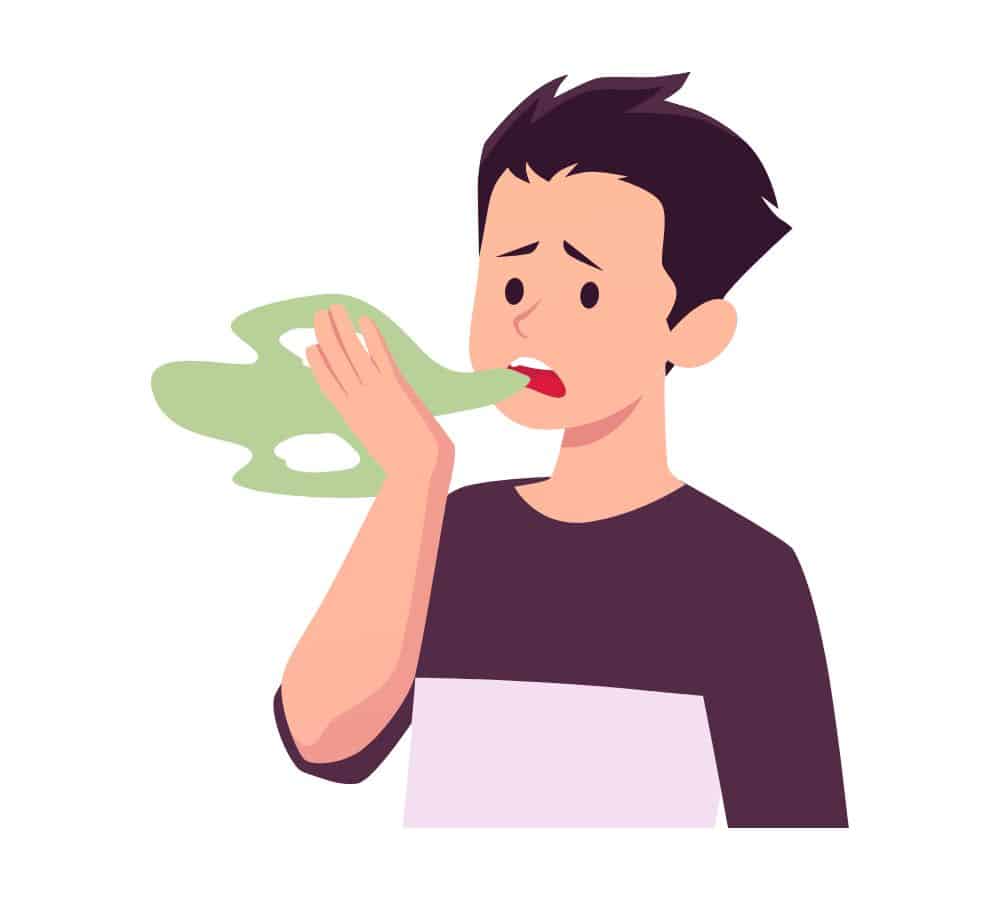
Bad breath — halitosis — is a common concern, and more often than not it has a relatively straightforward remedy.
This page is the practical one: the seven steps, and how to actually do each of them properly, since most of them are done badly rather than not at all. If you want the underlying causes in more depth, Bad Breath covers those; how to make sure you never have bad breath covers how to test your own breath and what to do when good hygiene has not worked; and how do I get rid of my bad breath? sets out the chemistry and the products that do not work.
One thing to settle first: everyone has morning breath, because saliva flow drops overnight. That is normal physiology, and Healthdirect Australia says so plainly — "It's normal to have bad breath when you wake up in the morning, and it usually goes away after you have something to drink or clean your teeth." What this page is about is breath that is bad through the day and survives brushing. Healthdirect draws the same line: "If halitosis doesn't improve during the day, this may be a sign of a dental problem or another medical condition."
What usually causes it
Oral causes:
- Poor oral hygiene — plaque left on the teeth and tongue for extended periods
- Dental disease — decay, gum disease, an abscess, a failing filling or crown. What is gum disease?, periodontal (gum) disease, why do I need a filling? and what is a tooth abscess?
- Dry mouth — my mouth is always dry
- Smoking and vaping
- Strongly scented foods such as garlic and onion
Systemic causes:
- Extreme dieting
- Acid reflux — which also erodes the teeth themselves: what is dental erosion and how is it addressed?
- Chronic sinusitis or post-nasal drip — see mouth breathing: the silent habit
- Tonsil stones
- Medical conditions such as diabetes — diabetes and oral health and diabetes and dental health: the two-way street
Before the seven steps: what is not a breath problem
None of this is urgent. The following is. Go to a hospital emergency department, or call 000, if you have:
- Facial swelling that is spreading, especially toward the eye or down into the neck or under the jaw
- Difficulty breathing or swallowing, or a change in your voice
- Fever together with dental pain
- Bleeding from the mouth that will not stop
A sudden foul taste with a swollen, tender area is usually an abscess draining, and an abscess that is spreading is a same-day problem — why are dental abscesses so painful? and can a dental abscess affect your general health?. For urgent problems short of that list, emergency dentistry explains what can be seen on the day.
The most common cause
Infrequent or ineffective brushing and flossing.
If plaque is not removed regularly, the bacteria in it produce volatile sulphur compounds — the same chemistry behind the smell of rotten eggs — and those transfer to your breath. Food debris left in the mouth for any length of time spoils and produces a smell of its own.
Those bacteria are anaerobes: they thrive where there is no oxygen. That single fact explains where the problem lives — the back of the tongue, deep gum pockets, and between teeth — and why brushing the visible front surfaces of your teeth does not fix it. What is the ideal daily routine for oral hygiene? sets the whole routine out in order.
In the largest published series — 2,000 consecutive patients at a bad-breath clinic in Leuven, Belgium (Journal of Clinical Periodontology, 2009) — an oral cause was found in 76%, most often tongue coating (43%) or gum disease (11%).
Dry mouth — the second leading cause
Dry mouth, or xerostomia, is another leading cause and is frequently missed.
Saliva clears food and debris from the mouth after eating. If you are not producing enough, that cleansing action is limited and food simply stays in the mouth longer than it should. My mouth always feels dry! What can I do? covers the management, and what causes dry mouth during running? the exercise-related version.
If your hygiene is genuinely good and the problem persists, this is the first thing to investigate. Bring a list of your medications — Healthdirect names antihistamines, blood pressure medicines, sedatives, decongestants, pain relief and antidepressants among the categories known to cause dry mouth. Never stop a prescribed medication on your own account; the dryness can usually be managed instead.
Why food-related breath is different
The aromas in garlic, onion, coffee and alcohol are absorbed into the bloodstream and carried to the lungs. From there the scent escapes through your mouth as you breathe.
This is worth understanding, because it means brushing will not remove it. The smell is not coming from your mouth at all. It lasts as long as the compounds remain in your system — which for garlic can be many hours. Nothing is wrong; you just ate garlic.
Why smoking works on two fronts
Smoking dries out the mouth and causes bacteria to accumulate — attacking from both directions at once.
The smoke and its chemicals are also inhaled deep into the lungs, so the scent is exhaled afterwards in the same way food compounds are. Vaping shares the dry-mouth problem, because the vapour bases draw water out of the tissues.
Smoking is also the single biggest modifiable risk factor for periodontal disease, and it masks the warning sign — smokers' gums bleed less, not because they are healthier, but because the blood supply is reduced.
Seven quick tips — and how to do each one properly
1. Brush twice daily and clean between your teeth
Use fluoridated toothpaste, a soft brush, and two minutes. Angle the bristles into the gum line at about 45 degrees, because that is where plaque forms. That matches the Australian Dental Association's main oral hygiene strategies in Policy Statement 2.2.3, amended October 2025. How much pressure should I apply when brushing my teeth? and over brushing cover the force, which toothbrushes do dentists recommend? the brush, and selecting a toothpaste: fluoride or non-fluoride the paste.
Spit, don't rinse. Rinsing away the toothpaste rinses away the fluoride — the benefits of fluoride.
Then clean between the teeth — roughly 40 per cent of each tooth surface that a brush never touches. Floss curved into a C shape around each tooth and slid gently under the gum edge, or interdental brushes, which where the spaces suit them clean better than floss rather than merely more easily. Ask a hygienist to size them for you. Is flossing really that important?
2. Clean your tongue
Do this, but be clear about what it can and cannot do. Healthdirect Australia's wording is careful and worth copying: "Cleaning your tongue with a tongue scraper or tongue cleaner does not treat halitosis, but it can help to remove bacteria from your mouth." The Australian Dental Association's consumer site is blunter — "a review of the scientific evidence in 2019 found no evidence that cleaning your tongue, using several different methods including mouthwash or chewing gum, were effective for managing the cause of halitosis." That review is Cochrane's, and it rated tongue cleaning very low certainty. (The ADA is not quite consistent with itself: a summary box on the same page says tongue cleaning can help reduce bad breath.) Reasonable to do; no reason to expect it alone to settle the problem; a good reason to keep looking if it does not.
Use a tongue scraper or the back of a toothbrush. Start as far back as your gag reflex allows and draw forward, rinsing between strokes. The back third is the part that matters — the visible front is not where the anaerobic bacteria live. The ADA's technique advice is to be "very gentle because the tongue surface is delicate and sensitive", and to use water so the brush does not drag. The coating on your tongue and do I need to use a tongue scraper? go into the technique.
It takes about fifteen seconds and it is free.
3. Stay hydrated
Water through the day, not just at meals. It is the single simplest intervention on this list and the one most likely to help someone whose hygiene is already good. Plain water rather than sports drinks or sugar-free soft drinks, both of which are acidic whatever the label says.
4. Chew sugar-free gum between meals
It clears food and stimulates saliva, which neutralises acid and carries bacteria away. Xylitol-sweetened gum has the best evidence behind it. Ten to twenty minutes after a meal is enough. The ADA's 2025 oral hygiene policy includes sugar-free chewing gum in its list of "proven aids to oral hygiene". Does chewing sugar-free gum really help prevent cavities? explains the mechanism and its limits.
5. Minimise strongly scented foods and drinks
Coffee, alcohol, garlic and onion. You do not have to give them up — just know that on the days you have them, no routine will remove the effect, and it is not a sign that something is wrong. What impact does wine have on my teeth? and six foods to avoid for healthy teeth cover what those same items do to the enamel.
6. If you smoke, ask your dental professional for help quitting
It is the single change with the largest effect on both your breath and your gums. Quitline is free on 13 7848, and your GP or pharmacist can discuss what is available.
7. Schedule regular professional cleans and checks
Hardened calculus cannot be brushed off, at any technique level, and deep gum pockets are an ideal environment for odour-producing bacteria. A clean removes both. It also finds the dental causes — a leaking filling, an abscess, food trapping under a bridge — that no home routine addresses.
Where pockets have already deepened, a routine clean is not enough: healthy pockets measure 4mm or less, and 5mm or more indicates periodontitis, which is treated with scaling and root planing. When do you need deeper cleaning? explains the threshold, and periodontists the specialist referral. See also dental cleans and hygienists, what does a dental hygienist do?, and how often should I go to the dentist?
A caution on mouthwash
Mouthwash is not on the list of seven, deliberately. It is an adjunct, not a treatment — and that is the ADA's own classification. Policy Statement 2.2.3 lists mouthrinse among "proven aids to oral hygiene" while leaving it out of the main oral hygiene strategies entirely.
- Strongly alcoholic rinses dry the mouth, and a dry mouth produces more odour. Healthdirect's advice for anyone with dry mouth is to "avoid lollies (especially fruit-flavoured and sour lollies) and alcohol-containing mouthwashes, as these products tend to aggravate dry mouth tissue." Used daily for bad breath, they can make the problem worse. Choose alcohol-free.
- Rinses containing cetylpyridinium chloride have the better evidence for odour specifically, and it is thin. In the 2019 Cochrane review of halitosis interventions, the only comparison to reach even low-certainty evidence was brushing plus a cetylpyridinium mouthwash versus brushing alone (mean difference −0.48, 95% CI −0.72 to −0.24, one trial, 70 participants). A zinc-and-chlorhexidine rinse against placebo in the same review showed no demonstrated benefit (mean difference −0.20, 95% CI −0.58 to 0.18) — that confidence interval crosses zero. Zinc binds sulphur compounds directly, but the clinical evidence for it as a bad-breath treatment is not yet there.
- Chlorhexidine works but is not for indefinite use. Cochrane's separate review found a large increase in extrinsic tooth staining at 4 to 6 weeks (standardised mean difference 1.07, 95% CI 0.80 to 1.34, moderate-quality evidence), and concluded that "rinsing for 4 weeks or longer causes tooth staining, which requires scaling and polishing." This is why it is prescribed for a defined period.
- If you are using mouthwash daily to manage your breath, that is a reason to be examined, not a solution. Mints and rinses mask an odour without touching what is producing it — and Healthdirect adds that mints containing sugar increase the risk of decay.
The truth and myths about mouthwashes and should I be using mouthwash as well as brushing and flossing my teeth? take this further.
If you are unsure of the cause
Start with a conversation with your oral health professional. Healthdirect describes the examination as covering tongue, teeth, gums and throat, and notes one simple discriminator: the dentist may compare your mouth breathing with nose breathing.
If a systemic cause is suspected, they can point you toward someone who can identify it and work with you to resolve it.
Do the seven steps properly for a few weeks. If the problem persists, stop troubleshooting and get examined — the causes that are not hygiene are the ones worth finding, and some of them worsen while they are being masked. That is also where the evidence points: the 2019 Cochrane review pooled 44 trials and 1,809 participants and concluded, "We were unable to draw any conclusions regarding the superiority of any intervention or concentration."
See a GP as well if the change was sudden with no dietary explanation, particularly alongside weight loss, unusual thirst, reflux symptoms, or feeling generally unwell. And the standing rule applies here too: any ulcer, white patch, red patch or lump that has not healed in three weeks needs examining — mouth ulcers: causes and treatment and oral cancer: how your dentist can help with early detection.
Common questions
How do I know whether I actually have it? Nobody has said anything.
This is the hardest part of the problem, because your own nose is not a reliable instrument and the research says so.
In a study of 419 residents of Bern, Switzerland, 32% reported that they sometimes or often had bad breath, while 11.5% reached the objective threshold on examination — and the authors found "only a weak correlation" between what people reported and what was measured. Self-assessment overshoots in one direction for some people and undershoots for others.
The other half of that picture is worth knowing before you spend months worrying. At the Leuven bad-breath clinic, among 2,000 people who presented specifically because of halitosis, 16% had no detectable odour on examination — four times the proportion found to have a cause outside the mouth. Persistent conviction of an odour that nobody close to you can detect is a recognised condition in its own right, it is treatable, and more brushing and more mouthwash are not the treatment. The Leuven authors' own referral list for people in that group includes psychological support alongside gastroenterology and ENT.
So: ask one person who will tell you the truth, and if the answer is no but the worry persists, raise the worry itself with a clinician rather than escalating the routine.
How can I tell whether it is coming from my mouth or from somewhere else?
Three practical discriminators, none of them definitive on their own.
The pattern through the day. Healthdirect's rule is the useful one: morning breath that clears after a drink or brushing is ordinary, while breath that "doesn't improve during the day" points at a dental problem or another medical condition.
What else is going on. Healthdirect's associated-symptom list is a reasonable checklist: a dry mouth; sore or swollen gums; a white coating on the tongue; a bad taste; a toothache; a runny nose or other sinus symptoms. The last of those points away from the teeth; the rest point toward them.
Whether cleaning changes anything at all. An oral cause responds, at least partly, to the seven steps done properly. A cause in the nose, throat, gut or metabolism does not shift no matter how well you clean, which is the single most useful piece of information you can bring to an appointment.
For context on how often it really is elsewhere: in the Leuven series, ear, nose and throat or other non-oral causes accounted for 4% of attenders at a clinic devoted to this problem. Uncommon — but it is the group that will never be helped by a better toothbrush, which is why the distinction matters.
I have something on tonight. What can I actually do in the next hour?
Honestly: manage it, rather than fix it. Nothing on this page works in an hour, and it is worth knowing what each measure is doing.
Clean properly rather than quickly — two minutes, between the teeth, and the back third of the tongue, which is where the smell is produced. Drink water, steadily, because the commonest same-day cause in a person with healthy teeth is simply a dry mouth after coffee, alcohol or a long meeting. Sugar-free gum afterwards stimulates saliva, which is the mechanism doing the work — not the mint flavour.
What will not work: anything aimed at a food you have already eaten. Garlic, onion, coffee and alcohol compounds are carried in the bloodstream and released through the lungs, so no amount of brushing or rinsing reaches them. Time is the only remedy.
And a caution on the obvious shortcut: a strongly alcoholic mouthwash dries the mouth, which is the very thing producing the odour, and sugared mints add a decay risk for no benefit. If tonight matters, water and a proper clean beat both.
What happens at an appointment for this, and what does it cost?
The first appointment is diagnostic rather than therapeutic, and that is the point of it. Healthdirect describes the examination as covering the tongue, teeth, gums and throat, with the dentist also asking about symptoms such as a dry mouth or a runny nose and possibly comparing your mouth breathing with nose breathing. Expect questions about medications, reflux, snoring and diet, so it is worth arriving with a list rather than reconstructing it in the chair.
What happens next — and what it costs — depends entirely on what is found, which is why no honest single figure exists. The realistic cost drivers: whether radiographs are needed to find decay or an abscess between teeth; whether a hygiene visit is enough or the gums need staged treatment across several appointments; whether a restoration, crown or denture has to be repaired or replaced; and whether the answer is medical rather than dental, which moves the cost to a GP or an ENT specialist.
Ask for a written plan with itemised costs before agreeing to anything, ask what your health fund pays on each item, and ask what the whole course will total rather than what the first visit costs. Published fees are in the price guide, and understanding your treatment covers how a plan is set out.
I started a low-carbohydrate diet and my breath changed. Is that related?
Almost certainly, and it is the one cause on the list above — “extreme dieting” — that produces a completely different smell: sweet, fruity, or like nail polish remover, rather than the sulphurous odour of plaque.
The mechanism is ketosis. When carbohydrate stores run down, the body burns fat instead and produces ketones, which are eliminated through the breath. Low-carbohydrate diets, fasting and illness with poor food intake all do it. In that context it is harmless and it passes when eating returns to normal — and brushing will not touch it, for the same reason garlic does not respond to brushing.
The exception that matters: a sweet or acetone-like breath odour in someone with diabetes, particularly alongside excessive thirst, frequent urination, nausea, abdominal pain, drowsiness or rapid breathing, can indicate diabetic ketoacidosis, which is a medical emergency — 000 or an emergency department, not a dental appointment. The same odour in someone with unexplained weight loss and thirst who has not been diagnosed with diabetes should be seen by a doctor promptly.
Related reading
- How can I guarantee I always have fresh breath?
- What causes bad breath and how can I fix it?
- Bleeding gums
- Tongue and lip piercings and your teeth
- Health problems linked to poor oral hygiene
- Three oral hygiene tips you need to know
- Caring for your teeth: eight steps to dental health
Practical details
Smile Solutions, Level 1, 220 Collins Street, Manchester Unity Building, Melbourne VIC 3000 — getting here. Phone 13 13 96, contact us, or theteam@smilesolutions.com.au. Monday–Friday 8.00am–6.00pm, Saturday 8.30am–1.30pm, Sunday by appointment. Published fees are in the price guide.
Registration for any practitioner can be verified free on the AHPRA public register at ahpra.gov.au. The practice's registered specialists are identified as such within the full team.
Published 6 October 2016. General information only — it is not a diagnosis, a treatment plan or a promise of any particular clinical outcome, and it does not replace advice from your treating practitioner or doctor. Causes of halitosis vary between individuals and several can be present at once; persistent bad breath needs to be examined rather than self-treated.
Smile Solutions trades under ABN 28 193 514 103.
Images on This Page
-
https://www.facebook.com/tr?id=800557773428361&ev=PageView&noscript=1
(no alt text)
-
https://www.smilesolutions.com.au/wp-content/uploads/2025/10/calendar_month.svg
(no alt text)
-
https://www.smilesolutions.com.au/wp-content/themes/arcadian-wordpress-theme/assets/images/smile_solutions_logo_white.png
Smile Solutions Logo
-
https://www.smilesolutions.com.au/wp-content/themes/arcadian-wordpress-theme/assets/images/smile_solutions_logo_purple.png
Smile Solutions Logo
-
https://www.smilesolutions.com.au/wp-content/uploads/2023/11/SS-Tooth-1-1-150x150.png
Smile Solutions
-
https://www.smilesolutions.com.au/wp-content/uploads/2022/04/Bad-Breath.jpg
Bad Breath
-
https://www.smilesolutions.com.au/wp-content/uploads/2025/09/Root-Canal-2-300x217.jpg
Root Canal
-
https://www.smilesolutions.com.au/wp-content/uploads/2026/08/Mouth-Breathing-300x270.jpg
Mouth Breathing
-
https://www.smilesolutions.com.au/wp-content/uploads/2025/09/Dental-Crown-at-Smile-Solutions-300x300.jpg
Dental Crown at Smile Solutions
-
https://www.smilesolutions.com.au/wp-content/themes/arcadian-wordpress-theme/assets/images/family_owned_bussiness.png
Family Owned Business
-
https://www.smilesolutions.com.au/wp-content/themes/arcadian-wordpress-theme/assets/icons/icon--phone.svg
Smile Solutions Contact
-
https://www.facebook.com/tr? id=800557773428361&ev=PageView&noscript=1
(no alt text)