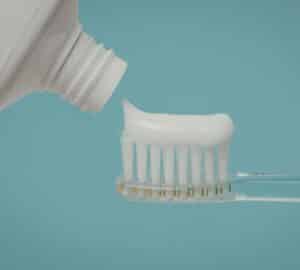
What is the ideal daily routine for oral hygiene?
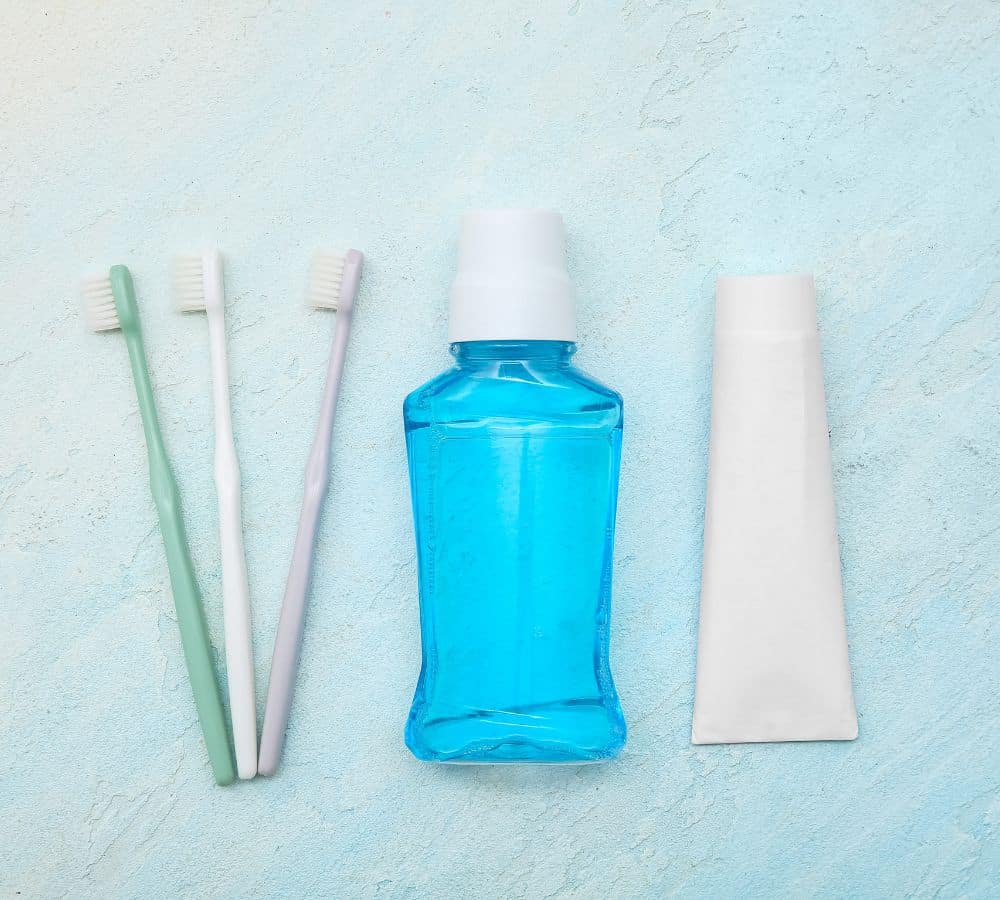
Brush twice a day, clean between your teeth once a day, and see a dental professional regularly. That is the whole routine. Standing in the dental aisle facing an overwhelming array of brushes, flosses, mouthwashes and gadgets, the useful thing to know is that most of it is optional.
That is not just our view. ADA Policy Statement 2.2.3, updated in October 2025, lists "The main oral hygiene strategies" as exactly four things: "brushing for two minutes twice a day; using an age-appropriate fluoride toothpaste; clean between teeth once a day using floss or interdental brushes; and visit a dental professional for regular check-ups and professional cleaning." Its one-sentence position summary names only three as essential: "Brushing, cleaning between teeth, and seeing a dental professional regularly are essential for good oral health."
The research is fairly settled on this:
- Brushing twice daily — morning and night — adequately removes plaque from most tooth surfaces. Further brushing beyond that will not significantly change the health of your gums. More is not better; see how often should I brush my teeth? and over-brushing, which is a real and under-recognised cause of damage.
- Brushing alone is inadequate, because it does not reach the surfaces between the teeth. Only brushing combined with cleaning between the teeth reaches all surfaces — is flossing really that important?
- Mouthwash is an adjunct, never a replacement. It cannot remove plaque on its own — only physical cleaning does that. The ADA's policy makes the same distinction structurally: mouthrinse is absent from the list of main strategies above, and appears instead on a separate list of "proven aids to oral hygiene" — alongside the toothbrush, fluoride toothpaste, interdental aids and sugar-free chewing gum. Proven, in other words, but as an addition. The truth and myths about mouthwashes and should I be using mouthwash as well as brushing and flossing?
Three oral hygiene tips you need to know is the short version of this page.
Why brush
Throughout the day a bacterial film called plaque builds up on the teeth — a combination of bacteria and debris that collects in everyone's mouth, unavoidably. Brushing removes it. Left on the teeth, plaque causes cavities and unhealthy gums. The ADA states it as a single causal fact: "Tooth decay (dental caries) and gum disease (periodontal disease) are two of the most common diseases experienced by Australians. Plaque is the primary cause of both diseases." See how does tooth decay develop? and what is gum disease?.
Plaque is a biofilm: a structured, adherent community, not loose debris. That is why rinsing does not shift it and why physical disruption is the only thing that works.
How to brush
Choosing a brush. Look for soft bristles, a small head so it reaches awkward areas, and a sturdy handle. Those qualities let you access every tooth without damaging the tissue. Medium and hard bristles cause gum recession, which does not grow back. Which toothbrushes do dentists recommend? goes through the choice, and caring for your toothbrush covers what happens to it afterwards.
What needs cleaning: all the outside surfaces, upper and lower; all the inside surfaces, upper and lower; and all the biting surfaces, upper and lower.
How long. Roughly two minutes — the figure in the ADA's own list. That does not sound long, but most people spend only 30 to 40 seconds brushing and believe they have done more. Time it once.
Technique. Gentle strokes, in a small circular or short back-and-forth motion, angled along the gum line — the ADA's own instruction is to hold the brush "at a 45-degree angle to the gums". That is where plaque collects and where gum disease starts. Let the bristles do the work; pressing harder cleans no better and causes recession. Bleeding gums is usually the first sign that the gum line is being missed rather than the sign of brushing too hard.
Electric brushes help most people, particularly with technique and timing. Hold the brush along the gum line and let it rest on each surface of every tooth for a couple of seconds, moving methodically around the mouth. Most have a built-in timer, and many have a pressure sensor that warns when you are pushing too hard. Studies generally find electric brushes remove modestly more plaque than manual brushing — the gain is real but not dramatic, and technique still matters: an electric brush held in the wrong place cleans nothing.
What paste. Selecting a toothpaste: fluoride or non-fluoride is the decision that matters most; choosing the right toothpaste and how to make a wise choice among the many toothpastes on the market cover the rest of the shelf. The benefits of fluoride explains what it is actually doing — in Australian Prescriber's words, fluoride "assists in the prevention of dental caries by promoting remineralisation with fluorapatite and fluoro-hydroxyapatite, thereby increasing enamel resistance to acid attack".
When. Morning and before bed. Two refinements worth adding:
- Spit, don't rinse. Rinsing with water straight after brushing washes away the fluoride you have just applied. The ADA gives the instruction plainly: "After brushing, spit out the excess toothpaste but do not rinse your mouth with water. This allows the fluoride paste to sit on the teeth for longer, increasing protection." A review in the British Dental Journal adds the nuance, having found lower fluoride retention in people who "used large volumes of water after brushing compared with those who used little or no water", and reporting that researchers "similarly concluded that the preferred practice was to rinse with a small volume of water after brushing". So the target is a small volume, or none — not a mouthful. This costs nothing and is one of the highest-value habits available.
- After anything acidic — juice, citrus, fizzy drinks — wait about an hour before brushing. Acid temporarily softens enamel, and brushing immediately abrades away the softened layer. If breakfast is acidic, brush before it, or wait. Should I brush my teeth before or after breakfast? works through that properly, and how dental erosion is addressed covers what the acid is doing; sugar-free soft drinks and teeth explains why removing the sugar does not remove the acid.
Cleaning between the teeth
Brushing does not clean between the teeth, which means one surface of every tooth goes uncleaned unless you address it. Around a third of each tooth's total surface sits between the teeth — and that is precisely where adult decay and gum disease most often begin. It is also invisible to the eye, which is what dental x-rays are for.
Daily interdental cleaning, alongside brushing, removes substantially more plaque from those spaces than brushing alone, and reduces gum bleeding and inflammation. Once a day is sufficient — unlike brushing, there is no benefit to more, and once a day is the interval the ADA specifies.
Control matters, because careless flossing can damage the gums.
How to floss
- Grip the floss between thumb and bent forefinger, and work it between two teeth with a gentle sawing motion. Never snap or force it in.
- Start in the same place each time — the rear molars are a good starting point — so nothing is missed.
- Gently scrape the floss around the tooth, going up into the gum line until you meet resistance. Work in a C shape around each tooth. That C shape is the part most people skip, and it is where the benefit is: floss that only passes through the contact point cleans almost nothing.
- Use your fingers like spools, unwinding a clean section and winding the used portion onto the other finger, then move to the next space.
- Continue all the way around, using the same technique.
Interdental brushes are often easier and more effective than floss where the gaps are large enough to take one, and many people find they actually use them. The ADA names "floss or interdental brushes" as equivalent options in its main-strategies list, so this is a preference rather than a compromise. The best interdental tool is the one you will use every day.
One diagnostic worth knowing: floss that keeps shredding in the same gap usually means a rough filling margin or early decay at the contact point, not bad floss. Mention it — see why do I need a filling?
And the rest of the aisle?
Mouthwash — optional, and the detail of when you use it decides whether it helps or hurts. A fluoride rinse has a measurable effect in its own right: a Cochrane review of fluoride mouthrinses in children and adolescents found a pooled prevented fraction for decayed, missing and filled tooth surfaces of "27% (95% confidence interval (CI), 23% to 30%; I2 = 42%) (moderate quality evidence)", and "23% (95% CI, 18% to 29%)" measured by whole teeth rather than surfaces. But timing is not neutral. The British Dental Journal review found that "rinsing with a non-fluoride mouth rinse soon after brushing" reduced the anticaries benefit of the toothpaste, while "the inclusion of 100 ppm fluoride in a mouth rinse compensated for the loss of" that benefit — and that a fluoride rinse "could contribute more effectively to inhibition of caries if used between brushings". So: use it at a different time from brushing, so it adds a fluoride exposure rather than washing one away. The truth and myths about mouthwashes
Two further points on mouthwash that rarely appear on a product label. An antiseptic chlorhexidine rinse does reduce gum inflammation as an adjunct — a Cochrane review measured a Gingival Index reduction of "0.21 (95% CI 0.11 to 0.31)" against placebo or no rinse — but the same review concludes that "Rinsing for 4 weeks or longer causes tooth staining", staining that is "closely linked to its mechanism of action" rather than a fault of any particular brand. And on the long-running question about alcohol-containing mouthwash and oral cancer, the largest pooled analysis located, from the International Head and Neck Cancer Epidemiology Consortium, found an odds ratio for all head and neck cancer of "1.01 [95% confidence interval (CI): 0.94-1.08] for ever users, based on 12 studies" — no effect — but reported higher estimates in subgroups, including "oropharyngeal cancer, OR 1.28 (95% CI 1.06 to 1.56)" for ever use and "use more than once per day, OR 1.31 (95% CI 1.09 to 1.58)". The honest summary is that the evidence is genuinely unsettled, not that the question is closed in either direction.
Tongue cleaning — here we are correcting what this page previously said. Cleaning the tongue is reasonable and feels pleasant, but it should not be presented as a treatment for bad breath, because the Australian Dental Association's own consumer material says the opposite: "a review of the scientific evidence in 2019 found no evidence that cleaning your tongue, using several different methods including mouthwash or chewing gum, were effective for managing the cause of halitosis. Bad breath can actually be caused by other areas of the body including the lungs and the nose!" The review it refers to is Cochrane's, whose authors concluded that "We found low- to very low-certainty evidence to support the effectiveness of interventions for managing halitosis" and that "We were unable to draw any conclusions regarding the superiority of any intervention or concentration." Worth noting that the ADA page contradicts itself: a key-message bullet says "Cleaning your tongue can help to reduce bad breath", while its own meta description is more careful — cleaning "can reduce the bacterial load on the tongue, but the impact of this reduction has not been proven yet". We have followed the cautious version. If you do clean your tongue, the ADA's technique is to "be very gentle because the tongue surface is delicate and sensitive", starting "gently at the back of the tongue, pulling or brushing forward" and using water so the brush does not drag. Persistent bad breath is worth investigating rather than scraping at: see should I use a tongue scraper?, do I need to use a tongue scraper?, and what causes bad breath and how can I fix it?
Oil pulling — does oil pulling work? is the honest answer on that one.
Everything else — useful for particular situations, prescribed on assessment, not needed by default.
What you eat is part of the routine
No brushing routine outruns a continuous supply of sugar and acid. The World Health Organization's position is that "Limiting the intake of free sugars to less than 10% of total energy intake – and ideally to less than 5% – minimizes the risk of dental caries throughout the life course", where free sugars means "all sugars added to foods and beverages by the manufacturer, cook or consumer, plus sugars naturally present in honey, syrups and fruit juices". The ADA adds the variable that matters most for a daily routine: "The form, frequency, timing and total amount of sugar intake are significant in the initiation of the caries process." Frequency is the one you control between meals. See how does your diet affect your teeth?
The last part of the routine
Alongside home care, visit a dental professional for regular examination and cleaning — typically every six months, more often if you have gum disease, dry mouth from medication, diabetes, orthodontic appliances or a smoking history.
There is a specific reason this cannot be skipped: once plaque hardens into calculus, no brush will remove it, and decay between the teeth is invisible without radiographs. Home care prevents; the appointment finds what prevention missed. Dental cleans and hygienists is the service page, what to expect at a hygienist visit describes the appointment, and do I need a deeper cleaning? covers what happens when calculus has already gone below the gumline.
Why any of this matters beyond the mouth: the importance of dental hygiene — a window onto overall health and health problems linked to poor oral hygiene.
Common questions
Floss first, or brush first?
Healthdirect, the government-funded consumer health service, gives a clear answer: ‘It's best to floss before brushing your teeth.' The reasoning usually offered is that loosening the debris first lets the brush carry it away and lets the fluoride toothpaste reach the cleaned spaces.
But notice what the ADA's own list does not say. Policy Statement 2.2.3 specifies brushing twice a day and cleaning between the teeth once a day, and says nothing at all about the order. That silence is informative: the profession's essential list is about whether and how often, not sequence.
Practical position: if you have a habit that works, keep it. The gap between flossing at the wrong moment and not flossing at all is enormous; the gap between flossing before and after brushing is small enough that no Australian authority in our reference material bothers to insist on it. If you are building the habit from scratch, follow healthdirect and do it first.
How often do I actually need a new toothbrush?
Healthdirect's instruction is to ‘replace your toothbrush or toothbrush head every 3 months, or when it looks worn.' The second clause is the one that matters. Three months is an average, not a rule — the real test is the bristles.
Splayed bristles are a message about pressure, not just age. A brush that flattens out in six weeks is telling you that you are pushing too hard, which is the same habit that causes the gum recession described above. If you are wearing brushes out fast, ease off before you buy another one.
A brush head that still looks new at six months is also worth noticing — it usually means it is not reaching the gum line at all.
Half an hour or an hour before brushing after something acidic? This page says one thing and healthdirect says another
Both figures are in circulation and it is better to see why than to be given a single number. Healthdirect advises: ‘Ideally, wait 30 minutes after eating and drinking to brush your teeth.' The advice further up this page is to wait about an hour after something acidic. Neither figure comes from a trial we can point you to; both come from the same observation, which is that acid temporarily softens enamel and brushing the softened layer abrades it.
The two are not really in conflict — one is the general case and one is the acidic case. Thirty minutes is the consumer default after ordinary eating and drinking. An hour is the cautious version after something markedly acidic — citrus, juice, soft drink, sports drink, wine, vinegar.
What you should not take from either number is that you should skip brushing. If waiting is impractical, rinse with plain water, or move the brushing to before the acidic food rather than after it.
Is a water flosser as good as floss?
We cannot answer this one from independent Australian sources, and it is more useful to say so than to guess. The ADA's policy names ‘floss or interdental brushes' in its main strategies, and its separate list of proven aids runs: toothbrush or denture brush, fluoridated toothpaste, interdental aids including floss and interdental brushes, sugar-free chewing gum, and mouthrinse. A water flosser appears on neither list. Nothing in the reference material we hold rules it out either — the absence is an absence of a statement, not a finding against the device.
Where it is genuinely worth raising with your dentist is the situation where conventional interdental cleaning is not happening: limited hand function or arthritis, a bridge or implant with an awkward contour, or fixed orthodontic appliances. A tool you use every day beats a tool you own and avoid.
Ask for the result to be checked rather than the device to be approved. Whether it is working shows up at the gum line at your next visit, not in the marketing.
Does sugar-free chewing gum count?
It counts as an aid, not as cleaning. The ADA's policy puts sugar-free chewing gum on its list of ‘proven aids to oral hygiene', alongside the toothbrush, fluoridated toothpaste, interdental aids and mouthrinse — and conspicuously not on its short list of main strategies. So the profession regards it as genuinely useful and as an addition to brushing and interdental cleaning, never as a substitute for either.
Where it earns its place is the meal you cannot brush after — a work lunch, a long drive, a day of grazing. It does not remove plaque, so it does not replace anything you would otherwise do that evening.
My gums bleed when I clean between my teeth. Should I stop?
Bleeding is usually a reason to keep going, not a reason to stop — provided the technique is gentle and the floss is being curved around the tooth rather than snapped into the gum.
Bleeding is a sign of inflammation, and inflammation is a sign of plaque that has been left undisturbed. Diabetes Australia lists it first among the things to watch for: ‘Signs of periodontal disease can include bleeding from gums, bad breath, sensitive teeth, loose teeth, recession of the gums (or longer looking teeth) and gaps developing between the teeth which may lead to food becoming stuck.' Gums that have not been cleaned between for months commonly bleed for the first week or two of a new routine and then settle.
What is not normal is bleeding that continues past a couple of weeks of consistent, gentle cleaning, bleeding in one specific spot only, or bleeding accompanied by any of the other signs in that list. That needs looking at rather than persisting with — see bleeding gums and what is periodontal disease? The same source makes the point that matters most: ‘Many of these diseases are often painless', so the absence of pain is not reassurance.
I take medication that dries my mouth. Does the routine change?
Yes, and this is the single most common reason a routine that worked for decades suddenly stops working. The Better Health Channel — produced in consultation with and approved by the Australian Dental Association Victorian Branch — reports that ‘about 10% of the general population and 25% of older people have dry mouth', and that ‘about 600 drugs and medications, both legal and illegal, are known to cause dry mouth', naming antihistamines, blood pressure medications, sedatives, decongestants, pain relief and antidepressants among the classes involved.
It matters because saliva is doing protective work you never see. The same source states that ‘a dry mouth significantly increases the risk of tooth decay and other oral diseases', and that people with dry mouth ‘are more prone to get decay along the gum line (tooth root surface)' and on the lower front teeth, which are normally bathed in saliva.
What changes in practice: thorough brushing with fluoride toothpaste becomes more important rather than less, cleaning between the teeth stays daily, and the recall interval is reconsidered — the Better Health Channel's guidance is every six to twelve months, with ‘more frequent visits if you have a higher risk for tooth decay'. Avoid alcohol-containing mouthwashes, which it says ‘tend to aggravate dry mouth tissue'; dry-mouth-specific products are among the things a dentist may suggest instead.
And the part worth stating plainly: do not stop your medication. The Better Health Channel is explicit — ‘Continue to take your medication, even if your medicine is to blame… Do not stop taking your medicine without speaking to your doctor.' Tell your dentist what you take; that is the conversation that changes the plan. See my mouth always feels dry — what can I do?
Related reading
- What do dental hygienists do?
- Dental hygienist versus dentist
- Preventing dental decay
- Can you reverse tooth decay?
- How does your diet affect your teeth?
- Kids teeth cleaning tips — the same routine, adapted
- Good oral hygiene can increase your lifespan
Practical details
Specialist registration can be verified on the AHPRA register, or by calling 1300 419 495. The clinical team is listed by name, with registered specialists identified as such.
Smile Solutions, Level 1, 220 Collins Street, Manchester Unity Building, Melbourne VIC 3000 — getting here. Phone 13 13 96, contact us, or theteam@smilesolutions.com.au. Monday–Friday 8.00am–6.00pm, Saturday 8.30am–1.30pm, Sunday by appointment. Published fees are in the price guide.
Published 4 March 2013, by Isabelle Sayers. General information only; it does not replace advice from your treating practitioner.
Smile Solutions trades under ABN 28 193 514 103.
Images on This Page
-
https://www.facebook.com/tr?id=800557773428361&ev=PageView&noscript=1
(no alt text)
-
https://www.smilesolutions.com.au/wp-content/uploads/2025/10/calendar_month.svg
(no alt text)
-
https://www.smilesolutions.com.au/wp-content/themes/arcadian-wordpress-theme/assets/images/smile_solutions_logo_white.png
Smile Solutions Logo
-
https://www.smilesolutions.com.au/wp-content/themes/arcadian-wordpress-theme/assets/images/smile_solutions_logo_purple.png
Smile Solutions Logo
-
https://www.smilesolutions.com.au/wp-content/uploads/2016/05/Isabelle-150x150.jpg
Isabelle Sayers
-
https://www.smilesolutions.com.au/wp-content/uploads/2013/03/oral-hygiene.jpg
What is the ideal daily routine for oral hygiene?
-
https://www.smilesolutions.com.au/wp-content/uploads/2025/09/Smile-Solutions-Level-10.png
Smile Solutions Level 10
-
https://www.smilesolutions.com.au/wp-content/uploads/2017/12/Dental-pain-300x270.jpg
Dental pain
-
https://www.smilesolutions.com.au/wp-content/uploads/2017/08/Toothpaste-300x270.jpg
Toothpaste
-
https://www.smilesolutions.com.au/wp-content/uploads/2016/08/Dry-Mouth-300x270.jpg
Dry Mouth
-
https://www.smilesolutions.com.au/wp-content/themes/arcadian-wordpress-theme/assets/images/family_owned_bussiness.png
Family Owned Business
-
https://www.smilesolutions.com.au/wp-content/themes/arcadian-wordpress-theme/assets/icons/icon--phone.svg
Smile Solutions Contact
-
https://www.facebook.com/tr? id=800557773428361&ev=PageView&noscript=1
(no alt text)