What to expect at your dental hygienist visit
Anxiety comes from not knowing
A trip to the dental hygienist can cause anxiety in even the most relaxed people, especially if you have never been to one.
The anxiety usually comes from a fear of the unknown. So here is exactly what a hygiene appointment involves, step by step. If dental visits are genuinely difficult for you, dental anxiety sets out what else can be done, and sleep dentistry covers the sedation options.
Arriving
You are greeted at reception and checked in, and any questions or concerns can be raised there while you wait in the lounge area. Getting here has the practical details; contact us to book.
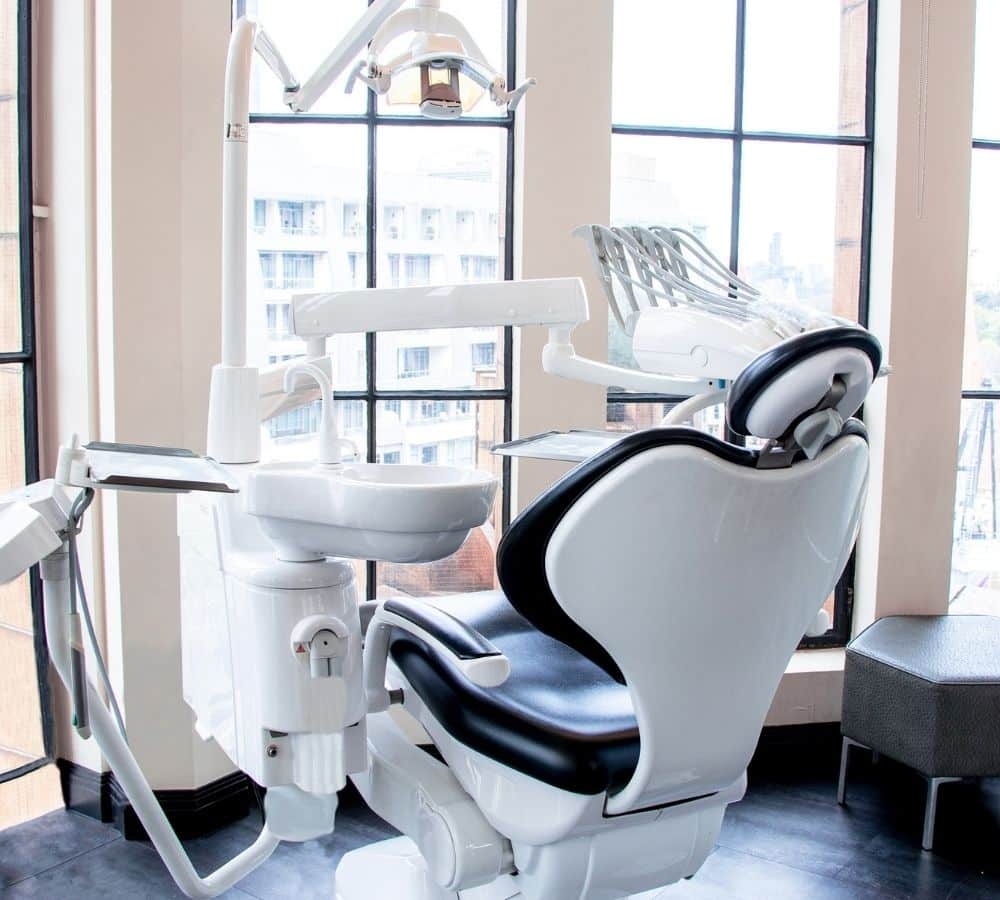
A hygienist collects you and takes you to one of the surgeries, where you take a seat in the chair. What do dental hygienists do? and dental hygienist versus dentist explain the role and what separates it from the dentist's; the difference between a dental therapist and a dental hygienist covers the third title you may see.
The questions
The hygienist asks about your general health and your dental health, including any concerns you have about the health or appearance of your teeth or gums.
Raise them here. The rest of the appointment is shaped by what you say at this point, and it is easier to address something in the plan than to add it at the end. Medications are worth mentioning specifically — many cause dry mouth, which changes your decay risk substantially.
Smoking and diabetes are the other two worth volunteering rather than waiting to be asked. In the clinical literature smoking "is a major risk factor; it significantly increases risk for periodontitis and severity of the condition", and the risk of periodontitis is increased by approximately threefold in people with diabetes (Preshaw and colleagues, Periodontitis and diabetes: a two-way relationship, Diabetologia). Both change what the hygienist looks for and how often you should come back. Diabetes and oral health and diabetes and dental health: the two-way street go further into it.
The assessment
The chair is tilted back and the hygienist examines your mouth.
They are looking at the overall condition of the teeth and gums, and taking measurements of how tightly the gums sit against the teeth.
Those measurements check whether gum disease is present, and if it is, how severe it is. What is gum disease? covers the early reversible stage; what is periodontal disease? covers the point past which bone loss does not come back.
This is the part people do not realise is happening. The numbers being called out are pocket depths, measured in millimetres around each tooth. Four millimetres or less is healthy; five or more indicates periodontitis. It is the single most informative thing done in the appointment, and it takes about two minutes.
The reason it is done with an instrument rather than by looking is straightforward, and it is stated plainly in the literature: "'Pocketing' is not evident on simple visual inspection, and assessment using a periodontal probe is essential" (Preshaw and colleagues, Diabetologia). What the probe measures is the distance in millimetres from the gum margin to the base of the pocket — the space between the root surface and the gum. In health there is effectively no pocket; in periodontitis its base migrates down the root as the fibres holding the gum to the tooth break down, and the bone recedes alongside.
Two things follow from that, and both explain why this measurement is worth the two minutes:
It is common. Severe periodontitis, the kind that threatens whether a tooth can be kept, affects 10–15 per cent of adults in most populations studied, and moderate periodontitis affects 40–60 per cent (Preshaw and colleagues, Diabetologia).
It is quiet. "In the early stages, the condition is typically asymptomatic; it is not usually painful, and many patients are unaware until the condition has progressed enough to result in tooth mobility." By the time a tooth feels loose, the measurement that would have caught it has been available for years.
The difference between the two stages is the whole reason for measuring: gingivitis is inflammation confined to the gum and is reversible with good oral hygiene, whereas in periodontitis the tissue destruction that occurs is largely irreversible.
Decay between the teeth is invisible to this examination, which is what dental x-rays are for. The gap is not marginal: one published review of radiographic practice reports that visual clinical examination accompanied by intraoral dental or bitewing radiographs detected up to 50 per cent more proximal caries lesions in posterior teeth than visual examination alone — a figure measured in children and adolescents, in a study of paediatric radiographic practice (Radiation Exposure and Frequency of Dental, Bitewing and Occlusal Radiographs in Children and Adolescents, Journal of Personalized Medicine). The same paper is clear that radiographs should be individually justified rather than taken routinely, which is why you are asked about your last set. How safe are dental X-rays and when do they become unsafe? covers that judgement.
The explanation
The hygienist explains their findings — what is happening in your mouth, and what can be done about it, both in the clinic and by you at home.
That includes showing you brushing and flossing techniques, and addressing your concerns. What is the ideal daily routine for oral hygiene?, is flossing really that important? and which toothbrushes do dentists recommend? are the written versions.
This is the most valuable part of the appointment and the easiest to sit through passively. Most people have a specific area they consistently miss, and they cannot see it themselves. Being shown, on your own teeth, is worth more than any amount of general advice.
It is also the moment to ask what toothpaste suits you — selecting a toothpaste: fluoride or non-fluoride — and whether a mouthwash would add anything in your case. On the toothpaste question the World Health Organization frames decay as the product of three things together: "A continued high intake of free sugars, inadequate exposure to fluoride and a lack of removal of plaque by toothbrushing with fluoride toothpaste containing 1000-1500 ppm concentration can lead to dental caries." Brushing is doing two jobs at once — removing plaque, and delivering the fluoride.
The clean
Ultrasonic
A routine clean starts with an ultrasonic device, which gently vibrates and knocks the hardened plaque — calculus, or tartar — off the teeth.
It is accompanied by a gentle flush of water, which irrigates the gums and removes bacteria.
Hand instruments
The hygienist follows up with hand instruments, which remove the finer spicules of calculus that cause bleeding and irritation under the gums. Bleeding gums explains why that irritation matters.
The two steps are not redundant. The ultrasonic removes bulk deposits efficiently; the hand instruments find what it leaves behind, particularly just below the gum margin where the deposits do the most harm.
Where deposits have gone well below the gumline, a routine clean is not enough — do I need a deeper cleaning? explains what root planing involves and why it takes longer.
Polish
Once the calculus is removed, the teeth are polished — using a handpiece with a rubber cup or brush, not unlike an electric toothbrush, and a polishing paste.
The paste is gritty, contains fluoride and is generally mint flavoured. It is applied to each tooth, and removes some extrinsic staining as well as leaving the teeth feeling smooth.
A polish is not whitening. It lifts surface stain from coffee, tea, wine and smoking; it does not change the underlying shade of the tooth. The Australian Dental Association makes the same point from the product end: whitening toothpastes "can help to prevent and remove stains that develop on the surface of teeth from cigarette smoking but professional dental cleans may still be needed." How can I improve the whiteness of my teeth? and teeth whitening cover what does change the shade.
Fluoride
You rinse, and then a fluoride treatment is applied.
Do not eat, drink or rinse for half an hour afterwards. That is not arbitrary — the fluoride needs contact time with the enamel to be incorporated into it. Rinsing it away immediately removes most of the benefit. The benefits of fluoride explains the chemistry, and it is the same reason you should spit rather than rinse after brushing at home.
Before you leave
This is a good time to ask questions — about the treatment you have had or may need, about home care, or anything else. The hygienist is happy to answer them. Understanding your treatment covers how any further work would be set out, and published fees are in the price guide.
You are accompanied back to reception, where any further appointments can be booked, including your next check-up in six months.
If gum disease was identified, the recall interval may be shorter than six months — typically three, because that is roughly how long the bacteria take to repopulate a treated pocket. The same applies if you have diabetes, dry mouth from medication, braces, or a smoking history. Periodontists are the specialists for advanced cases.
If you live with diabetes there is a second reason to keep the shorter interval, and it runs in the other direction. The relationship is described in the literature as two-way: diabetes increases the risk of periodontitis, and periodontal inflammation in turn negatively affects glycaemic control. Treating the gum disease is associated with HbA1c reductions of approximately 0.4 per cent — though the authors are explicit that "large, multi-centre, randomised controlled trials are needed to further validate these findings" (Preshaw and colleagues, Diabetologia). It is a reason to take the appointment seriously, not a treatment for diabetes.
Now that you know what to expect, the hope is there is less fear of the unknown — and you can relax through it.
Common questions
How often should I actually come — is six months a real interval or just a habit?
This deserves a straight answer, and the straight answer is that no independent source we can find sets a universal interval. Six months is convention rather than a figure anyone has established for the general population, and we would rather say so than dress it up.
What the evidence does support is that the interval should be risk-based, and the risk factors are identifiable. Periodontitis susceptibility is increased approximately threefold in people with diabetes, and smoking "is a major risk factor; it significantly increases risk for periodontitis and severity of the condition" (Preshaw and colleagues, Diabetologia). Medications that dry the mouth, orthodontic appliances and a history of treated periodontal pockets all point the same way. Against that, someone with no bleeding, no pockets over four millimetres, no decay history and no risk factors is a different proposition from someone with three of them.
So the useful thing to do at the end of the appointment is not to accept an interval but to ask for its reasoning: which of my measurements sets this interval, and what would have to change for it to get longer? A clinician who can answer that is individualising it. One who cannot is defaulting.
It bled, and it was uncomfortable. Did something go wrong?
Bleeding during or after a clean is usually a sign of the inflammation that was already there rather than of the instrument. Healthy gum tissue does not generally bleed on gentle probing; inflamed tissue does, and the deposits under the gum margin are what keep it inflamed. That is the reason the hand instruments follow the ultrasonic — they reach the finer spicules of calculus that cause bleeding and irritation under the gums, and leaving them is what perpetuates the problem.
The discomfort has a similar explanation. Where pockets are deeper, instruments have to work further below the gum and against root surfaces that are not normally exposed. If it is uncomfortable, say so during the appointment rather than afterwards — local anaesthetic can be used for a deeper clean, the appointment can be split across visits, and the amount done in one sitting is a decision that can be adjusted. Do I need a deeper cleaning? sets out what root planing involves and why it takes longer.
The distinction that matters for what happens next is the one described above: gingivitis is inflammation confined to the gum and is reversible with good oral hygiene, while in periodontitis the tissue destruction that occurs is largely irreversible (Preshaw and colleagues, Diabetologia). Bleeding that settles within a week or two as home care improves is the first picture. Bleeding that persists, or pockets that were measured at five millimetres or more, is the second — and that is a reason to return rather than to wait six months. Bleeding gums.
Can I skip the hygienist and just see the dentist?
Both are registered dental practitioners and both can examine your gums, so this is a question about how a practice divides the work rather than about whether you are getting less. What you should not skip is the measurement, and the reason is quotable: "'Pocketing' is not evident on simple visual inspection, and assessment using a periodontal probe is essential" (Preshaw and colleagues, Diabetologia).
That is the part worth insisting on wherever you have it done. An appointment in which nobody called out numbers around each tooth has not assessed your gums, however thorough the clean felt. Ask whether pocket depths were recorded, what the highest reading was, and how it compares with last time — the trend matters more than any single figure.
What a hygiene appointment typically buys you beyond the dentist's examination is time: the deposits removed properly rather than quickly, and the coaching on your own teeth, which is the part most people undervalue. What is the difference between having your teeth cleaned by a dentist and a hygienist? and dental hygienist versus dentist set out the roles.
Should I be using a mouthwash as well?
The consistent professional position is that it is an addition, not a replacement. Australian Prescriber puts it directly: mouthwashes are "an adjunct to, not a substitute for, regular brushing and flossing" and "should never be the sole means of oral hygiene". Nothing in a bottle substitutes for removing plaque mechanically.
Where a rinse is prescribed for a reason, the evidence for the strongest one is good and its drawback is directly relevant to the appointment you have just had. A Cochrane review of chlorhexidine mouthrinse as an adjunct to mechanical cleaning found that after four to six weeks it reduced gingivitis by 0.21 (95% CI 0.11 to 0.31) on the 0-to-3 Gingival Index scale in people with mild gingival inflammation — 10 trials, 805 participants, rated high-quality evidence — and produced a large reduction in plaque, SMD 1.45 (95% CI 1.00 to 1.90) across 12 trials and 950 participants. But it also produced a large increase in extrinsic tooth staining, SMD 1.07 (95% CI 0.80 to 1.34) across eight trials and 415 participants, at moderate-quality evidence. In other words it stains the teeth the polish has just cleaned, which is why it is generally used for a defined period rather than indefinitely. The same review found the evidence insufficient to say how much it helps people with moderate or severe gingival inflammation, and inconclusive on calculus.
On alcohol-containing rinses, the sources genuinely disagree and we are not going to resolve it for you. A review in an Australian dental journal concluded there is "now sufficient evidence to accept the proposition that alcohol-containing mouthwashes contribute to the increased risk of development of oral cancer", and that "it is inadvisable for oral healthcare professionals to recommend the long-term use of alcohol-containing mouthwashes". Against that, a pooled analysis of 8,981 head and neck cancer cases and 10,090 controls across 12 case-control studies, adjusted for tobacco and alcoholic drinks, found an odds ratio for ever-use of 1.01 (95% CI 0.94 to 1.08) — essentially no association overall — while reporting 1.31 (95% CI 1.09 to 1.58) for use more than once a day and 1.15 (1.01 to 1.30) for use over more than 35 years. Its authors note the study was limited by its retrospective nature and by limited ability to assess risk in people who neither smoked nor drank. Frequent long-term use is where the signal sits; occasional use is where it does not. Raise it with the hygienist rather than deciding from a label. The truth and myths about mouthwashes.
My breath is the real reason I came. Can a clean fix it?
It may help, and it is worth saying at the start of the appointment rather than hoping it is noticed. But the honest position is that the evidence for treating bad breath is weak across the board, and one commonly recommended measure is contradicted by the body that recommends it.
The Cochrane review of interventions for managing halitosis covered 44 trials and 1,809 participants aged 17 to 77 and concluded, in its own plain-language summary, "We do not have enough evidence to say which intervention works better to control bad breath". For mechanical tongue cleaning specifically it reports a mean difference of -0.20 (95% CI -0.34 to -0.07) from 2 trials and 46 participants, rated very low-certainty evidence — a small effect from a very small number of people, measured in a way nobody should build a routine on.
The Australian Dental Association has adopted that position in its own consumer material, and then contradicted it on the same page. Its tongue-cleaning page states that "a review of the scientific evidence in 2019 found no evidence that cleaning your tongue, using several different methods including mouthwash or chewing gum, were effective for managing the cause of halitosis", and adds that bad breath "can actually be caused by other areas of the body including the lungs and the nose". The key-messages box on that same page says "Cleaning your tongue can help to reduce bad breath." Both sentences are the ADA's. We are flagging the contradiction rather than choosing between them.
What is better established is that some causes are findable and treatable, which is the argument for raising it here. Gum disease is one, and the ADA's own account of smoking gives two pathways at once: the ingredients "have their own smell and smoking makes the mouth dry which helps certain bacteria grow", producing "toxins and gas which smell", and smoking separately "makes you more likely to get gum disease which can cause bad breath". Dry mouth from medication belongs in the same category — my mouth always feels dry. If nothing in your mouth accounts for it, that is itself useful information and points elsewhere.
What can I do at home that actually changes the next appointment?
Less than the product aisle suggests, and more than most people do. The World Health Organization's framing is the most useful summary available, because it names three things that have to go wrong together: "A continued high intake of free sugars, inadequate exposure to fluoride and a lack of removal of plaque by toothbrushing with fluoride toothpaste containing 1000-1500 ppm concentration can lead to dental caries." Check the ppm figure on your tube; brush to remove plaque and to deliver the fluoride; and spit rather than rinse, for the same contact-time reason that applies to the fluoride at the end of your appointment.
The second lever is interdental, and it is the one that shows up in the measurements. Deposits just below the gum margin between the teeth are where the irritation and the bleeding start, and a toothbrush does not reach them — is flossing really that important? and what is the ideal daily routine for oral hygiene?
The third is acid, which is about timing as much as quantity. The Australian Dental Association's policy on diet and nutrition asks that acidic foods and drinks be avoided "especially when an individual is at high risk of developing caries or erosion of teeth", and its list of who is at risk includes people with reduced salivary flow, people on medications that reduce saliva, "exertion resulting in a dry mouth", and "sipping drinks, other than water, during interrupted sleep". Sports drinks during exercise and anything but water at the bedside are the two habits on that list people rarely connect with their teeth. See what is dental erosion and how is it addressed?
And the one that is free: ask to be shown where you are missing, on your own teeth, at every appointment. Most people miss the same place for years.
Does this article replace an individual dental assessment?
No. It provides general information. Symptoms, suitability, risks and treatment choices depend on examination and, where indicated, imaging or other records from an appropriately registered practitioner.
Related reading
- Dental cleans and hygienists — the service page
- What is the difference between having your teeth cleaned by a dentist and a hygienist?
- Three oral hygiene tips you need to know
- Preventing dental decay
- Can you reverse tooth decay?
- The importance of dental hygiene: a window onto overall health
- What to do if you suffer from sensitive teeth
- How often should I go to the dentist?
Practical details
Written by Sarah Lawrence. The full team is listed by name.
Smile Solutions, Level 1, 220 Collins Street, Manchester Unity Building, Melbourne VIC 3000 — getting here. Phone 13 13 96, contact us, or theteam@smilesolutions.com.au. Monday–Friday 8.00am–6.00pm, Saturday 8.30am–1.30pm, Sunday by appointment.
Published 24 September 2018. Appointments are tailored to individual needs and may differ from the outline above. Quotations and figures attributed to Diabetologia, the Journal of Personalized Medicine, the World Health Organization, the Cochrane Library, Australian Prescriber, the Australian Dental Association and the International Head and Neck Cancer Epidemiology Consortium are those publications' own, as at the dates of the documents cited. Effect sizes and confidence intervals are group results from pooled studies and are not predictions for an individual. General information only; it does not replace advice from your treating practitioner.
Smile Solutions trades under ABN 28 193 514 103.
Images on This Page
-
https://www.facebook.com/tr?id=800557773428361&ev=PageView&noscript=1
(no alt text)
-
https://www.smilesolutions.com.au/wp-content/uploads/2025/10/calendar_month.svg
(no alt text)
-
https://www.smilesolutions.com.au/wp-content/themes/arcadian-wordpress-theme/assets/images/smile_solutions_logo_white.png
Smile Solutions Logo
-
https://www.smilesolutions.com.au/wp-content/themes/arcadian-wordpress-theme/assets/images/smile_solutions_logo_purple.png
Smile Solutions Logo
-
https://www.smilesolutions.com.au/wp-content/uploads/2025/11/Sarah-Lawrence-150x150.jpg
Sarah Lawrence
-
https://www.smilesolutions.com.au/wp-content/uploads/2014/07/Ortho-Tower.jpg
Orthodontic Tower
-
https://www.smilesolutions.com.au/wp-content/uploads/2018/08/Soft-Drink-300x270.jpg
Damage to tooth enamel occurs within 30 seconds of consuming soft drinks
-
https://www.smilesolutions.com.au/wp-content/uploads/2025/09/Root-Canal-2-300x217.jpg
Root Canal
-
https://www.smilesolutions.com.au/wp-content/uploads/2023/11/SS-Tooth-1-1-150x150.png
Smile Solutions
-
https://www.smilesolutions.com.au/wp-content/uploads/2025/09/Wisdom-Teeth-Smile-Solutions-300x300.png
Smile Solutions Dentist Melbourne
-
https://www.smilesolutions.com.au/wp-content/uploads/2025/11/Kia-150x150.jpg
Dr Kia Pajouhesh
-
https://www.smilesolutions.com.au/wp-content/themes/arcadian-wordpress-theme/assets/images/family_owned_bussiness.png
Family Owned Business
-
https://www.smilesolutions.com.au/wp-content/themes/arcadian-wordpress-theme/assets/icons/icon--phone.svg
Smile Solutions Contact
-
https://www.facebook.com/tr? id=800557773428361&ev=PageView&noscript=1
(no alt text)