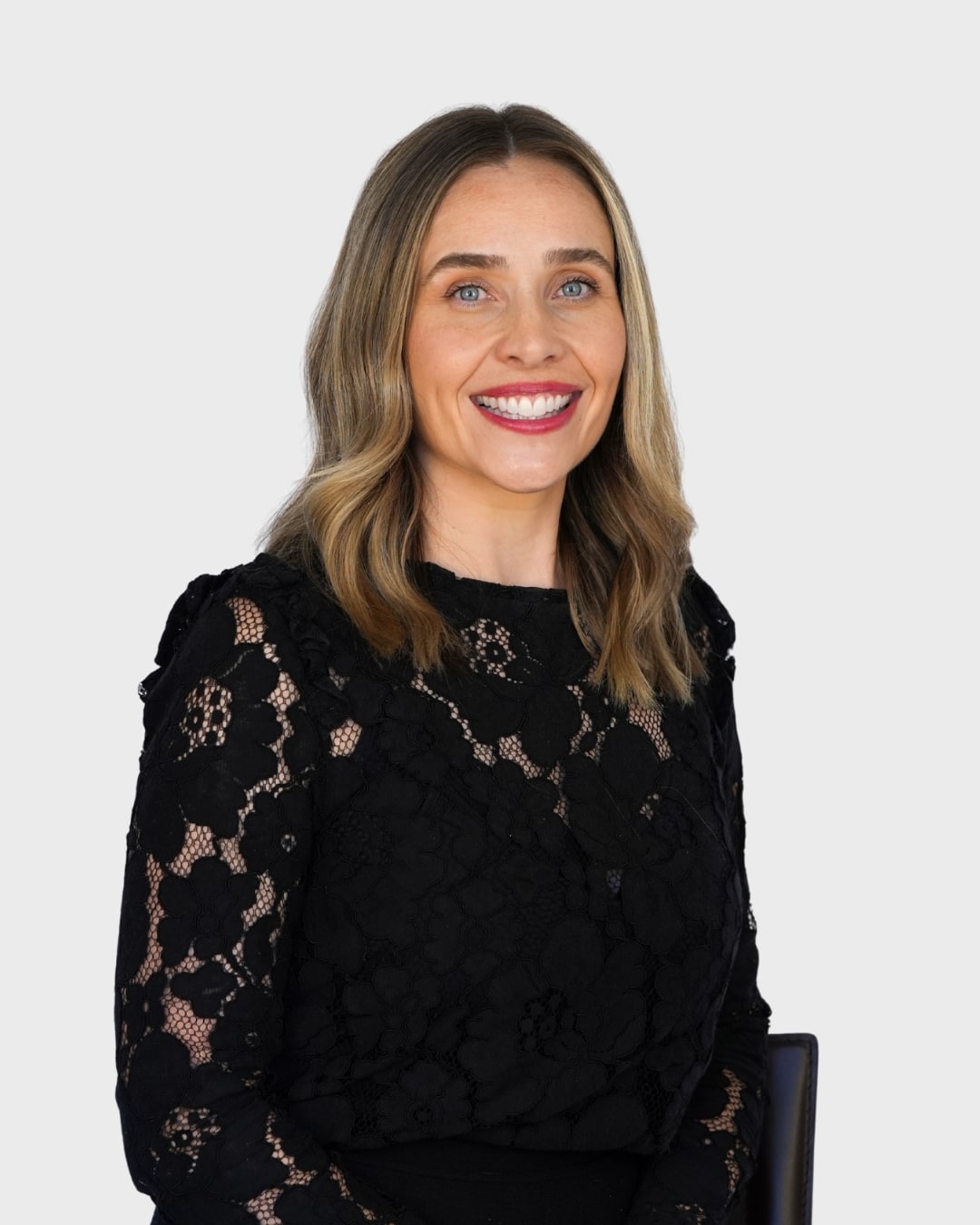
Sarah Lawrence, Dental Hygienist — Orthodontic Practice
Role: Dental hygienist, working in orthodontics in a clinical and treatment coordinating capacity
Qualifications: Bachelor of Health Science (endorsed in dental therapy), University of Otago, New Zealand (2007)
Registration: Registered dental practitioner, dental hygienist division, general registration, DEN0001656150
Registration status can be verified on the AHPRA register of practitioners at ahpra.gov.au. Her work spans orthodontics and hygiene; the full clinician list is on the our team page.
Note on duplicate pages: this practitioner appears at two addresses on this site — Sarah Lawrence, Dental Hygienist — Orthodontic Practice and Sarah Lawrence — duplicate page. They describe the same person, with the same registration number. There is one Sarah Lawrence at this practice.
A note on titles and scope
The practice describes this role as "orthodontic dental therapy". Two clarifications, because the terminology is easily misread:
- "Orthodontic therapist" is not a registration division in Australia. The Dental Board registers dentists, dental specialists, dental hygienists, dental therapists, oral health therapists and dental prosthetists. There is no separate orthodontic auxiliary registration here, unlike the United Kingdom. What is the difference between a dental therapist and a dental hygienist? sets out the divisions that do exist.
- The registration recorded for this practitioner is the dental hygienist division. That is the scope she practises within. The qualifying degree was endorsed in dental therapy; the division shown on the AHPRA register — not the title of the course or a website description — is what governs what a practitioner may do. The register is free to search and settles it, and the practice's own summary is on the dentists and registered specialists page.
The rule behind that is the Dental Board's Scope of practice registration standard (in effect 1 July 2020), which "applies to all practitioners registered with the Board" and "requires dental practitioners to practise within the scope of their education, training, and competence at all times" — stated elsewhere by the Board as an obligation to "only provide treatments in which they are educated, trained and competent". It is a test about the individual's education, training and current competence, which is why a course title settles nothing on its own. (Source: Dental Board of Australia, FAQ: Specialist registration; Teeth whitening products.)
A registered practitioner working in an orthodontic practice may carry out orthodontic procedures within a structured professional relationship with the treating dentist or orthodontist, under that practitioner's treatment plan. The diagnosis, the treatment plan and the clinical decisions remain the orthodontist's — orthodontic treatment: general dentist vs specialist orthodontist?
Orthodontics is one of the 13 dental specialties recognised by the Dental Board and "approved by the Australian Health Workforce Ministerial Council". A dentist holding specialist registration in it has completed the approved qualification, met every requirement for general registration, and "completed a minimum of two years general dental practice" first. Ahpra's register "also includes details of the specialty or specialties for dentists who hold specialist registration", so the title is checkable in a minute. The ADA notes that "many general dentists also perform orthodontic treatment". (Sources: Dental Board of Australia, Specialist Registration; ADA, Teeth straightening and braces.)
Background
Sarah Lawrence graduated from the University of Otago in New Zealand in 2007 with a Bachelor of Health Science endorsed in dental therapy.
After four years working in dental hygiene she moved to Melbourne to work exclusively in orthodontics, and has since worked alongside Melbourne orthodontists in both clinical and treatment coordinating roles. She has written for the practice on soft drinks and enamel, and on what a hygienist appointment involves; those articles are listed below.
Working in an orthodontic practice
Orthodontics runs on repetition. A course of comprehensive treatment involves twenty or more appointments over two years or more, most of them short adjustment visits — how long does it take to have orthodontic treatment? Much of the routine work in a well-run orthodontic practice is carried out by registered auxiliary practitioners under the orthodontist's plan, with the orthodontist reviewing progress and making the clinical decisions.
What a registered practitioner may do in that setting varies with their division and their training, and typically includes:
- Taking records — photographs, impressions or digital scans, radiographs
- Oral hygiene instruction adapted to appliances
- Cleaning and periodontal care during treatment
- Fluoride application to reduce decalcification risk
- Placing and removing separators, and fitting bands
- Removing appliances and cleaning residual adhesive from teeth
- Fitting and reviewing retainers
- Explaining care instructions and coordinating appointments
What remains with the orthodontist or dentist: diagnosis, the treatment plan, decisions about extractions, prescribing appliance changes and wire sequences, and any decision to alter or stop treatment. Understanding your treatment describes how a plan is set out at the start.
When assessment should happen. The ADA records that "the Australian Society of Orthodontists' recommend children have an orthodontic assessment between the ages of 7 – 10", and — the part parents most often get wrong — that "all the adult teeth do not have to be present in the mouth for an assessment to be done", because "an examination at this age can allow for early intervention treatment should it be needed". See children's braces and Invisalign.
On treatment ordered over the internet, the ADA's position is unambiguous: it "do not recommend Australians have DIY orthodontic treatment", because the risks "can lead to permanent damage to your teeth, gums, and jaw joints", and it "recommends that you have in-person treatment with a dentist or orthodontist which includes a thorough assessment before starting treatment and ongoing supervision". (Source: ADA, Teeth straightening and braces.)
The thing that matters most during orthodontic treatment
Decalcification. White scarring on the enamel around brackets, caused by plaque left against the tooth surface. It is permanent — it does not disappear when the appliances come off, and treating it afterwards means either accepting it, resin infiltration, or restorative work.
The mechanism is worth stating once, precisely, because it explains every instruction that follows. The ADA describes caries initiation as "the metabolism of simple carbohydrates by bacteria in the dental plaque which produces acids", where "the production of these acids causes the pH of dental plaque to fall below the critical level leading to softening of tooth structure". Crucially, "the form, frequency, timing and total amount of sugar intake are significant" — frequency, not just quantity. Fixed appliances make this worse for a purely mechanical reason: they hold plaque and food against the enamel in places a brush does not reach. (Source: ADA Policy Statement on sugar and dental caries.)
It is entirely preventable, and preventing it is the single most valuable thing an orthodontic hygienist does:
- Fluoride toothpaste twice daily, spit don't rinse. Higher-concentration fluoride toothpaste is often prescribed during treatment — selecting a toothpaste: fluoride or non-fluoride? The World Health Organization places toothbrushing "with fluoride toothpaste containing 1000-1500 ppm concentration" alongside adequate fluoride exposure and low free-sugar intake as the three things whose absence "can lead to dental caries".
- Cleaning around and under the wire with an interdental brush or a floss threader — a toothbrush alone does not reach it. Is flossing really that important?, and what are the hygiene benefits of Invisalign? for the removable alternative.
- Reduced sugar frequency. Appliances hold food against the tooth surface; frequent snacking during treatment is far more damaging than it would otherwise be — how does sugar affect your dental health? and the stages of dental decay. The WHO recommendation is to limit free sugars — "all monosaccharides and disaccharides added to foods and beverages by the manufacturer, cook or consumer, as well as sugars naturally present in honey, syrups, fruit juices and fruit juice concentrates" — to "less than 10% of total energy intake", and states that "limiting the intake of free sugars to less than 10% of total energy intake – and ideally to less than 5% – minimizes the risk of dental caries throughout the life course". (Source: WHO, oral health and sugars.)
- Regular professional cleaning throughout treatment. Routine dental care does not pause because orthodontic treatment is running — how often should I go to the dentist?
Brushing with braces, step by step
The ADA publishes a sequence, and it is more specific than "brush well". Remove any elastics or removable appliances first, rinsing them before they go back in. Then:
- A pea-sized amount of toothpaste on the brush — manual or electric, both work.
- Start at the gum line, holding the brush "at a 45-degree angle to the gums with the brush bristles split evenly over the teeth and gums", moving "in small circular or back-forward motions".
- Turn the brush to face the bristles downwards to clean the top of the brackets.
- Turn it again to clean at an upward angle along the bottom of the brackets.
- Spit, don't rinse. The ADA's reasoning is explicit: "this allows the fluoride paste to sit on the teeth for longer, increasing protection."
For braces the ADA recommends brushing after every meal, "as food can get stuck around the brackets". Between the teeth, "cleaning between your teeth with string floss can be tricky while wearing braces", so "floss threaders for braces or interdental brushes can assist" — and interdental brushes "can help to clean between the teeth as well as between the orthodontic brackets". (Source: ADA, Teeth straightening and braces.)
Aligners: two instructions people ignore
What you drink while wearing them. Clear aligner trays "should be worn at all times other than when eating and drinking liquids other than water", and the ADA spells out why: "drinking liquids such as fruit juice or soft drink while wearing clear aligners can trap the liquids against the teeth, which can cause damage to the teeth if it happens frequently." A tray turns a passing sip into prolonged contact. See are sugar free soft drinks better for my teeth than regular soft drinks?
Cleaning the trays themselves. Clean them when you clean your teeth, "ideally twice per day" — "the trays can be cleaned with an antibacterial liquid soap and a spare toothbrush", rinsed well afterwards with warm water. Teeth "can be brushed and flossed as normal" during aligner treatment, which is the hygiene advantage over fixed appliances. (Source: ADA, Teeth straightening and braces.) One practical caution: see how to protect your aligners and your smile — heat distorts them permanently.
Other things worth knowing during treatment:
- Gum inflammation and swelling are common with fixed appliances, and are almost always a cleaning problem rather than an appliance problem — bleeding gums.
- Hard and sticky foods break brackets, and each breakage adds an appointment and extends treatment. The most common complaints associated with conventional braces lists what patients actually report.
- Discomfort for a few days after an adjustment is normal. Persistent sharp pain, a poking wire or a loose band should be reported rather than endured — emergency dentistry covers anything acute.
- Elastics work only if worn as instructed. They are the commonest reason a case does not track to plan.
Retention: the part most people are not told firmly enough
Retention is lifelong. Teeth drift throughout life — why do teeth shift? Relapse after orthodontic treatment is not a failure of the treatment; it is the natural behaviour of teeth, and it applies to braces and aligners equally. Will my teeth need retainers after I've had braces? is the article to read before starting, not after.
- Fixed (bonded) retainers require no memory but make flossing harder, and can debond silently — a wire detached at one end lets that tooth move while everything looks normal. Anything that feels different needs checking promptly.
- Removable retainers work while worn and do nothing in a drawer. Instructions usually move from full-time, to nights, to a minimum number of nights per week indefinitely.
- Replace a lost retainer immediately. Teeth move within days; a replacement made two months later may not fit, and the alternative is re-treatment.
What a dental hygienist is
A hygienist is a registered dental practitioner in their own right — independently registered and independently accountable, with their own indemnity insurance and continuing professional development obligations, and subject to the same registration standards and complaints process as a dentist. What does a dental hygienist do? and dental hygienist vs dentist are the patient-facing versions.
Scope includes periodontal assessment and charting, scaling and root surface debridement, managing gum disease, oral hygiene instruction, fluoride, sealants and radiographs. Scope does not include crowns, bridges or veneers on adult teeth, root canal treatment on permanent teeth, extraction of permanent teeth, implant placement, surgery, or prescribing medicines. Cases needing specialist gum treatment go to a periodontist.
Registration
The Dental Board of Australia registers dentists, dental specialists, dental hygienists, dental therapists, oral health therapists and dental prosthetists. It does not register dental technicians, dental assistants or dental nurses, or administrative staff.
Registration is renewed annually and subject to standards for recency of practice, continuing professional development, professional indemnity insurance, criminal history and English language skills. Conditions appear on the public register.
The Board publishes each of those standards with a date of effect — continuing professional development and recency of practice from 1 December 2015, professional indemnity insurance arrangements from 1 July 2016, scope of practice from 1 July 2020, English language skills from 18 March 2025, criminal history from 15 July 2026 — alongside separate standards for overseas-qualified practitioners and for limited registration. Ahpra "publishes an online register of all dental practitioners that provides the profession and the public with up-to-date information about a dental practitioner's registration status". (Source: Dental Board of Australia, Registration Standards.)
For a practitioner who qualified in New Zealand, the Trans-Tasman Mutual Recognition Act provides that "a person who is registered in New Zealand for an occupation is entitled to be registered in the 'equivalent occupation' in Australia", and the Board "may impose conditions on your registration if this is required to make your occupation equivalent to an Australian occupation". Any such condition appears on the public register. (Source: Dental Board of Australia, FAQ: Specialist registration.)
Common questions
Should I see an orthodontist or a general dentist for braces?
Both are lawful routes, and the difference is one of registration rather than of permission.
Orthodontics is one of the thirteen dental specialties recognised by the Dental Board of Australia and "approved by the Australian Health Workforce Ministerial Council". A dentist holding specialist registration in it has completed the approved qualification, met every requirement for general registration as a dentist, and "completed a minimum of two years general dental practice" beforehand. The ADA states plainly that "many general dentists also perform orthodontic treatment" — so the absence of specialist registration is not a bar to providing it.
What the register gives you is certainty about which of those two you are looking at. Ahpra's register "also includes details of the specialty or specialties for dentists who hold specialist registration", free and searchable by name, so the claim is checkable before you book. Beware the middle ground in the wording: "specialist" is a protected title, and phrasing that implies specialty where no specialist registration is held is a breach carrying, for an individual, up to $60,000 per offence, imprisonment of up to three years, or both.
We are not going to tell you one route produces better teeth than the other — there is no independent clinical literature in our reference material comparing the outcomes of the two, and we would rather say that than assert something we cannot support. What we can suggest are questions that work in either setting:
- What registration does the treating practitioner hold, and is orthodontics part of it?
- Who reviews my progress, how often, and who makes the decisions if the case does not track to plan?
- What is the plan if this does not achieve what we discussed — including what a referral would look like?
- What is included in the fee, and what is not — records, retainers, replacement retainers, appointments after the appliances come off?
See orthodontic treatment: general dentist vs specialist orthodontist? and specialist orthodontist vs general dentist: which is best for Invisalign?
My child still has baby teeth. Is it too early for an assessment?
No — and this is the most common misunderstanding parents bring in.
The ADA records that "the Australian Society of Orthodontists' recommend children have an orthodontic assessment between the ages of 7 – 10", and states directly that "all the adult teeth do not have to be present in the mouth for an assessment to be done", because "an examination at this age can allow for early intervention treatment should it be needed". (Source: ADA, Teeth straightening and braces.)
An assessment at that age is not a decision to start treatment, and most children assessed at seven do not begin anything. What it does is put a clinician's eyes on jaw growth, erupting teeth and the space available while growth can still be worked with.
One related reason to be assessed earlier rather than later has nothing to do with appearance. The ADA's oral injury policy notes that "children with prominent front teeth may be a higher risk of injury and may benefit from orthodontic assessment and early treatment to reduce this risk", and separately that protective equipment "should be used during training as well as competition". If your child plays contact sport with prominent upper front teeth, those two sentences belong together. (Source: ADA Policy Statement 2.2.5.) See should my child wear a mouthguard? and children's braces and Invisalign.
What will it cost, and how much will my health fund actually pay?
The honest starting point is that dental fees in Australia are not regulated, and orthodontics is the item group where the variation bites hardest because the total is large and the treatment runs for years.
The Australian Dental Association's Dental Fees Survey 2022 (3,819 valid responses, fees as at 1 July 2022, 122 items) found general practitioner fees up 3.7% over the two years from 1 July 2020, with the largest increases "in Orthodontics (6.9%)" and the smallest in preventive services and periodontics (1.6%). It also reports "considerable variation in the fees charged within and between states". Those are Australia-wide figures about ADA members in general from 2022 — they are not this practice's fees. For those, see the price guide and your written plan.
On the insurance side, three features catch people out:
- Orthodontic cover is usually a separate limit from general dental, and it is commonly a lifetime cap rather than an annual one — so the whole of a child's treatment and any adult treatment later draw on the same pool.
- Waiting periods for orthodontics are typically long, often a year or more, and joining a fund in order to start treatment next month rarely works.
- Preferred provider status is a commercial arrangement between a practice and a fund. It reduces the gap for that fund's members; it is not a statement about clinical quality.
What you should have before agreeing to anything is a written, itemised plan with item numbers, which is what lets your fund quote your rebate in advance rather than afterwards. Ask specifically what happens to the fee if treatment runs longer than planned, and whether retainers and replacement retainers are included — retention is lifelong, and a plan that stops at the day the appliances come off is an incomplete quote. See what is the cost of braces? and understanding your treatment.
Can I just order aligners online and skip the appointments?
The Australian Dental Association's answer is the clearest sentence it publishes on the subject: it "do not recommend Australians have DIY orthodontic treatment", because the risks "can lead to permanent damage to your teeth, gums, and jaw joints". Its recommendation is "in-person treatment with a dentist or orthodontist which includes a thorough assessment before starting treatment and ongoing supervision". (Source: ADA, Teeth straightening and braces.)
The two halves of that are separate protections, and the second is the one the remote model removes. The assessment is where existing decay, gum disease, an unrestorable tooth, root or bone problems visible only on a radiograph, and a bite that cannot be corrected by tipping teeth all get found — before force is applied to them. The supervision is what catches the things that only appear mid-treatment: decalcification forming around the teeth, gums that have become inflamed, a tooth that is not tracking with its tray, discomfort that is not the ordinary post-adjustment kind.
There is a particular trap with aligners specifically. Because the trays are removable and worn a lot, everything in the mouth is under them — which is why the ADA warns that drinking anything other than water while wearing them "can trap the liquids against the teeth". A patient supervising themselves has no way to see the slow, painless damage that results, and decalcification, once it has happened, is permanent.
If cost is the reason the remote option is attractive, say so at a consultation rather than ordering. Staged treatment, a simpler goal, or treating only the teeth that actually bother you are all real conversations — and they are cheaper than repairing enamel afterwards.
Articles by Sarah Lawrence
- Damage to tooth enamel occurs within 30 seconds of consuming soft drinks
- Your Smile Solutions dental hygienist visit: what to expect
Related reading
- Are sugar free soft drinks better for my teeth than regular soft drinks?
- What are sports drinks really doing to your teeth?
- Children's braces and Invisalign
- Price guide — indicative fees, and what changes them
Practical details
Sarah Lawrence's registration and division can be checked on the AHPRA public register. Call 13 13 96 for orthodontic appointments or a hygiene visit during treatment, or use the contact page.
Smile Solutions, Level 1, 220 Collins Street, Manchester Unity Building, Melbourne VIC 3000. Phone 13 13 96, or theteam@smilesolutions.com.au. Monday–Friday 8.00am–6.00pm, Saturday 8.30am–1.30pm, Sunday by appointment.
This page records qualifications and career history as published by the practice. General information only — it is not a diagnosis, a treatment plan or a promise of any particular clinical outcome.
Smile Solutions trades under ABN 28 193 514 103.
Images on This Page
-
https://www.facebook.com/tr?id=800557773428361&ev=PageView&noscript=1
(no alt text)
-
https://www.smilesolutions.com.au/wp-content/uploads/2025/10/calendar_month.svg
(no alt text)
-
https://www.smilesolutions.com.au/wp-content/themes/arcadian-wordpress-theme/assets/images/smile_solutions_logo_white.png
Smile Solutions Logo
-
https://www.smilesolutions.com.au/wp-content/themes/arcadian-wordpress-theme/assets/images/smile_solutions_logo_purple.png
Smile Solutions Logo
-
https://www.smilesolutions.com.au/wp-content/uploads/2025/11/Sarah-Lawrence.jpg
Sarah Lawrence
-
https://www.smilesolutions.com.au/wp-content/uploads/2014/07/Ortho-Tower-300x270.jpg
Orthodontic Tower
-
https://www.smilesolutions.com.au/wp-content/uploads/2025/11/Sarah-Lawrence-150x150.jpg
Sarah Lawrence
-
https://www.smilesolutions.com.au/wp-content/uploads/2018/08/Soft-Drink-300x270.jpg
Damage to tooth enamel occurs within 30 seconds of consuming soft drinks
-
https://www.smilesolutions.com.au/wp-content/themes/arcadian-wordpress-theme/assets/images/family_owned_bussiness.png
Family Owned Business
-
https://www.smilesolutions.com.au/wp-content/themes/arcadian-wordpress-theme/assets/icons/icon--phone.svg
Smile Solutions Contact
-
https://www.facebook.com/tr? id=800557773428361&ev=PageView&noscript=1
(no alt text)