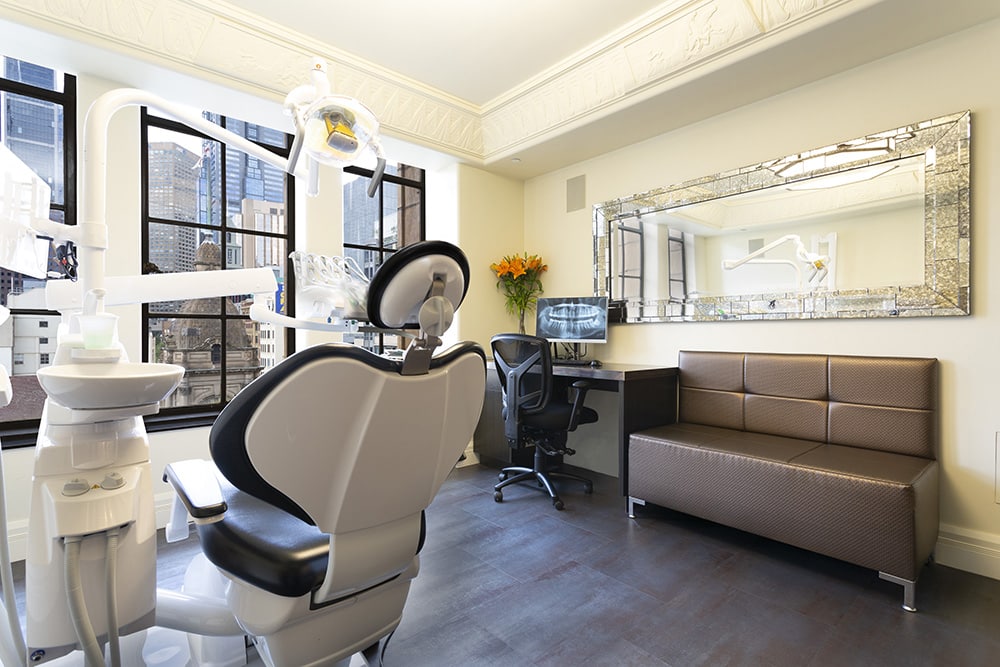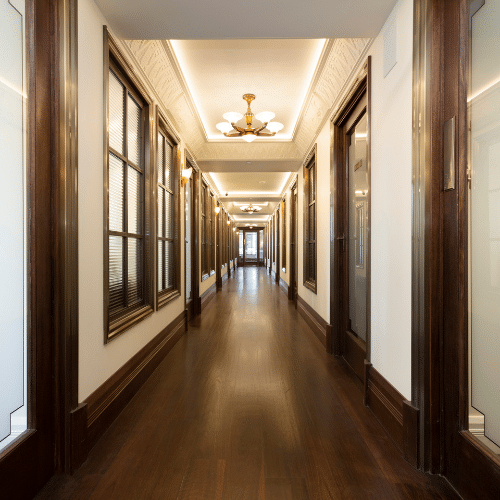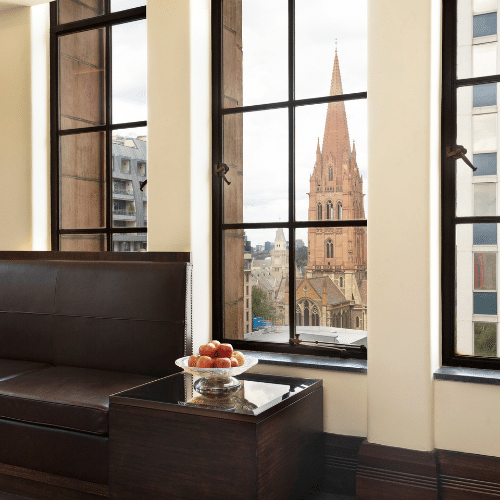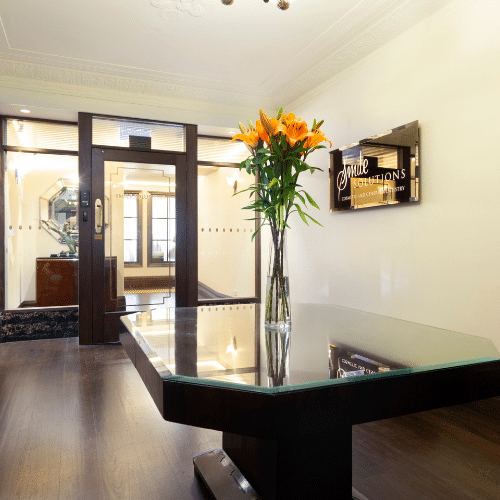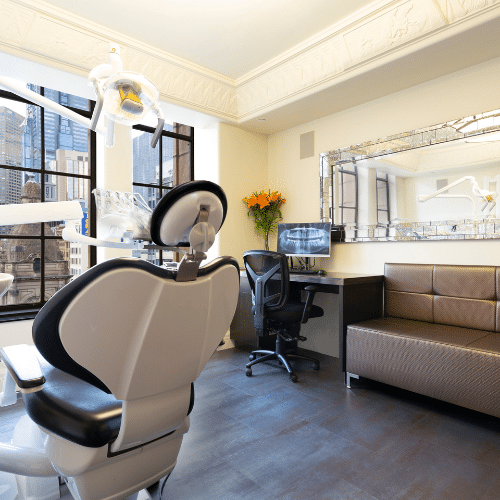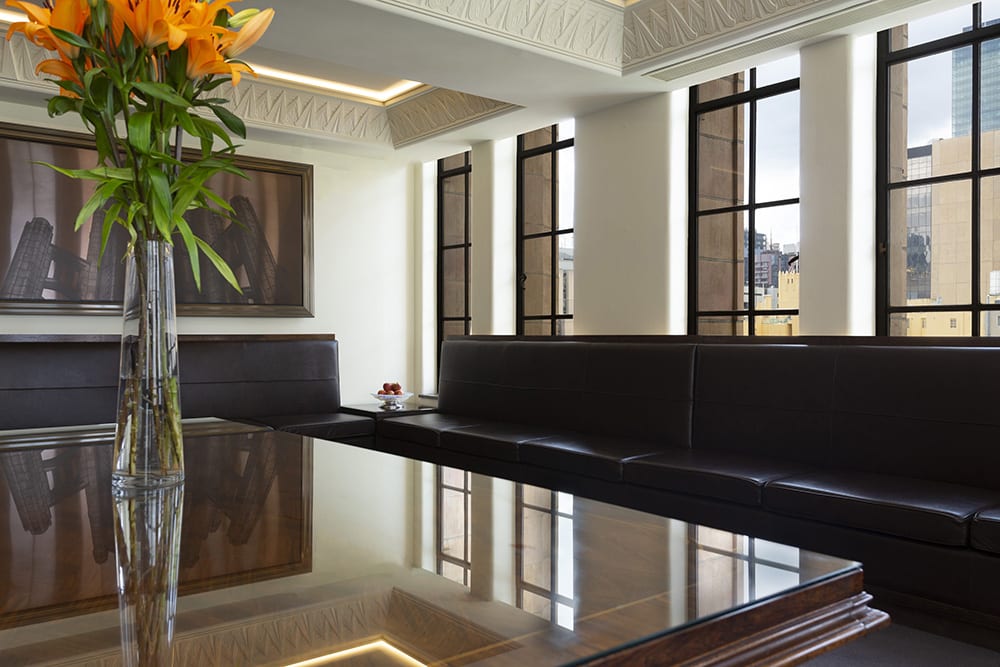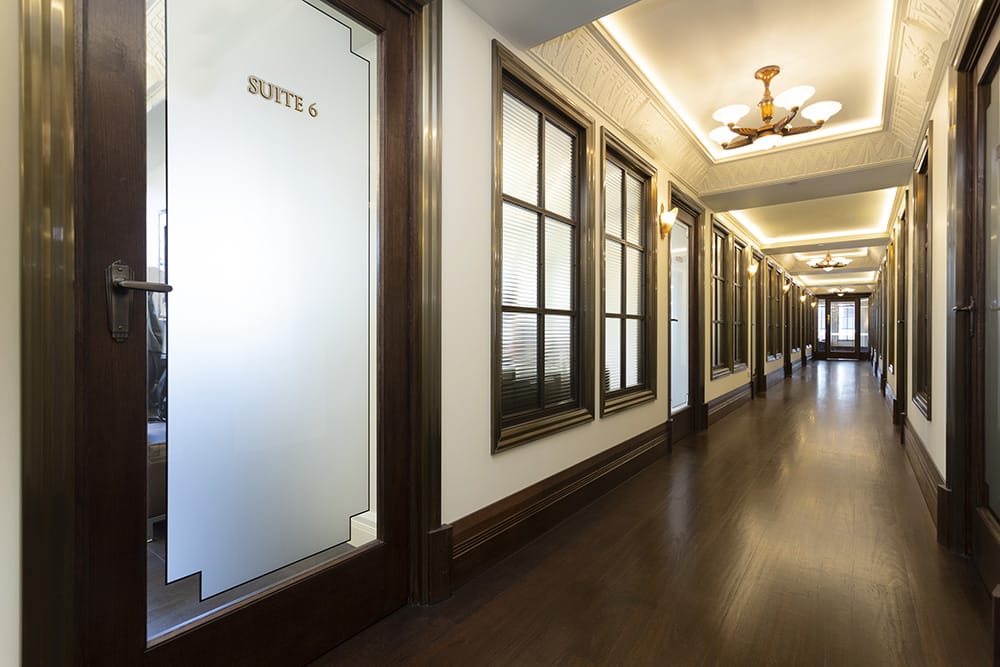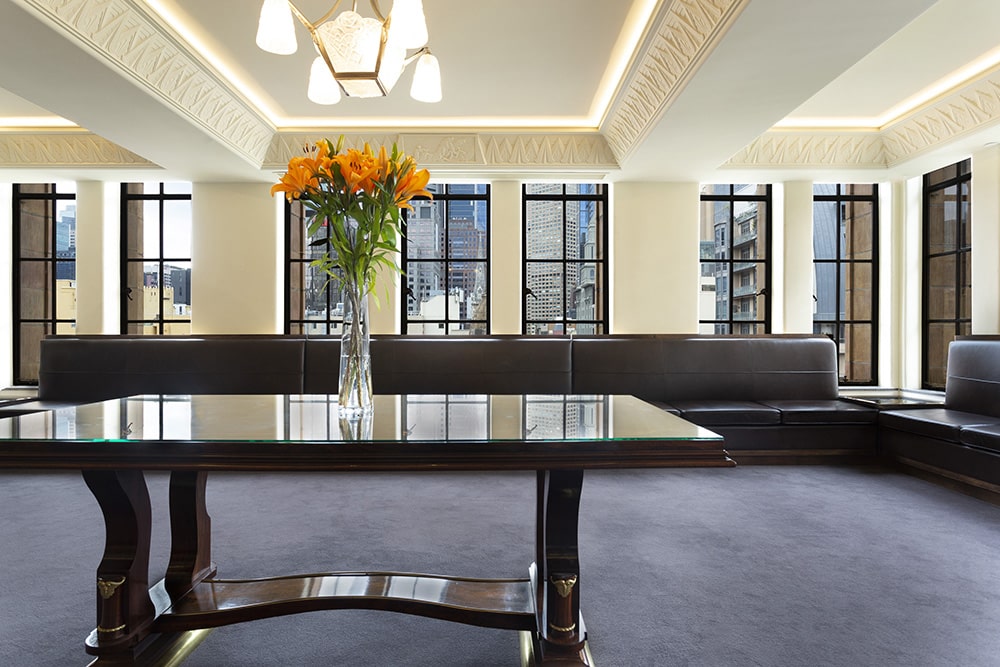
Our Location
Smile Solutions Level 1, 220 Collins Street Manchester Unity Building Melbourne VIC 3000
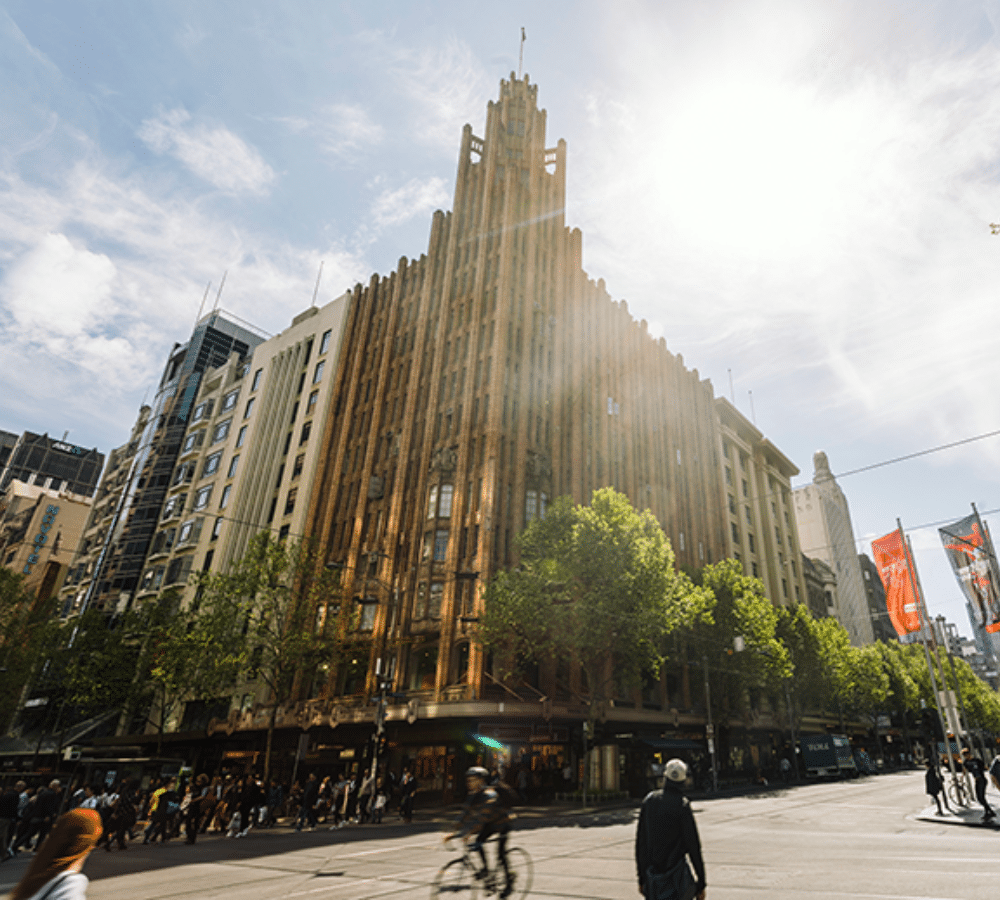
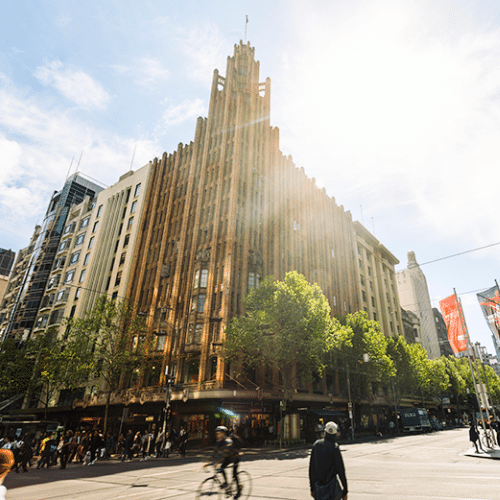
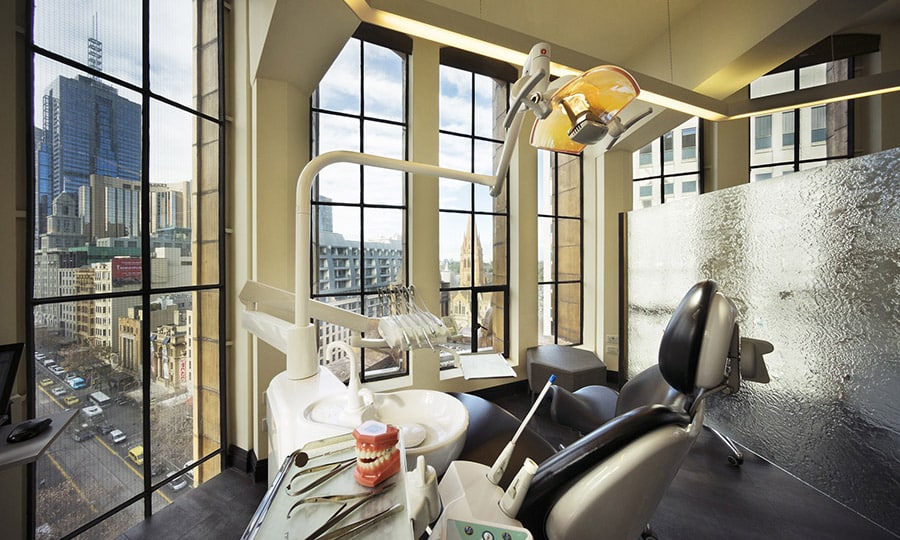
On the corner of Swanston Street and Collins Street, diagonally opposite the Melbourne Town Hall.
Phone: 13 13 96 — theteam@smilesolutions.com.au
Hours: Monday–Friday 8.00am–6.00pm, Saturday 8.30am–1.30pm, Sunday by appointment.
Getting here
Tram — the easiest option
Both Swanston Street and Collins Street tram routes stop at this intersection. It is one of the most tram-served corners in Melbourne, and the stop is at the door.
Train
- Flinders Street Station — a short walk north along Swanston Street
- Melbourne Central Station — a short walk south along Swanston Street
- Parliament Station — walkable, west along Collins Street
On foot
The practice is in the middle of Melbourne's retail and office core. This is the practical reason a great many patients attend at lunchtime — a check-up and hygiene appointment fits inside one — and it matters more than it sounds. Cost and fear are the two documented reasons Australians delay dental appointments, and removing the travel genuinely reduces the deferral that turns small problems into large ones.
The cost half of that is measured. A submission to a Parliament of Australia inquiry into out-of-pocket medical costs cites an Australian Institute of Health and Welfare 2013 survey finding that nearly a third of people aged 5 or older (32%) avoided or delayed visiting a dentist due to cost. The same submission notes that there is no national dental fee schedule in Australia — fees are set practice by practice, which is why it is worth asking for an itemised written quote and comparing it. Travel time is the smaller of the two barriers, but it is the one an address can do anything about. What a written quote should contain is set out on Contact Us; the published figures are at Price Guide.
Parking
There is no on-site parking. Commercial car parks operate nearby, and Melbourne CBD on-street parking is metered and time-limited, with restrictions that change by time of day.
Public transport is genuinely easier here, and for a long appointment it removes the meter from the equation.
Cycling
Bike parking is available in the surrounding streets, and the CBD is served by protected lanes on several approaches.
Finding the entrance
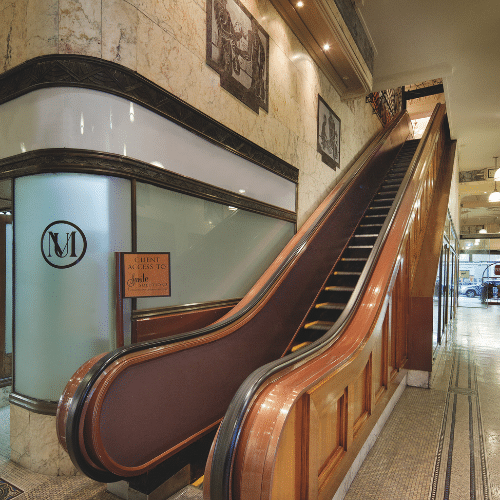
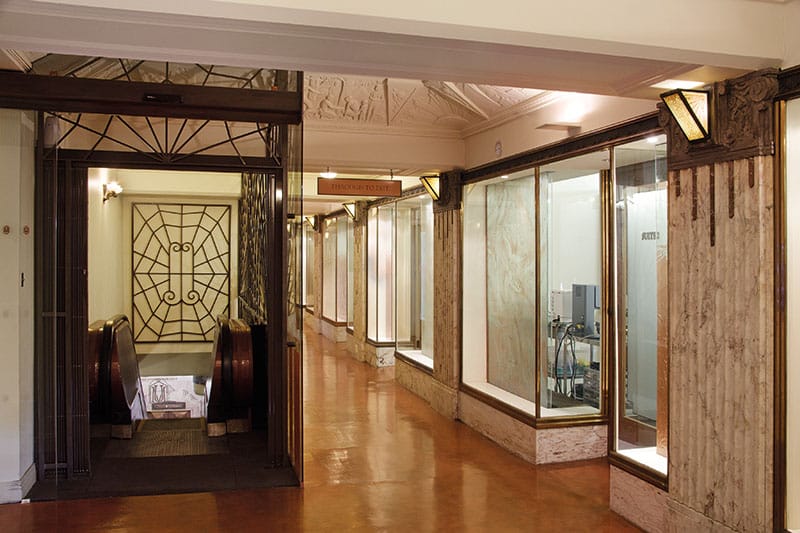
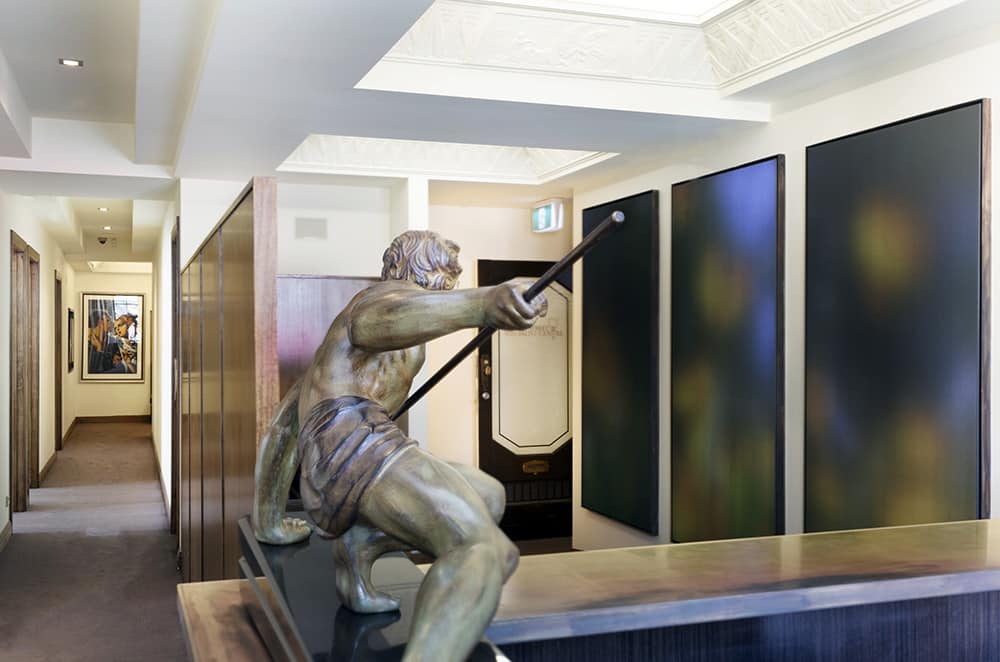
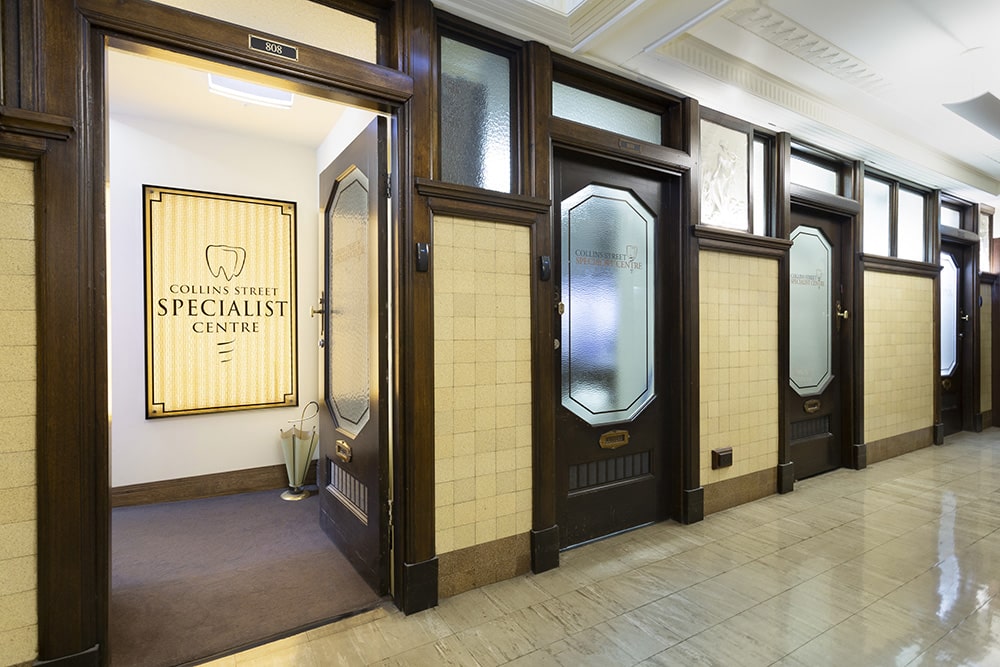
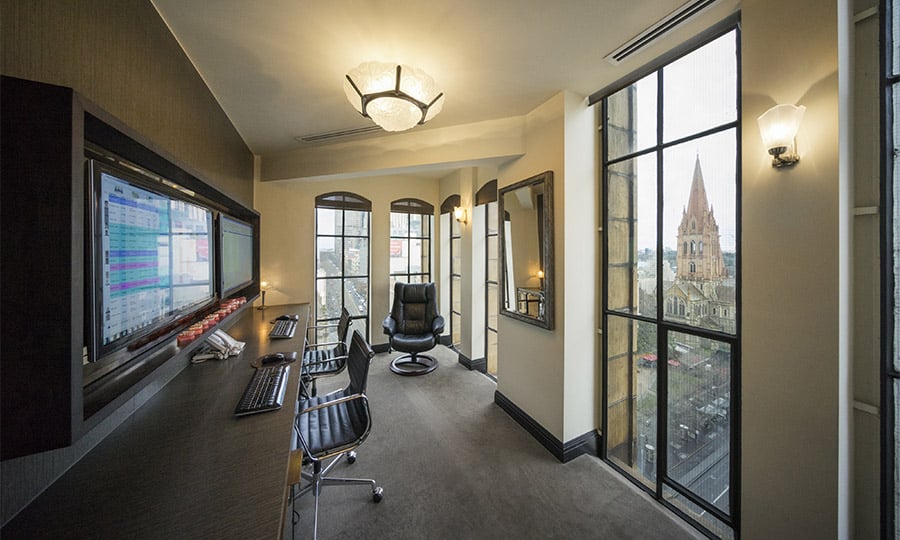
The Manchester Unity Building is the pale, vertically striped landmark on the Swanston and Collins corner, with a stepped tower. The ground-floor arcade runs through the building and is open during business hours.
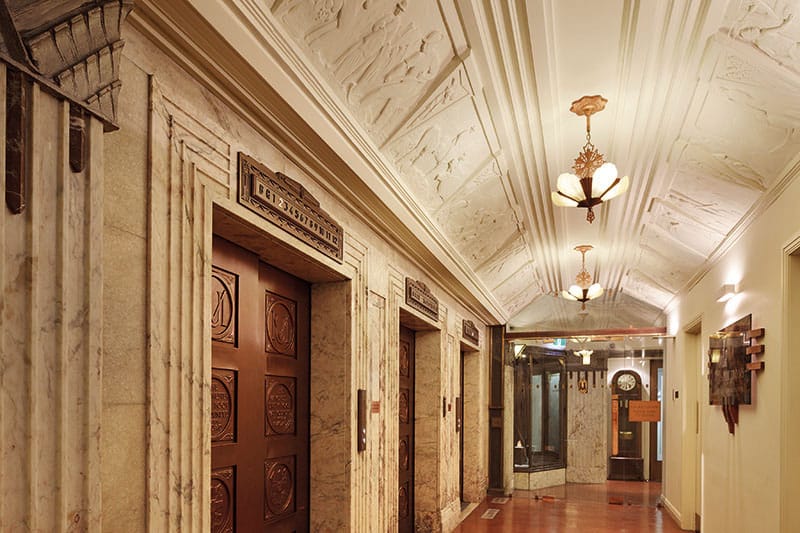
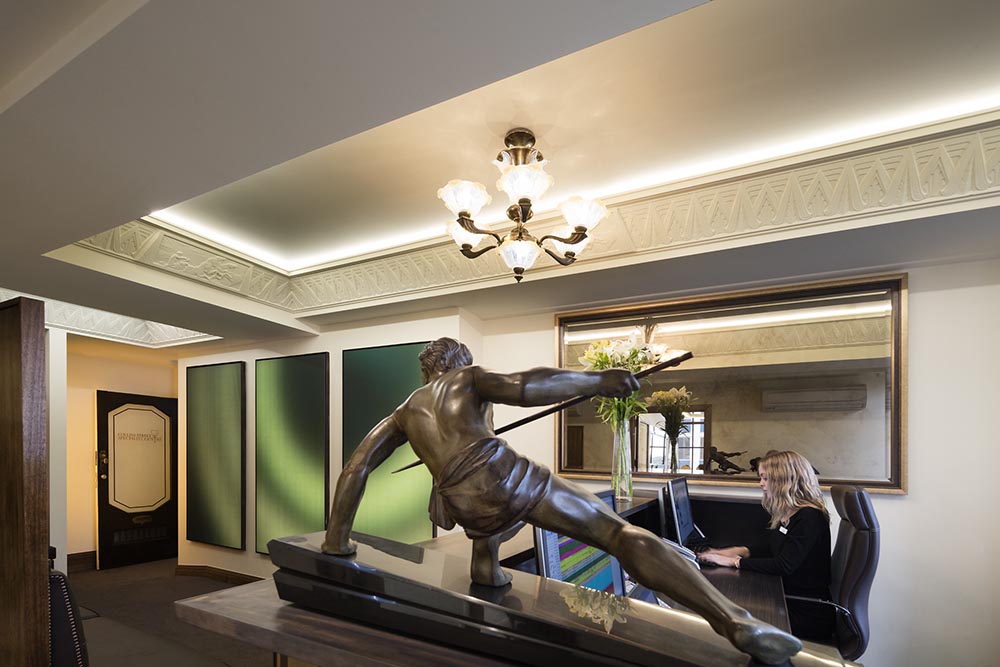
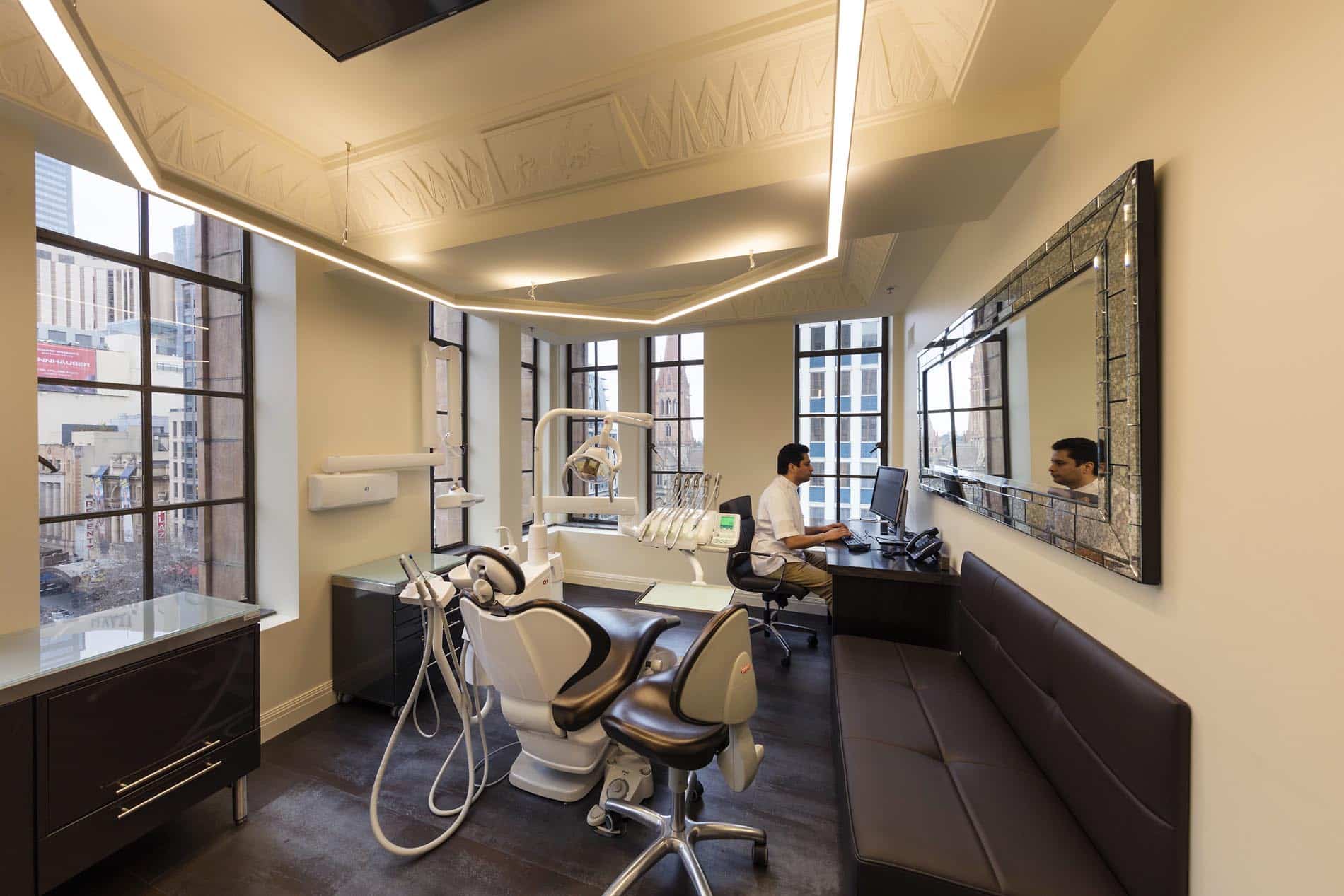
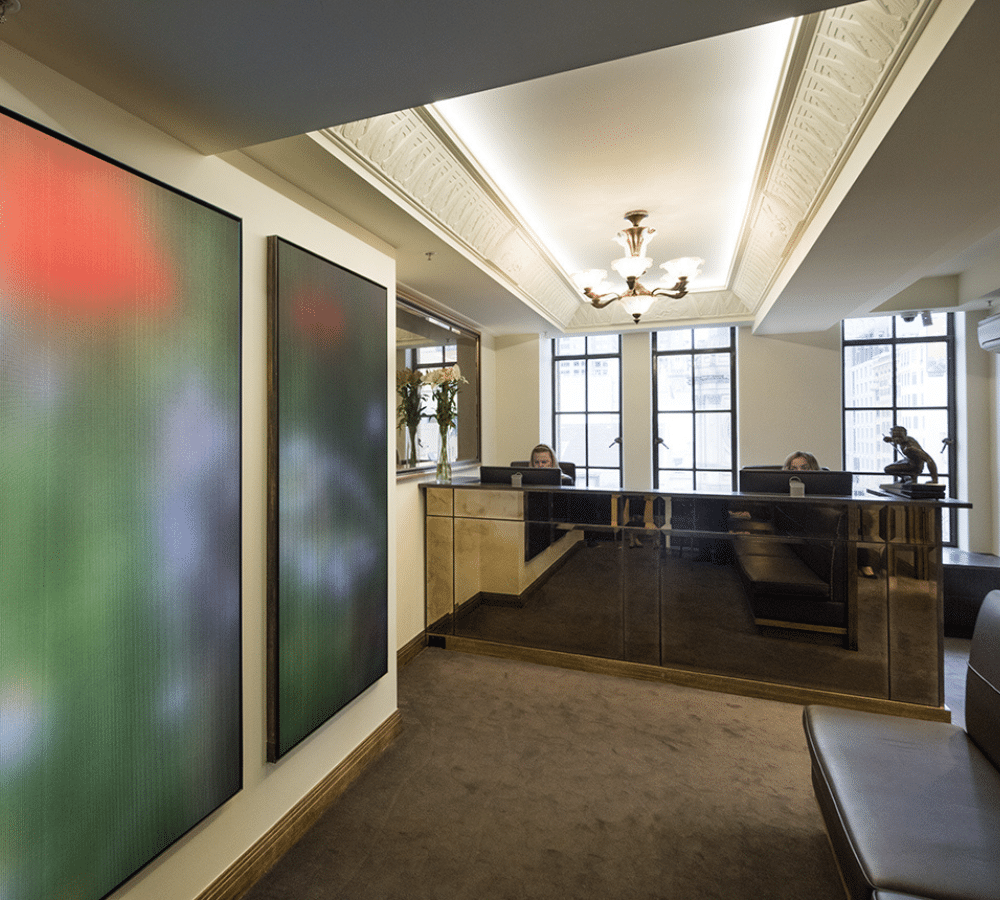
The practice is on Level 1, reached by lift.
If you are not sure, phone 13 13 96 from the street and someone will direct you.
Accessibility
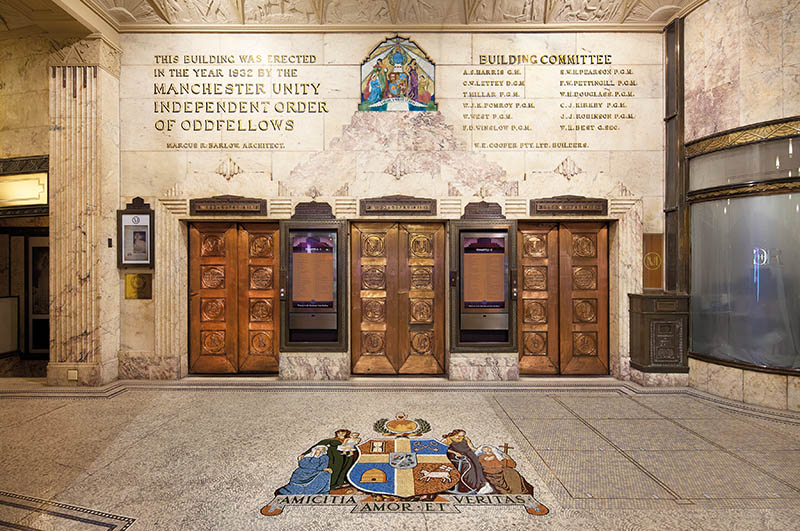
The building was completed in 1932 and has been adapted over time. Lift access serves the upper floors.
Please phone ahead on 13 13 96 if you have specific requirements, including:
- wheelchair access or a mobility aid
- assistance transferring, or treatment while remaining in a wheelchair
- an assistance animal
- a companion or carer attending with you
- an interpreter, including Auslan
- sensory requirements — a quieter time of day, reduced lighting, no radio
- a longer appointment
This is a completely normal request and practices expect the call. Arranging it beforehand is far better than discovering a constraint on arrival, and what to say when you book covers the rest of it.
See also Trio's good reason to smile on dental care for people with disability.
While you are in the area
The intersection is arguably the civic centre of Melbourne, and nearly every building around it is significant:
- Melbourne Town Hall, diagonally opposite — Joseph Reed, 1870s
- The Capitol Theatre, 113 Swanston Street — Walter Burley Griffin and Marion Mahony Griffin, 1924, with one of the most extraordinary interiors in Australia
- The Nicholas Building, 37 Swanston Street — Harry Norris, 1926, full of artists' studios, with the publicly accessible Cathedral Arcade at ground level
- St Paul's Cathedral and Flinders Street Station, a short walk south
- The Block Arcade (1892) and Royal Arcade (1870), a couple of blocks west
A fuller walking guide is at Our City: Manchester Unity Building, the building's own history at Have a Deco at a Classic, and the rest of the writing at Our Media.
All of it stands on the Country of the Wurundjeri Woi-wurrung people of the Kulin Nation.
And the standing note
The building is an address, not a claim about the dentistry. Under the National Law, premises must not be advertised in a way that implies superior clinical care, and nothing on this page does — the same rule is why this site carries no before-and-after gallery.
Why that rule exists, in AHPRA's own terms. Comparative advertising of a regulated health service "can be misleading and/or deceptive because it can be difficult to include complete information when making comparisons", and the kinds of comparison named specifically are comparisons between health outcomes and quality of care offered by different regulated health services, comparing professions, or the competency, skill or experience of practitioners, and price comparisons. A heritage address, a tram stop at the door and a lift are conveniences. None of them is evidence about any of those three things, and presenting them as though they were is where the breach would lie.
A premises claim would also need real evidence to stand up. AHPRA's standard for substantiating an advertising claim is acceptable evidence — "empirical data from formal research or systematic studies in the form of peer-reviewed publications". No practice anywhere holds that for its own building. Which is why you will not read such a claim here, and why it is worth noticing when you read one somewhere else.
What is verifiable about clinical care is the practitioner's registration — free, in about a minute, on the AHPRA public register at ahpra.gov.au. Why Choose Us applies the same test to everything else a practice can say about itself, and Reviews sets out what the rules require of the rest of it.
In an emergency
Facial swelling that is spreading, difficulty swallowing or breathing, or a significant head injury is a medical emergency — go to a hospital emergency department, or call 000. Do not travel here first.
For a knocked-out permanent tooth, put it straight back in the socket or store it in milk — saliva or saline if there is no milk, and plain water only as a last resort, because the one real absolute is never to let the tooth dry out — and phone 13 13 96 on the way. Minutes matter.
Full triage: Tooth Fairy's Vital Message. Emergency care: Emergency Dentistry.
Common questions
A tooth has just been knocked out. Do I put it back in myself, or get here first?
Put it back in first if you can. The International Association of Dental Traumatology is unambiguous: "immediate replantation of the avulsed tooth is the best treatment at the place of the accident." Hold the tooth by the crown, never the root, and if it is dirty remove the debris gently — a brief rinse in the storage medium, or a short stream of saline. Then get to a dentist.
If you cannot replant it, the tooth must not be allowed to dry. The IADT's descending order of preference for storage is milk, then HBSS, then saliva (spat into a glass), then saline. It adds that "although water is a poor medium, it is better than leaving the tooth to air-dry" — so water is a last resort rather than a forbidden one.
The variable that matters is dry time, not elapsed time, and this is the part that is most often got wrong. The IADT explains that survival depends on the periodontal ligament cells on the root surface, that "minimizing the dry time is critical for survival of the PDL cells", and that "after an extra-alveolar dry time of 30 minutes, most PDL cells are non-viable". A tooth sitting in milk for an hour is in a very different condition from a tooth that has been in a tissue for twenty minutes.
And if time has already passed, bring the tooth anyway. The IADT's position is that "the decision to replant a permanent tooth is almost always the correct decision even if the extra-oral dry time is more than 60 minutes", because "replantation will keep future treatment options open" and preserves the bone; the tooth can be removed later if it has to be. Do not decide at home that it is too late.
One exception: a baby tooth is never replanted, because doing so risks damaging the adult tooth developing above it. Bring it with you so it can be confirmed that no fragment has been pushed into the gum or inhaled.
Phone 13 13 96 while you are on the way so the practice knows to expect you.
I have been putting this off for years and I am dreading it. Is that unusual?
No, it is common enough to have been measured repeatedly, and the numbers are larger than most people assume.
A systematic review and meta-analysis in the Journal of Dentistry, pooling 31 studies and 72,577 adults, estimated the global prevalence of dental fear and anxiety at 15.3% (95% CI 10.2 to 21.2), high dental fear at 12.4% (95% CI 9.5 to 15.6), and severe dental fear at about 3% (95% CI 0.9 to 7.1). Those confidence intervals are wide, so treat them as a range rather than a fact — but the order of magnitude is not in doubt. Australian survey data from a separate study puts 11.9% of adults in the "yes, very" afraid category with a further 15.1% "a little" afraid.
What the Australian research adds is what avoidance costs. Among people who were very afraid of the dentist, 29.2% fitted a profile of delayed visiting, dental problems and symptom-driven treatment seeking, against 11.6% of people with no dental fear — an adjusted odds ratio of 3.33 (95% CI 2.67 to 4.15). The authors call this the vicious cycle, and the measurable end of it is plain: 36.4% of the very afraid rated their own oral health as average, poor or very poor, against 17.7% of those without fear.
None of that is a reason to feel singled out, and it is not a character judgement. It is a reason to say so when you book, so the appointment can be arranged around it — a quieter time of day, a longer booking, stopping when you raise your hand, or simply a first visit where nothing is done except a look and a conversation. Dental anxiety sets out what is actually available.
Can a check-up really fit in a lunch hour, and what will not fit?
A routine examination and a scale and clean will generally fit, which is why the CBD location is the practical point of this page. What will not reliably fit is anything that involves anaesthetic, a decision, or a laboratory.
As a rough guide to what to plan around: a single restoration is usually a longer appointment than a check-up; a crown is conventionally two visits, and an impression alone is held in place for several minutes; and anything involving sedation requires an escort home and the rest of the day off. Ask when you book how long the appointment is scheduled for, rather than assuming, and say if you have a hard finish time — it changes what is sensible to attempt in the session.
One thing worth not compressing: the conversation about what was found. If an examination turns up something that needs treatment, you are entitled to take the written plan and quote away and think about it rather than deciding in the ten minutes you have left. That is true here and anywhere.
I need an interpreter, step-free access, or to stay in my wheelchair. Do I have to explain that on arrival?
No — phone ahead on 13 13 96 and it is arranged before you get here. The list above is the one to work from, and none of it is an unusual request.
The reason to call rather than turn up is the building. It was completed in 1932 and has been adapted since, so lift access serves the upper floors but the arrangements are not identical to a purpose-built modern clinic. Knowing in advance what you need means the right surgery, the right appointment length and the right staffing can be organised, rather than being improvised at reception.
The same applies to sensory requirements — a quieter time of day, reduced lighting, no radio — and to bringing a carer, companion or assistance animal. If you are not sure what to ask for, describe what has been difficult before and let the practice work out the rest.
Related pages: Contact Us, Our Team, Our Services, General Dentistry, Specialist Care, Why Choose Us.
Practical details
Smile Solutions, Level 1, 220 Collins Street, Manchester Unity Building, Melbourne VIC 3000. Phone 13 13 96, or theteam@smilesolutions.com.au. Monday–Friday 8.00am–6.00pm, Saturday 8.30am–1.30pm, Sunday by appointment.
Every practitioner's registration can be verified free on the AHPRA public register at ahpra.gov.au.
This page contains general information about the location and access. Transport services, parking restrictions and building access arrangements are set by their operators and change; confirm current details with them. This is not a diagnosis or a treatment plan.
Smile Solutions trades under ABN 28 193 514 103.
Images on This Page
-
https://www.facebook.com/tr?id=800557773428361&ev=PageView&noscript=1
(no alt text)
-
https://www.smilesolutions.com.au/wp-content/uploads/2025/10/calendar_month.svg
(no alt text)
-
https://www.smilesolutions.com.au/wp-content/themes/arcadian-wordpress-theme/assets/images/smile_solutions_logo_white.png
Smile Solutions Logo
-
https://www.smilesolutions.com.au/wp-content/themes/arcadian-wordpress-theme/assets/images/smile_solutions_logo_purple.png
Smile Solutions Logo
-
https://www.smilesolutions.com.au/wp-content/uploads/2025/11/Smile-Solutions-4.png
Smile Solutions - Melbourne CBD
-
https://www.smilesolutions.com.au/wp-content/uploads/2025/11/Smile-Solutions-Manchester-Unity-Building.png
Manchester Unity Building Melbourne CBD
-
https://www.smilesolutions.com.au/wp-content/uploads/2025/09/Smile-Solutions-Lifts.jpg
Smile Solutions Lifts
-
https://www.smilesolutions.com.au/wp-content/uploads/2025/11/Manchester-Unity-Building-Smile-Solutions.png
Manchester Unity Building Smile Solutions
-
https://www.smilesolutions.com.au/wp-content/uploads/2025/11/Manchester-Unity-Building-1.png
Manchester Unity Building 1
-
https://www.smilesolutions.com.au/wp-content/uploads/2025/09/Smile-Solutions-Level-1-Doors.jpg
Smile Solutions Level 1 Doors
-
https://www.smilesolutions.com.au/wp-content/uploads/2025/09/Smile-Solutions-Level-1-Corridor.jpg
Smile Solutions Level 1 Corridor
-
https://www.smilesolutions.com.au/wp-content/uploads/2025/09/Smile-Solutions-L1-Dental-Suite.jpg
Smile Solutions L1 Dental Suite
-
https://www.smilesolutions.com.au/wp-content/uploads/2025/09/Smile-Solutions-Suite-Reception.jpg
Smile Solutions Suite Reception
-
https://www.smilesolutions.com.au/wp-content/uploads/2025/09/Smile-Solutions-Reception-1.jpg
Smile Solutions Reception 1
-
https://www.smilesolutions.com.au/wp-content/uploads/2025/09/Smile_Solutions_20.jpg
Smile Solutions 20
-
https://www.smilesolutions.com.au/wp-content/uploads/2025/09/Smile_Solutions_21.jpg
Smile Solutions 21
-
https://www.smilesolutions.com.au/wp-content/uploads/2025/09/201160727_JG_0274.jpg
201160727 JG 0274
-
https://www.smilesolutions.com.au/wp-content/uploads/2025/09/201160727_JG_0235.jpg
201160727 JG 0235
-
https://www.smilesolutions.com.au/wp-content/uploads/2025/11/Specialist-Centre.png
Specialist Centre
-
https://www.smilesolutions.com.au/wp-content/uploads/2025/09/Smile_Solutions_23.jpg
Smile Solutions 23
-
https://www.smilesolutions.com.au/wp-content/uploads/2025/09/Smile_Solutions_19.jpg
Smile Solutions 19
-
https://www.smilesolutions.com.au/wp-content/uploads/2025/09/Collins-Street-Imaging-6.jpg
Collins Street Imaging 6
-
https://www.smilesolutions.com.au/wp-content/uploads/2025/09/Collins-Street-Imaging-7-scaled.jpg
Collins Street Imaging 7 scaled
-
https://www.smilesolutions.com.au/wp-content/uploads/2025/09/Collins-Street-Imaging-5.jpg
Collins Street Imaging 5
-
https://www.smilesolutions.com.au/wp-content/uploads/2025/09/Collins-Street-Imaging.jpg
Collins Street Imaging
-
https://www.smilesolutions.com.au/wp-content/uploads/2025/11/Collins-Street-Imaging.png
Collins Street Imaging
-
https://www.smilesolutions.com.au/wp-content/uploads/2025/09/Collins-Street-Imaging-4.jpg
Collins Street Imaging 4
-
https://www.smilesolutions.com.au/wp-content/uploads/2025/09/Smile_Solutions_7-1.jpg
Smile Solutions 7 1
-
https://www.smilesolutions.com.au/wp-content/uploads/2025/11/Level-10-Smile-Solutions.png
Level 10 Smile Solutions
-
https://www.smilesolutions.com.au/wp-content/uploads/2025/11/Lvl-10-Smile-Solutions.png
Lvl 10 Smile Solutions
-
https://www.smilesolutions.com.au/wp-content/uploads/2025/11/Smile-Solutions-Level-10-General-Cosmetic-Dentistry.png
Smile Solutions Level 10 General Cosmetic Dentistry
-
https://www.smilesolutions.com.au/wp-content/uploads/2025/11/Smile-Solutions-Level-10.png
Smile Solutions Level 10
-
https://www.smilesolutions.com.au/wp-content/uploads/2025/09/Smile_Solutions_4.jpg
Smile Solutions 4
-
https://www.smilesolutions.com.au/wp-content/uploads/2025/09/Smile_Solutions_12.jpg
Smile Solutions 12
-
https://www.smilesolutions.com.au/wp-content/uploads/2025/09/Smile_Solutions_2.jpg
Smile Solutions 2
-
https://www.smilesolutions.com.au/wp-content/uploads/2025/09/Level-10-Door.jpg
Level 10 Door
-
https://www.smilesolutions.com.au/wp-content/uploads/2025/09/Smile_Solutions_9.jpg
Smile Solutions 9
-
https://www.smilesolutions.com.au/wp-content/uploads/2025/09/Collins-Street-Orthodontics.jpg
Collins Street Orthodontics
-
https://www.smilesolutions.com.au/wp-content/uploads/2025/09/Collins-Street-Orthodontics-5.jpg
Collins Street Orthodontics 5
-
https://www.smilesolutions.com.au/wp-content/uploads/2025/09/Collins-Street-Orthodontics-3.jpg
Collins Street Orthodontics 3
-
https://www.smilesolutions.com.au/wp-content/uploads/2025/09/Collins-Street-Orthodontics-2.jpg
Collins Street Orthodontics 2
-
https://www.smilesolutions.com.au/wp-content/uploads/2025/09/Collins-Street-Orthodontics-4.jpg
Collins Street Orthodontics 4
-
https://www.smilesolutions.com.au/wp-content/uploads/2025/09/1-2.png
1 2
-
https://www.smilesolutions.com.au/wp-content/uploads/2025/09/2-2.png
2 2
-
https://www.smilesolutions.com.au/wp-content/uploads/2025/09/3-2.png
3 2
-
https://www.smilesolutions.com.au/wp-content/uploads/2025/09/4-2.png
4 2
-
https://www.smilesolutions.com.au/wp-content/uploads/2026/01/190.jpg
190
-
https://www.smilesolutions.com.au/wp-content/uploads/2026/01/189.jpg
189
-
https://www.smilesolutions.com.au/wp-content/uploads/2026/01/157.jpg
157
-
https://www.smilesolutions.com.au/wp-content/uploads/2026/01/178.jpg
178
-
https://www.smilesolutions.com.au/wp-content/uploads/2026/01/Smile-Lab-4-scaled.jpg
Smile Lab 4 scaled
-
https://www.smilesolutions.com.au/wp-content/uploads/2025/09/9-1.png
9 1
-
https://www.smilesolutions.com.au/wp-content/uploads/2025/09/7-1.png
7 1
-
https://www.smilesolutions.com.au/wp-content/uploads/2025/09/5-1.png
5 1
-
https://www.smilesolutions.com.au/wp-content/uploads/2025/09/8-1.png
8 1
-
https://www.smilesolutions.com.au/wp-content/uploads/2025/09/6-2.png
6 2
-
https://www.smilesolutions.com.au/wp-content/uploads/2026/01/194.jpg
194
-
https://www.smilesolutions.com.au/wp-content/uploads/2026/01/WEBSITE-Images.jpg
WEBSITE Images
-
https://www.smilesolutions.com.au/wp-content/uploads/2026/01/195.jpg
195
-
https://www.smilesolutions.com.au/wp-content/uploads/2025/08/69a44c30c93ce196d539cc5520080df52a5f3f88-scaled.jpg
69a44c30c93ce196d539cc5520080df52a5f3f88 scaled
-
https://www.smilesolutions.com.au/wp-content/themes/arcadian-wordpress-theme/assets/images/family_owned_bussiness.png
Family Owned Business
-
https://www.smilesolutions.com.au/wp-content/themes/arcadian-wordpress-theme/assets/icons/icon--phone.svg
Smile Solutions Contact
-
https://www.facebook.com/tr? id=800557773428361&ev=PageView&noscript=1
(no alt text)