What is the difference between a dentist and a hygienist cleaning your teeth?
The cleaning itself is much the same. What differs is scope: a hygienist's focus is gum health and prevention, and a dentist's is the whole mouth — diagnosis, treatment planning, and treatment of the teeth themselves.
Most patients see their hygienist twice a year, which naturally prompts the question. The short answer is that the two roles are complementary rather than interchangeable, and you need both. Dental hygienist vs dentist sets the two side by side, and what does a dental hygienist do? goes through the hygienist's day in detail.
Smile Solutions works to a multidisciplinary approach, with dentists, hygienists and specialists working together toward a patient's oral health goals. The clinical team is listed by name, registered specialists are identified as such, and specialist care sets out which disciplines are held on site.
Dental hygienists
Hygienists are oral health practitioners with a strong emphasis on gum health. Their aim is to help patients maintain a healthy oral environment, and they work alongside dentists and specialists to:
- Prevent gum disease
- Diagnose and treat gum disease
- Achieve stable gum health
What is gum disease? and periodontal (gum) disease explain what is being prevented. Dental cleans and hygienists is the service page.
What a hygienist does
Cleaning teeth — also called a scale and clean or debridement. This involves removing plaque, calculus (colloquially, tartar) and stains using ultrasonic and hand instruments.
Why it cannot be done at home: plaque is a biofilm — a structured, adherent bacterial community rather than loose debris — and only mechanical disruption removes it. Rinses, oils and mouthwashes act on what brushing and interdental cleaning leave behind; see the truth and myths about mouthwashes and can oil pulling make my mouth healthier? Plaque that is still soft can be brushed and flossed away, but once it mineralises into calculus it is bonded to the tooth and only instruments will remove it. That is the whole reason the appointment exists.
Assessing gum health, which means:
- Measuring and recording mobility, pocket depths and bleeding points around every tooth
- Measuring and recording any recession
This is the part patients tend to see as bookkeeping, and it is actually the diagnostic core. Gum disease is measured, not eyeballed, and comparing this year's chart against last year's shows whether disease is progressing long before you could feel it.
What those numbers actually mean
A peer-reviewed review of periodontitis and diabetes published in PMC sets this out more precisely than most patient material does, and it is worth having in the exact terms the literature uses.
Periodontal disease is a family, not one thing. Gingivitis is inflammation confined to the gingiva and is reversible with good oral hygiene. Periodontitis is the stage at which the inflammation extends and results in tissue destruction and alveolar bone resorption. Collagen fibres of the periodontal ligament break down, which forms a pocket between the gum and the tooth.
The probe is not optional. In the review's words, “‘pocketing’ is not evident on simple visual inspection, and assessment using a periodontal probe is essential”. That single sentence is the justification for the part of the appointment that feels like admin. A mouth can look entirely healthy and be losing bone.
Two different measurements are being taken, and they are not the same. Pocket depth — also called probing depth — is measured in millimetres from the gum margin to the base of the pocket. Attachment loss is measured from the cemento-enamel junction (the boundary between the enamel crown and the root) to the base of the pocket, and it is the number that reflects real, permanent damage. The review's worked example: a pocket depth of 6 mm with 4 mm of attachment loss, the difference being explained by inflammation-induced swelling of the gum. Pocket depth is usually the larger of the two. If your hygienist reads out numbers and it is not obvious which is which, it is a reasonable thing to ask.
And the timing is the problem. Periodontitis is slowly progressing, and the tissue destruction that occurs is largely irreversible. In the early stages, the review notes, the condition is typically asymptomatic — it is not usually painful, and many patients are unaware until it has progressed enough to cause tooth mobility. By the time a tooth feels loose, a lot has already gone. Advanced periodontitis is characterised by gum redness and swelling, bleeding, recession, tooth mobility, drifting of teeth, pus from the pockets, and tooth loss.
Two further numbers give the chart its practical meaning. Floss reaches about 3mm below the gum margin, which is the limit of what any home routine can clean. A pocket of 5mm or more is periodontitis — past that point, better brushing is not the answer and professional treatment is. When do you need deeper cleaning? covers what that treatment involves, and periodontists are the specialists it may be referred to.
Also:
- Administering fluoride treatments — the benefits of fluoride
- Providing comprehensive oral hygiene instruction — brushing and flossing technique (is flossing really that important?), and recommendations for products suited to your routine (which toothbrushes do dentists recommend?, selecting a toothpaste: fluoride or non-fluoride)
- Assessing for pain or dental concerns to report to the dentist — what are the causes of toothache and what are their symptoms?
- Discussing findings and formulating a periodontal treatment plan
Dentists
Dentists and hygienists complete different degrees and hold different qualifications, and dentists have a much broader scope of practice. A dental therapist is a third role again — what is the difference between a dental therapist and a dental hygienist?
| Dentist | Hygienist | |
|---|---|---|
| Training | 5 years undergraduate, or 4 years postgraduate | 2-year advanced diploma or 3-year bachelor's degree |
| Focus | Whole mouth: diagnosis, treatment planning, treatment | Gum health and prevention |
| Can provide | Fillings, crowns, bridges, veneers, root canals, extractions, dentures, prescriptions, radiographs | Cleaning, periodontal assessment, fluoride, hygiene instruction |
Dentists provide the more complex treatments:
- Fillings (restorations) — tooth fillings and why do I need a filling?
- Crowns, bridges and veneers — dental crowns, dental bridges, porcelain veneers
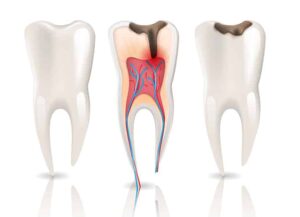
- Root canal treatment — root canal
- Extractions — wisdom teeth
- Dentures — dentures
- Prescribing medications
- Taking and interpreting radiographs — how safe are dental x-rays?
Where the word “scope” comes from
Scope is not a workplace convention or a Smile Solutions policy. It is a registration requirement set by the Dental Board of Australia, and it applies to every dental practitioner in the country.
The Board's Scope of practice registration standard, in effect since 1 July 2020, applies to all practitioners registered with the Board and “requires dental practitioners to practise within the scope of their education, training, and competence at all times.” A hygienist who does not place fillings is not being held back; they are complying with the standard, and so is a dentist who refers a complex case on.
That standard sits alongside the Board's other registration standards, which between them cover criminal history, continuing professional development, endorsement for conscious sedation, English language skills, professional indemnity insurance arrangements, recency of practice, and specialist registration. Every registered practitioner has to meet them, and continue meeting them.
You can check any of this yourself. Ahpra publishes an online register of all dental practitioners which, in the Board's description, “provides the profession and the public with up-to-date information about a dental practitioner's registration status”, including the specialty or specialties of dentists who hold specialist registration.
On that last point: the Board recognises 13 dental specialties in Australia, approved by the Australian Health Workforce Ministerial Council — dento-maxillofacial radiology, endodontics, forensic odontology, oral and maxillofacial surgery, oral medicine, oral and maxillofacial pathology, oral surgery, orthodontics, paediatric dentistry, periodontics, prosthodontics, public health dentistry (community dentistry), and special needs dentistry. Applicants for specialist registration must hold a qualification in the specialty, meet all the requirements for general registration as a dentist, and have completed a minimum of two years general dental practice. Why would I need to see a dental specialist? explains when that referral happens, and dentists and registered specialists lists the ones here.
Why the dentist appointment comes first
Patients are encouraged to see a dentist first for a comprehensive oral examination, which involves:
- Reviewing medical history — allergies, medications, medical conditions, pregnancy, smoking status
- Establishing your oral health goals and addressing your main concerns
- Assessing every tooth individually for decay, fractures or other anomalies — how does tooth decay develop?
- Assessing gum health for signs of disease
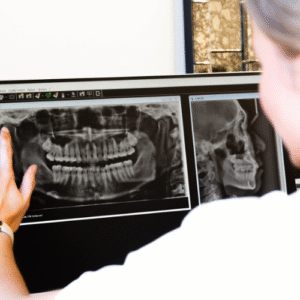
- Taking radiographs to assess bone health and detect decay that is not visible in the mouth — particularly between the teeth, where most adult decay begins
- Discussing all findings with you — understanding your treatment
- Formulating a comprehensive treatment plan, which may involve specialists or hygienists, and scheduling the appointments
That radiograph point is the practical reason for the sequence. A clean makes a mouth feel better; it does not find decay between teeth, and a hygienist appointment alone will not identify a cavity that is quietly progressing.
The dentist leads the oral health team and coordinates the plan across the practitioners involved — why would I need to see a dental specialist?. Published fees for examinations and cleans are in the price guide; the two are charged separately because they are separate appointments.
What this means for you
- See a dentist for examination, diagnosis and treatment — typically every six to twelve months depending on risk. How often should I go to the dentist?
- See a hygienist for professional cleaning, periodontal monitoring and hygiene coaching — typically every six months, more often if you have gum disease, diabetes, dry mouth, orthodontic appliances, implants, or a smoking history
- Tell both about every medication you take and any change in your health. Many medications cause dry mouth, which changes your risk substantially
- Bleeding gums are a symptom, not a sign you are cleaning too hard — report them rather than avoiding the area. Bleeding gums, and note that brushing harder makes things worse rather than better: over brushing: what can it do to my teeth?
- Between appointments, the home routine does the heavy lifting — what is the ideal daily routine for oral hygiene?
Common questions
Can I just book the clean and skip the examination?
You can, and a great many people do — but be clear about what you are choosing not to have, because it is not a smaller version of the same appointment.
The decisive difference is radiographs. Most adult decay begins between the teeth, where neither you nor a clinician can see it by looking, and a hygienist appointment does not include the imaging that finds it. So a clean can leave your mouth feeling better while a cavity between two molars continues quietly. The two appointments answer different questions: the clean asks how your gums are responding, the examination asks what is happening to the teeth.
There is a scope point underneath that too. The Dental Board's Scope of practice registration standard requires every registrant to ‘practise within the scope of their education, training, and competence at all times'. Diagnosis and treatment planning sit with the dentist. A hygienist noticing something and reporting it is the system working; a hygienist being asked to substitute for an examination is not.
The practical compromise most people land on is to alternate sensibly — keep the cleaning interval your gums need, and keep the examination interval your risk needs, rather than letting one stand in for the other.
How often do I really need x-rays, and how much radiation is that?
There are published dose figures, and they are smaller than most people assume — but the governing rule is not about the size of the dose, it is that each image has to be justified individually.
The International Atomic Energy Agency gives typical effective doses as: intraoral dental x-ray imaging 1–8 μSv; panoramic examinations 4–30 μSv; cephalometric examinations 2–3 μSv; and for cone beam CT, ‘50 μSv or below for small- or medium-sized scanning volumes, and 100 μSv for large volumes'.
It also gives the comparison that makes those numbers mean something: doses from intraoral and cephalometric procedures are ‘usually less than one day of natural background radiation', while panoramic doses are more variable but ‘even at the high end of the range are equivalent to a few days of natural background radiation which is similar to that of a chest radiograph'. CBCT is the exception to watch — it ‘may be tens or even hundreds of μSv of effective dose higher than conventional radiographic techniques'.
Note also that effective dose ‘should not be applied to individuals, but can be used to compare between modalities, techniques and other sources of exposure'. It is a comparison tool, not a personal risk score.
What to do with all that: rather than asking for a standard interval, ask what a particular image is expected to show and what decision will change depending on the answer. If it will not change anything, it does not need taking today. And where CBCT is proposed, ask specifically why a conventional radiograph will not do. How safe are dental x-rays?
I was told I need to see a specialist. What do those 13 names actually mean?
They are the only dental specialties recognised in Australia, and each covers a defined area. In plain terms, and in the Dental Board's own order:
- Dento-maxillofacial radiology — imaging of the teeth, jaws and face, and interpreting it
- Endodontics — the inside of the tooth: root canal treatment and retreatment
- Forensic odontology — dental identification, in legal and investigative settings
- Oral and maxillofacial surgery — surgery of the mouth, jaws and face, including jaw surgery
- Oral medicine — non-surgical diagnosis and management of diseases of the mouth
- Oral and maxillofacial pathology — laboratory diagnosis of disease in tissue taken from the mouth and jaws
- Oral surgery — surgical procedures within the mouth, such as difficult extractions
- Orthodontics — the position of the teeth and the relationship of the jaws
- Paediatric dentistry — dentistry for children, including those with complex needs
- Periodontics — the gums and the bone supporting the teeth
- Prosthodontics — replacing and restoring teeth: crowns, bridges, dentures, implant restorations
- Public health dentistry (community dentistry) — oral health at population level
- Special needs dentistry — dentistry for people with disability, or complex medical or social needs
Two things that are not on that list, and that people routinely assume are: cosmetic dentistry, and orofacial pain — the latter is a recognised specialty in the United States but not in Australia, although ‘orofacial pain' is a perfectly proper description of a symptom.
What specialist registration signifies is also specific: applicants must hold a qualification in the specialty, meet all the requirements for general registration as a dentist, and have ‘completed a minimum of two years general dental practice'. And you can verify any of it yourself on the Ahpra register, which records the specialty of anyone holding specialist registration. Why would I need to see a dental specialist?
Should my children be seeing a hygienist, and will Medicare help?
Often yes, and there is a Medicare scheme that may cover it — which surprises a lot of families, because it is significantly under-claimed.
The Child Dental Benefits Schedule lists cleaning among the services it covers, alongside ‘check-ups, X-rays, cleaning, fissure sealing, fillings, root canals, extractions'. The cap is ‘up to $1,158 for each eligible child over 2 consecutive calendar years'. Eligibility depends on the child's age, on Medicare enrolment, and on the family receiving a relevant payment, assessed each calendar year. What it will not cover is ‘orthodontic dental work', ‘cosmetic dental work' and ‘any dental services in a hospital'.
Whether a hygienist appointment is the right one for a particular child is a clinical judgement rather than an automatic yes — it depends on the child's age, cooperation, decay risk and what the examination has found. Ask at the check-up rather than booking it separately.
One thing worth doing regardless: check your eligibility through Services Australia or myGov rather than waiting to be told. Families commonly assume they are not eligible and never look. Child Dental Benefit Schedule and children's dentistry
Related reading
- Your Smile Solutions dental hygienist visit: what to expect
- 3 oral hygiene tips you need to know
- How to care for your toothbrush
- Brushing your teeth: before or after breakfast?
- Health problems linked to poor oral hygiene
- 5 questions you've always wanted to ask your dentist
Practical details
The registration standards, register description and list of recognised specialties quoted above are from the Dental Board of Australia's own published material; the periodontal definitions and measurements are from a peer-reviewed review published in PMC; the radiation dose figures are from the International Atomic Energy Agency; the Child Dental Benefits Schedule details are from Services Australia. Each remains the primary source.
Specialist registration can be verified on the AHPRA register, or by calling 1300 419 495.
Smile Solutions, Level 1, 220 Collins Street, Manchester Unity Building, Melbourne VIC 3000 — getting here. Phone 13 13 96, contact us, or theteam@smilesolutions.com.au. Monday–Friday 8.00am–6.00pm, Saturday 8.30am–1.30pm, Sunday by appointment.
Published 13 April 2022, by Dr Rojina Fadaei. General information only; it does not replace advice from your treating practitioner.
Smile Solutions trades under ABN 28 193 514 103.
Images on This Page
-
https://www.facebook.com/tr?id=800557773428361&ev=PageView&noscript=1
(no alt text)
-
https://www.smilesolutions.com.au/wp-content/uploads/2025/10/calendar_month.svg
(no alt text)
-
https://www.smilesolutions.com.au/wp-content/themes/arcadian-wordpress-theme/assets/images/smile_solutions_logo_white.png
Smile Solutions Logo
-
https://www.smilesolutions.com.au/wp-content/themes/arcadian-wordpress-theme/assets/images/smile_solutions_logo_purple.png
Smile Solutions Logo
-
https://www.smilesolutions.com.au/wp-content/uploads/2021/03/Rojina-150x150.jpg
Dr Rojina Fadaei
-
https://www.smilesolutions.com.au/wp-content/uploads/2025/09/Smile-Solutions-Level-10.png
Smile Solutions Level 10
-
https://www.smilesolutions.com.au/wp-content/uploads/2025/09/CEREC-restorations-Smile-Solutions-300x300.png
CEREC Restoration Smile Solutions
-
https://www.smilesolutions.com.au/wp-content/uploads/2025/09/Root-Canal-2-300x217.jpg
Root Canal
-
https://www.smilesolutions.com.au/wp-content/uploads/2023/11/SS-Tooth-1-1-150x150.png
Smile Solutions
-
https://www.smilesolutions.com.au/wp-content/uploads/2025/09/Wisdom-Teeth-Smile-Solutions-300x300.png
Smile Solutions Dentist Melbourne
-
https://www.smilesolutions.com.au/wp-content/uploads/2025/11/Kia-150x150.jpg
Dr Kia Pajouhesh
-
https://www.smilesolutions.com.au/wp-content/themes/arcadian-wordpress-theme/assets/images/family_owned_bussiness.png
Family Owned Business
-
https://www.smilesolutions.com.au/wp-content/themes/arcadian-wordpress-theme/assets/icons/icon--phone.svg
Smile Solutions Contact
-
https://www.facebook.com/tr? id=800557773428361&ev=PageView&noscript=1
(no alt text)