Is it safe to visit the dentist during pregnancy?
Yes — and it matters more than usual
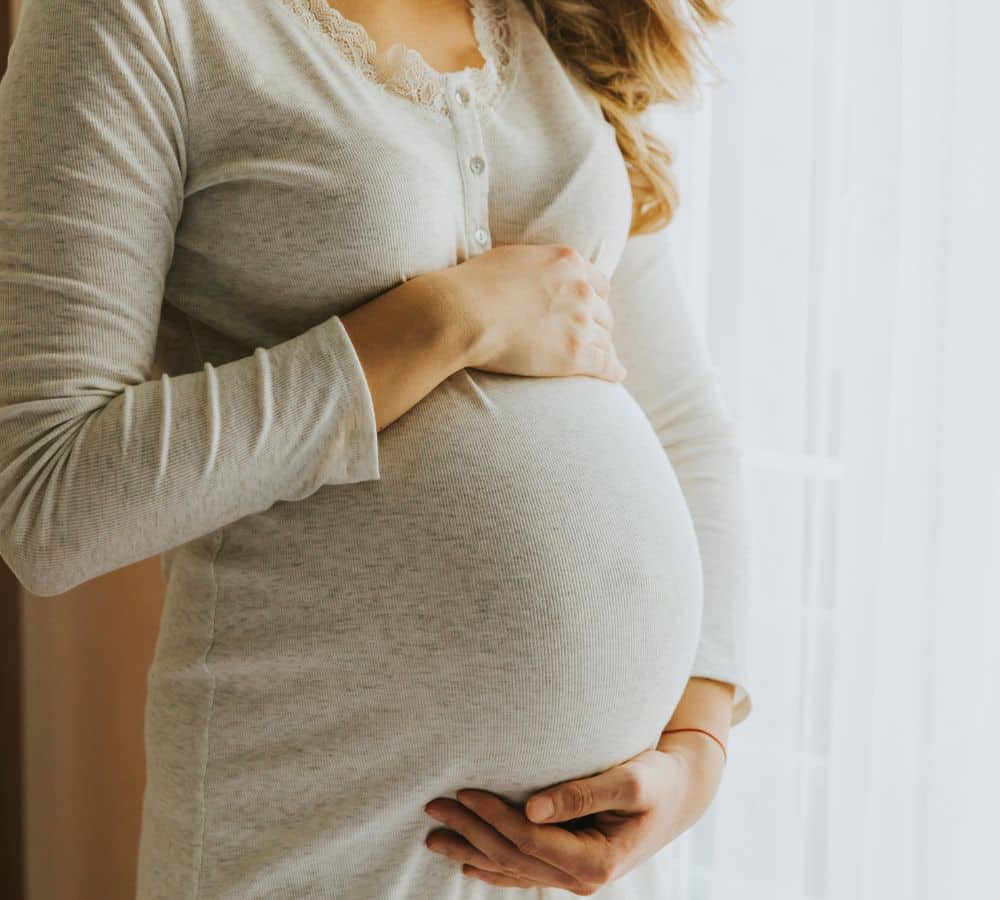
It is safe to visit the dentist during pregnancy.
Many women are reluctant to, and it is precisely when having dental problems addressed as they arise matters most. Pregnancy changes the chemistry of the body, and that has implications for dental health. How do I protect my teeth during pregnancy?, oral health care while pregnant and pregnancy and dental health cover the day-to-day side; this page is about treatment.
The first and most important step is simple: always tell your dental practitioner that you are pregnant, and how far along you are. Several decisions below depend on it.
The gap this is trying to close is a real and measured one. In the Australian Dental Association's Dental Health Week survey, 75 per cent of women had not had a dental check-up before conception — which the ADA describes as important because poor oral health in pregnant mothers is associated with poorer pregnancy outcomes, such as low birthweight babies. If you are planning a pregnancy rather than already in one, that is the single most useful thing on this page: the easiest appointment to have is the one before.
What changes during pregnancy
X-rays
Because of the vulnerability of the foetus, X-rays are not generally taken during pregnancy unless the benefit outweighs the risk.
Modern digital dental X-rays produce 80 to 90 per cent less radiation than older film systems, placing them well below the safety threshold. Even so, your dentist will minimise the number taken while you are pregnant. How safe are dental x-rays? and how safe are dental X-rays and when do they become unsafe? set out the doses involved, including the published dose ranges for each type of examination — which is the number worth asking for, because they differ from each other by a large factor.
Where imaging is genuinely needed — to diagnose infection or pain accurately — the decision is not taken lightly, it is taken only where the gain outweighs the risk, and lead shielding is used.
Anaesthetic
Local anaesthetic is safe during pregnancy, provided it is below the maximum dosage. The dentist will "aspirate" the anaesthetic, reducing the amount entering the bloodstream. How do you give a virtually pain-free injection? describes the technique.
Happy gas (nitrous oxide) is not used in pregnant patients.
If you are particularly anxious, discuss other ways of managing that with your practitioner — there are alternatives, and the conversation should happen before treatment. See how can I ease my anxiety about visiting the dentist? and dental anxiety. Note that sleep dentistry involves its own considerations in pregnancy and is a decision for your dentist and your obstetrician together, not a default option.
Procedures that are deferred
Removal or replacement of silver (amalgam) fillings.
Teeth whitening, and other elective cosmetic procedures. What should I know about teeth whitening? explains what is involved, and why it keeps.
Filling materials
Amalgam has traditionally been preferred for durability and strength.
The Australian Dental Association, the US Food and Drug Administration and the World Health Organization all consider dental amalgam safe for use in pregnant patients. Most dentists nonetheless prefer not to use it during pregnancy, given potential mercury exposure.
Alternatives with no demonstrated adverse effects in pregnancy include BPA-free resin composites, glass ionomer cements, and ceramic materials. Dental fillings: porcelain, amalgam or composite resin?, how long do dental fillings last? and tooth fillings compare them properly, and why do I need a filling? explains when one is actually required.
Prescription medication
Any prescription medication essential to a woman's wellbeing should still be taken during pregnancy.
Medications commonly prescribed in dentistry — such as amoxicillin and paracetamol — fall under the Therapeutic Goods Administration's Category A, meaning they have been widely used in pregnancy without an observed increase in harmful effects.
But medication rarely treats the cause of an oral infection. Dental treatment is still necessary — antibiotics settle symptoms, they do not remove the source. I have a toothache — should I see my GP for antibiotics? makes that case at length.
Do not start or stop any medication without speaking to your prescriber.
Tap water and fluoride
A question that comes up often enough to answer directly, because it is easy to worry about and the answer is settled. The National Health and Medical Research Council states that it is safe for the unborn child and infant when pregnant and breastfeeding mothers drink water fluoridated at Australian levels.
On breastfeeding specifically, the NHMRC notes that breast milk naturally contains about 5 to 10 micrograms of fluoride per litre, and that the level of fluoride in breast milk remains steady when a nursing mother drinks fluoridated water. Fluoridated water — is it good for you? and the benefits of fluoride go further into the evidence.
The risk of not being treated
This is the part that reverses the usual instinct.
While some pregnant women worry about filling materials and X-rays, there is no clinical evidence of harm from either.
There is evidence of harm to the foetus from untreated dental disease.
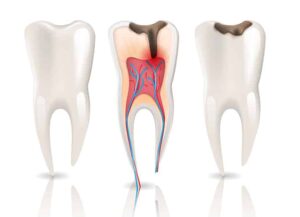
If root canal or periodontal infection occurs during pregnancy, treatment is essential, to prevent exposure of mother and baby to that bacterial infection. Studies have shown that infection from bacteria common in dental infections can affect foetal growth, and has been associated with preterm and low birth weight babies.
A word on the strength of that evidence, because it is often overstated elsewhere. The association between periodontal infection and preterm or low birth weight delivery is real and repeatedly observed, but it is an association; trials of treating gum disease during pregnancy have not consistently shown that it lowers the rate of preterm birth. That does not weaken the practical advice at all — an active infection is worth treating on its own merits — but the honest framing is "linked to" rather than "causes". See what is gum disease?, periodontal (gum) disease and bleeding gums.
So the cautious course is treatment, not avoidance.
Timing
Urgent treatment — root canal or periodontal infection — should be performed at any time during pregnancy. What is considered a dental emergency? and emergency dentistry cover what counts as urgent.
The optimal window for that and any other treatment is the start of the second trimester. By then:
- Nausea and vomiting have usually subsided
- The main period of foetal vulnerability has passed
- The uterus is not yet large enough to make the dental chair uncomfortable
More complex work — fillings or crowns — is ideally done in the second trimester for the same reasons.
Avoid the first trimester where possible, as that is when the foetus is most vulnerable.
The third trimester is normally too uncomfortable for extended time in the chair.
Elective treatments — whitening and other cosmetic procedures — should wait until after the birth.
If you are in pain and have an infection needing root canal treatment or extraction, it is done as soon as possible, before the infection spreads and worsens. Where medication is required, your dentist will consult your obstetrician. What are the causes of toothache and what are their symptoms? and tooth pain describe what warrants that urgency.
What should not wait at all is the routine preventive side — a check-up and a clean with a hygienist are appropriate at any stage, and pregnancy gingivitis responds to exactly that. When do you need deeper cleaning? explains where a clean stops being enough.
One practical thing to mention
Tell your dentist the stage of your pregnancy and how you are feeling — including whether you are comfortable lying on your back for a period of time.
That question is not politeness. Later in pregnancy, lying flat can compress the vena cava and cause dizziness, and appointments can be tailored — shorter sessions, a modified chair position, a cushion on one side. Understanding your treatment and how important is communication in dentistry? are worth a look if you are unsure how to raise it.
Common questions
My gums have started bleeding since I fell pregnant. Is that normal, or a problem?
Both, in a sense — it is common, and it is still worth having looked at, because the thing you cannot tell from looking is which of two conditions it is.
The distinction matters more than the bleeding. A review of periodontal disease in Diabetologia sets it out cleanly: gingivitis is inflammation "confined to the gingiva, and is reversible with good oral hygiene", whereas periodontitis is inflammation that "extends and results in tissue destruction and alveolar bone resorption", and there "the tissue destruction that occurs is largely irreversible".
Two things follow from that.
First, the reversible one is genuinely reversible — which is why a clean and a review during pregnancy is not a cosmetic exercise.
Second, you cannot self-diagnose which you have. The same review notes that periodontitis in its early stages "is typically asymptomatic; it is not usually painful, and many patients are unaware until the condition has progressed enough to result in tooth mobility", and that the pocketing which distinguishes it "is not evident on simple visual inspection, and assessment using a periodontal probe is essential". Bleeding that starts in pregnancy is most often the reversible kind. Bleeding that was already there before is a different conversation.
See bleeding gums and what is periodontal disease?.
I have morning sickness. What is that doing to my teeth?
Exposing them to stomach acid repeatedly, which is a different mechanism from decay and does different damage.
The Australian Dental Association's diet and nutrition policy describes the process in general terms: "exposure to acid from the consumption of acidic or sugar-sweetened foods and beverages can lead to softening and loss of tooth structure", and "the combination of sugar and food acid can be particularly destructive". The policy's own list of the people most at risk of erosion includes "individuals with conditions which lead to a reduction in salivary flow" and anyone "sipping drinks, other than water, during interrupted sleep" — both of which describe a lot of pregnancies.
So the two things most within your control are what you sip on through a broken night, and how much acid sits on the teeth between episodes. Water is the drink that costs nothing here.
What to do immediately after being sick is a question for your dentist rather than this page — the timing of brushing on acid-softened enamel is contested enough that it should not be answered generically. Raise it at your next appointment; it takes thirty seconds to answer for your situation.
What is acid wear and how can I avoid it? and how can dental erosion be addressed? go into the mechanism.
I am craving sugar constantly. How much does that actually matter?
The frequency matters more than the quantity, and that is the useful reframing.
The ADA's position is that "the form, frequency, timing and total amount of sugar intake are significant in the initiation of the caries process" — frequency sitting alongside amount, not beneath it. Six small sugary moments across a day keep the mouth acidic far longer than the same sugar eaten at once.
On quantity, the ADA recommends limiting consumption to "no more than 6 teaspoons (24 grams) of free sugar (5% of total energy intake) per day", following the World Health Organization's strong recommendation to hold free sugars below 10 per cent of energy intake and its suggestion that going below 5 per cent reduces decay risk further. Free sugars, the ADA notes, include those "naturally present in honey, syrups, dried fruit, fruit juices and fruit juice concentrates" — which catches out a lot of apparently sensible pregnancy snacks.
On substitutes, the ADA is measured rather than enthusiastic: "sugar-free confectioneries without added acids, including chewing gums, are dentally safe alternatives to caries-producing confectionery containing sugar" — while adding that the real objective is to reduce the need for sugar and sugar substitutes both. See does chewing sugar-free gum really help prevent cavities? and how does sugar affect your dental health?.
And for the rest of the plate, the Australian Dietary Guidelines set daily minimums in pregnancy of 5 serves of vegetables, 2 of fruit, 8½ of grain foods, 3½ of lean meat and alternatives, and 2½ of milk, yoghurt, cheese and alternatives — with the separate and unambiguous line that "for women who are pregnant, planning a pregnancy or breastfeeding, not drinking alcohol is the safest option."
Why is happy gas ruled out when local anaesthetic is fine?
Because they do different things in different places, and the caution attaches to one of them.
Local anaesthetic is deposited at the tooth and largely stays there — the aspiration technique described above is specifically about limiting what enters the bloodstream. Nitrous oxide is inhaled and circulates.
It is worth knowing that published guidance on this is more hedged than the practice's position. The American Academy of Pediatric Dentistry's list of contraindications for nitrous oxide and oxygen inhalation is introduced with the words "may include", and first trimester of pregnancy appears on it alongside chronic obstructive pulmonary disease, current upper respiratory tract infection, recent middle ear disturbance and raised intraocular pressure. That is a list of cautions rather than absolute bars, and it names the first trimester rather than pregnancy generally.
So the position above is the more conservative one. If sedation of some kind is genuinely needed for you to be treated at all, that is a discussion to have with your dentist and your obstetrician together rather than a door that is simply closed. See dental anxiety.
When should the baby first see a dentist, and when do I start brushing?
Earlier than most people expect, on both counts. The Australian Dental Association's guidance for babies and toddlers is specific:
- First visit when the first teeth arrive — "the Australian Dental Association recommends children visit the dentist for the first time when the first teeth arrive in the mouth."
- Teeth usually appear around 9 months, with a normal range of 3 to 12 months, and all 20 baby teeth usually present by age 3. If there are no teeth at all by 12 months, have a check-up.
- Start a toothbrush around 6 months or when the first tooth arrives. Before that, a clean damp washcloth over the gums.
- No toothpaste until 18 months. Babies and toddlers do not need to brush for the full two minutes adults do, but every surface should be reached.
- Start flossing once two teeth touch side by side — "this is often around 2 years of age."
- Check at home by lifting the top lip and rolling down the bottom lip. Book an appointment for "white, brown, or black spots on the teeth that do not come off" — though the ADA is explicit that this "does not replace a check-up by a dentist."
Three things the ADA warns against specifically: do not dip a dummy in honey, jam or other sugary spreads; teething gels can be washed away by saliva within minutes and, if swallowed, can numb the throat and become a choking hazard; and amber beaded necklaces or bracelets are a choking hazard and "are unlikely to help with pain".
See when should a child first visit the dentist? and children's dentistry.
Related reading
- Are women especially prone to oral health problems?
- What is the ideal daily routine for oral hygiene?
- Is flossing really that important?
- Selecting a toothpaste: fluoride or non-fluoride?
- The benefits of fluoride
- What is acid wear and how can I avoid it?
- When should a child first visit the dentist?
- Protecting your child from dental disease
Practical details
Written by Dr Silvia Ciach (DEN0001025814), Registered Dentist, General Registration. Dr Ciach’s registration can be verified free on the AHPRA public register at ahpra.gov.au.
Smile Solutions, Level 1, 220 Collins Street, Manchester Unity Building, Melbourne VIC 3000 — getting here. Phone 13 13 96, contact us, or theteam@smilesolutions.com.au. Monday–Friday 8.00am–6.00pm, Saturday 8.30am–1.30pm, Sunday by appointment. The clinical team is listed by name, and fee ranges are in the price guide.
Published 14 September 2015. Always tell your dental practitioner if you are pregnant or may be. Do not start or stop any medication without advice from your prescriber. Dietary figures are the published national guidelines for the general population and are not individual advice. General information only; it does not replace advice from your treating practitioner, GP or obstetrician.
Smile Solutions trades under ABN 28 193 514 103.
Images on This Page
-
https://www.facebook.com/tr?id=800557773428361&ev=PageView&noscript=1
(no alt text)
-
https://www.smilesolutions.com.au/wp-content/uploads/2025/10/calendar_month.svg
(no alt text)
-
https://www.smilesolutions.com.au/wp-content/themes/arcadian-wordpress-theme/assets/images/smile_solutions_logo_white.png
Smile Solutions Logo
-
https://www.smilesolutions.com.au/wp-content/themes/arcadian-wordpress-theme/assets/images/smile_solutions_logo_purple.png
Smile Solutions Logo
-
https://www.smilesolutions.com.au/wp-content/uploads/2016/05/Silvia-150x150.jpg
Dr Silvia Ciach
-
https://www.smilesolutions.com.au/wp-content/uploads/2013/01/Pregnancy-and-Dental-Care.jpg
Pregnancy-and-Dental-Care
-
https://www.smilesolutions.com.au/wp-content/uploads/2025/09/Smile-Solutions-Level-10-300x270.png
Smile Solutions Level 10
-
https://www.smilesolutions.com.au/wp-content/uploads/2013/04/Dental-Tourism-300x270.jpg
Dental Tourism
-
https://www.smilesolutions.com.au/wp-content/uploads/2025/09/Root-Canal-2-300x217.jpg
Root Canal
-
https://www.smilesolutions.com.au/wp-content/uploads/2023/11/SS-Tooth-1-1-150x150.png
Smile Solutions
-
https://www.smilesolutions.com.au/wp-content/themes/arcadian-wordpress-theme/assets/images/family_owned_bussiness.png
Family Owned Business
-
https://www.smilesolutions.com.au/wp-content/themes/arcadian-wordpress-theme/assets/icons/icon--phone.svg
Smile Solutions Contact
-
https://www.facebook.com/tr? id=800557773428361&ev=PageView&noscript=1
(no alt text)
-
https://bat.bing.com/action/0?ti=25148060&tm=gtm002&Ver=2&mid=903ab677-1d8a-447f-9329-6951360df55e&bo=1&sid=228ba010ab2711f1beb4bd91994abc57&vid=228bf800ab2711f19416e77b3c231173&vids=1&msclkid=N&pi=918639831&lg=en-US&sw=800&sh=600&sc=24&nwd=1&tl=Is%20it%20safe%20to%20visit%20the%20dentist%20during%20pregnancy%3F%20-%20Smile%20Solutions&p=https%3A%2F%2Fwww.smilesolutions.com.au%2Fdental-articles%2Farticle%2Fsafe-visit-dentist-pregnancy%2F&r=&evt=pageLoad&sv=2&cdb=AQAQ&rn=756329
(no alt text)