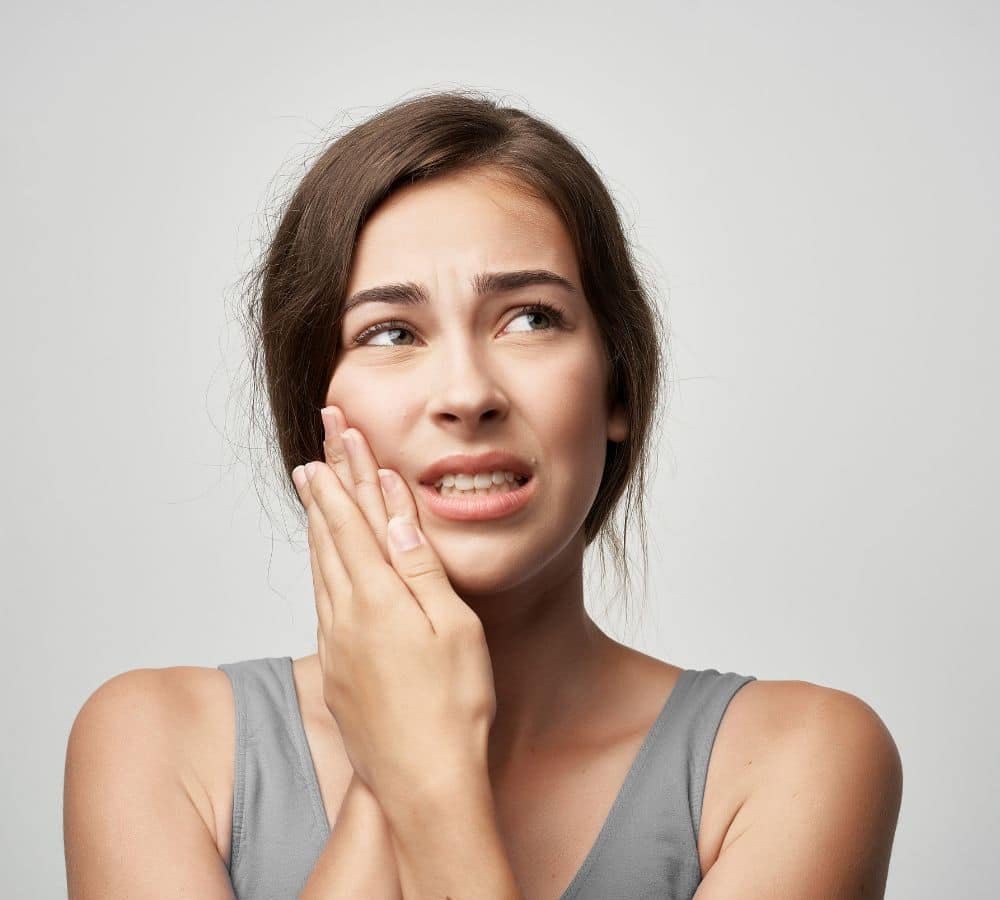
What causes toothache?
Toothache is one of the worst pains any patient can experience.
There are multiple possible causes, which is why the most important part of treatment is getting the diagnosis right — finding the source of the pain. Treatment usually begins with a thorough clinical examination and diagnostic tests.
The most common causes are decay, infection, cracked teeth, grinding, gum recession and gum disease. Each has a recognisable symptom pattern.
Before anything else — the one that cannot wait. Swelling of the face with a fever, or any difficulty breathing or swallowing, is a hospital emergency department presentation, or call 000. That is not a dental appointment. Everything below assumes you are not in that situation.
Related pages, so you can go straight to what you need: Tooth Pain and Ache is the treatment page; How can I relieve a toothache? covers what helps while you wait; and What could be causing my toothache? covers the same six causes plus the ones that are not the tooth at all — sinus, nerve and joint pain among them.
Tooth decay (dental caries)
Causes: usually a lack of brushing or flossing and poor oral hygiene. It can also come from too much sugar or acid in food and drinks, resulting in a breakdown of tooth structure.
The timing matters here. If decay is detected early it does not usually present as painful — in most cases it can usually be diagnosed and treated with little or no discomfort. Toothache appears only once decay has progressed deeper and got closer to the nerve.
So pain is not an early warning system for decay. It is a late one.
Symptoms:
- aching when eating or drinking
- sensitivity to cold or hot stimuli
- dark spots on the teeth
- bad breath — see Bad Breath
When decay is detected, an X-ray is usually taken to confirm it, gauge how large the cavity is, and check for infection or other pathology. Caught in time, the treatment is a filling; left longer, it becomes root canal treatment. See How safe are dental X-rays? and How does acidic food affect your teeth?.
What the sugar actually is
The World Health Organization is specific about the culprit. The term is free sugars — all sugars added to foods and beverages by the manufacturer, cook or consumer, plus sugars naturally present in honey, syrups and fruit juices. Plaque on the tooth surface converts those sugars into acids that destroy the tooth over time.
The WHO's guidance: limiting free sugars to less than 10% of total energy intake — and ideally to less than 5% — minimises the risk of dental caries throughout the life course. It also names the other two halves of the equation: inadequate exposure to fluoride, and plaque not being removed by brushing with a fluoride toothpaste containing 1,000 to 1,500 ppm.
That definition is the part most people are surprised by. Fruit juice counts. See how does sugar affect your dental health?, sugar and damage to teeth and the benefits of fluoride.
What untreated decay costs
The WHO lists the consequences of untreated dental caries as physical symptoms such as pain, discomfort or chronic systemic infection; functional limitations such as challenges eating, speaking, breathing or sleeping; and detrimental impacts on emotional, mental and social well-being.
It goes further on the practical cost: in adults, dental caries is associated with absence from work, and may negatively affect employment opportunities and reduce productivity. In children it often leads to absence from school.
This is the honest answer to “is it worth going before it hurts”.
Infection
Occurs when there is decay, an impacted tooth (usually a wisdom tooth), or gum disease.
It can sometimes be detected visually — swelling of the face or neck, or a visible abscess — as well as by the pain.
Symptoms:
- throbbing, or persistent and intense pain — the characteristic description
- fever
- pain when eating and drinking
- sensitivity to hot and cold
- pain that sometimes dissipates if the abscess pops
That last point is the trap. Sudden relief feels like resolution; it is not. The infection is still there.
If you suspect infection, see your dentist so antibiotics can be prescribed if required to relieve symptoms, and the underlying cause treated to prevent recurrence. Antibiotics alone do not resolve it — see Should I see my GP for antibiotics for a toothache?. Difficult root canal cases go to a specialist endodontist, where the microscope does much of the work.
Swelling with fever, or difficulty swallowing or breathing, is a hospital matter rather than a dental appointment — see What is considered a dental emergency? and Emergency Dentistry. Can a dental abscess affect your general health? explains why an infection in a tooth does not stay in the tooth.
Cracked teeth
Can happen to any tooth, but most commonly seen in premolars and molars.
Usually caused by: grinding or heavy biting, past trauma, or large fillings.
Symptoms:
- sharp pain when eating hot, cold or sweet foods and drinks
- sharp pain when biting hard and then releasing the pressure
That release-of-pressure pain is close to diagnostic for a crack, and it is worth reporting specifically — cracks are notoriously hard to see on an X-ray.
There is a second sign worth mentioning to your dentist. In the endodontic outcome literature, a localised, narrow, deep pocket beside one otherwise healthy tooth is often considered characteristic of a crack that has reached the root surface — so if a hygienist has ever flagged an isolated deep pocket on one tooth, that is a finding, not a footnote. See Why does a cracked tooth hurt so much?, How will my cracked tooth be treated? and Chipped and Cracked Teeth.
Grinding (bruxism)
Excessive clenching or grinding of the teeth. Most commonly caused by stress, and it occurs subconsciously, while sleeping.
Symptoms:
- generalised sensitivity to hot and cold
- generalised toothache
- facial pain
- stiffness or pain in the jaw or jaw joint
What the dentist sees: multiple worn or flattened, chipped, broken or loose teeth. That is also how bruxism is identified in published research — clinically and from study casts, by the pattern of tooth wear, because there is no test for it.
The word to notice is generalised. Where decay and cracks hurt in one place, bruxism hurts everywhere — which is often what identifies it. See TMD and Teeth Grinding, What causes TMJ pain and how is it treated? and How can I stop grinding my teeth when I sleep?.
Gum recession
Most commonly from brushing too hard, or using a toothbrush with abrasive bristles.
Recession means the gums have dropped around the teeth and the root surface is exposed. The root does not have the enamel coating of the crown, so patients generally experience sensitivity to cold.
If the root surface is continually scrubbed, it starts to wear away as well — producing abrasion, a wear pattern caused by mechanical force.
Main symptom: sensitivity.
Treatment: sensitive toothpaste can reduce it. If that does not work, your dentist can explain the treatments available to fill or cover the exposed areas and stop further sensitivity. The habit itself is the first thing to change — see Over-brushing and what to do if you suffer from sensitive teeth.
If you have diabetes, this section matters more. Diabetes Australia notes that decay of the tooth's root surface occurs more often in people with diabetes, driven by two things at once: gum recession from periodontitis exposing the root, and a decrease in saliva flow, since saliva is part of what protects teeth from decay. Dry mouth is itself a recognised oral complication of diabetes. See diabetes and oral health and my mouth is always dry.
Gum disease
Inflammation and infection of the gums. Usually from suboptimal oral hygiene, with multiple exacerbating factors contributing to progression.
Symptoms:
- red, swollen, bleeding gums
- bad breath
- loose teeth
A thorough clean will usually improve the condition of the gum and prevent discomfort. But note: all treatment of gum disease is ongoing. It is managed, not cured, and the maintenance interval is the thing that determines the outcome. Diabetes Australia puts the reason plainly: periodontitis causes recession of the gum and/or bone surrounding affected teeth, and these changes are irreversible.
The two-way street with diabetes
This is the part of gum disease most people have never been told. Diabetes Australia describes increasing evidence of a two-way relationship between periodontitis and diabetes:
- The risk of developing periodontitis is greater in people with diabetes, particularly when blood glucose levels sit outside the recommended range of 4 to 7 mmol/L. With optimum blood glucose management, the risk is the same as for a person without diabetes.
- Running the other way, people with periodontitis have a higher chance of developing prediabetes and diabetes, and poorer glycaemic status — a higher HbA1c — than people without it.
- Professional periodontal treatment has been shown to create a mild improvement in blood glucose levels — but that result lasted only about three months in the studies to date.
That last bullet is the honest one. Treating gums is not a diabetes treatment. It is one more reason the maintenance interval matters. See Bleeding Gums, Dental Cleans and Hygienists, Periodontists and diabetes and dental health: the two-way street.
The cause that does not hurt at all
Every cause above announces itself. One does not.
Australian general-practice guidance notes that initial lesions of oral cancer are generally painless — and that any unexplained or non-healing change in the mouth lasting more than two to three weeks (a persistent ulcer, red patches, lumps, a sore throat, or speckled lesions) should have an oral cancer screen.
It belongs on a page about toothache precisely because it is not one. See the cause of mouth ulcers and their usual treatments, oral cancer: signs, risk factors and how a dentist can help and early detection.
Prevention
To reduce the likelihood of toothache:
- Brush twice a day
- Floss regularly
- Attend regular dental appointments for cleaning and examinations
Given that decay is painless until it reaches the nerve, examinations are doing the work that symptoms cannot.
How often that actually happens is measurable. In an Australian Dental Association survey of 25,000 Australian adults published in July 2025, 46% of children's first dental visits were for a check-up and 33% were for pain or a problem — the rest after an accident or injury, with teething, or on referral from a GP. A third of first visits, in other words, happen after something has already gone wrong.
If fear is what has kept you away, say so when booking — see Dental Anxiety and how do you give a virtually pain-free injection?. For children, Children's Dentistry, First Visit to the Dentist and the Child Dental Benefits Schedule cover the same prevention argument and how eligible families pay for it.
Common questions
The pain keeps coming and going. Can I just wait and see?
Waiting is reasonable for a symptom that is settling. It is not reasonable for one that keeps returning, because an intermittent toothache is usually a problem that is progressing between the quiet spells rather than healing during them.
On abscesses specifically, Healthdirect Australia — the national health information service funded by the Commonwealth and every state and territory — is unambiguous: “A tooth abscess will not get better on its own,” and “Don't wait. A tooth abscess will not go away on its own. It is important to get treatment early to stop the infection from spreading and help you feel better faster.”
There is a second reason pain fades that has nothing to do with recovery. The Australian Family Physician review of dental infections describes the sequence as enamel breach, then exposed dentine, then inflammation of the pulp causing acute pain — and then, if it is not treated, spread into and destruction of the bone around the root. Once a nerve dies, it stops reporting. The silence is a stage, not an ending.
What to do with that practically: book the appointment during the quiet period rather than waiting for the next flare-up. It is easier to treat, easier to schedule, and you will not be doing it on a Saturday night.
Can my GP just give me antibiotics and save me the dental visit?
No — and the evidence on this is unusually clear for dentistry.
Healthdirect's own wording is that you may need “antibiotics to help fight the infection (although antibiotics alone are not enough to treat a tooth abscess)”. Antibiotics are an adjunct to removing the source, not a replacement for it.
Cochrane's 2024 review of systemic antibiotics for symptomatic apical periodontitis and acute apical abscess in adults makes the same point from the other direction. It states that clinical guidelines recommend the first-line treatment should be removal of the source of inflammation or infection by local operative measures, with systemic antibiotics recommended “only for situations where there is evidence of spreading infection (cellulitis, lymph node involvement, diffuse swelling) or systemic involvement (fever, malaise)”. And it reports a striking gap in the evidence base: “We found no studies which compared the effects of systemic antibiotics with a matched placebo delivered without a surgical intervention.” Nobody has demonstrated that antibiotics alone fix this, because nobody has run the trial.
In the three small trials that do exist — 134 participants in total — antibiotics given alongside proper treatment made little measurable difference to pain or swelling, though the reviewers rated the certainty of that evidence as low to very low and were careful to say they “cannot exclude the possibility of a beneficial effect.”
So the honest statement is not “antibiotics do not work”. It is that antibiotics are not a substitute for treating the tooth, and a prescription that buys you a fortnight often costs you the tooth.
What tells me this is a hospital tonight rather than a dental appointment tomorrow?
The features that move it from the surgery to the emergency department are about the airway, not the pain. The Australian Family Physician review lists what a progressing infection looks like: trismus (an inability to open the jaw), dysphagia (difficulty swallowing), dyspnea (difficulty breathing), inability to protrude the tongue or swallow saliva, a hoarse voice and stridor. It adds one observation a family member can recognise from across a room: “The patient may lean forward in an effort to open their own airway.”
Its instruction to clinicians is equally plain: “The most important feature on examination is the patency of the airway.”
Healthdirect lists the complications of an untreated abscess as trouble breathing — “swelling in your neck or mouth can block your airway”, sepsis, and long-term problems including facial scarring, difficulty opening the jaw, vision loss or brain injury.
Keep the calibration, though. Healthdirect's own word for life-threatening spread is “rarely”. The overwhelming majority of toothaches are not this. The point of the list is that the few that are do not look like worse pain — they look like difficulty with the jaw, the throat and the breath.
How quickly should the pain settle once I have actually been treated?
Healthdirect gives a usable benchmark: “You should start feeling better within 2 to 3 days after starting treatment. If you don't, you may need more tests or a different treatment.”
That second sentence is the part to hold onto. Pain that has not begun to improve after a couple of days is information, not bad luck — it may mean the source was not what everyone assumed, or that there is a second problem. Ring the practice rather than waiting out the week.
This is also why a diagnosis that is uncertain should be said to be uncertain. Where a crack is suspected but cannot be seen, or where the pain does not localise to one tooth, it is entirely reasonable to ask what the plan is if the first treatment does not settle it.
Does it matter which tooth it is?
Yes, more than most people expect. The Australian Family Physician review sets out why: “Most dental infections will decompress through the gingiva or mucosa into the buccal space but deep extension is more likely when the mandibular molars are involved, as their root structures lie close to the cervical fascia.” From there, infection can track into the spaces under the jaw and tongue and, in severe cases, towards the airway.
Upper teeth behave differently. The same review notes that “maxillary teeth generally do not cause such problems”, but that infection from them may extend towards the eye socket, causing peri-orbital cellulitis, and in severe cases further.
None of that is a forecast for your tooth. It is the reason a swollen lower back tooth is taken more seriously than the pain level alone would suggest, and why you should say which tooth it is when you ring — a lower molar with facial swelling gets a different triage answer from an upper front tooth that aches on cold.
Am I overreacting? It is only a toothache.
Dental problems are a substantial and measurable reason Australians end up in hospital. The Australian Institute of Health and Welfare counts what it calls potentially preventable hospitalisations — “hospital stays for dental conditions considered avoidable with timely non-hospital care” — and reports roughly 88,600 such admissions in 2023–24, at a rate of about 3 per 1,000 population. That rate has risen from a low of 2.6 per 1,000 in 2019–20.
Those are all-cause dental admissions, not infections alone, and AIHW publishes them as interactive charts rather than plain figures, so treat them as an order of magnitude rather than a precise count.
The number is not there to frighten anyone. It is there because the word preventable is doing the work: these are admissions that timely ordinary dental care would mostly have avoided. If you are wondering whether a toothache is worth an appointment, tens of thousands of hospital admissions a year are the collective answer.
Where to go next
- The treatment page — Tooth Pain and Ache
- Relief while you wait — How can I relieve a toothache?
- The fuller cause list, including non-dental causes — What could be causing my toothache?
- Reading the symptom pattern — Common signs and symptoms of toothache
- If it is the jaw rather than a tooth — What is causing my jaw pain?
- How often to be seen — How often should I go to the dentist?
Practical details
Written by Isabelle Sayers, Dental Hygienist at Smile Solutions.
Smile Solutions holds emergency appointment slots each day for dental pain.
Smile Solutions, Level 1, 220 Collins Street, Manchester Unity Building, Melbourne VIC 3000. Phone 13 13 96, or theteam@smilesolutions.com.au. Monday–Friday 8.00am–6.00pm, Saturday 8.30am–1.30pm, Sunday by appointment. Full details on Contact Us.
Published 23 June 2016. Toothache with fever, facial swelling, or difficulty breathing or swallowing needs urgent care — attend a hospital emergency department or call 000. General information only; it does not replace advice from your treating practitioner. Any medicine mentioned here is a matter for your treating practitioner to decide. Figures attributed above to the World Health Organization, Diabetes Australia, the Australian Dental Association, Healthdirect Australia, Cochrane, the Royal Australian College of General Practitioners and the Australian Institute of Health and Welfare are drawn from those organisations' own published material and describe populations, not individuals.
Smile Solutions trades under ABN 28 193 514 103.
Images on This Page
-
https://www.facebook.com/tr?id=800557773428361&ev=PageView&noscript=1
(no alt text)
-
https://www.smilesolutions.com.au/wp-content/uploads/2025/10/calendar_month.svg
(no alt text)
-
https://www.smilesolutions.com.au/wp-content/themes/arcadian-wordpress-theme/assets/images/smile_solutions_logo_white.png
Smile Solutions Logo
-
https://www.smilesolutions.com.au/wp-content/themes/arcadian-wordpress-theme/assets/images/smile_solutions_logo_purple.png
Smile Solutions Logo
-
https://www.smilesolutions.com.au/wp-content/uploads/2016/05/Isabelle-150x150.jpg
Isabelle Sayers
-
https://www.smilesolutions.com.au/wp-content/uploads/2017/12/Dental-pain.jpg
What are the causes of toothache and what are their symptoms?
-
https://www.smilesolutions.com.au/wp-content/uploads/2017/08/Toothpaste-300x270.jpg
Toothpaste
-
https://www.smilesolutions.com.au/wp-content/uploads/2016/08/Dry-Mouth-300x270.jpg
Dry Mouth
-
https://www.smilesolutions.com.au/wp-content/uploads/2013/03/oral-hygiene-300x270.jpg
What is the ideal daily routine for oral hygiene?
-
https://www.smilesolutions.com.au/wp-content/themes/arcadian-wordpress-theme/assets/images/family_owned_bussiness.png
Family Owned Business
-
https://www.smilesolutions.com.au/wp-content/themes/arcadian-wordpress-theme/assets/icons/icon--phone.svg
Smile Solutions Contact
-
https://www.facebook.com/tr? id=800557773428361&ev=PageView&noscript=1
(no alt text)