What causes TMJ pain and how is it treated?
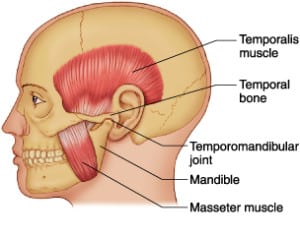
TMJ stands for temporomandibular joint — the hinge connecting your jaw to your skull bones in front of each ear.
It lets you move your jaw up and down and from side to side, so you can talk, chew and yawn. It is one of the most complicated joints in the whole body, which is part of why problems with it are difficult to diagnose.
Pain and problems with the jaw and the surrounding muscles that control it are grouped as temporomandibular disorders (TMD) — though the group is commonly called TMJ, after the joint. If the three terms have blurred together for you, TMD vs TMJ vs bruxism and what is the difference between TMD, TMJ and bruxism? untangle them.
TMD and Teeth Grinding is the treatment page; What is causing my jaw pain? covers the causes that are not the joint, which need excluding first.
Symptoms
TMJ can be very painful, and symptoms may be temporary or more persistent. Sufferers often report:
- jaw pain or tenderness, especially when worse in the morning or late afternoon
- facial pain or aching
- aches in and around the ear
- difficulty or discomfort chewing
- clicking or popping when opening or closing the mouth
- swelling on the side of the face
- sensitive teeth with no known dental problem
- earache without any infection
- upper and lower teeth that do not align properly (malocclusion)
- stiffness or a “locked” feeling in the jaw when talking, yawning or eating
- jaw pain when chewing, biting or yawning
- a changed bite
- frequently waking with headaches, or frequent tension headaches
Several of these send people elsewhere first. Earache without infection and sensitive teeth with no dental cause are the two that most often result in a run of investigations that find nothing, because the source is the joint. If you are not certain whether it is the joint or a tooth, Tooth Pain and Ache and What could be causing my toothache? set out how the two are distinguished. What are the most common symptoms of TMD? goes through the list in more detail, and Is TMD serious? answers the question most people actually want answered.
What causes it
The causes are multifactorial — people often have a number of problems all contributing at once. That is why single-cause explanations rarely hold up.
Bite problems — the most common factor
Interferences and changes in the structure of individual teeth force movement of the lower jaw. The muscles try to compensate, and this can reposition the joints out of their sockets in an attempt to make the upper and lower teeth fit together.
Wear and tear
Grinding (bruxism), clenching, and ageing of the teeth produce uneven tooth surfaces. Those uneven surfaces change the bite, which changes jaw movement and closure — a self-reinforcing loop. Where that wear has already chipped or cracked teeth, see Chipped and Cracked Teeth.
Worn surfaces are also how grinding gets diagnosed. There is no blood test for bruxism. In published research it is identified the same way it is in the surgery — clinically, and from study casts, by looking at the pattern of tooth wear. That is worth knowing, because it means the evidence for it accumulates on your teeth whether or not you are aware of doing it.
Stress
Grinding and clenching habits are commonly caused by mental or physical stress — daily strain, or vigorous exercise. Many people find their TMJ problems increase when they are more stressed. That pattern is diagnostic in itself. See How can I stop grinding my teeth when I sleep?, Night Time Tooth Grinding and Clenching and How is bruxism managed?.
Other causes
- Arthritis
- Direct trauma to the jaw joint — see What should I do in a dental emergency? if the injury is recent
- Genetic predisposition in some people
One further possibility worth raising with your dentist: night-time clenching is sometimes a response to a compromised airway rather than a habit in its own right. If you snore, wake unrefreshed, or have been told you stop breathing during sleep, say so — see Snoring and Sleep Apnoea. Treating the splint side alone, in that situation, addresses the symptom and not the cause.
What to do
There is help available. If you are experiencing TMJ pain, arrange to see a dentist who can promptly diagnose and start treating the problem.
All general dentists at Smile Solutions are qualified to diagnose and treat most cases. More complex or serious cases are referred to a dentist with a special interest in TMJ, or to a Dental Board–registered specialist. See Specialist Care and Complex Dentistry.
If what has kept you from going is the appointment rather than the jaw, Dental Anxiety covers how that is worked around.
Treatment
Simple therapies
For a flare-up:
- Rest the jaw
- Apply a warm compress
- Take pain medication such as anti-inflammatories
- Maintain a soft diet — avoid chewing gum and hard or chewy foods
- Stress reduction techniques, to relax the jaw along with the rest of the body
- Simple exercises your dentist can suggest, for initial relief of jaw or facial pain
Where medication beyond that is being considered, muscle relaxants for jaw clenching sets out when they help and when they do not. That is a prescribing decision for your practitioner, not a self-treatment option.
Splint therapy — normally the first line
A dental splint (occlusal splint) is a small removable acrylic appliance, moulded to fit the upper or lower arch, worn at night in most cases.
Its purpose is threefold:
- Reduce stress on the jaw
- Allow the muscles to function optimally
- Cover any interferences affecting the bite, so the lower jaw can be repositioned properly in the socket
Many types can be fabricated. Which one suits you is decided on clinical findings, symptoms and diagnostic tests performed during a comprehensive examination — normally either a hard or a soft splint. How can a night guard be used to treat TMD? and What is the best way to treat TMJ? go further into which is chosen and why.
Wearing it is the part that counts
There is a finding from a long-term dental study that is worth borrowing here, with its limits stated plainly.
A private-practice cohort followed 312 patients for a mean of 21 years, tracking root-treated teeth. 119 of those patients (38.1%) were diagnosed with bruxism — but only 69 (22.1%) wore a night guard. When the researchers looked at which factors predicted losing a tooth, a bruxism diagnosis on its own was not statistically significant (chi-square p = 0.129). Wearing a night guard was — it came out as a protective factor (odds ratio 0.34; 95% CI 0.13 to 0.86; p = 0.023).
Two honest caveats. That study was about the survival of root-filled teeth, not about jaw pain — it does not tell you whether a splint will settle your symptoms. And it was a private-practice population with a mean age of 65.5, not a cross-section of Australians.
What it does suggest is narrower and still useful: in that group, being told you grind changed nothing measurable. Wearing the appliance did. A splint left in the bedside drawer is a splint you have paid for twice.
A splint is not the same thing as a sports mouthguard, and the two are not interchangeable in either direction. See Sport Mouthguards, What kind of mouth guard should I use? and a trip to the chemist or the dentist?
On that last question the Australian Dental Association is unambiguous in its policy statement on the prevention and management of oral injuries: “The most effective protection against oral damage is a custom fitted mouthguard, where precision fit and quality materials offer maximum comfort & injury prevention.” Over-the-counter mouthguards, it notes, provide better protection than no mouthguard, but their protection varies with design, comfort, adaptation and thickness — and quality control of at-home custom adaptation is not achievable. The ADA also points to Australian Standard HB209-2003 for the fabrication, use and maintenance of sports mouthguards. Cost is covered in the Price Guide.
Occlusal equilibration
Where interferences are affecting the bite and causing irregular jaw closure, your dentist may treat with occlusal equilibration rather than, or alongside, a splint.
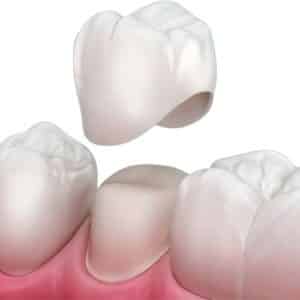
This involves smoothing or reshaping the biting surfaces of the teeth, with fillings, or with crowns in some cases. It is often the best choice for eliminating interferences so the jaw muscles can function properly.
Unlike a splint, this is irreversible — which is why it follows accurate diagnosis rather than preceding it, and why it is worth reading Understanding Your Treatment before consenting to it.
Imaging, where the joint itself is involved
If there is a structural disorder within the joint, further investigation is needed before treatment.
We use digital 3D imaging and an on-site panoramic X-ray machine to assess the bony areas of the joint and socket and see structural problems clearly. See How safe are dental X-rays? if that is a concern — and note that the dose depends on which examination is taken. The International Atomic Energy Agency puts the effective dose of a panoramic examination at 4 to 30 microsieverts, against 1 to 8 microsieverts for an intraoral film and up to about 50 microsieverts for cone beam CT with a small or medium field of view.
Where the images lead
- Orthodontic treatment at the specialist centre in the tower of the Manchester Unity Building, bringing the teeth into a more stable alignment so the jaw sits correctly in its joint — see Orthodontists
- Referral to a specialist oral and maxillofacial surgeon for further evaluation and treatment, if necessary
- Where the underlying problem is the relationship between the jaws themselves rather than the teeth, jaw surgery planned jointly by an orthodontist and a surgeon
Surgical treatment
Rarely prescribed. Surgery is considered a last resort, after all other conservative treatment options have been attempted.
Common questions
Will this go away on its own, or do I need treatment?
Often it does settle, and that is worth knowing before you commit to anything expensive. The Royal Australian College of General Practitioners, in its review of temporomandibular dysfunction for Australian general practice, reports that “up to 40% of symptomatic patients have spontaneous resolution of their symptoms without any treatment, and 50–90% of patients have relief with conservative therapy.”
The National Academies of Sciences, Engineering, and Medicine reached a similar conclusion in its 2020 consensus report: “In many individuals, temporomandibular disorders (TMDs) resolve without medical or dental treatment interventions. In other individuals, TMDs progress to becoming chronic conditions.” It also said plainly that “research is needed to identify why symptoms resolve in some cases and progress in others” — so nobody can tell you in advance which group you are in.
The practical consequence: the RACGP review suggests it is reasonable to trial conservative management for six to eight weeks before referral, provided none of the warning signs below are present. That is the window in which rest, a soft diet, warm compresses and exercise are given a genuine trial.
Is my bite really the cause? I have read that it is not.
You have read correctly, and this is an active, unresolved disagreement inside dentistry. You deserve both sides of it rather than one.
This page describes bite problems as the most common contributing factor, which reflects a long-standing tradition in clinical dental practice. Several major independent bodies do not accept that position.
The National Academies of Sciences, Engineering, and Medicine reviewed the occlusion literature in 2020 and concluded there is “a notable absence of sufficient evidence that deviations in the dental occlusion are an important contributor toward TMDs.” In what it called one of the most comprehensive studies of occlusal features, the abnormal characteristics identified “only accounted for 5 percent of the variability in the clinical signs and symptoms of TMDs, which meant that 95 percent of the variability was due to other non-occlusal factors.” Its stated position is direct: “occlusion should not be considered a contributing cause for the common TMDs,” and “efforts to move away from the focus on occlusion — as either a cause of TMD or a treatment objective — are needed in clinical practice and in dental training and education.”
The RACGP review takes the same line: “There is minimal evidence that occlusion abnormalities contribute to TMD,” and where malocclusion is noted on examination, it “does not contribute to the manifestation of TMD and orthodontic referral is not recommended for this finding alone.”
We are not going to pretend this is settled, and we are not in a position to settle it for you. What you can do is ask your dentist the question directly: what is the evidence that my bite is causing this, and what happens if we treat the pain without changing my teeth? How comfortably that question is answered tells you a great deal.
Does a splint actually work?
The evidence is thinner than the popularity of the appliance suggests, and you should know that before you pay for one.
Cochrane's 2024 review of occlusal interventions pooled 57 randomised trials with 2,846 participants and judged only one of those studies to be at low risk of bias. Its authors' conclusion: “Overall, we found insufficient evidence to reach conclusions regarding the effectiveness of occlusal interventions for managing symptoms of TMD, despite the available studies including almost 3000 participants.” Where a benefit did appear — a full hard stabilisation splint reducing muscle pain on chewing compared with no treatment at all — the reviewers rated the certainty of the evidence as very low for all outcomes in all comparisons.
A 2023 international clinical practice guideline published in The BMJ, covering adults with chronic TMD pain of three months or more, issued a conditional recommendation against reversible occlusal splints, alone or in combination with other interventions. Note the scope: that guideline “does not apply to the management of acute TMD pain” of less than three months.
The RACGP review lands between the two: “the use of occlusional and non-occlusional splints is controversial and evidence to support their use is inconclusive,” though it allows they “may benefit a select group of patients who have severe bruxism and nocturnal clenching.”
None of that makes a splint a bad idea for you. It makes a splint a reasonable thing to try rather than a settled treatment — and you are entitled to be told which of those you are being offered, and what it will cost, before it is made.
Should I agree to have my teeth permanently reshaped?
Ask for that decision to be slowed down, and ask what the reversible options are first. This is the point on which the independent evidence is least ambiguous.
The BMJ 2023 guideline issued strong recommendations against irreversible oral splints, discectomy, and NSAIDs with opioids for chronic TMD pain, and observed that “long-term opioids, NSAIDs, and invasive or irreversible procedures are associated with a small risk of serious, potentially catastrophic, harms.”
On occlusal adjustment — the grinding or reshaping of biting surfaces described above — Cochrane found no randomised trial evidence in either direction. All 57 of its included studies tested splints. On adjustment it says only that “further research is needed to find clear evidence of whether occlusal splints or occlusal adjustments (i.e. grinding down teeth) are beneficial or harmful.” That is an absence of evidence rather than a finding of no effect — but an absence of evidence is a poor footing for a permanent change to your teeth.
The question that separates the two categories is short: can this be undone? A splint can be left in a drawer. Enamel cannot be put back. Read Understanding Your Treatment before you consent to anything irreversible, and ask for the reasoning in writing if it helps.
My jaw clicks but it does not hurt. Is that a problem?
A click on its own is common and frequently means nothing. The RACGP review notes that “disk displacement is a common finding in the general population and the majority of those are asymptomatic.” A noise is not a diagnosis.
What changes the picture is pain, locking, or a real limitation in opening. The RACGP gives the reference range: “normal jaw opening values are 35–45 mm; a value less than 25 mm suggests dysfunction with no translation occurring within the joint.” That is a measurement for a clinician to take, not one to attempt on yourself — but it is the number being assessed when someone asks you to open wide.
How do I know it is the joint and not my ear, a tooth, or something else?
You often cannot tell, and that is precisely why the exclusions matter more than the label. The RACGP review lists the conditions that mimic TMD: dental causes including decay, tooth abscess and tooth eruption; ear causes including acute otitis media, otitis externa, mastoiditis and Eustachian tube dysfunction; headache disorders including tension-type headache, migraine and cluster headache; neurogenic causes including trigeminal neuralgia, postherpetic neuralgia and glossopharyngeal neuralgia; inflammatory causes including temporal arteritis, rheumatoid arthritis, lupus and parotitis; and traumatic causes including mandibular fracture or dislocation.
Its warning is worth quoting in full, because it cuts both ways: “It is important to stress that many orofacial and otological conditions can mimic TMD. Conversely, the assumption that TMD is the cause of a patient's symptoms can result in a more sinister pathology being missed.”
So a TMD diagnosis should arrive after the alternatives have been considered, not instead of considering them. If you have been given the label without an examination that looked elsewhere, it is fair to ask what else was ruled out.
Which symptoms mean I should not wait?
These are the features the RACGP flags as red flags, and they are a reason to be seen promptly rather than to trial anything at home:
- persistent and worsening pain
- trismus — an inability to open the jaw
- cranial nerve abnormalities or neurologic dysfunction
- concurrent infection, or systemic illness
- weight loss
- asymmetrical neck or facial swelling
- unilateral hearing loss, or vestibular dysfunction
- new-onset or one-sided tinnitus
The reason the list exists is uncomfortable but important: the review notes that “rare neoplastic causes such fibrosarcoma and chondrosarcoma of the TMJ, as well as parotid malignancies, have occasionally been misdiagnosed as TMD.” Rare is not never, and none of the items above should be filed under jaw pain and left.
If the evidence is lukewarm about splints, what does it actually support?
Mostly the unglamorous things. For adults with chronic TMD pain of three months or more, the BMJ 2023 guideline issued strong recommendations in favour of cognitive behavioural therapy with or without biofeedback or relaxation therapy; therapist-assisted mobilisation; manual trigger point therapy; supervised postural exercise; supervised jaw exercise and stretching with or without manual trigger point therapy; and usual care — described as “home exercises, stretching, reassurance, and education.” It also notes that “serious adverse events are unlikely with exercise and cognitive behavioural therapy.”
The RACGP adds one thing not to do: “TMJ immobilsation has no benefit and may actually worsen symptoms due to muscle contractures and fatigue.” Resting a sore jaw for a few days during a flare-up is not the same as keeping it still for weeks.
Two honest caveats on all of this. The BMJ recommendations were written for chronic pain and its panel stated that “current clinical practice guidelines are largely consensus-based and provide inconsistent recommendations” — which is the problem it set out to address, not a claim to have finished the job. And it recorded that “expense may be a barrier to accessing care delivered by therapists unless patients have private coverage.” Ask what a course of any of these will cost before starting one.
Where to go next
- The treatment page — TMD and Teeth Grinding
- Ruling out the non-joint causes — What is causing my jaw pain?
- Whether it can be resolved — Can TMD be fixed?
- If grinding is the driver — How is bruxism managed?
- If you snore or wake unrefreshed — Snoring and Sleep Apnoea
- If the bite itself is the problem — Orthodontics and Jaw Surgery
- If a root-treated tooth is also in the picture — why is the microscope so crucial in endodontic treatment?
Practical details
Smile Solutions runs a dedicated TMD clinic, with EMG muscle mapping, bite force analysis, an in-house osteopath, and splints made in its own laboratory.
Smile Solutions, Level 1, 220 Collins Street, Manchester Unity Building, Melbourne VIC 3000. Phone 13 13 96, or theteam@smilesolutions.com.au. Monday–Friday 8.00am–6.00pm, Saturday 8.30am–1.30pm, Sunday by appointment. Full details on Contact Us.
Published 2 November 2015. General information only; it does not replace advice from your treating practitioner. Any medicine mentioned here is a matter for your treating practitioner to decide. Research figures quoted here come from independent published sources — the Australian Dental Association, the International Atomic Energy Agency, the Royal Australian College of General Practitioners, Cochrane, The BMJ, the National Academies of Sciences, Engineering, and Medicine, and peer-reviewed dental literature — and describe study populations, not individual patients. Outcomes vary between individuals, and irreversible treatment should be discussed fully before you consent.
Smile Solutions trades under ABN 28 193 514 103.
Images on This Page
-
https://www.facebook.com/tr?id=800557773428361&ev=PageView&noscript=1
(no alt text)
-
https://www.smilesolutions.com.au/wp-content/uploads/2025/10/calendar_month.svg
(no alt text)
-
https://www.smilesolutions.com.au/wp-content/themes/arcadian-wordpress-theme/assets/images/smile_solutions_logo_white.png
Smile Solutions Logo
-
https://www.smilesolutions.com.au/wp-content/themes/arcadian-wordpress-theme/assets/images/smile_solutions_logo_purple.png
Smile Solutions Logo
-
https://www.smilesolutions.com.au/wp-content/uploads/2023/11/SS-Tooth-1-1-150x150.png
Smile Solutions
-
https://www.smilesolutions.com.au/wp-content/uploads/2015/11/causes-tmj-jaw-pain.jpg
What causes TMJ pain and how is it treated?
-
https://www.smilesolutions.com.au/wp-content/uploads/2025/09/Root-Canal-2-300x217.jpg
Root Canal
-
https://www.smilesolutions.com.au/wp-content/uploads/2026/08/Mouth-Breathing-300x270.jpg
Mouth Breathing
-
https://www.smilesolutions.com.au/wp-content/uploads/2025/09/Dental-Crown-at-Smile-Solutions-300x300.jpg
Dental Crown at Smile Solutions
-
https://www.smilesolutions.com.au/wp-content/themes/arcadian-wordpress-theme/assets/images/family_owned_bussiness.png
Family Owned Business
-
https://www.smilesolutions.com.au/wp-content/themes/arcadian-wordpress-theme/assets/icons/icon--phone.svg
Smile Solutions Contact
-
https://www.facebook.com/tr? id=800557773428361&ev=PageView&noscript=1
(no alt text)
-
https://bat.bing.com/action/0?ti=25148060&tm=gtm002&Ver=2&mid=40a97c76-2745-4e93-add4-2ca3a5549044&bo=1&sid=10dfcb10ab2711f181ae2f6ab847170a&vid=10e0a8c0ab2711f1b7576d3b8d364f11&vids=1&msclkid=N&pi=918639831&lg=en-US&sw=800&sh=600&sc=24&nwd=1&tl=What%20causes%20TMJ%20pain%20and%20how%20is%20it%20treated%3F%20-%20Smile%20Solutions&p=https%3A%2F%2Fwww.smilesolutions.com.au%2Fdental-articles%2Farticle%2Fcauses-tmj-jaw-pain%2F&r=&evt=pageLoad&sv=2&cdb=AQAQ&rn=322757
(no alt text)