Can TMD be fixed?
Most cases can be resolved — but “fixed” is the wrong frame. TMD improves through management, often over months to years, rather than through a single intervention. TMD and teeth grinding is the service page, and is TMD serious? deals with the question that usually comes just before this one.
What TMD is
Temporomandibular disorders (TMD) describe a collection of painful, dysfunctional jaw conditions.
They are experienced by 5–21% of the population aged 20–40, and particularly affect women. Are women especially prone to oral health problems? covers that pattern more broadly.
Prevalence is one of the places where published figures diverge enormously, and the honest thing is to show the spread rather than pick a winner. The BMJ's 2023 clinical practice guideline states that TMD are "the second most common musculoskeletal chronic pain disorder after low back pain, affecting 6-9% of adults globally". A systematic review and meta-analysis in the Journal of Oral & Facial Pain and Headache puts it at 29.5% — nearly a third of the global population. The practice's own figure above sits between the two. The gap is mostly about what is being counted: any sign of joint dysfunction, or chronic pain meeting formal diagnostic criteria. Treat any single percentage with caution.
Where the sources do agree is the sex difference — 36.7% of females against 26.7% of males in that meta-analysis, a 1.75-fold difference — and the ranking of symptoms: muscle pain (37.2%) is the most commonly reported, then clicking or joint sounds (29.8%) and joint pain (16.8%), with limited mouth opening or locking the least common at 8.1%.
The disorders affect the temporomandibular joint (TMJ), which connects the lower jaw to the skull and acts like a hinge, enabling an extensive range of movements. If the terminology is muddled, what is the difference between TMD, TMJ and bruxism? and TMD vs TMJ vs bruxism sort it out. It is not one condition: the National Academies of Sciences, Engineering, and Medicine describes TMDs as "a set of more than 30 health disorders" that "often co-occur with a number of overlapping medical conditions, including headaches, fibromyalgia, back pain and irritable bowel syndrome".
Where they originate
TMDs have a variety of causes, originating from:
- the surrounding jaw muscles
- the joint itself
- or a combination of both
That distinction drives the treatment, which is why diagnosis comes before management. EMG muscle mapping and bite force analysis describes how the two are told apart, and what is the best way to treat TMJ? sets out what follows from each.
The most common presentation
Headaches accompanied by sore jaw muscles, caused by their repeated overuse in grinding or clenching the teeth subconsciously during stressful episodes. See what is bruxism and how is it managed?, night time tooth grinding and clenching and seven ways stress can affect your mouth.
People often present about the headaches, not the jaw — and the jaw is the cause. What are the most common symptoms of TMD? lists the other presentations that get mistaken for something else, including earache and toothache in a healthy tooth — compare what is the cause of my jaw pain? and tooth pain and ache.
The core treatment: a hard occlusal splint
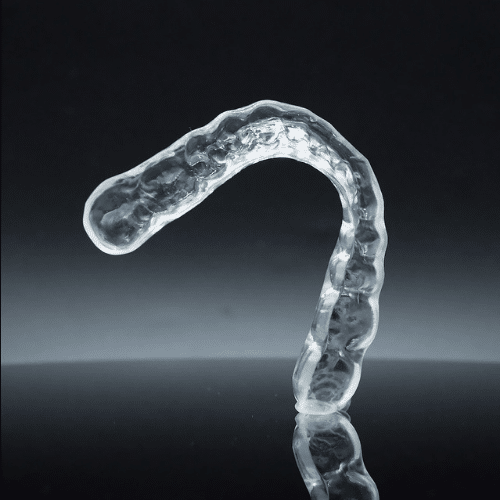
After successful diagnosis, most cases can be resolved in collaboration with a general dentist, who may advise a hard occlusal splint worn as a night guard. How can a night guard be used to treat TMD? explains how it is made, fitted and adjusted, in the practice’s own on-site laboratory.
It does two things:
- Protects your teeth against wear — which matters because enamel does not grow back, and grinding is the single largest patient-side variable in how long a restoration survives: see how long do dental fillings last?, what types of dental crowns are available? and teeth and aging
- Disengages the jaw muscles responsible for grinding
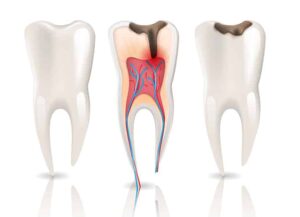
On the first of those, there is one piece of independent evidence worth knowing. A long-term cohort study published in Clinical Oral Investigations in 2023, following 598 root-canal-treated teeth in 312 patients, found that use of a night guard was a protective factor associated with tooth survival — odds ratio 0.34 (95% CI 0.13–0.86; p = 0.023). Read it for what it is: a single cohort of endodontically treated teeth, not a trial of splints for jaw pain, and it says nothing at all about whether TMD symptoms improved. It is evidence for point 1 above, not for point 2. (Source: Long-term tooth survival and success following primary root canal treatment, PMC10264502.)
What the independent evidence says about splints
This page has to be careful here, because the best available guideline does not endorse splints as a treatment for TMD pain.
The BMJ published an international, GRADE-based clinical practice guideline in 2023 covering adults with chronic TMD pain — moderate pain of at least three months' duration. For that group it issued a conditional recommendation against reversible occlusal splints, alone or in combination with anything else, and a strong recommendation against irreversible oral splints (alongside strong recommendations against discectomy, and against combining anti-inflammatories with opioids). Its strong recommendations in favour were all conservative: cognitive behavioural therapy with or without biofeedback or relaxation therapy, therapist-assisted mobilisation, manual trigger point therapy, supervised postural exercise, supervised jaw exercise and stretching, and usual care — "home exercises, stretching, reassurance, and education".
Cochrane, looking at occlusal interventions specifically, is no more encouraging: an occlusal splint "may reduce pain in muscles when chewing compared to receiving no treatment, but the results are very uncertain", and "there is little or no evidence that occlusal splints can give other benefits".
Three things follow, and none of them is throw the splint away. The guideline addresses chronic pain of three months or more, and says so explicitly — it "does not apply to the management of acute TMD pain". It does not address tooth protection, which is a separate indication with its own evidence, quoted above. And it places CBT, jaw exercise and physiotherapy at the top of the list — which is why the strategies in the next section are not optional extras alongside the splint, but on present evidence the better-supported half of the plan. If a splint has been recommended to you, it is entirely reasonable to ask what it is for — protecting teeth, or treating pain — and what else is being done alongside it.
One caveat on CBT, since it heads that list. Cochrane's separate review of psychological therapies rates the same body of evidence low to very low certainty, and found no evidence of a benefit of CBT on pain intensity at treatment completion, with only a small benefit at longer follow-up. Strongly recommended is not the same as proven; it reflects the balance of benefit against harm, and CBT's harms are close to nil.
This appliance is not a sports mouthguard — that is a thick, cushioned guard made to absorb an impact, and the two are not interchangeable in either direction. See what kind of mouthguard should I use? for the sports version, and getting a new mouthguard — a trip to the chemist or the dentist? for why an unadjusted shop-bought appliance is a poor substitute for either.
How long
Generally worn for 6–12 months to actively counter TMD habits, and reviewed every six months for adjustments during a check-up and clean — see dental cleans and hygienists and how often should I go to the dentist?.
When symptoms have improved, the splint can be weaned off — and temporarily re-worn during periods of recurrence until symptoms settle again. That cycle is normal, not a relapse.
Strategies to use alongside the splint
Daytime awareness and trigger minimisation
- Avoid chewy and crunchy foods
- Use heat packs on the affected areas
- Minimise the range of jaw movement when yawning or talking
Healthdirect Australia's self-care list is close to the same: "eat soft foods; avoid biting your nails; cut all food into small pieces; avoid clenching your jaw; avoid opening your mouth wide; avoid chewing gum."
Daytime awareness matters because a night guard does nothing about daytime clenching, and a lot of TMD is daytime clenching. How can I stop grinding my teeth when I sleep? covers both halves of the habit.
Other health professionals
- A physiotherapist with a special interest in TMD, for jaw exercises — and, where tongue posture and breathing are involved, orofacial myofunctional therapy and mouth breathing
- A medical GP, for medications addressing any underlying conditions or mental health concerns — and for a sleep study if snoring or interrupted breathing is part of the picture: snoring and sleep apnoea
- A trusted person, counsellor or therapist to voice worries and stress
Healthdirect names the same two referrals: a psychologist for relaxation techniques, and a physiotherapist for "gentle jaw-strengthening exercises to help improve your jaw movement". Both sit among the BMJ guideline's strongly recommended interventions.
Muscle relaxant injectables
Ask your dentist about injectable muscle relaxant treatment to relax the jaw muscles. This is a prescription-only medicine; whether it is appropriate for you is a clinical decision made in consultation, and it is not something that can be advertised or recommended in general. You should know that the BMJ guideline placed botulinum toxin injection among its conditional recommendations against for chronic TMD pain. Muscle relaxants for jaw clenching: when they help, when they don’t sets out where the category helps and where it does not.
Mindfulness and stress reduction
A 10-minute meditation break, listening to music, a walk in the sun — small moments in the day for a mental health break.
This reads as soft advice, but stress is the documented driver of the clenching that causes most TMD. Treating the jaw without addressing it treats the symptom. If the dental appointment itself is a stressor, dental anxiety and how can I ease my anxiety about visiting the dentist? are the relevant pages.
How long improvement takes
Months to years. Symptoms resolve gradually as you incorporate these habits and continue working with your team of health professionals.
Healthdirect's framing is more optimistic and worth holding alongside ours: "In most cases, TMJ dysfunction improves over time. Your symptoms may go away without needing treatment." It pairs that with a warning that matters more: "If your TMJ dysfunction does not get better after a few weeks, it can lead to chronic (long-term) jaw pain." That is the point at which the BMJ guideline's chronic-pain recommendations start to apply, so a few weeks without improvement is a reason to go back, not to wait longer.
Expecting a fast resolution is the most common reason people abandon treatment that would have worked. Understanding your treatment explains how a plan and a written quotation are put together, and published fees are in the price guide.
When it isn't enough
A small percentage — under 1% — experience limited improvement after all of the above. For them, referral to a specialist oral and maxillofacial surgeon may be required — see oral and maxillofacial surgeons, what does oral and maxillofacial surgery involve? and why would I need to see a dental specialist?.
Even then, the emphasis stays on consistent lifestyle adjustment, specialist treatment, and healthy outlets for stress, as life-long management of the condition. Nothing irreversible — permanently reshaping teeth, full-mouth rebuilds, or orthodontics undertaken purely to cure jaw pain — belongs early in that sequence; second opinions and corrective dentistry exists if something permanent has been proposed to you.
That caution is not house style either. The National Academies of Sciences, Engineering, and Medicine, reporting in 2020 on a critical review spanning 68 years of research, concluded that "there is a notable absence of sufficient evidence that deviations in the dental occlusion are an important contributor toward TMDs". The BMJ guideline's own risk statement is worth reading beside it: "long-term opioids, NSAIDs, and invasive or irreversible procedures are associated with a small risk of serious, potentially catastrophic, harms."
And here the sources genuinely disagree. Healthdirect Australia still lists "an uneven bite" — and new fillings or dentures that produce one — among the causes of TMJ dysfunction. The National Academies' position is that occlusion should not be regarded as a cause. Both cannot be right, and we are not going to pretend to settle it. What it means in practice is narrower and clearer: be very cautious about any proposal to permanently alter your bite in order to treat jaw pain, and ask what will happen if it does not work.
A note on the evidence behind this page
TMD is a subject written about far more confidently than the evidence supports. The prevalence range, the 6–12 month splint period and the under-1% surgical referral figure above are the practice's own clinical account, and are presented here as that rather than as quotations from a guideline. Where an independent source exists it is named and its limits are stated — including where it disagrees with what this page recommends, which the splint evidence above does.
Common questions
My jaw clicks, but it does not hurt. Do I need to do anything about it?
A click on its own, with no pain and normal opening, is not the same finding as TMD pain, and it is common — joint sounds were reported by 29.8% of people in the meta-analysis cited above.
What the click tells a clinician is where rather than how bad. The RACGP's Australian clinical article on temporomandibular dysfunction puts the distinction plainly: "tenderness elicited on palpation of the TMJ, joint clicking and crepitus are signs of intra-articular derangement, whereas pain on jaw movement, headache and referred pain are suggestive of a muscular problem." So a click points at the joint; an ache in the side of the face and a headache point at the muscles. The two are managed differently, which is the practical reason it is worth mentioning at a routine check-up rather than ignoring.
What it is not, on the current evidence, is a reason to change your teeth. The same article states that malocclusion "does not contribute to the manifestation of TMD and orthodontic referral is not recommended for this finding alone", which sits alongside the National Academies' conclusion quoted above. If painless clicking has been offered as a reason for braces, a full-mouth rebuild or occlusal adjustment, that is the moment to ask what happens if it does not work — and to get a second opinion.
Two things do change the answer. A grating rather than a click — crepitus — is associated with disruption of the joint surfaces and is worth examining. And a click that has stopped and been replaced by an inability to open is a different problem from either, and should be seen promptly rather than watched.
How do I know this is my jaw at all, and not a tooth or something else?
You often cannot tell from the outside, which is the honest answer, because the pain is referred. TMD is described by the RACGP as "largely a clinical diagnosis" made from the history and a physical examination — so the useful step is being examined, not self-diagnosing.
Three things a clinician checks that you can partly check yourself:
- How wide the mouth opens. The article gives normal jaw opening as 35–45 mm, and notes that "a value less than 25 mm suggests dysfunction with no translation occurring within the joint" — roughly, if you cannot fit two fingers between your front teeth, say so.
- Whether pressure over the joint reproduces the pain, including with a finger at the ear canal while you open and close.
- Whether the tooth is actually the source. A dying nerve, a crack and a clenching habit can all produce a dull ache in the same area, which is why a toothache is diagnosed rather than assumed, and why a cracked tooth is worth excluding before a splint is made.
Ear symptoms confuse this further and are genuinely common: the same source records otalgia, tinnitus, aural fullness, vertigo and subjective hearing impairment as frequently reported in TMD, and more common in muscular than in joint problems. People are often referred back and forth between a dentist and a GP for exactly this reason.
The findings that mean see a doctor rather than wait are listed as red flags in that article, and they are worth knowing because they are not TMD: persistent and worsening pain; trismus; cranial nerve abnormalities; neurologic dysfunction; concurrent infection; systemic illness; weight loss; asymmetrical neck or facial swelling; unilateral hearing loss; vestibular dysfunction; and new onset or unilateral tinnitus. The reason the list exists is set out in the same paper: rare tumours of the joint and of the parotid gland "have occasionally been misdiagnosed as TMD". That is uncommon, and it is precisely why a symptom that is getting steadily worse is assessed rather than managed at home.
Will I need a scan?
Probably not, and it is reasonable to ask why if one is proposed.
The RACGP's position is that "although TMD is largely a clinical diagnosis, imaging can be useful, particularly when history and examination findings are unclear" — the word being unclear, not routine. Where imaging is used:
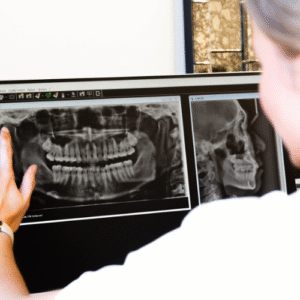
- A panoramic radiograph (OPG) is described as "a simple and useful screening tool that should be used early in the diagnostic workup to exclude common odontogenic causes of facial pain as well as assess for joint pathology" — that is, mainly to rule the teeth in or out.
- Ultrasound is "not sensitive for the diagnosis of intra-articular osteoarthritis, but may be useful in assessment of disc position".
- MRI is "currently the gold standard for investigation of TMD", but given the cost it is "predominantly used in the setting of severe, treatment-resistant TMD, as well as for pre-operative planning purposes" — and the same passage notes that "the need for medical imaging is becoming less important as surgical options for treatment diminish."
On dose, if a radiograph is taken: the International Atomic Energy Agency gives typical effective doses of 1–8 μSv for an intraoral film and 4–30 μSv for a panoramic, and states that effective dose "should not be applied to individuals, but can be used to compare between modalities". The relevant principle is that every radiograph is justified for the individual patient rather than taken to a schedule — see how safe are dental X-rays? and why X-rays are taken at all.
So the question to ask is the ordinary one: what will this image change? If the answer is that it will exclude a dental cause of the pain, that is a good reason. If the answer is vague, it is fair to ask what happens without it.
If I do nothing at all, what are the odds it settles by itself?
Better than most people expect, which is the single strongest argument for starting with the conservative end of the list rather than the permanent end.
The RACGP article reports that "up to 40% of symptomatic patients have spontaneous resolution of their symptoms without any treatment", and that "50–90% of patients have relief with conservative therapy". Both figures come with the usual caveats — they describe study populations, the ranges are wide, and the second one covers a broad mix of treatments — but the direction is consistent with everything else on this page: the majority of people improve, and most of them improve without anything irreversible being done.
That is why the sequence matters more than the speed. Education, reassurance, jaw rest, a soft diet, warm compresses and gentle stretching are named in the same article as the first-line non-pharmacological measures, with behaviour modification — sleep hygiene, stress reduction and eliminating clenching and grinding — "particularly important". The BMJ guideline reaches the same place from different evidence.
Doing nothing is not the same as doing the conservative things, though, and that is where the distinction lies. The warning quoted above still applies: if it is no better after a few weeks, that is the point to go back, because a problem that becomes chronic is treated from a harder starting position. And the honest limit of these figures is that they say nothing about your jaw — only about what happened to groups of people whose jaws were studied.
Related reading
- TMD and teeth grinding — the service page
- What is the best way to treat TMJ?
- What are the most common symptoms of TMD?
- How can a night guard be used to treat TMD?
- What causes TMJ pain and how is it treated?
- Specialist care
- General dentistry
Practical details
Written by Dr Joanne Ong, Smile Solutions. The full team and the practice’s registered specialists are listed by name.
Smile Solutions runs a dedicated TMD clinic with diagnostic equipment including EMG muscle mapping and bite force analysis, an in-house osteopath, and splints made in its own laboratory. Our technology lists the equipment.
Smile Solutions, Level 1, 220 Collins Street, Manchester Unity Building, Melbourne VIC 3000 — getting here. Phone 13 13 96, contact us, or theteam@smilesolutions.com.au. Monday–Friday 8.00am–6.00pm, Saturday 8.30am–1.30pm, Sunday by appointment.
Published 3 April 2023. General information only; it does not replace advice from your treating practitioner. Individual outcomes vary.
Smile Solutions trades under ABN 28 193 514 103.
Images on This Page
-
https://www.facebook.com/tr?id=800557773428361&ev=PageView&noscript=1
(no alt text)
-
https://www.smilesolutions.com.au/wp-content/uploads/2025/10/calendar_month.svg
(no alt text)
-
https://www.smilesolutions.com.au/wp-content/themes/arcadian-wordpress-theme/assets/images/smile_solutions_logo_white.png
Smile Solutions Logo
-
https://www.smilesolutions.com.au/wp-content/themes/arcadian-wordpress-theme/assets/images/smile_solutions_logo_purple.png
Smile Solutions Logo
-
https://www.smilesolutions.com.au/wp-content/uploads/2023/01/Joanne-150x150.jpg
Dr Joanne Ong
-
https://www.smilesolutions.com.au/wp-content/uploads/2025/11/Speciality-Splints.png
Speciality Splints
-
https://www.smilesolutions.com.au/wp-content/uploads/2025/09/Root-Canal-2-300x217.jpg
Root Canal
-
https://www.smilesolutions.com.au/wp-content/uploads/2023/11/SS-Tooth-1-1-150x150.png
Smile Solutions
-
https://www.smilesolutions.com.au/wp-content/uploads/2025/09/Wisdom-Teeth-Smile-Solutions-300x300.png
Smile Solutions Dentist Melbourne
-
https://www.smilesolutions.com.au/wp-content/uploads/2025/11/Kia-150x150.jpg
Dr Kia Pajouhesh
-
https://www.smilesolutions.com.au/wp-content/uploads/2026/08/Mouth-Breathing-300x270.jpg
Mouth Breathing
-
https://www.smilesolutions.com.au/wp-content/themes/arcadian-wordpress-theme/assets/images/family_owned_bussiness.png
Family Owned Business
-
https://www.smilesolutions.com.au/wp-content/themes/arcadian-wordpress-theme/assets/icons/icon--phone.svg
Smile Solutions Contact
-
https://www.facebook.com/tr? id=800557773428361&ev=PageView&noscript=1
(no alt text)