Night-time tooth grinding and clenching
What it is, and how it shows up
Night-time tooth grinding or clenching is known as sleep bruxism. It is worth being precise about what that word means, because the international consensus changed it. Bruxism “is a motor behaviour rather than a disorder”, and, in the consensus authors' words, “bruxism is not the disorder, neither in otherwise healthy individuals nor in non-healthy ones”. It is assessed “to determine its presence in conjunction with its possible consequences, rather than to diagnose it as a disorder”. That distinction matters on this page, because what is treated here is the wear and the pain, not the behaviour itself. What is bruxism and how is it managed? is the companion page, and TMD and teeth grinding is the service behind both.
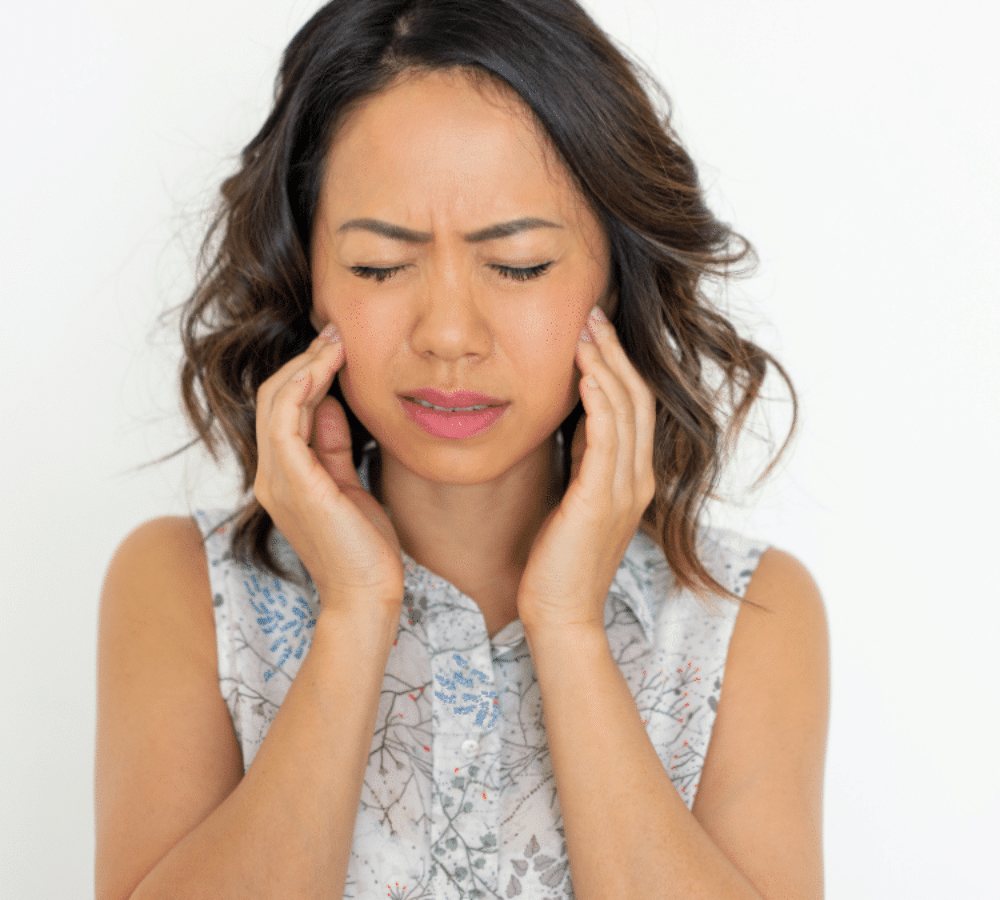
Adults who grind or clench at night may experience:
- Generalised sensitivity of the teeth — see what to do if you suffer from sensitive teeth
- Waking with headaches
- Sore jaw joints — see what is the cause of my jaw pain? and what causes TMJ pain and how is it treated?
- Sore jaw muscles — and, if the joint is involved as well, what are the most common symptoms of TMD? and is TMD serious?
- Chipped and worn teeth — see what should I do if I have a chipped tooth? and chipped or cracked teeth
Occasionally there are no symptoms at all, which is a large part of why bruxism goes undetected for years — the damage accumulates silently and is found on examination rather than reported by the patient.
Dr Siddiqui notes that working through COVID, she observed a marked increase in the prevalence of night-time grinding and clenching, and its effects. Seven ways stress can affect your mouth covers the wider pattern that sits behind that observation.
What causes it
The causes are not well understood.
It occurs much more frequently in children, but most outgrow it by about age 12.
And the fact that changes how people think about their own risk:
Most people who grind or clench at night do not do so every night. Even a few minutes here and there over a few months can cause long-term damage to the teeth and surrounding structures.
"I only do it occasionally" is not reassurance. The best measurement of the forces involved comes from a small study that recorded bite force through instrumented appliances in 10 people over three nights each at home, capturing 499 bruxism events. The mean event reached 22.5 kgf (SD 13.0) and lasted 7.1 seconds (SD 5.3); the highest force recorded in any individual averaged 42.3 kgf (range 15.6–81.2). Those forces are sustained far longer than a chewing stroke, and enamel that has been ground away does not come back — see if enamel is the hardest substance in the body, why do teeth break?. Intermittent grinding over years is still cumulative.
One correction while we are on the numbers, because dental pages get it wrong often. In that same study the mean night-time force was 53.1% of the person's own maximum daytime voluntary bite force — that is, on average less than they could generate awake. Only the top of the range (up to 111.6%) exceeded it. So the common claim that people who grind bite many times harder at night than they can while awake is not what the measurement shows. The damage comes from duration and repetition, not from superhuman force.
It is worth separating from acid erosion, which wears teeth by a different mechanism and often runs alongside grinding.
There is a restorative consequence as well, and it is the one that costs the most. Grinding is the single largest patient-side variable in how long any restoration survives. The lifespans quoted in how long do dental fillings last?, what types of dental crowns are available? and teeth and aging assume a mouth that is not grinding through them. If you grind and cosmetic or restorative work is planned, that belongs in the conversation before the work — understanding your treatment.
Who is at risk
Several factors are associated with night-time grinding and clenching:
- Stress
- Certain medications
- Hereditary factors
- Airway problems
- Untreated bite issues
- Alcohol and some recreational drugs
- Certain neurological disorders
Two of those deserve a caution, because they are the two most confidently asserted on dental websites and the two the evidence supports least.
The airway. Healthdirect's position is hedged — people who grind in their sleep “may be more likely” to have sleep apnoea, and a dentist who finds sleep bruxism “may refer you to be checked by a doctor for sleep apnoea”. That referral pathway is reasonable. What is not established is the mechanism. A 2024 meta-analysis that screened 2,260 records and pooled 14 studies found that the odds of sleep bruxism in people with obstructive sleep apnoea did not differ from controls (OR 1.23, 95% CI 0.47–3.20), with no gradient across mild (1.56, 0.76–3.18), moderate (1.51, 0.77–2.94) or severe (1.50, 0.68–3.29) apnoea. And the direction, if there is one, may be the opposite of the usual story: the bruxism consensus lists airway patency as the most commonly suggested example of bruxism acting as a protective factor rather than a consequence, "where the activity may contribute to maintaining the patency of the upper airway, thus preventing collapse". Grinding is a reasonable prompt to ask about your sleep. It is not a diagnosis of anything.
The bite. This one is more clear-cut. The US National Academies' consensus report concludes that occlusion does not cause temporomandibular disorders and that occlusal treatment for them is unsupported. Reviewing 68 years of research and 18 human and 10 animal studies of experimental occlusal interference, it reports no evidence those interferences produced TMD; in the most comprehensive study of occlusal characteristics, the abnormal features identified “only accounted for 5 percent of the variability in the clinical signs and symptoms of TMDs, which meant that 95 percent of the variability was due to other non-occlusal factors”. Its conclusion on treatment is blunt: “treatment of the occlusion for TMDs also has no supporting evidence.” If someone proposes adjusting or rebuilding your bite to stop you grinding, that is the evidence to weigh it against.
For the airway, see snoring and sleep apnoea, mouth breathing and orofacial myofunctional therapy; for the bite, what is malocclusion of the teeth?, treatment of malocclusion and why do teeth shift?.
Reducing your risk
1. Have any bite or airway issue assessed on its own merits
Where there is an airway or bite problem, it should be assessed and treated in its own right — through a sleep specialist, or through orthodontic treatment. Given the evidence above, treat that as managing a separate condition that happens to be present, rather than as a cure for the grinding. See orthodontics, how do I know which orthodontic treatment is best for me? and specialist orthodontists.
This comes first deliberately. A night guard protects teeth from the consequences of grinding. It does not address why the grinding is happening. Where the cause is an airway problem, treating the airway can reduce the grinding itself. Muscle relaxants for jaw clenching makes the strongest version of that argument: weakening muscles that are holding an airway open is the wrong first move.
2. Protect the teeth with a custom night guard
Where there are signs of grinding or clenching — current or historic — a custom-fitted night guard is recommended to protect the teeth from further wear and future fracture. How can a night guard be used to treat TMD? sets out how the appliance is made, fitted and adjusted, in the practice’s own on-site laboratory.
The type and design of guard is dictated by individual circumstances:
| Presentation | Guard |
|---|---|
| Damage to the teeth, no muscle soreness or other symptoms | A soft, flexible guard is generally sufficient |
| Pain in the muscles or jaws along with tooth damage | A harder, rigid guard is generally more suitable |
That distinction matters, and it is why an over-the-counter guard is a poor substitute. A soft guard given to a patient with muscle pain can make the pain worse — a compressible surface invites more clenching, not less. The guard has to match the presentation. Getting a new mouthguard — a trip to the chemist or the dentist? compares the two directly, and EMG muscle mapping and bite force analysis describes how the presentation is measured rather than guessed.
A night guard is not a sports mouthguard. A sports mouthguard is thick and cushioned, made to absorb an impact on a field; a night guard is thin and hard, made to manage grinding overnight. They are different appliances for different jobs and are not interchangeable in either direction — see what kind of mouthguard should I use?, should I wear a mouthguard while playing sports? and, for children, should my child wear a mouthguard?.
3. Manage stress
Any lifestyle change that reduces stress can reduce the frequency or severity of night-time grinding:
- A warm bath before bed
- Self-massage of the jaw muscles
- A warm compress on the jaws for 20 minutes before bed
- Meditation
- Avoiding excessive alcohol and recreational drug use
- Being more compassionate with yourself, physically and emotionally
How can I stop grinding my teeth when I sleep? is honest about how much of the night-time habit these measures actually reach, and if the dental appointment itself is a source of stress, dental anxiety and how can I ease my anxiety about visiting the dentist? are the pages for that.
4. Adjunctive therapy for the symptoms
Physiotherapy can help alleviate muscle and jaw symptoms, alongside a custom night guard that physically protects the teeth. What is the best way to treat TMJ? and can TMD be fixed? go through the full range.
It is worth separating the two jobs a guard might be asked to do, because the evidence differs sharply between them. Protecting worn teeth from further wear is a mechanical argument, and the guard above is for that. Relieving long-standing jaw pain is a different claim, and there the evidence is against splints. A 2023 international clinical practice guideline published in the BMJ, covering chronic pain of three months or more associated with temporomandibular disorders, issued a conditional recommendation against reversible occlusal splints and a strong recommendation against irreversible oral splints.
What that guideline strongly recommends instead, for chronic TMD pain, is conservative and largely non-dental: cognitive behavioural therapy with or without biofeedback or relaxation therapy, therapist-assisted mobilisation, manual trigger point therapy, supervised postural exercise, supervised jaw exercise and stretching, and usual care — home exercises, stretching, reassurance and education. It notes that “serious adverse events are unlikely with exercise and cognitive behavioural therapy”, while “long-term opioids, NSAIDs, and invasive or irreversible procedures are associated with a small risk of serious, potentially catastrophic, harms.” Those recommendations apply to chronic pain, not to acute pain and not to protecting teeth from wear.
Therapeutic muscle relaxants can also be used to alleviate jaw and neck muscle pain related to night-time grinding. These are prescription-only medicines — whether they are appropriate is a clinical decision made with a practitioner qualified to prescribe them, and specific products cannot be advertised to the public in Australia.
Why regular check-ups matter here
Many of the signs of night-time grinding are subtle.
Have your teeth checked periodically so a dentist can pick up the early signs and prevent fractures and long-term damage to the teeth and surrounding structures. See how often should I go to the dentist? and dental cleans and hygienists.
The practical reason: wear patterns, hairline cracks and flattened cusps are visible to a dentist long before a tooth chips or a filling fails. By the time you notice bruxism yourself, it has generally been happening for years — and why does a cracked tooth hurt so much? describes the point at which it stops being silent.
Early intervention and prevention is the goal — particularly in stressful periods, when the problem is most likely to appear or intensify. Published fees are in the price guide.
Common questions
My partner has never heard me grind. Does that rule it out?
No, and the international consensus glossary is unusually helpful here, because it names four separate behaviours and only one of them reliably makes a noise.
- Grinding is defined by “dynamic tooth contacts” brought about by jaw-muscle activity — and the consensus adds, in the same sentence, that “grinding may or may not be accompanied by sounds.”
- Clenching is “the act of sustained (static) tooth contact as a consequence of jaw-muscle activity.” Teeth held together hard, not moved across each other. Silent.
- Bracing is “the equivalent of clenching, but without tooth contact” — the muscles holding the jaw rigid with the teeth apart.
- Thrusting is “the equivalent of grinding, but then without tooth contact.”
Two of those four cannot produce a sound at all, and the noisiest one is optional. So a partner reporting silence, or sleeping alone, tells you very little.
The last two are worth knowing about for a second reason. The consensus notes that “emerging research suggests that bracing and thrusting may contribute to, among others, increased muscle fatigue and pain” — while also being clear that little research has been done on them. That is one explanation for the patient who wakes with aching jaw muscles and headaches but has almost no tooth wear: the muscles have been working all night without the teeth ever touching.
The wear on my teeth — does that prove I am still grinding now?
It proves grinding happened. It does not prove it is happening, and the consensus makes that point explicitly.
On what a clinical examination actually shows, the consensus states that “clinical examination does not measure bruxism itself but rather clinical signs of the motor behaviour that are possibly present independently from the patients' beliefs (e.g., tongue impressions) and may also be historical (e.g., mechanical tooth wear).” Worn-down cusps are a record, not a live reading — and they are permanent, so they stay on the record whether or not anything is still happening.
Bruxism also comes and goes. The same document notes that “device-based sleep bruxism fluctuates considerably over time, which can be considerable in individual polysomnographically confirmed sleep bruxism patients.” A person may grind heavily through one stressful year and barely at all through the next.
What separates history from current activity is a comparison over time, not a single examination: photographs and measurements of the same teeth a year or two apart, and any change in the appliance if one is being worn. If you are told that wear means you are grinding now, the fair question is: compared with when?
If I had a sleep study for one night, would that settle it?
It would tell you about that night, which is less useful than it sounds given how much the behaviour varies. The fluctuation quoted above is the reason: device-based measurement of sleep bruxism varies considerably over time even in people whose sleep bruxism has been confirmed in a sleep laboratory.
Interestingly, what you report about yourself is the more stable measure. The consensus records that “self-reported bruxism (sleep, awake) seems to be a fairly persistent trait over longer periods of time” — self-reported sleep bruxism held up as “a fairly persistent trait over a 20-year period in same-sex twins”, and self-reported awake bruxism recorded through a smartphone application was “quite constant over a 6-month monitoring period.”
The consensus also retired the old hierarchy of certainty. The grading of bruxism as possible, probable and definite “should now be replaced with the terms subject-based, clinically based and device-based”, because the three methods “could conceivably assess different aspects of bruxism” rather than being weaker and stronger versions of the same test. Self-report captures your experience over time; examination captures signs, some of them historical; a device measures muscle activity on the nights it is worn.
Practically: none of the three is the gold standard, and a night in a laboratory is not a verdict. What you have noticed, what your dentist can see, and what changes between visits are three different kinds of information, and the decision is made from all three.
I have no pain and my teeth look fine. Is a night guard still worth it?
Not automatically — and that is the consensus position rather than a cost-saving one. Bruxism is assessed “to determine its presence in conjunction with its possible consequences, rather than to diagnose it as a disorder”, and healthdirect states plainly that “not everybody who grinds their teeth needs treatment” and that mild bruxism may “cause little harm.” A behaviour that is not costing you anything is not automatically a target.
What shifts the answer towards yes is any of the consequences this page describes: wear that is measurably progressing between visits, teeth or fillings chipping, morning jaw ache or headaches, or sensitivity that has no other explanation.
One situation justifies a guard even without symptoms, and it is worth raising before the work rather than after: substantial restorative or cosmetic treatment already in the mouth or about to be. Crowns, veneers and large restorations are the things a grinding habit breaks first, and their expected lifespans assume they are not being ground through nightly.
If the answer is no for now, make it a monitored no. Ask for the wear to be photographed and recorded so that the comparison exists in two years, which is the only thing that will later distinguish an old problem from an active one.
Related reading
- TMD and teeth grinding — the service page
- What is bruxism and how is it managed?
- How can a night guard be used to treat TMD?
- TMD vs TMJ vs bruxism
- What is the difference between TMD, TMJ and bruxism?
- What is restorative dentistry?
- General dentistry
Practical details
Written by Dr Maliha Siddiqui. The full team and the practice’s registered specialists are listed by name.
Smile Solutions, Level 1, 220 Collins Street, Manchester Unity Building, Melbourne VIC 3000 — getting here. Phone 13 13 96, contact us, or theteam@smilesolutions.com.au. Monday–Friday 8.00am–6.00pm, Saturday 8.30am–1.30pm, Sunday by appointment.
The external evidence cited on this page comes from the 2018 international bruxism consensus and its published question-and-answer commentary, a 2001 quantitative study of night-time bite force, a 2024 meta-analysis of obstructive sleep apnoea and sleep bruxism, the US National Academies' consensus report on temporomandibular disorders, the 2023 BMJ clinical practice guideline on chronic TMD pain, and healthdirect Australia. Everything else is our own clinical guidance.
Published 14 January 2021. Presentation, causes and response to treatment vary between individuals; suspected sleep-disordered breathing requires medical assessment. General information only; it does not replace advice from your treating practitioner.
Smile Solutions trades under ABN 28 193 514 103.
Images on This Page
-
https://www.facebook.com/tr?id=800557773428361&ev=PageView&noscript=1
(no alt text)
-
https://www.smilesolutions.com.au/wp-content/uploads/2025/10/calendar_month.svg
(no alt text)
-
https://www.smilesolutions.com.au/wp-content/themes/arcadian-wordpress-theme/assets/images/smile_solutions_logo_white.png
Smile Solutions Logo
-
https://www.smilesolutions.com.au/wp-content/themes/arcadian-wordpress-theme/assets/images/smile_solutions_logo_purple.png
Smile Solutions Logo
-
https://www.smilesolutions.com.au/wp-content/uploads/2016/05/Maliha-150x150.jpg
Dr Maliha Siddiqui
-
https://www.smilesolutions.com.au/wp-content/uploads/2025/11/TMD-Teeth-Grinding-Smile-Solutions.png
Woman holding her face, looking concerned.
-
https://www.smilesolutions.com.au/wp-content/uploads/2025/09/CEREC-restorations-Smile-Solutions-300x300.png
CEREC Restoration Smile Solutions
-
https://www.smilesolutions.com.au/wp-content/uploads/2017/03/get-chipped-tooth-fixed.jpg
get chipped tooth
-
https://www.smilesolutions.com.au/wp-content/uploads/2025/09/Smile-Solutions-L1-Dental-Suite-300x196.jpg
Smile Solutions L1 Dental Suite
-
https://www.smilesolutions.com.au/wp-content/themes/arcadian-wordpress-theme/assets/images/family_owned_bussiness.png
Family Owned Business
-
https://www.smilesolutions.com.au/wp-content/themes/arcadian-wordpress-theme/assets/icons/icon--phone.svg
Smile Solutions Contact
-
https://www.facebook.com/tr? id=800557773428361&ev=PageView&noscript=1
(no alt text)