Why a mouthguard at all
Whether for training or game day, a mouthguard is the simplest way to protect your teeth and jaw from injury in sport. Sports mouthguards is the service page; what kind of mouthguard should I use? and should I wear a mouthguard while playing sports? cover the same decision, and should my child wear a mouthguard? covers it for children.
The protection it reliably provides is dental and soft-tissue: knocked-out and fractured teeth, teeth driven out of position, and cuts to the lips, cheeks and tongue. That is well established, and it is a substantial benefit — a lost front tooth is a lifetime of restorations, not a single repair. See what should I do when a tooth is knocked out?, what should I do if I have a chipped tooth? and chipped or cracked teeth.
A note on a claim you will see frequently, including in earlier versions of this page: mouthguards are often said to prevent concussion and brain injury. The evidence for that is not settled. Some laboratory and observational work suggests a mouthguard may reduce transmitted force to the jaw joints and skull, but research has not established that wearing one prevents concussion. Wear a mouthguard for your teeth and jaw — that benefit is real and well supported — and do not treat it as head protection or a substitute for a helmet.
On who needs one at all, the Australian Dental Association treats it as a clinical judgement rather than a general rule. Its Policy Statement 2.2.5 states that “The need to wear a mouthguard should be assessed by a dentist based on risk factors, including an individual’s sporting or occupational activities and dental anatomy.” Three things are doing work there: your sport, your job, and the shape of your own mouth.
The two types
- Over-the-counter (boil-and-bite) mouthguards
- Professionally made, custom-fitted mouthguards
What a custom guard does
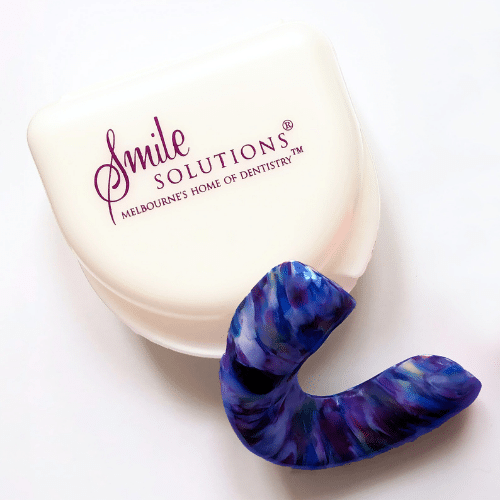
A custom-fitted guard fits your upper teeth precisely, and is indented so that your lower teeth close into it. That indentation distributes load across the arch and reduces shock to the jaw joints.
An accurate fit and even thickness of material protects teeth, gums, joints and jaws.
A custom guard is:
- Comfortable
- Tight fitting
- Allows you to speak clearly
- Highly resistant to being dislodged
- Does not restrict breathing
That list matters more than it appears to, because a guard that is uncomfortable, loose or hard to breathe through gets taken out — and a guard in a pocket protects nothing. The ADA’s consumer resource at teeth.org.au makes the same point from the other direction: custom-made guards “allow you to breathe and speak easily compared to mouthguards bought from sports stores and chemists.”
What a boil-and-bite guard does
Over-the-counter guards start at around $10. They are shaped by softening in hot water and biting into them, which produces an imperfect and uneven fit.
The ADA describes the same mechanism physically: “This do-it-yourself process can cause some parts of the mouthguard to be thinner than others. This can affect how well the mouthguard protects your teeth.”
Despite what packaging often suggests, they offer limited protection, and a poorly fitting one — loose, thin over the front teeth, or repeatedly pushed out of place — provides considerably less than most wearers assume.
Some protection is better than none. But the gap between the two types is not marginal, and it is largest at the front teeth, which is where impacts land.
What the ADA policy says — including where it disagrees with itself
Policy Statement 2.2.5, paragraph 1.8 reads: “The most effective protection against oral damage is a custom fitted mouthguard, where precision fit and quality materials offer maximum comfort & injury prevention. Over-the-counter mouthguards provide better protection than no mouthguard, however their protection varies depending on the design, comfort, adaptation and thickness of the final product. Quality control of at-home custom adaptation is not achievable.”
That last sentence is the sharpest line in the document. The problem with a boil-and-bite guard is not the material — it is that nobody checks the result.
Appendix 1 of the same policy — the model mandatory-mouthguard policy the ADA offers to sports clubs — puts it far more strongly: boil-and-bite and stock guards “offer little or no protection and can dislodge during play but may be appropriate during orthodontic treatment.”
Those two statements sit in the same document and do not agree. We have quoted both rather than picking the one that suits us, because the common ground between them is the honest summary: the protection an over-the-counter guard gives is unpredictable.
One practical exception is worth pulling out of that quotation: the ADA notes an over-the-counter guard may be appropriate during orthodontic treatment, when teeth are moving and a custom guard would be outgrown within weeks. See braces, children’s braces and Invisalign and orthodontics.
The technical standard behind a properly made guard is Australian Standard HB209-2003, “Handbook: Guidelines for the Fabrication, Use and Maintenance of Sports Mouthguards.” The ADA also holds that “All dental care funding schemes should allow for the provision of custom-made mouthguards” — which tells you it considers cost a genuine barrier.
How a custom guard is made
The process is straightforward.
At an examination, your dentist checks whether you need any dental work that would affect the fit. The ADA gives patients the same instruction: “It is best to have a check-up to make sure no other dental treatment is needed before your mouthguard is made.”
Guards can still be made if you wear braces or a partial denture, in nearly all cases — and for someone in braces, a guard matters more, not less, because brackets can cut the lips on impact. See braces, children’s braces and Invisalign and dentures.
Impressions of both upper and lower teeth are taken — the ADA describes this as taking “a mould or 3D scan of your teeth” — and the guard is fabricated from the material most appropriate to your comfort and to the nature of your sport. Different sports involve different impact profiles, and thickness is chosen accordingly. At Smile Solutions that work is done in the practice’s own on-site laboratory; our technology covers the scanning side.
You can usually pick the colours.
Fabrication takes around a week, so do not leave it until the week the season starts. Contact us to book the appointment.
Looking after it
Keep it clean, and store it in a firm container, away from heat, so it holds its shape. A guard left in a hot car warps and no longer fits — at which point you are back to the problems of a boil-and-bite. Clean it with a brush and mild soap rather than abrasive toothpaste, and treat mouthwash as a rinse rather than a clean: the truth and myths about mouthwashes.
The ADA’s own care list is short and worth following exactly:
- Do not store your mouthguard in direct sunlight
- Wash it in cool or warm water — not hot, which distorts it the same way a hot car does
- Store it dry and safely in a protective case
- Write your name on both the mouthguard and its case
When to wear one
Whenever you play or train for any sport where there is a possibility of contact to the face.
Training counts. A significant share of dental injuries happen at training, where guards are most often left out of the bag. The ADA states the rule without qualification: “Protective equipment such as helmets and mouthguards should be used during training as well as competition.”
Sports where a guard is recommended
Far from comprehensive, but the most common:
- Football (all codes)
- Basketball
- Netball
- Hockey
- Martial arts (all)
- BMX and motocross — along with helmets
- Cricket — wicket keeping, slips fielding, batting
- Beach volleyball
- Baseball and softball
- Whitewater kayaking and rafting
- Some gymnastics
- Rodeo
Basketball and netball surprise people. They are non-contact sports on paper, and they generate a large number of dental injuries — elbows, heads and the ball itself.
How the ADA sorts sports by risk
The ADA’s policy divides activities into four risk levels, with oral protection matched to the level — a more useful frame than a single list, because it explains why a sport is on it:
- Mouthguard strongly recommended — “off-road bike riding, skateboarding, rock climbing, white-water rafting, trampolining, combat sports, football, basketball, squash, and field hockey.”
- Head protection worn, which may remove the need for a mouthguard — ice hockey with full-face helmets, goalkeepers in field hockey, cricket, rollerblading and cycling.
- Not normally worn, but justifiable in some circumstances — “high diving, surfboarding, and skiing.”
- Impractical or not warranted, because injury risk is low — “swimming, athletics, aerobics, and rowing.”
Trampolining and skateboarding are worth noticing: neither is a club sport with a coach checking gear at the gate.
If an injury happens anyway, emergency dentistry, what should I do in a dental emergency? and, for children, children’s dental emergencies are the pages to know before you need them.
It is not only sport
The ADA policy is titled Prevention and Management of Oral Injuries, not Sports Mouthguards, and the difference matters. “Certain occupations expose workers to oral injuries,” it says, naming two distinct hazards:
- Physical impact from work equipment where fracturing of teeth is likely — “labourers, tradespeople, and riggers.”
- Tooth abrasion where abrasive dust or particles may enter the mouth — “miners, bricklayers, and tilers.”
For the second group the remedy is not a mouthguard at all but workplace control: “dust extraction or filtration when generating abrasive particles.” If you cut stone or tile for a living, say so at your next examination — see what is acid wear and how can I avoid it?, which covers the non-occupational version of the same surface loss.
Two further risk factors from the same policy, neither about sport:
Oral piercing jewellery “may also increase the risk and degree of oral injury.”
“Children with prominent front teeth may be a higher risk of injury and may benefit from orthodontic assessment and early treatment to reduce this risk.” This is the dental-anatomy limb of the ADA’s assessment rule, and it is the least known: moving prominent upper front teeth back is itself an injury-prevention measure, quite apart from appearance. See children’s braces and Invisalign, orthodontists and children’s dentistry.
A sports guard is not a night guard
Worth separating, because both are bought under the name “mouthguard” and the chemist sells versions of each.
A sports mouthguard is thick and cushioned, and exists to absorb an impact. A night guard — properly an occlusal splint — is thin and hard, and exists to protect the teeth from grinding during sleep and to unload the jaw muscles and joint. They are different appliances for different jobs and are not interchangeable in either direction: a sports guard worn overnight is unhygienic and can alter the bite, and a splint offers no impact protection on a field.
The chemist-versus-dentist question matters even more for the night guard than for the sports guard, because a splint is worn for eight hours a night, every night. An unadjusted, ill-fitting appliance applying uncontrolled force for that long can move teeth. See how can a night guard be used to treat TMD?, what is bruxism and how is it managed?, night time tooth grinding and clenching, how can I stop grinding my teeth when I sleep? and TMD and teeth grinding.
How often to replace it
Mouthguards should be checked or remade every 12 months for optimal fit and protection. A regular check-up is the natural time for it — how often should I go to the dentist? and dental cleans and hygienists.
The ADA’s consumer guidance frames the same question by service life rather than by the calendar: “If it is used, stored, and fit checked by your dentist, it can last you multiple sporting seasons as long as you are no longer growing.” Both point at the same check — it is the fit assessment that decides, not the age of the guard — and the growth qualifier is why the intervals differ for adults and children.
This is especially important for children and teenagers with growing jaws. A guard made for a mouth that has since erupted four teeth no longer fits that mouth — and an ill-fitting custom guard is not better than a well-fitting one just because it started out custom. See children’s dentistry and order and appearance of baby teeth for what is changing underneath.
The cost question
Custom guards cost more.
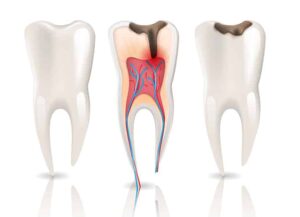
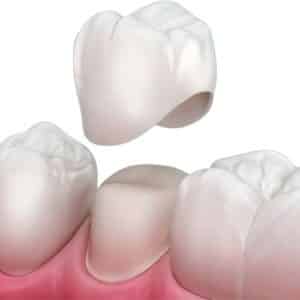
Set against what they protect: a fractured or lost front tooth means restoration and re-restoration across a lifetime — a crown replaced every 10 to 15 years, potentially root canal treatment, potentially an implant. The guard is the cheapest dentistry in that sequence by a wide margin. The ADA puts the same arithmetic in one line: “The cost of an injury to the teeth or jaw far exceeds the cost of a mouthguard.”
For the endpoint, see what types of dental crowns are available?, everything you need to know about root canal treatment, how much do dental implants cost? and bridges, implants or dentures?. Published fees are in the price guide, and understanding your treatment explains how a written quotation is put together.
If you are asking on behalf of a club: the ADA and Sports Medicine Australia jointly promote a “no mouthguard, no play” policy, and the ADA publishes model wording clubs can adopt — mouthguards mandatory at training and games, with coaches and managers checking compliance.
Smile Solutions makes custom-fitted guards for sport, and for patients who grind their teeth.
Common questions
A tooth has just been knocked out on the field. What do I do in the next five minutes?
This is the one thing to know before the season starts, and the answer depends entirely on whether it is an adult tooth or a baby tooth.
An adult tooth — put it back in. Hold it by the crown, never the root. If it is dirty, rinse it briefly in milk or the person's own saliva — not water, and do not scrub it. Reinsert it into the socket the right way round and have them bite gently on a clean cloth. Then get to a dentist immediately.
If you cannot reinsert it, keep it wet. In order of preference: back in the socket, then milk, then a tooth-preservation solution (HBSS), then the person's own saliva, then saline. Water is a poor medium and a last resort — though the International Association of Dental Traumatology is explicit that it is “better than leaving the tooth to air-dry”. Never wrap it in a dry tissue. Drying out is the worst thing that can happen to it.
The clock that matters is dry time, not elapsed time, and the familiar “you have twenty minutes” version of this advice is wrong in a way that talks people out of acting. The IADT's 2020 avulsion guideline states that “minimizing the dry time is critical for survival of the PDL cells” and that “after an extra-alveolar dry time of 30 minutes, most PDL cells are non-viable” — so a tooth that has been sitting in milk for an hour is in far better shape than one that spent fifteen minutes on the grass. And if a long time has passed, it still goes back in: the same guideline says “the decision to replant a permanent tooth is almost always the correct decision even if the extra-oral dry time is more than 60 minutes”, because replantation preserves the bone and “will keep future treatment options open”. It can be removed later if it does not take.
A baby tooth — do not put it back. Reinserting it risks damaging the permanent tooth developing above. Control the bleeding with gentle pressure and see a dentist, but the tooth stays out.
Facial swelling, difficulty breathing or swallowing, a suspected jaw fracture, or any head injury alongside the dental injury are emergency-department presentations — or call 000. The ADA's own policy directs dentists to the IADT guidelines for managing these injuries, so a practice should not be improvising either. What should I do when a tooth is knocked out? · Emergency dentistry
Will my health fund or the Child Dental Benefits Schedule pay for a custom guard?
Check before you assume, and be aware of one specific gap.
The Child Dental Benefits Schedule does not cover it. Services Australia's list of what CDBS pays for is check-ups, X-rays, cleaning, fissure sealing, fillings, root canals and extractions. A mouthguard is not on that list — so for an eligible child, the examination can be covered while the appliance itself is not.
Private extras cover varies, and this is the part to ring about. Many policies do include a mouthguard item, often with its own annual limit separate from general dental, and often once every year or two rather than on demand. Ask for the item number from the practice and read it to your fund, because “do you cover mouthguards” and “what do you pay on this item number this year” are different questions with different answers.
The ADA regards the funding position as a problem rather than a detail. Its policy position 2.2 is that “all dental care funding schemes should allow for the provision of custom-made mouthguards” — an argument nobody makes about something already covered. Set against that, the same policy's blunt cost comparison still applies: “the cost of an injury to the teeth or jaw far exceeds the cost of a mouthguard”, and an uncovered guard is cheaper than a covered crown with a gap.
My child's club does not require mouthguards. Is there anything I can actually do?
Yes, and the ADA has done most of the work for you. Its Policy Statement 2.2.5 includes Appendix 1, a model mandatory-mouthguard policy written for clubs to adopt as it stands — covering all registered players, during “all ‘on field’ activities including training and games”, with a “strict ‘No Mouthguard, No Play’ policy without exception”, and with coaches and managers directed to actively check all players for compliance and remove non-complying players until they comply. The model wording also makes agreement to the policy a condition of registering a child with the club.
That is a document a committee can vote on at one meeting, which is a far easier ask than a general conversation about safety. The ADA's broader positions give you the supporting argument: “where a risk of oral injury exists, sporting bodies should adopt a mandatory mouthguard policy” (2.9), there should be “targeted training in assessment and provision of oral protection in schools, sporting clubs, and workplaces” (2.7), and “appropriate protection should be normalised and expected in the community” (2.5). The ADA and Sports Medicine Australia jointly promote the no-mouthguard-no-play policy and encourage all Australian clubs to sign up.
One caution if the club responds by bulk-buying cheap guards: that solves attendance, not protection. Read the two ADA passages quoted earlier in this article — the policy body and its own appendix disagree about how much an over-the-counter guard is worth, and neither of them claims the fit can be quality-controlled at home.
At what age does this start mattering?
Earlier than most people expect, and for a reason that has nothing to do with sport. The ADA identifies “young children and teenagers” as high-risk groups for oral injury, “particularly when learning to walk and when new and/or high-risk activities are involved.” A toddler's front teeth are at risk from the coffee table, not from football, and no mouthguard addresses that — what addresses it is knowing the baby-tooth rule above before it happens.
From there the age question has three parts.
- Anatomy can be the risk factor, not the sport. The ADA notes that “children with prominent front teeth may be a higher risk of injury and may benefit from orthodontic assessment and early treatment to reduce this risk” — so for some children an orthodontic opinion is an injury-prevention step, and the guard is the second line rather than the first.
- A growing mouth outgrows a guard. The ADA's service-life guidance holds only “as long as you are no longer growing”, which is precisely why a child's guard needs the fit checked at each visit while an adult's may run for several seasons.
- The activities that generate injuries are often unsupervised. Trampolining and skateboarding both sit in the ADA's highest risk tier, and neither has a coach at the gate checking equipment.
The practical answer for a family: raise it at the child's regular examination and let the dentist apply the ADA's three-part test — sport, occupation and dental anatomy — rather than deciding by age alone.
Is there a number for how much protection a mouthguard gives?
Not one we can stand behind, and it is worth saying so because invented percentages circulate freely on this subject.
None of the Australian authorities we can check publishes a risk-reduction figure for mouthguard use. The ADA's position is expressed qualitatively — that a custom-fitted guard is “the most effective protection against oral damage”, that over-the-counter protection “varies depending on the design, comfort, adaptation and thickness of the final product”, and, in its own words at the start of the policy, that “oral damage is often irreversible, frequently complex, difficult, and costly to repair”. Its consumer material says a guard works by “absorbing and spreading the impact of a knock to the face”. Nowhere does either give a percentage.
So if you are offered a figure — “reduces dental injuries by X per cent” — ask where it comes from. It may be sound, but it is not coming from the ADA's policy or its consumer guidance, and the concussion claim discussed at the top of this page is a worked example of how such numbers acquire a life of their own.
What the absence of a number does not change: the mechanism is uncontroversial, the injuries are expensive and often permanent, and the only variable you control is whether the guard fits and whether it is in your mouth rather than your bag.
Related reading
- Sports mouthguards — the service page
- What kind of mouthguard should I use?
- Should my child wear a mouthguard?
- How can a night guard be used to treat TMD?
- What should I do when a tooth is knocked out?
- What are sports drinks really doing to your teeth?
- General dentistry
Practical details
Smile Solutions, Level 1, 220 Collins Street, Manchester Unity Building, Melbourne VIC 3000 — getting here. Phone 13 13 96, contact us, or theteam@smilesolutions.com.au. Monday–Friday 8.00am–6.00pm, Saturday 8.30am–1.30pm, Sunday by appointment. The full team is listed by name.
Quotations attributed to the Australian Dental Association are from its Policy Statement 2.2.5, Prevention and Management of Oral Injuries (Federal Council, April 2024), and from the ADA consumer article Sports Mouthguards at teeth.org.au. The avulsion protocol is from the International Association of Dental Traumatology, Guidelines for the management of traumatic dental injuries: 2. Avulsion of permanent teeth (Dental Traumatology, 2020). Child Dental Benefits Schedule coverage is as published by Services Australia.
Published 19 June 2015; the discussion of head injury evidence has been updated. Prices quoted are indicative, and health fund and CDBS entitlements change — confirm yours directly. General information only; it does not replace advice from your treating practitioner.
Smile Solutions trades under ABN 28 193 514 103.
Images on This Page
-
https://www.facebook.com/tr?id=800557773428361&ev=PageView&noscript=1
(no alt text)
-
https://www.smilesolutions.com.au/wp-content/uploads/2025/10/calendar_month.svg
(no alt text)
-
https://www.smilesolutions.com.au/wp-content/themes/arcadian-wordpress-theme/assets/images/smile_solutions_logo_white.png
Smile Solutions Logo
-
https://www.smilesolutions.com.au/wp-content/themes/arcadian-wordpress-theme/assets/images/smile_solutions_logo_purple.png
Smile Solutions Logo
-
https://www.smilesolutions.com.au/wp-content/uploads/2023/11/SS-Tooth-1-1-150x150.png
Smile Solutions
-
https://www.smilesolutions.com.au/wp-content/uploads/2025/09/Sports-Mouthguards-Smile-Solutions.png
Colourful dual laminate sports mouthguard with storage case
-
https://www.smilesolutions.com.au/wp-content/uploads/2025/09/Root-Canal-2-300x217.jpg
Root Canal
-
https://www.smilesolutions.com.au/wp-content/uploads/2026/08/Mouth-Breathing-300x270.jpg
Mouth Breathing
-
https://www.smilesolutions.com.au/wp-content/uploads/2025/09/Dental-Crown-at-Smile-Solutions-300x300.jpg
Dental Crown at Smile Solutions
-
https://www.smilesolutions.com.au/wp-content/themes/arcadian-wordpress-theme/assets/images/family_owned_bussiness.png
Family Owned Business
-
https://www.smilesolutions.com.au/wp-content/themes/arcadian-wordpress-theme/assets/icons/icon--phone.svg
Smile Solutions Contact
-
https://www.facebook.com/tr? id=800557773428361&ev=PageView&noscript=1
(no alt text)
-
https://bat.bing.com/action/0?ti=25148060&tm=gtm002&Ver=2&mid=ce1f5697-9e4e-4dfb-976a-9b673b6e2f8e&bo=1&sid=f5a31fd0ab2711f19044bdd59e388356&vid=f5a32950ab2711f1a356b15bd4b2922f&vids=1&msclkid=N&pi=918639831&lg=en-US&sw=800&sh=600&sc=24&nwd=1&tl=Getting%20a%20new%20mouthguard%20%E2%80%93%20a%20trip%20to%20the%20chemist%20or%20the%20dentist%3F%20-%20Smile%20Solutions&p=https%3A%2F%2Fwww.smilesolutions.com.au%2Fdental-articles%2Farticle%2Fnew-mouthguard-chemist-or-dentist%2F&r=&evt=pageLoad&sv=2&cdb=AQAQ&rn=653465
(no alt text)