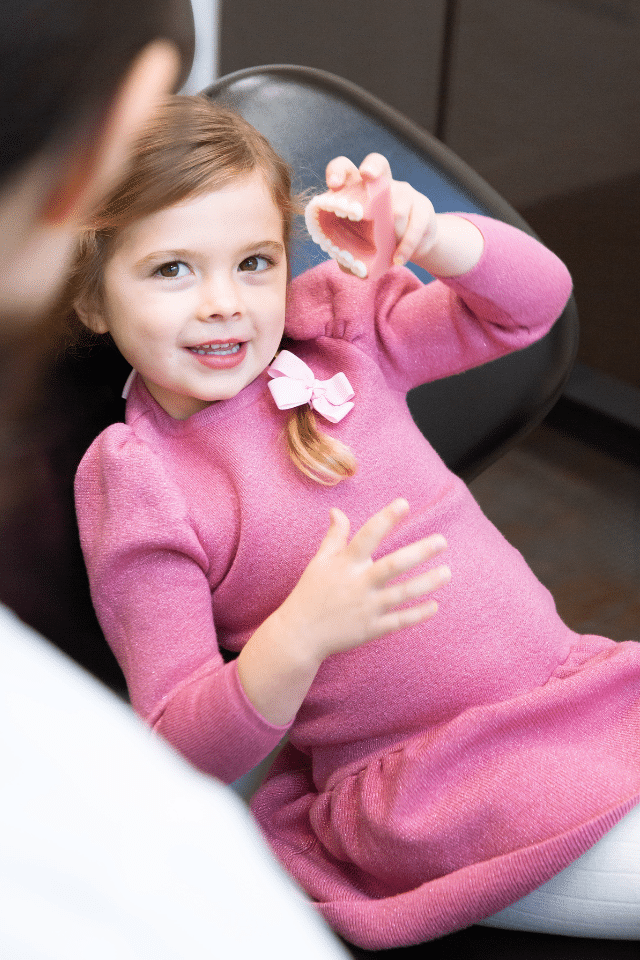
Children’s Dental Emergencies
What should I do in a children's dental emergency?
The first rule is not to panic — and the second is that acting in the first few minutes matters more than anything that happens later. For a knocked-out adult tooth, what decides the outcome is how long the root stays dry, not how long it is since the accident.
If the child has lost consciousness at any point, go to your nearest hospital emergency department immediately. A head injury takes precedence over a dental one.
For dental emergencies, call Smile Solutions on 13 13 96. The practice is at Level 1, 220 Collins Street, Manchester Unity Building, Melbourne CBD, and operates an after-hours emergency service for existing patients.
Knocked-out adult tooth — act immediately, and never let it dry out
This is the one genuine race against the clock — but the clock that matters is dry time, not elapsed time. The International Association of Dental Traumatology (IADT) puts it plainly: "Minimizing the dry time is critical for survival of the PDL cells", and "after an extra-alveolar dry time of 30 minutes, most PDL cells are non-viable". A tooth kept in milk or saliva is not drying out, so keeping it wet stops that clock. Straight back into the socket is still by far the best outcome — but the IADT is explicit that "the decision to replant a permanent tooth is almost always the correct decision even if the extra-oral dry time is more than 60 minutes". So if time has already passed, come anyway, and bring the tooth.
- Act quickly.
- Hold the tooth by the crown — never touch the root. The root surface carries the cells that allow the tooth to reattach; handling it destroys them.
- If the tooth is dirty, rinse it gently in milk, saline or the child's own saliva — the IADT names those three, not tap water — then put the tooth straight back into its socket, even if the site is bleeding. Hold it gently in place.
- To keep it there, close the mouth onto a piece of gauze, clean cloth or napkin placed between the upper and lower teeth.
- It does not matter if the tooth is crooked or facing the wrong way. Being back in the socket at all produces a better outcome than perfect alignment achieved later.
- If the tooth cannot be reinserted, it must be kept moist — submerge it in milk, or in the parent's or child's saliva. Never let it dry out.
- Call and come in immediately.
Knocked-out baby tooth — do the opposite
Do not put a baby tooth back in the socket. Reimplanting a baby tooth risks damaging the developing adult tooth sitting in the bone above it.
Submerge the tooth or fragment in milk, bring it to the appointment, and book the earliest available appointment with a paediatric dentist.
Loosened or displaced teeth
This is urgent and needs a dentist the same day.
- Gently try to move the teeth back toward their original position.
- Close the mouth onto gauze, a clean cloth or a napkin between the upper and lower teeth to stabilise them.
- Call and come in immediately.
Broken or fractured tooth
Not a same-hour emergency, but it needs treatment within 24 hours.
- Find the broken piece if you can, and store it in water or milk — do not let it dry out.
- Call and book the earliest possible appointment.
A fragment that has been kept moist can sometimes be bonded back onto the tooth, which gives a better colour and shape match than any restorative material. See Chipped & Cracked Teeth.
While you wait
- Keep the child on a soft diet.
- Manage pain with Panadol or Nurofen at the dose appropriate for the child's age and weight.
- Keep the injured area clean — brush gently, or use a moist cotton swab if brushing is too painful.
Afterwards: follow-up is not optional
Traumatised teeth can lose vitality, discolour, or develop infection months after the original injury, often with no pain to signal it. Attend every follow-up appointment so the tooth can be monitored, and maintain good oral hygiene around the injured site throughout.
Quick reference
| Injury | Urgency | Key action |
|---|---|---|
| Adult tooth knocked out | Immediately — but never too late to come in | Reinsert into socket; hold by crown only. If you cannot, keep it wet in milk |
| Baby tooth knocked out | Same day | Do not reinsert; store in milk |
| Tooth loosened or moved | Immediate | Reposition gently, stabilise with gauze |
| Broken or fractured tooth | Within 24 hours | Keep fragment moist in milk or water |
| Loss of consciousness | Immediate | Hospital emergency department |
Why dry time is the thing that matters
The reason is specific, and knowing it helps you make the right call under pressure.
The root of a tooth is covered in living cells from the ligament that held it in the jaw. If those cells survive, the tooth can reattach. They begin dying within minutes of the root drying out — and dry time matters far more than total time out of the mouth.
So the order of preference — the IADT's order — is:
- Back in the socket immediately. Nothing else comes close.
- Milk. The best widely available storage medium — its salt balance and pH suit those cells.
- HBSS (Hanks' Balanced Salt Solution), the fluid sold in commercial tooth-preservation kits, if you have one to hand.
- The child's own saliva, held in the cheek if they are old enough not to swallow it, or spat into a container with the tooth in it.
- Saline, if you happen to have it.
If you have none of those, use water. Water is a poor storage medium — it is the wrong concentration and it damages the very cells you are trying to protect — so reach for anything on the list above first. But the IADT's own wording is that "although water is a poor medium, it is better than leaving the tooth to air-dry". A dry tissue, a bag or an empty container is the worst option of all, so never choose dry over wet. Do not scrub the root, and do not use disinfectant.
The other injuries, and what each means
Not every knock knocks a tooth out. The pattern matters, because the treatment and the outlook differ:
| What you see | What it is | Urgency |
|---|---|---|
| Tooth pushed up into the gum, looks shorter | Driven into the bone | Same day. Do not try to pull it down |
| Tooth hanging lower than its neighbours | Partly displaced out of the socket | Same day; gentle repositioning |
| Tooth pushed backwards or forwards, bite feels wrong | Displaced sideways, often with a bone fracture | Same day |
| Tooth tender but not moved | Bruised ligament | Within a day or two; soft diet |
| Tooth slightly wobbly, not displaced | Loosened ligament | Within a day or two |
| Chip with pink or red showing at the break | Fracture into the nerve | Same day — this one is time-sensitive |
| A whole segment of teeth moving together | Fracture of the supporting bone | Same day |
A pink or bleeding spot in the middle of a fresh break is the one people underestimate. It means the nerve is exposed, and treating it within hours rather than days materially improves the chance of keeping that tooth alive. Cover the tooth, keep the child comfortable, and call.
A baby tooth pushed up into the gum is common in toddlers after a fall. It usually re-erupts on its own over weeks, but it still needs to be seen, because the position matters for the adult tooth developing above it.
Bleeding, lips and tongue
Mouth injuries bleed dramatically and the bleeding usually looks far worse than it is.
- Apply firm, steady pressure with clean gauze or a cloth for ten minutes without lifting to check. Most bleeding stops.
- Cold on the outside of the lip reduces swelling; a wrapped ice pack, not ice against skin.
- Look for missing pieces. If a tooth fragment cannot be found and the lip is cut, tell the clinician — fragments can lodge inside a lip and need to be found on an x-ray.
- A cut that gapes open, crosses the lip border, or will not stop bleeding needs medical attention, usually at an emergency department.
- Ask about tetanus if the injury involved dirt, gravel or an outdoor surface, and your child's immunisations are not up to date.
Call 000 or attend an emergency department for loss of consciousness, vomiting or drowsiness after a head knock, a suspected broken jaw, bleeding that will not stop, or difficulty breathing or swallowing.
Not all emergencies are injuries
Facial swelling with a toothache is the one to take most seriously. Swelling that is spreading, closing an eye, or accompanied by fever or difficulty swallowing is a medical emergency — call 000 or attend an emergency department. Swelling confined to the gum still needs to be seen the same day.
Toothache without swelling should be assessed promptly rather than watched. Children often do not localise or report dental pain clearly — they chew on one side, refuse cold food, wake at night, or simply become irritable. See Toothache & Tooth Pain.
A wobbly baby tooth that will not come out, or an adult tooth coming up behind a baby one, is rarely urgent but worth checking — see my child's loose tooth.
Something broken on braces — a poking wire or a loose bracket — is uncomfortable rather than dangerous. Cover the wire with orthodontic wax and call in the morning. See Orthodontic Braces.
What happens at the appointment
Knowing the shape of it helps you prepare a frightened child:
- A look at the whole picture first — the head, the jaw, the bite and the soft tissues, not just the obvious tooth
- X-rays, to check the root, the bone, the position of any displaced tooth, and the adult tooth developing underneath a baby one
- Repositioning and splinting, where a tooth has moved — a fine wire or a bonded splint holding it to its neighbours for a period the clinician specifies
- Covering an exposed nerve, where the fracture reached it
- Cleaning and, where needed, closing soft tissue injuries
- A written follow-up schedule, because trauma is monitored over months rather than signed off on the day
Treatment is delivered by clinicians used to frightened children; where a child cannot cope, options include nitrous oxide and, in some cases, general anaesthesia with a specialist anaesthetist. See Specialist Paediatric Dentists, Dental Anxiety and Sleep Dentistry.
Bring: the tooth or fragment in milk, the name of any medication your child takes, immunisation status if a tetanus question arises, and — if you can — a photograph of the injury taken at the scene.
The months afterwards
This is the part families most often let slide, and it is where injured teeth are lost.
An injured tooth can die quietly. The nerve supply is damaged at the moment of impact, and the consequences show up weeks or months later:
- The tooth darkens — grey, brown or pink — usually painlessly
- A small pimple appears on the gum above it, which is an abscess draining
- The tooth becomes tender to bite on, or loosens again
- Nothing happens at all, and it is picked up only on a review x-ray
Reviews are typically scheduled at intervals over the following year or more, with x-rays, because that is the only way to see it. A tooth that looks fine at six weeks can still fail at six months.
Where the nerve does die, the tooth is usually saved with root canal treatment rather than lost — and in a young adult tooth whose root is still forming, the techniques are specialised. See Specialist Endodontists. Discolouration can often be lightened from the inside afterwards rather than veneered.
Keep the area meticulously clean throughout. Plaque around an injured tooth makes every one of these outcomes more likely.
Preventing the next one
- A custom-fitted mouthguard for any contact sport. The adult front teeth arrive around six to eight and are prominent and exposed for years afterwards, which is the peak window for dental injury. See Sports Mouthguards and should my child wear a mouthguard.
- Wear it at training, not only at games — a large share of injuries happen at training, where the guard stays in the bag.
- Helmets for scooters, skateboards and bikes, which is where a great many preschool and primary-age injuries come from.
- Have prominent upper front teeth assessed. Teeth that sit well forward of the lip are substantially more likely to be injured, and orthodontic assessment from age seven can identify it. See Children's Orthodontics.
- Keep a small kit in the sports bag: gauze, a sealed container, and something to hold milk.
Claims and cover
Worth sorting out early rather than years later. Sporting clubs and associations often carry injury cover that includes dental, schools may have their own, and injuries in a motor vehicle accident fall under a separate scheme.
Dental treatment after trauma frequently continues for years — a tooth injured at nine may need a crown at nineteen and an implant at thirty — so keep the records, the photographs and the receipts from the beginning. Many children are also eligible for the Child Dental Benefit Schedule. See Price Guide.
Staying calm helps more than you would think
Children take their cue from the adult in the room. A few things genuinely help:
- Say what is happening in simple, neutral words. “We're going to see the dentist so they can look after your tooth.”
- Avoid “it won't hurt”, which introduces the idea that it might, and avoid the words needle, drill and blood.
- Give them a job — holding the container, pressing the gauze — which reduces panic in older children.
- Do not promise what you cannot control, such as that the tooth will definitely be saved.
Common questions
My child only plays netball and basketball. Does that really need a mouthguard?
Yes, and the Australian Dental Association's own risk classification puts basketball in its highest category — which surprises most parents.
ADA Policy Statement 2.2.5 sorts sports into four risk levels:
- Mouthguard use strongly recommended — "off-road bike riding, skateboarding, rock climbing, white-water rafting, trampolining, combat sports, football, basketball, squash, and field hockey".
- Head protection already worn, which may remove the need — full-face helmets in ice hockey, goalkeepers in field hockey, cricket, rollerblading and cycling.
- Not normally worn, but justifiable in some circumstances — high diving, surfboarding, skiing.
- Impractical or not warranted — swimming, athletics, aerobics, rowing.
The ADA's consumer site is blunter still: "It is not only contact sports like rugby union, rugby league, AFL, hockey and boxing" that cause these injuries — "sports such as cricket, basketball, netball, touch football, skateboarding and soccer can also cause damage to the teeth and mouth." Trampolining is on the top-tier list too, which matters more than most people realise given how many are in back gardens.
Two further points from the same policy. The need for a mouthguard "should be assessed by a dentist based on risk factors, including an individual's sporting or occupational activities and dental anatomy" — so it is an individual judgement, not a sport-by-sport rule. And protective equipment "should be used during training as well as competition", which is the single most-ignored line in the document.
Is a chemist mouthguard good enough?
The ADA's answer is clearly "custom is better" — and its own documents disagree about how much worse the chemist version is, which is worth seeing rather than glossing over.
The policy statement says: "The most effective protection against oral damage is a custom fitted mouthguard, where precision fit and quality materials offer maximum comfort & injury prevention. Over-the-counter mouthguards provide better protection than no mouthguard, however their protection varies depending on the design, comfort, adaptation and thickness of the final product. Quality control of at-home custom adaptation is not achievable."
Appendix 1 to that same policy — the model club mouthguard policy — puts it far more harshly: over-the-counter and boil-and-bite guards "offer little or no protection and can dislodge during play, but may be appropriate during orthodontic treatment."
So the ADA's own material runs from "better than nothing, but variable" to "little or no protection", in one document. The practical reading is the one both halves support: a boil-and-bite guard is better than an empty mouth on the day you forgot the good one, and it is not what you should be relying on for a season. Note also the one situation where the cheap version is the right answer — during orthodontic treatment, when the teeth are moving and a custom guard would stop fitting.
What custom actually means: the ADA describes a mouthguard made by a dental practitioner from an impression or 3D scan, fitted to that person's teeth only, and easier to breathe and speak through. It also recommends having a check-up before the guard is made, so that any treatment needed is done first.
Looking after it, in the ADA's own list: keep it out of direct sunlight, wash it in cool or warm water, store it dry in a protective case, and write your child's name on both the guard and the case. A well-cared-for guard "can last you multiple sporting seasons as long as you are no longer growing" — which is precisely why a growing child's needs remaking while their jaws and teeth are still changing.
Is it worth the cost of a custom mouthguard for a child who may lose interest in the sport?
The arithmetic is not about this season, and the ADA makes the comparison explicitly.
Its position is that "oral damage is often irreversible, frequently complex, difficult, and costly to repair", that dental injuries "can result in time off school or work to recover, can be painful and disfiguring, may involve lengthy and complex dental treatment", and — in terms — that "the cost of an injury to the teeth or jaw far exceeds the cost of a mouthguard." Its consumer site adds that these injuries "can also need a lifetime of dental treatment."
That lifetime point is the one that changes the sum, and it is the reason this page says a tooth injured at nine may need a crown at nineteen and an implant at thirty. A knocked-out front tooth in a child is not a single bill; it is a sequence of them, recurring every time the restoration reaches the end of its life.
Two funding realities to factor in:
- The Child Dental Benefits Schedule will not cover the mouthguard, and covers only part of the aftermath. Its list runs to check-ups, X-rays, cleaning, fissure sealing, fillings, root canals and extractions — and it expressly excludes orthodontic work, cosmetic work and any dental services in a hospital. The ADA's own position is that "all dental care funding schemes should allow for the provision of custom-made mouthguards", which tells you they currently do not.
- Sporting club, association and school injury cover often includes dental, and is claimed far less often than it could be. Find out what your child's club carries before anything happens, not after.
If cost is genuinely the obstacle, the honest ranking is: a custom guard, then an over-the-counter guard worn every session, then nothing. The middle option is not equivalent — but it is not nothing either, and the gap between "wearing something" and "wearing nothing" is where the injuries happen.
It did not happen at sport. Where do these injuries actually come from?
Mostly from ordinary life, and the ADA says so directly: "oral injury can occur anywhere. Young children and teenagers have been identified as high-risk groups, particularly when learning to walk and when new and/or high-risk activities are involved."
That sentence contains the two peaks. Toddlers learning to walk account for a large share of baby-tooth injuries — the falls onto furniture, steps and hard floors that no mouthguard was ever going to prevent. Teenagers taking up something new account for much of the rest, and "new" is the operative word: the first few sessions of an unfamiliar activity carry the risk, not the hundredth.
Three further risk factors from the same policy that rarely get mentioned to families:
- Oral piercing jewellery "may also increase the risk and degree of oral injury" — both the chance of an injury and how bad it is. Worth raising with a teenager who is considering a lip or tongue piercing, alongside the chipping and gum recession that jewellery causes without any accident at all.
- Prominent upper front teeth. The ADA states that children with prominent front teeth "may be at higher risk of injury and may benefit from orthodontic assessment and early treatment to reduce this risk" — which is a clinical reason for an early orthodontic assessment rather than a cosmetic one. See Children's Orthodontics.
- Work, once they are old enough. Certain occupations expose workers to oral injury — the ADA names physical impact from equipment for labourers, tradespeople and riggers, and tooth abrasion from dust or particles for miners, bricklayers and tilers. A teenager starting an apprenticeship is entering a risk category nobody warns them about.
None of this changes the first aid, which is the same wherever the injury happened. It changes when you think about prevention — which is before the activity starts, not after the first accident.
Practical details
| Address | Level 1, 220 Collins Street, Manchester Unity Building, Melbourne VIC 3000 |
| Emergency phone | 13 13 96 |
| theteam@smilesolutions.com.au | |
| Monday – Friday | 8.00am – 6.00pm |
| Saturday | 8.30am – 1.30pm |
| Sunday | By appointment |
| After hours | Emergency service for existing patients |
| Best storage | Back in the socket; otherwise milk, HBSS, saliva or saline. Water only if you have none of those — poor, but better than letting it dry |
| Never | A dry tissue or bag, scrubbing the root, or disinfectant |
| Baby tooth | Never reinsert |
| Follow-up | Over months, with x-rays |
| Parking | Wilsons Parking, Flinders Lane (between Swanston and Russell) |
Related pages: Children's Dentistry, Emergency Dentistry, Chipped & Cracked Teeth, Toothache & Tooth Pain, Sports Mouthguards, Specialist Paediatric Dentists, Your Child's First Visit, Kids' Teeth Cleaning Tips.
This is general first-aid information, not a diagnosis or a treatment plan, and it does not replace examination by a registered dental practitioner. Act on the steps above and then be seen — do not delay care in order to read further. Outcomes after dental trauma vary between individuals and cannot be guaranteed, and the timeframes given here are general guidance rather than a prediction for your child. Medication doses must follow the product label for the child's age and weight; check with a pharmacist or doctor if you are unsure, and take account of any allergy or existing medication. In a medical emergency — loss of consciousness, spreading facial swelling, difficulty breathing or swallowing, or uncontrolled bleeding — call 000 or attend a hospital emergency department.
Smile Solutions trades under ABN 28 193 514 103.
Images on This Page
-
https://www.facebook.com/tr?id=800557773428361&ev=PageView&noscript=1
(no alt text)
-
https://www.smilesolutions.com.au/wp-content/uploads/2025/10/calendar_month.svg
(no alt text)
-
https://www.smilesolutions.com.au/wp-content/themes/arcadian-wordpress-theme/assets/images/smile_solutions_logo_white.png
Smile Solutions Logo
-
https://www.smilesolutions.com.au/wp-content/themes/arcadian-wordpress-theme/assets/images/smile_solutions_logo_purple.png
Smile Solutions Logo
-
https://www.smilesolutions.com.au/wp-content/uploads/2025/11/Smile-Solutions-4.png
Smile Solutions - Melbourne CBD
-
https://www.smilesolutions.com.au/wp-content/uploads/2025/09/Childrens-Orthodontics-at-Smile-Solutions.png
Childrens Orthodontics at Smile Solutions
-
https://www.smilesolutions.com.au/wp-content/themes/arcadian-wordpress-theme/assets/images/family_owned_bussiness.png
Family Owned Business
-
https://www.smilesolutions.com.au/wp-content/themes/arcadian-wordpress-theme/assets/icons/icon--phone.svg
Smile Solutions Contact
-
https://www.facebook.com/tr? id=800557773428361&ev=PageView&noscript=1
(no alt text)
-
https://bat.bing.com/action/0?ti=25148060&tm=gtm002&Ver=2&mid=ae4e99f4-de5c-4586-afbd-db8cde92d51b&bo=1&sid=d1481a20ab2711f1bf27c9ea413d3abc&vid=d1485cf0ab2711f1b42221676a985aaa&vids=1&msclkid=N&pi=918639831&lg=en-US&sw=800&sh=600&sc=24&nwd=1&tl=Children's%20Dental%20Emergencies%20Melbourne%20%7C%20Smile%20Solutions&p=https%3A%2F%2Fwww.smilesolutions.com.au%2Fchildrens-dentistry%2Fchildrens-dental-emergencies%2F&r=&evt=pageLoad&sv=2&cdb=AQAQ&rn=378
(no alt text)