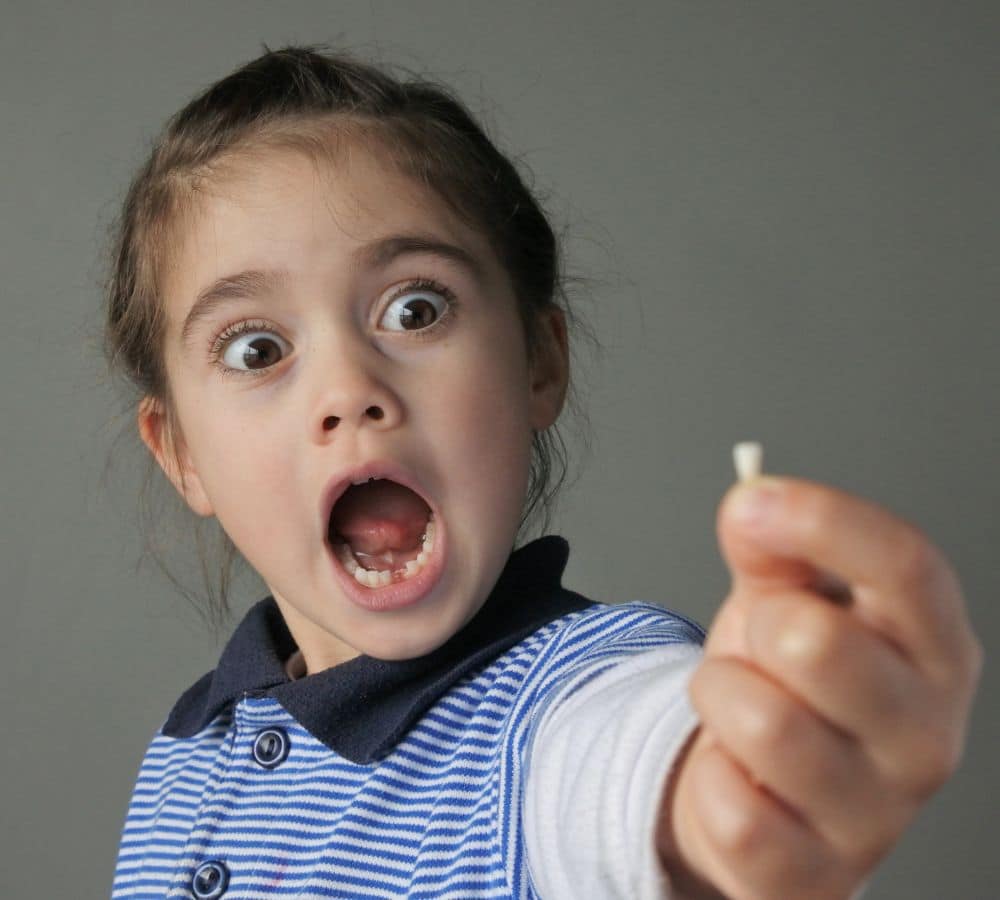
Should I pull out my child's loose tooth?
Usually, no.
Many of us remember getting a little help with a loose baby tooth — string tied to the tooth and to a door handle was not unusual. Whether our parents were doing the right thing is a fair question, and the answer is generally that they were not.
Leave it to the child and to time. Almost every baby tooth comes out on its own, at the right moment, with no blood and no drama. The order and appearance of baby teeth sets out the sequence they follow.
Why pulling it early causes problems
Even when a tooth is the slightest bit loose, pulling it out before it's ready can damage sensitive gum tissue. It also increases the possibility of:
- infection
- bleeding
- pain
- a root fragment left behind, if the tooth snaps rather than lifting cleanly
There is a second reason, and it is the one that lasts: a frightening extraction at six can produce an adult who avoids dentists. Dental anxiety very often traces back to a single childhood experience, and the door-handle method is a classic origin story. It is not worth the few days saved. Combating dental anxiety in children covers how that fear forms and how to avoid seeding it.
The longer-term consequence
This is the part that is not obvious in the moment.
If a tooth is lost before the permanent tooth is ready to replace it, the surrounding teeth may drift forward or out of position. That causes:
- crowding in other areas of the mouth
- or large gaps between teeth
Crowded or drifted teeth can then misplace the permanent teeth as they erupt — a condition called malocclusion. Correcting the altered position of the teeth and jaw may require orthodontic work later.
This matters most with back teeth, which hold considerably more space than front ones. Where a back baby tooth is lost early — usually to decay rather than to a parent — a space maintainer is often fitted precisely to stop that drift. Children's Orthodontics.
That decay route is not rare. The Australian Dental Association reports that 34% of Australian children aged 5–6 have experienced decay in their baby teeth, and 27% of those aged 5–10 have untreated decay in primary teeth; its Children and Young People Oral Health Tracker records 10.8 per 1,000 children aged 5–9 hospitalised for potentially preventable dental problems, rising to 14.3 per 1,000 for Indigenous children. That is also the reason a decayed baby molar is restored rather than simply removed: see dental crowns for children — silver or white? and should your child see a specialist paediatric dentist?
What normal looks like
It helps to know what came before. The ADA's consumer site puts the arrival of baby teeth at around 9 months, with a normal range of 3 to 12 months, and notes that all 20 baby teeth usually arrive by age 3 — so there are twenty of them to lose, and the losing takes about as long as the arriving did.
Most children begin losing their primary teeth around five or six years of age, making room for the adult teeth growing behind them. The bottom front teeth usually go first, then the top front teeth, with the back teeth following over several years and the last baby teeth typically gone by around twelve.
The range is wide, and early or late is usually just that. A child who starts at four and a half, or has not lost one by seven, is generally within normal variation — worth mentioning at a check-up, not worth worrying about. When should a child first visit the dentist? sets out how often those check-ups happen.
A loose baby tooth normally takes a few days to a few weeks to come out once it starts moving.
The best approach
Patience — from both the parent and the child.
Allow your child to play with and gently wiggle the loose tooth themselves. Children are naturally curious about loose teeth and will usually keep at it until the tooth comes out on its own. Wiggling with a clean finger or tongue is safe and speeds things along.
Crunchy food helps — apples, carrots, corn on the cob. Many teeth come out mid-sandwich, which is the least eventful way for it to happen.
The underlying principle is a simple one: the more ready a tooth is to fall out by itself, the lower the risk of bleeding, pain and infection — and the less traumatic the whole episode is for the child.
Wash hands first if anyone is going to touch the tooth, and do not use string, pliers, or anything with leverage.
When it does come out
There is usually very little to do.
- A little bleeding is normal. Fold a clean tissue or gauze, have the child bite firmly on it for about ten minutes by the clock, and avoid the temptation to keep lifting it to check.
- Rinse gently with cool water afterwards. Avoid vigorous rinsing or spitting for the rest of the day.
- Keep brushing, gently around the socket — see kids teeth cleaning tips and how to encourage your child to brush.
- Soft, cool food for the rest of the day if it is tender.
- The gum closes over within days, and the adult tooth may take weeks to months to appear.
Call if bleeding does not stop after 15–20 minutes of firm continuous pressure, or if it restarts heavily. Contact us, or see emergency dentistry out of hours.
What if they swallow it?
Parents sometimes worry their child will swallow a tooth that is ready to come out.
If this happens, it's fine. Problems are highly unlikely — a swallowed baby tooth passes through without incident.
The only real downside is disappointing the tooth fairy, and a note under the pillow generally settles that. Life as the Smile Solutions tooth fairy.
Inhaling one is a different matter and is rare. If a tooth is lost during coughing, sleep or a fall and the child then has coughing, wheezing or difficulty breathing, that needs urgent medical attention — call 000.
A knocked-out tooth is a different situation entirely
This is the one part of the page worth reading before you need it, because the right action depends on which kind of tooth it is and on how fast you act.
Baby tooth: do not put it back. The Better Health Channel is unambiguous, and gives the reason the rest of us usually omit: "Never try to put a baby (deciduous or primary) tooth back in the gum if it is knocked out. This can damage the developing permanent tooth underneath the gum." The International Association of Dental Traumatology says the same in its avulsion guidelines — "primary teeth should not be replanted". See an oral health professional straight away regardless, to check for other damage.
How to tell which you are holding, per the Better Health Channel: "baby teeth are smaller, smoother and usually whiter than adult teeth. Children's adult teeth are often more yellow, larger, and can have bumps on their biting edge."
Adult tooth: put it back, now. The IADT calls an avulsed permanent tooth "one of the few real emergency situations in dentistry", and its first-aid sequence is short: keep the patient calm; pick the tooth up by the crown, avoiding the root; if it is dirty, rinse it gently in milk, saline or the child's own saliva — not water if it can be helped — and put it straight back into the socket, then have the child bite on a tissue or gauze to hold it. If replanting on the spot is not possible, the tooth goes immediately into a storage medium: in descending order of preference, milk, a proprietary tooth-rescue solution, saliva, or saline. Water is a poor medium, but the IADT notes it is still better than letting the tooth dry out.
Time is the whole game. The IADT's own thresholds: the ligament cells on the root are most likely viable if the tooth is replanted within about 15 minutes; may be viable but compromised if kept in a storage medium with less than 60 minutes of dry time; and likely to be non-viable after more than 60 minutes of dry time, regardless of storage. After 30 minutes of dry time, most of those cells are already dead.
One honest caveat from Healthdirect Australia, so the expectation is right: "when an adult tooth is reimplanted, there is a high chance it will need root canal therapy in the future." That is still a far better outcome than losing the tooth.
When to get it looked at
See a dentist rather than waiting if:
- the tooth is loose because of a knock or fall, rather than natural exfoliation
- the gum around it is swollen, red or painful, or there is a pimple-like spot on the gum — which can indicate an abscess. What is a tooth abscess? and can a dental abscess affect your general health?
- the tooth has been loose for a long time without progressing, or is hanging by tissue and catching when eating
- an adult tooth is erupting behind the baby tooth — see below
- an adult tooth has been knocked loose or out — this is an emergency, and the sequence above applies. Never attempt to reimplant a baby tooth. Children's Dental Emergencies
- your child has a medical condition or takes medication affecting bleeding or healing, in which case ask before any tooth is loosened deliberately. Oral health care for children with special needs
If the tooth is loose because of sport, the preventable version of this conversation is should my child wear a mouthguard? and sport mouthguards. The Better Health Channel puts it in its own summary: "wear a mouthguard to reduce the risk of knocked out or broken teeth when training for and playing sport."
Shark teeth — the adult tooth coming up behind
This one alarms parents and usually resolves itself. When a lower adult front tooth erupts behind a baby tooth that has not yet loosened, the result looks like a second row.
In most cases the baby tooth loosens and falls out within a few weeks, and the tongue pushes the new tooth forward into place. Encourage wiggling. If the baby tooth is still firm after a few weeks, have it assessed — it may need removing so the adult tooth can move into position properly.
If you are concerned about your child's teeth, a discussion with a general dentist or a specialist paediatric dentist will usually put the worry to rest. Paediatric Dentists.
Common questions
My child plays sport and their teeth are wobbly half the year. Is a mouthguard even worth it yet?
Yes — and these are exactly the years the Australian Dental Association singles out. Its policy on the prevention and management of oral injuries identifies "young children and teenagers" as high-risk groups, "particularly when learning to walk and when new and/or high-risk activities are involved."
Which sports. The ADA sorts them into four risk levels rather than a contact/non-contact split, and the first list is longer than most parents expect — mouthguard use strongly recommended for "off-road bike riding, skateboarding, rock climbing, white-water rafting, trampolining, combat sports, football, basketball, squash, and field hockey." Its consumer site adds that "it is not only contact sports", naming cricket, netball, touch football and soccer. A separate tier covers sports where head protection may make a mouthguard unnecessary, and a third where it is impractical or the risk is low — swimming, athletics, aerobics and rowing.
Which type. The ADA's position is that "the most effective protection against oral damage is a custom fitted mouthguard, where precision fit and quality materials offer maximum comfort & injury prevention," while over-the-counter guards "provide better protection than no mouthguard" but vary "depending on the design, comfort, adaptation and thickness of the final product" — and it adds that "quality control of at-home custom adaptation is not achievable." So a boil-and-bite is better than nothing, and not the same product.
The timing point that answers your actual question. The ADA's consumer site says to see the dentist for a custom guard, and that "it is best to have a check-up to make sure no other dental treatment is needed before your mouthguard is made." During the mixed-dentition years the mouth changes shape repeatedly, so a custom guard made at seven will not fit at nine. Plan on reassessing the fit each season rather than each decade, and raise it at the check-up you are already attending.
The arithmetic the ADA offers is blunt: injuries to teeth and jaws "can also need a lifetime of dental treatment," and "the cost of an injury to the teeth or jaw far exceeds the cost of a mouthguard." See sport mouthguards and the price guide.
My child's front teeth stick out. Does that change anything?
It raises the injury risk, and the ADA says so directly. Its policy states that "children with prominent front teeth may be a higher risk of injury and may benefit from orthodontic assessment and early treatment to reduce this risk."
That is worth separating from the cosmetic conversation, because it is a different argument entirely. The usual reason to consider early orthodontic assessment is alignment; this one is about a tooth that protrudes being the first thing to meet a football, a trampoline mat or a footpath.
Two things follow practically. First, if your child has prominent upper front teeth and plays anything from the ADA's strongly-recommended list, the mouthguard argument above applies with more force rather than less. Second, an orthodontic assessment is not a commitment to treatment — it is a look at whether anything is worth doing and when. Orthodontics and children's braces and Invisalign describe what is involved.
One thing that is not settled, and we are not going to pretend otherwise: whether early treatment is the right call for a given child depends on the child, the degree of protrusion, their age and their activities. The ADA's wording is "may benefit", not "should have". Ask for the reasoning, and ask what happens if you wait.
If a baby tooth is going to fall out anyway, why is the dentist putting a crown on it?
Because of the space, mostly — the same mechanism this page describes for teeth pulled too early.
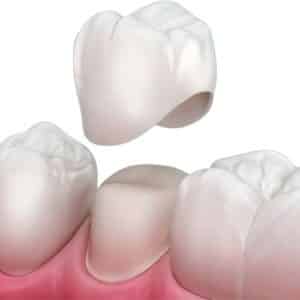
A back baby tooth holds the gap that the adult tooth underneath will eventually need. Lose it early and the neighbouring teeth drift into that gap, which is how crowding and malocclusion arise in the teenage years. Restoring the tooth keeps it doing its job until the adult tooth is ready; removing it means fitting a space maintainer to do the same job artificially, which is a device to look after, adjust and replace.
The timeline is the part parents underestimate. A back baby tooth is not due out at six. The back teeth come out around ages 9 to 12, so a molar restored at five is being asked to last another four to seven years — long enough that "it will fall out anyway" is not a useful argument, and long enough that a child would otherwise carry pain or infection for that period.
Fair questions to ask, because a crown is more than a filling: why a crown rather than a filling on this tooth, how long is it expected to last, what happens if it fails, and what the alternative would cost including the space maintainer. Dental crowns for children — silver or white? covers the material choice, and crowns for children are among the items the Child Dental Benefits Schedule may help with for eligible families — how the schedule operates has the rules.
The tooth came out in a knock rather than naturally. Does the advice change?
Yes, completely — and the first question is not whether to save the tooth but whether anything else was injured.
For a baby tooth the rule is settled and absolute: do not put it back, because as the Better Health Channel says, "this can damage the developing permanent tooth underneath the gum." But still have the child seen. A knock hard enough to remove a tooth is hard enough to push a fragment up into the gum, to damage the adult tooth developing above it, or to have injured the lip, jaw or head.
For an adult tooth, the sequence above applies and the clock is the treatment — the IADT's thresholds turn on extra-oral dry time, not on how long ago the accident happened. A tooth kept wet in milk for an hour is in a far better position than one carried dry in a tissue for twenty minutes.
Two things to bring with you, whichever kind it is: the tooth or any fragments, in milk, and an account of how the injury happened. And treat anything beyond the teeth as the priority — loss of consciousness, vomiting, confusion, a change in the bite, or an injury that will not stop bleeding is a hospital matter rather than a dental one.
Children's Dental Emergencies has the full sequence, and emergency dentistry covers out-of-hours access.
Related reading
- Children's dentistry — the service page
- Baby teething: signs, symptoms and treatments
- Everything you need to know about chalky teeth
- Protecting your child from dental disease
- The role of fissure sealants in children's teeth
- How Smile Solutions helps manage your child's dental anxiety
- How does the Child Dental Benefits Schedule operate?
Practical details
Smile Solutions, Level 1, 220 Collins Street, Manchester Unity Building, Melbourne VIC 3000 — getting here. Phone 13 13 96, contact us, or theteam@smilesolutions.com.au. Monday–Friday 8.00am–6.00pm, Saturday 8.30am–1.30pm, Sunday by appointment. The clinical team is listed by name.
Related: Children's Dental Emergencies, First Visit to the Dentist, Paediatric Dentists, When do babies start teething, and what helps?, Life as the Smile Solutions Tooth Fairy.
Registration for any practitioner can be verified free on the AHPRA public register at ahpra.gov.au.
Published 1 December 2018. General information only — it is not a diagnosis, a treatment plan or a promise of any particular clinical outcome, and it does not replace advice from your treating practitioner. The timing of tooth loss varies widely between children. A loose tooth following trauma, or accompanied by swelling, pain or fever, should be examined rather than managed at home. Mouthguard and injury-risk positions above are attributed to the Australian Dental Association's policy on the prevention and management of oral injuries and to its consumer site teeth.org.au.
Smile Solutions trades under ABN 28 193 514 103.
Images on This Page
-
https://www.facebook.com/tr?id=800557773428361&ev=PageView&noscript=1
(no alt text)
-
https://www.smilesolutions.com.au/wp-content/uploads/2025/10/calendar_month.svg
(no alt text)
-
https://www.smilesolutions.com.au/wp-content/themes/arcadian-wordpress-theme/assets/images/smile_solutions_logo_white.png
Smile Solutions Logo
-
https://www.smilesolutions.com.au/wp-content/themes/arcadian-wordpress-theme/assets/images/smile_solutions_logo_purple.png
Smile Solutions Logo
-
https://www.smilesolutions.com.au/wp-content/uploads/2023/11/SS-Tooth-1-1-150x150.png
Smile Solutions
-
https://www.smilesolutions.com.au/wp-content/uploads/2018/12/child-loose-tooth.jpg
child loose tooth
-
https://www.smilesolutions.com.au/wp-content/uploads/2025/09/Root-Canal-2-300x217.jpg
Root Canal
-
https://www.smilesolutions.com.au/wp-content/uploads/2026/08/Mouth-Breathing-300x270.jpg
Mouth Breathing
-
https://www.smilesolutions.com.au/wp-content/uploads/2025/09/Dental-Crown-at-Smile-Solutions-300x300.jpg
Dental Crown at Smile Solutions
-
https://www.smilesolutions.com.au/wp-content/themes/arcadian-wordpress-theme/assets/images/family_owned_bussiness.png
Family Owned Business
-
https://www.smilesolutions.com.au/wp-content/themes/arcadian-wordpress-theme/assets/icons/icon--phone.svg
Smile Solutions Contact
-
https://www.facebook.com/tr? id=800557773428361&ev=PageView&noscript=1
(no alt text)
-
https://bat.bing.com/action/0?ti=25148060&tm=gtm002&Ver=2&mid=0fc606c8-8c4f-4d3e-bcaa-e9fdb38a1218&bo=1&sid=6a157a30ab2611f180b579d69ba2d7bb&vid=6a15d1c0ab2611f194190b5daf974326&vids=1&msclkid=N&pi=918639831&lg=en-US&sw=800&sh=600&sc=24&nwd=1&tl=Should%20I%20pull%20out%20my%20child%E2%80%99s%20loose%20tooth%3F%20-%20Smile%20Solutions&p=https%3A%2F%2Fwww.smilesolutions.com.au%2Fdental-articles%2Farticle%2Fchilds-loose-tooth%2F&r=&evt=pageLoad&sv=2&cdb=AQAQ&rn=257816
(no alt text)