Managing your child's dental anxiety
Why children find it stressful
Being asked to sit still — often tipped back in a big chair — with a bright light in their eyes and someone poking around in their mouth can rattle even the calmest child.
Children who have had unpleasant dental experiences before, or who know they have a dental problem, are especially likely to be anxious. Combating dental anxiety in children sets out the five documented sources of that anxiety; children's dentistry is the service page.
What you can do
Start before there is a problem
An excellent way to minimise anxiety is to begin regular visits before something like a cavity develops.
The benefit is twofold:
- Your child gets into the routine of seeing the dentist while young, and possibly less nervous
- Staying on top of potential problems reduces the chance of needing extensive treatment later — protecting your child from dental disease, the role of fissure sealants and preventing dental decay cover how
A first visit that involves a look and a count is a very different introduction from a first visit that involves treatment. When should a child first visit the dentist? answers the timing question.
Come in beforehand
You can bring your child in to get acquainted before the day of the appointment. Your child's first visit to the dentist describes what that appointment involves, and getting here helps you plan the trip so you are not arriving in a rush.
A dental visit can be sensory overload. Visiting first lets your child acclimatise and come back another day knowing what to expect.
You can also take them along to a parent's or older sibling's check-up. And if you cannot come in beforehand, the Tooth Fairy at Smile Solutions can show you around virtually — life as the Smile Solutions tooth fairy.
Manage your own fear
If you dread the dentist, your child will pick up on it. If that describes you, dental anxiety sets out what is available for adults.
Also run interference if siblings or friends are telling scary dentist stories. Two of the common ones have straightforward answers: how safe are dental x-rays? and why do I bite my cheek after a filling?, which explains the strange numb feeling children often find more alarming than the treatment.
The words to avoid
This is the most concrete piece of advice here, and it is easy to get wrong:
Do not use the words needles, injections or drills.
And do not promise that it will not hurt. The intention is reassurance, but your child will focus on the word hurt. Check-ups are generally pain-free, so avoid the concept entirely rather than trying to negate it.
Role play
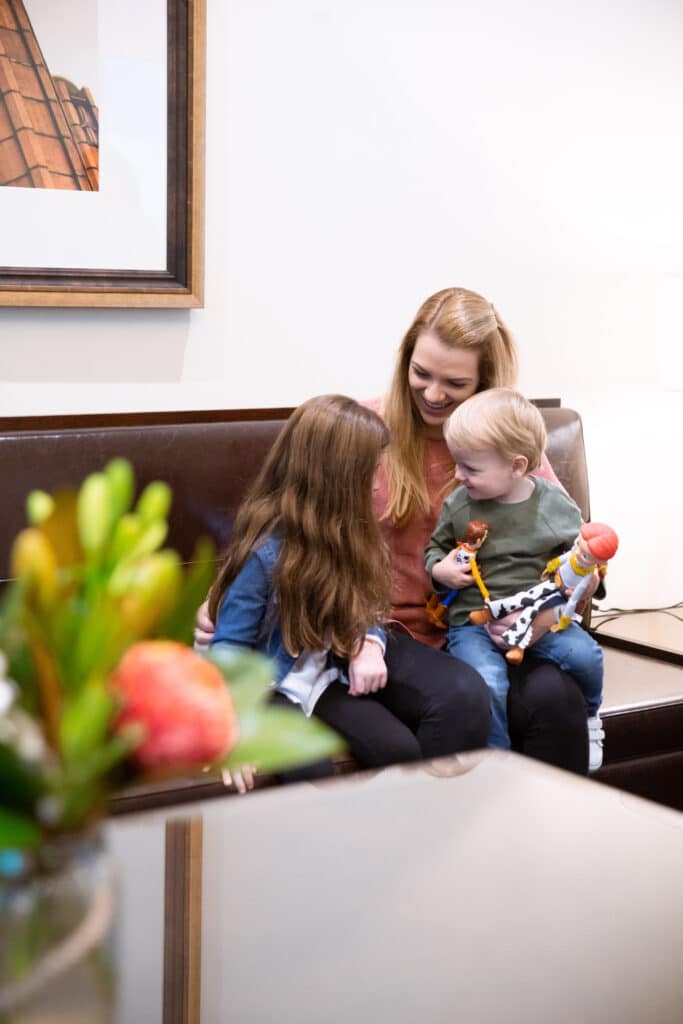
Set up a pretend dentist with your child's dolls and stuffed toys. It is a good way to spend time together and it soothes unwarranted fears before they attach to a real appointment.
Ask if you would like plastic mouth mirrors, gloves and masks as props.
Let your child bring whatever comforts them — a stuffed toy, a blanket, a fidget toy. Oral health care for children with special needs and visiting the dentist: caring for a child with autism cover the fuller set of adjustments.
What the practice does
Tell, show, do
An empathetic approach aimed at building a trusting relationship with each child.
Part of that is a fixed sequence: tell the child what is going to happen, show them, then do it. Nothing occurs that the child has not already seen.
The stop signal
If at any point your child begins to panic, feels anxious, or simply wants a break to spit and rinse, they are given the opportunity to stop until they are comfortable again.
Giving a child genuine control over stopping is often what makes it possible for them to continue.
Reducing the sensory load
The number of sensory inputs is kept to a minimum, so the child is not overwhelmed.
Building over time
With routine recall appointments, each visit becomes more predictable. Children become more comfortable, then more confident, and then allow more to be completed.
That progression is the point of early, regular visits.
Distraction and reward
TV screens play child-friendly shows and videos that children can watch from the chair, taking the focus off treatment.
At the end, positive behaviour is reinforced — children get to dig through the prize box.
Happy gas
Some children are compliant but anxious, and need extra help to get through treatment comfortably. Nitrous oxide — laughing or happy gas — may be appropriate.
It is a mild sedative and analgesic gas delivered through a nose piece, and has been used safely in paediatric dentistry for many years.
Before use: your child's medical history is reviewed and fasting instructions are given, because children can sometimes feel nauseous afterwards.
What it feels like: children usually feel happy, floaty, lightheaded, with tingling in the fingers.
The effects begin within minutes of starting the gas, and stop within minutes of stopping it. That rapid offset is what makes it suitable for children — they leave the appointment as they arrived. Sleep dentistry covers the fuller range of sedation options, and what sedation adds to your dental bill is honest about the cost.
General anaesthesia
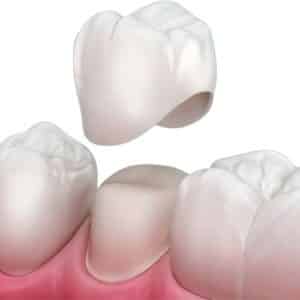
Some children have complex treatment needs and cannot tolerate treatment while awake — especially young children and children with special needs. That includes children needing several crowns or extensive restorative work in one sitting.
In those cases it is safer, and better quality care can be delivered, with the child asleep.
General anaesthesia is performed by highly trained specialist paediatric anaesthetists at private hospitals in Melbourne.
That is the important detail: the anaesthesia is delivered by a medical specialist in a hospital, not in a dental chair.
Common questions
My child already had a frightening appointment. Have we missed our chance?
No — and there is a documented technique for exactly this situation, which is more than can be said for most reassurance offered to parents.
The American Academy of Pediatric Dentistry's best-practice document on behaviour guidance describes memory restructuring: an approach in which "memories associated with a negative or difficult event (eg, first dental visit, local anesthesia, restorative procedure, extraction) are restructured into positive memories using information suggested after the event has taken place". Its four components are visual reminders, positive reinforcement through verbalisation, concrete examples that encode sensory details, and a sense of accomplishment. The document reports that it was used with children who had received local anaesthesia at a first restorative visit, and that they "showed a change in local anesthesia-related fears and behaviors at subsequent treatment visits".
In practice that means talking about the visit afterwards in terms of what your child managed, with something concrete attached — a photo, the sticker, the thing they did well — rather than letting the memory settle around the worst thirty seconds of it.
One balancing point from the research: a bad experience is not the only route into dental fear. Australian researchers analysing national survey data noted that "many highly anxious people can not recall an aversive event which might explain the origin of their dental anxiety". Some children are simply more fearful, and no particular appointment is to blame.
(That behaviour guidance document is a United States publication. Where it differs from Australian regulation, the Dental Board of Australia and ADA positions govern.)
What can we practise at home before the appointment?
There is a recognised ladder for this, called systematic desensitisation, and it is deliberately gradual. As the American Academy of Pediatric Dentistry sets it out, the steps are:
- At home, review information about the practice and what happens there — a preparation book, a video, or the practice website.
- Parents model the actions, for example "opening mouth and touching cheek", and practise with the child at home using a dental mirror.
- An office tour during non-clinical hours, when it is quiet.
- Another visit in the treatment room itself, purely to explore it.
- Then an appointment with the dentist and staff.
Each step is attempted only after the previous one has gone well. The indication given is broad — children who have experienced frightening situations, anxiety, or neurodevelopmental differences such as autism — and no contraindications are listed.
Two smaller things worth doing on the day. The same document describes enhancing control, where the child is given a signal such as raising a hand to pause treatment, and is explicit that "the patient should practice this gesture before treatment is initiated" — a signal explained mid-procedure is worth much less than one rehearsed beforehand. And ask-tell-ask — asking the child how they feel, explaining, then asking again whether they understood — is listed as usable with any child able to hold a conversation.
Is happy gas safe, and are there children who cannot have it?
The Australian Dental Association's policy statement on nitrous oxide sedation describes it as "a commonly used and safe technique administered by dentists for treating anxious patients", and as "one of the most common pharmacological behaviour management techniques" in dentistry. Two details in that policy are worth knowing as a parent.
First, what it is not: the ADA classifies nitrous oxide as minimal sedation, also called anxiolysis — a state in which patients remain conscious and respond purposefully to verbal commands or light touch. It is not "sleep dentistry", and it is not general anaesthesia.
Second, who may give it: "only dentists who have adequate training and experience should administer nitrous oxide", dentists remain the only dental practitioners who may do so independently, and those administering it must comply with the ANZCA guideline on procedural sedation. Other dental practitioners with suitable training may treat under supervision once a dentist has started it.
On when it is unsuitable, the American Academy of Pediatric Dentistry lists contraindications that may include chronic obstructive lung disease; a current cold, cough, tonsillitis, sinusitis or allergies that block nasal breathing; recent middle ear infection; ear, nose or throat surgery within the past 14 days; raised pressure in the eye, and up to three months after retinal surgery; and severe emotional disturbance or drug dependency. The blocked-nose one catches most families out, because the gas is breathed through a nose piece — a child with a heavy cold on the day may need the appointment moved.
That same document notes that nitrous oxide used above 50% concentration, or combined with other sedating medicines, stops being minimal sedation and moves toward moderate or deep sedation, which carries different requirements entirely.
Is treatment under general anaesthesia covered by Medicare or the Child Dental Benefits Schedule?
Usually not, and this is the part families most often discover late.
The ADA's policy statement on general anaesthesia in dentistry is unusually blunt about it. Medicare "provides universal coverage for medically necessary procedures, including many surgeries performed under general anaesthesia for children. However, dental procedures under general anaesthetic are not universally covered by Medicare. For most families, this means that dental treatment under general anaesthetic is either out-of-pocket or covered through private health insurance, leading to financial inequities."
On the scheme most parents ask about, the ADA states that "the inability for patients and families to access funding from the Child Dental Benefit Schedule for treatment under general anaesthesia remains a significant and unreasonable barrier for access", and calls for general anaesthesia to be added to the schedule — which, as at its June 2025 policy version, it is not. The ADA also reports that access to theatre facilities for dental general anaesthesia is "significantly inadequate to patient needs", which is why waiting times can be long.
So there are typically three separate costs — the dental treatment, the anaesthetist, and the hospital or facility fee — and they are billed separately. Ask for all three in writing before agreeing, and ask your health fund about each one, because they are covered differently. The CDBS may still fund the dental items done in a normal chair; see how the schedule operates and confirm current rules with Services Australia. The ADA's own condition on the whole approach is worth repeating: "dental treatment under general anaesthesia should only be undertaken when indicated for appropriate management of the patient."
If we just wait until they are older, is that really so bad?
The Australian data on what happens to fearful people over a lifetime is the honest answer to this, and it is not reassuring.
Analysis of the 2002 National Dental Telephone Interview Survey — 6,112 Australians aged 16 and over — found that 11.9% described themselves as "very" afraid of going to the dentist, with a further 5.2% "quite" afraid. Fear rose with age up to the 46–64 group before declining, so it does not simply resolve on its own.
What it does instead is set a pattern. Among the very afraid, 67.3% said the usual reason for a dental visit was a problem rather than a check-up, against 44.9% of those with no fear; of those, 72.3% said the problem was usually relief of pain. 43.9% had last attended more than two years ago. The researchers gave the resulting pattern a name: 29.2% of the very afraid fitted a profile of delayed visiting, dental problems and symptom-driven treatment seeking, against 11.6% of people with no dental fear — an adjusted odds ratio of 3.33 (95% CI 2.67–4.15).
And it shows up in the mouth. People who were very afraid "had significantly more teeth missing due to dental caries than did people with less extreme dental fear".
None of that is a prediction about your child. It is the reason that a familiarisation visit now, with nothing to treat, is worth more than it looks.
Related reading
- Should your child see a specialist paediatric dentist?
- Baby teething: signs, symptoms and treatments
- Should I pull out my child's loose tooth?
- Everything you need to know about chalky teeth
- How to encourage your child to brush their teeth
- Kids teeth cleaning tips
- Children's dental emergencies
Practical details
Written by a specialist paediatric dentist at Smile Solutions. The full team is listed by name, with registered specialists identified as such.
Call 13 13 96 to discuss treatment under happy gas or general anaesthesia, or to arrange a familiarisation visit before your child's appointment — or contact us.
Smile Solutions, Level 1, 220 Collins Street, Manchester Unity Building, Melbourne VIC 3000. theteam@smilesolutions.com.au. Monday–Friday 8.00am–6.00pm, Saturday 8.30am–1.30pm, Sunday by appointment.
Eligible children may be able to use the Child Dental Benefits Schedule; check with Services Australia, and see how the schedule operates. Published fees are in the price guide. Specialist registration can be verified on the AHPRA register.
Published 26 July 2021. General information only; it does not replace advice from your treating practitioner. Funding rules for Medicare, private health insurance and the Child Dental Benefits Schedule change; confirm the current position before treatment.
Smile Solutions trades under ABN 28 193 514 103.
Images on This Page
-
https://www.facebook.com/tr?id=800557773428361&ev=PageView&noscript=1
(no alt text)
-
https://www.smilesolutions.com.au/wp-content/uploads/2025/10/calendar_month.svg
(no alt text)
-
https://www.smilesolutions.com.au/wp-content/themes/arcadian-wordpress-theme/assets/images/smile_solutions_logo_white.png
Smile Solutions Logo
-
https://www.smilesolutions.com.au/wp-content/themes/arcadian-wordpress-theme/assets/images/smile_solutions_logo_purple.png
Smile Solutions Logo
-
https://www.smilesolutions.com.au/wp-content/uploads/2023/11/SS-Tooth-1-1-150x150.png
Smile Solutions
-
https://www.smilesolutions.com.au/wp-content/uploads/2025/09/Dental-Emergencies-683x1024.jpg
Children's Dental Emergencies at Smile Solutions
-
https://www.smilesolutions.com.au/wp-content/uploads/2025/09/Root-Canal-2-300x217.jpg
Root Canal
-
https://www.smilesolutions.com.au/wp-content/uploads/2026/08/Mouth-Breathing-300x270.jpg
Mouth Breathing
-
https://www.smilesolutions.com.au/wp-content/uploads/2025/09/Dental-Crown-at-Smile-Solutions-300x300.jpg
Dental Crown at Smile Solutions
-
https://www.smilesolutions.com.au/wp-content/themes/arcadian-wordpress-theme/assets/images/family_owned_bussiness.png
Family Owned Business
-
https://www.smilesolutions.com.au/wp-content/themes/arcadian-wordpress-theme/assets/icons/icon--phone.svg
Smile Solutions Contact
-
https://www.facebook.com/tr? id=800557773428361&ev=PageView&noscript=1
(no alt text)
-
https://bat.bing.com/action/0?ti=25148060&tm=gtm002&Ver=2&mid=97faba88-04a0-4637-a571-c4012e71c86d&bo=1&sid=2b9c8d60ab2711f1b600c581d54e0c65&vid=2b9d1a40ab2711f1b716e5c4e0f076e0&vids=1&msclkid=N&pi=918639831&lg=en-US&sw=800&sh=600&sc=24&nwd=1&tl=How%20can%20Smile%20Solutions%20help%20manage%20your%20child%E2%80%99s%20dental%20anxiety%3F%20-%20Smile%20Solutions&p=https%3A%2F%2Fwww.smilesolutions.com.au%2Fdental-articles%2Farticle%2Fhow-can-smile-solutions-help-manage-your-childs-dental-anxiety%2F&r=<=1981&evt=pageLoad&sv=2&cdb=AQAQ&rn=865069
(no alt text)