Sleep dentistry costs: what does sedation add to your bill?
Why this exists
Dental anxiety is real, common, and nothing to be embarrassed about.
Studies suggest between 15 and 20 per cent of Australians experience significant dental anxiety — and for some it is severe enough to avoid the dentist entirely, sometimes for years or decades.
Sleep dentistry — more accurately sedation dentistry — exists to solve that, allowing anxious patients to have the treatment they need without distress that would make it unbearable.
But when you are already anxious, uncertainty about sedation costs on top of treatment costs adds to the problem. So here is the breakdown, for Melbourne in 2026.
Smile Solutions offers the full spectrum of sedation on site — from mild relaxation through to general anaesthesia — which means the sedation can be matched to your needs rather than offered as one option. Sleep Dentistry covers what each option involves clinically; this page is about what each one costs.
Before assuming sedation is the answer, it is worth knowing what else can be adjusted — Dental Anxiety and A comfortable injection is possible set out the techniques that make many appointments manageable without it.
The four levels, and what they cost
1. Happy gas (nitrous oxide)
Additional cost: $80 to $250 per appointment
What it does: a mixture of nitrous oxide and oxygen breathed through a small nose piece, producing relaxation and mild euphoria. You remain fully conscious and can respond to instructions, and recover within minutes of the gas being turned off.
Best for: mild anxiety, taking the edge off, children, short procedures.
Recovery: immediate. You can drive yourself home.
2. Oral sedation (tablet-based)
Additional cost: $150 to $400 per appointment
What it does: a sedative medication — a prescription medicine, chosen and supervised by the practitioner treating you — taken 30 to 60 minutes before your appointment. Produces moderate relaxation and drowsiness, and you may not remember much of the procedure.
Best for: moderate anxiety, significant relaxation without an IV, procedures of one to two hours.
Recovery: several hours. You cannot drive, will need someone to take you home, and should rest for the day.
3. IV sedation (twilight sedation)
Additional cost: $500 to $1,500 per session
What it does: sedative medication given directly into a vein, producing deep relaxation — you drift in and out of a light sleep-like state, and most patients remember little or nothing. The level can be precisely adjusted throughout treatment, which is its main advantage over oral sedation.
Best for: significant anxiety, longer or complex procedures, patients who want to be deeply sedated but not unconscious, multiple treatments in one session.
Recovery: two to four hours supervised, then rest at home for the day. No driving for 24 hours. Someone must accompany you.
4. General anaesthesia
Additional cost: $1,500 to $6,000+ per session
What it does: you are completely unconscious, maintained by a specialist anaesthetist — the same anaesthesia used for hospital surgery.
Best for: extreme dental phobia, very complex or lengthy procedures, patients who cannot tolerate treatment under any conscious sedation, and patients with certain medical conditions or special needs.
Recovery: several hours supervised. A responsible adult must take you home and stay with you. Rest for 24 to 48 hours.
General anaesthesia may be given in a hospital or accredited day surgery, which adds facility fees, or in a dental practice with the appropriate accreditation and equipment.
Why IV sedation and general anaesthesia vary so widely
Duration. Sedation is charged on the time the anaesthetist or sedationist is with you. A 45-minute procedure costs less than a three-hour rehabilitation. Most IV sessions run one to three hours.
Who administers it. Either a specialist anaesthetist — a medical doctor with additional years of anaesthesia training — or a dentist with sedation qualifications. Specialist anaesthetists typically charge more.
Facility fees. For general anaesthesia in a hospital or day surgery: $500 to $2,000, covering theatre, nursing staff, monitoring equipment and recovery room.
Monitoring. Continuous monitoring of heart rate, blood pressure and oxygen saturation is essential, and the equipment and trained staff are reflected in the fee.
Pre-operative assessment. For general anaesthesia this is usually required — blood tests, an ECG and a consultation with the anaesthetist — and is typically included in the overall fee.
Combining treatments in one session
A significant advantage of sedation: patients can often have work done that would otherwise need three or four appointments.
That reduces the number of times you face the chair, and can save money overall by reducing the number of sedation sessions.
| Combination | Treatment | Sedation | Total |
|---|---|---|---|
| All four wisdom teeth (surgical) + IV sedation | $1,600–$3,200 | $800–$1,200 | $2,400–$4,400 |
| Implant placement (fixture only) + IV sedation | $3,000–$6,000 | $500–$1,000 | $3,500–$7,000 |
| Multiple fillings and a crown + oral sedation | $1,500–$3,000 | $150–$400 | $1,650–$3,400 |
| Full mouth rehabilitation + GA (day surgery) | $10,000–$30,000+ | $2,000–$3,500 | $12,000–$33,500+ |
| Check-up and clean + happy gas | $250–$450 | $80–$200 | $330–$650 |
All figures indicative, not quotes. The wisdom-teeth figures are set out in full on How much does wisdom teeth removal cost in Melbourne?, and full-mouth reconstruction is Complex Dentistry territory — see also Prosthodontists.
Health fund coverage
Happy gas — sometimes partially covered under general dental as an anaesthetic item. Typical contribution: $20 to $80.
Oral sedation — rarely covered specifically, though the dental treatment performed under it is covered as normal. The medication itself may be covered under pharmaceutical benefits.
IV sedation — some extras policies cover conscious sedation as a dental item. Typical contribution: $100 to $400. Check your policy for the relevant sedation item numbers.
General anaesthesia — this is the one that matters most:
- The anaesthetist and facility fees are typically claimed under hospital cover, not extras
- You need hospital cover that includes dental or oral surgery as a covered procedure
- The dental treatment itself is claimed under extras as usual
- With appropriate hospital cover, out-of-pocket costs for anaesthesia and facility may be modest
Always check your specific policy before proceeding. The difference between having and not having appropriate cover for general anaesthesia can be several thousand dollars.
For children, one exclusion is worth knowing in advance: the Child Dental Benefits Schedule pays nothing toward treatment in hospital or under general anaesthetic, even for an otherwise eligible child. That is the gap families most often discover late. See Paediatric Dentists and Children's Dentistry.
Who benefits
Sedation is not only for anxious patients. It is genuinely useful for:
- Dental phobia — where fear prevents treatment the patient knows they need
- A strong gag reflex, which can make treatment very difficult otherwise
- Complex or lengthy procedures — staying still and comfortable for two to three hours is hard
- Multiple treatments in one session — catching up on deferred work in one sedated visit rather than many stressful ones
- Patients with special needs — physical or cognitive conditions that make conventional treatment difficult
- Children who cannot cooperate with conventional techniques — see Combating dental anxiety in children
- A traumatic dental history, where past experiences make even routine visits stressful — see Can I ease my anxiety about visiting the dentist?
Choosing the level
| Happy gas | Oral | IV | General anaesthesia | |
|---|---|---|---|---|
| Anxiety level | Mild | Moderate | Significant | Severe |
| Procedure length | Under 1 hour | 1–2 hours | 1–3 hours | Long or complex |
| Memory of procedure | Yes | Partial | Little to none | None |
| Recovery | Minutes | Several hours | 2–4 hours | 24–48 hours |
| Can drive after | Yes | No | No | No |
| Adjustable during treatment | Yes | No | Yes | Yes |
| Escort home required | No | Yes | Yes | Yes |
Two rows are worth reading carefully. Oral sedation cannot be adjusted once the tablet is taken — if it is not enough, it is not enough. IV sedation can be titrated throughout, which is why it suits unpredictable or longer treatment.
The right option depends on your anxiety level, the procedure, your medical history and your preferences, and is discussed at your initial consultation.
Every level carries its own risks, and they rise with the depth of sedation. Those should be explained to you, and your medical history taken properly, before you consent — that conversation is part of the process, not a formality.
The cost of not being treated
For patients avoiding the dentist through anxiety, the financial cost of avoidance usually exceeds the cost of sedation.
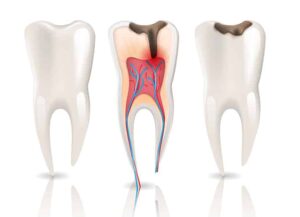
A cavity that could have been filled for around $250 becomes a root canal at $1,500 to $2,500.
A tooth that could have been saved with a crown becomes an extraction and implant at $5,000 to $7,000.
Set against that, $500 to $1,500 for IV sedation is modest — and it buys treatment at the stage where it is simpler, less invasive and less expensive.
Payment options
- Health fund claims processed on the spot for both sedation and treatment
- Payment plan options covering the combined cost. The deposit, establishment fee, term and any default interest depend on the provider and the amount financed, and are set out in writing before you commit — ask what the establishment fee is in dollars, since "interest free" beside an unquantified fee tells you little about the total. The plans currently offered are on Payment Plans, and Patient payment plans explains what to check in the terms.
- Hospital cover utilisation for general anaesthesia cases
- Treatment consolidation — combining procedures into fewer sedated sessions, reducing overall sedation cost
Common questions
"Sleep dentistry" sounds like being put to sleep. Is that what it actually is?
Usually not, and the gap between the marketing word and the clinical reality is worth closing before you agree to anything. "Sleep dentistry", "twilight sedation" and "happy gas" are consumer terms. They do not appear in the Australian Dental Association's Policy Statement 6.17 on conscious sedation, which instead defines four distinct levels:
- Minimal sedation — "a drug-induced state of diminished anxiety, during which patients are conscious and respond purposefully to verbal commands or light tactile stimulation", using a single low dose oral medication or inhaled gases.
- Moderate sedation — "a drug-induced state of depressed consciousness during which patients retain the ability to respond purposefully to verbal commands and tactile stimulation". The ADA says this level "includes the use of intravenous sedation".
- Deep sedation — patients "are not easily roused and may respond only to noxious stimulation".
- General anaesthesia — "a drug-induced state of controlled unconsciousness accompanied by a partial or complete loss of protective reflexes".
Only the last of those is being asleep in the ordinary sense. The ADA uses "conscious sedation" as an umbrella term covering "a spectrum of drug-induced states that range from minimal sedation to deep sedation" — so the phrase does not tell you how deeply you will be sedated either.
What to do with that: ask which of the four levels is being proposed, by name, and match it to the cost row above. The difference between minimal and moderate sedation on this page is several hundred dollars, a driving restriction and an escort home.
Who is actually allowed to sedate me, and can I check it before I book?
Yes, and this is one of the few things about dentistry you can verify yourself in about two minutes.
The Dental Board of Australia's position is unambiguous: "Only dentists, including dental specialists, whose registration is endorsed for conscious sedation can use this technique in their practice." An endorsement is not a marketing description — it is a formal notation on a practitioner's registration, and it appears on their entry in the AHPRA public register of practitioners. Search the practitioner's name and look for the endorsement on the record.
Two further requirements sit behind that notation:
- The ADA's policy states that someone seeking recognition as an endorsed conscious sedation dental practitioner "should have completed a mandatory two-year period as a dentist in general practice", and that endorsed dentists may use moderate sedation techniques while dentists with sufficient training and experience may use minimal sedation.
- The Board requires endorsed dentists to "complete an approved competency based course in dental sedation and medical emergencies before applying to renew their registration" — so the emergency training is a recurring obligation, not a one-off qualification.
General anaesthesia is a different matter again: it is administered by a medical practitioner, and the same public register carries medical registrations.
Is sedation safe? Nobody has actually said.
No responsible source will tell you it is risk-free, and you should be wary of any page that does. The ADA's own policy statement puts it in one sentence: "Both general anaesthesia and conscious sedation procedures encompass risk." The Association's position is that sedation should remain available because it relieves anxiety and pain, and that "patient safety should be the prime consideration" in how it is regulated — not that it carries no risk.
What reduces that risk is structural rather than reassuring: the endorsement and recurring emergency-training requirements above, continuous monitoring of heart rate, blood pressure and oxygen saturation, and an accurate medical history.
The history is the part you control. Tell them about every medicine and supplement you take, any diagnosed or suspected sleep apnoea or snoring, heart or lung conditions, pregnancy, recreational drug or alcohol use, and any previous reaction of yours or a close relative's to an anaesthetic. Risk rises with the depth of sedation, so a level you do not need is not a free upgrade.
If I am going to be sedated anyway, why not just have a general anaesthetic and know nothing about it?
Because the two are not interchangeable, and the cost difference on this page is not arbitrary. The ADA's stated reason for keeping conscious sedation available is that it "provides access to care at a lower cost-of-service than general anaesthesia, which can facilitate better access to care" — the four rows above put roughly a thousand to three thousand dollars between IV sedation and a general anaesthetic once facility fees are counted, plus a longer recovery and a pre-operative work-up.
But the reverse is equally true and less often said. The same policy states that "availability of conscious sedation services cannot replace the need for access to general anaesthesia services in hospitals for dental purposes", and calls on governments and private health funds to fund those hospital services adequately. For some patients — very young children, some people with disability, severe phobia, or medical conditions that make conscious sedation unsuitable — hospital general anaesthesia is the appropriate answer and not an indulgence.
Practical resolution: if you hold hospital cover that includes dental or oral surgery, ask for the general anaesthetic pathway to be costed as well, because your out-of-pocket position can invert. If you do not, and the procedure is short, the conscious sedation route is usually the cheaper one. For a child, check the exclusion noted above first — the Child Dental Benefits Schedule pays nothing toward treatment in hospital or under general anaesthetic.
Where to go next
- What each sedation option involves — Sleep Dentistry
- Managing fear without sedation — Dental Anxiety
- Wisdom teeth, the most common sedated procedure — Wisdom Teeth, Oral and Maxillofacial Surgeons
- For a child — Paediatric Dentists, Child Dental Benefits Schedule
- Paying for it — Payment Plans
Practical details
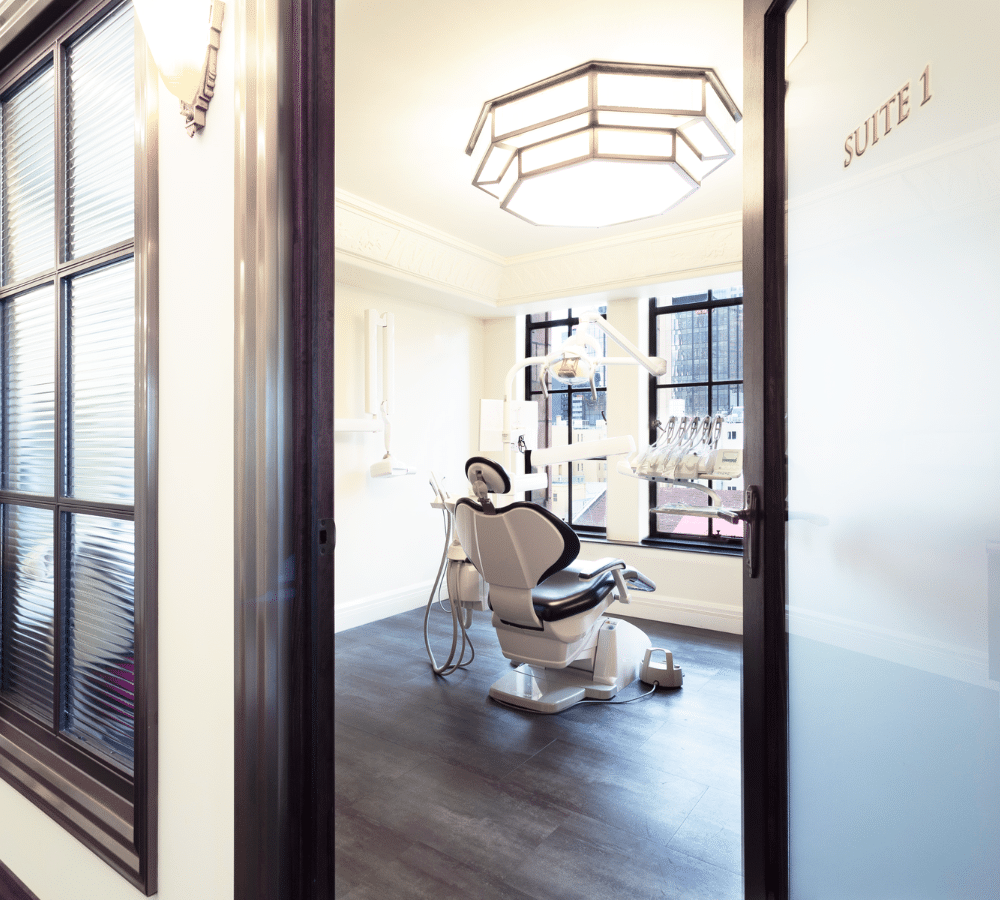
We offer every level of sedation on site at the Manchester Unity Building, and work with experienced anaesthetists for IV sedation and general anaesthesia cases.
Smile Solutions, Level 1, 220 Collins Street, Manchester Unity Building, Melbourne VIC 3000. Phone 13 13 96, or theteam@smilesolutions.com.au. Monday–Friday 8.00am–6.00pm, Saturday 8.30am–1.30pm, Sunday by appointment. Full details on Contact Us.
Specialist registration can be verified on the AHPRA register, or by calling 1300 419 495.
Published 28 July 2026. All figures are indicative Melbourne ranges at that date, not a quote. Sedation and anaesthesia carry risks that must be discussed with the practitioner administering them; suitability depends on your medical history. Any medicine mentioned here is a matter for your treating practitioner to decide. Health fund and Medicare rules are set by others and change; confirm current entitlements directly. General information only; it does not replace advice from your treating practitioner.
Smile Solutions trades under ABN 28 193 514 103.
Images on This Page
-
https://www.facebook.com/tr?id=800557773428361&ev=PageView&noscript=1
(no alt text)
-
https://www.smilesolutions.com.au/wp-content/uploads/2025/10/calendar_month.svg
(no alt text)
-
https://www.smilesolutions.com.au/wp-content/themes/arcadian-wordpress-theme/assets/images/smile_solutions_logo_white.png
Smile Solutions Logo
-
https://www.smilesolutions.com.au/wp-content/themes/arcadian-wordpress-theme/assets/images/smile_solutions_logo_purple.png
Smile Solutions Logo
-
https://www.smilesolutions.com.au/wp-content/uploads/2023/11/SS-Tooth-1-1-150x150.png
Smile Solutions
-
https://www.smilesolutions.com.au/wp-content/uploads/2025/09/Smile-Solutions-Level-10.png
Smile Solutions Level 10
-
https://www.smilesolutions.com.au/wp-content/uploads/2025/09/Root-Canal-2-300x217.jpg
Root Canal
-
https://www.smilesolutions.com.au/wp-content/uploads/2026/08/Mouth-Breathing-300x270.jpg
Mouth Breathing
-
https://www.smilesolutions.com.au/wp-content/uploads/2025/09/Dental-Crown-at-Smile-Solutions-300x300.jpg
Dental Crown at Smile Solutions
-
https://www.smilesolutions.com.au/wp-content/themes/arcadian-wordpress-theme/assets/images/family_owned_bussiness.png
Family Owned Business
-
https://www.smilesolutions.com.au/wp-content/themes/arcadian-wordpress-theme/assets/icons/icon--phone.svg
Smile Solutions Contact
-
https://www.facebook.com/tr? id=800557773428361&ev=PageView&noscript=1
(no alt text)