How can I ease my anxiety about visiting the dentist?
Start by knowing two things. You are not unusual — dental anxiety is one of the most common specific fears there is, and practices see it every day. And the person treating you may understand it better than you expect. Dental anxiety is the service page.
Why this practice takes it seriously
At the age of 11, Dr Kia Pajouhesh — now Smile Solutions' managing director — underwent root canal treatment without anaesthetic.
The dental assistant physically held him down while his mother stood in the room, unable to stop it. The dentist perforated the tooth in three places. He says he still remembers every sensation.
He spent his teenage years severely dentist-phobic. Then he chose dentistry as a career anyway — to confront it, and to make sure the decisions he made in his own practice meant no child or adult went through what he had.
That is the origin of the anxiety-management approach here. It is not a marketing position.
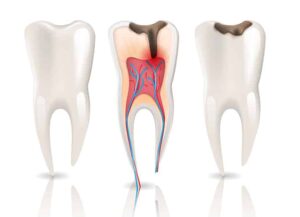
If root canal treatment is specifically what you are dreading, it is worth reading what it actually involves now: root canal, everything you need to know about root canal treatment and endodontist vs dentist for root canal.
Four things that genuinely help
1. Tell someone before you arrive
Share your fears with your dentist, specialist or hygienist — or with reception when you make the appointment. Contact us.
This is the highest-value step and the one most people skip. Expressing your concerns lets the clinician adapt the treatment to you: more time, more explanation, agreed stop signals, a slower pace. They may also recommend sleep dentistry if that suits your situation better — sleep dentistry, and sleep dentistry costs: what does sedation add to your dental bill? for what it changes financially.
Saying nothing means being treated as though you have no anxiety at all. How important is communication in dentistry? and 5 questions you’ve always wanted to ask your dentist are useful if you are not sure how to start the conversation.
Be specific if you can. “I'm nervous” is useful; “it's the needle”, “it's the sound”, “it's not being able to swallow”, or “it's not knowing what's happening” is far more useful, because each has a different answer. If it is the needle, how do you give a virtually pain-free injection? describes what is done differently now.
2. Breathe deliberately
Focus on breathing regularly and slowly during the appointment.
When you are nervous you tend to hold your breath without noticing. That lowers oxygen levels and feeds the feeling of panic — a physiological loop, not a psychological weakness. Slow, regular breathing breaks it.
A specific technique that works in the chair: breathe in through the nose for four counts, out for six. The longer exhale is the part that matters. Nobody watching will notice you doing it. (If breathing through the nose is difficult for you generally, that is worth raising in its own right — mouth breathing.)
3. Block the sound
If the sound of the drill is the trigger — and for a lot of people it is the sound rather than the sensation — bring headphones and music.
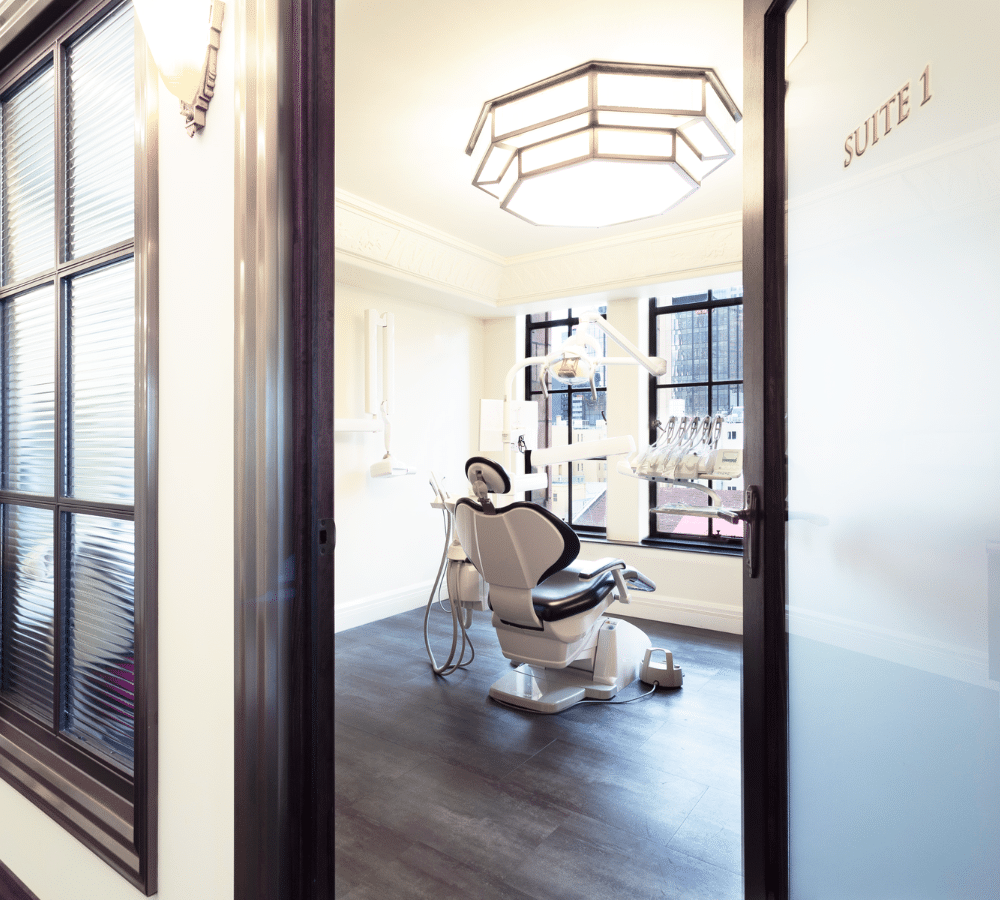
Smile Solutions also has digital screens and DVD players in each treatment room, with a choice of movies and music, which for many patients is enough to lose track of the surroundings entirely. Our technology covers what else is in the room.
4. Skip the coffee
Avoid caffeine before your appointment. It raises your heart rate, and a raised heart rate is indistinguishable from anxiety once you are in the chair. You will feel more anxious than you actually are.
Six more that are worth knowing
Agree a stop signal. A raised hand means stop, immediately, no negotiation. Ask for it at the start. Knowing you can stop is often enough that you never need to — much of dental anxiety is about loss of control rather than pain.
Book the right time of day. First appointment in the morning means less time to dread it. Some people prefer the end of the day so they are not anxious at work. Either is fine; drifting into an appointment mid-afternoon after six hours of anticipation is the worst option.
Start with something small. A first appointment can be a conversation and a look, with no treatment at all. For patients whose anxiety is severe enough that they struggle to get through the door, we offer a consultation in a room with no dental chair and no equipment. Understanding your treatment explains how a plan and a written quotation follow from that, and published fees are in the price guide.
Bring someone. Support people are welcome at appointments — partner, parent, friend.
Ask for narration, or ask for silence. Some people are calmed by being told exactly what is happening; others find it worse. Both are reasonable, and your clinician cannot guess which you are. What makes a truly great dentist? is largely about this.
Do not go alone with the problem for years. The most common pattern is avoidance leading to a bigger problem leading to more fear. Breaking it early is far easier — how often should I go to the dentist?, dental cleans and hygienists and the stages of dental decay show how much cheaper and smaller early treatment is. If something is already urgent, emergency dentistry and what is considered a dental emergency?.
What else is available
If the four steps above are not enough, there is a genuine ladder of options, and none of them is a failure:
- Computer-controlled anaesthetic delivery — DentaPen and the STA Wand deliver anaesthetic at a controlled rate and pressure. Much of the discomfort of an injection comes from speed and pressure rather than the needle.
- Laser dentistry, which can treat some small cavities without local anaesthetic at all — see what is laser dentistry? and laser used in dentistry.
- Nitrous oxide (happy gas) — mild relaxation, you stay awake and responsive, and it wears off within minutes of the mask coming off.
- Oral sedation — medication taken before the appointment. You must not drive, and you need someone to take you home.
- IV sedation and general anaesthesia, administered by a board-registered specialist anaesthetist — see dentists and registered specialists.
Sedation and general anaesthesia are medical procedures with real risks, requiring a pre-anaesthetic assessment, strict fasting, and a responsible adult to take you home. They are the right answer for some people and not for others, and that is the anaesthetist's judgement rather than a preference. Sleep Dentistry and Dental Anxiety.
When it is more than nerves
There is a difference between disliking the dentist and dental phobia — avoidance that lasts years, panic attacks at the thought of an appointment, cancelling repeatedly, or lying awake for nights beforehand.
If that is closer to your experience, a psychologist can help, and the evidence for it is good. Cognitive behavioural therapy for dental phobia works, often in a small number of sessions, and it works best alongside dental care rather than instead of it. Your GP can refer you.
That combination — psychological support plus a practice willing to go slowly — resolves more long-standing dental avoidance than either alone.
Anxiety also shows up in the mouth in ways people do not connect to it: clenching and grinding, in particular. See seven ways stress can affect your mouth, TMD and teeth grinding and how can I stop grinding my teeth when I sleep?.
If it is your child who is anxious
The approach is different for children, and it works. Combating dental anxiety in children and how can Smile Solutions help manage your child’s dental anxiety? set out the specific techniques; children’s dentistry and specialist paediatric dentists cover who provides it.
Starting early is the single best protection against an anxious adult later — see when should a child first visit the dentist? and your child’s first visit to the dentist. Where there are additional needs, visiting the dentist: caring for a child with autism and oral health care for children with special needs.
What has changed
If you can identify with feeling anxious about the dentist, it is worth knowing that treatment today has moved a long way from the techniques that created most people's bad memories — including computer-controlled anaesthetic delivery, topical numbing gel before any injection, and far finer needles.
Most adult dental fear traces back to a specific childhood experience. The techniques that caused it are largely no longer in use.
And one reassurance worth stating plainly: nobody who works in dentistry is shocked or judgemental about a long gap or the state of your mouth. They see it constantly. The first appointment after ten years away is almost always just a look and a plan — fix my teeth is written for exactly that starting point, and second opinions and corrective dentistry if a previous experience is what put you off.
Common questions
How common is this really, or am I being ridiculous?
It is common, and it has been measured. A systematic review and meta-analysis published in the Journal of Dentistry in 2021, pooling 31 studies and 72,577 adults, estimated the global prevalence of dental fear and anxiety at 15.3% (95% CI 10.2 to 21.2%), with high dental fear at 12.4% (9.5 to 15.6%) and severe dental fear at 3.3% (0.9 to 7.1%).
Two honest caveats about those numbers. The confidence intervals are wide — severe fear ranges from under 1% to over 7% — so “about 3%” is defensible and a flat “3.3% of adults” is not. And the review's own most striking finding is that the measuring instrument changes the answer more than the population does: estimates of high dental fear ran from 5.5% to 15.7% depending on which questionnaire was used.
The subgroup pattern, which the authors treat as indicative, is that women report it roughly twice as often as men (any dental fear 18.3% against 10%), while age made no significant difference — younger and older adults were close to identical.
So: somewhere between one in seven and one in three adults, depending on how you ask. Not ridiculous, and not rare.
My fear is not really about pain. Does that still count?
Yes, and the list of recognised causes is broader than most people expect. The Victorian Government's own patient information names, among the causes of dental anxiety:
- a traumatic dental experience or other healthcare experience
- previous trauma to the head and neck
- other traumatic experiences, including abuse
- generalised anxiety, depression or post-traumatic stress disorder
- “the view that the head is a personal area and accessing the mouth is an invasion of personal space”
- fear of loss of control
- trust issues
- anxiety associated with other conditions such as agoraphobia, claustrophobia or obsessive compulsive disorder
That list matters because each one has a different practical answer. Loss of control is met with a stop signal and a running commentary you can switch off. Claustrophobia is met with the chair upright, the door open, and no rubber dam until you have agreed to it. A history of trauma may be best met by a shorter first visit with nothing done at all, and by telling the clinician only as much as you want them to know — “I have a history that makes this difficult, please check in with me before each step” is a complete sentence and needs no elaboration.
The same source lists the physical signs it expects to see, which is worth knowing because they are involuntary: sweating, a racing heartbeat or palpitations, low blood pressure and possible fainting, visible distress or crying, and withdrawal — or using humour or aggression to mask anxiety. Nobody in the room will be surprised by any of them.
If I just keep avoiding it, does the fear fade?
The evidence says the opposite, and this is the most useful thing on the page for anyone who has been putting it off for years.
The Victorian Government's statement is blunt: “adults who are anxious about dental care tend to remain anxious throughout life”, while “children who have had bad dental experiences can likely overcome their fear if they are supported during further dental visits”. Avoidance is not a strategy that works itself out.
It also names the mechanism by which it gets worse — “the vicious cycle of dental anxiety”: “avoiding the dentist can result in dental disease getting worse, and a greater need for emergency care or more complex treatment. It can also feed the underlying problem of dental anxiety.” Each year of avoidance makes the eventual appointment longer, more expensive and more invasive, which confirms the fear that caused the avoidance.
There is one further cost that is easy to miss. Routine check-ups are also when the mouth is screened for oral cancer, and the same source is specific about the threshold for concern: “if you notice a mouth ulcer that lasts for longer than 2 weeks, get it checked by a dentist as soon as you can.” That check does not happen if nobody is looking.
The way out of the cycle is deliberately small: book something that is not treatment. A conversation, a look, a plan.
What can I actually ask for in the room, apart from sedation?
More than most people realise, and none of it requires a drug. The Victorian Government's own list of psychological coping techniques for dental anxiety is:
- deep breathing
- meditation
- distraction — music or a device
- guided imagery
- progressive muscle relaxation
- an agreed signal to stop for a break — its example is “raising your left pointer finger or hand”
- a weighted blanket — and its advice is to bring your own
- hypnosis
To which the practical requests worth adding are: the chair a little more upright, a break every ten minutes whether or not you have asked for one, nothing placed on the tray where you can see it, and being told “next I am going to…” before each step rather than afterwards.
The same source also says that “referral to a psychologist can be helpful too. Short, targeted therapies including cognitive behavioural therapy can be very successful.” That is worth pairing with dental care rather than treating as a last resort — and your GP can arrange it.
I want to be asleep for it. What should I know before I ask?
That it is a legitimate option, that it is a medical decision rather than a menu choice, and that the terminology is slipperier than the marketing suggests.
The Australian Dental Association's policy defines a spectrum. Minimal sedation is “a drug-induced state of diminished anxiety” in which you remain responsive; moderate and deep sedation are progressively deeper states of depressed consciousness; and general anaesthesia is “a drug-induced state of controlled unconsciousness”. “Sleep dentistry” and “twilight sedation” are marketing terms that can refer to several points on that spectrum, so it is worth asking which one is actually being proposed.
Three things the ADA and the Victorian Government both flag. “Both general anaesthesia and conscious sedation procedures encompass risk.” “Not all dentists offer treatment under sedation”, and who may provide which level is regulated. And “some pre-existing medical conditions or medications may affect the type of sedation you can have, or may prevent you from having some types of sedation” — which is why the pre-anaesthetic assessment and your full medication list are not a formality.
The practical ones: “you should avoid driving home after having any sedation”, you will need a responsible adult with you, and fasting instructions are strict. Ask for the sedation fee and the dental fee separately in writing, and ask whether the sedation is billed by the dentist or by a separate practitioner — what sedation adds to your dental bill covers that arithmetic.
One last point, made by the ADA in its own policy: sedation “cannot replace the need for access to general anaesthesia” for the patients who genuinely require it. If one option is not available to you, that is a reason to ask about the others rather than to give up.
Related reading
- Dental anxiety — the service page
- Sleep dentistry
- Sleep dentistry costs
- Combating dental anxiety in children
- How do you give a virtually pain-free injection?
- Why do I bite my cheek after a filling?
- General dentistry
Practical details
We offer sleep dentistry options including happy gas, oral sedation, twilight sedation and general anaesthetic, alongside a dedicated approach for anxious patients. Specialist paediatric dentists use tell-show-do communication and other techniques for anxious children. The full team is listed by name.
Smile Solutions, Level 1, 220 Collins Street, Manchester Unity Building, Melbourne VIC 3000 — getting here. Phone 13 13 96, or theteam@smilesolutions.com.au. Monday–Friday 8.00am–6.00pm, Saturday 8.30am–1.30pm, Sunday by appointment.
When you book, say that you are anxious. It changes how the appointment is set up.
Related: Dental Anxiety, Sleep Dentistry, Paediatric Dentists, Laser Dentistry, Why do I bite my cheek after a filling?.
Registration for any practitioner, including specialist anaesthetists, can be verified free on the AHPRA public register at ahpra.gov.au.
Published 4 May 2015. General information only — it is not a diagnosis, a treatment plan or a promise of any particular clinical outcome, and it does not replace advice from your treating practitioner. Sedation and general anaesthesia are medical procedures that carry risks, and whether any is suitable for you can only be determined by a pre-anaesthetic assessment. How well any anxiety-management approach works varies between individuals. If dental fear is part of a broader anxiety condition, your GP or a psychologist can help alongside dental care.
Smile Solutions trades under ABN 28 193 514 103.
Images on This Page
-
https://www.facebook.com/tr?id=800557773428361&ev=PageView&noscript=1
(no alt text)
-
https://www.smilesolutions.com.au/wp-content/uploads/2025/10/calendar_month.svg
(no alt text)
-
https://www.smilesolutions.com.au/wp-content/themes/arcadian-wordpress-theme/assets/images/smile_solutions_logo_white.png
Smile Solutions Logo
-
https://www.smilesolutions.com.au/wp-content/themes/arcadian-wordpress-theme/assets/images/smile_solutions_logo_purple.png
Smile Solutions Logo
-
https://www.smilesolutions.com.au/wp-content/uploads/2023/11/SS-Tooth-1-1-150x150.png
Smile Solutions
-
https://www.smilesolutions.com.au/wp-content/uploads/2025/09/Smile-Solutions-Level-10.png
Smile Solutions Level 10
-
https://www.smilesolutions.com.au/wp-content/uploads/2025/09/Root-Canal-2-300x217.jpg
Root Canal
-
https://www.smilesolutions.com.au/wp-content/uploads/2026/08/Mouth-Breathing-300x270.jpg
Mouth Breathing
-
https://www.smilesolutions.com.au/wp-content/uploads/2025/09/Dental-Crown-at-Smile-Solutions-300x300.jpg
Dental Crown at Smile Solutions
-
https://www.smilesolutions.com.au/wp-content/themes/arcadian-wordpress-theme/assets/images/family_owned_bussiness.png
Family Owned Business
-
https://www.smilesolutions.com.au/wp-content/themes/arcadian-wordpress-theme/assets/icons/icon--phone.svg
Smile Solutions Contact
-
https://www.facebook.com/tr? id=800557773428361&ev=PageView&noscript=1
(no alt text)
-
https://bat.bing.com/action/0?ti=25148060&tm=gtm002&Ver=2&mid=4afd09dd-8cb8-4150-bdd3-2d5ada25ad29&bo=1&sid=d87f7660ab2711f194e0793105e7d4c3&vid=d87f9920ab2711f1958d693ae063fef0&vids=1&msclkid=N&pi=918639831&lg=en-US&sw=800&sh=600&sc=24&nwd=1&tl=How%20can%20I%20ease%20my%20anxiety%20about%20visiting%20the%20dentist%3F%20-%20Smile%20Solutions&p=https%3A%2F%2Fwww.smilesolutions.com.au%2Fdental-articles%2Farticle%2Fcan-ease-anxiety-visiting-the-dentist%2F&r=&evt=pageLoad&sv=2&cdb=AQAQ&rn=929705
(no alt text)