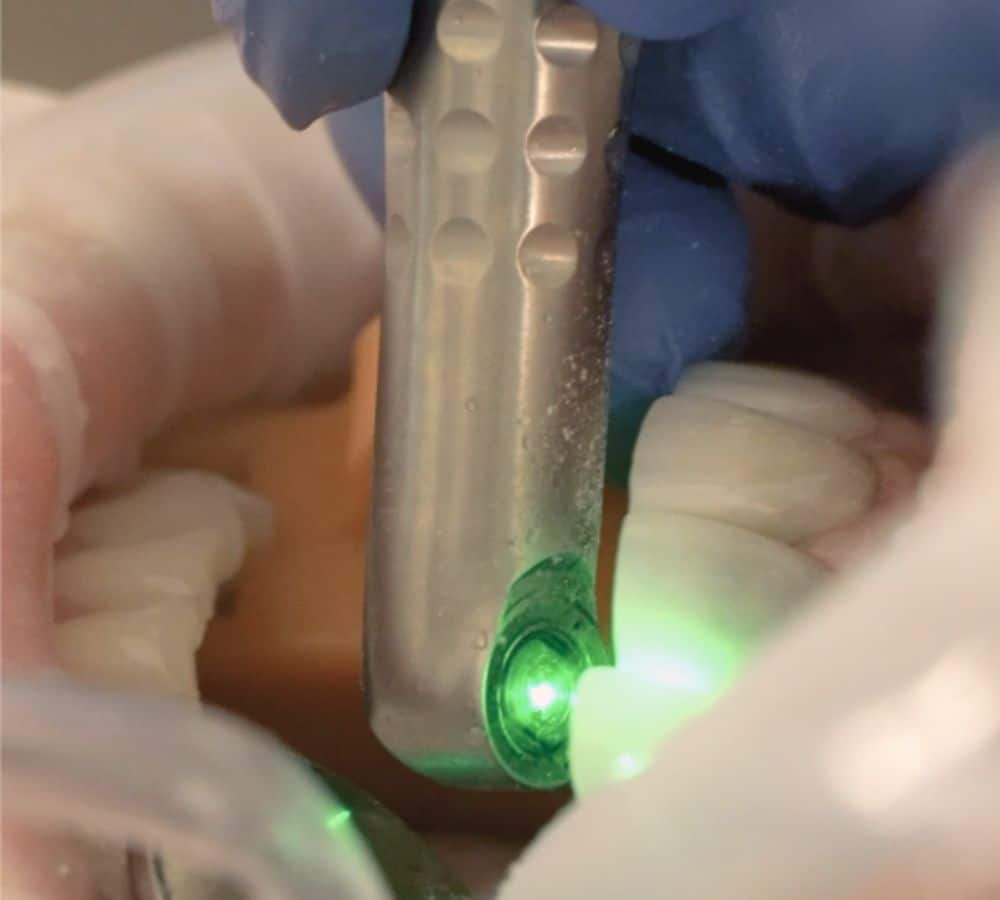
What a laser is, and how it entered the practice
“Laser” is an acronym: light amplification by stimulated emission of radiation.
A specialist periodontist at Smile Solutions writes about using laser in practice since 2004, having gone looking for new tools to improve treatment outcomes. Periodontists are one of the registered specialist groups working in the building — see our periodontists and the wider specialist care team, and how specialist registration works in Australia.
At conferences the applications ranged widely — from something as simple as making an ulcer less uncomfortable, through to tooth preparation for crowns and even endodontic treatment.
This article is about the surgical applications, where the case is strongest — and, importantly, about one application where the case is not made, which is the more useful half. For the general-practice view of what a dental laser does day to day, see laser dentistry and the companion article What is laser dentistry?.
Periodontal surgery
Surgery has two main roles in periodontics:
- Treating complex periodontal disease — the disease process itself is set out in Periodontal (gum) disease and What is gum disease?
- Improving the contour and shape of the gingival tissues — in the smile line, or as an aid to placing a new crown
Surgery is not the first step. Most periodontal disease is managed first with non-surgical debridement — when you need deeper cleaning explains where that line sits, and the hygienist appointment is where it is usually done. Surgery, with or without a laser, is what follows when that has been given a fair run and pockets have not resolved.
Aesthetic gum surgery
Laser used for aesthetic surgery has produced a better end result, and seems to enable quicker and less painful healing. Most patients report little post-operative discomfort the day after the procedure.
The reason for the aesthetic advantage is technical and worth understanding: the laser is used without contacting the tissues directly, which tends to produce a better flow to the smile line, often making it look more natural.
A blade must be placed against tissue and moved through it. A non-contact instrument can follow a curve without the mechanical constraints of a cutting edge — which is exactly what a natural gum margin is. The commonest reason to want that curve reshaped is a gummy smile, where the tooth is a normal length but too little of it is showing. Where gum recontouring is one step inside a larger cosmetic plan, it is usually done before the definitive restorations, because the crown margin has to be made to fit the new gum line rather than the old one.
Within traditional periodontal surgery
Laser in conjunction with conventional periodontal surgery offers three advantages:
- Good access to the root surface
- Tissue remodelling that is less uncomfortable than traditional methods
- An antibacterial effect
Combined, these lead to a better post-surgical outcome.
Note the framing throughout: the laser is always used in conjunction with traditional therapies, because that optimises both. It is an addition to the surgical repertoire, not a replacement for it. That is the same logic that governs the rest of the equipment list — see technology for what is in the building and, more to the point, what each thing is actually for.
Extracting fractured teeth before an implant
This is the application with the clearest mechanical logic.
If an implant is planned after the loss of a tooth, it is imperative to minimise the loss of bone.
Sectioning the roots with laser enables very accurate cuts that cause minimal trauma to surrounding tissues, preserving vital bone.
Why this matters so much: an implant needs bone volume to sit in. Bone lost during a difficult extraction has to be replaced with bone grafting — which adds cost, adds months to the treatment, and is less predictable than bone that was never lost. Preserving bone at the point of extraction is far easier than rebuilding it afterwards.
It also keeps more options open. Where the socket walls survive intact, an immediate implant at the time of extraction may be possible; where they do not, the site has to heal and be rebuilt first. What you need to know about dental implants covers the staging, and the implants page covers the components. The financial side of that difference is not small — grafting is a separate item, so see how much dental implants cost, the more recent Melbourne implant cost breakdown, and the price guide for the practice’s own published ranges.
Frenectomy
A frenectomy removes or loosens a band of muscle tissue connected to the lip, cheek or floor of the mouth.
Traditionally performed with a scalpel, which means suturing, pain and bleeding, with a prolonged healing time.
With a laser it is a very quick procedure, with limited or no bleeding. There is sometimes the feeling of an ulcer in the area for a week afterwards, but this is far less uncomfortable than the traditional surgical procedure.
The honest framing there is worth noting — not “painless”, but less uncomfortable, and specifically for about a week. The same applies to soft-tissue surgery generally: what to expect during recovery from oral surgery is a realistic guide to the first fortnight, and the larger jaw and soft-tissue procedures sit with the oral and maxillofacial surgeons rather than in general practice — what that surgery involves sets out the boundary.
Implant surgery
Two uses:
Marking the starting point. The laser marks the starting point far better than any drill and smooths the ridges cleanly and swiftly. A drill bit tends to skate on a sloped bony surface; a laser mark does not move. Accuracy at that first millimetre is what the rest of the implant protocol is built on, and what makes the difference in implant work is largely a series of small decisions like this one. It matters more, not less, in full-arch work — see All-on-4 dental implants and things to consider when choosing All-on-4.
Peri-implant infection. Where infection is present around an implant, laser is useful in cleaning the implant surface, being very good at eliminating bacteria. Decontaminating a threaded titanium surface is genuinely difficult with mechanical instruments, which cannot reach into the thread pattern without damaging it. Peri-implant disease behaves much like gum disease around a natural tooth, which is why implants are maintained on a hygiene recall rather than left alone once they are in.
Where the laser is not used — and why
This is the most valuable paragraph in the article.
Laser has not been adopted here for the treatment of periodontal disease using a LANAP procedure.
The reasoning, stated plainly: there is no good scientific evidence for it over the traditional process, which has been very successful. So there is no advantage to the patient — it would just increase the cost.
That is the standard worth applying to any technology offered to you. Having the equipment is not a reason to use it. A clinician who can tell you which procedures they do not use their expensive machine for is telling you something useful about how they make decisions on all the others. The same test applies to the operating microscope in endodontics — there the evidence for magnification is strong, which is precisely why it is worth distinguishing one case from the other.
A reasonable question to ask about any laser-assisted treatment you are offered: what does the laser add here, compared with the conventional approach, and what does that cost? Understanding your treatment sets out how a plan is put in writing before anything starts, and if the answer you get does not satisfy you, a second opinion is a normal and reasonable step — not a discourtesy.
Common questions
Is a laser inherently safer than a scalpel or a drill?
No instrument is inherently safe; a laser is a different set of risks rather than an absence of them, and the Australian professional literature is explicit about what those risks are.
The Australian Dental Association's policy on teeth whitening — which deals with lasers because whitening is one of the places they are used — warns that “the incorrect application of heat and other forms of energy during teeth whitening procedures, such as light from a plasma arc lamp or high-power (Class 4) laser may cause nerve damage to the tooth and burns to adjacent soft tissues, and failure to ensure use of the appropriate protective eyewear may also cause irreversible injury.”
Three things in that sentence are worth carrying to any laser-assisted appointment. The damage mechanism is heat, not cutting. It can reach the nerve inside the tooth as well as the gum. And the eye protection is not decorative — an unprotected eye in the beam path is the one injury on that list described as irreversible. If you are offered protective glasses, wear them for the whole procedure, and expect the clinician and assistant to be wearing them too.
The corresponding upside is real and is set out above: non-contact cutting, less bleeding in soft tissue, and accurate sectioning that preserves bone. Both halves are true at once.
Who is allowed to use one, and how do I check?
Dental lasers used surgically are typically Class 4 devices, the highest hazard class, and Australia regulates them accordingly.
The ADA identifies the governing document as AS/NZS 4173:2018, *Safe use of lasers and intense light sources in health care***, which **“specifies requirements for dental practices and the cosmetics industry, including required standards of training.” On who may operate one, the ADA's position is that all registered dental practitioners with appropriate training and competence may undertake procedures using Class 4 lasers, but that Victoria — along with Western Australia, Queensland and Tasmania — requires practitioners to first obtain a licence to do so from the state regulatory authority. So in Melbourne there is a state licence sitting behind the machine as well as the practitioner's registration.
What you can check yourself, free and in about a minute, is the registration: search the clinician's name on AHPRA's public register, which shows current registration status, the division, any conditions, and any specialist registration. The laser licence itself is a state matter rather than something on that register — if it matters to you, ask the practice directly. A practice using this equipment properly will not find the question awkward.
I have seen laser advertised for bad breath and for jaw pain. Does it work for those?
These are the two laser claims most often met outside a surgical context, and in both the independent evidence is much weaker than the advertising.
Bad breath. The FDI World Dental Federation does list laser therapy (Er:YAG, Nd:YAG) and antimicrobial photodynamic therapy among “advanced treatments” for persistent halitosis — but it lists them without any evidence grading and without citations. The body that has actually assessed the question is Cochrane, whose 2019 review Interventions for managing halitosis concluded, in its plain-language summary, “we do not have enough evidence to say which intervention works better to control bad breath,” with certainty rated low to very low. Cochrane did not find laser superior; it found the evidence base too thin to rank anything. For what is actually established on this subject, the reliable ground is mechanical — cleaning, tongue cleaning, and treating gum disease.
Jaw pain and TMD. The largest recent synthesis is a network meta-analysis published in The BMJ in 2023, covering 148 randomised trials, 7,867 patients and 59 interventions for chronic TMD pain. Only eight of those 59 interventions reached high or moderate certainty evidence for pain relief. Laser was not among them; it sits, with splints, injections, TENS and most drugs, at low or very low certainty. What did land in the effective band was unglamorous: usual care — home exercises, self-stretching, reassurance and education — which the analysis treats as a front-line option rather than a fallback.
None of that says a laser cannot help anyone. It says that if a laser is being sold to you for bad breath or for jaw pain, the evidence does not currently support paying a premium for it, and you are entitled to ask what is being relied on.
Is a laser used inside a root canal?
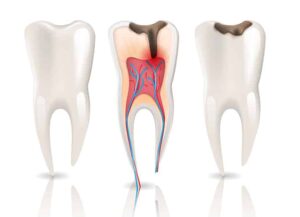
Sometimes, as an adjunct, and the honest description of the evidence is that the laboratory findings run ahead of the clinical ones.
Cleaning a root canal is chemical as much as mechanical: irrigant solutions do a large part of the disinfection, and their limitations have been well described. Reviewing this, the British Dental Journal notes that to overcome those limitations, “activation of the irrigant solutions via manual dynamic agitation with a gutta-percha cone or the use of sonic devices, ultrasonic devices and lasers, has become popular” — and then states the position plainly: “although the limitations of the clinical outcome studies assessing effectiveness don't provide us with strong evidence for their clinical efficacy, lab-based studies continue to support biofilm disruption with their use and so these methods are commonly used in endodontics.”
That is a fair summary of the state of play: good laboratory rationale, weak clinical outcome evidence, widespread use. A laser here is one of several ways of agitating an irrigant, not a separate treatment, and it is not the thing that determines whether root canal treatment succeeds. Everything you need to know about root canal treatment covers what does.
Related reading
- What is laser dentistry?
- Periodontal (gum) disease
- Why would I need to see a dental specialist?
- Complex dental cases: what happens when multiple specialists collaborate
- What do I need to know about dental implants?
- I’ve just had oral surgery. What can I expect during recovery?
- How can I change my smile naturally?
- What’s new in cosmetic dentistry?
- Complex dentistry under one roof
- General dentistry
Sources for the quoted material in Common questions
- Australian Dental Association, Policy Statement 2.2.8 — Teeth Whitening (Bleaching) By Persons other than Dental Practitioners — Class 4 laser hazards, AS/NZS 4173:2018, and the state licensing requirement.
- FDI World Dental Federation, halitosis guidance, and Cochrane Oral Health, Interventions for managing halitosis (CD012213, 2019).
- The BMJ, 2023 — Management of chronic pain secondary to temporomandibular disorders: a systematic review and network meta-analysis of randomised trials.
- British Dental Journal — review of irrigation and irrigant activation in endodontics.
Practical details
Smile Solutions, Level 1, 220 Collins Street, Manchester Unity Building, Melbourne VIC 3000 — see how to find us. Phone 13 13 96, or theteam@smilesolutions.com.au; the contact page has the full details. Monday–Friday 8.00am–6.00pm, Saturday 8.30am–1.30pm, Sunday by appointment. The clinicians who do this work are listed on our team.
Specialist registration can be verified on the AHPRA register, or by calling 1300 419 495.
Published 1 May 2017. Suitability and outcomes vary between individuals; all surgical treatment carries risks that should be discussed with your clinician. General information only; it does not replace advice from your treating practitioner.
Smile Solutions trades under ABN 28 193 514 103.
Images on This Page
-
https://www.facebook.com/tr?id=800557773428361&ev=PageView&noscript=1
(no alt text)
-
https://www.smilesolutions.com.au/wp-content/uploads/2025/10/calendar_month.svg
(no alt text)
-
https://www.smilesolutions.com.au/wp-content/themes/arcadian-wordpress-theme/assets/images/smile_solutions_logo_white.png
Smile Solutions Logo
-
https://www.smilesolutions.com.au/wp-content/themes/arcadian-wordpress-theme/assets/images/smile_solutions_logo_purple.png
Smile Solutions Logo
-
https://www.smilesolutions.com.au/wp-content/uploads/2023/11/SS-Tooth-1-1-150x150.png
Smile Solutions
-
https://www.smilesolutions.com.au/wp-content/uploads/2025/09/Laser-Dentistry-for-Obstructive-Sleep-Apnoea.jpg
Laser treatment
-
https://www.smilesolutions.com.au/wp-content/uploads/2025/09/Root-Canal-2-300x217.jpg
Root Canal
-
https://www.smilesolutions.com.au/wp-content/uploads/2026/08/Mouth-Breathing-300x270.jpg
Mouth Breathing
-
https://www.smilesolutions.com.au/wp-content/uploads/2025/09/Dental-Crown-at-Smile-Solutions-300x300.jpg
Dental Crown at Smile Solutions
-
https://www.smilesolutions.com.au/wp-content/themes/arcadian-wordpress-theme/assets/images/family_owned_bussiness.png
Family Owned Business
-
https://www.smilesolutions.com.au/wp-content/themes/arcadian-wordpress-theme/assets/icons/icon--phone.svg
Smile Solutions Contact
-
https://www.facebook.com/tr? id=800557773428361&ev=PageView&noscript=1
(no alt text)
-
https://bat.bing.com/action/0?ti=25148060&tm=gtm002&Ver=2&mid=93ec79f7-e57c-443a-b5ef-8f31fbb67c2d&bo=1&sid=a431bd00ab2511f188f5f1501395fbd5&vid=a431d580ab2511f1aa7e8fa7fba008fd&vids=1&msclkid=N&pi=918639831&lg=en-US&sw=800&sh=600&sc=24&nwd=1&tl=Laser%20used%20in%20dentistry%20-%20Smile%20Solutions&p=https%3A%2F%2Fwww.smilesolutions.com.au%2Fdental-articles%2Farticle%2Flaser-used-in-dentistry%2F&r=<=2012&evt=pageLoad&sv=2&cdb=AQAQ&rn=241720
(no alt text)