Dental implant costs in Melbourne: what you'll actually pay in 2026
Losing a tooth changes more than your smile. It changes how you eat, how you speak, and often how you feel about yourself.
If you have been researching implant costs, you will have found that the pricing landscape is confusing at best, and deliberately opaque at worst.
Some clinics advertise implants “from $2,999” without clarifying what that includes. Others quote $6,000 or more without explaining why.
The truth is that a dental implant is not a single item with a single price. It is a multi-stage treatment involving surgical placement, a healing period, and a custom-made prosthetic tooth. Each stage has its own cost, and the total depends on factors specific to your mouth.
Here is the full picture — no asterisks, and no “that doesn't include the crown” conversation after treatment has started. For what the treatment itself involves, see Dental Implants.
What you are actually paying for
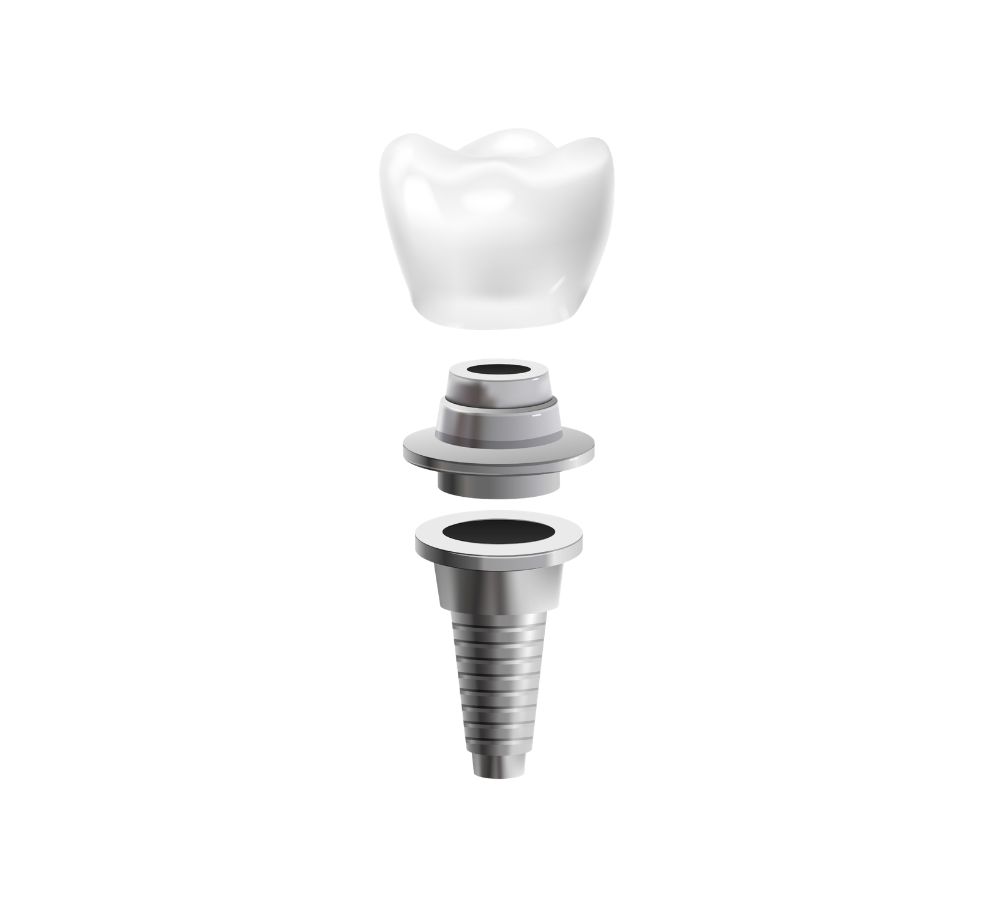
Three components. Clinics quote them differently, which is where most of the confusion comes from.
When a clinic quotes you a price for “an implant”, ask specifically whether it includes all three. The cheapest quotes almost always cover only the fixture.
| Component | What it is | Cost |
|---|---|---|
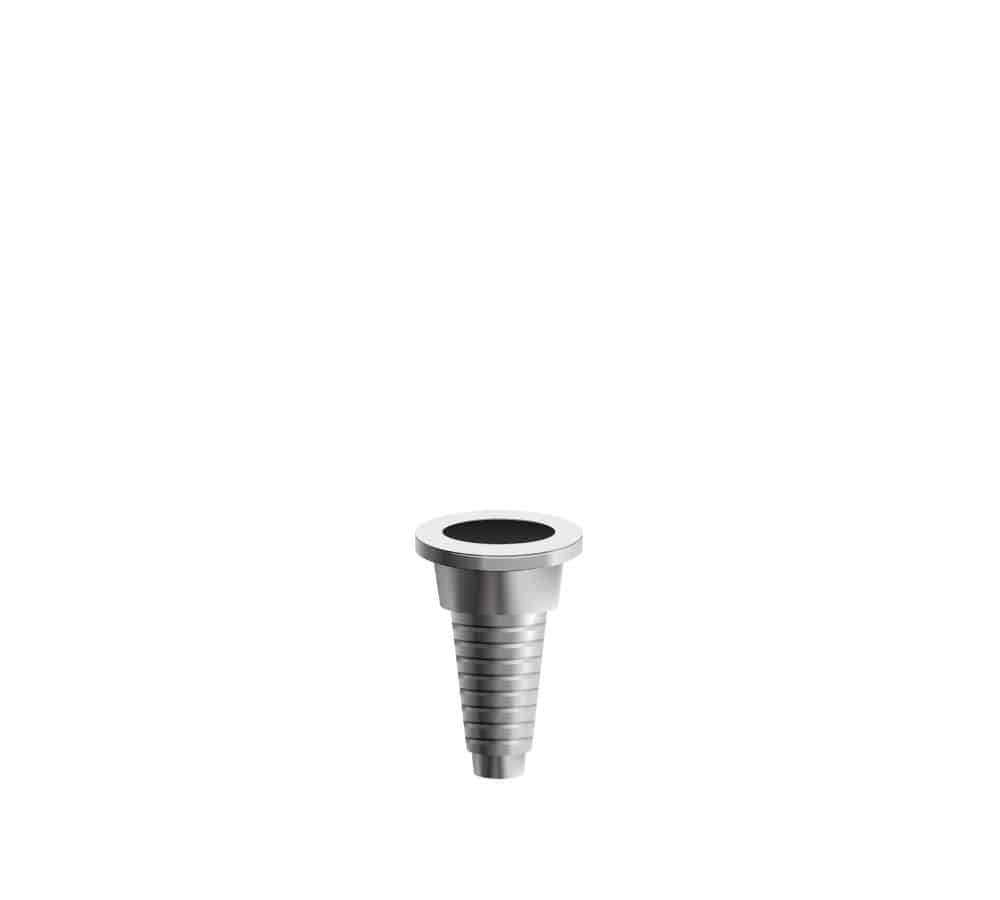
| The implant fixture | A titanium or zirconia screw surgically placed in the jawbone — the artificial tooth root | $2,500 – $4,500 |
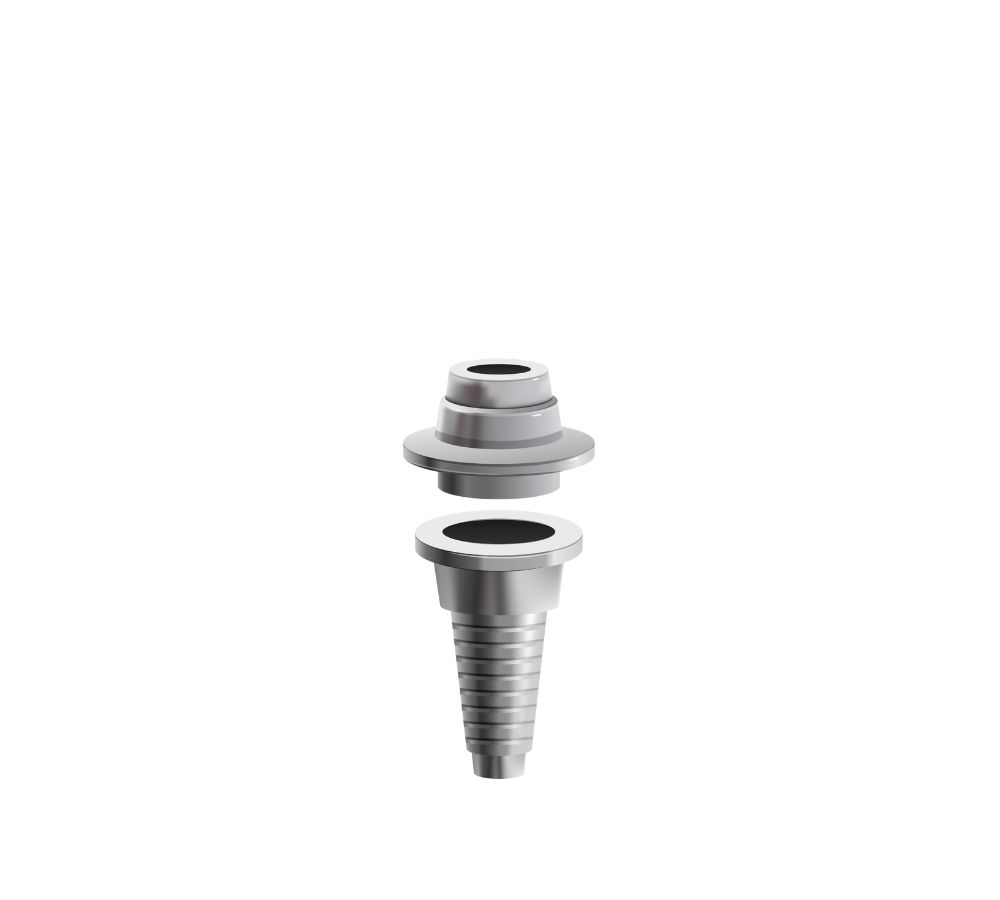
| The abutment | The connector attaching to the implant and supporting the restoration | $500 – $1,200 |
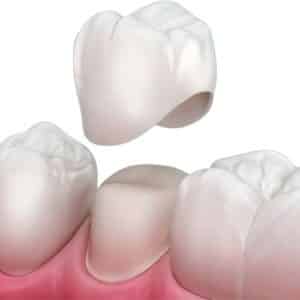
| The crown (or prosthesis) | The visible tooth, custom-made to match your natural teeth in shape, size and colour | $1,500 – $3,000 |
The fixture and the crown are separate products made by different people — see Dental Crowns for how the visible part is made. What are the different types of dental implants? covers the fixture options.
Complete price ranges
Realistic Melbourne market rates in 2026 for complete treatment:
| Treatment | Cost |
|---|---|
| Single implant (fixture + abutment + crown) | $4,500 – $7,000 |
| Two to three implants | $9,000 – $20,000 |
| Implant-supported bridge (3–4 teeth on 2 implants) | $8,000 – $18,000 |
| Implant-supported denture (overdenture on 2–4 implants) | $10,000 – $25,000 per arch |
| All-on-4 full arch (fixed prosthesis on 4 implants) | $20,000 – $40,000 per arch |
Where you fall within a range depends on the factors below. Practice fees are published on the Price Guide; a written quote after examination is the only figure that applies to you.
Before assuming an implant is the answer, it is worth comparing it against the alternatives for the same gap — Implant versus bridge for single tooth replacement, Bridges, implants or dentures, Dental Bridges and Dentures. For full-arch cases, All-on-4 Dental Implants and Things to consider when choosing All-on-4.
What moves the price
1. Bone grafting and augmentation
This is the most common reason implant costs exceed expectations.
After a tooth is lost, the surrounding jawbone begins to shrink. If too much has gone, it must be rebuilt before an implant can be placed. See Bone Grafting.
| Procedure | Cost |
|---|---|
| Minor — socket preservation at time of extraction | $300 – $800 |
| Localised bone grafting | $500 – $2,000 |
| Major augmentation — block grafts, ridge augmentation | $2,000 – $5,000 |
| Sinus lift — upper back teeth, where the sinus has expanded into the bone | $2,000 – $4,500 |
Not everyone needs grafting. If the implant is placed relatively soon after the tooth is lost and bone volume is adequate, you may avoid this cost entirely. See Conventional and Immediate Implants.
Which is the strongest argument against delay. Every month a gap sits empty, the bone shrinks further, and a $300 socket preservation can become a $3,000 augmentation.
One caution on that logic: bone loss from gum disease is a different problem, and placing an implant into actively diseased bone is not a plan. If your gums bleed, that gets assessed and treated first — What is periodontal disease? and Periodontists.
2. Sinus lifts
When replacing upper back teeth, the maxillary sinus often sits too close to where the implant needs to go. A sinus lift raises the sinus membrane and places graft material underneath to create enough depth.
- Internal (crestal) sinus lift — less invasive, done through the implant site: $1,500 – $2,500
- External (lateral window) sinus lift — more complex, where significant height is needed: $2,500 – $4,500
3. Implant brand and system
Not all implants are the same.
Premium systems — Straumann, Nobel Biocare, Astra — have decades of clinical research behind them, with documented long-term success rates above 95%. They also have global support networks: if you move overseas or need work done elsewhere, any qualified dentist can access compatible components.
Budget systems may cost less initially but can create problems with component availability, long-term research backing, and compatibility if future work is needed.
The question to ask is not which brand sounds better, but whether a dentist in another city in fifteen years will be able to get parts for it.
Ask for the system name and write it down. You want it in your own records, not only in the clinic's. If you are considering a narrower fixture, Mini implants vs standard dental implants sets out the trade-off.
4. Who places the implant
A general dentist with implant training — may charge $4,000 – $5,500 for a complete single implant. Many place implants competently, particularly straightforward cases.
A specialist (oral surgeon, periodontist or prosthodontist) — typically $5,000 – $7,000+. Specialists have completed additional years of postgraduate training specifically in implant surgery and complex rehabilitation. See Oral & Maxillofacial Surgeons, Periodontists and Prosthodontists.
For complex cases involving bone grafting, sinus lifts or full-mouth rehabilitation, specialist expertise can make a meaningful difference to the outcome. For straightforward single implants in healthy bone, an experienced general dentist with implant training may deliver an equally excellent result.
The advantage of a multidisciplinary practice is being able to match the case to the right clinician. Not every implant needs a specialist, and not every case should be handled by a generalist. Who should I see for dental and teeth implants? goes through that decision; specialist registration is verifiable free on the AHPRA register and each clinician's training is listed on Our Team.
5. Extraction and site preparation
| Cost | |
|---|---|
| Simple extraction | $200 – $400 |
| Surgical extraction | $350 – $700 |
| Socket preservation grafting — recommended to maintain bone for a future implant | $300 – $800 |
6. Temporary teeth during healing
Implants need 3 to 6 months to integrate. During that time you will need something, especially for visible teeth:
- Temporary denture (flipper): $400 – $800
- Temporary bridge: $600 – $1,500
- Immediate temporary crown on the implant: $500 – $1,000 — not suitable for all cases
Budget for this from the start. It is the line item most often left out of a comparison between two quotes.
7. Imaging and digital planning
- CBCT scan: $200 – $400
- Surgical guide (3D-printed, for precise placement): $300 – $800
These are not optional extras. They are essential tools for safe, predictable placement — any clinic offering implants without 3D imaging should raise concerns.
Health fund coverage
Implants are classified as major dental treatment, and coverage varies significantly.
What funds typically cover
| Item | Typical benefit |
|---|---|
| Surgical placement (item 661) | $400 – $1,200 depending on cover level |
| Abutment (item 672) | $200 – $600 |
| Implant crown (item 613 or 615) | $300 – $800 |
| Total per implant | $900 – $2,600 |
Things that catch people out
- 12-month waiting periods apply for major dental on most policies
- Annual benefit limits mean your fund may cover part of one implant but not multiple implants in the same year
- Some funds have sub-limits specifically for implant treatment
- Pre-approval is recommended — your fund can confirm your benefit before you proceed
Smile Solutions processes fund claims on the spot through HICAPS, and can provide the item numbers you need for a pre-treatment estimate. Benefits are set by your fund, not by the practice, and both benefit levels and item schedules change — confirm yours in writing before you commit.
Payment options
- Health fund claims processed immediately at the appointment
- Staged treatment — since implants are placed in stages anyway, payments naturally spread over several months
- Superannuation release — patients with qualifying dental conditions may be eligible to access super for treatment. Eligibility is decided by the ATO and your fund under the compassionate release rules, not by the practice, and applications can be refused
Payment plan options are available. Where a plan is advertised as interest free, that describes the plan term only — a deposit may be required, an establishment fee and ongoing account fees may apply, and charges can apply if the balance is not cleared within the agreed period. The applicable terms depend on the provider and the amount financed, and are set out in writing before you commit — ask what the deposit and the establishment fee are, in dollars, and what the total will be by the end. Payment Plans.
On a $20,000 arch, those two questions are not administrative detail. They are the difference between two materially different totals.
Why the cheapest quote is not always the best value
Patients who chose a low-cost provider and later sought retreatment commonly present with:
- Implant failure from inadequate planning or poor surgical technique
- Poorly fitting crowns that trap food, cause gum inflammation, or look obviously artificial
- Unknown implant systems where replacement parts are unavailable or incompatible
- No bone grafting where it was needed, leading to thin bone and eventual failure
- Complications from placement without proper 3D imaging
A failed implant does not just waste the initial investment. Salvage treatment often costs more than doing it properly the first time — and in some cases the bone damage from a failed implant makes replacement more difficult, or impossible.
The same reasoning applies to treatment overseas, where follow-up and warranty are the practical problem rather than the surgery itself — Dental tourism: the risks involved.
The timeline
- Initial consultation and planning (week 1) — examination, CBCT scan, treatment plan, cost estimate
- Extraction and grafting if needed (weeks 2–4) — not always required
- Healing from extraction (6–12 weeks) — if extraction was needed
- Implant placement surgery — a day procedure, 30–60 minutes per implant under local anaesthesia, with sedation available — see Sleep Dentistry
- Integration period (3–6 months) — the implant fuses with bone; you have a temporary tooth
- Abutment and crown placement — the final appointment
Total time from start to finish is typically 4 to 9 months, though immediate implant protocols can shorten this in suitable cases.
After it is finished
An implant cannot decay, but the gum and bone around it can become inflamed and recede — which is how implants are lost years later. Maintenance is not optional: a professional clean on schedule, daily cleaning under and around the restoration, and prompt attention to any bleeding around the implant. See Dental Cleans & Hygienists.
That maintenance cost belongs in the comparison too. An implant is a long-term commitment, not a purchase.
Common questions
What are the real odds of this failing, and when would it happen?
The largest published dataset available is a retrospective analysis of one of Israel's four national health funds, covering 158,824 implants placed in 53,874 patients between 1 January 2014 and 31 December 2022. Its findings:
- overall survival 97.79%, with a total failure rate of 2.21%
- 1.56% failed early, during the osseointegration phase — that is, before the crown was ever made
- failures within the first year accounted for 1.59% of cases, and the incidence dropped markedly after that
- failure was significantly higher in the maxillary molar region (3%) and the central incisor region (3.37%) — roughly double the rate at other sites
- failure was higher in men than women (2.53% vs 1.93%)
The pattern matters more than the headline number. Most failures that are going to happen happen early, before you have paid for the final crown, which is worth establishing with the practice in advance: ask what happens financially if the fixture does not integrate, and get the answer in writing before you start. Practices differ on this and it is not a regulated matter.
A separate consensus review from the ITI reports cumulative survival of implants supporting fixed partial dentures at 95.4% after 5 years of function and 92.8% after 10 years. Read alongside the registry figures, that is the honest shape of it: high survival, not certainty, and a long tail rather than a fixed lifespan.
I smoke, or have osteoporosis or diabetes. Does that rule me out?
Not automatically, and the three are not equivalent.
Smoking is the one with the clearest signal. The registry paper above cites a meta-analysis of early implant failure which concluded that significant risk factors for early failure included smoking habits, implants shorter than 10 mm, and implants placed in the maxillary region. Smoking is also modifiable, which is why it is the first thing raised.
Osteoporosis is more reassuring than most people expect. A 2024 systematic review of 24 studies covering 2,102 patients and 5,954 implants, with follow-up ranging from one month to 25 years, found that all studies' survival rate was higher than 90%, even for osteoporotic patients, and concluded that “osteoporosis status was not a risk factor for dental implant failure”. Most included studies found no difference in marginal bone loss or bone-to-implant contact between osteoporotic and healthy patients, although some reported lower stability scores at placement. The review does not address medications taken for bone density, which is a separate assessment your treating practitioner and your doctor need to make together — tell them what you take.
Diabetes appears in the literature as one of the systemic conditions affecting implant survival, alongside osteoporosis, but the sources here do not attach a reliable figure to it. What is well established is the gum side: severe gum disease is roughly three times more common in people with diabetes, and implants sit in the same tissues. See Diabetes and oral health.
None of this is a screening test you can apply to yourself. It is a list of things to put on the table at the consultation rather than leave out of it.
The quote covers the implant. What will it cost me over the following ten years?
This is the line item almost no quote contains, and it is not small.
The ITI consensus on implant-supported and combined implant/tooth-supported fixed partial dentures concluded that while both “present with high implant and restoration survival rates … biologic and technical complications occurred in about half the cases after 5 years of function.” The specific complication rates it reports for implant-supported bridges:
- screw loosening or fracture of the connection: 7.3% at 5 years
- fracture of the veneering ceramic or the framework: 14.0% at 5 years
- loss of retention of cemented restorations: 2.9% within 5 years, rising to 16.2% within 10 years
- fracture of the implant itself: 0.4% at 5 years and 1.8% at 10 years
None of those is a failure of the implant. They are repairs — and most of them are chargeable. On top of that sit the routine costs the page above mentions: professional cleaning on a schedule that suits an implant rather than a natural tooth, and periodic radiographs to check the bone level.
The practical instruction is to ask two questions when comparing quotes. What is the warranty period on the fixture, and separately on the crown? And what is the fee for re-cementing or replacing the crown if it comes loose in year seven? A quote that answers both is a more useful document than one that is $400 cheaper.
How do I tell whether a quote is reasonable?
Honestly: there is no published benchmark to check it against, and that is a structural feature of Australian dentistry rather than a gap in this page.
The Australian Dental Association runs a members' Dental Fees Survey — the 2022 edition drew 3,819 valid responses from 11,035 dentists invited — and it reports “considerable variation in the fees charged within and between states.” For the specialist sample it records hourly rates in 2022 ranging between $450 and $1,500 per hour, with a mean of $921 and a median of $800; the ADA itself cautions that the specialist response rate was low and “survey results for specialists should be interpreted with considerable caution.” The survey is published to members, not to patients, and it does not cover implant treatment as a package.
A submission to the 2017 Commonwealth parliamentary inquiry into private health insurance and out-of-pocket costs put the consumer side of it plainly: “The absence of a national dental fee schedule is problematic … private patients can go to multiple dentists and receive conflicting diagnoses and widely varying quotes for unpredictable dental fees. There are no consumer guidelines to ascertain the reasonableness of dental fees charged.”
So compare what is comparable rather than looking for a right answer:
- Get every quote itemised — fixture, abutment, crown, imaging, grafting, temporaries, and the review appointments. A single headline number cannot be compared with anything.
- Ask for item numbers. They are what your fund will assess and they make two quotes directly comparable.
- Check who is placing it and who is making the crown, because both affect the total.
- A second opinion is normal and nobody should be offended by it — particularly where grafting, a sinus lift or a full arch is proposed.
- Put the ten-year costs above into the same spreadsheet.
See Understanding your treatment and the published Price Guide.
Related reading
- How much do dental implants cost?
- What you need to know about dental implants
- What are the different types of dentures?
- Dental Implants at Smile Solutions
- Complex Dentistry
Practical details
Smile Solutions' team includes registered oral surgeons, periodontists and prosthodontists, with CBCT imaging and an in-house laboratory on site.
Smile Solutions, Level 1, 220 Collins Street, Manchester Unity Building, Melbourne VIC 3000. Phone 13 13 96, or theteam@smilesolutions.com.au. Monday–Friday 8.00am–6.00pm, Saturday 8.30am–1.30pm, Sunday by appointment. Full details on Contact Us.
Specialist registration can be verified on the AHPRA register, or by calling 1300 419 495.
Published 21 July 2026. All figures are indicative Melbourne market ranges at that date, not a quote. Your cost depends on your individual assessment. Individual results and timeframes vary. General information only; it does not replace advice from your treating practitioner. Payment plan terms are set by the credit provider and change; confirm current terms directly before you commit. Implant survival and complication figures in the questions above are attributed to the published sources named there and describe those study populations, not this practice.
Smile Solutions trades under ABN 28 193 514 103.
Images on This Page
-
https://www.facebook.com/tr?id=800557773428361&ev=PageView&noscript=1
(no alt text)
-
https://www.smilesolutions.com.au/wp-content/uploads/2025/10/calendar_month.svg
(no alt text)
-
https://www.smilesolutions.com.au/wp-content/themes/arcadian-wordpress-theme/assets/images/smile_solutions_logo_white.png
Smile Solutions Logo
-
https://www.smilesolutions.com.au/wp-content/themes/arcadian-wordpress-theme/assets/images/smile_solutions_logo_purple.png
Smile Solutions Logo
-
https://www.smilesolutions.com.au/wp-content/uploads/2023/11/SS-Tooth-1-1-150x150.png
Smile Solutions
-
https://www.smilesolutions.com.au/wp-content/uploads/2026/07/the-crown.jpg
Dental Implant Costs in Melbourne: What You’ll Actually Pay in 2026
-
https://www.smilesolutions.com.au/wp-content/uploads/2026/07/implant-fixture.jpg
The implant fixture
-
https://www.smilesolutions.com.au/wp-content/uploads/2026/07/the-abutment.jpg
The abutment
-
https://www.smilesolutions.com.au/wp-content/uploads/2025/09/Root-Canal-2-300x217.jpg
Root Canal
-
https://www.smilesolutions.com.au/wp-content/uploads/2026/08/Mouth-Breathing-300x270.jpg
Mouth Breathing
-
https://www.smilesolutions.com.au/wp-content/uploads/2025/09/Dental-Crown-at-Smile-Solutions-300x300.jpg
Dental Crown at Smile Solutions
-
https://www.smilesolutions.com.au/wp-content/themes/arcadian-wordpress-theme/assets/images/family_owned_bussiness.png
Family Owned Business
-
https://www.smilesolutions.com.au/wp-content/themes/arcadian-wordpress-theme/assets/icons/icon--phone.svg
Smile Solutions Contact