Bridges, implants and dentures: replacing a missing tooth
Why replace a missing tooth at all?
The human dentition is designed to function with twenty-eight interacting teeth, each connecting with two others in the opposing arch.
Losing one is like knocking a brick out of a wall. At first nothing happens. Then gravity and external forces take over: the teeth either side of the gap collapse inwards and the opposing tooth over-erupts into the space. The result is malocclusion — abnormal tooth alignment — in teeth that were previously fine. See Orthodontics for what correcting that afterwards involves.
The longer you wait, the more complicated and costly replacement becomes — and you may lose options altogether. The bone at the gap resorbs over time, and once enough has gone, an implant may no longer be feasible without grafting — see Bone Grafting. This is the single most important fact on this page.
Choosing between a bridge and an implant
The three replacement options are dentures, implant-supported crowns, and bridges. Each will get you there, but differently, and at different cost. The service pages are Dentures, Dental Implants and Dental Bridges.
For a single missing tooth the choice usually comes down to bridge versus implant, decided on these factors — and Implant versus bridge for a single tooth replacement takes that one comparison further:
The condition of the neighbouring teeth — the primary consideration
- Bounding teeth in good condition → an implant is probably the way to go, because a bridge would mean cutting down two healthy teeth
- Bounding teeth in poor condition — heavily filled, large dark amalgams, poor appearance → they would likely need crowning anyway, so a bridge becomes the obvious choice. See Dental Crowns and Tooth Fillings
How long the tooth has been missing
A recent extraction behaves differently from a long-standing gap. The extraction site usually needs several weeks to heal before an implant or bridge is placed, so that gum shrinkage does not compromise the final appearance.
If the gap shows when you smile, you will need something temporary in the meantime. For an implant that generally means a temporary denture for a few months, which is less comfortable than a temporary bridge.
Position of the gap
Front or back changes both the aesthetic demand and the biting forces the restoration has to survive.
Cost
There is generally little cost difference between a bridge and an implant. The exception: an implant needs adequate bone, and if there is insufficient bone, bone grafting may be required — which can add several hundred dollars and extend treatment time.
A bridge is two crowns plus a pontic (the floating tooth spanning the gap). An implant is a screw placed in the bone plus a crown on top.
For the itemised numbers, see Dental implant costs in Melbourne and the Price Guide.
Dentures
A denture is a removable prosthetic device replacing missing teeth and associated gum loss — also called false teeth or plates. They may be partial (one or more teeth) or full (all teeth in one jaw or both). See Dentures, and What are the different types of dentures? for a fuller comparison.
Partial dentures — three materials
Acrylic resin. A rigid resin — pink for the base and gums, tooth-coloured for the teeth. Usually held in by metal clasps gripping the surrounding natural teeth, partially or fully covered by your lips when in place.
Metal (cobalt-chrome alloy base). Pink acrylic for the gum portion, tooth-coloured teeth, metal clasps attached to the metal base. Two advantages over acrylic: the base can be made both thin and strong, and it gives greater support, minimising the impact on your existing teeth.
Flexible resin. Pink, made from a flexible resin that eases insertion, with clasps often made of the same flexible material. Flexible dentures usually do not last as long as acrylic or metal, but suit some patients.
Full denture
A pink acrylic denture replacing all teeth in one or both jaws. It rests on the gums and uses no clasps; some patients need adhesive to hold it. It can be made to look like an ideal dentition or to mimic your own natural teeth. Expect to need a little time to adjust to eating and speaking — 5 things to know about new dentures covers that period.
Over-denture
Made to fit over existing teeth or roots, or over dental implants. The advantage over a full denture is that the teeth or implants act as a secure anchor.
Immediate denture
Prepared before extraction and placed on the same day as the extraction, so you are never without teeth.
The trade-off is accuracy: an immediate denture cannot fit as precisely as one made after healing. It can sometimes be adjusted to fit well, but in most cases it serves as a temporary, with a new denture made several months later. See Caring for immediate dentures.
Dental implants
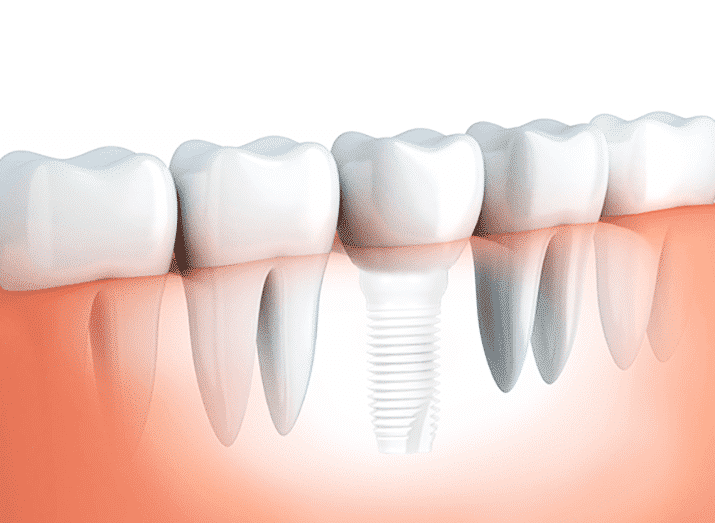
An implant is a titanium or zirconia post replacing the tooth root, surgically placed into the jawbone beneath the gum. A crown or bridge is then fitted to it.
Because the post fuses with the jawbone, implants:
- do not need removing daily and do not come loose like a denture
- do not anchor to other teeth like bridges, so they put no pressure on and do not compromise the remaining teeth
Endosteal implants
The most common type — screw-shaped, fixed into the jawbone, made of titanium or zirconia that bonds into bone as it heals. Suited to most patients, provided there is healthy jawbone for the post to fuse to.
Subperiosteal implants
A metal framework sitting below the gum tissue but above the jawbone, with posts protruding through the healed gum to carry the teeth.
Historically used where there was insufficient jawbone or an unwillingness to have bone grafting. They are now uncommon, because shorter implants that function just as well as regular ones, and improved grafting techniques including donor bone, have largely replaced the need.
Implant placement techniques
Conventional implants
Diameter roughly 3mm to 6mm. After any extraction, a healing period is required. A periodontist surgically places the titanium fixture into the jawbone, and it is left to heal and integrate over about three months. Once osseointegrated, a small abutment is attached to act as an anchor for the crown. See Conventional and Immediate Implants.
Immediate implants
The term covers two different things, worth separating:
- Immediate implant placement — the implant goes in at the same visit as the tooth is removed
- Immediate load implants — also called same day implants, teeth in a day or teeth in 3 days — the new tooth or teeth are placed shortly after the posts go into the bone
Immediate loading suits patients with enough healthy natural bone and a post secure enough to carry the load. The tooth fitted soon after surgery is temporary, designed to avoid stressing the healing implant, and is replaced with a permanent one after full osseointegration.
Mini implants
Much smaller in diameter — about 1.8mm to 2.9mm. Suggested where there is insufficient bone width for regular implants; commonly used to support dentures or to replace small front incisors. Mini implants versus standard dental implants sets out where each is appropriate.
Mini ortho implants (miniscrew implants)
About 1.8mm diameter, designed specifically for orthodontic anchorage — stable anchors that make the desired tooth movement possible. They are temporary and removed once the movement is achieved.
All-on-4 / Teeth in 3 Days
Four implants placed in available bone support a complete upper or lower bridge, with special abutments allowing temporary teeth on the same day. The temporaries are replaced with permanent teeth once osseointegration is complete. See All-on-4 Dental Implants and Things to consider when choosing All-on-4.
Where there is not enough jawbone, zygomatic implants may be used — these anchor into the cheekbone rather than the jaw, and are placed by an oral and maxillofacial surgeon.
Dental bridges
A bridge “bridges” the gap left by one or more missing teeth. It consists of crowns on the teeth adjacent to the gap (the abutment teeth) plus one or more false teeth (pontics) attached between them. Pontics can be gold, alloy, porcelain, zirconia, or a combination. See Dental Bridges and I'm looking to get a bridge to replace a tooth — what are the different types?.
Conventional bridge
Used when natural teeth are present on both sides of the gap. The teeth either side are reshaped to take crowns, with a pontic between.
Cantilever bridge
Used when there is an adjacent tooth on only one side. The pontic is supported from one side only, by one or two crowned abutments depending on the span.
The limitation matters: supported on one side, the bridge acts as a lever, which can lead to fractured teeth or loosened crowns. The risk is highest at the back of the mouth, where molar biting forces are strong. See Chipped and Cracked Teeth.
Maryland bridge (resin-bonded)
A conservative alternative — a single pontic held by a metal or porcelain wing bonded to the back of the adjacent tooth with composite resin cement.
Minimal alteration of the adjacent tooth is required — only a very small amount is removed from the back surface to make room for the wing. The strength of the bridge is limited by the strength of the resin, so it may dislodge if used in molar areas.
Implant-supported bridge
Generally regarded as the most stable means of tooth replacement. Biocompatible titanium implants are embedded in the jawbone and secure the entire restoration — one implant per missing tooth, or a pontic suspended between two implant-supported crowns.
You must have enough healthy bone to support the implants; x-rays, CT scans and other tests are used to assess bone quality and quantity.
Be clear-eyed about the trade-off. The procedure is expensive, invasive and time-consuming, with a long recovery and post-treatment sensitivity. Against that, implants survive well as a group. The largest published series is an audit of 158,824 implants placed in 53,874 patients through an Israeli health fund between 2014 and 2022, which reported an overall survival rate of 97.79%, with failures concentrated early — 1.59% of all implants failed within the first year. Failure was not evenly spread: the maxillary molar region (3%) and the central incisor region (3.37%) ran at roughly double the rate of other sites. That is a service-population audit rather than a controlled trial, and a group survival rate is not a prediction for any one person.
Bridge materials compared
| Material | Strength | Appearance | Tooth structure removed | Best used |
|---|---|---|---|---|
| Gold, silver, metal alloys | Strongest and most durable | Poor | Minimal | Molar areas — withstands strong biting forces where appearance matters least |
| Porcelain-fused-to-metal | Metal base for strength and stability | Better than metal; porcelain matched to your tooth colour | More — must accommodate both metal and porcelain layers | General use |
| All ceramic | Not as strong as metal | Most natural — blends seamlessly | More, because the material is thicker | Where appearance is the priority |
| Zirconia | Virtually as strong as metal | Wide shade range, near-perfect match; slightly translucent so it reflects light like enamel | Typically very little | Broad use — the best strength/appearance balance |
The choice weighs your budget, lifestyle, overall oral health and personal preference.
Your dentist plans treatment around the number and location of missing teeth, the presence and health of adjacent teeth, and the quantity and quality of jawbone. In complex cases your general dentist may refer you to a specialist prosthodontist, periodontist, or oral and maxillofacial surgeon. See also Complex Dentistry.
One thing that applies to all three options. None of them removes the need for the rest of your mouth to be healthy. Gum disease is the most common reason teeth are lost in the first place, and it will do the same to the teeth carrying a bridge or the bone holding an implant — see Bleeding Gums and Dental Cleans & Hygienists. Implants are not exempt: the International Team for Implantology's review of long-term studies records peri-implantitis and soft tissue complications in 11.7% of implants after five years.
Teeth in 3 Days at Smile Solutions
Traditionally, implants and single implant-supported dentures require three to six months of healing before they can be loaded.
The Teeth in 3 Days procedure allows multiple implants to be loaded almost immediately without jeopardising success rates. This works by distributing the load across four to six implants, so stability is achieved through the rigid prosthetic bridge rather than through any one implant.
It is made possible by collaboration between registered oral and maxillofacial surgeons, specialist periodontists and specialist prosthodontists in one location, and by a 3D i-CAT scanner used to determine the quality and dimensions of available bone support. See Dental Implants at Smile Solutions.
The advantages over traditional dentures
- Improved ability to eat
- Better taste and sense of texture, because the palate is left exposed
- Greater comfort
- Improved speech
- A more aesthetically pleasing result
What the procedure involves
Day 1 — The implants are placed. This normally takes place under general anaesthetic in hospital as day surgery (you are not admitted overnight). The surgeon prepares the jawbone and places the implants, then a prosthodontist takes impressions to begin constructing the fixed bridge.
Day 2 — The prosthodontist and dental prosthetist check the fit and initial setup of the new teeth on the fixed bridge, at the specialist centre on Level 12 of the Manchester Unity Building.
Day 3 — A high-strength, high-gloss acrylic bridge is attached to your implants.
Suitability is determined by thorough medical and dental assessment.
Common questions
Does every missing tooth have to be replaced?
No, and a clinician who says otherwise is worth questioning. Where the tooth was changes the answer more than anything else.
A wisdom tooth is generally not replaced at all. The last molar in the arch is often a considered decision rather than an automatic one: there is nothing behind it to drift, and the main consequence is the opposing tooth over-erupting into the space, which can sometimes be monitored instead.
A gap between two teeth is a different matter, because that is where the drift and collapse described at the top of this page happen, and the tooth that over-erupts into the space eventually becomes a problem of its own.
So the questions to ask are specific ones: “What will the tooth above or below this gap do if I leave it?”, “What will the teeth either side do?”, and “if I decide to wait, what am I giving up — and by when?” That last one is the sharp end, because the bone at the site resorbs whether or not the gap is causing you any trouble, and the options narrow quietly while nothing appears to be happening.
Am I a good candidate for an implant — what actually raises the risk of failure?
The published risk factors are more specific than “good general health”, and three of them are worth knowing before you choose between the options.
The registry audit described above examined this directly. Its authors report that a meta-analysis of early implant failure “concluded that significant risk factors for early failures included smoking habits, implants shorter than 10 mm, and implants placed in the maxillary region”, and note that such findings “underscore the importance of identifying patients who might be at higher risk and adapting surgical and postsurgical protocols accordingly”. Broader patient-related factors identified in the same literature include general health, smoking status, oral hygiene practices, bone quality and quantity, implant location, implant characteristics and the clinician's experience.
Two things follow. Smoking is the modifiable one, and it is worth raising honestly rather than hoping it will not come up — it changes the risk discussion, and in some cases the timing. And the upper jaw, particularly the molar region, carries more risk than the lower, which is consistent with the site-specific failure rates quoted above.
What this does not mean is that a smoker or an upper molar cannot be treated. It means the conversation should include your risk profile, not just the headline survival figure, and that you should ask what is being done about it in your case.
Once it is done, what maintenance does each option need?
All three need maintenance, and the commonest mistake is assuming an implant is a finished object rather than something that has to be kept clean.
Implants. The gum and bone around an implant can become inflamed and lose support in much the same way as around a natural tooth, which is why the ITI figure quoted above — peri-implantitis and soft tissue complications in 11.7% of implants after five years — matters more than the survival rate. The same ITI review reports that implant-supported fixed bridges were free of any biologic or technical complication in 61.3% of patients after five years, a figure drawn from only four of the twenty-one cohort studies it examined. Read plainly: a substantial minority needed something attended to within five years. Expect hygiene visits at an interval your clinician sets, and expect the screws, the fit and the surrounding tissue to be checked.
Bridges. The vulnerable points are the margins of the two crowns and the space beneath the pontic, neither of which ordinary flossing reaches — threading floss or a specific interdental aid is part of the deal, and someone should show you how at the fit appointment. If an abutment tooth decays under a crown, the whole bridge is usually affected.
Dentures. Daily cleaning, overnight removal, relining as the gums change, and replacement on a cycle — 5 things to know about new dentures covers that in detail.
Ask, before you commit: what does looking after this cost per year, and how often will it need to be seen?
What happens if it fails — who pays to fix it?
This is an uncomfortable question that is much easier to ask before treatment than after, and every practice has an answer to it.
Worth establishing in writing: what is covered if the implant does not integrate, which is the early failure the audit above puts at 1.59% within the first year; what happens if the crown, the screw or the bridge fails later, which is a different event from the implant failing; whether a replacement is charged at full fee, at a reduced fee, or not at all; and for how long. Laboratory-made work and surgical components often carry different arrangements, so ask about each.
Two more that people forget. Who does the remedial work — the original clinician, or someone else if they have left the practice. And what your obligations are — attendance at reviews and maintenance visits is commonly a condition of any warranty, which is another reason to know the maintenance schedule before you agree.
None of this implies that failure is likely. It means the arrangements should be known, in writing, while you still have a choice between three different treatments.
What will a health fund actually pay, and are there waiting periods?
This is where the gap between the quote and the cost to you is decided, and it is worth doing before treatment starts rather than after the first appointment.
The practical steps: get a written treatment plan with the item numbers listed, then give those numbers to your fund and ask, for each one, what benefit is payable, whether an annual limit applies, and whether the item sits under a waiting period. Major dental and prosthetic items commonly carry longer waiting periods than general dental, and an implant course is usually several items spread over months, which means it can also straddle two calendar years — occasionally to your advantage.
On public funding, be realistic: the Commonwealth's main dental benefit is the Child Dental Benefits Schedule, which is limited to eligible children and expressly excludes cosmetic work, orthodontics and any dental services provided in a hospital. Adult tooth replacement is not covered by it.
And ask about the parts people forget to quote: the imaging (a CT scan is often a separate item), any bone grafting, the temporary denture or bridge you will wear during healing, and the review appointments. Understanding your treatment covers what a plan should tell you, and published fees are in the price guide.
Related reading
- What do I need to know about dental implants?
- What are the different types of dental implants?
- Who should I see for dental and teeth implants?
- How much do dental implants cost?
- My denture is broken — can it be fixed on the spot?
Practical details
Published under Dr Philippa Robinson. Written by our clinicians Dr Stephen Do, Dr Robert Ormerod and Dr Constantine Ong, and managing director Dr Kia Pajouhesh. Registration and any specialist listing can be verified free on the AHPRA register, or by calling 1300 419 495; the clinicians are listed on Our Team.
Smile Solutions, Level 1, 220 Collins Street, Manchester Unity Building, Melbourne VIC 3000. Phone 13 13 96, or theteam@smilesolutions.com.au. Monday–Friday 8.00am–6.00pm, Saturday 8.30am–1.30pm, Sunday by appointment. Full details on Contact Us.
Published 7 December 2018. Individual results and treatment times vary. General information only; it does not replace advice from your treating practitioner. Figures attributed to published studies and to the ITI are those publishers' own and describe the groups studied, not any individual outcome.
Smile Solutions trades under ABN 28 193 514 103.
Images on This Page
-
https://www.facebook.com/tr?id=800557773428361&ev=PageView&noscript=1
(no alt text)
-
https://www.smilesolutions.com.au/wp-content/uploads/2025/10/calendar_month.svg
(no alt text)
-
https://www.smilesolutions.com.au/wp-content/themes/arcadian-wordpress-theme/assets/images/smile_solutions_logo_white.png
Smile Solutions Logo
-
https://www.smilesolutions.com.au/wp-content/themes/arcadian-wordpress-theme/assets/images/smile_solutions_logo_purple.png
Smile Solutions Logo
-
https://www.smilesolutions.com.au/wp-content/uploads/2016/05/Pip-150x150.jpg
Dr Philippa Robinson
-
https://www.smilesolutions.com.au/wp-content/uploads/2025/09/Conventional-Dental-Implants.png
Bridges, implants, or dentures for replacing missing teeth?
-
https://www.smilesolutions.com.au/wp-content/uploads/2025/09/Root-Canal-Treatment-Smile-Solutions-300x270.png
Tooth anatomy with decay and infection
-
https://www.smilesolutions.com.au/wp-content/uploads/2025/09/Smile-Solutions-Orthodontics-300x270.jpg
Ortho at Smile Solutions
-
https://www.smilesolutions.com.au/wp-content/uploads/2025/09/Dental-Emergencies-200x300.jpg
Children's Dental Emergencies at Smile Solutions
-
https://www.smilesolutions.com.au/wp-content/themes/arcadian-wordpress-theme/assets/images/family_owned_bussiness.png
Family Owned Business
-
https://www.smilesolutions.com.au/wp-content/themes/arcadian-wordpress-theme/assets/icons/icon--phone.svg
Smile Solutions Contact
-
https://www.facebook.com/tr? id=800557773428361&ev=PageView&noscript=1
(no alt text)